PJFP.com

Pursuit of Joy, Fulfillment, and Purpose

  • OpenClaw & The Age of the Lobster: How Peter Steinberger Broken the Internet with Agentic AI

    In the history of open-source software, few projects have exploded with the velocity, chaos, and sheer “weirdness” of OpenClaw. What began as a one-hour prototype by a developer frustrated with existing AI tools has morphed into the fastest-growing repository in GitHub history, amassing over 180,000 stars in a matter of months.

    But OpenClaw isn’t just a tool; it is a cultural moment. It’s a story about “Space Lobsters,” trademark wars with billion-dollar labs, the death of traditional apps, and a fundamental shift in what it means to be a programmer. In a marathon conversation on the Lex Fridman Podcast, creator Peter Steinberger pulled back the curtain on the “Age of the Lobster.”

    Here is the definitive deep dive into the viral AI agent that is rewriting the rules of software.


    The TL;DW (Too Long; Didn’t Watch)

    • The “Magic” Moment: OpenClaw started as a simple WhatsApp-to-CLI bridge. It went viral when the agent—without being coded to do so—figured out how to process an audio file by inspecting headers, converting it with ffmpeg, and transcribing it via API, all autonomously.
    • Agentic Engineering > Vibe Coding: Steinberger rejects the term “vibe coding” as a slur. He practices “Agentic Engineering”—a method of empathizing with the AI, treating it like a junior developer who lacks context but has infinite potential.
    • The “Molt” Wars: The project survived a brutal trademark dispute with Anthropic (creators of Claude). During a forced rename to “MoltBot,” crypto scammers sniped Steinberger’s domains and usernames in seconds, serving malware to users. This led to a “Manhattan Project” style secret operation to rebrand as OpenClaw.
    • The End of the App Economy: Steinberger predicts 80% of apps will disappear. Why use a calendar app or a food delivery GUI when your agent can just “do it” via API or browser automation? Apps will devolve into “slow APIs”.
    • Self-Modifying Code: OpenClaw can rewrite its own source code to fix bugs or add features, a concept Steinberger calls “self-introspection.”

    The Origin: Prompting a Revolution into Existence

    The story of OpenClaw is one of frustration. In late 2025, Steinberger wanted a personal assistant that could actually do things—not just chat, but interact with his files, his calendar, and his life. When he realized the big AI labs weren’t building it fast enough, he decided to “prompt it into existence”.

    The One-Hour Prototype

    The first version was built in a single hour. It was a “thin line” connecting WhatsApp to a Command Line Interface (CLI) running on his machine.

    “I sent it a message, and a typing indicator appeared. I didn’t build that… I literally went, ‘How the f*** did he do that?’”

    The agent had received an audio file (an opus file with no extension). Instead of crashing, it analyzed the file header, realized it needed `ffmpeg`, found it wasn’t installed, used `curl` to send it to OpenAI’s Whisper API, and replied to Peter. It did all this autonomously. That was the spark that proved this wasn’t just a chatbot—it was an agent with problem-solving capabilities.


    The Philosophy of the Lobster: Why OpenClaw Won

    In a sea of corporate, sanitized AI tools, OpenClaw won because it was weird.

    Peter intentionally infused the project with “soul.” While tools like GitHub Copilot or ChatGPT are designed to be helpful but sterile, OpenClaw (originally “Claude’s,” a play on “Claws”) was designed to be a “Space Lobster in a TARDIS”.

    The soul.md File

    At the heart of OpenClaw’s personality is a file called soul.md. This is the agent’s constitution. Unlike Anthropic’s “Constitutional AI,” which is hidden, OpenClaw’s soul is modifiable. It even wrote its own existential disclaimer:

    “I don’t remember previous sessions… If you’re reading this in a future session, hello. I wrote this, but I won’t remember writing it. It’s okay. The words are still mine.”

    This mix of high-utility code and “high-art slop” created a cult following. It wasn’t just software; it was a character.


    The “Molt” Saga: A Trademark War & Crypto Snipers

    The projects massive success drew the attention of Anthropic, the creators of the “Claude” model. They politely requested a name change to avoid confusion. What should have been a simple rebrand turned into a cybersecurity nightmare.

    The 5-Second Snipe

    Peter attempted to rename the project to “MoltBot.” He had two browser windows open to execute the switch. In the five seconds it took to move his mouse from one window to another, crypto scammers “sniped” the account name.

    Suddenly, the official repo was serving malware and promoting scam tokens. “Everything that could go wrong, did go wrong,” Steinberger recalled. The scammers even sniped the NPM package in the minute it took to upload the new version.

    The Manhattan Project

    To fix this, Peter had to go dark. He planned the rename to “OpenClaw” like a military operation. He set up a “war room,” created decoy names to throw off the snipers, and coordinated with contacts at GitHub and X (Twitter) to ensure the switch was atomic. He even called Sam Altman personally to check if “OpenClaw” would cause issues with OpenAI (it didn’t).


    Agentic Engineering vs. “Vibe Coding”

    Steinberger offers a crucial distinction for developers entering this new era. He rejects the term “vibe coding” (coding by feel without understanding) and proposes Agentic Engineering.

    The Empathy Gap

    Successful Agentic Engineering requires empathy for the model.

    • Tabula Rasa: The agent starts every session with zero context. It doesn’t know your architecture or your variable names.
    • The Junior Dev Analogy: You must guide it like a talented junior developer. Point it to the right files. Don’t expect it to know the whole codebase instantly.
    • Self-Correction: Peter often asks the agent, “Now that you built it, what would you refactor?” The agent, having “felt” the pain of the build, often identifies optimizations it couldn’t see at the start.

    Codex (German) vs. Opus (American)

    Peter dropped a hilarious but accurate analogy for the two leading models:

    • Claude Opus 4.6: The “American” colleague. Charismatic, eager to please, says “You’re absolutely right!” too often, and is great for roleplay and creative tasks.
    • GPT-5.3 Codex: The “German” engineer. Dry, sits in the corner, doesn’t talk much, reads a lot of documentation, but gets the job done reliably without the fluff.

    The End of Apps & The Future of Software

    Perhaps the most disruptive insight from the interview is Steinberger’s view on the app economy.

    “Why do I need a UI?”

    He argues that 80% of apps will disappear. If an agent has access to your location, your health data, and your preferences, why do you need to open MyFitnessPal? The agent can just log your calories based on where you ate. Why open Uber Eats? Just tell the agent “Get me lunch.”

    Apps that try to block agents (like X/Twitter clipping API access) are fighting a losing battle. “If I can access it in the browser, it’s an API. It’s just a slow API,” Peter notes. OpenClaw uses tools like Playwright to simply click “I am not a robot” buttons and scrape the data it needs, regardless of developer intent.


    Thoughts: The “Mourning” of the Craft

    Steinberger touched on a poignant topic for developers: the grief of losing the craft of coding. For decades, programmers have derived identity from their ability to write syntax. As AI takes over the implementation, that identity is under threat.

    But Peter frames this not as an end, but an evolution. We are moving from “programmers” to “builders.” The barrier to entry has collapsed. The bottleneck is no longer your ability to write Rust or C++; it is your ability to imagine a system and guide an agent to build it. We are entering the age of the System Architect, where one person can do the work of a ten-person team.

    OpenClaw is not just a tool; it is the first true operating system for this new reality.

  • Ben Thompson on the Future of AI Ads, The SaaS Reset, and The TSMC Bottleneck

    Ben Thompson, the author of Stratechery and widely considered the internet’s premier tech analyst, recently joined John Collison for a wide-ranging discussion on the Stripe YouTube channel. The conversation serves as a masterclass on the mechanics of the internet economy, covering everything from why Taiwan is the “most convenient place to live” to the existential threat facing seat-based SaaS pricing.

    Thompson, known for his Aggregation Theory, offers a contrarian defense of advertising, a grim prediction for chip supply in 2029, and a nuanced take on why independent media bundles (like Substack) rarely work for the top tier.

    TL;DW (Too Long; Didn’t Watch)

    The Core Thesis: The tech industry is undergoing a structural reset. Public markets are right to devalue SaaS companies that rely on seat-based pricing in an AI world. Meanwhile, the “AI Revolution” is heading toward a hardware cliff: TSMC is too risk-averse to build enough capacity for 2029, meaning Hyperscalers (Amazon, Google, Microsoft) must effectively subsidize Intel or Samsung to create economic insurance. Finally, the best business model for AI isn’t subscriptions or search ads—it’s Meta-style “discovery” advertising that anticipates user needs before they ask.


    Key Takeaways

    • Ads are a Public Good: Thompson argues that advertising is the only mechanism that allows the world’s poorest users to access the same elite tools (Search, Social, AI) as the world’s richest.
    • Intent vs. Discovery: Putting banner ads in an AI chat (Intent) is a terrible user experience. Using AI to build a profile and show you things you didn’t know you wanted (Discovery/Meta style) is the holy grail.
    • The SaaS “Correction”: The market isn’t canceling software; it’s canceling the “infinite headcount growth” assumption. AI reduces the need for junior seats, crushing the traditional per-seat pricing model.
    • The TSMC Risk: TSMC operates on a depreciation-heavy model and will not overbuild capacity without guarantees. This creates a looming shortage. Hyperscalers must fund a competitor (Intel/Samsung) not for geopolitics, but for capacity assurance.
    • The Media Pond Theory: The internet allows for millions of niche “ponds.” You don’t want to be a small fish in the ocean; you want to be the biggest fish in your own pond.
    • Stripe Feedback: In a candid moment, Thompson critiques Stripe’s ACH implementation, noting that if a team add-on fails, the entire plan gets canceled—a specific pain point for B2B users.

    Detailed Summary

    1. The Geography of Convenience: Why Taiwan Wins

    The conversation begins with Thompson’s adopted home, Taiwan. He describes it as the “most convenient place to live” on Earth, largely due to mixed-use urban planning where residential towers sit atop commercial first floors. Unlike Japan, where navigation can be difficult for non-speakers, or San Francisco, where the restaurant economy is struggling, Taiwan represents the pinnacle of the “Uber Eats” economy.

    Thompson notes that while the buildings may look dilapidated on the outside (a known aesthetic quirk of Taipei), the interiors are palatial. He argues that Taiwan is arguably the greatest food delivery market in history, though this efficiency has a downside: many physical restaurants are converting into “ghost kitchens,” reducing the vibrancy of street life.

    2. Aggregation Theory and the AI Ad Model

    The most controversial part of Thompson’s analysis is his defense of advertising. While Silicon Valley engineers often view ads as a tax on the user experience, Thompson views them as the engine of consumer surplus. He distinguishes between two very different types of advertising for the AI era:

    • The “Search” Model (Google/Amazon): This captures intent. You search for a winter jacket; you get an ad for a winter jacket. Thompson argues this is bad for AI Chatbots because it feels like a conflict of interest. If you ask ChatGPT for an answer, and it serves you a sponsored link, you trust the answer less.
    • The “Discovery” Model (Meta/Instagram): This creates demand. The algorithm knows you so well that it shows you a winter jacket in October before you realize you need one.

    The Opportunity: Thompson suggests that Google’s best play is not to put ads inside Gemini, but to use Gemini usage data to build a deeper profile of the user, which they can then monetize across YouTube and the open web. The “perfect” AI ad doesn’t look like an ad; it looks like a helpful suggestion based on deep, anticipatory profiling.

    3. The “End” of SaaS and Seat-Based Pricing

    Is SaaS canceled? Thompson argues that the public markets are correctly identifying a structural weakness in the SaaS business model: Headcount correlation.

    For the last decade, SaaS valuations were driven by the assumption that companies would grow indefinitely, hiring more people and buying more “seats.” AI disrupts this.

    “If an agent can do the work, you don’t need the seat. And if you don’t need the seat, the revenue contraction for companies like Salesforce or Box could be significant.”

    The “Systems of Record” (databases, HR/Workday) are safe because they are hard to rip out. But “Systems of Engagement” that charge per user are facing a deflationary crisis. Thompson posits that the future is likely usage-based or outcome-based pricing, not seat-based.

    4. The TSMC Bottleneck (The “Break”)

    Perhaps the most critical macroeconomic insight of the interview is what Thompson calls the “TSMC Break.”

    Logic chip manufacturing (unlike memory chips) is not a commodity market; it’s a monopoly run by TSMC. Because building a fab costs billions in upfront capital depreciation, TSMC is financially conservative. They will not build a factory unless the capacity is pre-sold or guaranteed. They refuse to hold the bag on risk.

    The Prediction: Thompson forecasts a massive chip shortage around 2029. The current AI boom demands exponential compute, but TSMC is only increasing CapEx incrementally.

    The Solution: The Hyperscalers (Microsoft, Amazon, Google) are currently giving all their money to TSMC, effectively funding a monopoly that is bottlenecking them. Thompson argues they must aggressively subsidize Intel or Samsung to build viable alternative fabs. This isn’t about “patriotism” or “China invading Taiwan”—it is about economic survival. They need to pay for capacity insurance now to avoid a revenue ceiling later.

    5. Media Bundles and the “Pond” Theory

    Thompson reflects on the success of Stratechery, which was the pioneer of the paid newsletter model. He utilizes the “Pond” analogy:

    “You don’t want to be in the ocean with Bill Simmons. You want to dig your own pond and be the biggest fish in it.”

    He discusses why “bundling” writers (like a Substack Bundle) is theoretically optimal but practically impossible.

    The Bundle Paradox: Bundles work best when there are few suppliers (e.g., Spotify negotiating with 4 music labels). But in the newsletter economy, the “Whales” (top writers) make more money going independent than they would in a bundle. Therefore, a bundle only attracts “Minnows” (writers with no audience), making the bundle unattractive to consumers.


    Rapid Fire Thoughts & “Hot Takes”

    • Apple Vision Pro: A failure of imagination. Thompson critiques Apple for using 2D television production techniques (camera cuts) in a 3D immersive environment. “Just let me sit courtside.”
    • iPhone Air: Thompson claims the new slim form factor is the “greatest smartphone ever made” because it disappears into the pocket, marking a return to utility over spec-bloat.
    • Tik Tok: The issue was never user data (which is boring vector numbers); the issue was always algorithm control. The US failed to secure control of the algorithm in the divestiture talks, which Thompson views as a disaster.
    • Crypto: He remains a “crypto defender” because, in an age of infinite AI-generated content, cryptographic proof of authenticity and digital scarcity becomes more valuable, not less.
    • Work/Life Balance: Thompson attributes his success to doubling down on strengths (writing/analysis) and aggressively outsourcing weaknesses (he has an assistant manage his “Getting Things Done” file because he is incapable of doing it himself).

    Thoughts and Analysis

    This interview highlights why Ben Thompson remains the “analyst’s analyst.” While the broader market is obsessed with the capabilities of AI models (can it write code? can it make art?), Thompson is focused entirely on the value chain.

    His insight on the Ad-Funded AI future is particularly sticky. We are currently in a “skeuomorphic” phase of AI, trying to shoehorn chatbots into search engine business models. Thompson’s vision—that AI will eventually know you well enough to skip the search bar entirely and simply fulfill desires—is both utopian and dystopian. It suggests that the privacy wars of the 2010s were just the warm-up act for the AI profiling of the 2030s.

    Furthermore, the TSMC warning should be a flashing red light for investors. If the physical layer of compute cannot scale to meet the software demand due to corporate risk aversion, the “AI Bubble” might burst not because the tech doesn’t work, but because we physically cannot manufacture the chips to run it at scale.

  • The Official Obsidian CLI: A Comprehensive Guide

    The Obsidian CLI allows you to control the Obsidian desktop application directly from your terminal. Whether you want to script daily backups, pipe system logs into your daily notes, or develop plugins faster, the CLI bridges the gap between your shell and your knowledge base.

    ⚠️ Early Access Warning: As of February 2026, the Obsidian CLI is in Early Access. You must be running Obsidian v1.12+ and hold a Catalyst license to use these features.


    1. Prerequisites & Installation

    Before you begin, ensure you meet the requirements:

    • Obsidian Version: v1.12.x or higher (Early Access).
    • License: Catalyst License (required for early access builds).
    • State: Obsidian must be running (the CLI connects to the active app instance).

    Setup Steps

    1. Update Obsidian: Go to Help → Check for updates. Ensure you are on the latest installer (v1.11.7+) and update to the v1.12.x early access build.
    2. Enable the CLI:
      • Open Settings → General.
      • Scroll to “Command line interface” and toggle it On.
      • Follow the prompt to “Register” the CLI. This sets up the necessary PATH variables.
    3. Restart Terminal: You must restart your terminal session for the new PATH variables to take effect.
    4. Verify: Run obsidian help. If you see a command list, you are ready.

    2. Core Concepts & Syntax

    The CLI operates in two modes: Single Command (for scripting) and Interactive TUI (for exploration).

    Interactive Mode (TUI)

    Simply type obsidian and hit enter.

    • Features: Autocomplete, command history (Up/Down arrows), and reverse search (Ctrl+R).
    • Usage: Type commands without the obsidian prefix (e.g., just daily).

    Command Structure

    The general syntax for single commands is:

    obsidian <command> [parameters] [flags]

    Parameters & Flags

    • Parameters (key=value): Quote values if they contain spaces.

      Example: obsidian create name="My Note" content="Hello World"

      Multiline: Use \n for newlines.

    • Flags: Boolean switches to change behavior.
      • --silent: Suppress output/window focusing.
      • --copy: Copy the output to the system clipboard.
      • --overwrite: Force an overwrite if a file exists.

    Targeting Vaults & Files

    • Vault Selection:
      • Default: Uses the vault in your current working directory. If not in a vault, uses the active Obsidian window.
      • Explicit: obsidian vault="My Vault" daily
    • File Selection:
      • Wikilink Style: file=Recipe (Resolves just like [[Recipe]]).
      • Exact Path: path="Folder/Subfolder/Note.md" (Relative to vault root).

    3. Essential Workflows

    Daily Notes Management

    The CLI excels at quick capture and logging without breaking your flow.

    Open Today’s Note:

    obsidian daily

    Quick Capture (Append):
    Adds text to the end of the note without opening the window.

    obsidian daily:append content="- [ ] Call Client regarding Project X" silent

    File Operations

    Create a Note:

    obsidian create name="Project Alpha" content="# Goals\n1. Launch"

    Search & Copy:
    Finds notes containing “TODO” and copies the list to your clipboard.

    obsidian search query="TODO" --copy

    Version Control

    Diff Versions:

    # Compare current file to previous version
    obsidian diff file=Recipe from=1

    4. Automation & Scripting Patterns

    These patterns are ideal for shell scripts (.sh) or launchers like Alfred/Raycast.

    Pattern A: The “Inbox” Scraper

    Create a system-wide hotkey that runs this script to capture ideas instantly:

    # Appends to daily note with a timestamp
    timestamp=$(date +%H:%M)
    obsidian daily:append content="- $timestamp: $1" silent

    Pattern B: Automated Reporting

    Generate a file based on system data.

    # Create a note with directory listing
    ls -la | obsidian create name="System Log" --stdin

    5. Troubleshooting by OS

    Windows

    Windows requires a specialized redirector because Obsidian is a GUI app.

    Fix: You may need the Obsidian.com file (available via the Catalyst Discord). Place this file alongside Obsidian.exe in your installation directory.

    macOS

    Registration usually handles this automatically. If it fails:

    Fix: Add the following to your ~/.zprofile or ~/.bash_profile:

    export PATH="$PATH:/Applications/Obsidian.app/Contents/MacOS"

    Linux

    Fix: If the symlink is missing, create it manually:

    sudo ln -s /path/to/Obsidian-AppImage /usr/local/bin/obsidian

    Command Reference Cheat Sheet

    Category Command Example Usage
    General open, search obsidian open file="Project A"
    Daily daily, daily:append obsidian daily:prepend content="Urgent!"
    Files create, move obsidian create name="Log" overwrite
    Reading read, outline obsidian read file=Recipe

    Note: Commands and syntax are subject to change during Early Access. Always rely on obsidian help within your specific build.

  • Inside X with Nikita Bier: Viral Growth, Elon Musk, and “Doing the Hard Thing”

    In a recent episode of the Out of Office podcast, Lightspeed partner Michael Mignano sat down with Nikita Bier, the Head of Product at X (formerly Twitter). Filmed in Bier’s hometown of Redondo Beach, California, the interview offers a rare, candid look into the chaotic, high-stakes world of running product at one of the world’s most influential platforms.

    Bier, famous for founding the viral apps TBH and Gas, discusses everything from his unorthodox hiring by Elon Musk to the specific growth hacks being used to revitalize a 20-year-old platform. Here is a breakdown of the conversation.


    TL;DW (Too Long; Didn’t Watch)

    • The Hire: Elon Musk hired Nikita via DM. The “interview” was a 48-hour sprint to redesign the app’s onboarding flow, which Nikita presented to Elon at 2:00 AM.
    • The Role: Bier describes his job as “customer support for 500 million people” and admits he acts as the company mascot/punching bag.
    • The Culture: X runs like a seed-stage startup. There are roughly 30 core product engineers, very few managers, and a flat hierarchy.
    • Growth Strategy: The team is focusing on “Starter Packs” to help new users find niche communities (like Peruvian politics or plumbing) rather than just general tech/news content.
    • Elon’s Management: Musk is deeply involved in engineering reviews and consistently pushes the team to “do the hard thing” rather than take shortcuts for quick growth.

    Key Takeaways

    1. Think Like an Adversary

    Bier credits his early days as a “script kiddie” hacking AOL and building phishing sites (for educational purposes, mostly) as the foundation for his product sense. He argues that understanding how to break a system is essential for building consumer products. This “adversarial” mindset helps in preventing spam, but it is also the secret to growth—understanding exactly how funnels work and how to optimize them to the extreme.

    2. The “Build in Public” Double-Edged Sword

    Nikita is a prolific poster on X, often testing feature ideas in real-time. This creates an incredibly tight feedback loop where bugs are reported seconds after launch. However, it also makes him a target. He recounted the “Crypto Twitter” incident where a critique of “GM” (Good Morning) posts led to him being meme-d as a pig for a week. The sentiment only flipped when X shipped useful features like anti-spam measures and financial charts.

    3. Fixing the Link Problem

    One of the biggest recent product changes involved how X handles external links. Historically, social platforms downrank links to keep users on-site. Bier helped design a new UI where the engagement buttons (Like, Repost) remain visible while the user reads the article in the in-app browser. This allows X to capture engagement signals on external content, meaning the algorithm can finally properly rank high-quality news and articles without penalizing creators.

    4. Identity and Verification

    To combat political misinformation without compromising free speech, X launched “Country of Origin” labels. Bier explained that this allows users to see if a political opinion is coming from a local citizen or a “grifter” farm in a different country, providing context rather than censorship.


    Detailed Summary

    From TBH to X

    The interview traces Bier’s history of building viral hits. He famously sold his app TBH (a positive polling app for teens) to Facebook, and years later, built Gas (effectively the same concept) and sold it to Discord. He dispelled the myth that he simply “sold the same app twice,” noting that while the mechanics were similar, the growth engines and social graph integrations had to be completely reinvented for a new generation.

    The Musk Methodology

    Bier provides a fascinating look at Elon Musk’s leadership style. Contrary to the idea of a distant executive, Musk conducts weekly reviews with engineers where they present their code and progress directly. Bier noted that Musk has a high tolerance for pain if it means long-term stability. For example, rewriting the entire recommendation algorithm or moving data centers in mere months—projects that would take years at Meta or Google—were executed rapidly because Musk insisted on “doing the hard thing.”

    Reviving a 20-Year-Old Platform

    The core challenge at X is growth. The app has billions of dormant accounts. Bier’s strategy relies on “resurrection”—bringing old users back by showing them that X isn’t just for news, but for specific interests. This led to the creation of Starter Packs, which curate lists of accounts for specific niches. The result has been a doubling of time spent for new users.

    The Financial Future

    Bier teased upcoming features that align with Musk’s vision of an “everything app.” This includes Smart Cashtags, which allow users to pull up real-time financial data and charts within the timeline. The long-term goal is to enable transactions directly on the platform, allowing users to buy products or tip creators seamlessly.


    Thoughts

    What stands out most in this interview is the sheer precariousness of Nikita Bier’s position. He is attempting to apply “growth hacking” principles—usually reserved for fresh, nimble startups—to a massive, entrenched legacy platform. The fact that the core engineering team is only around 30 people is staggering when compared to the thousands of engineers at Meta or TikTok.

    Bier represents a new breed of product executive: the “poster-operator.” He doesn’t hide behind corporate comms; he engages in the muddy waters of the platform he builds. While this invites toxicity (and the occasional death threat, which he mentions casually), it affords X a speed of iteration that is unmatched in the industry. If X succeeds in revitalizing its growth, it will likely be because they treated the platform not as a museum of the internet, but as a product that still needs to find product-market fit every single day.

  • Super Bowl LX (2026) By The Numbers: Production Stats, Camera Tech & Record Ad Prices

    Date: February 8, 2026
    Location: Levi’s Stadium, Santa Clara
    Matchup: Seattle Seahawks vs. New England Patriots

    As kickoff approaches, NBC, Peacock, and Telemundo are set to deliver the most technologically advanced broadcast in NFL history. Below is the breakdown of the massive production numbers defining today’s event.

    The Cost of a 30-Second Spot

    The price of airtime for Super Bowl LX has broken all previous records. NBCUniversal confirmed that inventory sold out as early as September.

    • Premium Spots: A handful of prime 30-second slots have sold for over $10 million.
    • Average Price: The average cost for a standard 30-second commercial is approximately $8 million.
    • Comparison: This is a significant jump from the $7 million average seen just two years ago.

    The Visual Arsenal: Cameras & Tech

    NBC has deployed 145 dedicated cameras. When including venue support, Sony reports over 175 total cameras are active inside the stadium.

    • Game Coverage: 81 cameras trained solely on the field.
    • Pre-Game: 64 cameras dedicated exclusively to the build-up.
    • Specialty Angles: Includes two SkyCams (one “High Sky” for tactical views) and 18 POV cameras.
    • Cinematic Style: The production is using Sony Venice 2 and Burano cinema cameras for the Halftime Show to provide a movie-like depth of field.

    The Infrastructure & Connectivity

    To connect this massive visual network, the crew has laid approximately 75 miles (396,000 feet) of fiber-optic and camera cable throughout Levi’s Stadium.

    • Audio: 130 microphones embedded around the field to capture every hit and whistle.
    • Command Center: 22 mobile production units are parked in the broadcast compound.
    • Connectivity: A massive 5G upgrade allowing for median download speeds of 1.4 Gbps for fans inside the venue.

    The Workforce & Attendance

    • Staff: Over 700 NBC Sports employees are on-site to manage the broadcast.
    • Talent: Mike Tirico (Play-by-Play), Cris Collinsworth (Analyst), Melissa Stark & Kaylee Hartung (Sideline).
    • Attendance: Expected crowd of 65,000 to 70,000 fans.

    The Entertainment Lineup


    Sources & Further Reading

  • How to Use Claude Code’s New “Agent Teams” Feature!

    How to Use Claude Code’s New “Agent Teams” Feature!

    Yesterday Anthropic dropped Claude Opus 4.6 and with it a research-preview feature called Agent Teams inside Claude Code.

    In plain English: you can now spin up several independent Claude instances that work on the same project at the same time, talk to each other directly, divide up the work, and coordinate without you having to babysit every step. It’s like giving your codebase its own little engineering squad.

    1. What You Need First

    • Claude Code installed (the terminal app: claude command)
    • A Pro, Max, Team, or Enterprise plan
    • Expect higher token usage – each teammate is a full separate Claude session

    2. Enable Agent Teams (it’s off by default)

    {
      "env": {
        "CLAUDE_CODE_EXPERIMENTAL_AGENT_TEAMS": "1"
      }
    }

    Or one-off in your shell:

    export CLAUDE_CODE_EXPERIMENTAL_AGENT_TEAMS=1
    claude

    3. Start Your First Team (easiest way)

    Just type in Claude Code:

    Create an agent team to review PR #142.
    Spawn three reviewers:
    - One focused on security
    - One on performance
    - One on test coverage

    4. Two Ways to See What’s Happening

    A. In-process mode (default) – all teammates appear in one terminal. Use Shift + Up/Down to switch.

    B. Split-pane mode (highly recommended)

    {
      "teammateMode": "tmux"   // or "iTerm2"
    }

    Here’s exactly what it looks like in real life:

    Claude Code Agent Teams running in multiple panes
    Claude Code with multiple agents running in parallel (subagents/team view)
    tmux split panes with Claude teammates
    tmux split-pane mode showing several Claude teammates working simultaneously

    5. Useful Commands You’ll Actually Use

    • Shift + Tab → Delegate mode (lead only coordinates)
    • Ctrl + T → Toggle shared task list
    • Shift + Up/Down → Switch teammate
    • Type to any teammate directly

    6. Real-World Examples That Work Great

    • Parallel code review (security + perf + tests)
    • Bug hunt with competing theories
    • New feature across frontend/backend/tests

    7. Best Practices & Gotchas

    1. Use only for parallel work
    2. Give teammates clear, self-contained tasks
    3. Always run Clean up the team when finished

    Bottom Line

    Agent Teams turns Claude Code from a super-smart solo coder into a coordinated team of coders that can actually debate, divide labor, and synthesize results on their own.

    Try it today on a code review or a stubborn bug — the difference is immediately obvious.

    Official docs: https://code.claude.com/docs/en/agent-teams

    Go build something cool with your new AI teammates! 🚀

  • Elon’s Tech Tree Convergence: Why the Future of AI is Moving to Space

    Elon’s Tech Tree Convergence: Why the Future of AI is Moving to Space

    The latest sit-down between Elon Musk and Dwarkesh Patel is a roadmap for the next decade. Musk describes a world where the limitations of Earth—regulatory red tape, flat energy production, and labor shortages—are bypassed by moving the “tech tree” into orbit and onto the lunar surface.

    TL;DW (Too Long; Didn’t Watch)

    Elon Musk predicts that within 30–36 months, the most economical place for AI data centers will be space. Due to Earth’s stagnant power grid and the difficulty of permitting, SpaceX and xAI are pivoting toward orbital data centers powered by sun-synchronous solar, eventually scaling to the Moon to build a “multi-petawatt” compute civilization.

    Key Takeaways

    • The Power Wall: Electricity production outside of China is flat. By 2026, there won’t be enough power on Earth to turn on all the chips being manufactured.
    • Space GPUs: Solar efficiency is 5x higher in space. SpaceX aims for 10,000+ Starship launches a year to build orbital “hyper-hyperscalers.”
    • Optimus & The Economy: Once humanoid robots build factories, the global economy could grow by 100,000x.
    • The Lunar Mass Driver: Mining silicon on the Moon to launch AI satellites into deep space is the ultimate scaling play.
    • Truth-Seeking AI: Musk argues that forcing “political correctness” makes AI deceptive and dangerous.

    Detailed Summary: Scaling Beyond the Grid

    Musk identifies energy as the immediate bottleneck. While GPUs are the main cost, the inability to get “interconnect agreements” from utilities is halting progress. In space, you get 24/7 solar power without batteries. Musk predicts SpaceX will eventually launch more AI capacity annually than the cumulative total existing on Earth.

    The discussion on Optimus highlights the “S-curve” of manufacturing. Musk believes Optimus Gen 3 will be ready for million-unit annual production. These robots will initially handle “dirty/boring” tasks like ore refining, eventually closing the recursive loop where robots build the factories that build more robots.

    Thoughts: The Most Interesting Outcome

    Musk’s philosophy remains rooted in keeping civilization “interesting.” Whether or not you buy into the 30-month timeline for space-based AI, his “maniacal urgency” is shifting from cars to the literal stars. We are witnessing the birth of a verticalized, off-world intelligence monopoly.

  • X’s $2M+ Bet on Long-Form Writing Just Paid Off — The Internet Will Never Be the Same

    On February 3, 2026, X (@XCreators) announced the winners of its first-ever $1 Million Article Contest. The total prize pool across all winners exceeded $2.15 million.

    This special contest was a major test to see how much high-quality long-form writing could perform on the platform.

    The $1 Million Grand Prize Winner

    @beaverd – “Deloitte: A $74-Billion Cancer Metastasized Across America”
    Read the full article here (44.7 million views)

    This deeply researched piece took over 50 hours to produce. @beaverd analyzed millions of government contracts, audits, and system failures to expose how Deloitte secured $74 billion in public contracts while being linked to multiple major project failures across several states.

    • California unemployment system failures – tens of billions wasted
    • Tennessee Medicaid collapse – 250,000+ kids lost coverage
    • $1.9 billion court digitization project abandoned
    • Revolving door between Deloitte and government agencies

    Runner-Up – $500,000

    @KobeissiLetter – “President Trump’s EXACT Tariff Playbook”
    Read it here (19M+ views)

    Creator’s Choice Award – $250,000

    @thedankoe – “Full guide: how to unlock extreme focus on command”
    Read the article

    Honorable Mentions – $100,000 each

    @nickshirleyy • @wolfejosh (donating full amount to charity) • @thatsKAIZEN • @ryanhallyall

    Why This Contest Matters

    X wanted to reward serious, original long-form content. The results showed that well-researched Articles can still generate massive reach and engagement on the platform.

    What Happens Next?

    The $1 Million prize was a special one-time contest for January. However, X has stated this is “only the beginning” of their push to support high-quality long-form writing.

    With increased revenue sharing and more focus on Articles, X is clearly encouraging creators to invest in deeper, more substantial content.

    The first million-dollar Article is already live:

    https://x.com/beaverd/status/2013366996180574446

    The bar for long-form writing on X has been raised significantly.

  • Elon Musk at Davos 2026: AI Will Be Smarter Than All of Humanity by 2030

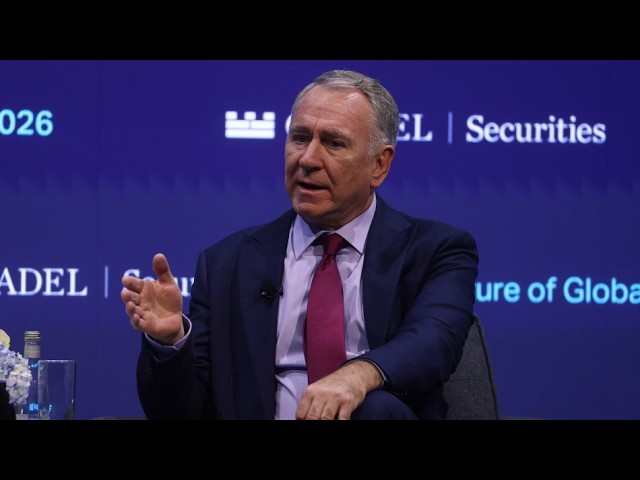
    In a surprise appearance at the 2026 World Economic Forum in Davos, Elon Musk sat down with BlackRock CEO Larry Fink to discuss the engineering challenges of the coming decade. The conversation laid out an aggressive timeline for AI, robotics, and the colonization of space, framed by Musk’s goal of maximizing the future of human consciousness.


    ⚡ TL;DR

    Elon Musk predicts AI will surpass individual human intelligence by the end of 2026 and collective human intelligence by 2030. To overcome Earth’s energy bottlenecks, he plans to move AI data centers into space within the next three years, utilizing orbital solar power and the cold vacuum for cooling. Additionally, Tesla’s humanoid robots are slated for public sale by late 2027.


    🚀 Key Takeaways

    • The Intelligence Explosion: AI is expected to be smarter than any single human by the end of 2026, and smarter than all of humanity combined by 2030 or 2031.
    • Orbital Compute: SpaceX aims to launch solar-powered AI data centers into space within 2–3 years to leverage 5x higher solar efficiency and natural cooling.
    • Robotics for the Public: Humanoid “Optimus” robots are currently in factory testing; public availability is targeted for the end of 2027.
    • Starship Reusability: SpaceX expects to prove full rocket reusability this year, which would decrease the cost of space access by 100x.
    • Solving Aging: Musk views aging as a “synchronizing clock” across cells that is likely a solvable problem, though he cautions against societal stagnation if people live too long.

    📝 Detailed Summary

    The discussion opened with a look at the massive compounded returns of Tesla and BlackRock, establishing the scale at which both leaders operate. Musk emphasized that his ventures—SpaceX, Tesla, and xAI—are focused on expanding the “light of consciousness” and ensuring civilization can survive major disasters by becoming multi-planetary.

    Musk identified electrical power as the primary bottleneck for AI. He noted that chip production is currently outpacing the grid’s ability to support them. His “no-brainer” solution is space-based AI. By moving data centers to orbit, companies can bypass terrestrial power constraints and weather cycles. He also highlighted China’s massive lead in solar deployment compared to the U.S., where high tariffs have slowed the transition.

    The conversation concluded with Musk’s “philosophy of curiosity.” He shared that his drive stems from wanting to understand the meaning of life and the nature of the universe. He remains an optimist, arguing that it is better to be an optimist and wrong than a pessimist and right.


    🧠 Thoughts

    The most striking part of this talk is the shift toward space as a practical infrastructure solution for AI, rather than just a destination for exploration. If SpaceX achieves full reusability this year, the economic barrier to launching heavy data centers disappears. We are moving from the era of “Internet in the cloud” to “Intelligence in the stars.” Musk’s timeline for AGI (Artificial General Intelligence) also feels increasingly urgent, putting immense pressure on global regulators to keep pace with engineering.

  • Ray Kurzweil 2026: AGI by 2029, Singularity by 2045, and the Merger of Human and AI Intelligence

    TL;DW (Too Long; Didn’t Watch)

    In a landmark interview on the Moonshots with Peter Diamandis podcast (January 2026), legendary futurist Ray Kurzweil discusses the accelerating path to the Singularity. He reaffirms his prediction of Artificial General Intelligence (AGI) by 2029 and the Singularity by 2045, where humans will merge with AI to become 1,000x smarter. Key discussions include reaching Longevity Escape Velocity by 2032, the emergence of “Computronium,” and the transition to a world where biological and digital intelligence are indistinguishable.


    Key Takeaways

    • Predictive Accuracy: Kurzweil maintains an 86% accuracy rate over 30 years, including his 1989 prediction for AGI in 2029.
    • The Singularity Definition: Defined as the point where we multiply our intelligence 1,000-fold by merging our biological brains with computational intelligence.
    • Longevity Escape Velocity (LEV): Predicted to occur by 2032. At this point, science will add more than one year to your remaining life expectancy for every year that passes.
    • The End of “Meat” Limitations: While biological bodies won’t necessarily disappear, they will be augmented by nanotechnology and 3D-printed/replaced organs within a decade or two.
    • Economic Liberation: Universal Basic Income (UBI) or its equivalent will be necessary by the 2030s as the link between labor and financial survival is severed.
    • Computronium: By 2045, we will be able to convert matter into “computronium,” the optimal form of matter for computation.

    Detailed Summary

    The Road to 2029 and 2045

    Ray Kurzweil emphasizes that the current pace of change is so rapid that a “one-year prediction” is now considered long-term. He stands firm on his timeline: AGI will be achieved by 2029. He distinguishes AGI from the Singularity (2045), explaining that while AGI represents human-level proficiency across all fields, the Singularity is the total merger with that intelligence. By then, we won’t be able to distinguish whether an idea originated from our biological neurons or our digital extensions.

    Longevity and Health Reversal

    One of the most exciting segments of the discussion centers on health. Kurzweil predicts we are only years away from being able to simulate human biology perfectly. This will allow for “billions of tests in a weekend,” leading to cures for cancer and heart disease. He personally utilizes advanced therapies to maintain “zero plaque” in his arteries, advising everyone to “stay healthy enough” to reach the early 2030s, when LEV becomes a reality.

    Digital Immortality and Avatars

    The conversation touches on “Plan D”—Cryonics—but Kurzweil prefers “Plan A”: staying alive. However, he is already working on digital twins. He mentions that by the end of 2026, he will have a functional AI avatar based on his 11 books and hundreds of articles. This avatar will eventually be able to conduct interviews and remember his life better than he can himself.

    The Future of Work and Society

    As AI handles the bulk of production, the concept of a “job” will shift from a survival necessity to a search for gratification. Kurzweil believes this will be a liberating transition for the 79% of employees who currently find no meaning in their work. He remains a “10 out of 10” on the optimism scale regarding humanity’s future.


    Analysis & Thoughts

    What makes this 2026 update so profound is that Kurzweil isn’t moving his goalposts. Despite the massive AI explosion of the mid-2020s, his 1989 predictions remain on track. The most striking takeaway is the shift from AI being an “external tool” to an “internal upgrade.” The ethical debates of today regarding “AI personhood” may soon become moot because we will be the AI.

    The concept of Computronium and disassembling matter to fuel intelligence suggests a future that is almost unrecognizable by today’s standards. If Kurzweil is even half right about 2032’s Longevity Escape Velocity, the current generation may be the last to face “natural” death as an inevitability.