Peloton, once a shining star in the fitness industry, has experienced a significant downturn, with its co-founder and CEO John Foley at the center of the narrative. Founded in 2012 by Foley, Peloton achieved rapid growth, particularly during the COVID-19 pandemic, as demand for at-home fitness solutions skyrocketed. This period marked the company’s transformation into a key industry player, reshaping home exercise norms.
However, Peloton’s success story took a turn under Foley’s leadership. The company faced substantial challenges, notably in supply chain management and product safety. The recall of a product following a tragic accident involving a child, coupled with shipping delays and pricing issues, marked the beginning of its decline. These operational hurdles were exacerbated as the pandemic eased and people started returning to gyms. Additionally, a series of public relations blunders further tarnished Peloton’s reputation and financial standing.
Foley’s leadership style and decisions have been under scrutiny. His choice to host an extravagant holiday party amid company-wide troubles was particularly controversial, raising doubts about his decision-making. His reluctance to consider selling the company and the complexity of Peloton’s product lines further compounded the challenges. Foley’s personal finances, deeply intertwined with Peloton’s stock, also suffered as the company’s shares plummeted.
In a strategic move, Peloton appointed Barry McCarthy, the former CFO of Netflix and Spotify, as its new CEO. Foley transitioned to the role of executive chairman, maintaining significant influence in the company’s decisions. This change was part of a larger strategy to revitalize and stabilize Peloton. Despite these efforts, the company’s market valuation and stock prices have drastically decreased from their peak, highlighting the depth of its challenges.
In summary, John Foley’s tenure at Peloton was marked by remarkable innovation and significant setbacks. His vision drove the company to new heights, but his later decisions and operational issues led to its difficulties. The leadership change and restructuring are aimed at addressing these challenges and steering Peloton towards recovery.
In the dynamic landscape of animation and design, keeping abreast of the latest tools and technologies is paramount. Rive and Adobe Animate (formerly Flash) stand out as two popular choices for crafting captivating animations and interactive content. This article delves into the nuances of these platforms, comparing their features, usability, and suitability for different project types.
The Evolution from Flash to Adobe Animate
Adobe Animate, the rebranded version of the once ubiquitous Flash, revolutionized web animation. It enabled designers to craft interactive content and animations integral to websites and games. However, its dependence on a proprietary plugin and non-compliance with evolving web standards led to a gradual decline in its popularity.
Rive: Embracing Modern Web Standards
Rive emerges as a contemporary tool for animation and design, prioritizing compatibility with modern web standards. It facilitates the creation of captivating animations and interactive content, exportable to a multitude of platforms, including web, Android, iOS, and others. Rive’s commitment to web standards and multi-platform optimization positions it as a formidable tool for today’s designers.
Comparative Analysis: Rive vs Adobe Animate
Technology: Adobe Animate operates on a proprietary plugin system, whereas Rive is engineered with contemporary web standards, offering greater versatility and efficiency.
Compatibility: Adobe Animate faces limitations in supporting modern web standards and is incompatible with many mobile devices. Rive is crafted for seamless functionality across diverse platforms.
Features: Rive boasts advanced features like real-time collaboration, a domain where Adobe Animate falls short.
Learning Curve: Rive’s user-friendly interface and workflow cater to beginners, simplifying the learning process compared to Adobe Animate.
Choosing the Right Tool for Your Needs
Both Rive and Adobe Animate have their distinct advantages and limitations. The optimal choice hinges on specific project requirements and user preferences. Rive is an excellent choice for modern, versatile tool requirements, aligning with web standards. Conversely, Adobe Animate might appeal to users familiar with its interface and specific features. Understanding these tools’ capabilities enables designers to make informed decisions, ensuring their projects resonate with the intended audience and leverage the latest in animation technology.
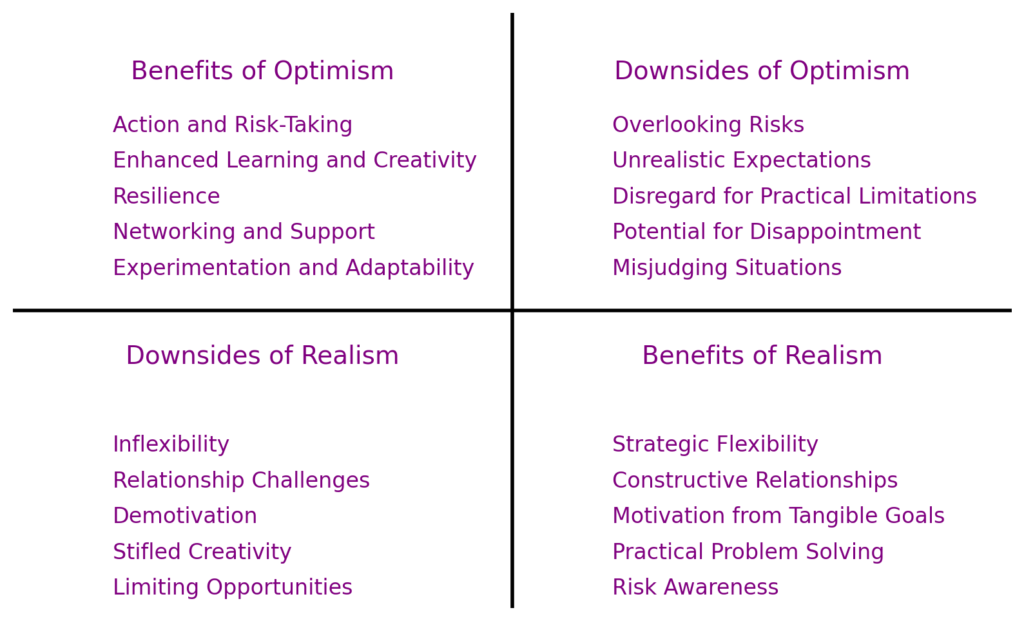
1. Action and Risk-Taking: Optimists often dive into projects with enthusiasm, willing to take risks that might intimidate others. This bold approach can lead to significant breakthroughs and innovations.
2. Enhanced Learning and Creativity: Optimism fuels a positive mindset that is conducive to learning and creativity. Optimists are more likely to engage in creative problem-solving, seeing potential where others might see dead-ends.
3. Resilience: Optimism is a key component of resilience. It allows individuals to bounce back from setbacks and maintain a positive outlook, even in the face of adversity.
4. Networking and Support: Optimists tend to attract a network of supportive and like-minded individuals. This positive energy not only fosters personal growth but also creates a support system that can be crucial in challenging times.
5. Experimentation and Adaptability: An optimistic disposition encourages experimentation and adaptability. Optimists are more likely to try new things and adapt to changes, viewing them as opportunities rather than threats.
Downsides of Realism
1. Limiting Opportunities: Realists might miss out on opportunities due to their focus on practicalities and limitations. This perspective can sometimes prevent them from taking chances that could lead to significant gains.
2. Stifled Creativity: A realistic viewpoint might inhibit creativity. By focusing too much on what is practical or probable, realists may overlook innovative solutions.
3. Demotivation: Realism can lead to demotivation, especially if the focus is constantly on the hurdles or the less-than-ideal aspects of a situation.
4. Relationship Challenges: Realists might face challenges in relationships, particularly with more optimistic counterparts, due to their pragmatic and sometimes pessimistic outlook.
5. Inflexibility: A strong focus on realism can result in inflexibility, as adapting to new or unforeseen circumstances may be more difficult for those who are deeply rooted in practical realities.
Downsides of Optimism
1. Overlooking Risks: Optimists might overlook or underestimate risks, leading to decisions that are not well-informed or prepared for potential challenges.
2. Unrealistic Expectations: Excessive optimism can foster unrealistic expectations, setting one up for disappointment if things do not pan out as hoped.
3. Disregard for Practical Limitations: Optimists may sometimes disregard practical limitations, leading to overcommitment or the pursuit of unfeasible goals.
4. Potential for Disappointment: High expectations fueled by optimism can lead to disappointment if outcomes do not match the optimistic projections.
5. Misjudging Situations: A highly optimistic outlook can sometimes lead to misjudging situations, underestimating difficulties, or failing to plan adequately for possible setbacks.
Benefits of Realism
1. Risk Awareness: Realists are typically more aware of risks, allowing for better preparedness and contingency planning.
2. Practical Problem Solving: A realistic approach fosters practical problem-solving skills. Realists tend to focus on tangible solutions that are feasible and grounded in reality.
3. Motivation from Tangible Goals: Realists are often motivated by tangible, achievable goals. This focus on realistic objectives can drive consistent progress and achievement.
4. Constructive Relationships: Realism can lead to more constructive relationships, particularly in professional settings, as realists tend to set clear, achievable expectations.
5. Strategic Flexibility: Realism does not necessarily mean rigidity. In fact, a realistic outlook can foster strategic flexibility, allowing individuals to adjust plans and strategies based on practical assessments of changing circumstances.
Both optimism and realism have their distinct advantages and disadvantages. Striking a balance between the two can lead to a more well-rounded approach to life and decision-making, combining the best of both worlds: the hope and drive of optimism with the groundedness and practicality of realism.
INVERT:
Charlie Munger, the renowned investor and vice chairman of Berkshire Hathaway, is well-known for his concept of “inversion,” a problem-solving strategy. Inversion involves approaching a problem backward or from the opposite end of the traditional starting point. It’s about looking at what you want to avoid and then figuring out how to avoid it. This concept can be applied to the balance between optimism and realism, particularly in decision-making and strategic planning.
Applying Inversion to Optimism and Realism
For the Overly Optimistic:
Inversion Focus: Instead of focusing on what could go right, they should consider what could go wrong. This helps in identifying potential pitfalls and risks they might typically overlook.
Risk Management: By considering the worst-case scenarios, optimists can create contingency plans, thus grounding their optimism with a dose of realism.
Setting Realistic Goals: By inverting their tendency to set overly ambitious goals, they can aim for targets that are challenging yet achievable, reducing potential disappointment.
For the Overly Realistic:
Inversion Focus: Instead of constantly looking at the limitations and risks, they should contemplate what opportunities might be missed by being too cautious.
Encouraging Creativity: By considering the best-case scenarios, realists can open themselves up to more creative and innovative solutions, breaking free from the confines of their usual pragmatism.
Expanding Comfort Zones: Inverting their focus on practicality can lead to taking calculated risks, potentially leading to greater rewards.
Practical Steps for Inversion
Reflection and Self-Awareness: Acknowledge your natural inclination towards either optimism or realism. Self-awareness is key in understanding how to apply inversion.
Seeking Alternative Perspectives: Engage with individuals who hold a different outlook. For optimists, this means consulting with more pragmatic individuals, and vice versa for realists.
Scenario Analysis: Actively practice thinking through both positive and negative outcomes of any given situation. For optimists, emphasize the negative outcomes more, and for realists, the positive ones.
Balance in Decision Making: Strive for decisions that incorporate both the hopefulness of optimism and the groundedness of realism. This might mean tempering high expectations with practical considerations or infusing a realistic plan with a bit more ambition and vision.
In essence, Munger’s inversion idea, when applied to the dichotomy of optimism and realism, encourages individuals to step outside their comfort zones and adopt a more balanced, comprehensive approach to thinking and problem-solving. This can lead to more robust, well-rounded decisions and strategies, both in personal and professional contexts.
In a riveting interview, Sam Altman, CEO of OpenAI, robustly addresses Elon Musk’s criticisms, discusses the challenges of AI development, and shares his vision for OpenAI’s future. From personal leadership lessons to the role of AI in democracy, Altman provides an insightful perspective on the evolving landscape of artificial intelligence.
Sam Altman, the dynamic CEO of OpenAI, recently gave an interview that has resonated throughout the tech world. Notably, he offered a pointed response to Elon Musk’s critique, defending OpenAI’s mission and its strides in artificial intelligence (AI). This conversation spanned a wide array of topics, from personal leadership experiences to the societal implications of AI.
Altman’s candid reflections on the rapid growth of OpenAI underscored the journey from a budding research lab to a technology powerhouse. He acknowledged the challenges and stresses associated with developing superintelligence, shedding light on the company’s internal dynamics and his approach to team building and mentorship. Despite various obstacles, Altman demonstrated pride in his team’s ability to navigate the company’s evolution efficiently.
In a significant highlight of the interview, Altman addressed Elon Musk’s critique head-on. He articulated a firm stance on OpenAI’s independence and its commitment to democratizing AI, contrary to Musk’s views on the company being profit-driven. This response has sparked widespread discussion in the tech community, illustrating the complexities and controversies surrounding AI development.
The conversation also ventured into the competition in AI, notably with Google’s Gemini Ultra. Altman welcomed this rivalry as a catalyst for advancement in the field, expressing eagerness to see the innovations it brings.
On a personal front, Altman delved into the impact of his Jewish identity and the alarming rise of online anti-Semitism. His insights extended to concerns about AI’s potential role in spreading disinformation and influencing democratic processes, particularly in the context of elections.
Looking forward, Altman shared his optimistic vision for Artificial General Intelligence (AGI), envisioning a future where AGI ushers in an era of increased intelligence and energy abundance. He also speculated on AI’s positive impact on media, foreseeing an enhancement in information quality and trust.
The interview concluded on a lighter note, with Altman humorously revealing his favorite Taylor Swift song, “Wildest Dreams,” adding a touch of levity to the profound discussion.
Sam Altman’s interview was a compelling mix of professional insights, personal reflections, and candid responses to critiques, particularly from Elon Musk. It offered a multifaceted view of AI’s challenges, OpenAI’s trajectory, and the future of technology’s role in society.