
PJFP.com

Pursuit of Joy, Fulfillment, and Purpose

Day: November 15, 2024

  • ChatGPT Desktop Apps Now Supercharge Workflow on Mac and Windows

    ChatGPT Desktop Apps Now Supercharge Workflow on Mac and Windows

    OpenAI has announced significant updates for its ChatGPT desktop apps on macOS and Windows, cementing the AI’s role as an essential tool for developers and casual users alike. From seamless app integration on macOS to broader accessibility on Windows, these enhancements are designed to improve productivity and usability for a wide audience.

    MacOS: “Work with Apps” Enhances Developer Workflows

    The macOS ChatGPT app introduces “Work with Apps,” a groundbreaking feature that allows direct interaction with popular developer tools like VS Code, Xcode, TextEdit, Terminal, and iTerm2. By leveraging macOS’s Accessibility API, ChatGPT can read and analyze code directly from these applications, providing context-aware assistance without the need for copy-pasting.

    Key highlights:

    Contextual Code Assistance: Analyze the last 200 lines of code or visible content in supported apps.

    Extension Support: VS Code requires an additional extension for sharing content.

    Refined Input: Users can highlight specific sections of code for focused feedback.

    Though powerful, this feature is text-only and cannot interpret visual elements like images or videos. It’s currently available for Plus and Teams subscribers, with plans to expand to Enterprise and Edu accounts.

    Windows: Free Users Gain Access to ChatGPT App

    Meanwhile, Windows users can now download the ChatGPT desktop app from the Microsoft Store for free. Previously restricted to paid subscribers, the app is now available to all users, providing access to ChatGPT’s popular conversation mode and text processing capabilities.

    Key features of the Windows app:

    Conversation Mode: Includes multiple voice options for audio input.

    Image Input: Users can upload images for analysis.

    Limitations for Free Users: Interaction limits still apply for non-premium accounts.

    For those who subscribe to ChatGPT Plus ($20/month), the dedicated app enhances workflows by offering faster processing and integration with desktop environments.

    Why These Updates Matter

    These updates mark a significant shift in OpenAI’s strategy to make ChatGPT accessible and indispensable across platforms:

    Mac Users: Developers benefit from seamless app integration, improving coding workflows.

    Windows Users: Free access expands ChatGPT’s user base, making AI tools available to more individuals.

    In contrast to Microsoft’s Copilot, which is tightly integrated into Windows features like the taskbar and Office suite, ChatGPT offers a broader appeal, particularly for general users and developers.

    Looking Ahead

    OpenAI’s advancements come as the company prepares for the anticipated release of its general-purpose AI agent, “Operator,” expected in early 2025. While macOS users enjoy advanced integrations now, Windows users may have to wait for similar features, signaling OpenAI’s focus on a staggered platform strategy.

    With Apple also planning ChatGPT integration by December 2024, the competition among AI tools is heating up. These updates position ChatGPT as a leader in enhancing productivity, whether you’re coding on macOS or exploring AI tools for the first time on Windows.

  • How Netflix Handles Oceans of Bandwidth for Live Events Like Paul vs. Tyson

    How Netflix Handles Oceans of Bandwidth for Live Events Like Paul vs. Tyson

    Streaming giants face monumental challenges when delivering high-profile live events to millions worldwide, and Netflix is no exception. As the Jake Paul vs. Mike Tyson fight approaches—a historic first for live boxing on Netflix—questions arise: How will Netflix manage the tidal wave of internet traffic? The answer lies in their advanced technology stack, specifically their Open Connect CDN and innovative backend architecture.

    What is Open Connect? Netflix’s Secret Weapon for Bandwidth

    Netflix’s proprietary Open Connect Content Delivery Network (CDN) is the backbone of its streaming success. Built in 2012, Open Connect redefined video delivery by placing specialized servers, called Open Connect Appliances (OCAs), within Internet Service Providers’ (ISP) networks. These servers store Netflix content locally, dramatically reducing latency and minimizing the strain on public internet infrastructure.

    For live events, Open Connect ensures streams flow seamlessly by leveraging:

    • Direct Connections with ISPs: Netflix collaborates directly with ISPs, ensuring that data doesn’t have to travel across the public internet, cutting down on lag and improving reliability.
    • Localized Data Caching: OCAs pre-store and deliver content efficiently, even during peak demand.
    • Smart Load Balancing: By strategically routing traffic, Open Connect ensures stable streams for millions of viewers, even when demand spikes.

    This architecture is key to handling the “oceans of bandwidth” needed for events like Jake Paul vs. Mike Tyson, streamed live in multiple languages to millions of homes.

    Live Streaming: A Unique Challenge for Netflix

    Unlike traditional on-demand content, live events demand real-time, low-latency delivery. For the Paul vs. Tyson fight, Netflix is adapting its platform to provide the reliability and speed associated with dedicated live-streaming services. Key strategies include:

    1. Dynamic Scalability: Netflix’s backend, built on a microservices architecture, allows rapid scaling of specific components (e.g., authentication, video delivery) to handle unpredictable surges.
    2. Redundant Streaming Paths: Netflix ensures uninterrupted delivery by creating redundant pathways for live video streams, mitigating risks of outages.
    3. Multi-Region Streaming: With data centers and OCAs distributed globally, Netflix can deliver content from the nearest possible location, reducing buffering and improving quality.

    How Netflix Prepares for the Paul vs. Tyson Event

    Netflix’s preparation for this live boxing event involves months of optimization and collaboration. Here’s how they’re gearing up:

    • Bandwidth Forecasting: Analyzing expected viewership data to allocate resources effectively.
    • Performance Stress Tests: Running simulations to identify weak points and ensure systems can handle real-world loads.
    • Real-Time Monitoring: Leveraging AI-driven monitoring tools to detect and resolve issues in milliseconds.

    Why Open Connect is a Game-Changer for Live Streaming

    Netflix’s Open Connect CDN doesn’t just support on-demand streaming; it’s evolving to tackle live content as well. This gives Netflix a competitive edge, combining its massive global reach with unparalleled stream quality. Open Connect’s unique ability to localize content reduces the burden on the public internet, delivering crystal-clear video streams even for events with massive concurrent viewers.

    What It Means for Viewers

    For fans tuning in to the Jake Paul vs. Mike Tyson showdown, Netflix’s cutting-edge infrastructure means:

    • Buffer-Free Streaming: Enjoy uninterrupted, high-definition streams without annoying lag.
    • Global Accessibility: Seamless streaming, no matter where you are in the world.
    • Event Reliability: Confidence that the stream won’t crash during a pivotal moment in the fight.

    A Blueprint for the Future of Live Streaming

    The Jake Paul vs. Mike Tyson fight marks a new era for Netflix and live sports entertainment. With Open Connect and an adaptable backend architecture, Netflix is poised to deliver one of the most-watched boxing matches in history without missing a beat.

    As live-streaming becomes a growing focus for platforms like Netflix, the strategies used for this event may very well set the standard for bandwidth management in the future of digital entertainment. Prepare to witness more than a legendary fight—watch the evolution of streaming technology in action.

  • TikTok’s Digital Slot Machine: How the Algorithm Baits, Traps, and Sells Your Attention

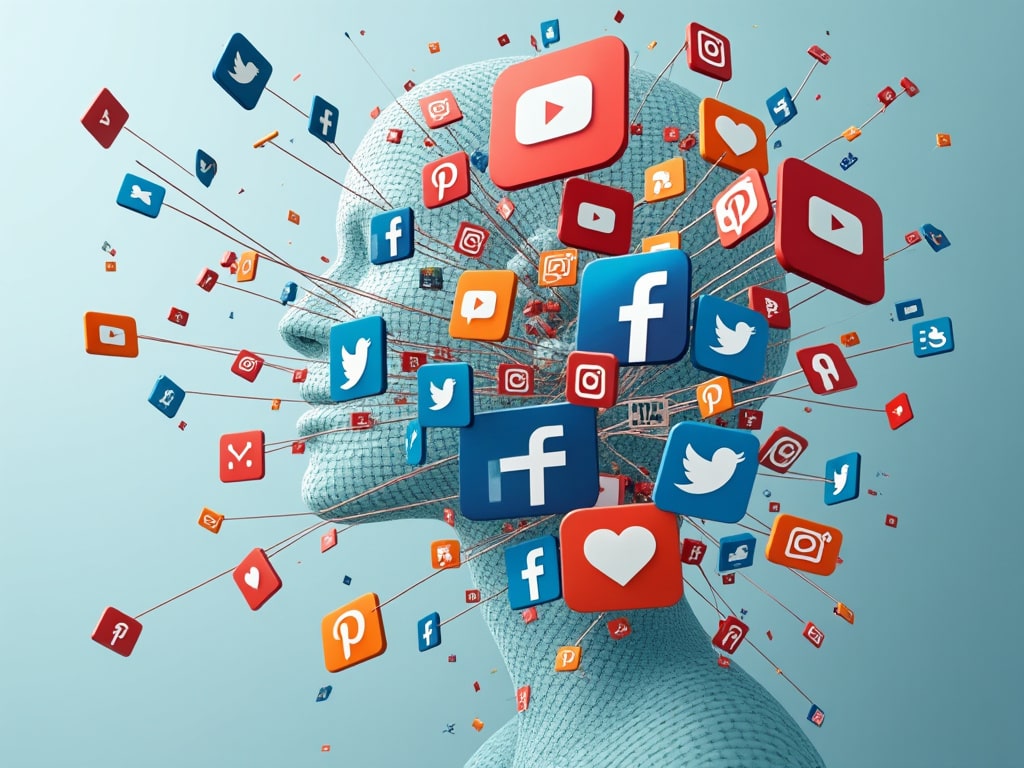
    TikTok’s Digital Slot Machine: How the Algorithm Baits, Traps, and Sells Your Attention

    Imagine TikTok as an endless, neon-lit casino. There’s no clock on the wall, no last call, no sense of day or night—just an infinite aisle of digital slot machines tuned perfectly to your desires. This isn’t just an app; it’s a behavioral experiment engineered to catch your eye and keep it there. Every scroll, every like, every glance is data. TikTok knows you better than you’d like to believe, and it’s ready to use that knowledge to exploit your attention for one simple purpose: profit.

    The magic trick here is a classic in computer science, dressed up in new clothes: the multi-armed bandit problem. Normally, it’s just a statistical problem, a math exercise for testing strategies. But when TikTok got hold of it, the problem transformed into something deeply lucrative—and borderline dystopian. In TikTok’s world, each piece of content you encounter is an arm of the bandit, and every one of your actions is a pull on the handle. You’re not there to win; you’re there to feed a machine that’s already won before you ever walked through its virtual doors.

    Baiting the Hook: A Digital Experiment in Exploitation

    Let’s get one thing straight: TikTok’s algorithm isn’t here to entertain you. Entertainment is just the cheese in the mousetrap. What the algorithm is really doing is playing a calculated game of behavioral conditioning. By continually balancing exploration (testing new content to see if you bite) with exploitation (doubling down on content you’ve shown interest in), it perfects a routine that keeps you scrolling for hours.

    The algorithm is relentless. It’s not just curating content; it’s creating a behavioral profile of you with an almost clinical precision. It knows when you linger a few seconds longer on a video, when you rewatch a loop, when you break your scrolling trance to tap that heart. It knows, because every one of those tiny, fragmented behaviors is recorded, filed, and fed back into a system designed not to engage, but to exploit.

    Infinite Scroll, Infinite Profit

    The real kicker is TikTok’s true endgame: converting your attention into cold, hard cash. TikTok doesn’t care if you love what you’re watching or hate it. What matters is that you’re there, engaged, scrolling like a rat in a lab experiment pressing a lever. This engagement isn’t some happy accident; it’s the result of a meticulously designed cycle of content that blurs the line between watching and wanting. Every moment you spend on TikTok isn’t just a pleasant distraction; it’s a unit of attention sold to advertisers, measured down to the last nanosecond.

    TikTok doesn’t just want to know you; it wants to own you. It doesn’t want a passing interest—it wants a dependency. It cultivates that dependency with micro-doses of novelty (thanks to the multi-armed bandit approach) that stimulate the brain’s reward centers. This isn’t entertainment; this is algorithmic seduction, and it’s happening on an industrial scale.

    How TikTok Sells You Back to Yourself

    But here’s the twist: the data you generate while being mesmerized by that never-ending feed is more valuable than the time you’re spending on the app. TikTok’s real product isn’t the video or the trend; it’s you. It’s the digital map of your attention, your preferences, your weak spots. That’s the commodity. TikTok is harvesting it, packaging it, and selling it back to you in the form of personalized ads, perfectly tailored to slip by your defenses because they’re so seamlessly embedded in the endless stream.

    And this feedback loop of attention isn’t just some benign personalization feature. It’s a revenue engine with a ruthless focus: maximizing every millisecond you spend, every reaction you give. Ads are crafted to appear as natural extensions of content, blurring the line so thoroughly that you might not even realize when you’ve slipped into consuming ads. TikTok’s algorithm is optimized not for your satisfaction but for extracting every drop of engagement it can squeeze from you.

    The Ultimate Attention Economy Trap

    TikTok’s multi-armed bandit algorithm isn’t some theoretical exercise. It’s the most sophisticated attention trap ever built, honed to keep you coming back like an addict to a slot machine. It doesn’t matter if you’re 12 years old or 50; it will work tirelessly to find your personal vulnerabilities and exploit them. It will study you, shape you, bend you to its needs, until every moment you spend on the app is another hit in a carefully calibrated sequence designed to keep you hooked.

    The app’s brilliance, if you can call it that, is in its ability to make this manipulation feel like entertainment, like choice. But look closer, and you’ll see the machinery whirring underneath—the gears of a massive, data-driven casino, where your time, your attention, your very brain chemistry are assets to be mined, monetized, and eventually discarded.

    In the end, TikTok doesn’t just want a share of your time; it wants to control it. It doesn’t want to entertain you; it wants to own you. And the scariest part is, it’s succeeding.