PJFP.com

Pursuit of Joy, Fulfillment, and Purpose

Category: finance

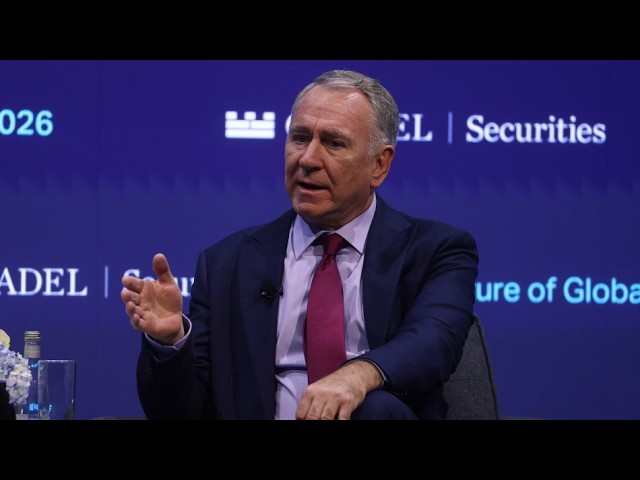
  • Howard Marks on Why Most Investors Lose, the AI Bubble, India, and the Hunt for the $10 Bill Nobody Picked Up

    TLDW

    Howard Marks, co-founder of Oaktree Capital and the author of the memos every serious investor reads first, sat down with Nikhil Kamath for a wide-ranging conversation on his 50+ year career, the philosophy of Mujo (the inevitability of change), why he chose bonds over stocks, the difference between drifting down the river and seeing it, where we sit in the current cycle, AI as both threat and opportunity, why active management lost to indexation, and why the only way to outperform in a world full of smart, motivated, computer-literate competitors is “superior insight.” His core message: investing is a puzzle that cannot be solved by formula, and the only edge that lasts is being more right than the other person, more often, with the discipline to stay calm when everyone else is panicking or partying.

    Key Takeaways

    • Mujo is the operating system. Marks took Japanese literature at Wharton and walked away with one idea that shaped his whole career: change is inevitable, unpredictable, and uncontrollable. You cannot predict the future, but you can prepare for it.
    • Cycles are excesses and corrections, not ups and downs. The S&P 500 has averaged about 10% per year for 100 years, but it is almost never between 8% and 12% in any given year. The norm is not the average. Greed and fear push the pendulum past equilibrium every time.
    • The recovery is two years older. When asked where we are in the cycle, Marks notes the bull market continued from April 2024 through January 2026, so by definition we are deeper into the cycle, with a recovery distorted by the unique man-made COVID recession.
    • Drifting versus seeing the river. Marks describes the first 35 years of his career (roughly age 14 to 49) as drifting. Starting Oaktree in 1995 was the first truly intentional decision he made. Entrepreneurship forced proactivity on him.
    • Why bonds over equities. The contractual, predictable nature of debt suited his conservative temperament (his parents were adults during the Depression). He was not voluntarily moved to bonds in 1978; a boss reassigned him just in time for the birth of the high-yield bond market.
    • Distressed debt is the bigger story. Bruce Karsh joined in 1987 and has run roughly $70 billion in distressed debt since 1988, with profits well over 90% of the total profit and loss.
    • Excess return is getting paid more than the risk warrants. If the market thinks a borrower has a 5% default probability and you correctly conclude it is 2%, you collect interest priced for 5% risk while taking 2% risk. That gap is the alpha.
    • Oaktree’s default rate is about a third of the market. Over 40 years, roughly 3.6% to 3.7% of high-yield bonds default each year. Oaktree’s rate is roughly one-third of that, achieved through process discipline, institutional memory, and analysts who stay analysts for life.
    • If you are starting a career today, understand AI. Marks says the investor who will make the most money over the next 10 years is the one who best understands AI and its capabilities, whether they bet for or against it.
    • AI is excellent at pattern matching, but cannot create new patterns. Can AI pick the Amazon out of five business plans? The Steve Jobs out of five CEOs? Marks bets no. Most humans cannot either, which means there is still a role for exceptional people.
    • Indexation won because active management lost. Passive did not become dominant because it is brilliant. It dominated because most active managers failed and charged high fees for the privilege.
    • Bad times create openings for active managers, but most cannot take them. Panic drives prices down, but the same panic prevents most investors from buying. Wally Deemer: when the time comes to buy, you will not want to.
    • The job is simple but not easy. Find the best managers, the best companies, the best ideas. Charlie Munger told Marks: anyone who thinks it is easy is stupid.
    • Where is the $10 bill nobody picked up? Marks thinks it is around AI, but only for those with insight above the average. If you are average and you crowd into AI, you get average results in a bull case and worse in a bear case.
    • Quantitative information about the present cannot produce alpha. Andrew Marks (howards son) pointed this out to his father during the COVID lockdown. Everyone has the same data. Outperformance has to come from somewhere else.
    • Buffett’s edge was reading Moody’s Manuals when nobody else would. The pre-internet research process favored those willing to do tedious work alone. The format of the edge changes; the fact that edge requires doing what others will not, does not.
    • You cannot coach height. Marks can tell you that second-level thinking, contrarian insight, and the ability to evolve at 80 are essential. He cannot tell you how to acquire any of them.
    • India: Marks declines to opine. He has deployed roughly $4 billion in India but refuses to claim expertise on the Indian stock market or recommend a sector.
    • History rhymes. Marks credits Mark Twain. The lessons that repeat are lessons of human nature, which changes incredibly slowly.
    • Investing is a puzzle, not dentistry. Quoting Taleb, Marks observes that engineers and dentists succeed by repeating the right answer. Investors face a problem with no certain solution. If you need to be right every time, do not become an investor.

    Detailed Summary

    From Queens to Wharton: The Accidental Investor

    Howard Marks grew up in Queens, New York, in a middle-class family. Neither of his parents went to college, but his father was an intelligent accountant. Marks discovered accounting in high school, fell in love with its orderliness, and chose Wharton because he was told it was the best undergraduate business school in America. Wharton required a literature class in a foreign country and a non-business minor. For reasons he no longer remembers, Marks chose Japanese studies, then took Japanese civilization and Japanese art. He calls it the most important academic decision of his life because of one concept he encountered: Mujo.

    Mujo, Independence of Events, and Why You Cannot Predict

    Mujo, the turning of the wheel of the law, teaches that change is inevitable, unpredictable, and uncontrollable, and that humans must accommodate it rather than try to control it. Marks pairs this with his deep belief in the independence of events: ten heads in a row do not change the odds on flip eleven. Roughly 20 years ago he wrote a memo titled “You Can’t Predict. You Can Prepare.” A portfolio cannot be optimized for both extreme upside and extreme downside, but it can be built to perform respectably across many possible futures, if you suboptimize for the middle of the probability distribution.

    Why Cycles Exist

    If GDP averages 2% growth, why is it never simply 2%? Marks’s answer is excesses and corrections. Optimism leads producers to overbuild and consumers to overspend, growth runs above trend, then satiation and oversupply pull it back below trend. The S&P 500 averages 10% per year over a century, but the return in any given year is almost never between 8% and 12%. The norm is not the average because human beings are not average; they are alternately greedy and fearful.

    Where Are We Now?

    Two years ago Marks told the Norwegian Sovereign Wealth Fund’s Nicolai Tangen that we were near the middle of the cycle. Two years later, the bull market in stocks continued through January 2026, so by simple math the recovery is older. The COVID recession was a man-made anomaly: one quarter of negative growth followed by the best quarter in history, triggered by a deliberate global shutdown rather than by accumulated excess. That distorts every traditional cycle metric.

    Drifting Versus Seeing the River

    One of the most personal moments in the conversation is Marks’s confession that he drifted for the first 35 years of his career. He did not pick his career, his first job, or his transition from equities to bonds in any deliberate way. Other people pushed him; he said yes. The first proactive decision of his life was co-founding Oaktree in 1995 at age 49, and even that came largely because his wife and his partner Bruce Karsh pushed him into it. Once he had to lead, he had to be intentional. Leadership cannot be passive.

    The Bond Decision

    Marks did not choose bonds; bonds chose him. In May 1978 his boss at Citibank moved him to the bond department to start a convertible fund. Three months later another phone call asked him to figure out something called high-yield bonds being run by a guy in California named Milken. Marks said yes both times. He arrived at the front of the line for high-yield in 1978 and has been there for 48 years.

    The conservative temperament fit. Marks’s parents were adults during the Depression, so he grew up hearing “don’t put all your eggs in one basket” and “save for a rainy day.” Bonds offered contractual, predictable returns. The phrase “junk bonds” was a bias that made the asset class cheaply available to anyone willing to do the analytical work.

    Distressed Debt and Excess Return

    When Bruce Karsh joined in 1987, Oaktree launched what Marks believes was the first distressed debt fund from a mainstream institution. Karsh has managed about $70 billion since 1988 with well over 90% of the total being profit. The core skill is predicting default probability better than the market. If consensus prices a borrower at a 5% default risk and you correctly assess 2%, the interest you receive is overpaid relative to actual risk. Marks calls this “excess return” and credits Mike Milken with the foundational insight: lend to borrowers others will not, demand interest beyond what compensates you, and the math works.

    Over 40 years, roughly 3.6% to 3.7% of high-yield bonds default annually on average. Oaktree’s default rate has been roughly one-third of that. Marks credits institutional culture (analysts who stay analysts for life), psychological stability in volatile periods, and a process that forces every analyst to ask the same eight questions of every company every time. In equity research, you can buy a stock for great management without examining the product, or for a great product without examining the management. In Oaktree’s bond process, you cover every base every time.

    Beginning a Career Today: The AI Question

    Asked what he would do today, Marks says the front of the line is AI. The investor who will succeed most over the next decade is the one who best understands AI, whether they bet for or against it. He notes that he was shocked by his own experience using Claude, but adds that he has not fired a single person and does not intend to.

    His view: AI excels at extracting patterns from history and applying them with discipline and without psychological wobble. But investing also requires creating new patterns. Can AI sit with five business plans and identify the future Amazon? Can it sit with five CEOs and pick Steve Jobs? Marks bets not. Then he adds the killer line: most humans cannot either. Which means the role for exceptional humans survives, but the bar gets higher.

    Why Indexation Won

    When Marks went to graduate school at the University of Chicago in 1968, his professor pointed out that most mutual funds underperformed the S&P after fees. Index funds did not exist yet; Jack Bogle launched the first one in 1974. Today, most equity mutual fund capital is passive. Marks’s controversial take: indexation did not win because it is great. It won because active management was so bad and so expensive. Even at equal fees, if active decisions are inferior, passive wins.

    Bad times create openings for active managers because panic drives prices down, but the same panic prevents most people from buying. Marks quotes the old trader Wally Deemer: when the time comes to buy, you will not want to. The advantage of an AI nudge that says “this is one of those moments, get your ass in gear and buy something” might genuinely add value, because it removes the emotion.

    Second-Level Thinking and Why You Cannot Coach It

    Marks’s first book, The Most Important Thing, has 21 chapters, each titled “The Most Important Thing Is…” Each one is different because so many things matter. The chapter on second-level thinking came to him spontaneously while writing a sample chapter for Columbia University Press. The argument is simple: if you think like everyone else, you act like everyone else, and you get the same results. To outperform, you must deviate from the herd and be more right than the herd. Different is not enough. Different and better is the bar.

    Can AI become a contrarian thinker? You can prompt Claude to give you only non-consensus answers, but the catch is that consensus is often close to right because the people building consensus are intelligent, educated, computer-literate, and motivated. Forcing non-consensus often forces wrong. The real edge is being non-consensus AND correct, which is a much narrower target.

    The $10 Bill That Nobody Has Picked Up

    Marks references the joke about the efficient market hypothesis: there is no $10 bill on the sidewalk because if there were, somebody would have already picked it up. He then concedes that the bill is probably around AI today, but only for those whose insight rises above the average. If you are average and you crowd into AI, you go along with the tide if it works and get crushed if it does not. Quoting Garrison Keillor’s Lake Wobegon, “where all the children are above average,” Marks notes that the math does not allow it. Most investors will not be above average, and acknowledging that is the first step toward becoming one of the few who are.

    Learning From Andrew, Buffett, and Onion-Skin Manuals

    Marks lived with his son Andrew during COVID and wrote a memo about it called “Something of Value” in January 2021. Andrew’s most important contribution was a near-revelation: readily available quantitative information about the present cannot be the source of investment alpha because everyone has it. Buffett’s edge in the 1950s was reading Moody’s Manuals (giant books printed on onion-skin paper with tiny type and zero narrative) when nobody else would. The medium changes; the principle that edge requires doing what others will not, does not.

    India

    Kamath asks Marks directly about India. Marks has deployed roughly $4 billion there but politely declines to claim any expertise on the Indian stock market or recommend a sector. He cautions Kamath about taking advice from people who do not know what they are talking about, and includes himself in that category on the question of India. The honesty is striking and is itself an investment lesson.

    History Rhymes, and Final Advice

    Marks reads Andrew Ross Sorkin’s 1929 and references it in an upcoming memo on private credit. He likes Mark Twain’s reputed line that history does not repeat but it rhymes, and Napoleon’s line that history is written by the winners of tomorrow. The lessons that rhyme are lessons of human nature, which evolves incredibly slowly. Fight or flight from the watering hole still drives behavior in financial markets.

    His final advice: investing is a puzzle, not engineering. A civil engineer calculates steel and concrete, builds the bridge, and the bridge stands. Every time. A dentist fills the cavity correctly and it stays filled. Every time. If you need that kind of reliability in your work, become a dentist. Investing is the act of positioning capital for a future that cannot be predicted accurately. You will be wrong sometimes. If something in your makeup cannot tolerate being wrong sometimes, do not become an investor. The puzzle has no final solution, which is exactly what makes it endlessly interesting.

    Thoughts

    The most useful thing Marks does in this conversation is admit, repeatedly and without ego, what he does not know. He does not know whether AI models differ in real intelligence. He does not know which sector in India to bet on. He does not know how to teach second-level thinking. He drifted for 35 years and only began making intentional decisions at 49. This honesty is the inverse of every guru selling certainty, and it is the actual content of the lesson he is trying to convey: epistemic humility is the precondition for superior insight, because you cannot acquire what you already think you have.

    The deepest insight in the conversation might be the one Andrew Marks (Howard’s son) gave his father during COVID: readily available quantitative information about the present cannot produce alpha because everyone has it. This is devastating in the AI era. If everyone is asking the same large language model the same question, the answers converge, and convergence is consensus, and consensus does not pay. The arms race for proprietary data, novel framings, and unconventional questions is the only thing that can break the convergence.

    Marks’s framing of cycles as excesses and corrections rather than ups and downs is genuinely useful. It reframes volatility from something to fear into something to expect, and reframes the question from “where are we going?” to “how far past trend have we already gone?” The 8 to 12 percent observation about the S&P (that the average return is almost never the actual return) is the kind of fact that should be taught in every introductory finance class but is almost never mentioned.

    The most contrarian claim in the conversation is the one about indexation: that it won because active was bad, not because passive is great. This is a useful inversion. Most defenders of passive investing argue from efficient market theory; Marks argues from the empirical failure of active managers. The implication is that if you can find the small population of active managers who genuinely outperform, the indexation argument falls apart for that subset. Most cannot. The hardest job in investing is the meta-job of identifying the few who can.

    The exchange about AI as a contrarian engine is one of the most clarifying short discussions of AI’s investment limits I have read. Different from consensus is easy. Different and better is the actual goal. Forcing different gets you wrong more often than right because consensus, built by smart, motivated, educated competitors, is usually close to correct. This is why “use AI to find non-consensus ideas” is a worse strategy than it sounds.

    Finally, the Buffett-Moody’s-Manual story is the most quietly profound moment in the interview. The edge in 1955 was the willingness to read tiny type on onion-skin paper alone in an office in Omaha when no one else would. The edge in 2026 is whatever the modern equivalent of that is, and the only honest answer is: nobody knows yet, which is precisely why finding it is worth so much money.

  • Paul Tudor Jones on Macro Trading, Bitcoin, the AI Existential Threat, and Why the US Stock Market Is the Most Leveraged in History

    Legendary macro trader Paul Tudor Jones sat down with Patrick O’Shaughnessy on Invest Like the Best for a sweeping conversation that spans 50 years of trading, the 1980 silver collapse, the 1987 crash, his evolving admiration for Warren Buffett, his alarming view of AI safety, and a daily routine that starts at 2:30 AM. This is one of the most candid and useful conversations a working trader, investor, or builder can listen to right now.

    TLDW (Too Long, Didn’t Watch)

    Paul Tudor Jones believes the United States is sitting on the most leveraged equity market in history at 252% of GDP, dwarfing 1929 and 2000. He sees a sovereign debt bubble, a coming wave of IPO supply that could reverse a decade of buyback driven gains, and a dollar yen trade setting up as the next big macro opportunity. He calls Bitcoin the best inflation hedge that exists thanks to its finite supply, but flags real cyber and quantum tail risks. He apologizes publicly to Warren Buffett for years of doubting him and calls him the OG of compound interest. He thinks AI is being deployed without any meaningful safety regulation, that watermarking AI content should be mandated by law, and that humanity is sleepwalking into a tail risk that could cost hundreds of millions of lives. And he closes with a simple life formula: God, family, friends, fun, and service, with a daily intentional act of kindness as the secret to a meaningful life.

    Key Takeaways

    • The US equity market is at 252% of GDP, the highest in history. For context, 1929 peaked at 65%, 1987 around 85 to 90%, and 2000 around 170%. A standard mean reversion to long term PEs would be a 30 to 35% decline, which on this base would shave 80 to 90% of GDP in market cap.
    • We are in a sovereign debt bubble, not necessarily an equity bubble. But the country is over equitized, individual equity weightings are at all time highs, and private equity has more than doubled as a share of institutional portfolios since 2008.
    • IPO supply is about to flip the buyback math. Buybacks have been retiring roughly 2% of market cap per year for a decade. Contemplated IPOs in the next year could equal 5 to 6% of market cap, reversing a structural tailwind.
    • Hyperscaler capex will eat into tech cash flow, which is part of why tech has been dogging it and may continue to.
    • The buy and hold S&P 500 advice is dangerous at current valuations. Historically, buying the S&P at a PE of 22 has produced negative 10 year returns. Valuation matters even on long horizons.
    • Dollar yen is his current setup. The yen has been grossly undervalued for 24 months. Japan is the largest net international investment creditor, holding roughly $4.5 trillion mostly unhedged in dollars. The catalyst is a new Reagan or Thatcher style prime minister who Paul thinks will trigger a sharp yen rally.
    • Bitcoin is the best inflation hedge in existence because it is finite and decentralized, more scarce than gold. The two real risks are kinetic conflict triggering cyber warfare and the eventual arrival of quantum computing.
    • Every major crash he has lived through had the same DNA: leverage, usually derivative driven. 1987 was 100% portfolio insurance. 1998 was Long Term Capital and derivatives. 2000 was an IPO supply unlock cascade. Today combines all three risks with sovereign debt fragility on top.
    • Trading is boxing, not chess. Most days you are jabbing and feeling out the market. A few times per cycle there is a real opening. Bitcoin in 2020 was a knockout. Two year rates in 2022 was a knockout. The job is to be ready when the opening appears.
    • Great traders are 70% born, not made. Paul polled his top risk takers and the consensus was nature dominates nurture. The traits: type A, hyper curious, loves competition, loves games, intuitive grasp of probability.
    • Liquidity is everything. His grandfather told him as a kid, “you are only worth what you can write a check for tomorrow.” He watched Bunker Hunt go from richest man on earth to virtually bankrupt in six weeks during the 1980 silver collapse. The lesson stuck.
    • Warren Buffett apology. Paul publicly recants decades of skepticism, calling Buffett a flipping genius who understood compound interest at age nine and the OG of compounding.
    • AI safety is a five alarm fire. Paul attended a small conference with modelers from the four biggest model labs. The consensus answer to how AI safety gets resolved was, paraphrasing, when 50 to 100 million people die in an accident. He thinks this is insane.
    • Mandatory AI watermarking should be a campaign issue. He wants knowing violations made a felony after three offenses. He says deepfakes have already fooled serious people he knows twice this year.
    • The build, break, iterate model is fine for most technology and catastrophic for AI because the break in this case can be civilization scale. The Atomic Energy Commission was created 18 months after the bomb. We are three years into deployed AI with effectively zero regulation.
    • Daily routine for 50 years: wake at 6:15, work an hour, 45 minutes of hard cardio, screens for the open, meetings 10 to 12, lunch meeting, hour before close and hour after to plan the next day, walk with wife at 5, work, dinner, mindless TV, work 9:30 to 10:15, sleep, wake at 2:30 or 3 AM to watch the London open and do analytical work, then back to sleep until 6:15.
    • Information overload is now the bottleneck. He works harder today than 40 years ago because the volume of inputs has exploded. The challenge is preserving what he calls exquisite execution: buying when there is blood on the ground and selling at maximum elation.
    • Eli Tullis was his trading mentor. Tullis traded almost only cotton and was a master of executing at the maximum apogee of fear and greed. The biggest lesson came after a catastrophic loss when Tullis greeted his wife’s friends with a smile and total composure. When the going gets tough, the tough get going.
    • Robin Hood Foundation was born from a wrong call. Paul was convinced 1987 would trigger a depression. It did not. But the conviction launched what became one of the most influential anti poverty organizations in America.
    • Journalism 101 should be required at every college. Newspaper inverted pyramid writing taught him principal component analysis: lead with the most important fact, then the next, then the next. He says it is exactly how he ranks variables in a trade.
    • If you do not use it, you lose it. A Palm Beach doctor told him “you retire, you die” and it changed how he thinks about working into his 90s.
    • The principal components of a great life: God, family, friends, fun, service. Significance does not come from the trades. It comes from the people you loved and the people you served.
    • Kill them with kindness. One intentional act of kindness per day, repeated, rewires you. “I should” becomes “I am.” It is the closing message of the entire conversation.

    Detailed Summary

    The Kindest Thing: A Three Year Old Lost in a Vegetable Market

    Paul opens the conversation by insisting they reverse the usual order of the show and start with Patrick’s signature closing question: what is the kindest thing anyone has ever done for you. His earliest childhood memory is being separated from his mother around age two and a half at an outdoor produce market in Memphis in 1957. An elderly Black man took his hand, walked him up and down the aisles, and reunited him with his mother. When she tried to give him five dollars, a meaningful sum at the time, he refused, saying he knew she would do it for his child. That night Paul began adding the unnamed man to his prayer list. He repeated that prayer roughly four to five thousand times over the next twelve years.

    Decades later, watching Harry Reasoner interview Eugene Lang on 60 Minutes, Paul saw the photo negative of his own story: an older man, this time helping kids of color in Harlem, promising to put them through college if they finished high school. Paul called Lang the next day and was redirected to Bedford Stuyvesant, the highest crime neighborhood in New York at the time. He adopted a class, ran after school programs, hired tutors, dealt with kids being murdered and teen pregnancy, and learned by failing what poverty actually requires to defeat. That work seeded the Robin Hood Foundation in 1987 and one of the first charter schools in New York, the Bedford Stuyvesant Charter School of Excellence, which became the number one ranked elementary school out of 543 in NYC within five years.

    Aim High and Shoot Straight

    Paul tells the story of his commencement address at what is now Rhodes College in Memphis. He polled the audience to see who remembered their own commencement speakers. Almost no one did. So he ended his speech by pulling out a bow, knocking an arrow, telling the graduates “whatever you do, aim high and shoot straight,” and shooting an apple off a table. Memorable.

    Trading vs Investing: A 50 Year Career in the Trenches

    Paul started in 1976 when inflation was raging and assets routinely doubled and halved in a single year. He cut his teeth on the floor of the cotton exchange and the COMEX, watching Bunker Hunt accumulate roughly 200 million ounces of silver at an average cost of $3.12 and ride it to roughly $50 an ounce, becoming worth $11 billion at the peak. When the COMEX restricted silver to liquidation only, the price collapsed from $50 to under $10 in eight weeks. Hunt was virtually bankrupt. The searing lesson: never trust permanence in any asset, and always preserve liquidity.

    He contrasts his own life with Warren Buffett’s. Paul’s BBI Fund has run for 40 years with a negative 0.12 correlation to the S&P 500, meaning 100% of returns are alpha. He compares trading to playing right guard in the NFL for 50 years, fighting in the trenches every single day, while Buffett’s belief in America gave him a different kind of strength: the ability to ride out a 50% drawdown in 2008 to 2009 without flinching. After listening to the Acquired podcast on Berkshire Hathaway, Paul realized Buffett understood compound interest at age nine and sought out Benjamin Graham at 17. He calls himself an idiot for ever doubting him.

    The AI Existential Risk Argument

    Paul attended a small conference around 18 months ago with roughly 35 to 40 attendees, including one modeler from each of the four largest AI labs. When he asked them point blank how they expected AI safety to get resolved, the consensus answer was, paraphrasing, that meaningful action would only happen after a mass casualty event of 50 to 100 million people. He has been alarmed ever since.

    His core critique is structural. The build, break, iterate cycle has been the engine of human invention since the beginning. The problem is that AI is the first technology where the tail event of a break could be civilizational. He compares the regulatory response unfavorably to the atomic bomb: the Atomic Energy Commission was stood up 18 months after Hiroshima. We are three years into widely deployed AI with no real regulation, no public referendum, and no convening with adversaries like China.

    His specific policy ask is mandatory watermarking of AI generated content, with knowing violations made a felony after three offenses. He says deepfakes have already deceived people he trusts twice this year and that restoring trust in a basic shared reality is foundational to fixing American discourse. He also notes that a meaningful share of senior AI scientists openly envision a future of brain implanted humans with inalienable rights. He thinks most humans, given a vote, would reject that path. His point is that there has been no vote.

    The Nature of Trading: Boxing, Not Chess

    Trading, Paul says, is more like classic boxing than chess. You are jabbing, feeling out the opponent, looking for an opening. Most days you are gathering information and not doing much. A few times per cycle there is a real opening that you can land hard. He cites Bitcoin in 2020 and two year rates in 2022 as recent knockouts.

    The genesis of every big move, he argues, is one of three things: the market got carried away, an imbalance went on too long, or a central bank or government did something they should not have. Right now he thinks dollar yen fits the pattern: the yen has been grossly undervalued for two years, Japan holds about $4.5 trillion in net international investment positions mostly unhedged in dollars, and the catalyst has arrived in a new prime minister he compares to Reagan, Thatcher, or Trump in his second term.

    Bitcoin as the Best Inflation Hedge

    Paul reiterates Bitcoin as superior to gold as an inflation hedge. Gold supply grows roughly two percent a year. Bitcoin’s supply is capped. Decentralization adds defensibility. The honest caveats: any kinetic global conflict will trigger cyber warfare, and electronic assets sit on the front line. Quantum computing, if and when it arrives, could enable hacks of any bank or any digital store of value. He is not predicting either tomorrow but he is unwilling to ignore them.

    Are We in a Bubble? Look at the Numbers

    The headline statistic is jaw dropping. Stock market capitalization to GDP is currently 252%. The 1929 peak was 65%. The 1987 peak was 85 to 90%. The 2000 peak was 170%. We have never been here before.

    Bear markets since 1970 have mean reverted on roughly a ten year cadence. A reversion to a normalized PE from current levels would imply a 30 to 35% decline. On a 250% of GDP base, that is 80 to 90 points of GDP in evaporated wealth. Capital gains tax revenue would crater, the deficit would explode, and the bond market would suffer a self reinforcing negative feedback loop.

    Add to this the IPO unlock schedule. Contemplated IPOs over the next year may equal 5 to 6% of market cap. For a decade, buybacks have removed roughly 2% per year. The math is about to flip. Hyperscaler capex commitments will further eat into the cash flow that funded the buybacks. Private equity has gone from 7% of institutional portfolios in 2007 to 16% today. Real estate and infrastructure allocations have grown. The system is dramatically more illiquid and more leveraged than it was in 2008.

    Paul’s specific warning to anyone telling clients to just buy the S&P: at a starting PE of 22, history shows negative 10 year returns. Valuation always matters.

    A Day in the Life of PTJ

    The schedule is monastic. Up at 6:15. Work an hour. 45 minutes of hard cardio. At the screens for the open. Meetings from 10 to 12. Lunch meeting. Afternoon meeting. An hour before the close and an hour after to plan tomorrow and think about what is coming overnight in Tokyo and Hong Kong. Home around 5. An hour walking with his wife. Another hour of work. Dinner. Mindless TV. Work again from 9:30 to 10:15. Sleep. Wake at 2:30 or 3 AM to watch the London open for 30 to 45 minutes and do analytical work in the quiet. Back to sleep. Wake at 6:15. Repeat for 40 years.

    He says he works harder now than ever before because of information overload. The opportunity cost of every distraction is exquisite execution: buying when there is blood on the ground, selling at peak euphoria.

    Eli Tullis and Executing at Maximum Pain

    Paul’s mentor Eli Tullis traded almost exclusively cotton. The defining moment came after Tullis was annihilated when a long awaited drought broke and cotton went limit down over a weekend. Paul watched in disbelief as Tullis welcomed his wife’s friends to a beautiful office for lunch with a smile, charm, and zero visible distress. The lesson, branded into Paul: when the going gets tough, the tough get going.

    Are Traders Born or Made

    Paul polled four or five of his best risk takers at a Christmas dinner. The unanimous answer: roughly 70% nature. The traits that recur: type A personality, hyper curiosity, love of competition, obsession with games, intuitive grasp of probability theory. Paul had a degree in probability theory without ever taking a math course on it. He played chess, backgammon, monopoly, gin rummy, gambled in college, and has never stopped playing bridge with friends.

    Why Keep Trading?

    Three reasons. First, his Palm Beach doctor told him retirement equals death. If you do not use it, you lose it. Second, his father lived to 100 and Paul wants to remain mentally sharp through his 90s. Third, and most importantly, he wants to make an absolute pot of money so he can give it away. The pursuit of nobility, as he calls it.

    The Workless World

    Paul used to despair about a future where AI does so much that humans no longer need to work. So much human significance comes from work. He has become more optimistic recently, watching how athletes find significance in sport and how he finds significance in bridge games with friends. Humans, he argues, are absurdly adaptable. We may find significance in something as small as a single intentional act of kindness per day.

    Why Journalism 101 Should Be Required

    Paul’s father ran a tiny trade finance legal paper in Memphis. Paul grew up writing for it and taking journalism classes. He argues that newspaper inverted pyramid writing should be mandatory in every college, more important than business school. Conclusion first. First sentence carries the most important fact. Who, what, where, when, why, how. Each subsequent paragraph drops one notch in importance. This is just principal component analysis applied to communication. It is also exactly how Paul ranks variables in a trade. At any given moment, ten things might matter, but only one is the catalytic variable today. The discipline of the inverted pyramid is the discipline of trading.

    The Principal Components of a Great Life

    Asked to apply the same framework to life, Paul answers without hesitation: God, family, friends, fun, service. He says he has actually thought about his own funeral with anticipation, partly because of the songs he has chosen. At the end, he says, no one thinks about the 1987 crash or Bitcoin. They think about who they loved, who loved them, what kind of relationships they had, and what they did to leave a legacy of betterment for others. Legacy, he insists, means deeds, not words.

    Kill Them With Kindness

    The closing message comes from his mother. Wake up some days you will be in a bad mood. Something on TV will make you angry. The temptation today is to demonize the other side. The antidote is intentional. One simple act of kindness per day, transmitted outward, repeated. Reps matter. “I should” becomes “I am.” Over time you become an organically kind person. Your outlook brightens. Multiply that across a country and the country changes.

    Thoughts

    The 252% market cap to GDP figure is the single most important number in the conversation. Most listeners will gloss over it. They should not. The structural argument Paul lays out is internally consistent and uncomfortably specific: an over equitized country, a sovereign debt bubble, an IPO supply wave that flips a decade of buyback math, hyperscaler capex eating cash flow, private equity more than doubled as a portfolio share since 2008, and far less liquidity than 2008 to absorb a shock. None of these are predictions of an imminent crash. They are descriptions of the kindling.

    His Buffett apology is the kind of intellectual honesty that is rare in finance. Two operators with opposite styles can both be right for fifty years. Paul’s negative correlation to the S&P with 100% alpha and Buffett’s belief in America with patient compounding are not rival theories of investing. They are different jobs. Most retail investors are trying to do Buffett’s job with a trader’s emotional reflexes, which is why so few make it.

    The AI section is the part of the interview that should make builders pause. Paul is not an AI doomer in the online sense. He is a 50 year career risk manager applying the standard framework: what is the size of the tail, what is the regulatory containment, who has the kill switch. His answer is that the tail is potentially civilization scale, the containment is effectively zero, and there is no kill switch. The historical precedent he reaches for is not science fiction but the Atomic Energy Commission stood up 18 months after Hiroshima. The contrast with our current trajectory is uncomfortable.

    The watermarking proposal is unusually concrete for a trader and unusually politically tractable for an AI safety policy. It does not require slowing capability research. It does not require international coordination as a precondition. It restores the basic epistemic substrate of public discourse: knowing what is human and what is not. Whether you think AI risks are overblown or underrated, watermarking is a Pareto improvement.

    For builders shipping software in the AI era, the meta lesson is that we are running the build, break, iterate playbook on a system whose break radius is no longer contained by the founders. That is a different kind of responsibility than the one most engineers have ever held. It does not have a clean answer yet. But the question is now visible.

    The kindness frame at the start and end is not throat clearing. It is the actual operating system Paul has run on for 70 years. The four to five thousand prayer reps for an unnamed man who held his hand in a Memphis vegetable market produced a pattern interrupt 25 years later that founded one of the most effective anti poverty organizations in the country. Compound interest applies to acts as much as to dollars. That is the through line of the entire conversation, and it is the thing most listeners will forget by tomorrow morning. They should not.

  • Pershing Square’s Bold Plan: Relist Fannie Mae & Freddie Mac on NYSE in November 2025 – Taxpayers Could Gain $300B+

    Pershing Square’s Bold Plan: Relist Fannie Mae & Freddie Mac on NYSE in November 2025 – Taxpayers Could Gain $300B+

    TL;DR:

    Bill Ackman’s Pershing Square Capital Management just released a 28-page investor presentation urging the Trump administration to immediately (1) deem the Treasury’s Senior Preferred Stock repaid, (2) exercise the 79.9% warrants, and (3) relist Fannie Mae (FNMA) and Freddie Mac (FMCC) on the NYSE — all while keeping the GSEs in conservatorship. They claim this can be done before the end of November 2025 and would instantly value the U.S. taxpayer’s stake at over $300 billion without disrupting mortgage affordability.

    Key Takeaways

    • Fannie & Freddie OTC shares have already more than doubled in 2025 on Trump administration statements.
    • The three-step plan (repay SPS → exercise warrants → NYSE relisting) can be executed immediately by Treasury and FHFA.
    • Post-relisting, Treasury would own 79.9% of two NYSE-listed companies worth a combined ~$387 billion (Pershing estimate).
    • Taxpayers have already received $301 billion in dividends — $25 billion more than required under the original 10% deal.
    • Pershing strongly opposes any conversion of Senior Preferred into common — calls it value-destructive and legally risky.
    • Relisting unlocks massive institutional buying (many funds are barred from OTC stocks) and fulfills Trump’s campaign promise timing.
    • Conservatorship continues for years, giving the administration runway to finalize capital rules, backstop structure, and governance.

    Detailed Summary of the Pershing Square Presentation (November 2025)

    In a presentation titled “Promises Made, Promises Kept”, Pershing Square lays out a politically and financially attractive path for the second Trump administration to deliver on its GSE reform pledges without raising mortgage rates or rushing a full privatization.

    The core argument: the government has already been fully repaid (and then some) via $301 billion of dividends since 2008. The Obama-era 2012 “Net Worth Sweep” was paused under Mnuchin, but never fully reversed. Pershing says a simple letter agreement between Treasury and FHFA can officially retire the Senior Preferred Stock today.

    Once the SPS is gone, Treasury can exercise its long-held warrants for 79.9% of the common stock at essentially zero cost. The GSEs already meet every NYSE listing requirement (market cap, float, share price, shareholder count, etc.). FHFA can approve relisting while keeping full conservatorship powers intact — no change to operations, no new capital raises, no dividend payments to juniors until fully recapitalized.

    Pershing’s valuation math (as of 12/31/2025):

    • Fannie Mae: 16× 2026E EPS → ~$42–45/share → Treasury 79.9% stake ≈ $196 billion
    • Freddie Mac: 13× 2026E EPS → ~$44/share → Treasury 79.9% stake ≈ $114 billion
    • Total taxpayer value: >$310 billion (plus junior preferred)

    They explicitly reject the idea of converting Senior Preferred into common, warning it would trigger new litigation, force government consolidation onto the federal balance sheet, and slash valuations by 27–56% depending on the multiple the market would assign to a company that wiped out private shareholders.

    My Thoughts

    This is classic Ackman: aggressive, detailed, and perfectly timed to influence policy while he has a massive economic interest (Pershing owns large common positions in both GSEs). The beauty of the proposal is that it is genuinely low-risk from a mortgage-market standpoint and gives the administration an instant “win” before Thanksgiving 2025.

    The politics line up perfectly: Trump gets to post on Truth Social that he turned two “bailed-out” companies into a $300 billion+ taxpayer windfall, keeps 30-year mortgage rates stable (or even lower), and still retains total control to shape the final exit over the next three years.

    If Treasury and FHFA actually follow the three steps before November 30, 2025, the OTC-to-NYSE pop could be one of the largest wealth-transfer events in market history — and almost entirely to existing common shareholders (retail + hedge funds that held on since 2008).

    Watch for any joint Treasury/FHFA announcement or letter agreement in the next two weeks. That will be the trigger.

    Disclosure: Like Pershing Square, the author may have direct or indirect exposure to FNMA/FMCC securities.

  • Balaji Srinivasan: The Future of Crypto Is Private – ACC 1.8

    TL;DW (Too Long; Didn’t Watch)

    In this insightful podcast episode from “Accelerate with Mert,” Balaji Srinivasan explores the shifting global landscape, contrasting the declining Western powers—particularly America as an invisible empire—with the rising centralized might of China. He frames the future as a dynamic tension between China’s vertically integrated “Apple-like” system (nation, state, and network in one) and the decentralized, open “Android” of the internet. Crypto emerges as a crucial “backup” for core American values like freedom, capitalism, and self-sovereignty, evolving from Bitcoin’s foundational role to Ethereum’s programmability, and now prioritizing privacy through zero-knowledge (ZK) technologies. Balaji stresses that crypto’s ideological essence—providing an exit from failed banks and political systems, with privacy as the missing piece—is as vital as its commercial applications. He envisions network states as physical manifestations of online communities, rebooting civilization amid Western collapse.

    Introduction

    The podcast “Accelerate with Mert,” hosted by Mert Kurttutan, delivers thought-provoking discussions on technology, geopolitics, and innovation. In episode ACC 1.8, released on November 12, 2025, Mert welcomes Balaji Srinivasan, a renowned entrepreneur, investor, and futurist known for his roles as former CTO of Coinbase, co-founder of Earn.com (acquired by Coinbase), and author of “The Network State.” With over 2,367 views shortly after release, the episode titled “Balaji Srinivasan: The Future of Crypto Is Private” weaves personal stories, macroeconomic analysis, and a deep dive into cryptocurrency’s role in a multipolar world. Balaji’s signature blend of historical analogies, technological optimism, and geopolitical realism makes this a must-listen for anyone interested in the intersection of tech and global power dynamics.

    Personal Connections and the Catalyst for Change

    The conversation begins on a personal note, highlighting the real-world impact of Balaji’s influence. Mert recounts how Balaji was the first notable figure to DM him on Twitter (now X) in 2020 or 2021, responding to a tweet about Balaji’s 1729 bounty platform—a now-defunct initiative that rewarded users for completing tasks related to technology and innovation. This interaction boosted Mert’s confidence in building an online presence, proving that insightful content could attract attention regardless of follower count.

    Adding another layer, Mert shares how a discussion with Balaji and investor Naval Ravikant convinced him to leave Canada for Dubai. They warned of Canada’s downward trajectory—citing issues like economic stagnation, overregulation, and political instability—contrasting it with Dubai’s rapid growth, business-friendly environment, and appeal to global talent. Balaji reinforces this by noting the broader trend: the East (including Dubai and Riyadh) is ascending, while the West copes with decline. This personal anecdote sets the tone for the episode’s exploration of global shifts, emphasizing how individual decisions mirror larger geopolitical movements.

    Framing the World: East vs. West, State vs. Internet

    Balaji introduces a compelling framework inspired by Ray Dalio’s analysis of empires and the ideas in “The Sovereign Individual.” He argues that the postwar Western order is crumbling, with the future defined by “China plus/versus the internet.” China represents a centralized, vertically integrated powerhouse—akin to Apple—where nation (Han Chinese culture), state (Communist Party), and network (Great Firewall-insulated apps) align seamlessly under one authority. With 1.4 billion people, China operates as a self-sufficient civilization, immune to external disruptions like Anglo-internet trends.

    In contrast, the West is decentralizing into “American anarchy,” marked by internal divisions (blue, red, and tech America) and a sovereign debt crisis. Balaji points to financial indicators: rising U.S. Treasury yields signaling eroding creditworthiness, while investors flock to Chinese bonds, gold, and “digital gold” (crypto). Militarily, he cites U.S. admissions of inferiority, such as China’s hypersonic missiles outpacing American defenses and a single Chinese shipyard outproducing the entire U.S. Navy.

    Drawing historical parallels, Balaji likens the internet’s disruption of the West to Christianity’s role in Rome’s fall. Social media embodies “ultra-democracy” (like Gorbachev’s glasnost), and crypto “ultra-capitalism” (perestroika), unleashing forces that fragment established powers. Yet, just as Christianity rebooted civilization via the Holy Roman Empire, the internet could synthesize a new order. China, meanwhile, has “inactivated” communism’s destructive elements post-Deng Xiaoping, fusing it with 5,000 years of tradition to create a stable alloy—nationalist in practice, communist in name only.

    Balaji warns of China’s “monkey’s paw” foreign policy: non-interference abroad, but exporting surveillance tech to prop up regimes in places like Venezuela or Iran, ensuring resource extraction without ideological meddling. This contrasts sharply with Western neoconservatism/neoliberalism, which he critiques for overreach.

    America as the Greatest Empire: Rise, Achievements, and Inevitable Decline

    Challenging conventional narratives, Balaji defends America as not merely a country but “the greatest empire of all time”—invisible yet omnipresent. With 750 military bases, the UN headquartered in New York, and exported regulations (e.g., FDA, SEC standards), America shaped global norms. Culturally, it dominated via Hollywood, McDonald’s, and blue jeans; economically, through the dollar’s reserve status.

    He traces this to World War II: Pre-1939, America avoided empire-building, focusing inward. But with Britain faltering against Nazis, FDR’s administration pivoted to global dominance to prevent fascist or Soviet hegemony. The result? A “rules-based order” where America made the rules, promoting democratic capitalism over alternatives.

    Yet, Balaji argues, this empire is fading. Economic defeat is evident in the flight from U.S. bonds; military setbacks include failed decoupling from China and dependencies on Chinese suppliers for weapons. Politically, fragmentation erodes unity. He rebuffs accusations of anti-Americanism, praising innovations in science, technology, culture, and politics, but insists on facing reality: Empires rise and fall, and denial (e.g., on inflation, COVID origins, or Biden’s decline) accelerates collapse.

    The Ideological Heart of Crypto: Beyond Commerce to Self-Sovereignty

    Transitioning to crypto, Balaji echoes the episode’s title: “Crypto isn’t just about the commercial part. It’s about the ideological part.” It’s a response to systemic failures—banks, politics—and a tool for exit and self-sovereignty. Privacy, he asserts, is the missing link.

    He outlines crypto’s evolution: Bitcoin as the base layer (2009-2017), proving digital scarcity; Ethereum introducing programmability (2017-2025), enabling smart contracts, DEXes, NFTs, stablecoins, and scalability solutions like L2s. Today, crypto banks the unbanked globally—in Bolivia, prices are quoted in Tether; in Nigeria, savings in Bitcoin—operating 24/7 on smartphones.

    Looking ahead (2025-2033), privacy takes center stage via Zcash-inspired ZK tech. This encrypts transactions while proving validity, enabling ZKYC (zero-knowledge know-your-customer), private DEXes, and minimal data disclosure. Balaji references Coinbase’s 40-page PDF on replacing traditional KYC, highlighting how ZK could overhaul compliance without sacrificing privacy.

    Ideologically, crypto upgrades American values: From British common law to U.S. Constitution to smart contracts—global, equal access via “TCP/IP visas” over H-1Bs. It’s “version 3.0” of freedom, accessible to all regardless of nationality.

    Network States: Printing the Cloud onto the Land

    Balaji’s vision culminates in “network states”—physical embodiments of online communities, as detailed in his book. Examples include Zuzalu (Ethereum-inspired), Network School, Prospera’s zones in Honduras, and initiatives like Coinbase’s Base Camp or SpaceX’s Starbase. These “print out” digital networks into real-world societies, providing order amid chaos.

    As the West faces debt crises and anarchy, the internet—designed to withstand nuclear attacks—endures. Crypto ensures property rights and identity in the cloud, enabling a mammalian reboot after the “dinosaur” empires fall. Balaji urges accelerating this: Privacy isn’t optional; it’s essential for resilient, sovereign communities.

    Audience Reactions and Broader Context

    The episode has sparked positive feedback in comments. Viewers like @aseideman praise Balaji’s insights, while @Shaqir plans to buy more $ZEC (Zcash), aligning with the privacy focus. @remsee1608 shouts out Monero, another privacy coin, and @sigma_brethren notes AI’s lag behind Balaji’s intellect. These reactions underscore crypto’s community-driven ethos.

    Balaji’s ideas build on his prior work, such as interviews with Tim Ferriss (e.g., on Bitcoin’s future and non-cancelability) and his book “The Network State,” which expands on decentralized societies. Similar themes appear in podcasts like “Venture Stories” with Naval Ravikant, discussing blockchains as alternatives to traditional governance.

    Closing Thoughts: Creativity and Wordsmithing

    Mert wraps by asking about Balaji’s (and Naval’s) prowess in wordplay. Balaji describes it as intuitive crafting—constantly refining concepts like a woodworker shapes figurines. This creative process mirrors his broader approach: Iterating on ideas to navigate complex futures.

    Why This Matters Now

    In a world of escalating U.S.-China tensions and crypto’s maturation, Balaji’s analysis is timely. As privacy coins and ZK tech gain traction, they offer tools for sovereignty amid surveillance. This episode challenges listeners to think beyond borders, embracing crypto not just for profit but as a ideological lifeline. For policymakers, investors, and innovators, it’s a roadmap to a decentralized tomorrow.

    Follow Mert on X: @0xmert_.

    Follow Balaji on X: @balajis.

  • Warren Buffett’s Final Thanksgiving Letter: A Historic Farewell from the Oracle of Omaha

    Warren Buffett’s Final Thanksgiving Letter: A Historic Farewell from the Oracle of Omaha

    On November 10, 2025, Berkshire Hathaway released an 8-page document that instantly became one of the most important shareholder letters in the history of American capitalism.

    This is not just another annual report update. This is Warren Buffett’s official retirement announcement at age 95, his last direct message to shareholders, and the clearest blueprint yet for the future of his $1 trillion empire and his remaining $150+ billion fortune.

    In one sweeping move, Buffett converted 1,800 Class A shares into 2.7 million Class B shares and donated them immediately — the largest single-day charitable gift in Berkshire history:

    • 1.5 million B shares → The Susan Thompson Buffett Foundation
    • 400,000 B shares each → The Sherwood Foundation, Howard G. Buffett Foundation, and NoVo Foundation

    That’s over $13 billion at today’s prices, delivered the same day.

    The End of an Era

    In his trademark folksy style, Buffett declares: “I will no longer be writing Berkshire’s annual report or talking endlessly at the annual meeting. As the British would say, I’m ‘going quiet.’ Sort of.”

    He confirms what insiders have known for years: Greg Abel takes over as CEO at year-end 2025. Buffett’s praise is unequivocal: “I can’t think of a CEO, a management consultant, an academic, a member of government — you name it — that I would select over Greg to handle your savings and mine.”

    The Most Personal Letter Ever Written by a Billionaire

    Unlike any previous letter, this one is deeply autobiographical. Buffett recounts:

    • Nearly dying at age 8 from a burst appendix in 1938
    • Fingerprinting Catholic nuns during recovery (and fantasizing about helping J. Edgar Hoover catch a “criminal nun”)
    • Missing Charlie Munger by a whisker — Munger worked at Buffett’s grandfather’s grocery store in 1940; Warren took the same $2-for-10-hours job in 1941
    • Living one block away from Munger, six blocks from future Berkshire legends, and across the street from Coca-Cola president Don Keough — all without knowing it

    His conclusion? “Can it be that there is some magic ingredient in Omaha’s water?”

    Lady Luck, Father Time, and the Acceleration of Giving

    At 95, Buffett is blunt about aging: “Father Time, to the contrary, now finds me more interesting as I age. And he is undefeated.”

    He acknowledges his children (Susie, Howie, and Peter — ages 72, 70, and 67) are entering the zone where “the honeymoon period will not last forever.” To avoid the chaos of post-mortem estate battles, he is accelerating lifetime gifts at warp speed while keeping enough A shares to ease the transition to Greg Abel.

    Most powerful line on wealth and luck:

    “I was born in 1930 healthy, reasonably intelligent, white, male and in America. Wow! Thank you, Lady Luck.”

    Warnings to Corporate America

    Buffett eviscerates CEO pay inflation, dementia in the C-suite, and dynastic wealth. Highlights:

    • CEO pay-disclosure rules “produced envy, not moderation”
    • Boards must fire CEOs who develop dementia — he and Munger failed to act several times
    • Berkshire will never tolerate “look-at-me rich” or dynastic CEOs

    Why This Document Will Be Studied for Centuries

    This letter is the capitalist equivalent of a papal encyclical. It combines:

    • A formal leadership handoff after 60 years
    • The largest ongoing wealth transfer in history
    • A philosophical treatise on luck, aging, kindness, and corporate governance
    • A love letter to Omaha and middle America
    • Buffett’s final ethical will: “Decide what you would like your obituary to say and live the life to deserve it.”

    Business schools will teach this. Biographers will mine it. Investors will quote it for decades.

    Download the full PDF here: Warren Buffett Thanksgiving Letter 2025 (PDF)

    As Buffett signs off:

    “I wish all who read this a very happy Thanksgiving. Yes, even the jerks; it’s never too late to change.”

    The Oracle has spoken — one last time. And the world is listening.

  • Ray Dalio Warns: The Fed Is Now Stimulating Into a Bubble

    https://x.com/raydalio/status/1986167253453213789?s=46

    Ray Dalio, founder of Bridgewater Associates and one of the most influential macro investors in history, just sounded the alarm: the Federal Reserve may be easing monetary policy into a bubble rather than out of a recession.

    In a recent post on X, Dalio unpacked what he calls a “classic Big Debt Cycle late-stage dynamic” — the point where the Fed’s and Treasury’s actions start looking less like technical balance-sheet adjustments and more like coordinated money creation to fund deficits. His key takeaway: while the Fed is calling its latest move “technical,” it is effectively shifting from quantitative tightening (QT) to quantitative easing (QE), a clear easing move.

    “If the balance sheet starts expanding significantly, while interest rates are being cut, while fiscal deficits are large, we will view that as a classic monetary and fiscal interaction of the Fed and the Treasury to monetize government debt.” — Ray Dalio

    Dalio connects this to his Big Debt Cycle framework, which tracks how economies move from productive credit expansion to destructive debt monetization. Historically, QE has been used to stabilize collapsing economies. But this time, he warns, QE would be arriving while markets and credit are already overheated:

    • Asset valuations are at record highs.
    • Unemployment is near historical lows.
    • Inflation remains above target.
    • Credit spreads are tight and liquidity is abundant.
    • AI and tech stocks are showing classic bubble characteristics.

    In other words, the Fed may be adding fuel to an already roaring fire. Dalio characterizes this as “stimulus into a bubble” — the mirror image of QE during 2008 or 2020, when stimulus was needed to pull the system out of crisis. Now, similar tools may be used even as risk assets soar and government deficits balloon.

    Dalio points out that when central banks buy bonds and expand liquidity, real yields fall, valuations expand, and money tends to flow into financial assets first. That drives up prices of stocks, gold, and long-duration tech companies while widening wealth gaps. Eventually, that liquidity leaks into the real economy, pushing inflation higher.

    He notes that this cycle often culminates in a speculative “melt-up” — a surge in asset prices that precedes the tightening phase which finally bursts the bubble. The “ideal time to sell,” he writes, is during that final euphoric upswing, before the inevitable reversal.

    What makes this period different, Dalio argues, is that it’s not being driven by fear but by policy-driven optimism — an intentional, politically convenient push for growth amid already-loose financial conditions. With massive deficits, a shortening debt maturity profile, and the Fed potentially resuming bond purchases, Dalio sees this as “a bold and dangerous big bet on growth — especially AI growth — financed through very liberal looseness in fiscal, monetary, and regulatory policies.”

    For investors, the takeaway is clear: the Big Debt Cycle is entering its late stage. QE during a bubble may create a liquidity surge that pushes markets higher — temporarily — but it also raises the risk of inflation, currency debasement, and volatility when the cycle turns.

    Or as Dalio might put it: when the system is printing money to sustain itself, you’re no longer in the realm of normal economics — you’re in the endgame of the cycle.

    Source: Ray Dalio on X

  • Banks Get Green Light to Dive Deeper into Cryptocurrency, Says OCC

    Washington, D.C. – March 7, 2025 – The Office of the Comptroller of the Currency (OCC), a key regulator for U.S. banks, announced today that banks can now get more involved with cryptocurrencies like Bitcoin. This decision marks a big shift in how banks can handle digital money.

    In a new statement, the OCC said banks are allowed to offer custody services for cryptocurrencies. This means they can hold and manage these digital assets for customers, much like they do with regular money or valuables. Banks can also act as “nodes” in blockchain networks—the tech behind cryptocurrencies—which could help verify transactions.

    The OCC also loosened some rules around stablecoins, a type of cryptocurrency tied to traditional money like the U.S. dollar. Previously, banks had to prove they could handle the risks of crypto before jumping in. Now, they can start these activities without as many upfront checks, though they still need to follow basic safety rules.

    This change reverses some caution put in place after the collapse of FTX, a major crypto company, in 2022. Back then, regulators worried about banks getting too risky with digital money. Today’s update shows a more open attitude, though the OCC stressed that banks must still manage risks carefully and follow the law.

    The announcement came on the same day as a White House summit, raising eyebrows about the timing. Some see it as a sign of growing support for crypto in the U.S., while others wonder if banks are ready for the fast-moving world of digital currencies.

    For everyday people, this could mean more ways to use crypto through their local bank. For now, it’s up to the banks to decide how—and if—they’ll take the plunge.

  • United States Establishes Strategic Bitcoin Reserve: A Game-Changer for Digital Asset Policy

    On March 6, 2025, the President of the United States issued an Executive Order officially establishing the Strategic Bitcoin Reserve (SBR) and the United States Digital Asset Stockpile (USDAS). This landmark decision signals a major shift in the nation’s approach to digital assets, reinforcing Bitcoin’s status as a strategic financial asset while setting the foundation for digital asset management at the federal level.

    Why Is the U.S. Creating a Strategic Bitcoin Reserve?

    Bitcoin (BTC) has long been referred to as “digital gold” due to its fixed supply of 21 million coins and its strong security. Unlike traditional fiat currencies, Bitcoin cannot be printed or manipulated by central authorities, making it a valuable hedge against inflation and economic uncertainty.

    The United States government already holds a significant amount of Bitcoin, mainly through asset forfeitures and law enforcement seizures. However, there has been no structured policy for managing these assets strategically—until now. By consolidating all forfeited BTC into a sovereign Bitcoin reserve, the U.S. aims to:

    • Strengthen its position in the global digital economy
    • Enhance financial security by holding Bitcoin as a long-term store of value
    • Establish Bitcoin as a key national asset alongside gold and other strategic reserves

    Key Takeaways from the Executive Order

    1. Creation of the Strategic Bitcoin Reserve (SBR)

    • The Department of the Treasury will oversee the SBR, which will hold all BTC forfeited through criminal or civil proceedings.
    • Government-held BTC will not be sold; instead, it will be retained as a reserve asset.
    • Strategies will be developed to acquire additional Bitcoin, as long as they are budget-neutral and do not place additional financial burdens on taxpayers.

    2. Establishment of the United States Digital Asset Stockpile (USDAS)

    • In addition to Bitcoin, other government-seized digital assets (such as Ethereum and stablecoins) will be consolidated into the USDAS.
    • The Treasury Department will be responsible for managing and safeguarding these assets.
    • Unlike Bitcoin, these assets may be liquidated under certain circumstances, such as funding law enforcement operations or returning funds to victims of crimes.

    3. Prohibitions on Liquidating Government-Held Bitcoin

    • The Executive Order prohibits the government from selling BTC in the Strategic Bitcoin Reserve unless under specific legal circumstances.
    • This policy contrasts with previous auctions of seized Bitcoin, where the U.S. government sold off assets at significantly lower prices than their future valuations.
    • By holding Bitcoin instead of selling it, the U.S. acknowledges Bitcoin’s long-term value as a digital asset.

    4. Legal and Investment Evaluation

    • The Secretary of the Treasury must conduct a comprehensive legal and investment review within 60 days to outline the best management strategies for the SBR and USDAS.
    • Agencies are required to submit full reports on their current digital asset holdings within 30 days.

    How Will This Affect Bitcoin and the Digital Asset Market?

    1. Increased Legitimacy for Bitcoin

    This move further legitimizes Bitcoin as a strategic financial asset, potentially leading to:

    • Greater institutional and sovereign investment in BTC
    • Strengthened global confidence in Bitcoin as a store of value
    • A potential increase in Bitcoin’s price due to long-term government retention

    2. Potential Ripple Effects on Global Bitcoin Policy

    As the first major government to establish a dedicated Bitcoin reserve, the U.S. could set a precedent for other nations to follow. This may lead to:

    • More governments adding Bitcoin to their national reserves
    • Increased global competition for acquiring BTC
    • Accelerated adoption of Bitcoin as a reserve currency

    3. Bitcoin Reserves as a Global Game Theory Strategy

    From a game theory perspective, the establishment of a U.S. Bitcoin reserve places pressure on other nations to follow suit. If Bitcoin continues to appreciate in value, any country that delays adopting a strategic reserve will be at a disadvantage compared to those that act swiftly. This creates a Nash equilibrium scenario, where rational actors (governments) must also accumulate Bitcoin to avoid economic and geopolitical disadvantages.

    Nations that fail to establish reserves risk:

    • Losing influence in the emerging Bitcoin-based financial system
    • Facing competitive disadvantages in international trade if Bitcoin becomes a major reserve asset
    • Allowing their adversaries to gain a first-mover advantage in digital asset accumulation

    Historically, early adopters of transformative financial assets—such as gold reserves in the 19th century or the U.S. dollar’s global dominance after World War II—gained significant economic and strategic power. The same dynamic could unfold with Bitcoin, leading to an inevitable cascade where more countries begin stockpiling BTC as a matter of national security and financial stability.

    4. Shift in U.S. Crypto Regulations

    The creation of a formalized digital asset policy suggests the U.S. government is moving toward a more structured regulatory framework for crypto assets. Future implications may include:

    • Stricter compliance measures for digital asset exchanges and custodians
    • New tax policies and reporting requirements for crypto holdings
    • Potential future policies governing CBDCs (Central Bank Digital Currencies)

    A Historic Moment for Bitcoin

    The establishment of the Strategic Bitcoin Reserve is a monumental step in the evolution of Bitcoin’s role in global finance. By recognizing Bitcoin as a critical financial and strategic asset, the U.S. government is signaling its commitment to digital asset adoption and economic innovation.

    As the game theory dynamics unfold, other nations will be forced to establish their own Bitcoin reserves or risk falling behind in the digital economy. This decision could significantly impact Bitcoin’s long-term valuation, financial stability, and global adoption. As governments, institutions, and investors react to this historic policy shift, the future of Bitcoin has never looked brighter.

  • Deep Dive: Meltem Demirors on Crypto’s Future, Infrastructure’s Rise, and the Evolution of Finance

    Meltem Demirors is not merely a commentator in the cryptocurrency and digital asset space; she’s a builder, an investor, and a visionary. Her insights into the convergence of technology, finance, and infrastructure offer a compelling perspective on the future of our digital world. This article delves into her career, investment philosophy, and key observations, providing a detailed exploration of her impact on the evolving financial landscape.

    A Career Forged in the Digital Frontier:

    Demirors’ journey into the world of digital assets began with a pragmatic understanding of Bitcoin’s potential for facilitating global transactions. This early exposure sparked a deep interest in the underlying technology and its transformative power. Her time at Digital Currency Group (DCG) provided invaluable experience, allowing her to witness the nascent stages of the crypto industry’s growth. This foundation has shaped her current perspective, which emphasizes the importance of building robust infrastructure to support the digital economy.

    Infrastructure as the Cornerstone:

    A defining characteristic of Demirors’ investment philosophy is her focus on infrastructure. She believes that the true value of the digital asset space lies in the foundational layers that enable its operation. This includes:

    • Compute: The increasing demand for processing power to support blockchain networks, artificial intelligence, and other data-intensive applications.
    • Energy: The critical role of sustainable and efficient energy sources in powering the digital asset ecosystem, particularly in the context of mining and data centers.
    • Semiconductors: The essential hardware components that form the backbone of digital infrastructure.

    Demirors emphasizes the interconnectedness of these elements, highlighting the need for a holistic approach to infrastructure development. She recognizes that the convergence of physical and digital infrastructure is essential for the seamless integration of emerging technologies into our daily lives.

    Market Dynamics and Evolving Trends:

    Demirors possesses a keen understanding of market dynamics, recognizing the interplay of technology, psychology, and finance. She observes:

    • The Influence of Institutional Investors: The growing presence of institutional investors and the introduction of cryptocurrency ETFs are transforming the market, leading to increased liquidity and maturity.
    • The Power of Narratives: Market movements are often driven by narratives and psychological factors, with social media playing a significant role in amplifying volatility.
    • The Impact of Artificial Intelligence: Demirors sees significant potential for AI to accelerate cryptocurrency adoption, simplifying user experiences and expanding access to digital assets.

    The Importance of Self-Sovereignty:

    A core principle that Demirors champions is the importance of self-sovereignty. She advocates for self-custody of digital assets, emphasizing the use of hardware wallets and other security measures to protect against vulnerabilities. This commitment to individual control underscores her belief in the empowering potential of decentralized technologies.

    Crypto Culture and its Significance:

    Demirors acknowledges the unique culture of the cryptocurrency community, including its use of memes, humor, and digital art. She views these cultural expressions as a reflection of the innovative and disruptive nature of the space. Her willingness to engage with these aspects of crypto culture demonstrates her understanding of the community’s importance.

    Crucible Capital: A New Chapter:

    With the founding of Crucible Capital, Demirors is putting her investment philosophy into action. The firm’s focus on infrastructure reflects her belief in the long-term value of building the foundations of the digital economy.

    Wrap Up:

    Meltem Demirors is a vital voice in the digital asset space, offering a unique blend of technical expertise, market insight, and visionary thinking. Her focus on infrastructure, commitment to self-sovereignty, and understanding of crypto culture make her a key figure in shaping the future of finance.

  • Navigating Economic Headwinds: Insights from Ray Dalio on the US Economy and Global Landscape

    Ray Dalio, the esteemed investor and founder of Bridgewater Associates, recently engaged in a comprehensive discussion with David Friedberg on the All-In Podcast, offering valuable insights into the current state of the US economy and its interconnectedness with the global landscape. Dalio, renowned for his deep understanding of economic cycles and historical patterns, provided a nuanced perspective on the challenges and opportunities that lie ahead.

    Understanding the Debt Cycle

    Central to Dalio’s analysis is the concept of the “Big Debt Cycle,” a recurring pattern observed throughout history where economies experience prolonged periods of rising debt levels followed by inevitable deleveraging events. He argues that the US is currently navigating one such cycle, with debt-to-GDP ratios reaching historically significant levels.  

    Dalio explains that while debt can be a useful tool for stimulating economic growth, excessive debt accumulation can lead to instability and ultimately a debt crisis. He points to several factors that contribute to this dynamic, including expansionary monetary policies, government spending, and the inherent tendency for debt to compound over time.  

    Proactive Measures for a Healthy Economy

    While acknowledging the potential risks associated with high debt levels, Dalio maintains an optimistic outlook, emphasizing that proactive measures can mitigate the likelihood of a severe debt crisis. He suggests a multi-pronged approach that includes fiscal responsibility, monetary policy adjustments, and structural reforms.  

    On the fiscal front, Dalio advocates for a “3% solution,” urging policymakers to reduce the annual budget deficit to 3% of GDP. This would involve a combination of spending cuts and revenue increases, potentially through tax reforms or tariffs. He emphasizes the importance of achieving a sustainable fiscal trajectory to maintain confidence in the US economy and its currency.  

    In terms of monetary policy, Dalio suggests that central banks need to carefully navigate the delicate balance between supporting economic growth and managing inflation. He notes that while expansionary policies can be beneficial in the short term, they can also contribute to debt accumulation and asset bubbles if not managed prudently.  

    Furthermore, Dalio highlights the importance of structural reforms to enhance productivity and competitiveness. He suggests that investments in education, infrastructure, and innovation can foster long-term economic growth and resilience.  

    Navigating the Investment Landscape

    Dalio’s insights also provide valuable guidance for investors. He cautions against complacency in the current market environment, noting that high asset valuations and rising interest rates create potential risks. He advises investors to diversify their portfolios, considering a range of asset classes and geographies to mitigate risk.  

    He also emphasizes the importance of focusing on “real returns,” that is, returns adjusted for inflation. He notes that even when markets appear to be performing well in nominal terms, inflation can significantly erode purchasing power, leading to disappointing real returns.  

    Dalio suggests that alternative assets, such as gold, Bitcoin, and other commodities, can play a role in portfolio diversification, offering potential hedges against inflation and economic uncertainty. He also encourages investors to consider the long-term implications of their investment decisions, aligning their portfolios with their financial goals and risk tolerance.  

    The Evolving Global Landscape

    Beyond the domestic economic outlook, Dalio also provides insights into the evolving global landscape. He discusses the complex relationship between the US and China, highlighting the growing competition between the two superpowers. He emphasizes the need for both countries to engage in constructive dialogue and cooperation to address global challenges such as climate change, economic inequality, and geopolitical tensions.  

    Dalio also touches on the rise of other emerging markets and the shifting balance of economic power. He suggests that investors and policymakers need to adapt to this evolving landscape, recognizing the growing importance of understanding and engaging with different cultures and economic systems.  

    Embracing Technological Transformation

    Dalio also addresses the transformative potential of artificial intelligence (AI) and its impact on the economy and society. He acknowledges the potential for AI to drive productivity gains, create new industries, and improve living standards. However, he also cautions about the potential for job displacement and social disruption, urging policymakers to proactively address these challenges.  

    He suggests that investing in education and training programs can help workers adapt to the changing demands of the labor market and ensure that the benefits of AI are shared broadly. He also emphasizes the importance of ethical considerations in the development and deployment of AI, ensuring that it is used responsibly and for the benefit of humanity.

    Wrapping up

    Ray Dalio’s interview offers a comprehensive and insightful perspective on the US economy and its place in the global landscape. He provides a balanced assessment of the challenges and opportunities that lie ahead, emphasizing the importance of proactive measures, prudent investment strategies, and international cooperation. By embracing innovation, adapting to change, and engaging in constructive dialogue, the US can navigate the complexities of the 21st century and ensure a prosperous future for all.