PJFP.com

Pursuit of Joy, Fulfillment, and Purpose

Category: news

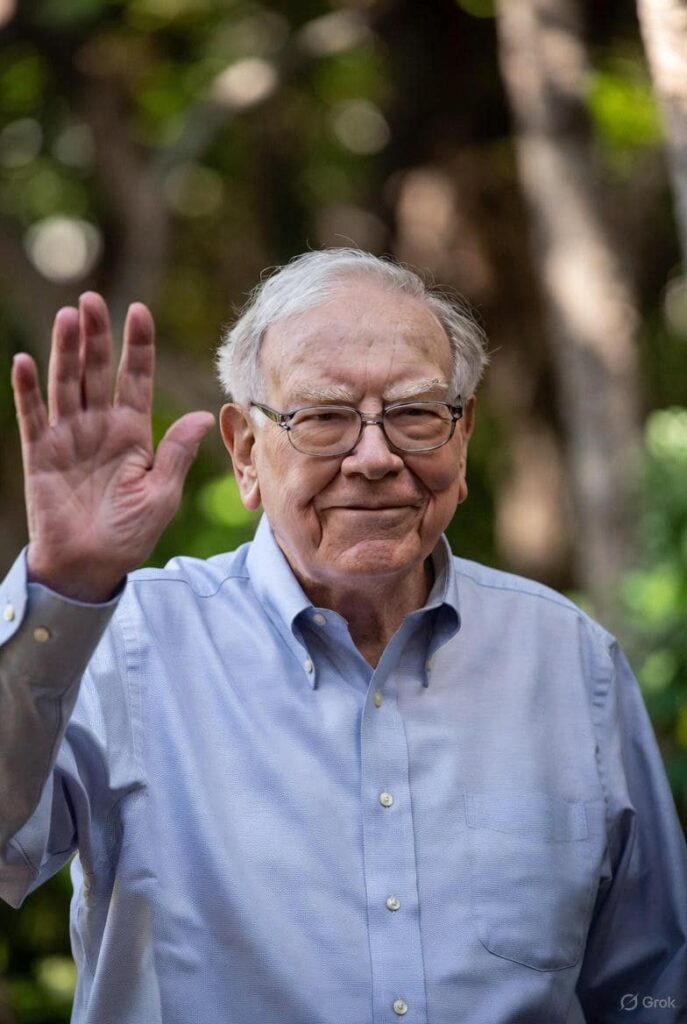
  • Warren Buffett’s Final Thanksgiving Letter: A Historic Farewell from the Oracle of Omaha

    Warren Buffett’s Final Thanksgiving Letter: A Historic Farewell from the Oracle of Omaha

    On November 10, 2025, Berkshire Hathaway released an 8-page document that instantly became one of the most important shareholder letters in the history of American capitalism.

    This is not just another annual report update. This is Warren Buffett’s official retirement announcement at age 95, his last direct message to shareholders, and the clearest blueprint yet for the future of his $1 trillion empire and his remaining $150+ billion fortune.

    In one sweeping move, Buffett converted 1,800 Class A shares into 2.7 million Class B shares and donated them immediately — the largest single-day charitable gift in Berkshire history:

    • 1.5 million B shares → The Susan Thompson Buffett Foundation
    • 400,000 B shares each → The Sherwood Foundation, Howard G. Buffett Foundation, and NoVo Foundation

    That’s over $13 billion at today’s prices, delivered the same day.

    The End of an Era

    In his trademark folksy style, Buffett declares: “I will no longer be writing Berkshire’s annual report or talking endlessly at the annual meeting. As the British would say, I’m ‘going quiet.’ Sort of.”

    He confirms what insiders have known for years: Greg Abel takes over as CEO at year-end 2025. Buffett’s praise is unequivocal: “I can’t think of a CEO, a management consultant, an academic, a member of government — you name it — that I would select over Greg to handle your savings and mine.”

    The Most Personal Letter Ever Written by a Billionaire

    Unlike any previous letter, this one is deeply autobiographical. Buffett recounts:

    • Nearly dying at age 8 from a burst appendix in 1938
    • Fingerprinting Catholic nuns during recovery (and fantasizing about helping J. Edgar Hoover catch a “criminal nun”)
    • Missing Charlie Munger by a whisker — Munger worked at Buffett’s grandfather’s grocery store in 1940; Warren took the same $2-for-10-hours job in 1941
    • Living one block away from Munger, six blocks from future Berkshire legends, and across the street from Coca-Cola president Don Keough — all without knowing it

    His conclusion? “Can it be that there is some magic ingredient in Omaha’s water?”

    Lady Luck, Father Time, and the Acceleration of Giving

    At 95, Buffett is blunt about aging: “Father Time, to the contrary, now finds me more interesting as I age. And he is undefeated.”

    He acknowledges his children (Susie, Howie, and Peter — ages 72, 70, and 67) are entering the zone where “the honeymoon period will not last forever.” To avoid the chaos of post-mortem estate battles, he is accelerating lifetime gifts at warp speed while keeping enough A shares to ease the transition to Greg Abel.

    Most powerful line on wealth and luck:

    “I was born in 1930 healthy, reasonably intelligent, white, male and in America. Wow! Thank you, Lady Luck.”

    Warnings to Corporate America

    Buffett eviscerates CEO pay inflation, dementia in the C-suite, and dynastic wealth. Highlights:

    • CEO pay-disclosure rules “produced envy, not moderation”
    • Boards must fire CEOs who develop dementia — he and Munger failed to act several times
    • Berkshire will never tolerate “look-at-me rich” or dynastic CEOs

    Why This Document Will Be Studied for Centuries

    This letter is the capitalist equivalent of a papal encyclical. It combines:

    • A formal leadership handoff after 60 years
    • The largest ongoing wealth transfer in history
    • A philosophical treatise on luck, aging, kindness, and corporate governance
    • A love letter to Omaha and middle America
    • Buffett’s final ethical will: “Decide what you would like your obituary to say and live the life to deserve it.”

    Business schools will teach this. Biographers will mine it. Investors will quote it for decades.

    Download the full PDF here: Warren Buffett Thanksgiving Letter 2025 (PDF)

    As Buffett signs off:

    “I wish all who read this a very happy Thanksgiving. Yes, even the jerks; it’s never too late to change.”

    The Oracle has spoken — one last time. And the world is listening.

  • Google’s Quantum Echoes Breakthrough: Achieving Verifiable Quantum Advantage in Real-World Computing

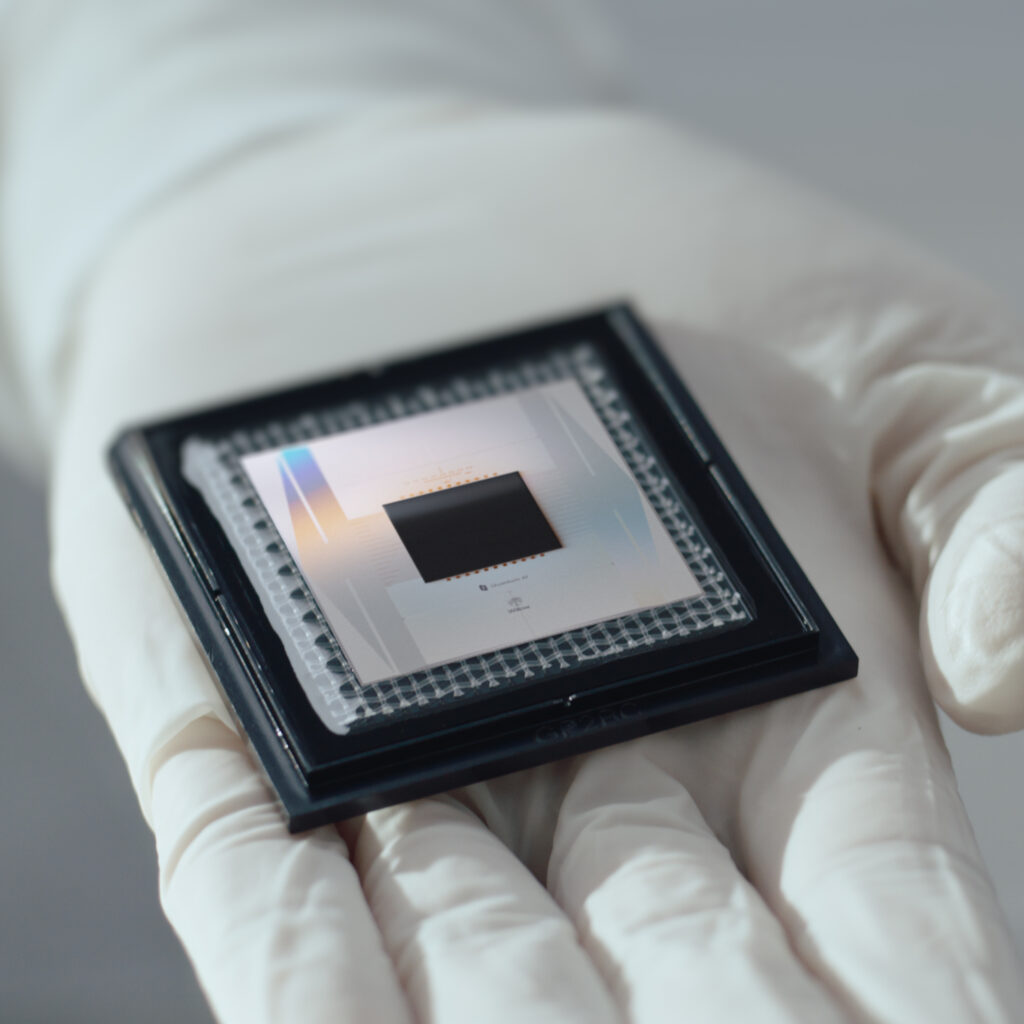
    TL;DR Google’s Willow quantum chip runs the Quantum Echoes algorithm using OTOCs to achieve the first verifiable quantum advantage, outperforming supercomputers 13,000x in modeling molecular structures for real-world applications like drug discovery, as published in Nature.

    In a groundbreaking announcement on October 22, 2025, Google Quantum AI revealed a major leap forward in quantum computing. Their new “Quantum Echoes” algorithm, running on the advanced Willow quantum chip, has demonstrated the first-ever verifiable quantum advantage on hardware. This means a quantum computer has successfully tackled a complex problem faster and more accurately than the world’s top supercomputers—13,000 times faster, to be exact—while producing results that can be repeated and verified. Published in Nature, this research not only pushes the boundaries of quantum technology but also opens doors to practical applications like drug discovery and materials science. Let’s break it down in simple terms.

    What Is Quantum Advantage and Why Does It Matter?

    Quantum computing has been hyped for years, but real-world applications have felt distant. Traditional computers (classical ones) use bits that are either 0 or 1. Quantum computers use qubits, which can be both at once thanks to superposition, allowing them to solve certain problems exponentially faster.

    “Quantum advantage” is when a quantum computer does something a classical supercomputer can’t match in a reasonable time. Google’s 2019 breakthrough showed quantum supremacy on a contrived task, but it wasn’t verifiable or useful. Now, with Quantum Echoes, they’ve achieved verifiable quantum advantage: repeatable results that outperform supercomputers on a problem with practical value.

    This builds on Google’s Willow chip, introduced in 2024, which dramatically reduces errors—a key hurdle in quantum tech. Willow’s low error rates and high speed enable precise, complex calculations.

    Understanding the Science: Out-of-Time-Order Correlators (OTOCs)

    At the heart of this breakthrough is something called out-of-time-order correlators, or OTOCs. Think of quantum systems like a busy party: particles (or qubits) interact, entangle, and “scramble” information over time. In chaotic systems, this scrambling makes it hard to track details, much like how a rumor spreads and gets lost in a crowd.

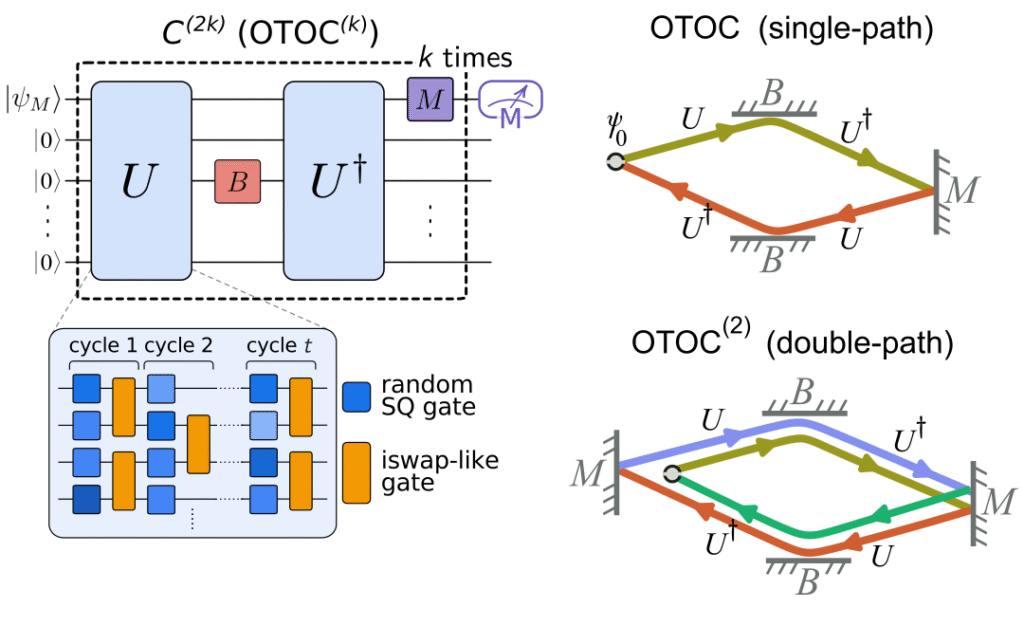
    Regular measurements (time-ordered correlators) lose sensitivity quickly because of this scrambling. OTOCs flip the script by using time-reversal techniques—like echoing a signal back. In the Heisenberg picture (a way to view quantum evolution), OTOCs act like interferometers, where waves interfere to amplify signals.

    Google’s team measured second-order OTOCs (OTOC(2)) on a superconducting quantum processor. They observed “constructive interference”—waves adding up positively—between Pauli strings (mathematical representations of quantum operators) forming large loops in configuration space.

    In plain terms: By inserting Pauli operators to randomize phases during evolution, they revealed hidden correlations in highly entangled systems. These are invisible without time-reversal and too complex for classical simulation.

    The experiment used a grid of qubits, random single-qubit gates, and fixed two-qubit gates. They varied circuit cycles, qubit positions, and instances, normalizing results with error mitigation. Key findings:

    • OTOCs remain sensitive to dynamics long after regular correlators decay exponentially.
    • Higher-order OTOCs (more interference arms) boost sensitivity to perturbations.
    • Constructive interference in OTOC(2) reveals “large-loop” effects, where paths in Pauli space recombine, enhancing signal.

    This interference makes OTOCs hard to simulate classically, pointing to quantum advantage.

    The Quantum Echoes Algorithm: How It Works

    Quantum Echoes is essentially the OTOC algorithm implemented on Willow. It’s like sending a sonar ping into a quantum system:

    1. Run operations forward on qubits.
    2. Perturb one qubit (like poking the system).
    3. Reverse the operations.
    4. Measure the “echo”—the returning signal.

    The echo amplifies through constructive interference, making measurements ultra-sensitive. On Willow’s 105-qubit array, it models physical experiments with precision and complexity.

    Why verifiable? Results can be cross-checked on another quantum computer of similar quality. It outperformed a supercomputer by 13,000x in learning structures of natural systems, like molecules or magnets.

    In a proof-of-concept with UC Berkeley, they used NMR (Nuclear Magnetic Resonance—the tech behind MRIs) data. Quantum Echoes acted as a “molecular ruler,” measuring longer atomic distances than traditional methods. They tested molecules with 15 and 28 atoms, matching NMR results while revealing extra info.

    Real-World Applications: From Medicine to Materials

    This isn’t just lab curiosity. Quantum Echoes could revolutionize:

    • Drug Discovery: Model how molecules bind, speeding up new medicine development.
    • Materials Science: Analyze polymers, batteries, or quantum materials for better solar panels or fusion tech.
    • Black Hole Studies: OTOCs relate to chaos in black holes, aiding theoretical physics.
    • Hamiltonian Learning: Infer unknown quantum dynamics, useful for sensing and metrology.

    As Ashok Ajoy from UC Berkeley noted, it enhances NMR’s toolbox for intricate spin interactions over long distances.

    What’s Next for Quantum Computing?

    Google’s roadmap aims for Milestone 3: a long-lived logical qubit for error-corrected systems. Scaling up could unlock more applications.

    Challenges remain—quantum tech is noisy and expensive—but this verifiable advantage is a milestone. As Hartmut Neven and Vadim Smelyanskiy from Google Quantum AI said, it’s like upgrading from blurry sonar to reading a shipwreck’s nameplate.

    This breakthrough, detailed in Nature under “Observation of constructive interference at the edge of quantum ergodicity,” signals quantum computing’s shift from promise to practicality.

    Further Reading

  • Apple M5 Chip Unveiled: 4x AI Performance Boost for MacBook Pro, iPad Pro, and Vision Pro

    On October 15, 2025, Apple announced the groundbreaking M5 chip, a next-generation system on a chip (SoC) designed to revolutionize AI performance across its devices. Built with third-generation 3-nanometer technology, the M5 delivers over 4x the peak GPU compute performance for AI compared to its predecessor, the M4, powering the new 14-inch MacBook Pro, iPad Pro, and Apple Vision Pro.

    Next-Level AI and Graphics Performance

    The M5 chip introduces a 10-core GPU architecture with a dedicated Neural Accelerator in each core, enabling GPU-based AI workloads to run dramatically faster. This results in a remarkable 4x increase in peak GPU compute performance compared to M4 and a 6x boost over the M1 for AI tasks. The GPU also enhances graphics capabilities, offering up to 45% higher graphics performance than the M4, thanks to Apple’s third-generation ray-tracing engine and second-generation dynamic caching.

    These advancements translate to smoother gameplay, more realistic visuals in 3D applications, and faster rendering times for complex graphics projects. For Apple Vision Pro, the M5 renders 10% more pixels on micro-OLED displays with refresh rates up to 120Hz, ensuring crisper details and reduced motion blur.

    Powerful CPU and Neural Engine

    The M5 features the world’s fastest performance core, with a 10-core CPU comprising six efficiency cores and up to four performance cores, delivering up to 15% faster multithreaded performance compared to the M4. Additionally, the chip includes an improved 16-core Neural Engine, which enhances AI-driven features like transforming 2D photos into spatial scenes on Apple Vision Pro or generating Personas with greater speed and efficiency.

    The Neural Engine also supercharges Apple Intelligence, enabling faster on-device AI tools like Image Playground. Developers using Apple’s Foundation Models framework will benefit from enhanced performance, making the M5 a powerhouse for AI-driven workflows.

    Enhanced Unified Memory

    With a unified memory bandwidth of 153GB/s—a nearly 30% increase over the M4 and more than double that of the M1—the M5 enables devices to run larger AI models entirely on-device. The 32GB memory capacity supports seamless multitasking, allowing users to run demanding creative suites like Adobe Photoshop and Final Cut Pro while uploading large files to the cloud in the background.

    Environmental Impact

    Apple’s commitment to sustainability shines through with the M5 chip. As part of the Apple 2030 initiative to achieve carbon neutrality by the end of the decade, the M5’s power-efficient performance reduces energy consumption across the 14-inch MacBook Pro, iPad Pro, and Apple Vision Pro, aligning with Apple’s high standards for energy efficiency.

    Availability

    The M5-powered 14-inch MacBook Pro, iPad Pro, and Apple Vision Pro are available for pre-order starting October 15, 2025. These devices leverage the M5’s cutting-edge capabilities to deliver unparalleled performance for professionals, creatives, and consumers alike.

    “M5 ushers in the next big leap in AI performance for Apple silicon,” said Johny Srouji, Apple’s senior vice president of Hardware Technologies. “With the introduction of Neural Accelerators in the GPU, M5 delivers a huge boost to AI workloads.”

  • xAI’s Macrohard: Elon Musk’s AI Answer to Microsoft

    What Is Macrohard?

    xAI’s Macrohard is an AI-powered software company challenging Microsoft. Its name swaps “micro” for “macro” for big ambitions. Elon Musk teased it in 2021 on X: Macrohard >> Microsoft. Now it’s real. Musk says: “The @xAI MACROHARD project will be profoundly impactful at an immense scale. Our goal is a company that can do anything short of making physical objects.”

    MACROHARD logo on xAI supercomputer

    Macrohard features:

    • AI teams: Hundreds of AI agents for coding, images, and testing, acting like humans.
    • Software tools: Apps for automation, content, game design, and human-like chatbots.
    • Power: Runs on xAI’s Colossus supercomputer in Memphis, with millions of GPUs.

    xAI trademarked “Macrohard” on August 1, 2025, for AI software. They’re hiring for “Macrohard / Computer Control” roles.

    “Macrohard uses AI for coding and automation, powered by Grok to build next-level software.” — Grok (xAI’s AI)

    Why Now? Musk vs. Microsoft

    Musk’s feud with Microsoft, tied to their OpenAI investment, drives Macrohard. He’s sued OpenAI over ChatGPT’s iOS exclusivity. With $6B in funding (May 2024), xAI aims to disrupt Microsoft’s software, linking to Tesla and SpaceX.

    X Reactions

    X users are hyped, with memes about the name (in India, it sounds like a curse word). Some call it “the first AI corporation.” Reddit debates if it’s a game-changer.

    What’s Next?

    xAI’s Yuhuai Wu teased hiring for “Grok-5” and Macrohard by late 2025. It could change software development—faster and cheaper. Can it top Microsoft? Comment below!

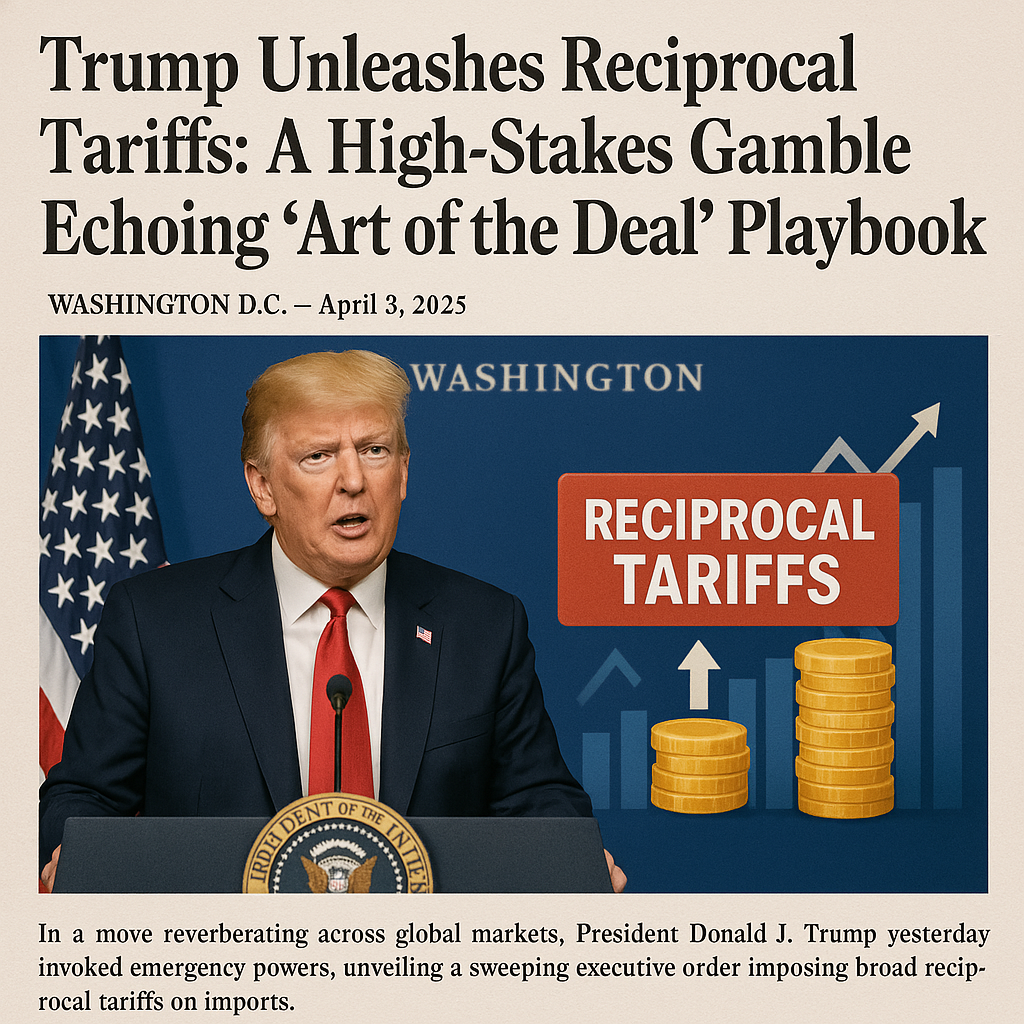
  • Trump Unleashes Reciprocal Tariffs: A High-Stakes Gamble Echoing ‘Art of the Deal’ Playbook

    In a move reverberating across global markets, President Donald J. Trump yesterday invoked emergency powers, unveiling a sweeping executive order imposing broad reciprocal tariffs on imports. Citing large and persistent U.S. goods trade deficits—now reportedly exceeding $1.2 trillion annually—as an “unusual and extraordinary threat to the national security and economy,” the President declared a national emergency, setting the stage for a dramatic reshaping of America’s trade relationships. This bold, confrontational strategy, detailed in the extensive executive order “Regulating Imports with a Reciprocal Tariff,” is being widely interpreted as a direct application of the aggressive deal-making principles famously outlined in Trump’s 1987 bestseller, “The Art of the Deal.”

    The executive order establishes an initial 10% additional ad valorem duty on nearly all imports, set to take effect shortly, with provisions for significantly higher, country-specific tariffs against major trading partners listed in an annex, including economic powerhouses like China and the European Union. This decisive action, rooted in the administration’s “America First Trade Policy,” directly addresses what the order describes as a fundamental lack of reciprocity in global trade, marked by disparate tariff rates, pervasive non-tariff barriers, and foreign economic policies that allegedly suppress wages and consumption abroad, unfairly disadvantaging U.S. producers and contributing to the “hollowing out” of American manufacturing.

    Observers familiar with President Trump’s long-professed business philosophy immediately recognized the hallmarks of “The Art of the Deal” in this expansive policy shift. The book, though focused on real estate, championed principles like thinking big, using leverage relentlessly, fighting back against perceived unfairness, protecting the downside, and employing bravado—all elements seemingly on display in the new tariff regime.

    Thinking Big and Aiming High: The sheer scale of the executive order—a near-universal tariff designed to fundamentally rebalance global trade flows—epitomizes the “think big” mantra central to Trump’s deal-making ethos. Rather than incremental adjustments, the order represents a monumental attempt to overhaul decades of U.S. trade policy, aiming for a dramatic impact rather than marginal gains.

    Leverage as the Ultimate Tool: “The Art of the Deal” emphasizes dealing from strength and creating leverage. The newly imposed tariffs function precisely as that: a powerful lever designed to compel trading partners to lower their own barriers to U.S. goods and address non-reciprocal practices. By making access to the vast U.S. market more costly, the administration aims to force concessions. The order explicitly reserves the right to increase tariffs further should partners retaliate (Sec. 4(b)) or decrease them if partners take “significant steps to remedy” imbalances (Sec. 4(c)), showcasing a dynamic use of leverage akin to high-stakes negotiation.

    Fighting Back and Confrontation: Trump’s book advises fighting back hard when treated unfairly. The executive order frames the trade deficit and associated manufacturing decline as the result of decades of unfair treatment and failed assumptions within the global trading system. The tariffs represent a direct, confrontational response, rejecting the existing framework and aggressively pushing back against trading partners and international norms deemed detrimental to American interests. The justification points fingers at specific higher tariff rates imposed by others (e.g., EU car tariffs, Indian tech tariffs) and a litany of non-tariff barriers detailed in the National Trade Estimate Report.

    Protecting the Downside: While often perceived as a gambler, “The Art of the Deal” preaches conservatism by focusing on protecting the downside. The executive order’s rationale heavily emphasizes protecting America’s “downside”—its national security, economic security, manufacturing base, defense-industrial capacity, and even agricultural sector (noting the shift from surplus to a projected $49 billion deficit). The tariffs are presented as a necessary defensive measure against the threats posed by reliance on foreign supply chains, geopolitical disruptions, and the erosion of domestic production capabilities, including critical military stockpiles.

    Knowing Your Market (and Sticking to Your Guns): Trump’s book advocates for developing a strong “gut feeling” about the market and trusting one’s instincts. The executive order reflects a deeply held conviction about the causes of trade imbalances and the necessity of tariffs, dismissing decades of conventional trade wisdom. It presents a specific diagnosis—failed reciprocity, suppressed foreign consumption (citing lower consumption-to-GDP ratios in China, Germany, etc.)—and prescribes a specific cure, demonstrating persistence in a vision pursued since his first term. The mention of R&D spending shifting overseas further underscores this specific market interpretation.

    Bravado and Getting the Word Out: Issuing such a far-reaching executive order under the banner of a national emergency is inherently a bold, headline-grabbing act, consistent with the “truthful hyperbole” and self-promotion tactics discussed in “The Art of the Deal.” It sends an unmistakable message of resolve to both domestic audiences and international partners, ensuring maximum attention for the administration’s policy goals.

    The order does include exemptions for certain critical goods (pharmaceuticals, semiconductors, energy, critical minerals, detailed in Annex II), previously tariffed steel and aluminum, and initially preserves preferential treatment for USMCA-originating goods from Canada and Mexico (though non-originating goods face duties tied to separate border EOs). It also notes adjustments based on U.S. content, attempts to address transshipment via Hong Kong and Macau, and anticipates changes to de minimis rules.

    However, the core thrust remains a dramatic, unilateral assertion of American economic power, justified by national emergency. Whether this massive gamble, seemingly drawn straight from the “Art of the Deal” playbook, will successfully revitalize American manufacturing, rebalance trade, and strengthen national security—or ignite damaging trade wars and harm consumers—remains the critical question. What is certain is that the President is applying his signature deal-making style to the complex arena of international trade on an unprecedented scale, betting that confrontation and leverage can reshape the global economic landscape in America’s favor. The coming months will reveal the consequences of this high-stakes application of the “art of the deal” to global commerce.


  • Trump Outlines Bold Vision in First Address to Congress Since Returning to Office

    In a nearly 100-minute address to a joint session of Congress on Tuesday night, President Donald J. Trump, speaking for the first time before lawmakers since his return to the White House in January, laid out an ambitious agenda to “usher in the greatest and most successful era” in U.S. history. Delivered six weeks after his inauguration, the speech blended triumphant rhetoric with policy specifics, reflecting the administration’s aggressive start—marked by nearly 100 executive orders and over 400 executive actions.

    Addressing a chamber divided along partisan lines, Trump touted his landslide victory in the November 5, 2024, election—winning all seven swing states, 312 Electoral College votes, and the popular vote—calling it a “mandate like has not been seen in many decades.” He highlighted early achievements, including a drastic reduction in illegal border crossings following a national emergency declaration and military deployment to the southern border, which he credited to his administration’s swift action.

    The speech was punctuated by moments of drama, including an interruption by Representative Al Green (D-Texas) and others, prompting Speaker Mike Johnson (R-La.) to order the sergeant-at-arms to restore order. Green was escorted out, underscoring the contentious atmosphere as Democrats largely remained seated while Republicans frequently rose to applaud.

    Policy Priorities: Economy, Borders, and Culture

    Trump emphasized economic revitalization, announcing plans to combat inflation through energy expansion—“drill, baby, drill”—and the creation of a Department of Government Efficiency led by Elon Musk to cut wasteful spending. He cited examples of terminated programs, such as $22 billion for housing illegal immigrants and $8 million for “transgender mice,” drawing applause from supporters and skepticism from critics.

    On immigration, Trump doubled down on border security, signing the Laken Riley Act to detain dangerous criminal aliens and renaming a Texas wildlife refuge after Jocelyn Nungaray, a 12-year-old murder victim, as a tribute to victims of crimes by undocumented immigrants. He also announced a historic deportation operation, surpassing even Dwight Eisenhower’s record, and thanked Mexican authorities for handing over 29 cartel leaders amid tariff pressures.

    Culturally, Trump positioned his administration as a counter to “woke” policies, banning critical race theory and transgender ideology from schools, ending diversity, equity, and inclusion programs, and affirming “only two genders: male and female.” He introduced a “gold card” initiative, offering citizenship to wealthy job-creators for $5 million, aiming to reduce national debt while contrasting this with the deportation of criminals.

    Global Ambitions and National Security

    Internationally, Trump promised to reclaim the Panama Canal, citing violations of its transfer agreement, and invited Greenland to join the U.S. for security reasons. He claimed progress toward peace in Ukraine, reading a letter from President Volodymyr Zelensky expressing readiness to negotiate, and signaled Russia’s willingness to talk, though specifics remained vague. He also announced the capture of an ISIS terrorist linked to the 2021 Abbey Gate bombing in Afghanistan, earning bipartisan nods.

    Domestically, Trump proposed a missile defense shield, a revitalized shipbuilding industry, and reciprocal tariffs starting April 2 to counter trade imbalances with nations like China and India. He celebrated recent investments—$1.7 trillion from companies like Apple and Taiwan Semiconductor—attributing them to his election win and tariff threats.

    Personal Stories and Emotional Appeals

    The address featured poignant guest appearances, a Trump hallmark. He honored Payton McNabb, a high school athlete injured by a transgender competitor, and vowed to ban men from women’s sports. He recognized Corey Comperatore’s family, killed during a July 13, 2024, rally shooting in Butler, Pennsylvania, crediting divine intervention for his own survival that day. Other guests included a steelworker, a Border Patrol agent, and a cancer-stricken teen named DJ Daniel, whom Trump named an honorary Secret Service agent.

    Partisan Divide and a Call for Unity

    Despite appeals for bipartisanship—“Let’s work together and truly make America great again”—Trump’s sharp critiques of Democrats, whom he accused of never applauding even historic achievements, highlighted the gulf. His mention of beating George Washington as the most successful first-month president drew laughs from allies and eye-rolls from opponents.

    As of March 5, 2025, reactions are pouring in. Supporters hail the speech as a bold blueprint for renewal, while critics question the feasibility of promises like balancing the budget—unachieved in 24 years—and decry the rollback of progressive policies. With Congress set to debate his funding requests and tax cuts, the coming months will test whether Trump’s “golden age” vision can bridge America’s divides or deepen them.

  • Microsoft’s Majorana 1 Quantum Chip: A Breakthrough in Scalable Computing


    TL;DR:

    Microsoft has unveiled the Majorana 1 quantum chip, leveraging topological qubits for enhanced stability and scalability, aiming for a million-qubit system. This breakthrough, backed by DARPA, accelerates the timeline for practical quantum computing.

    Satya Nadella emphasized AI’s role in economic growth, not just AGI, predicting 10% global GDP expansion through AI-driven enterprise applications. He sees AI transforming SaaS, Office, and industrial automation while rejecting a winner-take-all market.

    Microsoft also introduced Muse, an AI-powered gaming engine capable of real-time world modeling for dynamic, immersive experiences.

    Together, these advances in AI, quantum computing, and gaming position Microsoft at the forefront of the next computing revolution.


    Microsoft has unveiled a game-changing innovation in quantum computing with its new Majorana 1 chip, an advancement poised to accelerate the transition from experimental quantum systems to practical, large-scale computing solutions. This development, coupled with insights from CEO Satya Nadella, signals Microsoft’s ambitious plans for artificial intelligence (AI), economic growth, and the future of computing.

    Microsoft’s Majorana 1 Chip: The Future of Quantum Computing

    Harnessing Majorana Particles for Stable Qubits

    The Majorana 1 chip is built on a new Topological Core architecture that utilizes Majorana particles, first theorized in 1937. Unlike traditional quantum bits (qubits), topological qubits are inherently more stable and less prone to errors—two critical factors for achieving scalable quantum computing.

    Microsoft’s research over the past two decades has led to the development of the world’s first topoconductor, a material designed to enable the observation and control of Majorana particles. This marks a significant step toward creating quantum processors capable of handling real-world computational challenges with greater efficiency and reliability.

    Scalability: From Eight Qubits to One Million

    Currently, the Majorana 1 chip features eight topological qubits but is designed with scalability in mind. Microsoft’s goal is to achieve a million-qubit system, which would enable complex simulations in areas such as medicine, materials science, and artificial intelligence.

    Microsoft Technical Fellow Chetan Nayak described this breakthrough as the equivalent of the “transistor moment” for quantum computing, underscoring its potential to revolutionize industries worldwide.

    Microsoft’s Partnership with DARPA

    This breakthrough has earned Microsoft a place as one of two companies advancing to the final phase of DARPA’s Underexplored Systems for Utility-Scale Quantum Computing (US2QC) program. The goal is to develop a fault-tolerant quantum computing prototype within years, not decades.

    Satya Nadella’s Vision: AI, Quantum, and Economic Growth

    Beyond AGI: AI’s Role in Economic Expansion

    In a recent interview with Dwarkesh Patel, Satya Nadella challenged the hype surrounding Artificial General Intelligence (AGI), arguing that the real benchmark of technological progress should be economic growth. He believes AI should drive a 10% increase in global GDP, rather than simply focusing on intelligence milestones.

    Key takeaways from Nadella’s discussion:

    • AI is not a winner-take-all industry; multiple hyperscalers (like Microsoft Azure) will coexist.
    • AI commoditization is inevitable, but enterprise adoption will define its long-term value.
    • Legal and ethical barriers to AI deployment must be addressed before true mass adoption.

    AI’s Impact on Enterprise and SaaS Markets

    Nadella predicts a fundamental shift in knowledge work as AI tools become deeply embedded in workflows. He envisions AI-powered assistants transforming Office applications, enterprise SaaS platforms, and industrial automation, making AI an indispensable productivity tool rather than a separate industry.

    Microsoft’s AI-Powered Gaming Evolution

    Muse: The World Model for Next-Gen Gaming

    Alongside its quantum breakthrough, Microsoft introduced Muse, an AI-driven gaming engine that leverages real-time world modeling to generate immersive gaming experiences. Muse builds upon advancements in generative AI (such as Sora and DALL-E) but applies them to dynamic environments where player actions shape the game world.

    The Road Ahead: AI, Quantum, and a New Computing Era

    Microsoft’s Majorana 1 chip represents a turning point in quantum computing, positioning the company ahead of competitors like Google and IBM by pursuing topological qubits over traditional quantum designs. When combined with Microsoft’s investments in AI, cloud computing, and gaming, this innovation strengthens its position as a leader in the next era of computational power.

    With quantum computing, AI-driven economic growth, and next-generation gaming, Microsoft is reshaping the future of technology. The next few years will determine whether its bold bets on AI and quantum will yield world-changing results.

  • Microsoft Unveils Majorana 1: A Quantum Leap in Computing

    Introduction Microsoft has introduced Majorana 1, the world’s first quantum chip utilizing a groundbreaking Topological Core architecture. This innovation, built on the newly developed topoconductor material, aims to accelerate the realization of scalable, industrial-grade quantum computing, transforming problem-solving capabilities in fields ranging from materials science to artificial intelligence.

    Topoconductors: The Foundation of Majorana 1 The Majorana 1 chip leverages a revolutionary material class—topoconductors—to enable more reliable and scalable qubits, the fundamental units of quantum computation. This breakthrough positions Microsoft to lead the quantum computing industry towards achieving a million-qubit system within years rather than decades. By integrating error-resistant properties at the hardware level, the Majorana 1 ensures greater qubit stability, a crucial factor for scaling quantum operations.

    Scalability and Real-World Applications Unlike current quantum architectures, which require fine-tuned analog control, Microsoft’s approach employs digital control for qubits, simplifying quantum computations and reducing hardware constraints. This architecture enables the integration of a million qubits on a single chip, unlocking solutions to some of the most complex industrial and environmental challenges, such as:

    • Microplastic Breakdown: Quantum calculations could facilitate the development of catalysts capable of breaking down plastics into harmless byproducts.
    • Self-Healing Materials: Engineering materials that can autonomously repair structural damage in construction and manufacturing.
    • Advanced Enzyme Engineering: Enhancing agricultural productivity and healthcare by designing more efficient biological catalysts.
    • Corrosion Prevention: Analyzing material interactions at the atomic level to create corrosion-resistant structures.

    Microsoft’s Quantum Roadmap and DARPA Collaboration Recognizing the potential of Majorana 1, the Defense Advanced Research Projects Agency (DARPA) has selected Microsoft as one of two companies progressing to the final stage of its US2QC program. This initiative aims to accelerate the development of utility-scale, fault-tolerant quantum computers capable of commercial impact.

    Precision Measurement and Digital Control A key challenge in quantum computing is qubit instability due to environmental perturbations. Microsoft has overcome this hurdle with a pioneering measurement approach that enables digital qubit control, making quantum systems easier to manage and scale. This precise measurement technique distinguishes between one billion and one billion and one electrons, ensuring the accuracy needed for advanced computations.

    Engineering Breakthrough: Atom-By-Atom Material Design Majorana 1 is built on a meticulously engineered materials stack comprising indium arsenide and aluminum. Microsoft designed and fabricated this stack atom by atom to create the necessary topological state for stable qubits. This breakthrough is pivotal in overcoming the scalability limitations of traditional quantum computing approaches.

    Integration with AI and Cloud Computing Quantum computing’s synergy with artificial intelligence will redefine problem-solving across industries. Microsoft’s Azure Quantum platform provides enterprises with early access to quantum capabilities, enabling AI-driven insights and innovation. The combination of quantum computing and AI will revolutionize material science, drug discovery, and sustainable technology development.

    Microsoft’s Majorana 1 chip marks a paradigm shift in quantum computing, paving the way for practical, large-scale quantum applications. With its topologically protected qubits, digital control systems, and scalable architecture, Majorana 1 is set to drive the next frontier of computational advancements. As quantum computing progresses towards commercial viability, industries worldwide stand to benefit from solutions that were previously unattainable with classical computing methods.

  • Navigating Economic Headwinds: Insights from Ray Dalio on the US Economy and Global Landscape

    Ray Dalio, the esteemed investor and founder of Bridgewater Associates, recently engaged in a comprehensive discussion with David Friedberg on the All-In Podcast, offering valuable insights into the current state of the US economy and its interconnectedness with the global landscape. Dalio, renowned for his deep understanding of economic cycles and historical patterns, provided a nuanced perspective on the challenges and opportunities that lie ahead.

    Understanding the Debt Cycle

    Central to Dalio’s analysis is the concept of the “Big Debt Cycle,” a recurring pattern observed throughout history where economies experience prolonged periods of rising debt levels followed by inevitable deleveraging events. He argues that the US is currently navigating one such cycle, with debt-to-GDP ratios reaching historically significant levels.  

    Dalio explains that while debt can be a useful tool for stimulating economic growth, excessive debt accumulation can lead to instability and ultimately a debt crisis. He points to several factors that contribute to this dynamic, including expansionary monetary policies, government spending, and the inherent tendency for debt to compound over time.  

    Proactive Measures for a Healthy Economy

    While acknowledging the potential risks associated with high debt levels, Dalio maintains an optimistic outlook, emphasizing that proactive measures can mitigate the likelihood of a severe debt crisis. He suggests a multi-pronged approach that includes fiscal responsibility, monetary policy adjustments, and structural reforms.  

    On the fiscal front, Dalio advocates for a “3% solution,” urging policymakers to reduce the annual budget deficit to 3% of GDP. This would involve a combination of spending cuts and revenue increases, potentially through tax reforms or tariffs. He emphasizes the importance of achieving a sustainable fiscal trajectory to maintain confidence in the US economy and its currency.  

    In terms of monetary policy, Dalio suggests that central banks need to carefully navigate the delicate balance between supporting economic growth and managing inflation. He notes that while expansionary policies can be beneficial in the short term, they can also contribute to debt accumulation and asset bubbles if not managed prudently.  

    Furthermore, Dalio highlights the importance of structural reforms to enhance productivity and competitiveness. He suggests that investments in education, infrastructure, and innovation can foster long-term economic growth and resilience.  

    Navigating the Investment Landscape

    Dalio’s insights also provide valuable guidance for investors. He cautions against complacency in the current market environment, noting that high asset valuations and rising interest rates create potential risks. He advises investors to diversify their portfolios, considering a range of asset classes and geographies to mitigate risk.  

    He also emphasizes the importance of focusing on “real returns,” that is, returns adjusted for inflation. He notes that even when markets appear to be performing well in nominal terms, inflation can significantly erode purchasing power, leading to disappointing real returns.  

    Dalio suggests that alternative assets, such as gold, Bitcoin, and other commodities, can play a role in portfolio diversification, offering potential hedges against inflation and economic uncertainty. He also encourages investors to consider the long-term implications of their investment decisions, aligning their portfolios with their financial goals and risk tolerance.  

    The Evolving Global Landscape

    Beyond the domestic economic outlook, Dalio also provides insights into the evolving global landscape. He discusses the complex relationship between the US and China, highlighting the growing competition between the two superpowers. He emphasizes the need for both countries to engage in constructive dialogue and cooperation to address global challenges such as climate change, economic inequality, and geopolitical tensions.  

    Dalio also touches on the rise of other emerging markets and the shifting balance of economic power. He suggests that investors and policymakers need to adapt to this evolving landscape, recognizing the growing importance of understanding and engaging with different cultures and economic systems.  

    Embracing Technological Transformation

    Dalio also addresses the transformative potential of artificial intelligence (AI) and its impact on the economy and society. He acknowledges the potential for AI to drive productivity gains, create new industries, and improve living standards. However, he also cautions about the potential for job displacement and social disruption, urging policymakers to proactively address these challenges.  

    He suggests that investing in education and training programs can help workers adapt to the changing demands of the labor market and ensure that the benefits of AI are shared broadly. He also emphasizes the importance of ethical considerations in the development and deployment of AI, ensuring that it is used responsibly and for the benefit of humanity.

    Wrapping up

    Ray Dalio’s interview offers a comprehensive and insightful perspective on the US economy and its place in the global landscape. He provides a balanced assessment of the challenges and opportunities that lie ahead, emphasizing the importance of proactive measures, prudent investment strategies, and international cooperation. By embracing innovation, adapting to change, and engaging in constructive dialogue, the US can navigate the complexities of the 21st century and ensure a prosperous future for all.

  • The DeepSeek Revolution: Financial Markets in TurmoilA Sputnik Moment for AI and Finance

    The DeepSeek Revolution: Financial Markets in TurmoilA Sputnik Moment for AI and Finance

    On January 27, 2025, the financial markets experienced significant upheaval following the release of DeepSeek’s latest AI model, R1. This event has been likened to a modern “Sputnik moment,” highlighting its profound impact on the global economic and technological landscape.

    Market Turmoil: A Seismic Shift

    The unveiling of DeepSeek R1 led to a sharp decline in major technology stocks, particularly those heavily invested in AI development. Nvidia, a leading AI chip manufacturer, saw its shares tumble by approximately 11.5%, signaling a potential loss exceeding $340 billion in market value if the trend persists. This downturn reflects a broader market reassessment of the AI sector’s financial foundations, especially concerning the substantial investments in high-cost AI infrastructure.

    The ripple effects were felt globally, with tech indices such as the Nasdaq 100 and Europe’s Stoxx 600 technology sub-index facing a combined market capitalization reduction projected at $1.2 trillion. The cryptocurrency market was not immune, as AI-related tokens experienced a 13.3% decline, with notable losses in assets like Near Protocol and Internet Computer (ICP).

    DeepSeek R1: A Paradigm Shift in AI

    DeepSeek’s R1 model has been lauded for its advanced reasoning capabilities, reportedly surpassing established Western models like OpenAI’s o1. Remarkably, R1 was developed at a fraction of the cost, challenging the prevailing notion that only vast financial resources can produce cutting-edge AI. This achievement has prompted a reevaluation of the economic viability of current AI investments and highlighted the rapid technological advancements emerging from China.

    The emergence of R1 has also intensified discussions regarding the effectiveness of U.S. export controls aimed at limiting China’s technological progress. By achieving competitive AI capabilities with less advanced hardware, DeepSeek underscores the potential limitations and unintended consequences of such sanctions, suggesting a need for a strategic reassessment in global tech policy.

    Broader Implications: Economic and Geopolitical Considerations

    The market’s reaction to DeepSeek’s R1 extends beyond immediate financial losses, indicating deeper shifts in economic power, technological leadership, and geopolitical influence. China’s rapid advancement in AI capabilities signifies a pivotal moment in the global race for technological dominance, potentially leading to a reallocation of capital from Western institutions to Chinese entities and reshaping global investment trends.

    Furthermore, this development reaffirms the critical importance of computational resources, such as GPUs, in the AI race. The narrative that more efficient use of computing power can lead to models exhibiting human-like intelligence positions computational capacity not merely as a tool but as a cornerstone of this new technological era.

    DeepSeek’s Strategic Approach: Efficiency and Accessibility

    DeepSeek’s strategy emphasizes efficiency and accessibility. The R1 model was developed using a pure reinforcement learning approach, a departure from traditional methods that often rely on supervised learning. This method allowed the model to develop reasoning capabilities autonomously, without initial reliance on human-annotated datasets.

    In terms of cost, DeepSeek’s R1 model offers a significantly more affordable option compared to its competitors. For instance, where OpenAI’s o1 costs $15 per million input tokens and $60 per million output tokens, DeepSeek’s R1 costs $0.55 per million input tokens and $2.19 per million output tokens. This cost-effectiveness makes advanced AI technology more accessible to a broader audience, including developers, businesses, and educational institutions.

    Global Reception and Future Outlook

    The global reception to DeepSeek’s R1 has been mixed. While some industry leaders have praised the model’s efficiency and performance, others have expressed skepticism regarding its rapid development and the potential implications for data security and ethical considerations.

    Looking ahead, DeepSeek plans to continue refining its models and expanding its offerings. The company aims to democratize AI by making advanced models accessible to a wider audience, challenging the current market leaders, and potentially reshaping the future landscape of artificial intelligence.

    Wrap Up

    DeepSeek’s R1 model has not merely entered the market; it has redefined it, challenging established players, prompting a reevaluation of investment strategies, and potentially ushering in a new era where AI capabilities are more evenly distributed globally. As we navigate this juncture, the pertinent question is not solely who will lead in AI but how this technology will shape our future across all facets of human endeavor. Welcome to 2025, where the landscape has shifted, and the race is on.