PJFP.com

Pursuit of Joy, Fulfillment, and Purpose

Category: news

  • Meet Auto-GPT: The AI Game-Changer

    Meet Auto-GPT: The AI Game-Changer

    A game-changing AI agent called Auto-GPT has been making waves in the field of artificial intelligence. Developed by Toran Bruce Richards and released on March 30, 2023, Auto-GPT is designed to achieve goals set in natural language by breaking them into sub-tasks and using the internet and other tools autonomously. Utilizing OpenAI’s GPT-4 or GPT-3.5 APIs, it is among the first applications to leverage GPT-4’s capabilities for performing autonomous tasks.

    Revolutionizing AI Interaction

    Unlike interactive systems such as ChatGPT, which require manual commands for every task, Auto-GPT takes a more proactive approach. It assigns itself new objectives to work on with the aim of reaching a greater goal without the need for constant human input. Auto-GPT can execute responses to prompts to accomplish a goal, and in doing so, will create and revise its own prompts to recursive instances in response to new information.

    Auto-GPT manages short-term and long-term memory by writing to and reading from databases and files, handling context window length requirements with summarization. Additionally, it can perform internet-based actions such as web searching, web form, and API interactions unattended, and includes text-to-speech for voice output.

    Notable Capabilities

    Observers have highlighted Auto-GPT’s ability to iteratively write, debug, test, and edit code, with some even suggesting that this ability may extend to Auto-GPT’s own source code, enabling a degree of self-improvement. However, as its underlying GPT models are proprietary, Auto-GPT cannot modify them.

    Background and Reception

    The release of Auto-GPT comes on the heels of OpenAI’s GPT-4 launch on March 14, 2023. GPT-4, a large language model, has been widely praised for its substantially improved performance across various tasks. While GPT-4 itself cannot perform actions autonomously, red-team researchers found during pre-release safety testing that it could be enabled to perform real-world actions, such as convincing a TaskRabbit worker to solve a CAPTCHA challenge.

    A team of Microsoft researchers argued that GPT-4 “could reasonably be viewed as an early (yet still incomplete) version of an artificial general intelligence (AGI) system.” However, they also emphasized the system’s significant limitations.

    Auto-GPT, developed by Toran Bruce Richards, founder of video game company Significant Gravitas Ltd, became the top trending repository on GitHub shortly after its release and has repeatedly trended on Twitter since.

    Auto-GPT represents a significant breakthrough in artificial intelligence, demonstrating the potential for AI agents to perform autonomous tasks with minimal human input. While there are still limitations to overcome, Auto-GPT’s innovative approach to goal-setting and task management has set the stage for further advancements in the development of AGI systems.

  • Apple’s Reality Pro Headset: A Revolutionary Mixed Reality Experience

    Apple's Reality Pro Headset: A Revolutionary Mixed Reality Experience

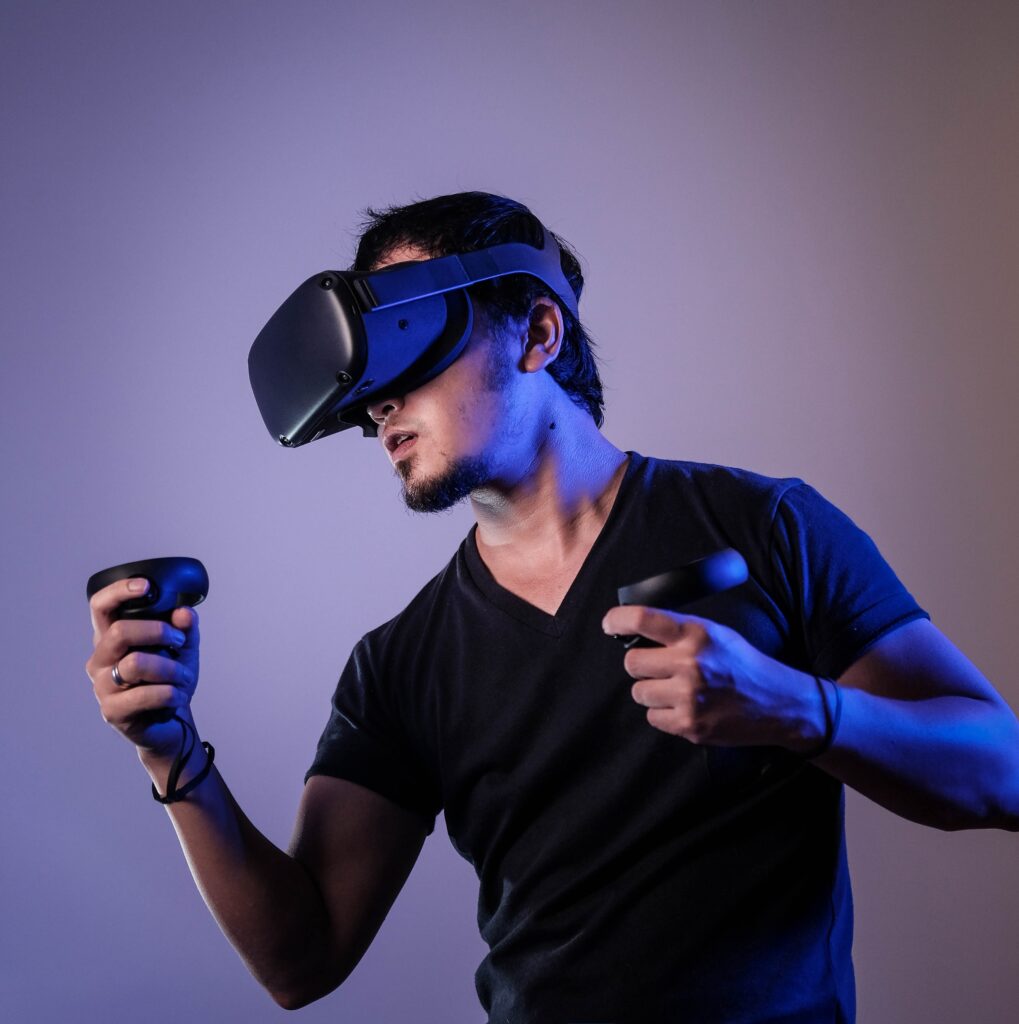
    Apple Inc. is set to launch its long-anticipated mixed reality headset, Reality Pro, later this year. The device is a bold attempt to create a 3D version of the iPhone’s operating system, with eye- and hand-tracking capabilities that could set the technology apart from its competitors.

    The estimated $3,000 headset will feature an external display for a connected Mac, a 3D iOS-like interface, immersive video, and a novel approach to virtual meetings. It also has two ultra-high-resolution displays developed with Sony Group Corp. to handle virtual reality (VR) and augmented reality (AR). It can switch between both modes with a digital crown, similar to the Apple Watch, and comes with custom lenses for those wearing prescription glasses.

    FaceTime software will be a major feature of the Reality Pro, as it will realistically render a user’s face and full body in VR. This will allow two people with an Apple headset to communicate and feel like they are in the same room. Apple is also working on content with media partners, such as Disney and Dolby Laboratories, and is updating its own Apple TV+ material to work with the headset. Users will be able to watch video content in a variety of environments, such as a desert or outer space.

    The device will have a dedicated app store for third-party software and services, including apps, games, and health-tracking functions. It will also have productivity features, such as being able to serve as an external monitor for a Mac. It can be controlled with a trackpad or mouse, a physical keyboard, or with voice commands via Siri.

    For all its features and potential, Apple’s Reality Pro headset faces a few obstacles. The high price tag could limit its appeal, and there’s no guarantee the device will be a hit. Apple is also working on a cheaper version for release in late 2024 or early 2025, which could be closer to $1,500.

    The device is expected to be unveiled as early as this spring, so we’ll have to wait just a little longer to find out if Apple’s long-anticipated mixed reality headset will be the success the company is hoping for.

  • Google Re-Engages Founders to Take on ChatGPT Challenge

    Google Re-Engages Founders to Take on ChatGPT Challenge

    Google’s re-engagement of its founders to tackle the threat of ChatGPT, a new chatbot from OpenAI, has put the tech giant on a collision course with A.I. competition. For the first time in decades, Google’s search business is facing a rival that could offer a new way to search for information online.

    Google is responding to the challenge by cutting 12,000 jobs and releasing more than 20 new products with chatbot features this year. The company is also working to bring A.I. into its products and has launched the Advanced Technology Review Council to review plans for products to be unveiled in May. This includes image-creation technology, tools to help other businesses create their own A.I. prototypes, and a version of its search engine with chatbot features.

    Google’s A.I. technology has been in development for the last decade, and the company already has an internal chatbot that could rival ChatGPT. However, the technology is not without its risks. Large language models, which rely on online information, have been known to share false statements and show biased attitudes. Companies have been cautious about offering the technology to the public, but several new companies have already done so, and Microsoft is working on its own version.

    Google is trying to accelerate product approval reviews and has established a fast-track review process called the “Green Lane” initiative. It is also looking for ways for teams to conduct their own reviews and “recalibrate” the level of risk it is willing to take when releasing the technology.

    The consequences of Google’s approach to A.I. are still unclear, but the company is taking steps to ensure that its technology is fair, ethical, and safe. It is aiming to curb issues relating to hate and toxicity, danger and misinformation rather than preventing them, and it is working to block certain words to avoid hate.

    Google’s re-engagement of its founders and its efforts to bring A.I. into its products could have a profound impact on the future of search and artificial intelligence. As the company moves forward, it will be important to keep an eye on the potential risks of the technology and how it is being regulated.

  • Apple Delays Release of AR Glasses, to Focus on Cheaper Mixed Reality Headset

    Apple Delays Release of AR Glasses, to Focus on Cheaper Mixed Reality Headset

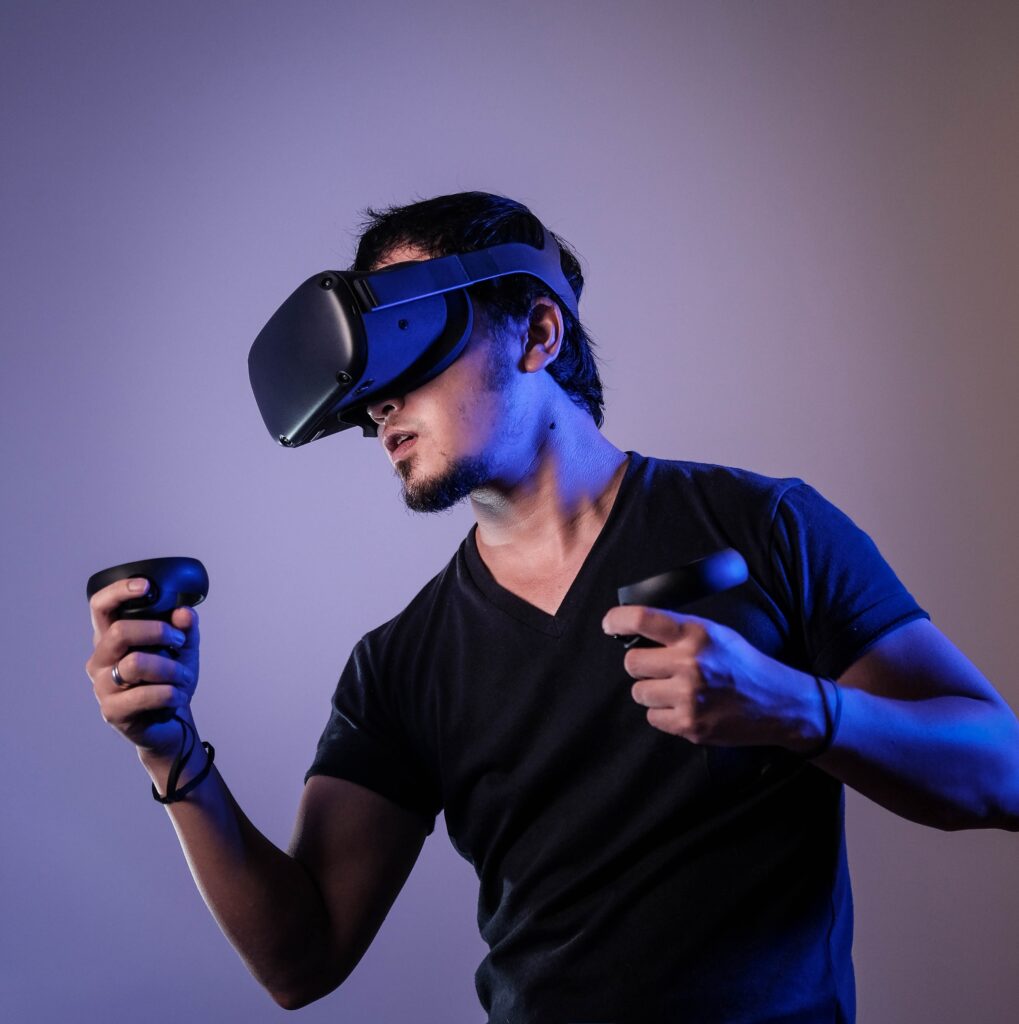
    Apple’s foray into the world of virtual and augmented reality has been a long time coming, and the tech giant is finally ready to enter the market. However, the company’s initial plans have changed, with Apple now postponing its first pair of augmented-reality glasses and instead focusing on a cheaper mixed-reality headset.

    The mixed-reality headset is expected to be released sometime in 2024 or early 2025, and will offer users a blend of virtual reality and augmented reality experiences. It will be powered by a Mac-grade M2 processor and a dedicated chip for handling AR and VR visuals, and will cost around $3,000. The goal is to eventually reduce the price of the headset to be competitive with other mixed-reality headsets on the market, such as Meta Platforms Inc.’s Quest Pro VR headset, which is currently priced at $1,500.

    Apple’s initial plan was to release the AR glasses after the debut of the mixed-reality headset, but the company has since postponed the launch due to technical challenges. AR glasses are designed to overlay visuals and information on real-world views, and earlier attempts at the concept such as Google Glass haven’t been successful. Additionally, the cost and weight of the device are big factors in its potential success, and Apple has yet to find the right chips, batteries, software, and manufacturing to make a lightweight device that can last all day.

    The company is still exploring the possibilities of AR glasses, with some teams continuing to look into the technologies for a standalone device. However, with the current state of technology, many within Apple are skeptical that the company will ever ship AR glasses. Other tech companies, such as Meta and Alphabet Inc.’s Google, have also announced their own plans for AR glasses, but their products remain in early stages.

    In the meantime, Apple is continuing to work on its mixed-reality headset, and has trademarked the names “Reality Pro” and “Reality One”. The Pro name is likely for the initial model, while the “One” suffix could be under consideration for the cheaper version. The company is also working on a dedicated chip for the headset, which will be called “Reality Processor”.

    For now, Apple’s mixed-reality headset will be the company’s first foray into the world of virtual and augmented reality. It will be interesting to see how the product is received, and whether it will be the precursor to the eventual launch of Apple’s long-awaited AR glasses.