PJFP.com

Pursuit of Joy, Fulfillment, and Purpose

Tag: aws

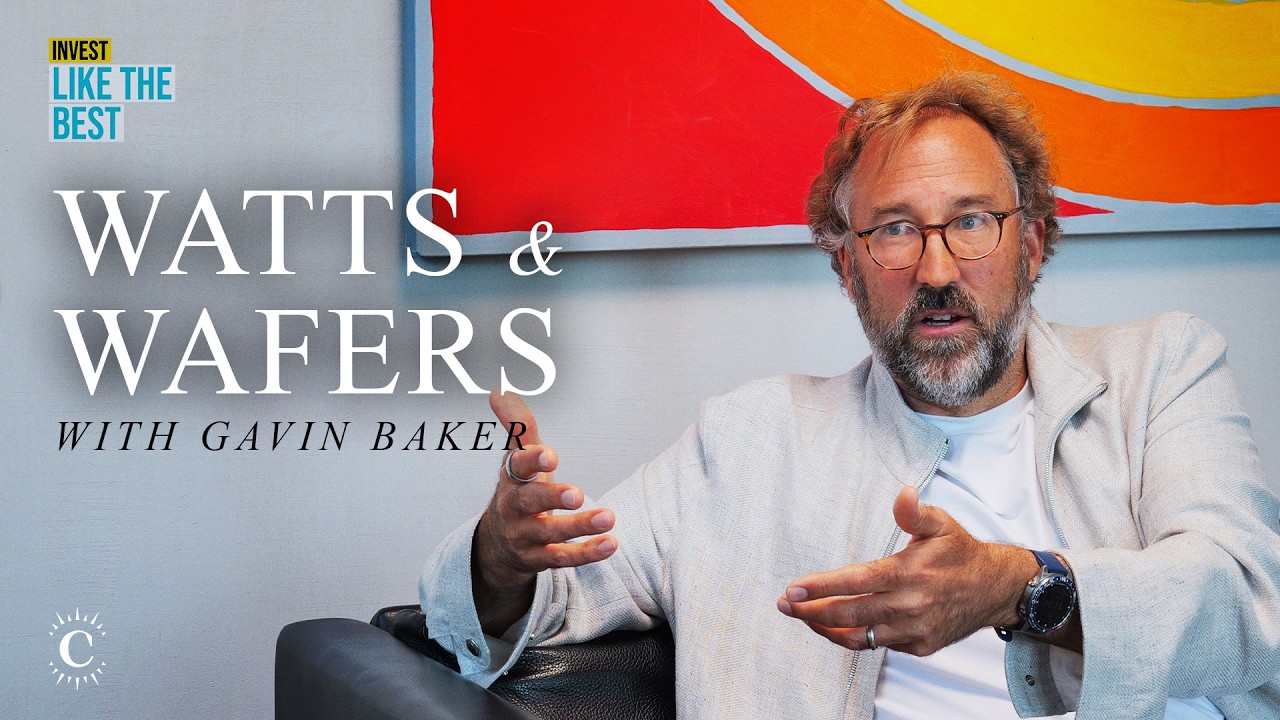
  • Gavin Baker on Orbital Compute, TSMC, Frontier AI Models, Anthropic’s Vertical Take Off, and the Coming Wafer Shortage

    Gavin Baker, founder and CIO of Atreides Management, returns to Patrick O’Shaughnessy’s Invest Like the Best for his sixth appearance. He calls the current AI moment the most extraordinary moment in the history of capitalism, walks through what Anthropic’s vertical takeoff in revenue actually means, lays out why orbital compute is closer than skeptics believe, dissects the TSMC bottleneck that may be the only thing standing between today’s market and a full-on AI bubble, and rates every hyperscaler on how they have positioned for a world where frontier model providers may stop selling API access altogether.

    TLDW

    Anthropic added eleven billion dollars of ARR in a single month, which is roughly the combined business of Palantir, Snowflake, and Databricks built over a decade. That is the setup. From there Gavin Baker covers the March and April selloff, the contrarian read that a closed Strait of Hormuz was actually bullish for American manufacturing competitiveness, why Anthropic and OpenAI multiples may be misleadingly cheap on an unconstrained run rate basis, why Elon Musk’s discipline on SpaceX valuation created a superpower of permanent access to capital, the practical engineering case for orbital compute as racks in space rather than Pentagon sized space stations, why TSMC’s capacity discipline is the single most important variable in whether the AI cycle becomes a bubble, what Terafab in Texas changes, why the Pareto frontier of AI models has flipped from Google dominance to Anthropic and OpenAI dominance in nine months, the shift from all you can eat AI subscriptions to usage based pricing and what that means for revenue scaling, Richard Sutton’s bitter lesson as the largest risk to the AI trade, why frontier tokens still capture an overwhelming share of economic value, the role of continual learning as the third great open question, why most new chip startups should not try to build a better GPU, why Cerebras did something different and hard, why disaggregated inference may extend GPU useful lives to ten or fifteen years and rescue the private credit industry, why being in the token path is the new venture filter, the new prisoner’s dilemma around releasing frontier models via API, an honest rating of Google, Meta, Amazon, and Microsoft, why personal safety is becoming a real AI era risk, and why he remains an AI optimist maximalist who believes this could be the next Pax Americana.

    Key Takeaways

    • Anthropic added eleven billion dollars of ARR in one month, more than the combined businesses of Palantir, Snowflake, and Databricks built across a decade. There is no precedent for this in the history of capitalism.
    • The SaaS and cloud revolution created between five and ten trillion dollars of value over twenty years. AI is replaying that compression on a timeline measured in months.
    • The March selloff was a drawdown driven by disagreement with price action, not invalidated thesis. That is the kind of drawdown an investor can lean into.
    • Deep Seek Monday in January 2025 was a similar setup. By the day of the selloff, AWS Asia GPU prices had already doubled, GPU availability had fallen, and it was obvious reasoning models would be vastly more compute hungry at inference. The market priced the opposite.
    • The Strait of Hormuz closing was actually positive for America. US natural gas (the primary input into US electricity, which feeds AI) fell twenty percent on Bloomberg while Asian and European natural gas doubled or tripled. American manufacturing competitiveness improved overnight.
    • The US is now the world’s largest producer and exporter of oil and gas. The economy is dramatically less energy intensive than in the 1970s. The shortage trauma comparison does not hold.
    • Tech as a sector traded as cheaply versus the rest of the market in early April as at any point in the last ten years, into the single most bullish moment for AI fundamentals on record.
    • Anthropic is dramatically more capital efficient than OpenAI, having burned roughly eighty percent less to reach a similar revenue scale. They have very different structural returns on invested capital.
    • Anthropic at roughly nine hundred billion for fifty billion of ARR (growing a thousand percent) is striking. Adjusted for compute constraint, the unconstrained run rate could be one hundred fifty to two hundred billion, putting the implied multiple closer to five times.
    • Claude Opus generates roughly seventy percent fewer tokens for the same question than previously, with token quantity tied to answer quality. Subscribers on flat-fee plans are getting a lobotomized model.
    • Elon Musk’s superpower is twenty years of making investors money. He never pushes valuation. SpaceX compounded low thirty percent per year for a decade because Musk treats fair pricing as a sacred covenant.
    • Capitalism will solve the watts shortage. The current bottleneck has shifted from chips and energy to zoning and political approval. Many capex decisions are paused until after the US midterms.
    • The watts shortage probably begins to alleviate in 2027 and 2028. Orbital compute solves it longer term.
    • Orbital compute is not Pentagon sized data centers in space. It is racks in space. A Blackwell rack is three thousand pounds, eight feet tall, four feet deep, three feet wide. SpaceX has shown a satellite roughly that size.
    • The satellites operate in sun synchronous orbit so solar wings (around five hundred feet per side) always face the sun and the radiator on the dark side always points to deep space.
    • Starlink V3 satellites already run at around twenty kilowatts. A Blackwell rack runs at one hundred kilowatts. SpaceX engineers express genuine confidence they have already solved cooling and radiator design at these scales.
    • Racks in space are connected with lasers traveling through vacuum, the same lasers already on every Starlink. SpaceX operates the world’s largest satellite fleet and, via xAI Colossus, the world’s largest data center on Earth.
    • Inference will move to orbit. Training will stay on Earth for a long time. Terrestrial data centers remain valuable for the rest of an investor’s career.
    • The wafer bottleneck is structural and political. TSMC is essentially Taiwan’s GDP, water, and electricity. The leaders see themselves as inheritors of Morris Chang’s sacred legacy and they do not behave like a Western public company.
    • Jensen Huang has never had a contract with TSMC. The relationship is run on handshakes and the assumption that things will be fair over time.
    • If TSMC did everything Jensen wanted, Nvidia could be selling two to three trillion dollars of GPUs in 2026 and 2027. TSMC’s discipline is the single largest factor preventing a true AI bubble.
    • Historically, foundational technologies always get a bubble. Railroads, canals, the internet. The current AI buildout is overwhelmingly funded out of operating cash flow, GPUs are running at one hundred percent utilization, and that is fundamentally different from the year 2000 fiber overbuild.
    • If one of Intel or Samsung Foundry catches up at the leading node, the other will follow, and TSMC’s discipline collapses. Watch TSMC capacity decisions to predict a bubble.
    • Terafab, the SpaceX and Tesla joint venture to build the world’s largest fab in America, has a partnership with Intel that grants access to fifty years of institutional foundry knowledge. The A teams at ASML, KLA, Lam Research, and Applied Materials will follow Elon’s reputation in hardware engineering.
    • The hiring playbook for Terafab includes building Taiwan Town, Japan Town, and Korea Town next to the fab. Recruit the engineers and import their families, their restaurants, and their staff.
    • Frontier tokens still capture an overwhelming share of all economic value created at the model layer. This is surprising and is one of the three big open questions for AI investing.
    • The Pareto frontier of intelligence versus cost has flipped. Nine months ago Google’s TPU dominated every point on the frontier. Today Anthropic and OpenAI dominate, with Grok 4.3 on the frontier and Gemini 3.1 hanging on.
    • Google’s conservative TPU V8 design (partly an attempt to reduce dependence on Broadcom and Nvidia) is the leading explanation for the loss of per token cost leadership.
    • AI pricing is shifting from all you can eat to usage based, mirroring the cellular and long distance industries. Cellular stopped being a great growth industry when it went all you can eat. AI just made the opposite move.
    • OpenAI and Anthropic together could exceed two hundred billion in ARR this year if compute keeps coming online and frontier token pricing holds.
    • The two hundred fifty dollar a month consumer AI plan is no longer enough to evaluate frontier capability. Enterprise plans with usage based billing are required because rate limits are now severe.
    • The three biggest open questions for AI investors are: violation of the bitter lesson via ASI or human ingenuity, whether frontier tokens keep commanding their premium, and when continual learning arrives.
    • Today’s continual learning is crude reinforcement learning during mid training on verifiable tasks. True continual learning means weights updating dynamically, like a human who learns the first time they touch fire.
    • Trying to build a better GPU is a losing strategy. Jensen will copy any one to three percent share design. Startups should target one percent share, do something different, and make it hard enough that Nvidia cannot fast follow.
    • Disaggregated inference (separating prefill and decode) opens new design canvases. Prefill is memory capacity bound. Decode is memory bandwidth bound. Each can be optimized independently.
    • Cerebras did something different and hard with wafer scale computing. Three generations of chips and real grit to get there.
    • Disaggregation of inference may stretch GPU useful lives to ten or fifteen years, dropping financing costs from low sevens to five or six percent, mathematically lowering the cost of the AI buildout and likely saving the private credit industry from its SaaS loan exposure.
    • Sellers of shortage outperform buyers of shortage. But owning the largest installed base of what is currently in shortage (hyperscaler CPU fleets, for example) is also a strong position.
    • Most of the economic value at the application layer of AI has been destroyed, not created. The exceptions are companies in the token path or in niches small enough that frontier labs ignore them.
    • Coding may be the shortest path to ASI. If you can write code, you can write code that does anything. Cursor, Cognition, and Anthropic correctly focused on it.
    • Jensen could probably get close to the frontier with his own Nemotron family of models whenever he wants. The fact that he chooses not to is a strategic decision about not commoditizing his customers.
    • The new prisoner’s dilemma in AI is whether frontier labs release their best model via API. If everyone agrees not to, Chinese open source falls behind. If anyone defects, the defector pulls ahead on revenue and resources, forcing everyone else to defect.
    • Google still owns the largest compute installed base. Without TPU’s prior cost advantage, this matters more. YouTube data has real value in a world of robotics. GCP is going crazy.
    • Meta deserves credit for becoming AI first internally faster than any other internet giant. Musa, their first MSL model, is impressively close to the Pareto frontier.
    • Amazon is strong because of Trainium and robotics driven retail P&L efficiency. Nova is better than it gets credit for.
    • Microsoft flinched on capex in early 2025 and lost position. Satya Nadella’s current decision to use Microsoft compute for Microsoft products rather than reselling to OpenAI is a courageous and probably correct call, even at the cost of an eight hundred dollar stock price.
    • The hyperscalers most engaged with startups are Amazon and Nvidia by a mile, followed by Google. Broadcom is the favorite ASIC partner. AMD, Microsoft, and Meta have minimal startup engagement and that will cost them as the best teams are now at startups.
    • Personal safety in an AI era requires a family or company safe word that cannot be socially engineered. Deepfake voice and video extortion at the speed of FaceTime is already feasible.
    • Ukraine is winning largely on the back of having the best battlefield AI outside America and Israel. Adversaries are starting to internalize what AI dominance means geopolitically.
    • An optimistic read is that this becomes a new Pax Americana, the way the post 1945 American nuclear monopoly was used to rebuild Germany and Japan rather than dominate.
    • AI cured a friend’s daughter’s rare disease by spinning up a research effort that identified a market drug capable of impacting her condition. That is the upside that keeps Gavin an AI optimist maximalist.

    Detailed Summary

    The most extraordinary moment in the history of capitalism

    Gavin’s framing of the current moment is unusually direct. Anthropic added eleven billion dollars of annual recurring revenue in a single month. The three highest profile SaaS companies of the last decade plus, Palantir, Snowflake, and Databricks, took a decade and tens of thousands of employees collectively to build the combined business that Anthropic added in thirty days. He has been investing through every major tech cycle and says there is no historical analog. Not the dotcom era, not the cloud transition, not mobile. This is its own thing.

    The market response, then, was peculiar. The NASDAQ sold off into the single most bullish moment for AI fundamentals on record. Tech traded at roughly its widest discount versus the rest of the market in a decade. Investors who said they wished they had bought into AI during 2022, during COVID, or during Deep Seek Monday got the same valuation setup again in early April, this time with an even clearer inflection.

    Why the Strait of Hormuz closing was secretly bullish for America

    One reason the macro fear in March may have been mispriced is that the same geopolitical event that drove the selloff was, in practice, a relative benefit to the United States. American natural gas, the input into American electricity, which is the input into American AI training and inference, fell roughly twenty percent. Asian and European natural gas prices doubled or tripled. The US emerged with sharply improved relative manufacturing competitiveness, which is exactly what the current administration cares about.

    The 1970s comparison does not hold. The US economy is dramatically less energy intensive, it is now the world’s largest producer and largest exporter of oil and gas, and there are no shortages, only price moves. That backdrop made it easier for disciplined investors to stay focused on AI fundamentals through the volatility.

    Anthropic and OpenAI valuations on an unconstrained run rate

    Anthropic at roughly nine hundred billion for fifty billion of ARR sounds rich until you adjust for the fact that the company is severely compute constrained. Gavin estimates that, unconstrained, Anthropic might be at one hundred fifty to two hundred billion in run rate revenue, putting the implied multiple closer to five times. He also points out that Claude Opus now generates roughly seventy percent fewer tokens for the same question than it used to. Token quantity correlates with answer quality, and Anthropic is rate limiting and shrinking outputs to ration capacity across its user base.

    Anthropic and OpenAI are also structurally very different. Anthropic has burned around eighty percent less cash than OpenAI to reach a comparable revenue scale. That implies very different long term returns on invested capital, though OpenAI has done a better job locking in compute and Sarah Friar is one of the most exceptional CFOs Gavin has worked with.

    Why neither lab is raising at a three trillion dollar valuation

    The answer Gavin gives is that both labs are deliberately leaving valuation on the table the way Elon has done for two decades. SpaceX compounded at low thirty percent annually for a decade because Elon never pushed price. The result is a permanent superpower of access to capital. Investors trust him because they have made money with him for twenty years. That is a moat that compounds with every round.

    Anthropic could probably raise at a one hundred percent premium to its rumored latest mark. They are choosing not to. In an uncertain world (Ukraine, Russia, Iran, Taiwan), preserving the ability to raise more capital later at fair prices is more valuable than maximizing this round.

    Watts and wafers, the two real constraints

    Capitalism is solving the watts problem. The leading PE infrastructure investors now say zoning and political approval, not chips or energy, are the gating factors. Companies are deferring big capex announcements until after the US midterms. Turbine capacity is being doubled at the manufacturers. Companies like Boom Aerospace are repurposing jet engines for grid use. Watts probably ease meaningfully in 2027 and 2028 and then orbital compute does the rest.

    Wafers are the harder problem because they live in Taiwan, run on handshakes, and depend on a corporate culture that does not respond to public market incentives. TSMC is essentially the GDP, water consumption, and electricity consumption of Taiwan. Its leadership treats the company as the legacy of Morris Chang. The Silicon Shield doctrine is real and internal.

    Orbital compute as racks in space

    The biggest mental update Gavin asks listeners to make is to stop picturing data centers in space as Pentagon sized space stations. A Blackwell rack is three thousand pounds and roughly the size of a refrigerator. SpaceX has shown a concept satellite of about that size. Solar wings extend five hundred feet to each side and the radiator extends hundreds of feet behind, both possible because the orbit is sun synchronous and the orientation is fixed relative to the sun.

    SpaceX engineers Gavin has spoken to at Starbase express genuine confidence that they have solved cooling at these power levels. They have. Starlink V3 satellites already operate at twenty kilowatts. A Blackwell rack is one hundred kilowatts. The same company operates the world’s largest satellite fleet and the world’s largest data center on Earth via xAI Colossus. The racks are connected to each other with lasers traveling through vacuum, technology already deployed in every Starlink. The naysayers, Gavin observes, are armchair skeptics and Larry Ellison’s response (he is out there landing rockets, no one else is) is the right frame.

    Terafab in Texas and the threat to TSMC’s discipline

    Terafab, the SpaceX and Tesla joint venture, intends to be the largest fab in the world. The partnership with Intel grants access to fifty years of foundry institutional knowledge, allowing Terafab to start three to five quarters behind the leading node rather than fifteen years behind. The A teams at the semicap equipment companies (ASML, KLA, Lam Research, Applied Materials) will follow Elon’s reputation in hardware engineering the same way they followed TSMC twenty years ago when Intel stumbled.

    The talent strategy is the part most observers underestimate. Recruit the best engineers globally, then import their families, their restaurants, their staff. Build Taiwan Town, Japan Town, and Korea Town next to the fab. Optimize the human experience for the people whose work matters. Intel and Samsung do not think that way.

    Bubble watch and the year 2000 comparison

    Every foundational technology in modern history has had a bubble. Railroads, canals, the internet. Carlota Perez documented why. Markets correctly identify the importance, diversity of opinion collapses, supply gets ahead of demand, the bubble crashes. The current cycle has two important differences. The buildout is overwhelmingly funded out of operating cash flow, not debt. Every GPU is running at one hundred percent utilization, while at the peak of the fiber bubble ninety nine percent of fiber was unused.

    TSMC discipline is the single largest reason a bubble has not formed. If Jensen could buy everything TSMC could theoretically make, Nvidia could sell two to three trillion dollars of GPUs in 2026 and 2027. At some point that becomes more than the market can absorb. If Intel or Samsung Foundry catches up at the leading node, the other will too. TSMC’s pricing discipline collapses and the bubble starts.

    The Pareto frontier and the loss of Google’s cost advantage

    The most important chart in AI is the Pareto frontier of model intelligence versus per token cost. Nine months ago, Google’s TPU based models dominated every point on it. OpenAI, Anthropic, and xAI sat inside the frontier. Today the frontier is dominated by Anthropic and OpenAI, with Grok 4.3 on the frontier and Gemini 3.1 hanging on by subsidization more than economics. The most likely cause is Google’s conservative TPU V8 design, an attempt to reduce dependence on Broadcom and Nvidia that sacrificed per token economics.

    The bitter lesson, frontier tokens, and continual learning

    Three open questions dominate AI investing. The first is whether Richard Sutton’s bitter lesson (more compute beats human algorithmic cleverness) gets violated by ASI itself optimizing for efficiency. Closer observers of AI are more skeptical of a violation. Gavin thinks ASI’s first move will be to make itself more efficient and more resourced, which is technically a temporary violation.

    The second is whether frontier tokens keep capturing the overwhelming share of economic value at the model layer. Today they do, surprisingly. Gemini 3.1 Pro was mindblowing nine months ago and is intolerable today. The third is when continual learning arrives. Today’s models need a million fire touches to learn what a human learns from one. True continual learning would mean dynamic weight updates in real time and would produce a fast takeoff.

    From all you can eat to usage based AI pricing

    AI is shifting from flat fee plans to usage based pricing. The historical analogy is cellular and long distance. Both stopped being great growth industries when they went all you can eat. AI just made the opposite move. The consequence is that flat fee subscribers, even on premium consumer plans, get a rate limited and token throttled version of the frontier model. Enterprise plans with usage based billing are now required to evaluate true capability. Gavin thinks the combination of new compute coming online and usage based pricing is what gets OpenAI and Anthropic past two hundred billion in combined ARR this year.

    Chip startups, prefill decode disaggregation, and Cerebras

    Trying to build a better GPU is the wrong move. The four scaled players (Nvidia, AMD, Trainium, TPU) have copy capability for any one to three percent share design that looks attractive. The good news for startups is that disaggregated inference (separating prefill and decode) opens a richer design canvas. Prefill is memory capacity bound. Decode is memory bandwidth bound. Each can be optimized independently. Andrew Fox’s analogy is a British naval ship of the eighteenth century. Prefill is loading the cannon. Decode is firing it.

    Cerebras is the model. Wafer scale computing is genuinely different and genuinely hard. It took three generations of chips to get right. Andrew Feldman and his team had the grit to keep going through chip one being a failure. The design has a high ratio of on chip compute and memory relative to shoreline IO, which is why Cerebras is now experimenting with putting an optical wafer on top of the compute wafer to solve scale out.

    GPU useful lives and the rescue of private credit

    One of the strongest claims in the conversation is that disaggregated inference will stretch GPU useful lives to ten or fifteen years. The skeptical narrative (GPUs are obsolete in two years, companies are cooking their depreciation books) is wrong. You can put a Cerebras system or Groq LPU in front of older Hopper or Ampere parts, use them only for prefill, and run them until they physically melt. Private credit, which is in pain from SaaS loans and which underwrote GPU loans on three to four year lives, may be saved by this.

    If GPU financing rates can come down from low sevens to five or six percent, the mathematics of the AI buildout improves materially. That is a structural tailwind that compounds for years.

    The application layer, the token path, and a new prisoner’s dilemma

    Trillions of dollars of value have been destroyed at the application layer, not created. Cursor and Cognition are the rare scaled exceptions, and they got there by focusing on coding very early. As Amjad Masad noted, coding is plausibly the shortest path to ASI because a coding agent can write itself into any new domain. Jamin Ball’s frame is that the new venture filter is whether the company is in the token path. Data Bricks is. Most application layer startups are not.

    Jensen could probably get close to the frontier with Nemotron whenever he wants, and the strategic question of whether to do that is a new prisoner’s dilemma. If every frontier lab agrees not to release best models via API, Chinese open source falls steadily behind. If anyone defects, the defector gains revenue and resources, and everyone else has to defect. The same dynamic exists between TSMC, Intel, and Samsung. If Nvidia or AMD ever truly used an alternative foundry, that foundry would catch up rapidly.

    Rating the hyperscalers

    Google has the largest compute installed base, the YouTube data that matters in a robotics world, and a search business that prints. Their loss of TPU cost leadership is the surprise of the year. If Google IO in five days does not produce a leapfrog model, the Nvidia centric narrative gets even stronger.

    Meta deserves real credit. Zuckerberg made Meta AI first internally faster than any other internet giant, paid up for the talent contracts when no one else would, and shipped Musa as a first model from MSL that is close to the Pareto frontier. Amazon is well positioned on Trainium, robotics in retail, and a Nova model line that is better than it gets credit for. Microsoft flinched on capex in early 2025 and lost position. Satya Nadella’s current decision to use Microsoft compute for Copilot rather than reselling to OpenAI is courageous and probably correct, even at the cost of stock price.

    The most interesting cross hyperscaler metric is startup engagement. Nvidia and Amazon engage deeply with startups. Google is next. Broadcom is the favored ASIC partner. AMD, Microsoft, and Meta have minimal startup engagement, which Gavin believes will cost them as the best teams now sit at startups.

    Personal safety, geopolitics, and the Pax Americana case

    The closing section turns darker. Personal safety in an AI era requires a family or company safe word that cannot be socially engineered. Deepfake voice and video extortion via something that looks exactly like your child calling on FaceTime is already feasible. Political violence against AI leaders is a real concern. Geopolitically, Ukraine is winning largely because it has the best battlefield AI outside America and Israel. How adversaries respond to that asymmetry is the next great variable.

    Gavin’s optimistic frame is the Pax Americana. After 1945 the US had a nuclear monopoly and could have controlled the world. Instead it rebuilt Germany and Japan, both of which became the most reliable American allies for the next eighty years. If AI dominance plays out similarly, this is a generationally positive story rather than a destabilizing one. The personal anecdote that closes the conversation is a friend whose daughter was diagnosed with a rare genetic condition. He spun up agents, identified a drug already on the market that addresses her mutation, and her life is immeasurably different because of AI. That is the upside.

    Thoughts

    The Anthropic eleven billion in a month framing is the kind of stat that resets priors. The right way to interpret it is not as a one off but as a measure of how fast value can compound when the underlying technology improves on a curve steeper than the ability of the rest of the economy to absorb it. The skeptical question is whether that ARR is durable or whether it is heavily tied to a customer base of other AI companies that are themselves on a single venture funded year of runway. The bullish answer is that frontier coding, frontier research, and frontier enterprise tasks are not going to stop being valuable, and Anthropic is the best at all three. Both can be true. The number is still extraordinary.

    The argument that TSMC discipline is the only thing preventing a bubble is the analytically tightest part of the conversation. The implied trade is to watch TSMC capacity additions like a hawk and to be more, not less, cautious if Intel Foundry or Samsung Foundry ever announce real share at the leading node. The Terafab thesis is more speculative but more interesting. If Elon’s talent recruiting playbook works and the Intel partnership gives Terafab a real seat at the table within five years, the geometry of the global semiconductor industry shifts in a way that is bullish for American manufacturing, bullish for power and water infrastructure in Texas, and ambiguous for TSMC itself.

    The Pareto frontier discussion deserves more attention than it usually gets. Pricing leadership in AI is not a vanity metric. It determines who can subsidize free tier usage, who can absorb compute shortages, who can ship cheaper enterprise plans, and ultimately whose model becomes the default for any given workload. Google losing per token leadership in nine months is one of the most under analyzed events in the sector and it explains a lot about why Anthropic and OpenAI are growing the way they are. If Google IO does not produce a leapfrog model, the implied verdict on TPU V8 design choices gets a lot harsher.

    The application layer destruction point is worth sitting with. Founders building on top of frontier models are competing in a world where the model itself moves faster than any moat they can build, where the model lab can absorb their niche if it gets interesting, and where the only protection is either deep token path integration or a niche so small the lab does not bother. That is a much harsher venture environment than the early SaaS era. The compensating opportunity is that one human can now run a hundred agents, so the ceiling on what a small team can build is correspondingly higher. The bet is that productivity per founder rises faster than competitive pressure from the labs. We will find out.

    The orbital compute pitch is the section that will polarize listeners. The naive read is that this is science fiction. The closer read is that every component (sun synchronous orbit, laser interconnect, twenty kilowatt satellite buses, ten thousand satellite manufacturing cadence, full rocket reusability) already exists. The remaining engineering problems are repair, maintenance, and radiator scale, all of which are real but tractable on a five to ten year horizon. The strategic implication is that the political and zoning ceiling on terrestrial data centers becomes less binding if orbital compute is a credible alternative for inference workloads. The investor implication is that being short the watts and cooling complex on a five year horizon is a real trade, not a meme.

    Watch the full conversation here.

  • Krishna Rao on Anthropic Going From 9 Billion to 30 Billion ARR in One Quarter and the Compute Strategy Powering Claude

    Krishna Rao, Chief Financial Officer of Anthropic, sat down with Patrick O’Shaughnessy on Invest Like the Best for one of the most detailed public looks yet at the operating engine behind Claude. He covers how Anthropic compounded from $9 billion of run rate revenue at the start of the year to north of $30 billion by the end of Q1, why he spends 30 to 40 percent of his time on compute, the playbook for buying gigawatts of AI infrastructure across Trainium, TPU, and GPU platforms, how Anthropic prices its models, why returns to frontier intelligence keep climbing, and what the Mythos release tells us about the cyber capabilities of the next generation of Claude.

    TLDW

    Anthropic is running the most compute fungible frontier lab in the world, with active deployments across AWS Trainium, Google TPU, and Nvidia GPU, and an internal orchestration layer that lets a chip serve inference in the morning and run reinforcement learning the same evening. Krishna Rao explains the cone of uncertainty that governs gigawatt scale compute procurement, the floor Anthropic refuses to drop below on model development compute, the Jevons paradox unlock from cutting Opus pricing, the 500 percent annualized net dollar retention from enterprise customers, the layer cake of long term deals with Google, Broadcom, Amazon, and the recent xAI Colossus tie up in Memphis, the phased release of the Mythos model in response to spiking cyber capabilities, the internal use of Claude Code to produce statutory financial statements and run a Monthly Financial Review skill, and why the team believes scaling laws are alive and well. The interview also covers fundraising history through Series D and Series E, the $75 billion already raised plus another $50 billion coming, talent density beating talent mass during the Meta poaching wave, and Rao’s belief that biotech and drug discovery represent the most exciting frontier for AI.

    Key Takeaways

    • Anthropic entered the year with about $9 billion of run rate revenue and ended the first quarter with north of $30 billion of run rate revenue, a more than 3x leap driven by model intelligence gains and the products built around them.
    • Compute is described as the lifeblood of the company, the canvas everything else is built on, and the most consequential class of decisions Rao makes. Buy too much and you go bankrupt. Buy too little and you cannot serve customers or stay at the frontier.
    • Rao spends 30 to 40 percent of his time on compute, even today, and the leadership team meets repeatedly on both procurement and ongoing compute allocation.
    • Anthropic is the only frontier language lab actively using all three major chip platforms in production: AWS Trainium, Google TPU, and Nvidia GPU. It is also the only major model available on all three clouds.
    • Flexibility is the central design principle. Anthropic builds flexibility into the deals themselves, into the orchestration layer that maps workloads to chips, and into compilers built from the chip level up.
    • The cone of uncertainty frames procurement. Small differences in weekly or monthly growth compound into wildly different two year outcomes, so the team plans across a range of scenarios rather than a single point estimate, and ranges toward the upper end while protecting downside.
    • Compute allocation across the company sits in three buckets: model development and research, internal employee acceleration, and external customer serving. A non negotiable floor protects model development even when customer demand is tight.
    • Anthropic estimates that if it cut off internal employee use of its own models, the freed compute could serve billions of dollars of additional revenue. It chooses not to, because internal use compounds into better future models.
    • Intelligence is multi dimensional, not a single IQ score. Anthropic measures real world capability through customer feedback, long horizon task performance, tool use, computer use, and speed at agentic tasks, not just leaderboard benchmarks that have largely saturated.
    • Each Opus generation, 4 to 4.5 to 4.6 to 4.7, delivers both capability improvements and an efficiency multiplier on token processing. New models often serve customers at a fraction of the prior cost while doing more.
    • Reinforcement learning is described as inference inside a sandbox with a reward function, so model efficiency gains directly improve internal RL throughput. The flywheel is tightly coupled.
    • Over 90 percent of code at Anthropic is now written by Claude Code, and a large share of Claude Code itself is written by Claude Code.
    • Anthropic shipped roughly 30 distinct product and feature releases in January and the pace has accelerated since.
    • Scaling laws, in Anthropic’s internal data, are alive and well. The team holds itself to a skeptical scientific standard and still does not see them slowing down.
    • Anthropic recently signed a 5 gigawatt deal with Google and Broadcom for TPUs starting in 2027, plus an Amazon Trainium agreement for up to 5 gigawatts, totaling more than $100 billion in commitments. A significant portion lands this year and next year.
    • A new partnership for capacity at the xAI Colossus facility in Memphis was announced just before the interview, aimed at expanding consumer and prosumer capacity.
    • Pricing has been remarkably stable across Haiku, Sonnet, and Opus. The biggest deliberate change was lowering Opus pricing, which produced a textbook Jevons paradox: consumption rose far faster than the price drop, and the new Opus 4.6 and 4.7 slot in at the same price point.
    • Mythos is the first model Anthropic chose to release in a phased way because of a sharp spike in cyber capability. In an open source codebase where a prior model found 22 security vulnerabilities, Mythos found roughly 250.
    • The Mythos release framework focuses on defensive use first, expands access over time, and is presented as a template for future capability spikes.
    • Anthropic now sells to 9 of the Fortune 10 and reports net dollar retention above 500 percent on an annualized basis. These are not pilots. Rao describes signing two double digit million dollar commitments during a 20 minute Uber ride to the studio.
    • The platform strategy is mostly horizontal. Anthropic will go vertical with offerings like Claude for Financial Services, Claude for Life Sciences, and Claude Security where it can demonstrate the model’s capabilities, but expects most application value to accrue to customers building on top.
    • Investors raised over $75 billion in equity since Rao joined, with another $50 billion in commitments tied to the Amazon and Google deals. Capital intensity is real, but the raises fund the upper end of the cone of uncertainty more than they fund current losses.
    • The Series E close coincided with the day the DeepSeek news broke, forcing investors to reassess their AI thesis in real time. Anthropic closed the round anyway.
    • Inside finance, Claude now produces statutory financial statements for every Anthropic legal entity, with a human checker. A library of more than 70 finance specific skills underpins workflows.
    • A custom Monthly Financial Review skill produces a 90 to 95 percent ready monthly close report, so leadership discussion shifts from reconciling numbers to debating implications.
    • An internal real time analytics platform called Anthrop Stats compresses weekly insight cycles from hours to about 30 minutes.
    • The biggest token user inside Anthropic’s finance team is the head of tax, focused on tax policy engines and workflow automation. The most senior people, not the youngest, are leading internal adoption.
    • Talent density beats talent mass. When Meta and others ran aggressive offer waves, Anthropic lost two people while peer labs lost dozens.
    • All seven Anthropic co founders remain at the company, as does most of the first 20 to 30 employees, which Rao credits to a collaborative, transparent, debate friendly culture and a real culture interview that can veto otherwise top tier candidates.
    • Dario Amodei holds an open all hands every two weeks, writes a short prepared document, and takes unscripted questions from anyone at the company.
    • AI safety investments in interpretability and alignment have a commercial side effect. Looking inside the model helps Anthropic build better models, and enterprises selling sensitive workloads want to trust the lab they hand customer data to.
    • Anthropic explicitly identifies as America first in its approach to model development, and engages closely with the US administration on capability releases such as Mythos.
    • The longer term product vision is the virtual collaborator: an agent with organizational context, access to the company’s tools, persistent memory, and the ability to work on ideas, not just tasks, over long horizons.
    • CoWork, Anthropic’s extension of the Claude Code paradigm into general knowledge work, is being adopted faster than Claude Code itself when indexed to the same point in its launch curve.
    • Anthropic’s product teams ship daily, with a fleet of agents working across the company on specific tasks. Everyone effectively becomes a manager of agents.
    • The dominant downside risks to Anthropic’s high end forecast are slower customer diffusion of model capability into real workflows, scaling laws flattening unexpectedly, and Anthropic losing its position at the frontier.
    • Rao is most excited about biotech and healthcare outcomes, especially the prospect that AI could push drug discovery and lab throughput up 10x or 100x, turning currently incurable diagnoses into treatable ones within a patient’s lifetime.

    Detailed Summary

    Compute as Lifeblood and the Cone of Uncertainty

    Rao opens with the claim that compute is the most important resource at Anthropic, and the most consequential decision class in the company. You cannot buy a gigawatt of compute next week. You have to anticipate demand a year or two in advance, and the cost of being wrong in either direction is high. Buy too much and the unit economics collapse. Buy too little and you cannot serve customers or stay at the frontier, which are described as the same failure mode. To navigate this, the team uses a cone of uncertainty rather than point estimates. Small differences in weekly growth compound into vastly different two year outcomes, and Anthropic tries to position itself toward the upper end of that cone while preserving optionality. Rao notes he has had to consciously break a lifetime of linear thinking and force himself into exponential models.

    Three Chip Platforms, One Orchestration Layer

    Anthropic uses Amazon’s Trainium, Google’s TPUs, and Nvidia’s GPUs fungibly. That was not free. Adopting TPUs at scale started around the third TPU generation, when outside observers thought it was a strange choice. Anthropic invested years into compilers and orchestration so workloads can flow across chips by generation and by job type. The team works deeply with Annapurna Labs at AWS to influence Trainium roadmaps because Anthropic stresses these chips harder than almost anyone. The result is what Rao believes is the most efficient utilization of compute across any frontier lab, with a dollar of compute going further inside Anthropic than anywhere else.

    Three Buckets and the Model Development Floor

    Compute gets allocated across model development, internal acceleration of employees, and customer serving. The conversations are collaborative rather than zero sum, but there is a hard floor on model development that the company refuses to cross even if it makes customer demand harder to serve in the short term. The thesis is simple. The returns to frontier intelligence are extremely high, especially in enterprise, so cutting model investment to chase near term revenue is a bad trade. Internal employee use is also explicitly protected. Rao notes that diverting that internal usage to external customers would unlock billions of additional revenue today, but the compounding benefit of accelerating researchers and engineers outweighs that.

    Intelligence Is Multi Dimensional

    Rao pushes back hard on the IQ framing of model progress. Benchmarks saturate quickly, and the real signal comes from how customers actually use the models. Anthropic looks at long horizon task completion, tool use, computer use, and time to result on agentic tasks. Two equally capable agents who differ only in speed produce dramatically different value, because the faster one compounds into more attempts and more outcomes. Frontier model leaps are also fuel efficient. The sedan to sports car analogy breaks down because each Opus generation, 4 to 4.5 to 4.6 to 4.7, delivers a step up in capability and a multiplier on per token efficiency.

    From 9 Billion to 30 Billion ARR in One Quarter

    The headline number for the quarter is a leap from about $9 billion of run rate revenue to over $30 billion, accomplished without onboarding a corresponding step up in compute, because new compute lands on ramps locked in 12 months prior. Rao attributes the leap to model capability gains, products that surface that intelligence in usable form factors, and an enterprise customer base that pulls more workloads onto Claude as each generation unlocks new use cases. Coding started the wave with Sonnet 3.5 and 3.6, and the same pattern is now playing out elsewhere in the economy.

    Recursive Self Improvement and Talent Density

    Over 90 percent of Anthropic’s code is now written by Claude Code, including most of Claude Code itself. Rao describes this as a structural reason to keep allocating internal compute to employees even when external demand is hungry. Recursive self improvement is not happening through models that need no humans. It is happening through researchers who set direction and use frontier models to compress months of work into days. Talent density beats talent mass. When Meta and other labs went after Anthropic researchers with very large packages, Anthropic lost two people while peer labs lost dozens.

    Procurement Strategy and the Layer Cake

    Compute lands as a layer cake. Last month Anthropic signed a 5 gigawatt TPU deal with Google and Broadcom starting in 2027, alongside an Amazon Trainium agreement for up to 5 gigawatts. The total is north of $100 billion in commitments. A new tie up with xAI’s Colossus facility in Memphis was announced just before the interview, intended for nearer term capacity to support consumer and prosumer growth. Anthropic evaluates near term and long term compute deals against the same set of variables: price, duration, location, chip type, and how efficiently the team can run it. The relationships are deeper than procurement. The hyperscalers are also distribution channels for the model.

    Platform First, Selective Vertical Bets

    Rao describes Anthropic as a platform first business, with most expected value accruing to customers building on the platform. The team will only go vertical when it can either demonstrate capabilities that are skating to where the puck is going, like Claude Code did before the models could fully support it, or when it wants to set a template for an industry vertical, as with Claude for Financial Services, Claude for Life Sciences, and Claude Security. He acknowledges that surprise capability jumps make customers anxious about the platform competing with them, and frames Anthropic’s mitigation as deeper partnerships, early access programs, and an emphasis on accelerating customer building rather than disintermediating it.

    Pricing, Jevons Paradox, and Return on Compute

    Pricing across Haiku, Sonnet, and Opus has been stable. The notable exception is Opus, which Anthropic deliberately repriced lower when launching Opus 4.5 because Opus class problems were being squeezed into Sonnet workloads. Efficiency gains made it possible to serve Opus profitably at the new level. The consumption response was a classic Jevons paradox, with usage rising far more than the price reduction would have predicted, and Opus 4.6 then slotted in at the same price with a capability bump. Margins are not framed as a per token markup. Compute is fungible across model development, internal acceleration, and customer serving, so Anthropic measures return on the entire compute envelope rather than software style variable cost per call.

    Fundraising, DeepSeek, and Capital Intensity

    Rao joined while Anthropic was closing its Series D, mid frontier model launch and during the FTX share liquidation. Investors initially questioned whether Anthropic needed a frontier model, whether AI safety and a real business could coexist, and why the sales team was so small. The Series E closed the same day the DeepSeek news broke, with markets violently re pricing AI in real time. Since Rao joined, Anthropic has raised over $75 billion, with another $50 billion tied to the Amazon and Google compute deals. The reason for the size of the raises is the cone of uncertainty, not current losses. Returns on compute today are described as robust.

    Mythos, Cyber Capability, and Phased Releases

    The Mythos release marks the first time Anthropic shipped a model under a deliberately phased rollout because of a specific capability spike. Cyber is the dimension that spiked. Where a prior model found 22 vulnerabilities in an open source codebase, Mythos found roughly 250. The defensive applications, automatically patching massive codebases, are genuinely valuable, but the offensive risk is real enough that Anthropic chose to release to a smaller group first and expand access over time. Rao positions this as a template for future capability spikes, not a permanent restriction. He also describes the relationship with the US administration as cooperative, including the Department of War interaction, with Anthropic supporting a regulatory framework that does not strangle innovation but takes responsibility seriously.

    Claude Inside Finance

    Anthropic’s finance team is one of the strongest internal case studies. Statutory financial statements for every legal entity are produced by Claude, with a human reviewer. A skill library of more than 70 finance specific skills underpins a Monthly Financial Review skill that drafts the monthly close at 90 to 95 percent ready, so leadership meetings shift from explaining the numbers to discussing what to do about them. An internal analytics platform called Anthrop Stats compresses weekly insight cycles from hours to 30 minutes. The biggest internal token user in finance is the head of tax, building policy engines, which Rao highlights as evidence that adoption is driven by the most senior people, not just younger engineers.

    Culture, Co Founders, and the Race to the Top

    Seven co founders should not, on paper, work as a leadership group. Rao argues it works because the culture was set early around collaboration, intellectual honesty, transparency, and humility. The culture interview is a real veto, not a checkbox. Dario Amodei runs an all hands every two weeks with a short written piece followed by unscripted questions, and decisions, once made, get clean alignment rather than residual politics. Anthropic frames its approach as a race to the top, where being a model for how to build the technology responsibly is itself a recruiting and retention advantage.

    The Virtual Collaborator and the Frontier Ahead

    The product vision Rao describes is the virtual collaborator. Not just a smarter chatbot, but an agent with organizational context, access to the company’s tools, memory, and the ability to work on ideas over long horizons. Coding was the first domain to feel this, but CoWork, Anthropic’s extension of the Claude Code pattern into general knowledge work, is being adopted faster than Claude Code was at the same age. Product development inside Anthropic already looks different. Teams ship daily, with fleets of agents working across the company, and individual humans increasingly act as managers of those fleets.

    Downside Risks and What Excites Him Most

    The three risks Rao names if asked to do a premortem on a softer year are slower customer diffusion of model capability into real workflows, scaling laws unexpectedly flattening, and Anthropic losing its frontier position to competitors. None of these are observed today, but he is unwilling to claim them with certainty. On the upside, he is most excited about biotech and healthcare. Lab throughput rising 10x or 100x, paired with AI assisted clinical workflows, could turn currently incurable diagnoses into treatable ones within a patient’s lifetime. That is the outcome he wants the technology to chase.

    Thoughts

    The most consequential structural point in this interview is the framing of compute as a single fungible resource pool measured by return on the entire envelope, not as a variable cost per inference call. That accounting shift, if you accept it, breaks most of the bear cases about AI lab unit economics. The bear argument almost always assumes that a token served to a customer is the only thing the chip did that day. Rao’s version is that the same fleet trains models in the morning, runs reinforcement learning at lunch, serves customers in the afternoon, and accelerates internal engineers in the evening. If even half of that is real, the right comparison is total compute spend versus total enterprise value created by the platform, and on that ratio Anthropic looks structurally strong rather than weak.

    The Jevons paradox on Opus pricing is the most actionable insight for anyone running an AI product. Most teams default to either chasing premium pricing on the newest model or undercutting to chase volume. Anthropic did something more disciplined: it left Sonnet and Haiku alone, dropped Opus when efficiency gains made it serveable, and watched aggregate usage rise faster than the price cut. The lesson is that frontier model pricing is not really a price problem. It is a capability access problem, and elasticity around the right tier is much higher than the standard SaaS playbook implies.

    The Mythos cyber jump deserves more attention than it has gotten. Going from 22 to 250 vulnerabilities found in the same codebase is the kind of capability discontinuity that genuinely changes the regulatory calculus. Anthropic is signaling that it can identify these discontinuities ahead of release and choose a deployment shape that respects them. Whether peer labs adopt similar discipline is the open question. Anthropic’s race to the top framing assumes they will be forced to. The competitive market may say otherwise.

    The hiring data point is the most underrated investor signal. Two departures while peer labs lost dozens, during the most aggressive talent war in tech history, is not a culture poster. It is a structural advantage that compounds every time another lab tries to buy its way to the frontier. Money can be matched. Conviction in the mission, transparent leadership, and a culture interview that can veto otherwise stellar candidates cannot. If you believe scaling laws hold, talent retention at this density is one of the few moats that actually scales with capital.

    Finally, the most interesting personal admission is that Krishna Rao, a finance leader trained at Blackstone and Cedar, is openly telling investors that linear thinking is the failure mode he had to break out of. The companies that pattern match this moment to prior technology waves are mispricing it, in both directions. The cone of uncertainty Anthropic uses internally is the right metaphor for everyone else too. If you are forecasting AI as if it is cloud in 2010, you are almost certainly wrong, and the magnitude of the error is much larger than it would be in any prior era.

    Watch the full conversation with Krishna Rao on Invest Like the Best here.

  • The Bezos Scrolls: Unearthing Decades of Amazon’s Core Business Wisdom

    For over two decades, Jeff Bezos’s annual letters to Amazon shareholders were more than just financial updates; they were a masterclass in business philosophy, a living document chronicling the evolution of one of the world’s most influential companies. These letters reveal the foundational principles that propelled Amazon from an online bookstore to a global behemoth, offering timeless wisdom on customer obsession, long-term thinking, innovation, and much more. We’ve dived deep into this treasure trove to extract and distill the essential business tenets that defined Amazon’s journey. Prepare for a deep dive into the strategic mind that built an empire, all under the guiding mantra: “It’s still Day 1.”

    I. The North Star: Relentless Customer Obsession

    If there’s one principle that echoes loudest through Bezos’s letters, it’s an unwavering, almost fanatical, focus on the customer. This isn’t just a platitude; it’s the bedrock of Amazon’s decision-making.

    • Start with the Customer and Work Backwards (2008, 2009): Instead of focusing on existing skills and then finding markets (“skills-forward”), Amazon identifies customer needs (even unarticulated ones) and then acquires or builds the necessary competencies to meet them. This often demands developing fresh skills and venturing into uncomfortable territory.
    • Customers are Divinely Discontent (2016, 2017): Even when happy, customers always want something better. This beautiful dissatisfaction is a constant wellspring for invention. Yesterday’s “wow” quickly becomes today’s “ordinary.”
    • Earn Trust, Not Just Optimize Short-Term Profit (2002, 2008): Pricing strategies aim to earn customer trust over the long haul, even if it means lower per-item margins in the short term. The belief is that trust leads to more items sold over time.
    • Brand Image Follows Reality (1998): Customers are perceptive and smart. A strong brand is built on delivering actual value (selection, ease-of-use, low prices, service), not just marketing.
    • Fear Customers, Not Competitors (1998, 2012): While competitors should be monitored and can inspire, the primary fear should be failing customers, as their loyalty is conditional on receiving the best service. Energy should come from a desire to impress customers, not best competitors.
    • Proactive Improvements (2012): Don’t wait for external pressures. Improve services, add benefits, lower prices, and invent *before* you have to. This builds trust and enhances customer experience even in areas of leadership. Examples include proactive refunds for poor video playback or pre-order price guarantees.
    • The Customer Franchise is the Most Valuable Asset (2001): Nourish it with innovation and hard work.

    II. The Horizon: It’s All About the Long Term

    Bezos consistently emphasized that Amazon makes decisions with a multi-year, even multi-decade, horizon. This long-term orientation is a fundamental differentiator.

    • Prioritize Long-Term Shareholder Value (1997, 2003): The fundamental measure of success is shareholder value created over the long term. This often means making decisions that might not look good on short-term financial statements or to Wall Street. Owners are different from tenants; long-term thinking is a requirement of true ownership.
    • Focus on Free Cash Flow Per Share (2001, 2004, 2008): This is the ultimate financial measure. Earnings don’t directly translate to cash flows, and shares are worth the present value of their future cash flows. Decisions should maximize future cash flows over optimizing GAAP accounting appearances.
    • Invest Aggressively for Market Leadership (1997): Strong market leadership leads to a more powerful economic model (higher revenue, profitability, capital velocity, ROI). Early growth is prioritized to achieve scale.
    • Patience for New Ventures (2006, 2014, 2015): Meaningful new businesses (like AWS, Marketplace, Prime) take time – often 3 to 7 years or more – to mature and contribute significantly to the overall company. This requires patience and nurturing.
    • The Stock Market: Voting vs. Weighing Machine (2000, 2012): “In the short term, the stock market is a voting machine; in the long term, it’s a weighing machine.” Amazon aims to be weighed, working to build a “heavier” company over time, not celebrating short-term stock fluctuations.
    • The Current Experience is the Worst it Will Ever Be (1999): An optimistic view driven by the belief that foundational technologies continually improve, enabling ever-better customer experiences.

    III. The Engine: Invention, Pioneering, and Embracing Failure

    Amazon’s culture is deeply rooted in invention, experimentation, and a remarkable comfort with failure as an inevitable byproduct of innovation.

    • Failure and Invention are Inseparable Twins (2015, 2018): To invent, you must experiment, and experiments, by definition, have uncertain outcomes. If you know in advance it’s going to work, it’s not an experiment. Amazon strives to be “the best place in the world to fail.”
    • Make Bold Bets, Not Timid Ones (1997, 2000, 2014): Where there’s a sufficient probability of gaining market leadership, make bold investment decisions. Some will pay off, others won’t, but valuable lessons are learned either way.
    • Big Winners Pay for Many Experiments (2015, 2018): Business has a long-tailed distribution of returns; a single big win can cover the cost of many losers. This justifies bold, even multi-billion dollar, experimental failures if the potential prize is large enough. Failure needs to scale with the company.
    • Intuition, Curiosity, and the Power of Wandering (2018): While efficiency is important, outsized, non-linear discoveries often require “wandering” – a process guided by hunch, gut, intuition, and curiosity, rather than a clear, efficient plan. AWS itself was an example of this.
    • Missionaries Build Better Products (2007): A heartfelt, missionary zeal for a product or service leads to better outcomes than a purely mercenary approach.
    • Constant Improvement and Experimentation (1998, 2013): Use tools like “Weblabs” to run thousands of experiments annually. Foster a pioneering spirit.
    • Empower Others to Unleash Creativity (2011): Platforms like AWS, Fulfillment by Amazon (FBA), and Kindle Direct Publishing (KDP) are powerful self-service tools that allow thousands to experiment and innovate. When a platform is self-service, even improbable ideas get tried, and many work.
    • Decentralized Invention (2013): Innovation should happen at all levels throughout the company, not just among senior leaders, to achieve robust, high-throughput invention.

    IV. The Framework: Operational Excellence and Efficiency

    While dreaming big, Amazon maintains a rigorous focus on the details of execution and cost-consciousness.

    • Maintain a Lean, Cost-Conscious Culture (1997, 2008): Spend wisely, especially when incurring losses. Continuously seek out and eliminate “muda” (waste). This efficient cost structure is essential for offering low prices.
    • Operational Excellence Drives Customer Experience and Productivity (1999, 2001): Improving efficiency (e.g., faster delivery) improves customer experience, which builds brand and lowers customer acquisition costs. Eliminating defects and errors saves money and customer time.
    • Transform Customer Experience into Fixed Costs (2002): Features like vast selection, product information, and recommendations, when built with technology, become largely fixed expenses. As sales grow, these costs shrink as a percentage of sales.
    • Capital-Efficient Business Model (1998, 1999, 2004): Centralized distribution, low inventory (high turnover), and modest fixed asset investments contribute to a cash-generative operating cycle.
    • Scale is Central (1997, 2000): Online selling is a scale business with high fixed costs and relatively low variable costs. Scale allows for lower prices and better service.
    • Technology as a Fundamental Tool (2010): Deeply integrate technology (SOA, machine learning, distributed systems) into all teams, processes, and decision-making to evolve and improve every aspect of the customer experience.

    V. The Team: Hiring, Culture, and Empowerment

    Amazon’s success is inextricably linked to its ability to attract, retain, and motivate exceptional talent within a distinctive culture.

    • Set a High Bar in Hiring (1997, 1998): This is the single most important element of success. Ask three questions:
    • Will you admire this person?
    • Will this person raise the average level of effectiveness of the group they’re entering?
    • Along what dimension might this person be a superstar?
    • Employees as Owners (1997, 2018): Encourage employees to think like owners, often by weighting compensation towards stock options rather than cash.
    • Demanding Work Environment (1997): “You can work long, hard, or smart, but at Amazon.com you can’t choose two out of three.” Building something important isn’t easy.
    • Culture is Discovered, Not Created (2015): Corporate cultures are enduring and stable, formed over time by people and events. People self-select into cultures that fit them.
    • Insist on High Standards (2017): High standards are teachable, domain-specific, require recognition of what “good” looks like, and realistic coaching on the “scope” (effort/time) required. They lead to better products, aid recruiting/retention, protect invisible work, and are fun.
    • Employee Empowerment Programs (2013, 2014, 2015, 2018, 2020): Initiatives like Career Choice (pre-paying tuition for in-demand fields), Pay to Quit, Virtual Contact Centers, Leave Share, and Ramp Back demonstrate investment in employees. Aim to be “Earth’s Best Employer and Earth’s Safest Place to Work.”

    VI. The Compass: Decision Making & Strategy

    How Amazon approaches decisions, from daily choices to company-altering bets, is a core part of its DNA.

    • Data-Driven vs. Judgment-Based Decisions (2005): Favor math-based decisions when possible. However, some crucial decisions (like consistently lowering prices or launching Marketplace) require judgment, as short-term data might suggest otherwise. Institutions unwilling to endure the controversy of judgment-based decisions limit innovation.
    • High-Velocity Decision Making (2015, 2016): Speed matters.
    • One-Way vs. Two-Way Doors (Type 1 vs. Type 2 decisions): Consequential, irreversible (Type 1) decisions need slow, methodical deliberation. Changeable, reversible (Type 2) decisions should be made quickly by high-judgment individuals or small groups. Large organizations tend to misuse heavy Type 1 processes for Type 2 decisions, causing slowness.
    • Decide with ~70% of Information: Waiting for 90% is often too slow. Be good at quickly recognizing and correcting bad decisions.
    • Disagree and Commit: Saves time when consensus is elusive but conviction is strong. Leaders should use this to empower teams, and also practice it themselves when directed by their teams.
    • Escalate True Misalignment: If teams have fundamentally different objectives, no amount of discussion will resolve it. Escalate quickly to avoid resolution by exhaustion.
    • Resist Proxies (2016): Don’t let processes become a proxy for desired results (“we followed the process” for a bad outcome). Don’t let market research or surveys become a proxy for genuine customer understanding.
    • Focus on Controllable Inputs (2009): Energy should be on the inputs to the business (customer experience, selection, price) as the most effective way to maximize financial outputs over time. Annual goals reflect this.
    • The Flywheel Effect (2014): Initiatives like Marketplace and FBA create virtuous cycles. Lower prices attract customers, attracting more sellers, which increases selection and economies of scale, allowing further price reductions. FBA links Marketplace and Prime, making both more valuable.

    VII. The Ethos: Day 1 Mentality and Enduring Values

    The concept of “Day 1” is a recurring theme, symbolizing a commitment to a startup’s hunger, agility, and inventiveness, regardless of company size.

    • It’s Always Day 1 (1997-2020): This signifies a state of constant beginning, avoiding complacency and stasis. Day 2 is stasis, followed by irrelevance, decline, and death. Defend Day 1 by customer obsession, resisting proxies, embracing external trends, and high-velocity decision-making.
    • Embrace External Trends (2016): Don’t fight powerful trends like Machine Learning and AI; embrace them to gain a tailwind.
    • Create More Than You Consume (2020): The goal is to create value for everyone you interact with (shareholders, employees, sellers, customers, society). Invention is the root of all real value creation.
    • Differentiation is Survival (2020): The universe wants to make you typical. Maintaining distinctiveness and originality requires continuous energy and effort, but it’s essential for survival and success. Be yourself, but understand it’s not easy or free.
    • Responsibility at Scale (2015, 2019, 2020): Large companies can and should use their inventive culture and scale to address broader issues like sustainability (The Climate Pledge, Frustration-Free Packaging) and social progress (minimum wage, upskilling employees).

    The Enduring Legacy: Still Day 1

    From his first letter in 1997 to his last as CEO in 2020, Jeff Bezos consistently reiterated a core set of philosophies. The language evolved, examples changed with Amazon’s growth, but the fundamental tenets of long-term orientation, deep customer obsession, a builder’s mentality comfortable with failure, and a relentless drive for operational excellence remained constant. Andy Jassy, in his first letter in 2021, explicitly picked up this mantle, emphasizing “iterative innovation” and the core components needed to foster it, ensuring that the “Day 1” ethos continues. These principles aren’t just Amazon’s story; they are a playbook for any business aspiring to build an enduring and impactful enterprise.

    What are your key takeaways from Bezos’s letters? Share your thoughts in the comments below!

  • AWS Launches Physical Data Transfer Terminals for Faster Cloud Uploads

    AWS Launches Physical Data Transfer Terminals for Faster Cloud Uploads

    Amazon Web Services (AWS) has unveiled AWS Data Transfer Terminals, secure physical locations where users can bring storage devices to upload data directly to the AWS Cloud with high-speed connectivity. This service is now available in Los Angeles and New York, with plans for global expansion.

    Revolutionizing Data Uploads to AWS

    The AWS Data Transfer Terminal is designed to cater to businesses and organizations handling large datasets. By offering high-throughput connections, the terminals enable rapid data uploads to AWS services such as:

    • Amazon S3 for scalable object storage
    • Amazon Elastic File System (EFS) for fully managed file storage
    • Other AWS public endpoints

    This service is ideal for scenarios such as:

    • Uploading large datasets collected from IoT devices or autonomous vehicle fleets
    • Transferring high-resolution video and audio files for media processing
    • Geographic data uploads by government agencies for spatial analysis

    Key Benefits

    1. Fast Upload Speeds: Avoid the delays of traditional shipping or lower-speed connections.
    2. Secure Environment: Physical security measures ensure data safety during transfer.
    3. Direct AWS Integration: Leverage the full suite of AWS services for immediate data processing and analysis.

    How to Get Started

    Step 1: Reserve Your Spot

    Log into the AWS Management Console to check availability and schedule your visit. Reservations are made per hour, and you can add team members for group access.

    Step 2: On-Site Visit

    Arrive at the reserved terminal with your storage devices. Connect to the AWS infrastructure via patch panels, fiber optic cables, or AWS Snowball devices, and initiate the transfer.

    Step 3: Validate Transfer

    Use the provided terminal interface to ensure successful data upload. Once complete, your data is ready to be accessed through AWS services.

    Pricing Details

    AWS Data Transfer Terminals are priced on an hourly reservation basis. Data uploads within the same continent incur no additional per-GB costs. For more detailed pricing, visit the Data Transfer Terminal pricing page.

    Customer Feedback

    During a pilot test at the Seattle terminal, AWS Developer Advocate Jeff Barr praised the facility for its ease of use and secure design, emphasizing its role in helping businesses speed up innovation.

    Availability and Expansion

    AWS Data Transfer Terminals are now operational in Los Angeles and New York. AWS plans to expand to additional locations worldwide to better serve its growing customer base.

    With the launch of AWS Data Transfer Terminals, AWS continues to innovate in simplifying and accelerating cloud data transfers. This new service is a game-changer for organizations managing large-scale datasets, offering a seamless, secure, and fast solution for cloud integration.


    Ready to start?

    Visit the AWS Data Transfer Terminal Console to reserve your spot today. Explore more on the official AWS page or contact AWS Support for further assistance.