PJFP.com

Pursuit of Joy, Fulfillment, and Purpose

Tag: Decision making

  • Uber CEO Dara Khosrowshahi on AI, Autonomous Vehicles, Robotaxis, Drones, and the Future of Transportation

    Uber CEO Dara Khosrowshahi sat down with Patrick O’Shaughnessy on the Invest Like the Best podcast for a long, candid conversation about the forces remaking transportation. There is artificial intelligence inside the company, and there is physical AI out in the real world, meaning autonomous vehicles, robotaxis, and delivery drones. He calls the autonomous opportunity another trillion dollar marketplace and argues it will change how society operates. You can watch the full interview here. What follows is a structured breakdown of the most useful ideas, the strategy behind Uber’s AV bet, and the operating philosophy that runs underneath all of it.

    TLDW

    Dara Khosrowshahi explains how he brought order to the chaos he inherited at Uber in 2017 by treating hard problems like vector mathematics, and how an immigrant childhood shaped his all-in, low-stress operating style. He describes AI hitting Uber on two fronts at once: much larger digital models that predict rider intent, and physical AI that changes how rides and food get fulfilled in the real world. The conversation covers Uber blowing through a full year of AI budget in a single quarter, metering headcount as engineers become superhuman, the more than 30 AV partnerships with Waymo, Nuro, Lucid, Nvidia, Wayve, and Pony AI, and why supply, not demand, is the whole game. It runs through the coexistence model borrowed from travel and Uber Eats, the Uber One membership flywheel at 50 million members, the push from on-demand to planned travel through hotels and Uber Reserve, the economics of cheaper autonomous cars and delivery drones, the regional race from the Middle East to Europe, and the lessons from Barry Diller and Herbert Allen about getting to ground truth and betting on people. It closes on his capital allocation philosophy of prioritizing organic growth and AV commitments over buybacks.

    Thoughts

    The most underappreciated line in the whole interview is the budget one. Blowing a full year of AI spend in a single quarter is the clearest signal yet that frontier intelligence is being consumed far faster than even an AI-native company planned for. Dara’s response has quietly become the default enterprise playbook: explore on the expensive frontier models, then scale the proven interactions onto cheaper or open-source models. The deeper tension is that he is simultaneously telling teams to drive adoption and metering headcount, which is the real story of AI in large companies. The productivity gains are showing up as fewer hires, not only as faster shipping.

    The supply-first framing is the strategic core, and it inverts the demand-first logic he learned at Expedia. In autonomous vehicles this means Uber does not need to win the self-driving race itself. It needs to own the demand layer and aggregate every AV maker’s supply, the same way online travel agents coexist with hotels and Uber Eats coexists with McDonald’s. The 30 percent higher utilization figure for AVs on Uber’s network is the wedge in that argument. It is the reason a Waymo stays on the platform even while building its own brand, because filling more of an expensive asset’s day changes the entire return on the car.

    His premortem answer is unusually honest. Asked what kills the opportunity, he does not name an Uber-specific execution failure. He names AI’s unpopularity with the general public. That is a CEO admitting the gating factor is social license, not technology. The early data he leans on, drivers in Austin and Atlanta earning more and signing up in greater numbers as AVs add incremental demand, is the counter-narrative he is betting the public conversation on. Whether that story holds as AV volume scales from thousands of vehicles to hundreds of thousands is the open risk the entire industry shares.

    Underneath the strategy is one repeated instinct: get to ground truth. It shows up in the Barry Diller story about reading the model from the analyst who built it, in his hunt for the troublemakers who keep a company mutating, and in the fact that he bought an ebike to deliver food in San Francisco. It is the same move applied at every altitude, and it is why he frames AI as a chance to rebuild processes from first principles rather than shave 20 percent off the ones that exist. The leaders who treat AI as an efficiency tool will likely lose to the ones who rebuild from the ground up.

    Key Takeaways

    • Dara took the Uber job in 2017 after Daniel Ek recommended him at the Allen and Company Sun Valley conference and told him, when he hesitated, that life is about impact rather than happiness.
    • He inherited what he calls complete chaos: a board fighting for control, lost trust with regulators and the public, and a committee running the company after Travis Kalanick stepped back.
    • His method for chaos is to treat it like vector mathematics, breaking a seemingly unassailable problem into component dimensions and solving each one.
    • Early moves included bringing in chairman Ron Sugar to unite the board, running a listening tour with stakeholders, and rebuilding the executive team with leaders like Andrew McDonald and Tony West.
    • He credits an engineering mindset and an immigrant childhood for his calm under pressure. His family lost everything leaving Iran when he was nine and rebuilt from nothing.
    • On parenting, he argues that overcoming challenges is what forms people, and that doing everything for your kids is a long-term disservice disguised as a short-term favor.
    • Uber has always operated in a probabilistic real world of traffic, cancellations, and late food, so it has used machine learning longer than most consumer companies.
    • The current inflection is AI on two fronts: larger digital models that predict intent, and physical AI that changes how Uber fulfills in the real world.
    • Uber’s feed and search models are now roughly 10,000 times bigger than the older ones, enabling universal search across rides, eats, and grocery in a single query.
    • Uber can already guess a rider’s destination about three quarters of the time, turning booking into a one-tap interaction.
    • AI adoption is bottoms-up across engineering, legal, and marketing. Developers in India are driving roughly ten times the code commits using autonomous agents.
    • Dara pushes teams to rebuild processes from first principles with AI rather than settling for 20 to 30 percent optimization of an existing process.
    • He wants the rebels and troublemakers to win, and treats unpredictable internal adoption patterns as something to find and promote.
    • Uber blew through its full-year AI budget in a single quarter, which is now forcing it to meter headcount as engineer throughput climbs.
    • The token strategy is to explore on expensive frontier models, then scale proven interactions onto cheaper or open-source models.
    • Uber generates over 10 billion dollars in free cash flow on more than 10 billion trips a year, but it is not a high-margin business, so efficiency funds lower prices and higher earnings.
    • In autonomous vehicles, the thesis is supply: own the demand layer and aggregate every AV maker’s vehicles, the way Uber aggregates drivers and restaurants.
    • Uber has more than 30 AV partnerships, including Waymo, Nuro, Lucid, Nvidia, Wayve, and Pony AI.
    • Uber is building the surrounding ecosystem: depots, charging, fleet partners, a one billion dollar Santander financing line for EV and AV fleets, and autonomous insurance.
    • AVs operating on Uber’s network are about 30 percent busier in trips and revenue per vehicle per day than vehicles not on the network, which transforms the return on an expensive car.
    • The build, partner, or buy answer is coexistence, mirroring how travel agents coexist with hotels and airlines and how Uber Eats coexists with McDonald’s, Starbucks, and Chipotle.
    • His public premortem is that AI’s unpopularity, not Uber-specific execution, is the biggest risk, so the company must move at the pace society will accept to avoid backlash.
    • Early data in Austin and Atlanta shows drivers earning more and more drivers joining, suggesting AVs are adding incremental demand rather than only displacing humans.
    • AV hardware costs typically fall 30 to 40 percent per generation. A Lucid midsize built with Nuro could land around 60,000 to 70,000 dollars and bring transportation costs down.
    • Lower cost expands demand. Uber already dwarfs the taxi market it was once sized against, and Dara expects the same dynamic with AVs.
    • Traditional OEMs are now investing in L4-ready systems and should arrive over the next two to four years. Each AV drives roughly three to four times what a human driver does.
    • Chinese manufacturing capability and bill of materials are described as unrivaled. A low-cost Western, Foxconn-style player for AVs is being worked on but does not exist yet.
    • Drones are gated by battery density. Food and grocery drones should reach real scale in two to five years and become normal in five to ten, with Joby and Zipline cited as examples.
    • The Middle East, including Abu Dhabi, Dubai, and Saudi Arabia, is moving fastest thanks to entrepreneurial regulators. Europe is catching up, with London robotaxi pilots expected before year end.
    • Uber Eats wins the number one position more often internationally. The playbook is selection plus reliability, amplified by cross-platform upsell, with about 13 percent of Eats bookings coming from the mobility app.
    • Uber One has 50 million members growing 50 percent year on year. Dara frames it like Netflix, more content for the same price, and accepts a first-year loss for multi-year profit.
    • Uber is pushing from on-demand to planned through hotels, via a deal with Expedia, and through Uber Reserve, now at over a 5 billion dollar run rate with 99 percent-plus reliability.
    • His leadership lessons: from Barry Diller, get to ground truth from source material and tell the truth as a leader. From Herbert Allen, bet on people, not companies.
    • On capital allocation, he prioritizes organic growth and financialized AV commitments over buybacks, while keeping costs growing slower than revenue.

    Detailed Summary

    From chaos to structure: the 2017 turnaround

    Dara came to Uber from 13 years running Expedia under Barry Diller, recruited through a head hunter after Daniel Ek floated his name at the Sun Valley conference. He arrived into what he describes as complete chaos, with the board fighting over control rather than the fate of the company and trust badly damaged with regulators, the public, and employees. His approach was to decompose the situation the way an engineer decomposes a multidimensional problem, solving each dimension and reassembling the whole. Practically that meant a new chairman in Ron Sugar to unite the board, a listening tour to understand stakeholder concerns, and a rebuild of the leadership team that kept strong insiders like Andrew McDonald while adding people like Tony West.

    An engineering mind and an immigrant chip on the shoulder

    His wife Sid calls him a robot, by which she means he does not get rattled. He traces that to an engineering education and to a childhood upheaval. His family left Iran when he was nine and lost the business his father had built, and he watched that loss diminish his father over the years. The experience produced a durable drive to rebuild and a refusal to let external chaos define him internally. He applies a similar philosophy to his kids, arguing that challenges and the act of overcoming them are what form a person, and that helicopter parenting removes the very friction that builds capability.

    AI inside Uber: prediction, agents, and superhuman engineers

    Uber has always lived in a probabilistic world where the digital booking is deterministic but the real-world fulfillment is not, so it adopted machine learning earlier than most consumer companies. The newest models are roughly 10,000 times larger than the prior generation and power universal search and destination prediction that is right about three quarters of the time. Internally, adoption is bottoms-up and uneven in a good way, with engineers in India shipping around ten times the code commits using autonomous agents. Rather than mandate from the top, Dara pushes teams to rebuild whole processes from first principles with AI instead of trimming a fifth off the existing ones.

    The cost of intelligence

    The flip side of fast adoption is cost. Uber blew through its annual AI budget in a single quarter, and that is forcing a real adjustment. Because engineer throughput is climbing, the company is metering headcount increases rather than simply hiring. The operating rule is to keep driving adoption while pursuing efficiency, using frontier models from providers like OpenAI and Anthropic to experiment with new interactions, then moving the scaled experiences onto more efficient or open-source models to bring the per-token cost down. With more than 10 billion dollars of free cash flow on over 10 billion trips, Uber is not a high-margin business, so efficiency directly funds lower prices for riders and higher earnings for drivers.

    Why supply decides the AV race

    At Expedia, Dara learned a demand-first model where you attract consumers and then build inventory to match. Uber is the opposite, a supply company, where securing every car, restaurant, courier, and retailer causes the demand to follow. Applied to autonomous vehicles, the strategy is to be the go-to-market and demand layer for anyone building a digital driver. Uber wants to aggregate the largest pool of AV supply, just as it aggregates human drivers, so that the companies building the actual self-driving software can focus on the driver while Uber handles distribution and utilization.

    Building the ecosystem around the digital driver

    Uber now has more than 30 AV partnerships spanning Waymo, Nuro, Lucid, Nvidia, Wayve, and Pony AI, and it expects many winners rather than one, the same shape as the foundation model market. Around those partners it is assembling the connective infrastructure: depots and charging in cities where the regulatory path is opening, fleet partners, a one billion dollar financing line with Santander for EV and AV fleets, and work on autonomous insurance. It is also collecting street data today that can feed the models, so that when a partner’s cars hit the market there is instant demand waiting. The early proof point is that AVs on Uber’s network run about 30 percent busier than comparable vehicles off it, which materially improves the return on a costly car.

    The premortem and the public’s patience

    Asked what derails the opportunity, Dara points outward rather than inward. The risk is that AI is powerful but unpopular, and the average person experiences it as a threat to electricity costs or a cousin’s job rather than as magic. The same dynamic could hit AVs even though the technology should end up safer than human drivers, which is why questions about emergency services, equitable access, and driver earnings have to be worked through with regulators and communities. The encouraging early signal is in Austin and Atlanta, where drivers are making more money and more are joining because AVs appear to be adding incremental demand. The controllable risk, he says, is access to supply, which is exactly why Uber has partnered with nearly every AV provider across mobility, delivery, and freight.

    A trillion dollar marketplace: cheaper cars and delivery drones

    Dara sizes the autonomous opportunity as another trillion dollar marketplace. As AV software and hardware costs fall, typically 30 to 40 percent per generation, a Lucid midsize built with Nuro could come in around 60,000 to 70,000 dollars, which starts to lower the real cost of transportation. History says lower cost expands demand, and Uber already became multiples larger than the taxi market it was once compared to. Manufacturing scales from hundreds to thousands to hundreds of thousands of vehicles, each driving three to four times what a human does, with traditional OEMs investing in L4-ready systems over the next two to four years and Chinese manufacturers setting the bar on cost and quality. Delivery drones are further out, gated mainly by battery density, but should reach real scale in two to five years and feel normal in five to ten.

    Membership, hotels, and the shift from on-demand to planned

    Uber Eats often reaches the number one position internationally by nailing selection and reliability and then layering on cross-platform advantages, with roughly 13 percent of Eats bookings flowing from the mobility app. Uber One, at 50 million members growing 50 percent year on year, is the loyalty engine, and Dara likens it to Netflix in that members get more for the same price. He explains the membership economics through Amazon Prime, accepting a money-losing first year to earn multi-year profit as members spend more across services. The newest expansion is travel: hotels through a deal with Expedia, and a broader move from Uber’s on-demand brand toward planned bookings, proven out by Uber Reserve at a 5 billion dollar-plus run rate and 99 percent-plus reliability. The end state he wants is a trip where Uber pre-books your ride to the airport, knows your hotel, and brings in-market magic to the whole journey.

    Operating philosophy: ground truth, troublemakers, and capital allocation

    The mentors thread through everything. From Barry Diller, with whom he worked for more than 20 years, he took the discipline of getting unfiltered truth from the source, illustrated by Diller insisting on hearing the Paramount LBO model from the young analyst who built it. From Herbert Allen he took the lesson to bet on people rather than companies, because great people stay great across cycles. In his own practice that becomes radical transparency, a deliberate hunt for the troublemakers who act as the mutations that keep an organism from dying, and a willingness to be wrong, since learning, often through pain, is what he finds interesting. On capital, he treats allocation as an art, prioritizing organic growth, which took Uber Eats from under a billion to over a hundred billion in gross bookings, then AV commitments that can be financialized, with buybacks coming after growth rather than instead of it.

    Notable Quotes

    “I know who I am, and I’m always going to be that same person. I’m not going to let the chaos of the world affect me mentally.”

    Dara Khosrowshahi, on why crisis does not rattle him

    “We blew through our AI budget in a quarter, you know, for the whole year essentially. And it is forcing us to adjust.”

    Dara Khosrowshahi, on the real cost of AI adoption at Uber

    “What’s magical now is going to seem normal to all of us 10 years from now.”

    Dara Khosrowshahi, on how fast riders stop noticing autonomous vehicles

    “We think it’s another trillion dollar marketplace.”

    Dara Khosrowshahi, on the scale of the autonomous vehicle opportunity

    “If we do that, the demand will take care of itself.”

    Dara Khosrowshahi, on why Uber obsesses over securing supply first

    “I’m looking for those mutations. I’m looking for those troublemakers constantly.”

    Dara Khosrowshahi, on keeping a large company adaptive

    “It’s the filtering that gets the edge out of the story or out of the situation. And it’s often the edge that gives you an edge.”

    Dara Khosrowshahi, on a lesson from Barry Diller about going to the source

    “If I’m not wrong, if I’m not making mistakes, it’s just not very interesting.”

    Dara Khosrowshahi, on why learning, often through pain, drives him

    “Meeting her and seeing her operate, I think, finally allowed me to be the person I want to be versus the person I thought I was supposed to be.”

    Dara Khosrowshahi, on his wife Sid, when asked the kindest thing someone has done for him

    The throughline is that Uber intends to be the demand layer for autonomous transportation the way it became the demand layer for human drivers, while rebuilding its own operations around AI from first principles. Whether the public grants the industry enough patience is the open question Dara keeps returning to. Watch the full conversation here.

    Related Reading

    • Uber primary source for the company, products, and AV partnerships discussed in the interview.
    • Dara Khosrowshahi (Wikipedia) background on the CEO’s path from Iran to Expedia to Uber.
    • Invest Like the Best the podcast with Patrick O’Shaughnessy where this conversation took place.
    • Waymo the autonomous driving company behind the Austin and Atlanta partnerships referenced.
    • Barry Diller (Wikipedia) the mentor whose lessons on ground truth shaped Dara’s leadership style.
  • Jocko Willink: Navy SEAL’s Unbreakable Tactics for Confidence, Discipline & Crushing Fear on Modern Wisdom


    In a compelling and wide-ranging interview on the Modern Wisdom podcast (dated June 2, 2025), retired U.S. Navy SEAL officer, bestselling author, and influential podcaster Jocko Willink sat down with Chris Williamson to dissect the anatomy of “Unstoppable Confidence.” This wasn’t just a surface-level chat; it was a deep exploration into the foundational principles that forge resilience, leadership, and true autonomy. Willink, drawing from his extensive experience in the crucible of combat and his subsequent career guiding others, laid bare the often misunderstood relationship between discipline, freedom, and the unwavering self-belief that allows individuals to navigate life’s most daunting challenges.

    The conversation, rich with actionable insights and raw honesty, covered everything from confident decision-making and conquering fear to the stark realities of firefights and the profound meaning behind Willink’s iconic mantra, “Discipline Equals Freedom.”

    The Bedrock of Choice: No Solutions, Only Trade-Offs (00:00)

    The interview kicked off with a powerful quote from Thomas Sowell, a favorite of Willink’s: “There are no solutions, only trade-offs.” For Willink, this isn’t a pessimistic view but a pragmatic one. “You’re never going to completely solve anything in your life or in the world,” he explained. “There’s always going to be compromises that you have to make.” This understanding is crucial because it forces a recognition of priorities. When Williamson asked how to deal with the emotional pain of letting one area stagnate while focusing on another, Willink emphasized the necessity of identifying the current priority: “Sometimes the family needs to be the priority. Sometimes the business, sometimes the other business, sometimes the health… you’re just going to have to weigh those things out.” This ties directly into a core SEAL principle: “Prioritize and Execute.” The ability to detach, step back, and assess the bigger picture (00:03:28) is vital to avoid being consumed by one area to the detriment of all others. As Willink noted, one cannot abandon health entirely, as it’s foundational: “I probably haven’t taken more than, you know, two or three days off from working out in decades.”

    Forging Confidence: The Power of Admitting “I Don’t Know” (06:23)

    When pressed on how to cultivate more confidence in decision-making, Willink offered a counterintuitive yet profound piece of advice: embrace humility. “I think one of the most profound things that you can do to become more confident is to become okay with saying, ‘Yeah, I’m not exactly sure what to do right now.’” This, he argued, lowers the immense pressure of always needing to have the answers. By admitting uncertainty, one opens the door for collaboration and genuine problem-solving, rather than pretending and potentially leading down a wrong path. He illustrated this with a hypothetical meeting scenario: “If I come in and I’m like, ‘I don’t want Chris to know that I don’t know how to do this… so I’m going to pretend to be confident.’ I think that’s problematic.” Instead, openly stating “I’m not really sure what to do here” is liberating and, ironically, builds true confidence and respect. This humility extends to leadership, where acknowledging a subordinate’s superior experience in a specific area and deferring to them (“Chris, you’ve already run these type of operations. Why don’t you take lead on this?”) actually elevates the leader.

    Williamson shared an anecdote about a technical issue during a cinema production (00:10:14) where crossed XLR cables created an antenna effect, picking up an FM radio station. No one initially knew the solution, but humble, collective problem-solving (including Googling “problem + Reddit”) led to the answer. This, Willink agreed, exemplifies the practical power of admitting a lack of immediate knowledge.

    The Antidote to Fear: The Single Word “Go” (20:39)

    Fear, Willink stated, is a universal human experience, but its power can be neutralized. His strategy? A single, decisive action encapsulated in the word: “Go.” He elaborated, “All that fear that’s in your head, all the what-ifs and the scenarios that you create inside your own mind that are way worse than anything that is actually going to happen, they all disappear when you go.” The period of anticipation, the “waiting to go,” is where fear festers. Once movement begins, the mental chatter subsides. He described this from combat experience: “Once you like stop, get out of the vehicle, all those things go away. And you’re doing the thing and you’re not worried about it anymore.” This isn’t necessarily innate but a trained response, honed through repeated exposure to fear-inducing situations, from obstacle courses in SEAL training to repelling and parachuting. He even wrote a children’s book, “Mikey and the Dragons,” where the protagonist discovers the dragons he fears are tiny once he confronts them, illustrating how fear is often an internal construct magnified by inaction.

    The Unvarnished Truth of a Firefight (31:59)

    Williamson sought to understand what civilians often miss about modern firefights. Willink highlighted the sheer “chaos and confusion.” He used the analogy of paintball training where trainees couldn’t locate shooters because paintballs lack muzzle flash and loud reports. “Guess what? You’re not going to know where you’re getting shot at from,” he stated, emphasizing how sound dynamics in urban environments further complicate situational awareness. Modern films like “Warfare” (directed by a fellow SEAL) are beginning to capture this realism, a departure from more sanitized Hollywood portrayals. He also touched on sensory experiences: the overwhelming noise of gunfire that one might not consciously register in the heat of battle, or how crucial radio communications can become mere background noise amidst the intensity, requiring direct, verbal commands to cut through. The adrenaline, while initially heightening senses, can also lead to detachment or a perceived slowing of time, a phenomenon sometimes depicted in films like “Saving Private Ryan.”

    “Discipline Equals Freedom”: Deconstructing the Misconceptions (50:19)

    Willink’s famous maxim, “Discipline Equals Freedom,” is often debated. He addressed the common critique that excessive discipline might lead to a joyless existence. “Yep. If you are so disciplined that you never go out and you never eat a pizza, cool… you might be bummed out.” He clarified that the principle isn’t about absolute, unyielding rigidity in every micro-aspect of life. More importantly, he stressed that discipline is not an inherent trait but “a choice.” He shared a personal story: “My dad didn’t want to train [one day] and he had to go, ‘Hey, doesn’t matter whether you want to do it or not, you got to have the discipline, go do it.’” This highlights that even for someone synonymous with discipline, the internal battle to choose the disciplined path over momentary comfort is constant. Discipline, therefore, is an accessible tool for everyone, not a gift bestowed upon a select few.

    Navigating Dark Times & Sustaining Drive (1:00:11 & 1:13:50)

    For those feeling lost or seeing “no light at the end of the tunnel,” Willink’s advice reverts to fundamental principles: assess your options, prioritize, and “take action and move forward.” He compared it to gaining a submission in Jiu-Jitsu: “You have to do jiu-jitsu until you submit someone… all of a sudden you go, ‘Oh, wow. I made progress.’” Small victories, even just getting out of bed and achieving one small thing, can build momentum.
    When success is achieved, how does one stay driven? Willink’s approach is to “explore new arenas,” making “very small decisions at a time” rather than “all in on some chance.” He uses the military concept of “maneuver warfare”: probing for weaknesses (“gaps”) and exploiting them, while pulling back from strong resistance (“surfaces”). This iterative process keeps him engaged and prevents stagnation.

    Guidance for Directionless Young Men (1:16:36)

    Willink, while acknowledging the narrative, expressed a degree of puzzlement about “directionless young men,” citing the many driven young individuals he encounters across various industries. However, for those feeling adrift, his message was stark and urgent: “Take about 15 minutes and figure out what the hell you want to do with your life. And I would start getting after it.” He recounted his experience training MMA fighters, initially telling 22-year-olds they had plenty of time, but later realizing and advising the opposite: “You need to get on it… You’re almost out of time. You’re 22. You’re late.” The core message is to cultivate a sense of urgency and take ownership of one’s path.

    The Double-Edged Sword of Comfort (1:23:35)

    “Comfort is a slow death,” Willink has stated. Balancing rest with the drive to avoid comfort-induced weakening is key. He drew an analogy from MMA fight camps: “It’s so obvious when someone is overtraining.” If performance dips significantly, rest is prescribed. His personal rule: “Oh, you need a day off today. You can’t take it today. You can take it tomorrow.” This ensures one pushes through immediate feelings of wanting to quit, but still allows for genuine recovery if the need persists the next day, preventing burnout while maintaining discipline.

    Military Recruitment, Leadership Changes & The Future of Warfare (1:30:05 & 1:37:39)

    The conversation shifted to contemporary issues. Willink attributed the recent surge in U.S. Army recruitment to a “pro-American and patriotic” new administration and figures like Pete Hegseth, whom he sees as an “aggressive change agent” willing to tackle bureaucratic bloat within the military. He noted the historical absurdity of having more generals and admirals today than during World War II.
    Looking at the future of warfare, Willink pointed to the conflict in Ukraine as a harbinger of change, with drones (some even trailing fiber optic cables for control) and cyber capabilities revolutionizing the battlefield. While he believes the fundamental principles of warfare remain, and a human element will likely always be necessary to “secure and hold a place,” he stressed the need for an open mind to rapid technological advancements. He provocatively suggested that a “Cyber Force,” dedicated to the war of ideas and information, might be more critical than a Space Force, as influencing thought is a powerful, albeit unsettling, form of warfare.

    Jocko’s Next Chapter (1:57:06)

    The interview concluded with a glimpse into Willink’s ongoing projects, notably the upcoming dramatization of one of his books, executive produced by him and starring Chris Pratt. The project has completed filming and is currently in the editing phase, promising another avenue through which Willink’s impactful lessons will reach a broader audience.

    Ultimately, Jocko Willink’s dialogue with Chris Williamson on Modern Wisdom was a masterclass in practical philosophy. It underscored that true, unstoppable confidence isn’t a mystical quality but the hard-won result of consistent discipline, the courage to act despite fear, the humility to learn, and the wisdom to understand that every choice is a trade-off on the path to a self-determined life.

  • Tit-for-Tat Strategy in Game Theory: Triumph of Simplicity Over Midwit Complexity

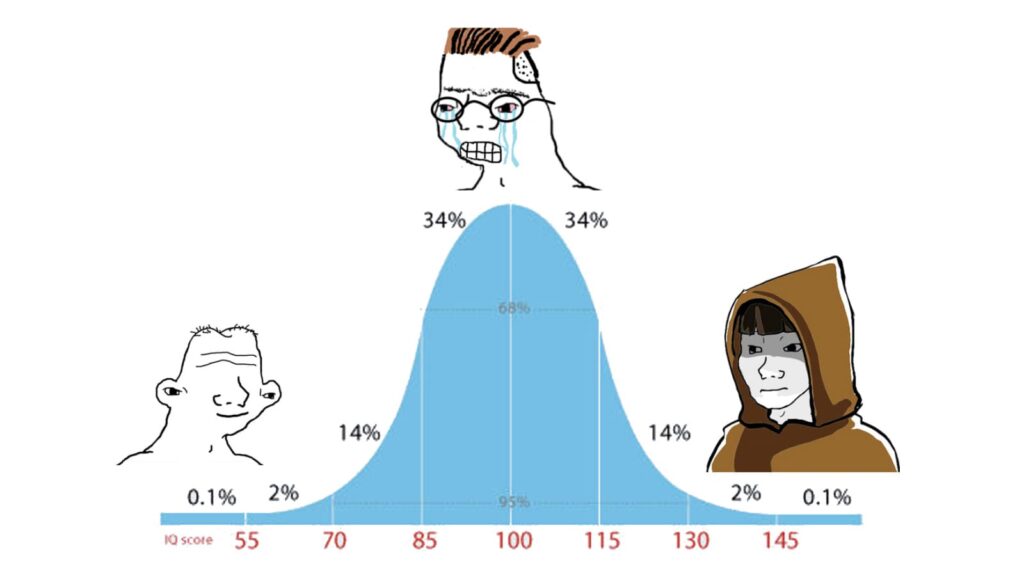
    In the world of memes and intellectual discourse, the “midwit meme” stands out for its incisive commentary on the spectrum of understanding. This meme ingeniously captures the phenomenon where individuals in the middle range of intelligence, often labeled as ‘midwits,’ demonstrate a superficial grasp of complex topics, falling into the trap of overconfidence. This contrasts starkly with those possessing either a basic or a highly advanced understanding of the same subjects, who often exhibit more humility and depth in their perspectives.

    A striking example of the midwit meme’s core message is seen in the realm of game theory, particularly in the concept of the Tit-for-Tat strategy. This strategy, characterized by its elegant simplicity, has proven to be remarkably effective in various scenarios, most notably in the Iterated Prisoner’s Dilemma. The premise of Tit-for-Tat is straightforward: start with cooperation, then mirror your opponent’s previous move. This approach is not only non-aggressive but also fair and forgiving, allowing for a return to cooperative behavior following any defection.

    The success of the Tit-for-Tat strategy is a testament to the power of simplicity. Unlike the midwits who might lean towards complex and convoluted tactics, believing that sophistication equates to superiority, the Tit-for-Tat approach demonstrates how uncomplicated, clear-cut strategies can be surprisingly effective. This principle resonates beyond game theory, extending to various facets of life and decision-making processes.

    The juxtaposition of the midwit meme and the efficacy of the Tit-for-Tat strategy offers a profound commentary on intellectual hubris. It underscores the value of clarity and straightforwardness over unnecessary complexity. In a world often captivated by the allure of elaborate theories and intricate methodologies, the simplicity of Tit-for-Tat stands as a reminder of the effectiveness that can be found in straightforward approaches. As we navigate through complex issues, whether in personal, professional, or academic realms, the lesson is clear: sometimes, the simplest strategy can be the most effective.

  • Empowering Life Strategies: Navigating Challenges with Resilience and a Positive Outlook

    Empowering Life Strategies: Navigating Challenges with Resilience and a Positive Outlook

    In the complex tapestry of life, our mental and emotional approaches significantly influence our journey. The tendency to worry, for instance, often leads to a drain on our mental resources without bearing fruitful results. It is more constructive to redirect these energies into proactive actions or creative pursuits, fostering tangible progress and innovative solutions.

    Understanding that challenges and failures are not the end, but rather stepping stones to success, is vital. The adage “You Don’t Drown by Falling in the Water” encapsulates this sentiment perfectly. It’s not the fall that defines us, but our refusal or inability to rise above and learn from these challenges.

    Similarly, the path to innovation and progress often lies in embracing the unknown. The greatest risks often pave the way to significant opportunities, hidden behind a veil of uncertainty, waiting to be discovered by those daring enough to take a chance.

    Every misstep offers a valuable lesson, guiding us closer to our goals. Success is rarely a straight path; it often involves navigating through a series of mistakes and learning from them. Similarly, relying on external validation and fearing rejection can trap us in a cycle of perpetual dissatisfaction. Building self-esteem on the foundation of self-awareness and personal values is far more enduring than depending on the ever-changing opinions of others.

    Happiness, too, is a state of being that emerges from appreciating the present moment, rather than deferring joy for an uncertain future. This approach to life is augmented by the belief that our attitudes significantly influence our achievements. A positive mindset not only opens new doors but also reveals opportunities that might remain hidden under a cloud of negativity.

    Furthermore, our beliefs profoundly shape our perceptions and realities. A belief in positive outcomes can illuminate paths and opportunities, whereas a negative mindset may obscure them. Patience, coupled with a positive attitude, is crucial during periods of waiting, acknowledging that some things simply take time.

    A rich, fulfilling life comprises varied experiences and continuous learning. Repeating the same patterns without growth or change fails to constitute a meaningful existence. Every significant journey or achievement begins with a simple yet crucial step: the decision to try. This initial effort sets the course for what follows.

    Our interactions with others also play a pivotal role in our lives. Being inclusive, kind, and choosing to surround ourselves with positive and inspiring individuals can have a profound impact on our personal and professional development.

    Sometimes, the greatest blessings come from not getting what we initially wanted. Such instances often lead us to better opportunities and realizations, steering us toward a path more aligned with our true purpose.

    Ultimately, a better life results from deliberate change and initiative. Each small step towards change lays the foundation for improved circumstances and personal growth. These principles underscore the significance of perspective, action, resilience, self-reliance, and embracing challenges. They advocate for valuing the present and continuously striving for personal growth and positive interactions.

  • Assessing Existential Threats: Exploring the Concept of p(doom)

    TL;DR: The concept of p(doom) relates to the calculated probability of an existential catastrophe. This article delves into the origins of p(doom), its relevance in risk assessment, and its role in guiding global strategies for preventing catastrophic events.


    The term p(doom) stands at the crossroads of existential risk assessment and statistical analysis. It represents the probability of an existential catastrophe that could threaten human survival or significantly alter the course of civilization. This concept is crucial in understanding and preparing for risks that, although potentially low in probability, carry extremely high stakes.

    Origins and Context:

    • Statistical Analysis and Risk Assessment: p(doom) emerged from the fields of statistics and risk analysis, offering a framework to quantify and understand the likelihood of global catastrophic events.
    • Existential Risks: The concept is particularly relevant in discussions about existential risks, such as nuclear war, climate change, pandemics, or uncontrolled AI development.

    The Debate:

    • Quantifying the Unquantifiable: Critics argue that the complexity and unpredictability of existential threats make them difficult to quantify accurately. This leads to debates about the reliability and usefulness of p(doom) calculations.
    • Guiding Policy and Prevention Efforts: Proponents of p(doom) assert that despite uncertainties, it offers valuable insights for policymakers and researchers, guiding preventive strategies and resource allocation.

    p(doom) remains a vital yet contentious concept in the discourse around existential risk. It highlights the need for a cautious, anticipatory approach to global threats and underscores the importance of informed decision-making in safeguarding the future.


  • Unlocking Success with ‘Explore vs. Exploit’: The Art of Making Optimal Choices

    In the fast-paced world of data-driven decision-making, there’s a pivotal strategy that everyone from statisticians to machine learning enthusiasts is talking about: The Exploration vs. Exploitation trade-off.

    What is ‘Explore vs. Exploit’?

    Imagine you’re at a food festival with dozens of stalls, each offering a different cuisine. You only have enough time and appetite to try a few. The ‘Explore’ phase is when you try a variety of cuisines to discover your favorite. Once you’ve found your favorite, you ‘Exploit’ your knowledge and keep choosing that cuisine.

    In statistics, machine learning, and decision theory, this concept of ‘Explore vs. Exploit’ is crucial. It’s about balancing the act of gathering new information (exploring) and using what we already know (exploiting).

    Making the Decision: Explore or Exploit?

    Deciding when to shift from exploration to exploitation is a challenging problem. The answer largely depends on the specific context and the amount of uncertainty. Here are a few strategies used to address this problem:

    1. Epsilon-Greedy Strategy: Explore a small percentage of the time and exploit the rest.
    2. Decreasing Epsilon Strategy: Gradually decrease your exploration rate as you gather more information.
    3. Upper Confidence Bound (UCB) Strategy: Use statistical methods to estimate the average outcome and how uncertain you are about it.
    4. Thompson Sampling: Use Bayesian inference to update the probability distribution of rewards.
    5. Contextual Information: Use additional information (context) to decide whether to explore or exploit.

    The ‘Explore vs. Exploit’ trade-off is a broad concept with roots in many fields. If you’re interested in diving deeper, you might want to explore topics like:

    • Reinforcement Learning: This is a type of machine learning where an ‘agent’ learns to make decisions by exploring and exploiting.
    • Multi-Armed Bandit Problems: This is a classic problem that encapsulates the explore/exploit dilemma.
    • Bayesian Statistics: Techniques like Thompson Sampling use Bayesian statistics, a way of updating probabilities based on new data.

    Understanding ‘Explore vs. Exploit’ can truly transform the way you make decisions, whether you’re fine-tuning a machine learning model or choosing a dish at a food festival. It’s time to unlock the power of optimal decision making.

  • The Cathedral and the Bazaar: A Comparative Study of Software Development Models

    The Cathedral and the Bazaar: A Comparative Study of Software Development Models

    Introduction: In the world of software development, there are two main models that have been widely adopted: the “cathedral” model and the “bazaar” model. The cathedral model is characterized by a closed and centralized approach, where software is developed behind closed doors by a small group of developers. On the other hand, the bazaar model is characterized by an open and decentralized approach, where software is developed openly and collaboratively by a large community of volunteers. In this article, we will take a detailed look at these two models and examine their pros and cons, as well as provide practical advice for developers and organizations that want to adopt the bazaar model.

    The Cathedral Model: The cathedral model of software development is based on the traditional, hierarchical approach of building a software project. In this model, a small group of developers, usually employed by a company or organization, work together to develop the software. The development process is usually closed, meaning that the source code is not publicly available, and access to the development team is limited. The development team is usually led by a project manager who is responsible for the overall direction of the project. The project is usually divided into several phases, such as design, development, testing, and deployment. The development team works on each phase in isolation, and the final product is released to the public only when it is considered complete and stable.

    The Bazaar Model: The bazaar model of software development is based on the idea of open-source software development. In this model, the source code is publicly available and the development process is open to anyone who wants to participate. The development team is usually composed of a large number of volunteers who work together to develop the software. The development process is decentralized, meaning that there is no central authority controlling the project. Instead, the development team is self-organized and relies on the collective intelligence of the community to make decisions. The bazaar model is characterized by a high degree of collaboration, communication, and transparency. The development process is often divided into several stages, such as planning, development, testing, and deployment. The final product is released to the public as soon as it is considered usable, and updates and bug fixes are released regularly.

    Pros and Cons: The cathedral model has its advantages and disadvantages. One of the advantages of this model is that it allows for a high degree of control and predictability. The development team is usually led by a project manager who is responsible for the overall direction of the project, and the development process is usually divided into several phases. This allows for a clear and structured approach to software development. Another advantage of the cathedral model is that it allows for a high degree of quality control. The development team is usually composed of experienced developers who are trained to follow best practices and standards. This allows for the development of high-quality software that meets the needs of the users.

    The bazaar model also has its advantages and disadvantages. One of the advantages of this model is that it allows for a high degree of innovation and creativity. The development team is usually composed of a large number of volunteers who work together to develop the software. This allows for a wide range of perspectives and ideas to be brought to the table. Another advantage of the bazaar model is that it allows for a high degree of flexibility and adaptability. The development process is decentralized, meaning that there is no central authority controlling the project. This allows for the project to adapt and evolve as the needs of the users change.

    The cathedral and bazaar models of software development are two distinct approaches to software development. The cathedral model is based on a closed and centralized approach, while the bazaar model is based on an open and decentralized approach. Both models have their advantages and disadvantages, and the choice of which model to use depends on the specific needs and goals of the project. The cathedral model is best suited for projects that require a high degree of control and predictability, while the bazaar model is best suited for projects that require a high degree of innovation and adaptability.

    However, the bazaar model has been gaining popularity in recent years, thanks to the success of open-source software projects such as Linux, Apache, and Firefox. These projects have shown that the bazaar model can be just as effective, efficient, and innovative as the cathedral model. Moreover, the bazaar model has been proven to be more cost-effective, as it relies on the collective intelligence of the community rather than on a small group of paid developers.

    For developers and organizations that want to adopt the bazaar model, the key is to foster a culture of collaboration, communication, and transparency. This can be achieved by using open-source development tools, such as version control systems, bug tracking systems, and mailing lists, and by encouraging participation from the community. Additionally, it is important to have a clear vision and goals for the project, and to establish a clear and transparent process for making decisions.

    In summary, the Cathedral and the Bazaar is a 1997 essay by Eric S. Raymond that compares two models of software development: the “cathedral” model, in which software is developed behind closed doors by a small group of developers, and the “bazaar” model, in which software is developed openly and collaboratively by a large community of volunteers. The essay argues that the bazaar model is more effective, efficient, and innovative than the cathedral model. It also provides practical advice for developers and organizations that want to adopt the bazaar model. The essay is widely considered a seminal work in the open-source software movement.

  • Summary of the book Atomic Habits

    Atomic Habits by James Clear is a self-help book that focuses on how small, incremental changes in behavior can lead to significant improvements in one’s life. The book advocates for the adoption of “atomic habits,” which are defined as “habits that are small and easy to implement, but also have a compound effect on your life.”

    Clear begins by explaining the concept of “the aggregation of marginal gains,” which refers to the idea that small improvements in various areas of one’s life can add up to create significant overall progress. He then introduces the “1 percent rule,” which states that making a small improvement in a given area (e.g., exercising one percent more each day) can lead to substantial progress over time.

    Clear then delves into the four laws of behavior change, which are as follows:

    1. Make it obvious: Make it easy to see the cues and triggers that remind you to perform the desired behavior.
    2. Make it attractive: Make the desired behavior appealing and desirable.
    3. Make it easy: Reduce the barriers and obstacles to performing the desired behavior.
    4. Make it satisfying: Make the desired behavior rewarding and satisfying in and of itself.

    Clear also discusses the concept of “identity-based habits,” which are habits that are aligned with one’s values and long-term goals. He argues that it is easier to maintain good habits if they are tied to one’s sense of self and purpose.

    Throughout the book, Clear provides numerous examples and case studies of how individuals and organizations have used the principles outlined in the book to make lasting changes in their lives. He also offers practical tips and strategies for how to implement atomic habits in one’s own life, including how to set goals, track progress, and overcome setbacks.

    Overall, Atomic Habits is a comprehensive guide to making lasting, positive changes in one’s life through the adoption of small, incremental habits. It is an inspiring and practical read for anyone looking to improve their personal or professional life.

    Atomic Habits

  • The Success Factors of Jocko Willink: Military Training, Discipline, and Leadership Skills

    Jocko Willink is a former Navy SEAL and successful entrepreneur, author, and podcaster known for his disciplined and driven approach to life. There are several key factors that have contributed to Willink’s success:

    1. Military training and experience: Willink served as a Navy SEAL for 20 years, during which he received extensive training in leadership, discipline, and mental and physical toughness. This training has undoubtedly played a major role in shaping Willink’s mindset and approach to life.
    2. Mental and physical discipline: Willink is known for his rigorous discipline in both his personal and professional life. He is a proponent of waking up early, setting clear goals, and consistently working towards them. He also places a strong emphasis on physical fitness and maintains a strict workout routine.
    3. Clear and concise communication: Willink is known for his ability to convey complex ideas in a clear and concise manner. This has made him an effective leader in the military and has helped him connect with his audience through his writing and speaking engagements.
    4. Adaptability and resilience: Willink has faced numerous challenges and setbacks throughout his career, but he has always managed to adapt and persevere. He is known for his ability to remain calm under pressure and to find creative solutions to difficult problems.
    5. Strong work ethic: Willink is known for his relentless work ethic and dedication to his craft. He is constantly seeking to improve and to learn new things, and he has a strong focus on delivering high-quality work.
    6. Leadership skills: Willink has demonstrated strong leadership skills throughout his career, both in the military and in his business ventures. He is known for his ability to inspire and motivate others and to foster a culture of teamwork and collaboration.

    Overall, Willink’s success can be attributed to a combination of his rigorous training, discipline, clear communication, adaptability, resilience, strong work ethic, and leadership skills. These qualities have helped him excel in both his military and civilian careers and have enabled him to achieve numerous accomplishments and accolades.

  • Are You an NPC? A Guide to Identifying Non-Player Characters in Real Life

    Are you an NPC? It’s a question we’ve all asked ourselves at some point, especially during those moments when we feel like we’re just going through the motions of daily life. But fear not! We’ve put together this handy guide to help you determine once and for all whether you are, in fact, an NPC (non-player character).

    First things first, let’s define what an NPC is. In the context of video games, an NPC is a character that is not controlled by a player, but rather follows a predetermined set of actions and dialog. In real life, you might think of an NPC as someone who is just going through the motions, following societal norms and expectations without really thinking for themselves.

    So, how can you tell if you’re an NPC? Here are a few telltale signs:

    1. You always follow the rules, even if they don’t make sense.
    2. You never question authority.
    3. You always do what you’re told, even if it doesn’t align with your values.
    4. You have a set daily routine that rarely deviates.
    5. You feel like you’re just going through the motions of life.
    6. You have a hard time making decisions on your own.
    7. You feel like you have no control over your life.
    8. You find it difficult to think for yourself or come up with new ideas.
    9. You feel like you have no agency or free will.
    10. You feel like you’re just a pawn in someone else’s game.

    If any of these sound familiar, it’s possible that you may be an NPC. But don’t panic! It’s never too late to break free from your predetermined path and start living a more authentic, fulfilling life.

    Here are a few ways to break out of the NPC mold:

    1. Start questioning authority and societal norms.
    2. Develop your own set of values and beliefs.
    3. Learn to think for yourself and make your own decisions.
    4. Take risks and try new things.
    5. Be curious and seek out new experiences and knowledge.
    6. Find your passion and pursue it with vigor.

    Remember, just because you may have been an NPC in the past doesn’t mean you have to continue down that path. You have the power to shape your own destiny and live a life that is truly your own.

    So, are you ready to break free from the constraints of NPC-hood and start living a more authentic, fulfilling life? We hope so!