PJFP.com

Pursuit of Joy, Fulfillment, and Purpose

Tag: digital assets

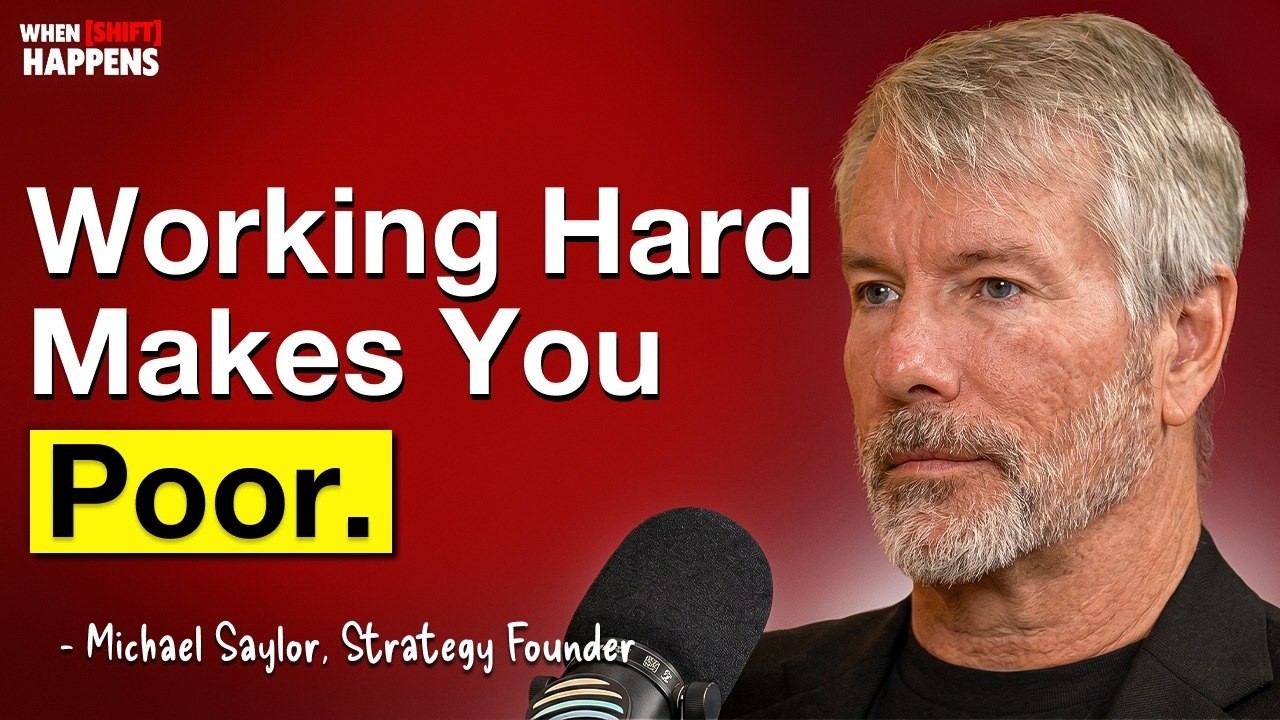
  • Michael Saylor on Strategy’s Bitcoin Playbook, the 11.5% Stretch Preferred Stock, Why Working Hard Is Bad Advice, and Bitcoin as Cyber Manhattan

    Michael Saylor, founder and executive chairman of Strategy (formerly MicroStrategy), sits down for Episode 172 of the When Shift Happens podcast for a wide-ranging, two-hour conversation on how a near-bankrupt enterprise software company became the world’s largest corporate holder of Bitcoin, why he calls his new preferred stock STRC “stretch” the most successful credit instrument in the world, and what 40 years of trial and error taught him about focus, leverage, time horizons, and the difference between working hard and working smart. This one is essential listening for anyone trying to understand Bitcoin as a protocol, Strategy as a capital markets machine, and what an “AI-pilled” 61-year-old founder actually does with his time.

    TLDW

    Saylor walks through his MIT-trained engineer’s framing of money as an adiabatic thermodynamic system, where the dollar loses roughly 7% of its energy per year, gold loses 2%, and Bitcoin loses zero, giving it an infinite half-life. He explains how COVID-era zero interest rates “rent controlled” the cash on Strategy’s balance sheet and forced him to search for a Facebook-of-money, leading to a $62 billion Bitcoin position across 818,000 coins. He details Strategy’s evolution from buying Bitcoin with cash, to convertibles, to senior bonds, to the equity ATM, to the new preferred stock family (Strike, Strife, Stride, and now Stretch), and argues that STRC is “rocket fuel kerosene” distilled from Bitcoin’s pure economic energy: an 11.5% monthly dividend, tax-deferred return of capital, designed to trade tightly around $100. He returns repeatedly to focus, the lesson he says he learned the hard way after spinning up alarm.com, voice.com, angel.com, and a half-dozen other ventures in his 30s. He argues working hard is now bad advice in an era where AI demonetizes labor, that volatility is vitality and the only honest time horizon is four to ten years, and that Bitcoin is to money what English is to language and Arabic numerals are to math: the protocol that won the network effect contest, and the place “all the money and power” now lives.

    Thoughts

    The most useful part of this conversation is not the Bitcoin maximalism, which is by now a fully formed Saylor genre. It is the brutal honesty about the decade he wasted launching alarm.com, voice.com, angel.com, michael.com, hope.com, and a half-dozen others while a billion-dollar MicroStrategy sat at the center of his portfolio asking for more attention. He admits the “imaginary future business is always more fun than struggling with the existing mature business,” which is one of the cleanest descriptions of founder ADHD I have read. The fact that someone at his level of intelligence and pattern recognition still required 20 years and a near-death experience to learn focus should make every operator under 40 reread that section twice. The single takeaway worth tattooing on a wall is his rule: “Just because you can do a thing doesn’t mean you should do a thing.”

    The engineering framing of money is the strongest intellectual move in the episode. Saylor is treating monetary supply expansion as energy loss in a thermodynamic system, with the dollar at a 10-year half-life, weak currencies at 3 to 5 years, gold at 36 years, and Bitcoin at infinity. Whether or not you accept the conclusion, the model is internally consistent in a way most macroeconomic arguments are not, and it gives him a vocabulary for talking about scarcity that economists trained on continuous-supply commodities literally do not have. The Max Planck quote he leans on, “science advances one funeral at a time,” is doing real work here. He is not saying he is smarter than the old guard. He is saying the old guard has no incentive to update because they already have money and power, and that the paradigm shift will be carried by the people with everything to gain. That is a more humble and more accurate version of the maximalist line.

    The Strategy capital markets machine is the part that deserves more scrutiny than it usually gets. The pitch for Stretch is genuinely interesting on its merits: a preferred stock that trades around $100, pays 11.5% monthly as return-of-capital dividends that defer all tax for roughly nine years, gets a step-up in basis on inheritance, and is positioned as a digital money market for people who believe in Bitcoin but do not want 40% volatility. If you take Saylor’s network-effect thesis seriously, this is the natural product to build, and his Standard Oil analogy (“distill the kerosene out of the crude oil”) is the right mental model. The risk that does not get discussed is what happens to the entire instrument family in a 99.8% drawdown of the kind he himself lived through with MicroStrategy in 2002. He waves it off by saying Strategy has 10x the enterprise value over the preferred, but in a deep enough Bitcoin winter, that cushion compresses fast. Worth holding both ideas at once: this is the most elegant Bitcoin-native fixed income product yet built, and it is still fundamentally a leveraged Bitcoin bet wearing a money-market mask.

    The “working hard is bad advice” thread is going to be the most controversial clip, and it is also the most important. Saylor is not saying do not work. He is saying do not be John Henry. Do not race the steam drill with a hammer. In a world where AI can translate, draft legal briefings, write books in 100 languages, and out-produce any individual professional by orders of magnitude, the marginal value of pure human labor is collapsing, and the right move is to ask “what tool can do this for me” before “how do I get better at this.” That is the same logic that took him from “I would have fired anyone who suggested Zoom in 2019” to running a global operation from a Florida studio. The unsubtle implication, especially for the 34-year-old host he is talking to, is that the 10,000-hour mastery model your parents grew up with is increasingly a status symbol with no underlying economics, like learning to compose Shakespearean sonnets in 2026.

    The single underrated line in the whole episode is “everything you own in the physical world you own at the pleasure of someone more powerful than you.” He is using it to make the Bitcoin self-custody case, but it generalizes to a much broader political and historical observation about property rights, minorities, and the steady drumbeat of expropriation events across 10,000 years of recorded history. Whether or not Bitcoin is the answer, the framing of “where do you store value such that nobody can decide to take it from you” is the right question to ask in the current decade, and most people are not asking it.

    Key Takeaways

    • Strategy now holds roughly 818,000 Bitcoin worth $62 billion, making it the world’s largest corporate Bitcoin holder and effectively a reserve bank built on a hard-capped digital monetary network.
    • Saylor’s working definition of an investor: anyone willing to hold a position for at least four years. Anyone with a shorter horizon is a trader, and most traders are fools who do not know they are fools.
    • His core advice to a 40-year-old Uber driver who cannot afford a house: own assets that appreciate faster than the 7% annual US dollar debasement rate. Anything slower means you are getting poorer in real terms while working harder every year.
    • The MIT-trained engineer’s framing of money: gold has a 36-year half-life because supply inflates ~2% a year, the dollar has a ~10-year half-life at ~7% debasement, weak currencies have 3 to 5-year half-lives, and Bitcoin’s half-life is infinite because supply growth is zero.
    • The 2020 pivot was forced, not chosen. When the Fed took rates to zero and signaled no hikes, Strategy’s $500 million in cash became, in Saylor’s metaphor, a rent-controlled building paying zero. They were forced to look for a way out and ended up at Bitcoin.
    • Saylor’s aha moment was recognizing Bitcoin as the only commodity in history with absolute scarcity. Gold inflates, silver inflates, even land can be reclaimed from the sea. Only Bitcoin’s 21 million cap is mathematically fixed.
    • The biggest lesson of his 30s and 40s: focus. He launched alarm.com, voice.com, angel.com, michael.com, hope.com, and several others while running MicroStrategy, and none of them matched the original. The line he leaves with is “just because you can do a thing doesn’t mean you should do a thing.”
    • By the time he was 55, he had been humbled enough to take someone else’s billion-dollar idea (Satoshi’s) instead of trying to generate his own.
    • Strategy’s evolution as an issuer: cash purchases, then convertibles, then senior bonds, then asset-backed loans (Silvergate failure ended that path), then the equity ATM, then the preferred-stock family Strike, Strife, Stride, and now Stretch.
    • Stretch (STRC) is a preferred stock targeted to trade around $100 with about 1 unit of volatility, paying 11.5% monthly as return-of-capital dividends, tax-deferred for roughly nine years until the basis is fully recovered.
    • STRC pairs with a step-up in basis on inheritance, meaning heirs can receive another nine years of tax-deferred dividends on top of what the original holder collected, an arrangement neither bonds nor most preferred stocks allow.
    • Strategy can create roughly 10 to 20 cents of digital credit per dollar of Bitcoin held, which positions a trillion dollars of future Bitcoin holdings to support $200 to $400 billion of credit instruments.
    • The addressable market for STRC-style instruments, in Saylor’s framing, is the roughly $300 trillion global credit market currently delivering about 350 basis points after tax. A product offering three times that yield is targeting trillions of dollars of demand.
    • Standard Oil analogy: Rockefeller called his company “Standard” because impure kerosene blew up engines and houses. Strategy is in the business of distilling pure financial instruments out of the raw economic energy of Bitcoin, the way refineries distill kerosene from crude.
    • Four-letter NASDAQ ticker discipline. Saylor specifically chose STRC over MSTR.P because retail can search, remember, and trade four-letter symbols on Robinhood and Schwab. About 80% of STRC is held by retail.
    • Bitcoin as a lifeboat thesis: in any country with a collapsing currency (Argentina, Brazil, most of Africa, historical Germany), no physical asset is safe because property is held at the pleasure of whoever has power. Bitcoin allows wealth to cross borders inside someone’s head.
    • The Saylor leverage example: a 2.5% mortgage in 2021 plus a 40% appreciating asset is a roughly 37.5% net spread on borrowed money, equivalent to a real after-tax salary of several hundred thousand dollars in a high-tax city, earned for nothing more than paperwork.
    • Volatility is the feature, not the bug. Bitcoin reacts in real time to events in every country, every hour, which is why 500 million people care about it and almost nobody cares about the value of Tokyo imperial real estate.
    • Saylor’s litmus test for trading: if you would not hold it for ten years, you should not hold it for ten minutes. Anything less than a four-year horizon means you are doing entertainment, not investing.
    • He spends “thousands of hours a year” thinking about Bitcoin’s first, second, third, and fourth-order effects, and runs a stochastic risk model that updates every 15 seconds, refusing to diversify because adding silver, gold, or real estate would shatter the model.
    • Bitcoin as protocol: the same network-effect logic that made English the default global language, Arabic numerals the default math, TCP/IP the default networking protocol, and the shipping container the default freight format. Once a protocol locks in, only an asteroid-strike-level event can dislodge it.
    • “There is no second best language” is the analogy he keeps returning to. Bitcoin is to money what English is to communication. Wishing it were Swahili or Esperanto does not change where the wealth concentrates.
    • The Newtonian network effect: when Rupert Murdoch joins Facebook he brings 50 friends. When he joins Bitcoin he brings $50 million. Monetary networks compound faster than social networks because billionaires bring billions.
    • “Don’t sell the thing that will make your children’s children wealthy” is the operating heuristic. He uses the great-great-grandfather analogy: if your ancestor sold Bitcoin to buy velvet for a horse-and-buggy, you would not be rich today.
    • Working hard is not the path. The forklift outperforms the strongest worker with a shovel. John Henry beat the steel drill once and his heart burst doing it.
    • AI is now the forklift for white-collar work. Saylor uses it to draft 25-page legal briefings, translate content into 100 languages, and avoid going back to law school. “It would take 10 years and a million dollars to do what the AI does in two minutes.”
    • Personal communication leverage: a single Lex Fridman appearance has reached more than 11 million views, more people than a 30-year teaching career could reach.
    • Saylor was inspired into engineering as a child by Robert Heinlein’s “Have Space Suit, Will Travel,” in which the hero saves Earth and is rewarded with a full scholarship to MIT. The same Heinlein-Asimov-Clarke pipeline shaped Elon Musk and Jeff Bezos.
    • His mother imprinted on him that he was expected to do great things while he was a 9-year-old paper boy in Dayton, Ohio. He credits the combination of literature plus maternal expectation with his early ambition.
    • He calls himself a late bloomer and “the Colonel Sanders of crypto,” noting that more interesting things have happened in the last 12 months of his career than in the entire previous 35 years.
    • Strategy’s succession is already in motion. CEO Phong Le, Andrew Kang, and CJ are running operational layers, and Saylor expects Strategy to outlast him the way Lloyd’s of London has outlasted its founders by hundreds of years.
    • The Bitcoin price path he is willing to articulate publicly: “We’ll buy it at 100,000, we’ll buy it at 200,000. We’ll buy it at 500,000, we’ll buy it at a million, 2 million, 4 million, 8 million.” The business is “drive Bitcoin to millions of dollars.”
    • He survived a 99.8% drawdown in MicroStrategy from $333 to $0.42 between 2000 and 2002, three days from bankruptcy. He says current Bitcoin volatility does not feel like stress by comparison.
    • He has no children, is not married, and describes himself as singularly married to the business, which he expects to keep doing as long as the civilization needs the money fixed.

    Detailed Summary

    Who Saylor is and why MicroStrategy became Strategy

    Saylor grew up in an Air Force family, lived on bases across Japan, New Zealand, Nebraska, Florida, and Ohio, and won a US Air Force scholarship to MIT, where he studied aerospace engineering and the history of science. He founded MicroStrategy at 24, took it public on the NASDAQ in 1998, and built it into a billion-dollar business intelligence company with about 2,000 employees. By 2020 the business was being slowly crushed by Microsoft Power BI, and lockdowns plus zero interest rates eliminated the natural return on the company’s $500 million cash position. The frustration drove Strategy into Bitcoin: $250 million, then another $250 million, then a billion, then two, until the company became the world’s largest corporate holder with ~$62 billion across 818,000 coins.

    The hard-earned lesson of focus

    Saylor’s defining career mistake was the period between his mid-30s and mid-40s when he launched ten other businesses on the side of MicroStrategy: alarm.com (now a public multi-billion-dollar company spun off), angel.com (sold for about $110 million), voice.com (sold for about $30 million), and several others including michael.com, frank.com, emma.com, hope.com, and usher.com. He concedes that almost none of these matched the original, that the imaginary future business is always more fun than the mature one, and that he wishes he had instead poured 150% of his energy into MicroStrategy. The crystallized lesson, repeated several times: “Just because you can do a thing doesn’t mean you should do a thing.”

    Money as a thermodynamic system

    The intellectual core of the conversation is Saylor’s framing of money as energy in an adiabatic system. Gold inflates ~2% a year and therefore has a 36-year half-life. The dollar debases at ~7% a year and has roughly a 10-year half-life. Weaker currencies have half-lives of 3 to 5 years. Bitcoin’s hard cap of 21 million coins means zero supply inflation, which produces an infinite half-life. He learned thermodynamics designing aircraft wings at MIT and applies the same closed-system logic to money: any system with energy lapse cannot be a long-term store of value, and Bitcoin is the first asset in human history with no lapse.

    Bitcoin as a global lifeboat

    For people in collapsing currency regimes, Saylor argues no domestic instrument holds value. Argentinian and Brazilian hyperinflations destroy 99.9% of purchasing power on familiar cycles. German marks were used in wheelbarrows to buy soap. Buying local real estate, bonds, or currency in those environments is useless because the underlying economy decays around them. The only escape historically has been gold or paintings, which then need to be smuggled across borders. Bitcoin solves the same problem digitally: it crosses borders inside someone’s head via private keys, and it cannot be expropriated by whoever currently holds power. Saylor’s broader point, “everything you own in the physical world you own at the pleasure of someone more powerful than you,” is the philosophical anchor of the entire Bitcoin maximalist case.

    Strategy’s capital markets evolution

    Strategy has run through every available capital structure to keep buying Bitcoin: cash, tender offers, equity issuance, convertible bonds (where Strategy became the largest issuer in the world), senior bonds (abandoned because covenants choked growth), asset-backed loans (Silvergate’s failure ended that channel), the equity ATM, and finally the preferred-stock family. Strike, Strife, Stride, and Stretch were each iterations toward what Saylor calls “the perfect credit instrument,” refined the way Standard Oil refined crude into kerosene. Stretch (STRC) is the current state of the art: a preferred stock targeted to $100, with about 1 unit of volatility, paying 11.5% monthly as return-of-capital dividends that defer all tax for roughly nine years.

    Why STRC matters as a product

    Saylor argues STRC is the first credit instrument that lets a retiree treat a Bitcoin-backed yield as a money-market alternative. The mechanics: a $100 share generates roughly $10/year in monthly dividends, each of which reduces the cost basis instead of triggering current income tax. After about nine years, basis is exhausted and the instrument becomes a qualified-dividend security taxed at long-term capital gains rates. On inheritance, the heir receives a step-up in basis to $100, and another nine-year cycle of tax-deferred dividends restarts. Eighty percent of the issue is held by retail through Robinhood and Schwab, and the company actively manages the price by issuing or buying back to hold the $100 anchor. The mission for the rest of the decade, Saylor says, is to scale this to $200, then $400, then $600, then $800 billion in outstanding credit, with Bitcoin as the underlying capital base.

    Working smart, not hard, in the age of AI

    Saylor’s most pointed advice to younger founders and operators is that hard work is becoming a low-return strategy. AI now drafts legal briefings, translates content into 100 languages, writes books, and outperforms most professional output by orders of magnitude. The 10,000-hour mastery model that built his generation’s careers, he says, will not produce equivalent results in the next one. The right move is to ask what tool can do the thing for you before asking how to do the thing yourself. He uses himself as the example: working 70 hours a week for ten years built MicroStrategy, but it felt easy compared to MIT, and the leverage from AI plus podcasts plus digital distribution lets him now reach more people in a single sitting than a 30-year teaching career could reach.

    Volatility, time horizon, and the trader-versus-investor split

    Saylor refuses to be rattled by short-term Bitcoin moves and uses his 99.8% MicroStrategy drawdown in 2002 as a baseline for what real volatility feels like. He argues that Bitcoin’s price swings are evidence of its utility: it is the only globally-tradable asset where a regulatory rumor in China at 2am can move price in real time, which is why it absorbs all attention. His rules are blunt: an investor holds for at least four years (40% volatility, 40% expected return for Bitcoin), the right indicator is the 200-week moving average, and the Buffett rule “if you would not hold it for ten years you should not hold it for ten minutes” still applies. Everything shorter is trading, which is fine if you are an expert, foolish if you are not.

    Bitcoin as protocol, not as bet

    The closing intellectual frame is that Bitcoin won the network-effect competition the same way English won language, Arabic numerals won math, TCP/IP won networking, and the standard shipping container won freight. None of these became dominant because they were objectively perfect. They became dominant because critical mass locked in, the wealthy and powerful coordinated around them, and any alternative now has to dislodge a $1.5 trillion incumbent. The protocols that win do so because “people aren’t stupid” and a billion small coordination decisions converge on the same standard. Bitcoin, on this read, is not an investment to be allocated against silver or real estate. It is the digital capital protocol that the rest of the financial world is going to be denominated in, and choosing not to participate is closer to refusing to learn English than it is to skipping a stock pick.

    Notable Quotes

    “Just because you can do a thing doesn’t mean you should do a thing.”

    Michael Saylor, distilling 20 years of side-business mistakes into one line

    “Bitcoin is a lifeboat tossed on a stormy sea, offering hope to anyone in the world that needs to get off their sinking ship.”

    Saylor’s framing of Bitcoin as a solution for collapsing-currency regimes

    “There is no second best crypto asset. There’s only one crypto asset and that’s Bitcoin. Human civilization settles on protocols.”

    The closing thesis of the conversation, in Saylor’s own words

    “Don’t sell the thing that will make your children’s children wealthy.”

    Saylor on holding Bitcoin through volatility and selling something else instead

    “Everything you own in the physical world you own at the pleasure of someone more powerful than you.”

    Saylor on why physical assets are not real property rights

    “Volatility is vitality. Bitcoin’s volatile because it’s useful.”

    Saylor reframing Bitcoin price swings as a feature

    “Don’t try to outwork a forklift.”

    Saylor on why “work harder” is increasingly bad advice in the AI era

    “I’m like the Colonel Sanders of crypto. But it’s okay. At least I found a mission at some point in my life.”

    Saylor on being a late bloomer at 55

    “Bitcoin is cyber Manhattan. A thousand years from now, your children’s children’s great-great-great 10x grandchildren will be rich, if you kept it.”

    Saylor on Bitcoin as multi-generational real estate

    “The world doesn’t care whether I’m a good manager of a hundred different things. The world wants me to be the best manager of one thing.”

    Saylor on focus as the only durable professional posture

    Watch the full conversation here: When Shift Happens E172: Michael Saylor on How To Get Rich With Crypto (Without Working Hard).

    Related Reading

  • AI vs Human Intelligence: The End of Cognitive Work?

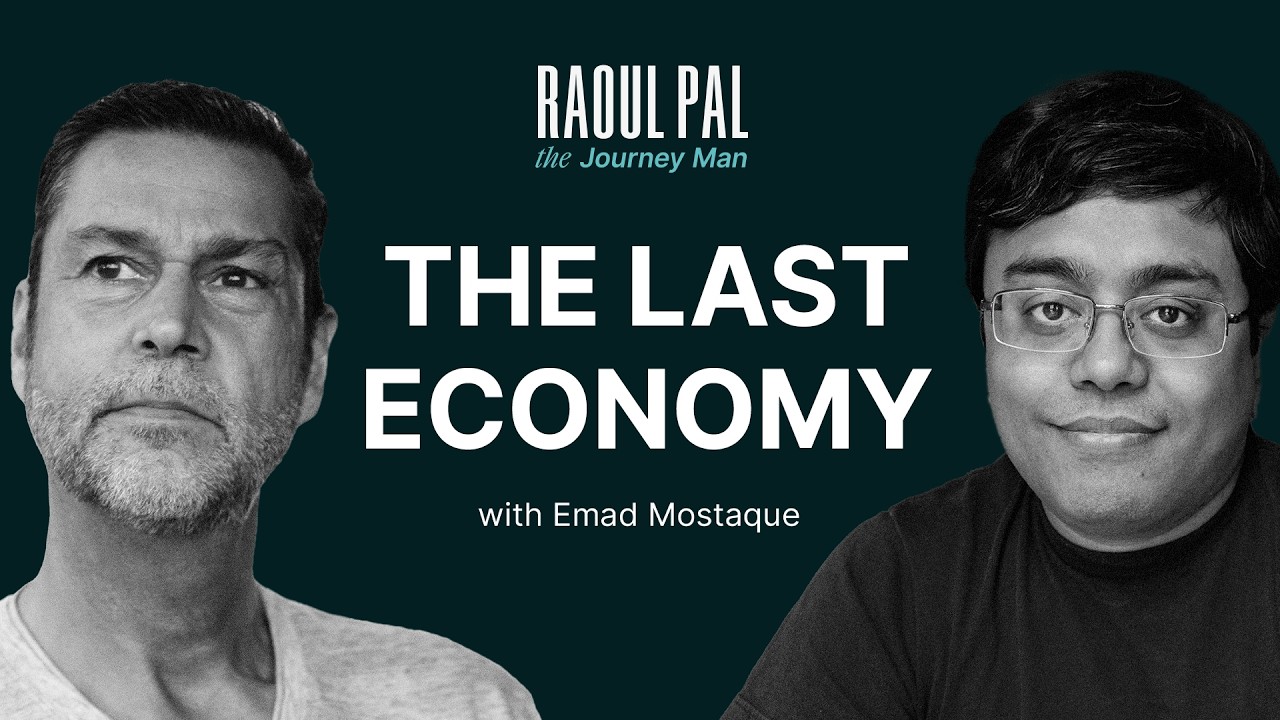
    In a profound and unsettling conversation on “The Journey Man,” Raoul Pal sits down with Emad Mostaque, co-founder of Stability AI, to discuss the imminent ‘Economic Singularity.’ Their core thesis: super-intelligent, rapidly cheapening AI is poised to make all human cognitive and physical labor economically obsolete within the next 1-3 years. This shift will fundamentally break and reshape our current economic models, society, and the very concept of value.

    This isn’t a far-off science fiction scenario; they argue it’s an economic reality set to unfold within the next 1,000 days. We’ve captured the full summary, key takeaways, and detailed breakdown of their entire discussion below.

    🚀 Too Long; Didn’t Watch (TL;DW)

    The video is a discussion about how super-intelligent, rapidly cheapening AI is poised to make all human cognitive and physical labor economically obsolete within the next 1-3 years, leading to an “economic singularity” that will fundamentally break and reshape our current economic models, society, and the very concept of value.

    Executive Summary: The Coming Singularity

    Emad Mostaque argues we are at an “intelligence inversion” point, where AI intelligence is becoming uncapped and incredibly cheap, while human intelligence is fixed. The cost of AI-driven cognitive work is plummeting so fast that a full-time AI “worker” will cost less than a dollar a day within the next year.

    This collapse in the price of labor—both cognitive and, soon after, physical (via humanoid robots)—will trigger an “economic singularity” within the next 1,000 days. This event will render traditional economic models, like the Fed’s control over inflation and unemployment, completely non-functional. With the value of labor going to zero, the tax base evaporates and the entire system breaks. The only advice: start using these AI tools daily (what Mostaque calls “vibe coding”) to adapt your thinking and stay on the cutting edge.

    Key Takeaways from the Discussion

    • New Economic Model (MIND): Mostaque introduces a new economic theory for the AI age, moving beyond old scarcity-based models. It identifies four key capitals: Material, Intelligence, Network, and Diversity.
    • The Intelligence Inversion: We are at a point where AI intelligence is becoming uncapped and incredibly cheap, while human intelligence is fixed. AI doesn’t need to sleep or eat, and its cost is collapsing.
    • The End of Cognitive Work: The cost of AI-driven cognitive work is plummeting. What cost $600 per million tokens will soon cost pennies, making the cost of a full-time cognitive AI worker less than a dollar a day within the next year.
    • The “Economic Singularity” is Imminent: This price collapse will lead to an “economic singularity,” where current economic models no longer function. They predict this societal-level disruption will happen within the next 1,000 days, or 1-3 years.
    • AI Will Saturate All Benchmarks: AI is already winning Olympiads in physics, math, and coding. It’s predicted that AI will meet or exceed top-human performance on every cognitive benchmark by 2027.
    • Physical Labor is Next: This isn’t limited to cognitive work. Humanoid robots, like Tesla’s Optimus, will also drive the cost of physical labor to near-zero, replacing everyone from truck drivers to factory workers.
    • The New Value of Humans: In a world where AI performs all labor, human value will shift to things like network connections, community, and unique human experiences.
    • Action Plan – “Vibe Coding”: The single most important thing individuals can do is to start using these AI tools daily. Mostaque calls this “vibe coding”—using AI agents and models to build things, ask questions, and change the way you think to stay on the cutting edge.
    • The “Life Raft”: Both speakers agree the future is unpredictable. This uncertainty leads them to conclude that digital assets (crypto) may become a primary store of value as people flee a traditional system that is fundamentally breaking.

    Watch the full, mind-bending conversation here to get the complete context from Raoul Pal and Emad Mostaque.

    Detailed Summary: The End of Scarcity Economics

    The conversation begins with Raoul Pal introducing his guest, Emad Mostaque, who has developed a new economic theory for the “exponential age.” Emad explains that traditional economics, built on scarcity, is obsolete. His new model is based on generative AI and redefines capital into four types: Material, Intelligence, Network, and Diversity (MIND).

    The Intelligence Inversion and Collapse of Labor

    The core of the discussion is the concept of an “intelligence inversion.” AI models are not only matching but rapidly exceeding human intelligence across all fields, including math, physics, and medicine. More importantly, the cost of this intelligence is collapsing. Emad calculates that the cost for an AI to perform a full day’s worth of human cognitive work will soon be pennies. This development, he argues, will make almost all human cognitive labor (work done at a computer) economically worthless within the next 1-3 years.

    The Economic Singularity

    This leads to what Pal calls the “economic singularity.” When the value of labor goes to zero, the entire economic system breaks. The Federal Reserve’s tools become useless, companies will stop hiring graduates and then fire existing workers, and the tax base (which in the US is mostly income tax) will evaporate.

    The speakers stress that this isn’t a distant future; AI is predicted to “saturate” or beat all human benchmarks by 2027. This revolution extends to physical labor as well. The rise of humanoid robots means all manual labor will also go to zero in value, with robots costing perhaps a dollar an hour.

    Rethinking Value and The Path Forward

    With all labor (cognitive and physical) becoming worthless, the nature of value itself changes. They posit that the only scarce things left will be human attention, human-to-human network connections, and provably scarce digital assets. They see the coming boom in digital assets as a direct consequence of this singularity, as people panic and seek a “life raft” out of the old, collapsing system.

    They conclude by discussing what an individual can do. Emad’s primary advice is to engage with the technology immediately. He encourages “vibe coding,” which means using AI tools and agents daily to build, create, and learn. This, he says, is the only way to adapt your thinking and stay relevant in the transition. They both agree the future is completely unknown, but that embracing the technology is the only path forward.

  • Deep Dive: Meltem Demirors on Crypto’s Future, Infrastructure’s Rise, and the Evolution of Finance

    Meltem Demirors is not merely a commentator in the cryptocurrency and digital asset space; she’s a builder, an investor, and a visionary. Her insights into the convergence of technology, finance, and infrastructure offer a compelling perspective on the future of our digital world. This article delves into her career, investment philosophy, and key observations, providing a detailed exploration of her impact on the evolving financial landscape.

    A Career Forged in the Digital Frontier:

    Demirors’ journey into the world of digital assets began with a pragmatic understanding of Bitcoin’s potential for facilitating global transactions. This early exposure sparked a deep interest in the underlying technology and its transformative power. Her time at Digital Currency Group (DCG) provided invaluable experience, allowing her to witness the nascent stages of the crypto industry’s growth. This foundation has shaped her current perspective, which emphasizes the importance of building robust infrastructure to support the digital economy.

    Infrastructure as the Cornerstone:

    A defining characteristic of Demirors’ investment philosophy is her focus on infrastructure. She believes that the true value of the digital asset space lies in the foundational layers that enable its operation. This includes:

    • Compute: The increasing demand for processing power to support blockchain networks, artificial intelligence, and other data-intensive applications.
    • Energy: The critical role of sustainable and efficient energy sources in powering the digital asset ecosystem, particularly in the context of mining and data centers.
    • Semiconductors: The essential hardware components that form the backbone of digital infrastructure.

    Demirors emphasizes the interconnectedness of these elements, highlighting the need for a holistic approach to infrastructure development. She recognizes that the convergence of physical and digital infrastructure is essential for the seamless integration of emerging technologies into our daily lives.

    Market Dynamics and Evolving Trends:

    Demirors possesses a keen understanding of market dynamics, recognizing the interplay of technology, psychology, and finance. She observes:

    • The Influence of Institutional Investors: The growing presence of institutional investors and the introduction of cryptocurrency ETFs are transforming the market, leading to increased liquidity and maturity.
    • The Power of Narratives: Market movements are often driven by narratives and psychological factors, with social media playing a significant role in amplifying volatility.
    • The Impact of Artificial Intelligence: Demirors sees significant potential for AI to accelerate cryptocurrency adoption, simplifying user experiences and expanding access to digital assets.

    The Importance of Self-Sovereignty:

    A core principle that Demirors champions is the importance of self-sovereignty. She advocates for self-custody of digital assets, emphasizing the use of hardware wallets and other security measures to protect against vulnerabilities. This commitment to individual control underscores her belief in the empowering potential of decentralized technologies.

    Crypto Culture and its Significance:

    Demirors acknowledges the unique culture of the cryptocurrency community, including its use of memes, humor, and digital art. She views these cultural expressions as a reflection of the innovative and disruptive nature of the space. Her willingness to engage with these aspects of crypto culture demonstrates her understanding of the community’s importance.

    Crucible Capital: A New Chapter:

    With the founding of Crucible Capital, Demirors is putting her investment philosophy into action. The firm’s focus on infrastructure reflects her belief in the long-term value of building the foundations of the digital economy.

    Wrap Up:

    Meltem Demirors is a vital voice in the digital asset space, offering a unique blend of technical expertise, market insight, and visionary thinking. Her focus on infrastructure, commitment to self-sovereignty, and understanding of crypto culture make her a key figure in shaping the future of finance.

  • Tad Smith on Bitcoin, AI, and the Future of Investing: Why Purpose Will Outlast Profit

    Tad Smith, a former CEO of Sotheby’s and Madison Square Garden, shares his journey into Bitcoin and his evolving investment philosophy. Initially skeptical, he became convinced of Bitcoin’s value after exploring concepts of money and wealth in an inflationary world. Smith now prioritizes assets like Bitcoin, art, and specific real estate to “beat the money printer,” shifting from a diversified portfolio to focused investments. He values MicroStrategy’s unique approach to Bitcoin, though he cautions about volatility. He also foresees a future where AI reshapes art, work, and education, advocating that future generations pursue fulfillment over traditional career paths.


    In a recent conversation, Tad Smith, former CEO of Sotheby’s and Madison Square Garden, shared insights on Bitcoin, alternative assets, and the rapidly changing landscape of investing and work. Currently a partner at 1 RoundTable Partners, Smith has pivoted from traditional finance to a focus on digital assets, particularly Bitcoin. His evolving outlook on wealth, investment strategies, and the impact of artificial intelligence reveals a forward-thinking approach that resonates with both seasoned investors and the younger generation.

    From Skeptic to Believer: Tad Smith’s Journey into Bitcoin

    Smith’s path into Bitcoin started with doubt but eventually led to conviction. Despite his extensive background in finance with firms like JP Morgan and his work in media, he initially struggled to see how Bitcoin held intrinsic value. However, after diving into concepts of currency, value, and wealth preservation, Smith recognized that Bitcoin could counter inflation and the devaluation caused by “money printing”—a term describing the inflationary policies of central banks.

    Bitcoin, for Smith, is more than an asset; it’s a shield against inflation, a “strongest horse in the race,” capable of maintaining value when traditional investments may not. He now holds a focused portfolio concentrated on assets he believes can “beat the money printer.” This includes Bitcoin, high-end art, and selective real estate, especially in valuable coastal areas.

    The Power of Focused Investment Over Diversification

    Smith challenges the traditional finance wisdom of diversification, asserting that a concentrated portfolio can be more powerful in today’s economy. In his view, spreading investments too thin makes it difficult to achieve relative wealth, especially in a world where inflation is steadily eroding purchasing power. Instead, he champions a strategy of deep investment in select areas with long-term value, including rare collectibles, fine wine, and blue-chip tech stocks.

    Why Smith Supports MicroStrategy as a Bitcoin Proxy

    Smith’s support for MicroStrategy, a publicly traded company with a strong Bitcoin position, reflects his belief in the potential of corporations to integrate Bitcoin into their treasury and offer exposure to the digital asset. Although he values MicroStrategy’s unique approach, he acknowledges the high volatility of its stock. For those prepared for a “volatile ride,” Smith sees potential in MicroStrategy as a more accessible way to invest in Bitcoin, particularly for those who prefer the security of a public company over direct Bitcoin ownership.

    Insights on Board Governance and Leadership

    Smith’s extensive experience on boards gives him a unique perspective on effective governance. He stresses the importance of “hygiene” in board discussions, meaning that all voices should be heard and decision-making should be structured and transparent. Good “board hygiene,” according to Smith, leads to higher performance and strategic clarity, essential for guiding organizations effectively through complex challenges.

    AI and the Transformation of Creativity

    Smith’s thoughts on AI highlight the technology’s disruptive potential, especially in creative fields. At a recent art-tech conference in Hong Kong, he discussed how artificial intelligence is evolving from a tool to what he calls a “non-biological intelligence.” He believes that in the next decade, AI will play a pivotal role in creating art, collaborating with humans to produce innovative forms of expression.

    This shift, Smith believes, will not only change the art world but also raise questions about human creativity and purpose. As AI continues to advance, he predicts it will be capable of outpacing humans in productivity, pushing society to redefine the value of human creativity and personal purpose.

    Preparing the Next Generation for a Purpose-Driven Life

    With the growing influence of AI and automation, Smith argues that the next generation must redefine traditional success metrics. Rather than aiming to become the best in a given profession, he advises younger people to focus on developing purpose and fulfillment in their careers. He envisions a world where education and career choices are driven not by economic necessity but by personal passion and purpose.

    Smith believes we are on the cusp of a new Enlightenment, where people will pursue knowledge and skills simply for the joy of learning. He stresses the importance of living a life rich in experience, family, and creativity—a life that AI cannot replicate.

    Looking Ahead: Health, Wealth, and Longevity

    Smith also offers a piece of practical advice for young people: stay healthy. With rapid advances in healthcare and life sciences, Smith believes that maintaining health could enable people to live significantly longer, healthier lives. In this future, where people may live for a century or more, focusing on purpose and fulfillment becomes even more critical.

    Wrap Up

    Tad Smith’s journey and insights on investing, Bitcoin, AI, and purpose offer a fresh perspective on preparing for an unpredictable future. His shift from a traditional diversified portfolio to concentrated investments in alternative assets, particularly Bitcoin, reflects his belief in value preservation over mere profit. Moreover, his advocacy for a purpose-driven life in an era dominated by AI speaks to a vision of human potential that goes beyond economic success. As he advises the next generation, Smith’s message is clear: invest not only in assets that beat inflation but also in a life that offers meaning and fulfillment.

  • Why Investing in Crypto Could Protect Your Wealth as the Economy Shifts: Insights from Raoul Pal

    Raoul Pal outlines an impending transformative shift in the global economy, emphasizing that traditional assets like cash and real estate are losing value due to inflation and changing market dynamics. He argues that blockchain and crypto, particularly Bitcoin and Ethereum, offer unique opportunities for wealth creation by enabling average investors to participate in a digital economy. Pal advocates for investing in digital assets and decentralizing personal financial security, seeing crypto as a hedge against systemic risk in traditional finance.

    As the global economy stands on the brink of major change, former hedge fund manager and Real Vision CEO Raoul Pal argues that traditional assets like cash and real estate may not secure your future as effectively as they once did. Instead, Pal suggests looking to blockchain and cryptocurrency, particularly Bitcoin and Ethereum, as potential pathways to building wealth in this evolving digital age. With the value of traditional assets eroding over time, Pal believes the decentralized and accessible nature of crypto could help individuals not only protect but grow their assets.

    The Shifting Economic Landscape and the Case for Crypto

    Pal highlights a pressing concern for today’s investors: inflation and economic policies are eating away at the value of cash and other conventional assets. For years, buying a home was seen as a reliable way to build wealth. But with rising property costs, stagnant wages, and uncertain financial returns, real estate is increasingly out of reach for many young people. This reality means that cash savings, pensions, and other traditional financial plans may not be as dependable as they once seemed.

    For those looking to safeguard their financial future, Pal suggests exploring the digital economy, where blockchain technology and cryptocurrency are reshaping how people store and grow wealth. Unlike banks or financial institutions, which hold onto your money and control it, crypto gives you control over your assets, making it a decentralized alternative that doesn’t depend on the stability of traditional banks.

    The Power of Blockchain Technology: More Than Just Money

    Many people still associate blockchain with Bitcoin and speculative investments. However, Pal emphasizes that blockchain is much more than that. It represents a revolutionary technology that democratizes ownership, allowing anyone with internet access to participate in a global financial system. Through decentralized networks, blockchain provides transparency and reduces reliance on middlemen, like banks, which in turn makes financial transactions more secure and transparent.

    For example, consider Ethereum, often called the “world computer.” Ethereum’s blockchain can store “smart contracts,” or self-executing agreements that don’t require lawyers or intermediaries. This technology is being used to power everything from new financial products to digital collectibles like NFTs (non-fungible tokens) and has created opportunities that didn’t exist a decade ago.

    In Pal’s view, owning digital assets like Bitcoin or Ethereum could be like holding a piece of the internet in its early days. As more people use these networks, their value could rise, providing significant returns for investors.

    Why Early Investment in Crypto Matters

    One of Pal’s key arguments is that early investment in crypto allows everyday people—not just Wall Street insiders—to gain a foothold in a rapidly growing sector. Bitcoin, for example, has outperformed traditional assets like the S&P 500 by a large margin, growing at an annualized rate of around 145% over the past decade. While investing in traditional stocks may yield returns of 10-20% annually, crypto offers the potential for much higher gains—albeit with more risk.

    However, Pal advises caution and encourages potential investors to start with small, manageable amounts. He stresses the importance of security, such as using hardware wallets to protect digital assets, to help avoid common pitfalls that come with crypto investment.

    Practical Steps to Getting Started with Crypto

    If you’re considering investing in crypto, here are some practical steps Pal recommends:

    1. Start Small and Stick with the Basics: Begin by investing a modest amount that you can afford to lose. Start with major coins like Bitcoin and Ethereum, which are widely available on reputable platforms.
    2. Secure Your Assets: Learn how to protect your digital assets by understanding private keys and using secure methods like hardware wallets to store your investments.
    3. Shift Your Perspective: Recognize that the financial landscape is changing and that crypto offers a way to diversify your investments away from traditional, centralized systems.
    4. Invest in Quality of Life: Pal also encourages people to remember that wealth is not an end in itself. The true value of investing is in the freedom and quality of life it can provide. This could mean different things for different people—whether it’s enjoying travel, pursuing a passion, or simply feeling financially secure.

    Looking Ahead: What’s Next for Investors?

    Pal’s approach is about more than just making a quick profit; it’s about preparing for a future where digital assets play a larger role in our everyday lives. He sees blockchain technology reshaping the economy much like the internet did in the 1990s and advises people to explore this space to keep pace with the rapidly evolving world.

    Whether you’re new to investing or considering a fresh approach, Pal’s message is clear: the old paths to financial security may no longer be enough. By understanding and exploring new technologies, investors can prepare for a digital future and, perhaps, find financial freedom along the way.

  • How To Tell If You Are You a Normie?

    In the ever-evolving world of cryptocurrency, jargon and slang play a significant role in defining one’s understanding and status within the community. One term that has gained traction is “normie,” often used by seasoned crypto enthusiasts to describe newcomers or those less familiar with the intricate workings of the crypto world. This article delves into the characteristics of a “normie” versus a crypto OG (Original Gangster) and provides insights on how to determine if you fall into the former category.

    Understanding the Crypto ‘Normie’

    A “normie” in crypto terms typically refers to someone new to the cryptocurrency space or someone who has a surface-level understanding of digital currencies and blockchain technology. This individual might have joined the crypto bandwagon influenced by mainstream media hype or peer pressure without a deep comprehension of the underlying principles of decentralized finance (DeFi).

    Behaviors of Normies vs. Crypto OGs

    Investment Approach: Normies are often characterized by their cautious or conventional investment approach. They might stick to well-known cryptocurrencies like Bitcoin and Ethereum, hesitant to explore lesser-known altcoins. Conversely, crypto OGs, who have been in the space since its nascent stages, are more adventurous, diversifying their portfolios with various digital assets, including DeFi tokens and NFTs (Non-Fungible Tokens).

    Market Reaction: The cryptocurrency market is known for its volatility. Normies might react hastily to market fluctuations, often swayed by the FOMO (Fear of Missing Out) or FUD (Fear, Uncertainty, and Doubt) generated by the media. In contrast, crypto OGs usually exhibit a more measured response, relying on their experience and understanding of market cycles.

    Community Engagement: Normies may not be as active in crypto forums or social media discussions. They often rely on mainstream news for information, unlike crypto OGs who are deeply ingrained in the community, engaging in discussions on platforms like Reddit, Twitter, or specialized crypto forums.

    How to Tell if You Are a Normie

    1. Your Knowledge Base: If your understanding of crypto is limited to its price movements and you find blockchain technology concepts baffling, you might be a normie.
    2. Source of Information: Relying solely on mainstream media for crypto news is another hallmark of a normie. Crypto OGs often turn to niche blogs, whitepapers, and community discussions for their information.
    3. Investment Behavior: If your investment strategy lacks diversification and is driven by hype rather than research, this is a normie trait.

    Embracing the Learning Curve

    Being a normie isn’t a permanent label. The crypto world is welcoming and educational resources are abundant. Whether you’re a normie or aspiring to be a crypto OG, the key lies in continuous learning and staying updated with the dynamic landscape of cryptocurrency. Remember, every expert was once a beginner, and the journey from a normie to a seasoned crypto enthusiast is an enriching experience filled with learning opportunities.

  • Unveiling the Truth Behind Crypto Investments: Who Really Invests and Why?

    The following article is based on this paper:

    https://papers.ssrn.com/sol3/papers.cfm?abstract_id=4631021

    Cryptocurrency has been a buzzword for a while, but who’s really diving into this digital gold rush? A recent study sheds light on the faces and factors behind crypto investments, debunking some myths and confirming some hunches.

    Who’s Investing? Contrary to popular belief, crypto investors aren’t just tech-savvy millennials. The study reveals a diverse group, spanning various income levels. However, it’s the high-income earners leading the charge, similar to trends in stock market investments.

    Why Crypto? The allure of cryptocurrencies isn’t just their novelty. Three key drivers emerged:

    • High Returns: The past success stories of cryptocurrencies have caught many an investor’s eye.
    • Income Changes: Interestingly, people tend to invest more in crypto following a positive change in their income.
    • Inflation Worries: With rising inflation concerns, many view crypto as a potential safe haven, a digital hedge against diminishing currency value.

    Crypto vs. Stocks: It turns out, crypto isn’t replacing stocks or bonds in investors’ portfolios. Instead, it’s becoming an additional playground. Most crypto investors still maintain traditional investments. But there’s a catch – crypto investments are more sensitive to market changes. While stocks may hold steady through ups and downs, crypto investments tend to ride the rollercoaster of market returns more closely.

    Geographical and Income Insights: From coast to coast, cryptocurrency investment is gaining ground across the U.S. And while all income levels are participating, the bulk of the investment is coming from the wealthier segment.

    The Early Birds vs. The Latecomers: There’s a distinct difference in behavior between early crypto adopters and those who jumped on the bandwagon later. Early birds have a unique approach, particularly during market highs, differing significantly from newer investors.

    Cryptocurrency may be the new kid on the investment block, but it’s playing by some old rules. Investors are approaching it with a mix of traditional wisdom and new-age enthusiasm. This study not only offers a clearer picture of who is investing in crypto and why but also how it’s reshaping the landscape of personal finance.

  • The Howey Test: An Outdated Yardstick for Crypto?

    The Howey Test, a regulatory framework for determining whether an arrangement constitutes an “investment contract” or security, may have made sense in the context of its orange grove origins in the mid-20th century. However, critics argue that this decades-old test seems out of place in the current digital age, especially when it comes to cryptocurrency.

    From Orange Groves to Digital Assets

    The Howey Test sprouted from a court case involving W.J. Howey Co., a company that sold parcels of its Florida citrus groves to buyers who then leased the land back to Howey for cultivation and profit-sharing. The U.S. Securities and Exchange Commission (SEC) deemed this arrangement as an investment that needed to be registered and regulated. The Supreme Court agreed and came up with the Howey Test as a three-part assessment to identify an “investment contract.”

    The criteria are as follows:

    1. There is an investment of money.
    2. The investment is in a common enterprise.
    3. The investors anticipate profits predominantly from the efforts of others.

    While these conditions might have effectively addressed orange grove land deals in the 1940s, some argue that they are ill-suited for the nuances of the cryptocurrency space.

    Cryptocurrency: A New Frontier

    Cryptocurrency is a digital or virtual asset that uses cryptography for security, operating independently of a central bank. This technology offers a revolutionary new way of transferring funds, making investments, and setting up contracts. However, it also raises complex questions about regulation and oversight.

    When attempting to apply the Howey Test to cryptocurrency, several problems arise:

    1. Investment of money: Cryptocurrency does involve an exchange of value, but this value is often in the form of other cryptocurrencies, not traditional fiat money. This distinction challenges the conventional understanding of “money.”
    2. Common enterprise: Cryptocurrencies are typically decentralized, operating on a network of computers rather than being controlled by a single entity. This decentralization contrasts with the “common enterprise” model, which traditionally implies a centralized entity.
    3. Expectation of profits from the efforts of others: This is the trickiest part. While some people buy cryptocurrencies hoping that their value will rise, others use them as a medium of exchange or a store of value. These uses fall outside the expectation of profit solely from the efforts of others.

    Given these challenges, critics contend that the Howey Test’s outdated framework fails to accommodate the unique characteristics of digital assets. They argue that attempting to fit the square peg of cryptocurrency into the round hole of a 1940s regulatory scheme simply doesn’t work.

    While the Howey Test has served its purpose well over the past several decades, many believe that it’s high time for a new regulatory approach—one that takes into account the evolving landscape of investment in the digital age. And as we look ahead, the ongoing debate surrounding cryptocurrency regulation could be a catalyst for much-needed change in securities laws.

  • Passing on Your Digital Torch: Fun & Interactive Ways to Future-Proof Your Digital Inheritance

    Welcome to the 21st Century, where your digital footprint can be as important as your physical possessions. Yes, we’re talking about digital estate planning – a fresh new field in the realm of legacy and inheritance.

    Unearth your Digital Treasures

    Start your digital estate planning journey by diving into the depths of your digital ocean. This could include anything from your priceless family photos stored on your cloud drive, your half-completed sci-fi novel, to your extensive digital currency portfolio. Give your digital life the Marie Kondo treatment and declutter where you can!

    The Digital Filing Cabinet

    Once you’ve scoured the digital seabed and assembled your treasures, it’s time to give them a good polish and organize. Name those folders clearly, sort those files logically, and bid farewell to the ‘New Folder (77)’ phenomenon.

    The Golden Key

    Next, let’s fashion the golden key that unlocks your digital vault. Create a secure document with all the necessary information to access your treasures. This could be usernames, passwords, and even answers to those pesky security questions. Encrypt this document and store it safely. It’s your map to the treasure, treat it like one!

    Meet your Digital Estate Planner

    Feeling overwhelmed? Fear not! Digital estate planning services are here to the rescue. These brave adventurers are experts in safeguarding your digital assets and can guide your loved ones when the time comes. They’re like the Gandalf to your Frodo, providing guidance in this novel journey.

    The Chosen One – Your Digital Executor

    Pick your digital torchbearer, the trusted person who will carry out your wishes in the digital realm. Choose someone tech-savvy who can navigate the digital labyrinth, like Neo in ‘The Matrix’.

    Your Digital Will

    Now, draft your digital will, specifying what happens to your assets once you’ve logged off for the last time. Perhaps you’d like your grandchildren to have your e-book collection or your Twitter account to be memorialised? Get it all down in writing.

    Knowledge is Power – Your Digital Guide

    Leave behind a ‘digital guide’, imparting your wisdom on how to navigate your digital empire. After all, as Dumbledore said, ‘Help will always be given at Hogwarts to those who ask for it.’ Similarly, your guide will assist those who seek it.

    There you have it! An epic quest in the realm of digital estate planning. As you embark on this journey, remember that this is a new trail you’re blazing, and it’s not just about practicality, but also about creating an enduring legacy in the world of ones and zeros.