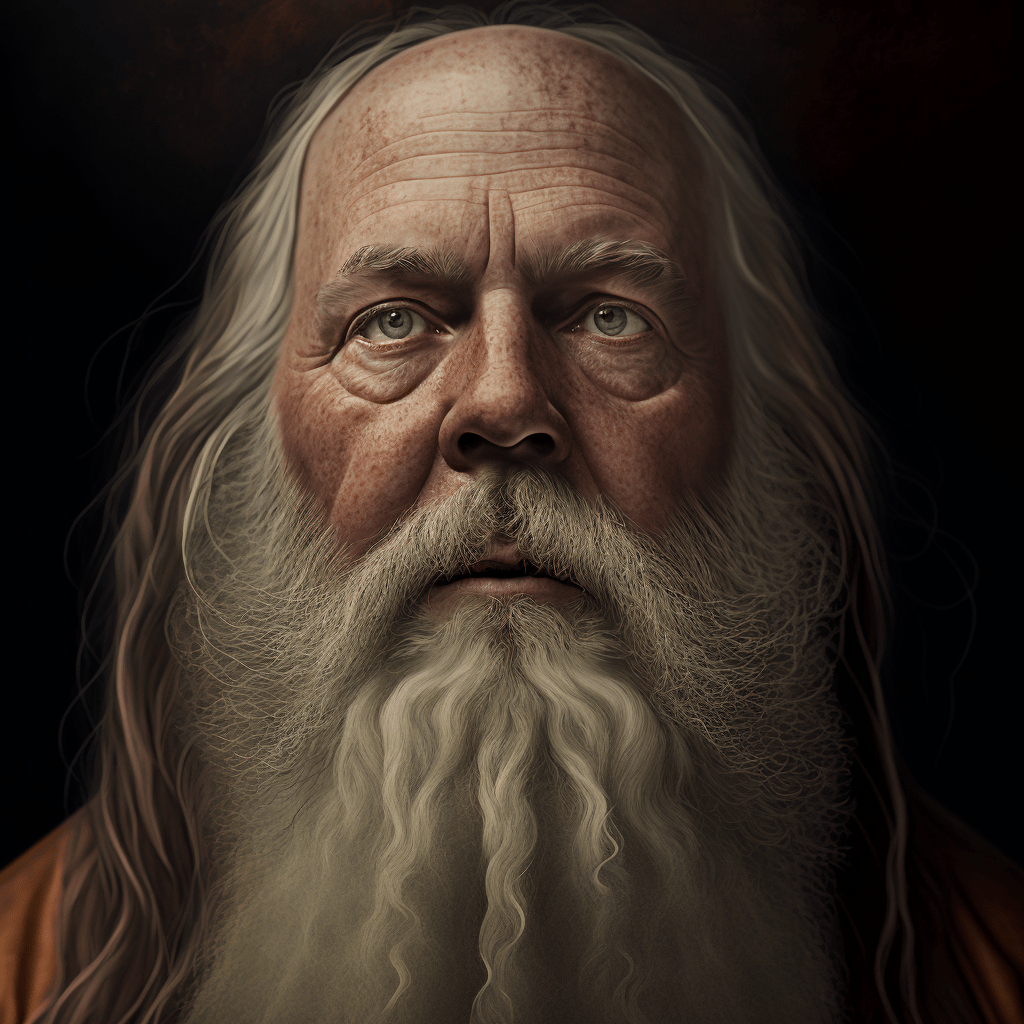
Rick Rubin has been making things for forty years, from founding Def Jam at twenty one to producing Johnny Cash, Jay-Z, Adele, Kanye West, Tom Petty, System of a Down and the Red Hot Chili Peppers, and in this long conversation with Steven Bartlett on The Diary of a CEO he lays out the one thing he does not think a machine can supply. Not craft, not output, not speed. Point of view.
TLDW
Rubin argues that the most valuable creative acts are indefensible, meaning you cannot justify them with reason, and that near-term incentives should never enter the room. He explains why he answered a random internet meme about vibe coding by dropping his professional work to write a book, why 99 Problems was written entirely in Jay-Z’s head, why the president of Def Jam said it would never be a single, and why System of a Down were banned from a radio station a year before they topped it. He walks through transcendental meditation as the practice that taught him to hear his own taste, the four phases of creativity and the only moment a deadline is permitted, and the depressive episode at thirty three that he describes as being shot with a poison arrow. He reframes suicidal feeling as a correct instinct pointed at the wrong target, arguing that what needs to die is the lifestyle, the career path or the relationship rather than the body, and tells the story of telling a hospitalized friend he was in the sweet spot. On artificial intelligence he is neither doomer nor evangelist: it is a powerful tool like fire or the printing press, it is useful as a sampling and mocking-up device, and it fundamentally lacks a point of view, because it is the collected ideas that already exist rather than one angle on the world. His sharpest move is insisting that the art was never in the execution anyway, citing Andy Warhol’s screen prints, Rembrandt’s studio assistants and Hitchcock’s storyboards to argue the creativity has always lived in the ideation, which is to say in the prompt. He closes on miracles in the studio, on making work as an offering to God rather than to a metric, on Jay-Z creating a vacuum by walking away from Cristal and having the universe fill it with Ace of Spades, and on his view that the people on his client list are ordinary people who made a decision.
Thoughts
The word Rubin keeps returning to early on is indefensible, and it is a genuinely useful idea because it is a filter that runs the opposite direction from every filter we normally use. Most decision hygiene is built to catch the thing you cannot justify. Rubin is suggesting that in creative work, the inability to justify is the signal rather than the warning. The vibe coding episode is the clean demonstration: a meme he had nothing to do with started attaching his face to a term he did not understand, he read the volume of incoming energy as an invitation rather than noise, wrote a joke tweet that did seventy five times his normal numbers, and then set aside his actual professional work to write a book about it. He is explicit that he cannot defend any step of that. What makes this more than mysticism is the second half of the argument, which is that answering invitations is a skill you lose by succeeding. His line about labels making you smaller lands hardest on people who have built something, because the reward for being good at one thing is a narrower and narrower definition of what is yours to do.
Roughly forty percent into the conversation Rubin does something I did not expect, which is take the mechanics of suicidal ideation and reframe them as an accurate instinct aimed at the wrong object. His claim is that the person knows something has to die and concludes it must be the body, when what actually has to die is the lifestyle, the career path or the relationship. He then tells the story of visiting a friend in a hospital after an attempt, listening to the visitors ahead of him grieve as though the man had already gone, walking in and saying you are in the sweet spot, you just hit the reset button. It is a startling thing to say and by his account it was the first thing the man responded to. I want to be careful here, because that is one anecdote and not a protocol, and Rubin is not a clinician. But the underlying observation is doing real work independent of the extreme case. Being boxed in is almost always a story about commitments that have quietly stopped being chosen, and the reset costs less than people assume. Bartlett’s follow-up is the better half of the exchange: we celebrate starting and we have no cultural script at all for quitting, even though quitting is structurally the first step of every start.
The AI section is where the title of the episode comes from and it is more interesting than the usual panel answer. Rubin will not say AI cannot be creative, he says he does not know and he is curious, which is already a better posture than most people bring. His actual claim is narrower and harder to dismiss: a model does not have a point of view, because it is the aggregate of ideas that already exist rather than one angle on the world, and if you ask it the same question on three consecutive days you get three different answers. That is not a statement about capability, it is a statement about identity, and it survives the model getting better. Then he does the move that separates him from the crowd. Rather than defending human execution, he gives it away entirely. Warhol never touched most of the Warhols, Rembrandt’s studio painted large parts of the Rembrandts, session musicians play on records credited to bands, Hitchcock and Wes Anderson build the whole film frame by frame before an actor arrives. If the art was never in the brushstroke, then the arrival of a machine that executes beautifully takes nothing. The creativity, he says, is in the prompt. That is a genuinely optimistic position dressed as a concession, and it implies the thing to protect is not your craft but your angle.
Bartlett brings the best counter-example in the episode, and I think Rubin’s answer to it is the most underrated moment in the conversation. Bartlett found a song on Spotify, loved it for two months, went looking for more from the artist, and discovered it was AI generated. He immediately liked it less. His read is that the loss was the human story behind it, the woman who meant it. Rubin’s response is close to a needle: it is interesting that you liked it before you knew, you either like it or you don’t. He is pointing at the fact that the experience was complete and the retroactive devaluation was about provenance rather than about the thing itself. Both men are right and they are describing different products. What Bartlett bought was never just audio, it was audio plus attribution, the same reason he says he would stop watching Formula One if you took Lewis Hamilton out of the car and the lap times improved. The commercial implication is worth sitting with: as generated work gets good, the scarce asset is not quality, it is a verifiable someone standing behind it. That is Rubin’s point about point of view arriving from the market side rather than the artistic side.
The last quarter is where the practical material is, and it is the part most write-ups of this episode will skip. Rubin’s claim about his own client list is deflationary in the best way: they are ordinary people who made a decision. The evidence he gives is Eminem’s notebooks, where ninety nine percent of the writing will never be seen by anyone, because he is not producing, he is training, in the way an athlete trains in the off season. Set that beside his insistence that risk and greatness are not separable, that the only available path is the tightrope, and you get something sharper than the usual follow-your-passion advice: the work ethic is table stakes and the risk is the differentiator, and neither one substitutes for the other. The distinction he draws between the perfectionist and the procrastinator is the most immediately usable line in the whole two hours, because it is diagnostic. The procrastinator’s delay is fear of the work meeting the world, and it compounds, since the longer you wait the less any finished thing can survive the expectation built up around it. Tom Petty spending two and a half years on Wildflowers was not that. He simply had not finished. If you cannot tell which one you are, Rubin’s earlier answer applies: you have not done enough homework to hear yourself yet.
Key Takeaways
- Rubin does not identify by job title. He describes his involvement in art and creativity as coach, collaborator, or whatever the project needs, and says any label placed on you or by you makes you smaller.
- His current operating word is indefensible. In art, the thing you cannot justify with reason is not a red flag, it may be a requirement, because reason is a tiny sliver of how good decisions actually get made.
- He treats repeated signals from the world as invitations. If two or three people independently recommend something, he goes, even when it does not interest him, on the theory that too much energy is pointed at it to ignore.
- The vibe coding story is his worked example. Andrej Karpathy coined the term, an unrelated photo of Rubin became the meme image for it, and Rubin chose to participate rather than laugh it off.
- His joke tweet, “tools will come, tools will go, only the vibe coder remains,” did about 1.5 million views against a normal 10,000 to 20,000, which he read as confirmation to go further.
- He then put aside his professional work to write a book about vibe coding, an adaptation of the Tao for code, and says plainly that he cannot explain why and will not claim it was a good idea.
- Near-term incentives have never entered his creative decisions. Not once, by his account, in forty years. He describes the work as being made forever rather than for a release window.
- Everything you make is a diary entry. Nobody can tell you your diary entry is wrong, which is why he considers competition between artists incoherent.
- Comparison is always apples and oranges. Michael Jackson is better at being Michael Jackson and Prince is better at being Prince. Drake and Kanye West are not in competition because they deliver different things.
- Yeezus was intentionally an anti-hip-hop album taken as far into indefensible territory as they could push it, and Rubin’s only test of whether it worked is whether it still matters to him now.
- With Linkin Park, the safe move was a fourth rap rock album to a guaranteed audience. Choosing the new sound cost roughly half the audience and bought the band a much longer career on the tail end of a dying genre.
- The 99 Problems session: Rubin played the beat, Jay-Z had it loop for twenty to thirty minutes while mumbling in the back of the room, then delivered the full verse from memory with nothing written down.
- Across takes the words were identical but the cadence shifted, like a saxophone solo played slightly differently each pass, with different words carrying the emphasis.
- Chris Rock suggested 99 Problems would make a great hook without the original Ice-T subject matter, and Rubin suggested to Jay-Z that he make it about the problems.
- The president of Def Jam, the label Rubin founded, said 99 Problems would never be a single because it did not sound like the radio. That was exactly why it landed when it got there.
- KROQ’s Kevin Weatherly told Rubin not only would they not play System of a Down’s single, they would never play the band. One year later it was the station’s most requested song, and Rubin recently watched them sell out 80,000 seats in Paris two nights running.
- Rubin learned transcendental meditation at fourteen, stopped for five years during college, and identifies the first sit after returning as the proof that it had shaped who he was.
- He meditated before sessions with Tom Petty, Johnny Cash and the Red Hot Chili Peppers, and calls it the most profound learnable, practicable thing he can point to.
- The purpose of the practice, in his framing, is to be able to answer which slice of pizza tastes better to you without routing the question through what someone else might think.
- He believes creativity is not unevenly distributed at birth so much as beaten out of people by institutions that reward repeating back what you are told.
- Creativity has four phases in his model: seed, experimentation, crafting, then finishing. A deadline is only permissible once you are through the first three and the thing is roughly ninety percent there.
- He sets no goals, no five year plans and no New Year’s resolutions, and describes them as a limitation that would have kept him from seeing the impossible become possible as often as it has.
- Losing his Malibu house and everything in it to a fire taught him impermanence directly rather than theoretically.
- On feeling trapped: the instinct that something must die is correct, but the target is the lifestyle, the career path or the relationship, not the body. People are free and mostly do not believe it.
- At thirty three a contract renegotiation with a new executive triggered panic attacks, insomnia and years of depression, which he describes as being shot with a poison arrow. He had no musculature for instability because nothing had gone wrong before.
- He went to therapy five days a week and eventually used an antidepressant despite not being a drug person, and he would not erase the episode, because it taught him what the artists he works with are carrying.
- What the great ones share is a point of view plus a work ethic. Talent without the ethic almost never reaches anyone, and the field is crowded not because of rivalry but because so many people attempt it.
- To make your perspective more interesting, stop studying your own field. Go to museums, read the great literature, watch the great films, and read old books rather than new ones.
- His one-sentence distillation of the Tao is that the soft overcomes the hard, and that non-action is often the correct action, illustrated by Napoleon telling people to bring emergencies back in two weeks because most resolve themselves.
- He rates Jung’s ideas about archetypes, dreams and synchronicity as closer to how the world actually works than what we are taught in maths and science, on the grounds that science is only current until the next result overturns it.
- On AI he refuses the doom framing and the hype. It is a powerful tool, like fire or the printing press, and powerful tools produce good and bad. The church tried to ban the printing press.
- His objection is specific: AI is the collected ideas that already exist, so it has no angle, and asking it the same thing on different days produces different answers. That is the absence of a point of view.
- He can see an immediate use for it as a crate-digging tool, the way hip-hop producers hunted old records for a usable break. Run it in the background and grab the fragment worth building on.
- He thinks AI may let people who cannot draw or play an instrument express themselves through iteration and prompting, and calls that a beautiful thing rather than a threat.
- The core argument: the art has always been in the ideation, not the execution. Warhol prompted a studio to screen print his most famous images and never touched them, and they are not less Warhol.
- Hitchcock storyboarded entire films frame by frame and Wes Anderson builds the whole movie before actors arrive. The creativity sits in the instruction, which is to say in the prompt.
- Bartlett loved a Spotify track for two months, learned it was AI generated, and immediately liked it less. Rubin’s reply: it is interesting that you liked it before you knew.
- Studio miracles are real but not repeatable. What is repeatable is showing up and continuing until it is great.
- The first Johnny Cash album came from living room recordings made purely to get to know each other. Two attempts at re-recording those songs properly with bands were worse, so they released the living room tapes.
- A week of Neil Young sessions felt like a total failure, and most of the finished album turned out to be from that first week once they stopped judging the mistakes and listened for the feeling.
- A few years ago Rubin realised he makes work as an offering to God. Once that is the frame, commercial metrics have nothing to compete with.
- He believes our purpose is to self-express, to say this is how I see the world and to ask others to show theirs. Copying what succeeded is a different game entirely.
- Jay-Z dropped Cristal after its executive made disparaging remarks about hip-hop drinkers, with no plan to replace it. Almost immediately someone brought him a gold bottle and the chance to own Ace of Spades.
- The general principle Rubin draws from that: create the vacuum first. The good thing cannot arrive while you are still occupying the space with the wrong one.
- He turned down Guns N’ Roses’ first album after seeing them play to thirty people, and thinks that was correct, because his involvement would have made it something other than what they made.
- Advice is dangerous because people give it in good faith from their own story. Gather as much conflicting information as you can, then take however long it takes to find the answer that is right for you.
- It took Rubin about a year after leaving home to separate which thoughts in his head were his and which were his parents’.
- Kanye West is, in Rubin’s description, totally fearless in both art and life, and Rubin rejects the idea that his success is surprising given the risk. Risk and greatness go together, and the tightrope is the only route.
- The client list is not made of special people. They are ordinary people who made a decision, with some cultivating a gift rather than being born with one.
- Eminem writes constantly and told Rubin that ninety nine percent of the notebooks will never be seen. He is in permanent training, like an athlete who works through the off season.
- Johnny Cash changed Rubin through humility and depth, Tom Petty through craft and patience, and Adele through the fact that she writes her own songs and can deliver thirty great takes in a row.
- Tom Petty’s rule was that everything be in time and in tune and every word intelligible, down to re-recording a line because a plural s was inaudible. Wildflowers took about two and a half years.
- Perfectionism and procrastination look alike from outside. The tell is fear: the procrastinator is afraid to release, and the longer the gap, the less any finished work can meet the expectation.
- Rubin made his Paul McCartney documentary because nobody had covered McCartney’s musicianship, arguing he belongs at number one on any list of bass players and almost nobody would even include him.
- The eight-part Jay-Z documentary exists for the same reason: he is known as a billionaire businessman, and almost nobody engages with him as a poet and lyricist.
- The Creative Act took eight years and went from roughly 1,400 unsorted pages to 63 areas of thought, then to 83. Rubin wanted 78 to echo the tarot deck, his collaborator told him he was insane, and the next day the assistant’s ordered file contained exactly 78.
- His closing note is that small children have not yet been told what they can and cannot do, so they look at ordinary things with wonder, which is exactly the posture of a great artist.
Detailed Summary
Indefensible as a Creative Filter
Asked for a high-level principle that applies across business and music, Rubin offers the word indefensible. He notes it is an unusually strong pejorative, something worse than merely bad, and then argues that in making art it may be not only acceptable but necessary to push to a level you cannot defend. He cannot explain why, and says so, locating himself firmly in the camp where reason is a thin slice of how decisions actually get made and intuition or guidance from what he calls the creative force of the universe does the rest. Applied to the work itself, the test is simple: if you make something believing everyone will love it, it was too easy, and if you make something you cannot justify but genuinely feel, that is the best thing available to you. He adds that the works he has fallen in love with over a lifetime frequently repelled him at first contact, because genuinely revolutionary work arrives without context.
The Vibe Coding Detour and Answering Invitations
The example Rubin gives is recent and slightly absurd. Andrej Karpathy coined the term vibe coding, and within a day someone attached an unrelated photograph of Rubin wearing headphones with his eyes closed to the phrase. Friends began sending him hundreds of variations. His pre-book self, he says, would have laughed and moved on. Instead he treated the volume as an invitation, the same way he now treats a film recommended by three separate people, and decided to participate by writing a joke tweet: tools will come, tools will go, only the vibe coder remains. It did roughly a million and a half views against his usual ten to twenty thousand. He took the response as a further invitation, set aside his professional work, and wrote a book on vibe coding built as an adaptation of the Tao. He repeats that he cannot defend the decision and will not claim it was a good idea, only that he was following a calling. The broader point Bartlett draws out is that success narrows people, and that we decline invitations mostly because they are not on the business card.
Never the Near-Term Incentive
Pressed on commercial pressure, Rubin is absolute: near-term incentives have never been a consideration, not once, at any point. The work is made forever, and it is made personal, which is where the diary entry metaphor comes from. Nobody can read your diary and tell you it is wrong. He produces a series of case studies in the same breath. Yeezus was deliberately anti-hip-hop and pushed as far into indefensible territory as they could manage. Linkin Park could have made a fourth guaranteed rap rock record to an audience that wanted it, and instead lost about half of that audience and gained a longer career as the genre died behind them. Radiohead’s Kid A alienated Bartlett on release and is now possibly his favourite album by the band. Rubin concedes freely that the approach does not always pay, that there are people who followed their own taste and failed, and that the alternative is a perfectly legitimate game. It is simply the commerce game, and he is in the art game.
99 Problems, System of a Down, and Being Wrong for the Radio
Rubin met Jay-Z when the Black Album was intended as a retirement record, with ten favourite producers each contributing one track. Chris Rock had floated 99 Problems as a hook detached from the Ice-T song’s subject matter, and Rubin suggested to Jay-Z that he make it literally about problems. The record became iconic, but the president of Def Jam, the label Rubin himself founded, listened and declared it would never be a single because it did not sound like anything on the radio. Rubin’s read is that this was the standard logic of the era and the reason so little from it lasted. He pairs it with System of a Down, whose single he brought to Kevin Weatherly at KROQ, the station whose playlist other alternative rock stations followed. Weatherly said not only would they not play the record, they would never play the band. Twelve months later it was the most requested song on the station. Two weeks before this interview, Rubin watched System of a Down sell out an 80,000 seat stadium in Paris on consecutive nights.
Transcendental Meditation and Learning to Hear Yourself
Asked how a person gets clearer on what they actually love, Rubin’s answer is one word: meditate. He learned transcendental meditation at fourteen, a silent mantra practice done sitting with eyes closed for twenty minutes, typically twice a day, with a private sound he has never spoken aloud in fifty years. He stopped through college and resumed after moving to California, and it was that first sit after five years away that served as his only proof, because he recognised immediately how much of how he saw the world had come from it. He quotes Maharishi Mahesh Yogi’s line that each meditation is a deposit in the bank, and notes that he considered this rhetoric until his own experience confirmed it. He meditated before sessions with Tom Petty, Johnny Cash and the Red Hot Chili Peppers. The functional payoff, in his description, is seeing past the surface, and the surface is the part he finds uninteresting. Bartlett admits he has no practice despite living with a breathwork practitioner, and has no good answer for why he has not tried it.
The Pizza Test, Comparison, and Self-Trust
Rubin’s model of working with an artist is closer to therapy than direction. He asks to hear their favourite things and then asks questions: what do you like about it, how did you get there, what equipment, was it fun, have you played it for anyone, what happened when you did. Most people, he says, are never really heard, because the other person is assembling their reply. Artists routinely tell him exactly what they want to do and then ask him what they should do, which he diagnoses as the standard condition of a world that trains people out of self-trust. The remedy he keeps returning to is the pizza test. Given two slices, nobody struggles to say which tastes better, and nobody answers by guessing which one a third party would prefer. That is the whole target. He adds that wild overconfidence is usually insecurity wearing a mask, and that the goal is neither pole but the middle place where you can simply report what is true for you. On comparison he is dismissive: it is always apples and oranges, Michael Jackson is better at being Michael Jackson, and asking whether Drake or Kanye West is more creative is asking who has the better diary.
Four Phases, No Goals, and the Only Legal Deadline
Rubin breaks creative work into four phases: the seed phase, the experimentation phase, the crafting phase and the finishing or editorial phase. His rule is that no timeline can exist until the first three are done, because until then you do not know what you are making. Once the thing is visible and roughly ninety percent there, a deadline for the final ten percent is fine, and that last stretch rarely makes or breaks the result. He extends this to life without prompting, agreeing with Bartlett that the seed, experimentation and crafting phases describe a life as well as a record, and that living so those phases can happen is what makes someone an artist regardless of occupation. He sets no goals, has never made a five year plan or a New Year’s resolution, and describes doing so as a terrible limitation that would have blinded him to the impossible becoming possible on a regular basis. The Malibu fire that took his house and possessions is his reference point for impermanence: he expected to live there forever and it is now a dirt lot.
What Actually Needs to Die
The most striking passage in the conversation is Rubin’s reframing of feeling trapped. He describes a successful artist he took to dinner during a terrible period, whose energy convinced him the person might not survive it, and telling them they were not obligated to continue, that they could stop, move somewhere else and live differently. Years later that person told him the conversation had registered and they had done a version of it. From the several suicides he has known, and one friend who survived an attempt, he draws a specific conclusion: the person is correct that something has to die, and wrong about what. The lifestyle, the career path, the relationship, those are the things that need to end. He visited the surviving friend in hospital, listened to two visitors ahead of him weep as though the man had already died, walked in and told him that hard as it was to see, he was in the sweet spot, because he had just hit the reset button and none of the obligations that made him want out were binding any more. The man, catatonic until that moment, responded, got up and got dressed. Rubin’s broader claim is that the box is a story, that a full restart often costs less rather than more, and that you can stand up from the chess table at any time and play a different game.
The Poison Arrow: Rubin’s Depression at Thirty Three
Rubin’s own collapse had an unremarkable trigger and a severe outcome. An only child of loving, supportive parents, he had gone from school to making music as a hobby to two decades of uninterrupted professional success. At thirty three, a mentor and industry figure was politically forced out of a company Rubin had a deal with, and the replacement called to say he had read the inherited agreement, did not like it, and wanted to discuss it when Rubin was next in California. That was the entire conversation. Rubin describes panic attacks, insomnia, nausea, physical illness and an inability to get out of bed, and says that for almost anyone else the same call would have been an inconvenience. He simply had no musculature for it, having been raised to believe he could do no wrong and then handed a career that confirmed it. The episode outlasted the problem by years, continuing after the contract was resolved and he had moved to a new company. He saw a therapist or healer five days a week, and eventually took an antidepressant despite an aversion to drugs. He would not press a button to erase it. It brought him down to a more realistic view of the world, he no longer feels like Superman, and it gave him a working understanding of what the artists he collaborates with are carrying.
Where a Point of View Comes From
What the great artists share, in Rubin’s account, is a point of view: seeing the world in a way others do not, or noticing something everyone sees that nobody has named. He compares it to what a comedian does, and says art lets us borrow emotions that belong to someone else and feel them anyway. The second ingredient is a work ethic he describes as grueling, without which talent almost never reaches an audience. Asked how to make your perspective more interesting, he tells Bartlett to stop reading business and self-help material and go sideways. Museums with the audio tour. The great literature, which is not one canonical list but is easy enough to find by asking around, with the three-recommendations rule applying again. The great films. Above all, old books rather than new ones, because ancient wisdom is the best. The logic is competitive as much as spiritual: if everyone reads the same books they arrive at the same perspective, and what makes you good at your work is precisely that you did not approach it the way everyone else did. Steve Jobs and typography is Bartlett’s example, and Rubin accepts it.
The Tao, Jung, and the Limits of Rationality
Rubin first read the Tao around thirty years ago on moving to California, and found it entirely different on a second reading six months later, which is his argument for the kind of book that changes each time you meet it. His one-sentence distillation is that the soft overcomes the hard, with the corollary that non-action is often the best action. The illustration he offers is Napoleon telling anyone who arrived with an emergency to bring it back in two weeks, on the reasoning that almost all urgent problems resolve themselves and the residue is worth his attention. Water wearing through rock is the other image. On Jung, he values the archetypes, the attention to dreams, and above all synchronicity, which he thinks is closer to how the world actually works than what maths and science present, given that scientific understanding holds only until the next result overturns it. Asked directly, he says rationality is overrated and the rational world is very small. His evidence is ordinary: nothing in the data explains why you want to be around one person and not another, and that kind of knowing probably shapes more of a life than any metric does.
Can AI Be Creative? The Point of View Argument
Rubin opens the AI section by refusing both available scripts. It is a wildly powerful tool, he is curious what it can do, and like any powerful tool it can be used well or badly. Fire burned his house down and he would not ban fire. The internet did good and harm. The church tried to ban the printing press because it did not want information available to everyone. Asked whether AI can be creative, he says he does not know. What he will assert is narrower: everything discussed in the conversation about creativity reduces to point of view, and AI does not have one, because it is the collected ideas that already exist rather than a particular angle on the world. Ask it the same question on successive days and the answers differ, which means there is no stable this is how I see it underneath. He is open to it producing something good by volume, comparing the process to crate digging, where hip-hop producers listened through old records hunting one usable break. If AI plays constantly in the background and he hears a fragment worth sampling, that is a legitimate use. He cannot imagine it replacing the artist end to end, but he is genuinely enthusiastic about it letting people who cannot draw or play an instrument reach something beautiful through prompting and iteration.
The Prompt Is Where the Art Lives
The sharpest turn in the episode is Rubin giving away execution entirely. The things we make, he says, are the reminders that we are creative, not the creativity itself. Hitchcock worked out whole films in advance and storyboarded them frame by frame, to the point where the drawings contain the movie. Wes Anderson builds the entire film before an actor appears and executes it afterwards. Andy Warhol began as a commercial illustrator, painted the first Campbell’s soup cans himself, and then produced his most famous images, the Marilyns and the Elvises, by instructing a studio to screen print them. He never touched them, and they are not less Warhol. Rembrandt and his contemporaries ran studios where disciples painted large portions of the work under the master’s direction. Session musicians play on records credited to bands, and nobody considers those records worse. The art is always in the ideation. From there the conclusion is direct: the prompt is what Hitchcock and Anderson were using to tell an illustrator what to draw, the creativity lives there rather than in the drawing or the finished film, and prompting is a skill with a very low barrier to entry that improves with experimentation. Rubin considers that democratisation a good thing. What he is uncertain about is whether an AI’s own ideation will be interesting to anyone.
The Spotify Song, Lewis Hamilton, and the Value of Provenance
Bartlett supplies the counterweight. He and his business partner found a song on Spotify, loved it, and two months later he went looking for more from the artist and realised it was AI generated. The song immediately meant less to him. His explanation is that the value was never only in the audio, it was in a woman singing about something that mattered to her, and removing that removed most of it. He reaches for Formula One: if you took Lewis Hamilton out of the car and the lap times improved, he would stop watching, because what he is watching is a human being experiencing competition and anger, which he can relate to. Rubin agrees an automated car is less interesting, but declines to follow the argument to its conclusion. He points out that Bartlett liked the song before he knew, wonders aloud whether he should be against something purely because of how it was made, and lands on you either like it or you don’t. The exchange never resolves, and it is better for that, because the two positions map exactly onto the commercial question the whole industry is now facing.
Miracles, and Why They Are Not Repeatable
Asked for a miracle, Rubin describes the Avett Brothers playing No Hard Feelings in the studio. It had been fine, unremarkable, played a few times, and then on one pass time stopped. Nobody changed anything and nobody knew why. His dominant thought a minute in was fear that they might not reach the end of the take, because if they did not, it might never come back. Sometimes the recognition is delayed instead. A week of Neil Young sessions felt like a band that could not play the songs and never would, until the following week the drummer insisted a take from the failed week was already there. Turned down slightly, with the piano raised, the mistakes were still audible but the feeling was present, and most of the finished album came from the week everyone had written off. Johnny Cash is the purest case: the living room recordings of Cash singing and playing guitar were made only to get to know each other and to test what sounded good in his voice, with a plan to try a hundred songs and then record the best ten properly. They did that twice, with two different bands, and both attempts were worse. The living room tapes became the album. Asked how to make any of it repeatable, Rubin says none of it is. What repeats is showing up and continuing until it is great.
An Offering, Not a Product
Rubin’s working rule is that once he likes something enough to release it, he is finished with it and moves on. Reception is a bonus and nothing more, and anything he thinks about beyond the release would undermine the process, which he describes as pure, delicate and in need of protection. When an artist in the studio says a track sounds like it could be a single, his answer is that this has nothing to do with what they are doing. For most of his career he framed the objective as timeless greatness without quite knowing what he meant by it. A few years ago, sitting on a lifeguard chair in Hawaii, he realised the frame was an offering to God, made out of love and gratitude, with God as beneficiary rather than customer. It is, he says, my best, here you go. Once that is the standard, the numbers become insignificant, and no metric competes. Asked why we are here at all, he answers self-expression: to say this is how I see the world and to ask another person to show you theirs, with agreement and disagreement both being fine outcomes. Copying what worked for someone else is a different game and, in his view, not the point of being here.
Create the Vacuum: Jay-Z, Cristal and Ace of Spades
The story Rubin says is treated as a passing remark in the Jay-Z documentary is the one he finds most interesting. Jay-Z had personally made Cristal popular in hip-hop, naming it in records when nobody knew what it was. When the person running the brand made disparaging remarks about hip-hop drinkers, Jay-Z pulled it from his clubs and stopped representing it, with no plan and no replacement in mind. Almost immediately someone approached him about a new champagne brand. All they had was a gold bottle whose shape he loved. That became Ace of Spades, and Bartlett notes the stake was worth around 630 million dollars when he sold it. Rubin’s reading is not luck but mechanism: Jay-Z acted on a belief at a near-term cost, which created a vacuum, and the vacuum got filled. He generalises it to relationships, where people stay in something that is not working while hoping to meet someone better first. That is not how it works, in his view. You end the thing, you create the space, and then the good thing has somewhere to arrive. Bartlett’s observation is that culture celebrates starting and has no vocabulary for quitting, despite quitting being the prerequisite.
Ordinary People Who Made a Decision
Shown the list of artists he has worked with, Rubin declines the premise that they were born different. They are ordinary people who made a decision, some with particular gifts and others who cultivated one, and they are not the only people capable of what they did. Eminem is his example: always writing, insanely obsessive about being as good as he can be, and clear that ninety nine percent of the notebooks will never be seen by anyone, because the writing is practice rather than product. Rubin compares it to athletes who train in the off season, who tend to be better and to last longer. On Kanye West he is more specific still. Rubin describes himself as fearless in art but not in life, and Kanye as fearless in both, which he calls great strength. When Bartlett suggests it is remarkable to have so many successes while taking such large risks, Rubin disagrees outright. The risk and the success are not separable. It is only through risk that greatness shows itself, there is a tightrope, and the only available choice is to walk it. Greatness, he clarifies, does not mean beating other people. It means your light shining brighter than anyone else doing what you do.
Cash, Petty, Adele, and the Procrastination Tell
Asked which artists changed him, Rubin names three. Johnny Cash, who was humble and quiet and said nothing unless drawn out, but had a considered view on anything you asked about and no need to advertise it. Tom Petty, whom he compares to Paul McCartney in the Lennon and McCartney division of labour, a craftsman who could play anything and see every route through a song while also writing at the highest level. Petty’s rules were that everything be in time and in tune and that every word of the vocal be intelligible, to the point of re-recording a line because a plural s was inaudible, and Wildflowers took around two and a half years without any sense of hurry. Adele is the third, singled out because she was a throwback to the singer-songwriters of the seventies at a time when most pop artists did not write their own material, and because she can sing a song thirty times and be great thirty times. On the perfectionism question, Rubin separates it cleanly from procrastination. Petty was not procrastinating, he simply had not finished. Real procrastination is fear of releasing the work, and it feeds itself, because the longer the silence the higher the expectation and the less any finished thing can survive it.
The Documentaries and the 78 Areas of Thought
Rubin made his six-part Paul McCartney documentary because every existing film covered the songwriting or the hysteria and none covered the musicianship, despite the fact that without it there would have been nothing to be hysterical about. He argues McCartney belongs at number one on any list of the greatest bass players and that most people would not put him on the list at all, because they think of him as Beatle Paul. Wanting another subject who is famous for the wrong thing led him to Jay-Z, universally known as a billionaire businessman and almost never engaged with as a poet, despite lyrics Rubin calls intricate and astounding. Jay-Z’s answer when pitched was that he would not say yes, because saying yes meant it would happen and he was not sure. A year passed, then months more while Rubin felt too uncomfortable to follow up, and eventually the answer was yes. Bartlett notes the finished eight-part film abandons the conventions of how such things are shot, with odd angles and a black and white grade, and that the effect is of spying on a private conversation. The episode ends with the origin of the 78 sections in The Creative Act: eight years of work, roughly 1,400 pages reduced to 63 areas of thought, which grew to 83, which Rubin wanted to be 78 to echo the tarot deck. His collaborator told him he was insane. The next day his assistant put the sections in order and reported there were 78, and nobody has ever found the missing five.
Notable Quotes
“Creativity is beaten out of us over the course of our lives. We go to school, we’re taught to follow rules. The rules are not there to help us. The rules are there to control us.”
Rick Rubin, on why he rejects the idea that some people are simply born more creative
“We never consider near-term incentive ever at any point in time. Never once. Never a consideration. It doesn’t exist. We’re making things forever.”
Rick Rubin, when asked about the commercial pressure to repeat a successful formula
“Everything we make is a diary entry. Everything we make is our personal true expression.”
Rick Rubin, on why one person cannot rank another person’s work
“The inclination to commit suicide is the person knows something needs to die and they think the body needs to die. But in reality those choices that they made, that lifestyle in that moment, that career path, that relationship, that’s what needs to die.”
Rick Rubin, reframing the instinct behind feeling permanently trapped
“Rationality is overrated. The rational world is very small. There’s much more, there are much more interesting things going on than the rational world.”
Rick Rubin, after Bartlett describes himself as a highly rational person
“AI is the collected ideas that already exist. It doesn’t see it from a particular angle. And if you ask it the same question several times or several days in a row, it may give you very different answer day after day.”
Rick Rubin, explaining the one thing he thinks a model structurally lacks
“The creativity is there. It’s not in the drawing. It’s not in the finished movie. It’s in the prompt.”
Rick Rubin, after walking through Hitchcock’s storyboards and Warhol’s screen prints
“We’re making it as an offering to God. And if we’re making it as an offering to God, things like the numbers, that’s insignificant. This is we’re doing our best as an offering. There’s nothing deeper than that. There’s no metric that competes with that.”
Rick Rubin, on the realisation he had roughly thirty five years into his career
“There’s a tightrope and you’re walking on the tightrope and if you make it, it’s really good. And if you don’t make it, it’s not so good. But the only choice is the tightrope.”
Rick Rubin, rejecting the idea that risk and success are in tension
“When you’re a little kid, you haven’t yet, no one has told you what you can and can’t do yet, how the world works. You really look at things with wonder. And that’s the perspective of a great artist.”
Rick Rubin, in the closing minutes, on what children still have that most adults have lost
The back half is where the material nobody else has written up yet sits, so watch the full conversation here rather than the clips.
Related Reading
- The Creative Act: A Way of Being by Rick Rubin, the eight-year book behind almost every idea in this conversation, including the 78 areas of thought.
- Tao Te Ching the text Rubin first read thirty years ago, source of the soft overcomes the hard and the basis for his adaptation for coders.
- Transcendental Meditation the official organisation for the practice Rubin learned at fourteen and calls the most profound learnable thing he can point to.
- Andy Warhol (Wikipedia) background on the screen-printed work Rubin uses to argue that the art was never in the execution.
- The pursuit of purpose for anyone taking seriously Rubin’s claim that we are here to self-express.