PJFP.com

Pursuit of Joy, Fulfillment, and Purpose

Tag: Ethereum

  • Bubbles, Parabolas and Speed Crashes: How AI Agents Are Ending Human Market Structure and Why This Is Not the Dot-Com Bubble

    The host opens this Saturday morning macro and AI markets video with a direct challenge to anyone calling the current move a bubble. The argument is that the market structure itself has changed, that AI agents now dominate trading and capital allocation, and that Charles Kindleberger’s Manias, Panics, and Crashes describes a world that no longer exists. The full hour-long conversation walks through earnings, PEG ratios, capex, the benchmark arbitrage trapping passive investors, the inflation regime shift, and where money is rotating now. Watch the original video here.

    TLDW

    AI is not a bubble in the Kindleberger sense because the market is no longer dominated by emotional human professionals. AI agents, retail risk-takers, and passive flows are reshaping price discovery while the spend is being funded by free cash flow from the most cash-rich companies in history, not bond-issuance manias like telecoms or oil. Earnings growth is 27 percent, semiconductor sales grew 88 percent year over year in March, OpenAI and Anthropic revenue is on near-vertical curves, Nvidia’s PE is at decade lows even as Cisco’s was 130 at the dot-com peak, and the PEG ratio for the S&P sits at 1.03 with one third of the host’s thematic basket under 1.0 while Microsoft, Amazon, Meta, Apple, and Alphabet all carry richer PEGs. The new regime brings speed crashes instead of multi-year recessions, persistent bottlenecks in power, chips, transportation, and chemicals, inflation pressure that pushes three-month bills below CPI for the first time since the inflation era, and a benchmark arbitrage forcing passive money to chase AI exposure. The host is selling two thirds of his Micron, rotating into Nvidia, Vistra, silver, Bitcoin, and Ethereum, and warning that tokenization launches scheduled for July 26 will be the next major regime change.

    Key Takeaways

    • The word bubble is being misapplied because the same people calling AI a bubble called QE, tariffs, oil, Bitcoin, and passive investing bubbles for fifteen years and were wrong every time.
    • Kindleberger’s Manias, Panics, and Crashes described a slow, linear, human-emotion-driven world. AI agents have no emotion, no memory of Druckenmiller’s 2000 top, and one goal: make money.
    • The simplest test for anyone bearish on AI is to ask how much they use artificial intelligence. If they have not used a tool like OpenClaw or similar agentic systems, they are still operating in the old market regime.
    • This buildout is funded by free cash flow and bond issuance at yields better than US Treasuries from companies with stronger balance sheets than the federal government, unlike the dot-com telecoms or 1970s oil majors.
    • The S&P 500 is up only 7 percent year to date. The bubble framing is being applied to a handful of names, not to broad indices that remain reasonably valued.
    • The agentic stage of AI started in late November and accelerated when OpenClaw went viral at the end of January. Token consumption is set to grow 15 to 50 times from the IQ stage.
    • Anthropic revenue is stair-stepping from 5 to 7 to 9 to 14 to 19 to 24 to 30 billion in annualized run rate, on pace to surpass Alphabet in revenue by mid-2028.
    • OpenAI’s backlog hit 1.3 to 1.4 trillion in the most recent earnings cycle and the company still does not have enough compute.
    • Dario Amodei told the world Anthropic was planning for 10 times growth per year. In Q1 they saw 80 times annualized growth, which is why compute is bottlenecked and Anthropic is renting from Amazon, Google, and Colossus.
    • S&P 500 earnings growth is 27.1 percent year over year. The only quarters that match are those coming out of recessions, and this is not a reopening trade.
    • 320 of 500 S&P companies have reported and the average earnings surprise is 20 percent. Forward estimates are up 25 percent year over year as analysts revise upward against the historical pattern.
    • Total semiconductor sales grew 88 percent year over year in March. Semis have moved in proportion to earnings, not in excess of them.
    • Cisco’s PE was 130 at the dot-com peak. Nvidia’s PE today is the lowest of the last decade because professionals cannot run concentrated positions in single names.
    • The Edward Yardeni PEG ratio for the S&P is 1.03. The hyperscalers are not cheap on PEG: Microsoft 1.4, Amazon 1.66, Meta 1.96, Apple 3, Alphabet near 5. Thirty of ninety-five names in the host’s thematic portfolio carry PEGs under 1.0.
    • Passive investing creates a benchmark arbitrage. Everyone long the S&P 500 through index funds is structurally underweight Intel, Nvidia, Micron, and every name actually going up. Pension funds and mutual funds are forced to chase AI exposure to keep up.
    • BlackRock’s Tony Kim at the Milken conference: compute and model layers added 8 trillion in market cap year to date while the service apps that make up two thirds of GDP lost 1.2 trillion. The benchmark arbitrage is already running.
    • Larry Fink predicted a futures market for computing power. Power plus chips is the oil of the intelligence economy.
    • Jensen Huang called this a 90 trillion dollar AI physical upgrade cycle. The one big beautiful bill bonus depreciation provision was designed to incentivize this capex magic.
    • The host is selling two thirds of his Micron position. The reasoning is the memory market started moving in September of last year, the DRAM ETF is the ninth most traded ETF with billion dollar daily volumes, and exhaustion indicators are flashing red.
    • Money from Micron is rotating into Nvidia, Vistra, silver, Bitcoin, and Ethereum. The view is that the energy and power side of the AI stack is lagging the semis and will catch up next.
    • Silver versus gold has not moved while Micron has gone parabolic. LME metals are breaking out. China is increasing gold purchases significantly month over month.
    • The expected CPI print of 3.7 percent will put three-month Treasury bills below CPI for the first time since the post-pandemic inflation era. That is when Bitcoin started its last major run.
    • Logistics Managers Index hit 69.9 in March, the fastest expansion since March 2022. Transportation prices are surging because there is no capacity. This typically only happens during tax cuts or post-COVID reopenings.
    • Payroll job creation in information, professional services, and financial activities is negative. AI is already replacing knowledge work. Job creation has shifted to mining, manufacturing, construction, trade, transportation, and utilities, which is structurally inflationary.
    • Whirlpool says appliance demand is at great financial crisis lows. The consumer PC and laptop market collapse is worse than 2008. AI is pulling capital and pricing power away from legacy consumer categories.
    • Mike Wilson’s data shows reacceleration across sectors, not just large cap tech. Small caps and median stocks are showing earnings growth too, just at smaller market caps.
    • Chevron’s CEO says global oil shortages are starting. Jeff Currie warns US storage tanks will run empty. Ships are still not transiting the Strait of Hormuz. Countries that learned this lesson will restock to higher inventory levels permanently.
    • The Renmac Bubble Watch threshold was crossed on a technical basis. The host considers technical exhaustion a stronger signal than narrative-driven bubble calls.
    • Goldman Sachs power demand reports, Guggenheim warnings on the power crunch, and BlackRock’s compute intensity research all triangulate on the same conclusion: capex needs are larger than current forecasts.
    • The thematic portfolio is up roughly 30 percent from March lows. Power, optical fiber, advanced packaging, chemicals, and rack-level infrastructure baskets are leading.
    • Sterling Infrastructure (STRL), Fluence batteries, ABB electrification, Hon Hai (Foxconn), Vistra, Eaton, and Soitec are highlighted as names lagging the megacaps but inside the same AI infrastructure trade.
    • John Roque at 22V Research is releasing weekly frozen rope charts, long-base breakouts across power, copper, grid equipment, utilities, natural gas, transportation, capital goods, and agriculture. They all map to the same AI plus inflation regime.
    • Bitcoin ETF outstanding shares hit new highs. BlackRock, Morgan Stanley, and Goldman are all running competitive products. Boomer and wealth manager allocation is accelerating into year end.
    • Tokenization rolls out July 26. Wall Street clearing has enlisted 50 firms. A16Z published their case in December 2024. The host considers this underweighted by most investors and is speaking on the topic at the II event in Fort Lauderdale.
    • Raoul Pal and Yoni Assia on the end of human trading: AI agents and crypto collide by moving finance from human speed to machine speed. Agents will trade, allocate, hedge, and shift capital through wallets and exchanges. Tokenization means ownership becomes programmable.
    • The new regime is bubbles, parabolas, and speed crashes. Corrections compress from years into months. The right strategy is to never go to cash, only to rebalance and slow down within the portfolio.
    • For traders, exhaustion indicators using 5-day and 14-day RSI plus DeMark signals identify potential speed crash setups. Intel and Micron are flashing red on those screens right now.

    Detailed Summary

    Why this is not Kindleberger’s world anymore

    The framing argument of the video is that Manias, Panics, and Crashes described a market dominated by human professionals operating with limited information and lagged feedback loops. When supply and demand fell out of sync, prices collapsed because nobody could see what was happening in real time. That world is gone. AI agents now manage a majority of professional fund flows. Information moves instantaneously. Retail investors trade differently than institutional pros, and the capital structure of the entire market has changed. The host argues that since the Great Financial Crisis, the combination of QE and exponential corporate growth produced the only companies in history worth 25 trillion dollars combined with no net debt. Their AI capex is funded by free cash flow and high-grade bonds, not panicked bond issuance like the dot-com telecoms or oil majors of the 1970s.

    The Druckenmiller anchor and why FOMO is the wrong lens

    The video reads the Stanley Druckenmiller story of buying six billion in tech at the 2000 top and losing three billion in six weeks. Every professional carries that scar. It has shaped a generation of money managers into seeing parabolic moves and immediately calling bubble. The host’s counter is that recession calls from wealthy professionals are themselves a form of hope. Cash-rich investors root for crashes because crashes give them entry points. If the bubble never breaks the way it broke in 2000, those investors stay locked out, and that is precisely what the AI regime is doing.

    Earnings, revenue, and the reality test

    The video walks through current numbers in detail. S&P 500 earnings growth is running 27.1 percent year over year, which only happens coming out of recessions. 320 companies have reported with an average 20 percent earnings surprise. Forward estimates were revised up 25 percent year over year, well above the historical pattern of starting-year estimates getting cut. Total semiconductor sales were up 88 percent year over year in March. Anthropic’s revenue trajectory is stair-stepping from 5 to 30 billion in annualized run rate on the back of Claude Opus 4.5, putting it on track to surpass Alphabet by mid-2028. OpenAI is sitting on a 1.3 to 1.4 trillion backlog and still cannot get enough compute. Dario Amodei told the public Anthropic planned for 10 times growth per year and saw 80 times in Q1.

    PE, PEG, and the valuation argument

    Cisco’s PE at the dot-com peak was 130. Nvidia, the indisputable lead dog of the AI buildout, currently has a PE at the lowest of its last decade. The S&P 500’s PE is roughly where it has been since the post-COVID money printing era, far below the dot-com peak. Edward Yardeni’s PEG ratio for the index sits at 1.03. The host built a PEG screen for his ninety-five name thematic portfolio. Thirty of those names trade at a PEG under 1.0. The hyperscalers everyone holds passively are the expensive ones: Microsoft 1.4, Amazon 1.66, Meta 1.96, Apple 3, Alphabet near 5. The capacity for forward PE compression sits in the names retail and active rotational money are buying, not in the index core.

    The benchmark arbitrage trap

    Most money is now in passive investing. By construction, an S&P 500 or MSCI World allocation is underweight the names that are actually rising. Pension funds, mutual funds, and any active manager benchmarked to those indices is forced to add AI exposure to keep pace. BlackRock’s Tony Kim made this point at Milken: 8 trillion in market cap has accrued to compute and model layers year to date, while service apps representing two thirds of GDP lost 1.2 trillion. The host calls this benchmark arbitrage and considers it the single most underappreciated driver of the current move.

    The 90 trillion dollar physical upgrade cycle

    Jensen Huang’s framing of a 90 trillion dollar AI upgrade includes autos, phones, computers, humanoids, robotics, and the military stack. The host considers this a global race between the US and China. The one big beautiful bill included bonus depreciation specifically to incentivize the capex push. Greg Brockman’s interview with Sequoia made the point that demand for intelligence is effectively unlimited, and that every company outside the hyperscalers, Morgan Stanley, Goldman, Eli Lilly, Merck, United Healthcare, needs their own data center compute or their margins will not keep up with competitors. In a capitalist system, that forces broad enterprise AI spending.

    Speed crashes replace recessions

    The new regime has corrections but they are fast. Since 2020 we have had multiple 20 percent corrections compressed into weeks instead of years. The host expects this pattern to continue for the next decade. Bottlenecks in power, chips, transportation, chemicals, and skilled labor will produce inflation spikes that trigger speed crashes, not traditional credit-cycle recessions. The Logistics Managers Index reading of 69.9 in March, with capacity contraction near record lows, signals exactly this kind of bottleneck environment. The host’s strategy in this regime is to never go to cash, only to rebalance and slow down within the portfolio.

    The inflation regime shift and the rotation out of Micron

    The expected CPI print of 3.7 percent will put three-month Treasury bills below CPI for the first time since the post-pandemic inflation era, restoring negative real yields. That was the condition under which Bitcoin first launched its major bull moves. The host has sold two thirds of his Micron position despite continued bullish conviction on the name, because the memory market is the most stretched on exhaustion indicators and the DRAM ETF is trading at unprecedented volume. The capital is rotating into Nvidia, Vistra, silver, Bitcoin, and Ethereum. Silver versus gold has not moved while semis went parabolic. LME metals are breaking out. China is increasing gold purchases. The energy and power side of the stack is the next leg up.

    AI is breaking the consumer and the labor market

    Whirlpool reports appliance demand at financial crisis lows. PCs and laptops are collapsing worse than 2008. Phones, autos, housing, all the categories Kindleberger’s framework was built around are under pressure because AI is pulling capital and pricing power into compute, power, and chemicals. Payroll job creation in information, professional services, and financial activities is negative as AI takes knowledge work. Job creation is rotating into mining, construction, manufacturing, trade, transportation, and utilities, which is structurally inflationary because those sectors require physical capacity and wages. That combination, wage inflation plus commodity inflation, makes it very difficult for the Fed to ease, even with Kevin Warsh likely taking over.

    Crypto, tokenization, and AI agents at machine speed

    The final section pivots to crypto. Bitcoin ETF outstanding shares hit new highs, BlackRock’s product remains dominant, and Morgan Stanley and Goldman have launched competing vehicles. Wealth managers and boomers are allocating. The Raoul Pal and Yoni Assia conversation on the end of human trading is the host’s headline reference: AI agents will trade, allocate, hedge, and shift capital at machine speed through programmable wallets and exchanges. Tokenization, scheduled for a major launch on July 26 with 50 Wall Street clearing firms onboarded, makes ownership programmable. A16Z laid out the case in December 2024. The host is speaking on tokenization at the II event in Fort Lauderdale May 13 through 15 and considers it the next regime-defining shift after agentic AI.

    Thoughts

    The strongest argument in this video is structural, not narrative. The shift from human professionals with anchored memories to AI agents and benchmark-driven passive flows is a real change in who sets prices. Whether or not you accept the host’s portfolio calls, the framing should make any investor pause before defaulting to dot-com pattern recognition. Cisco’s PE was 130 with no business model. Nvidia’s PE is at a decade low with a near monopoly on the picks and shovels of the largest capex cycle in industrial history. Those facts cannot both be true and produce the same outcome.

    The PEG framework is the cleanest test in the video. If you believe Nvidia, Micron, Intel, and the second-tier AI infrastructure names are bubbles, you are implicitly betting that earnings growth collapses. That bet was viable in 2000 because the companies driving the move had no earnings. It is much harder to bet against earnings growth when 320 companies have just printed a 20 percent average earnings beat and analysts are revising forward estimates up by 25 percent. The host’s argument is not that the prices are reasonable in absolute terms. It is that the bear case requires growth to fall off a cliff, and nothing in the order books, the capex commitments, or the compute backlog suggests that is imminent.

    The benchmark arbitrage point deserves more attention than it gets. If the majority of professional money is locked in passive structures that are by definition underweight the leading names, and if those managers are evaluated quarter to quarter against the benchmark they cannot match, the pressure to chase will compound. This is the opposite of the dot-com setup, where active managers were forced to add overpriced tech to keep up with the index. Here, the index itself is structurally underweight the trade, and the active managers chasing it are doing so against names with rational PEG ratios.

    The rotation thesis from Micron into power, silver, and crypto is more debatable. The energy and bottleneck story is real, but the timing of when the power trade catches up with the semi trade is the hard part. The host’s discipline of never going to cash and rebalancing through the cycle is a sensible response to a regime that produces speed crashes rather than slow drawdowns. The investors most hurt by this regime will not be the ones who are long the wrong names. They will be the ones who sit out waiting for an entry point that never comes.

    Tokenization is the most underappreciated thread in the video. If the July 26 rollout brings 50 clearing firms and real ownership programmability online, the second half of the year could produce a regime shift on top of the AI regime shift. AI agents transacting on tokenized assets at machine speed is the logical endpoint of the trends the host has been tracking, and it is the part of his framework that current market consensus has not yet priced.

    Watch the full conversation here.

  • Balaji Srinivasan: The Future of Crypto Is Private – ACC 1.8

    TL;DW (Too Long; Didn’t Watch)

    In this insightful podcast episode from “Accelerate with Mert,” Balaji Srinivasan explores the shifting global landscape, contrasting the declining Western powers—particularly America as an invisible empire—with the rising centralized might of China. He frames the future as a dynamic tension between China’s vertically integrated “Apple-like” system (nation, state, and network in one) and the decentralized, open “Android” of the internet. Crypto emerges as a crucial “backup” for core American values like freedom, capitalism, and self-sovereignty, evolving from Bitcoin’s foundational role to Ethereum’s programmability, and now prioritizing privacy through zero-knowledge (ZK) technologies. Balaji stresses that crypto’s ideological essence—providing an exit from failed banks and political systems, with privacy as the missing piece—is as vital as its commercial applications. He envisions network states as physical manifestations of online communities, rebooting civilization amid Western collapse.

    Introduction

    The podcast “Accelerate with Mert,” hosted by Mert Kurttutan, delivers thought-provoking discussions on technology, geopolitics, and innovation. In episode ACC 1.8, released on November 12, 2025, Mert welcomes Balaji Srinivasan, a renowned entrepreneur, investor, and futurist known for his roles as former CTO of Coinbase, co-founder of Earn.com (acquired by Coinbase), and author of “The Network State.” With over 2,367 views shortly after release, the episode titled “Balaji Srinivasan: The Future of Crypto Is Private” weaves personal stories, macroeconomic analysis, and a deep dive into cryptocurrency’s role in a multipolar world. Balaji’s signature blend of historical analogies, technological optimism, and geopolitical realism makes this a must-listen for anyone interested in the intersection of tech and global power dynamics.

    Personal Connections and the Catalyst for Change

    The conversation begins on a personal note, highlighting the real-world impact of Balaji’s influence. Mert recounts how Balaji was the first notable figure to DM him on Twitter (now X) in 2020 or 2021, responding to a tweet about Balaji’s 1729 bounty platform—a now-defunct initiative that rewarded users for completing tasks related to technology and innovation. This interaction boosted Mert’s confidence in building an online presence, proving that insightful content could attract attention regardless of follower count.

    Adding another layer, Mert shares how a discussion with Balaji and investor Naval Ravikant convinced him to leave Canada for Dubai. They warned of Canada’s downward trajectory—citing issues like economic stagnation, overregulation, and political instability—contrasting it with Dubai’s rapid growth, business-friendly environment, and appeal to global talent. Balaji reinforces this by noting the broader trend: the East (including Dubai and Riyadh) is ascending, while the West copes with decline. This personal anecdote sets the tone for the episode’s exploration of global shifts, emphasizing how individual decisions mirror larger geopolitical movements.

    Framing the World: East vs. West, State vs. Internet

    Balaji introduces a compelling framework inspired by Ray Dalio’s analysis of empires and the ideas in “The Sovereign Individual.” He argues that the postwar Western order is crumbling, with the future defined by “China plus/versus the internet.” China represents a centralized, vertically integrated powerhouse—akin to Apple—where nation (Han Chinese culture), state (Communist Party), and network (Great Firewall-insulated apps) align seamlessly under one authority. With 1.4 billion people, China operates as a self-sufficient civilization, immune to external disruptions like Anglo-internet trends.

    In contrast, the West is decentralizing into “American anarchy,” marked by internal divisions (blue, red, and tech America) and a sovereign debt crisis. Balaji points to financial indicators: rising U.S. Treasury yields signaling eroding creditworthiness, while investors flock to Chinese bonds, gold, and “digital gold” (crypto). Militarily, he cites U.S. admissions of inferiority, such as China’s hypersonic missiles outpacing American defenses and a single Chinese shipyard outproducing the entire U.S. Navy.

    Drawing historical parallels, Balaji likens the internet’s disruption of the West to Christianity’s role in Rome’s fall. Social media embodies “ultra-democracy” (like Gorbachev’s glasnost), and crypto “ultra-capitalism” (perestroika), unleashing forces that fragment established powers. Yet, just as Christianity rebooted civilization via the Holy Roman Empire, the internet could synthesize a new order. China, meanwhile, has “inactivated” communism’s destructive elements post-Deng Xiaoping, fusing it with 5,000 years of tradition to create a stable alloy—nationalist in practice, communist in name only.

    Balaji warns of China’s “monkey’s paw” foreign policy: non-interference abroad, but exporting surveillance tech to prop up regimes in places like Venezuela or Iran, ensuring resource extraction without ideological meddling. This contrasts sharply with Western neoconservatism/neoliberalism, which he critiques for overreach.

    America as the Greatest Empire: Rise, Achievements, and Inevitable Decline

    Challenging conventional narratives, Balaji defends America as not merely a country but “the greatest empire of all time”—invisible yet omnipresent. With 750 military bases, the UN headquartered in New York, and exported regulations (e.g., FDA, SEC standards), America shaped global norms. Culturally, it dominated via Hollywood, McDonald’s, and blue jeans; economically, through the dollar’s reserve status.

    He traces this to World War II: Pre-1939, America avoided empire-building, focusing inward. But with Britain faltering against Nazis, FDR’s administration pivoted to global dominance to prevent fascist or Soviet hegemony. The result? A “rules-based order” where America made the rules, promoting democratic capitalism over alternatives.

    Yet, Balaji argues, this empire is fading. Economic defeat is evident in the flight from U.S. bonds; military setbacks include failed decoupling from China and dependencies on Chinese suppliers for weapons. Politically, fragmentation erodes unity. He rebuffs accusations of anti-Americanism, praising innovations in science, technology, culture, and politics, but insists on facing reality: Empires rise and fall, and denial (e.g., on inflation, COVID origins, or Biden’s decline) accelerates collapse.

    The Ideological Heart of Crypto: Beyond Commerce to Self-Sovereignty

    Transitioning to crypto, Balaji echoes the episode’s title: “Crypto isn’t just about the commercial part. It’s about the ideological part.” It’s a response to systemic failures—banks, politics—and a tool for exit and self-sovereignty. Privacy, he asserts, is the missing link.

    He outlines crypto’s evolution: Bitcoin as the base layer (2009-2017), proving digital scarcity; Ethereum introducing programmability (2017-2025), enabling smart contracts, DEXes, NFTs, stablecoins, and scalability solutions like L2s. Today, crypto banks the unbanked globally—in Bolivia, prices are quoted in Tether; in Nigeria, savings in Bitcoin—operating 24/7 on smartphones.

    Looking ahead (2025-2033), privacy takes center stage via Zcash-inspired ZK tech. This encrypts transactions while proving validity, enabling ZKYC (zero-knowledge know-your-customer), private DEXes, and minimal data disclosure. Balaji references Coinbase’s 40-page PDF on replacing traditional KYC, highlighting how ZK could overhaul compliance without sacrificing privacy.

    Ideologically, crypto upgrades American values: From British common law to U.S. Constitution to smart contracts—global, equal access via “TCP/IP visas” over H-1Bs. It’s “version 3.0” of freedom, accessible to all regardless of nationality.

    Network States: Printing the Cloud onto the Land

    Balaji’s vision culminates in “network states”—physical embodiments of online communities, as detailed in his book. Examples include Zuzalu (Ethereum-inspired), Network School, Prospera’s zones in Honduras, and initiatives like Coinbase’s Base Camp or SpaceX’s Starbase. These “print out” digital networks into real-world societies, providing order amid chaos.

    As the West faces debt crises and anarchy, the internet—designed to withstand nuclear attacks—endures. Crypto ensures property rights and identity in the cloud, enabling a mammalian reboot after the “dinosaur” empires fall. Balaji urges accelerating this: Privacy isn’t optional; it’s essential for resilient, sovereign communities.

    Audience Reactions and Broader Context

    The episode has sparked positive feedback in comments. Viewers like @aseideman praise Balaji’s insights, while @Shaqir plans to buy more $ZEC (Zcash), aligning with the privacy focus. @remsee1608 shouts out Monero, another privacy coin, and @sigma_brethren notes AI’s lag behind Balaji’s intellect. These reactions underscore crypto’s community-driven ethos.

    Balaji’s ideas build on his prior work, such as interviews with Tim Ferriss (e.g., on Bitcoin’s future and non-cancelability) and his book “The Network State,” which expands on decentralized societies. Similar themes appear in podcasts like “Venture Stories” with Naval Ravikant, discussing blockchains as alternatives to traditional governance.

    Closing Thoughts: Creativity and Wordsmithing

    Mert wraps by asking about Balaji’s (and Naval’s) prowess in wordplay. Balaji describes it as intuitive crafting—constantly refining concepts like a woodworker shapes figurines. This creative process mirrors his broader approach: Iterating on ideas to navigate complex futures.

    Why This Matters Now

    In a world of escalating U.S.-China tensions and crypto’s maturation, Balaji’s analysis is timely. As privacy coins and ZK tech gain traction, they offer tools for sovereignty amid surveillance. This episode challenges listeners to think beyond borders, embracing crypto not just for profit but as a ideological lifeline. For policymakers, investors, and innovators, it’s a roadmap to a decentralized tomorrow.

    Follow Mert on X: @0xmert_.

    Follow Balaji on X: @balajis.

  • Why Investing in Crypto Could Protect Your Wealth as the Economy Shifts: Insights from Raoul Pal

    Raoul Pal outlines an impending transformative shift in the global economy, emphasizing that traditional assets like cash and real estate are losing value due to inflation and changing market dynamics. He argues that blockchain and crypto, particularly Bitcoin and Ethereum, offer unique opportunities for wealth creation by enabling average investors to participate in a digital economy. Pal advocates for investing in digital assets and decentralizing personal financial security, seeing crypto as a hedge against systemic risk in traditional finance.

    As the global economy stands on the brink of major change, former hedge fund manager and Real Vision CEO Raoul Pal argues that traditional assets like cash and real estate may not secure your future as effectively as they once did. Instead, Pal suggests looking to blockchain and cryptocurrency, particularly Bitcoin and Ethereum, as potential pathways to building wealth in this evolving digital age. With the value of traditional assets eroding over time, Pal believes the decentralized and accessible nature of crypto could help individuals not only protect but grow their assets.

    The Shifting Economic Landscape and the Case for Crypto

    Pal highlights a pressing concern for today’s investors: inflation and economic policies are eating away at the value of cash and other conventional assets. For years, buying a home was seen as a reliable way to build wealth. But with rising property costs, stagnant wages, and uncertain financial returns, real estate is increasingly out of reach for many young people. This reality means that cash savings, pensions, and other traditional financial plans may not be as dependable as they once seemed.

    For those looking to safeguard their financial future, Pal suggests exploring the digital economy, where blockchain technology and cryptocurrency are reshaping how people store and grow wealth. Unlike banks or financial institutions, which hold onto your money and control it, crypto gives you control over your assets, making it a decentralized alternative that doesn’t depend on the stability of traditional banks.

    The Power of Blockchain Technology: More Than Just Money

    Many people still associate blockchain with Bitcoin and speculative investments. However, Pal emphasizes that blockchain is much more than that. It represents a revolutionary technology that democratizes ownership, allowing anyone with internet access to participate in a global financial system. Through decentralized networks, blockchain provides transparency and reduces reliance on middlemen, like banks, which in turn makes financial transactions more secure and transparent.

    For example, consider Ethereum, often called the “world computer.” Ethereum’s blockchain can store “smart contracts,” or self-executing agreements that don’t require lawyers or intermediaries. This technology is being used to power everything from new financial products to digital collectibles like NFTs (non-fungible tokens) and has created opportunities that didn’t exist a decade ago.

    In Pal’s view, owning digital assets like Bitcoin or Ethereum could be like holding a piece of the internet in its early days. As more people use these networks, their value could rise, providing significant returns for investors.

    Why Early Investment in Crypto Matters

    One of Pal’s key arguments is that early investment in crypto allows everyday people—not just Wall Street insiders—to gain a foothold in a rapidly growing sector. Bitcoin, for example, has outperformed traditional assets like the S&P 500 by a large margin, growing at an annualized rate of around 145% over the past decade. While investing in traditional stocks may yield returns of 10-20% annually, crypto offers the potential for much higher gains—albeit with more risk.

    However, Pal advises caution and encourages potential investors to start with small, manageable amounts. He stresses the importance of security, such as using hardware wallets to protect digital assets, to help avoid common pitfalls that come with crypto investment.

    Practical Steps to Getting Started with Crypto

    If you’re considering investing in crypto, here are some practical steps Pal recommends:

    1. Start Small and Stick with the Basics: Begin by investing a modest amount that you can afford to lose. Start with major coins like Bitcoin and Ethereum, which are widely available on reputable platforms.
    2. Secure Your Assets: Learn how to protect your digital assets by understanding private keys and using secure methods like hardware wallets to store your investments.
    3. Shift Your Perspective: Recognize that the financial landscape is changing and that crypto offers a way to diversify your investments away from traditional, centralized systems.
    4. Invest in Quality of Life: Pal also encourages people to remember that wealth is not an end in itself. The true value of investing is in the freedom and quality of life it can provide. This could mean different things for different people—whether it’s enjoying travel, pursuing a passion, or simply feeling financially secure.

    Looking Ahead: What’s Next for Investors?

    Pal’s approach is about more than just making a quick profit; it’s about preparing for a future where digital assets play a larger role in our everyday lives. He sees blockchain technology reshaping the economy much like the internet did in the 1990s and advises people to explore this space to keep pace with the rapidly evolving world.

    Whether you’re new to investing or considering a fresh approach, Pal’s message is clear: the old paths to financial security may no longer be enough. By understanding and exploring new technologies, investors can prepare for a digital future and, perhaps, find financial freedom along the way.

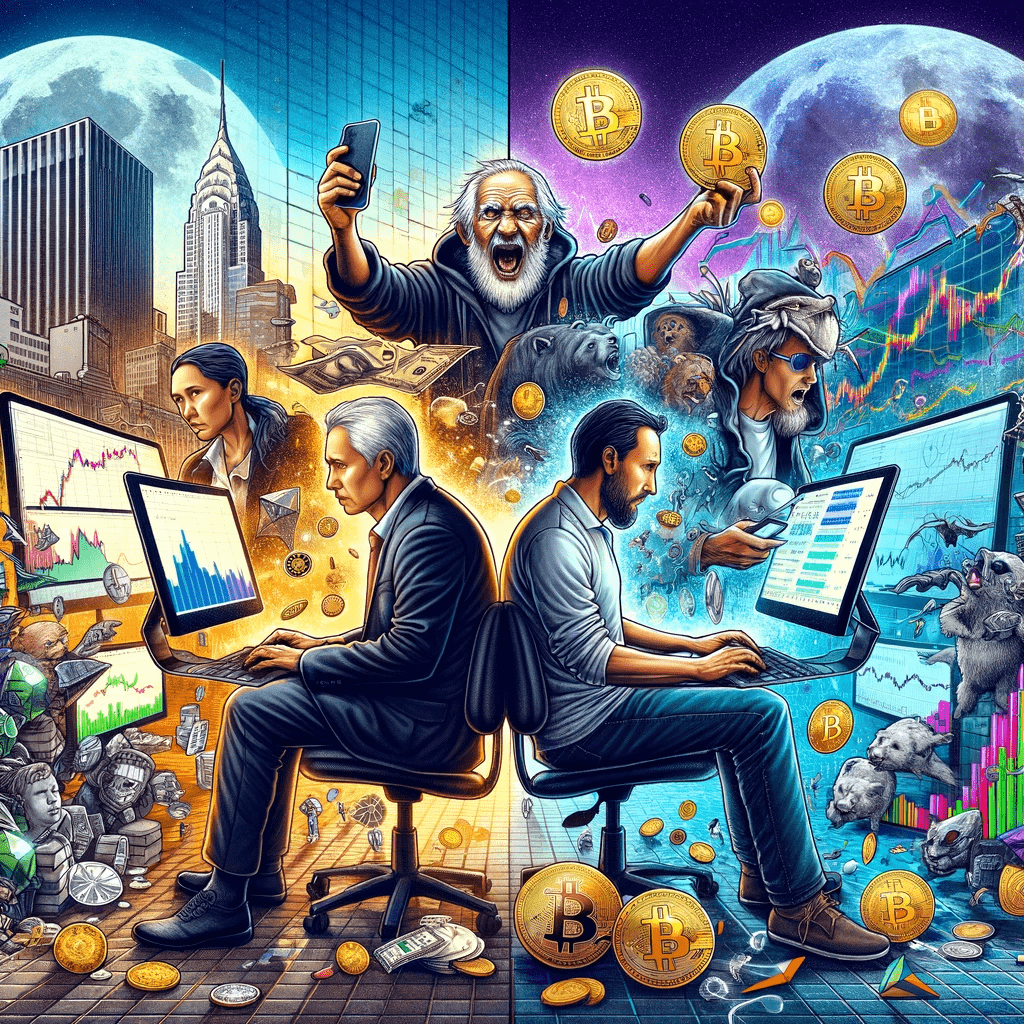
  • How To Tell If You Are You a Normie?

    In the ever-evolving world of cryptocurrency, jargon and slang play a significant role in defining one’s understanding and status within the community. One term that has gained traction is “normie,” often used by seasoned crypto enthusiasts to describe newcomers or those less familiar with the intricate workings of the crypto world. This article delves into the characteristics of a “normie” versus a crypto OG (Original Gangster) and provides insights on how to determine if you fall into the former category.

    Understanding the Crypto ‘Normie’

    A “normie” in crypto terms typically refers to someone new to the cryptocurrency space or someone who has a surface-level understanding of digital currencies and blockchain technology. This individual might have joined the crypto bandwagon influenced by mainstream media hype or peer pressure without a deep comprehension of the underlying principles of decentralized finance (DeFi).

    Behaviors of Normies vs. Crypto OGs

    Investment Approach: Normies are often characterized by their cautious or conventional investment approach. They might stick to well-known cryptocurrencies like Bitcoin and Ethereum, hesitant to explore lesser-known altcoins. Conversely, crypto OGs, who have been in the space since its nascent stages, are more adventurous, diversifying their portfolios with various digital assets, including DeFi tokens and NFTs (Non-Fungible Tokens).

    Market Reaction: The cryptocurrency market is known for its volatility. Normies might react hastily to market fluctuations, often swayed by the FOMO (Fear of Missing Out) or FUD (Fear, Uncertainty, and Doubt) generated by the media. In contrast, crypto OGs usually exhibit a more measured response, relying on their experience and understanding of market cycles.

    Community Engagement: Normies may not be as active in crypto forums or social media discussions. They often rely on mainstream news for information, unlike crypto OGs who are deeply ingrained in the community, engaging in discussions on platforms like Reddit, Twitter, or specialized crypto forums.

    How to Tell if You Are a Normie

    1. Your Knowledge Base: If your understanding of crypto is limited to its price movements and you find blockchain technology concepts baffling, you might be a normie.
    2. Source of Information: Relying solely on mainstream media for crypto news is another hallmark of a normie. Crypto OGs often turn to niche blogs, whitepapers, and community discussions for their information.
    3. Investment Behavior: If your investment strategy lacks diversification and is driven by hype rather than research, this is a normie trait.

    Embracing the Learning Curve

    Being a normie isn’t a permanent label. The crypto world is welcoming and educational resources are abundant. Whether you’re a normie or aspiring to be a crypto OG, the key lies in continuous learning and staying updated with the dynamic landscape of cryptocurrency. Remember, every expert was once a beginner, and the journey from a normie to a seasoned crypto enthusiast is an enriching experience filled with learning opportunities.