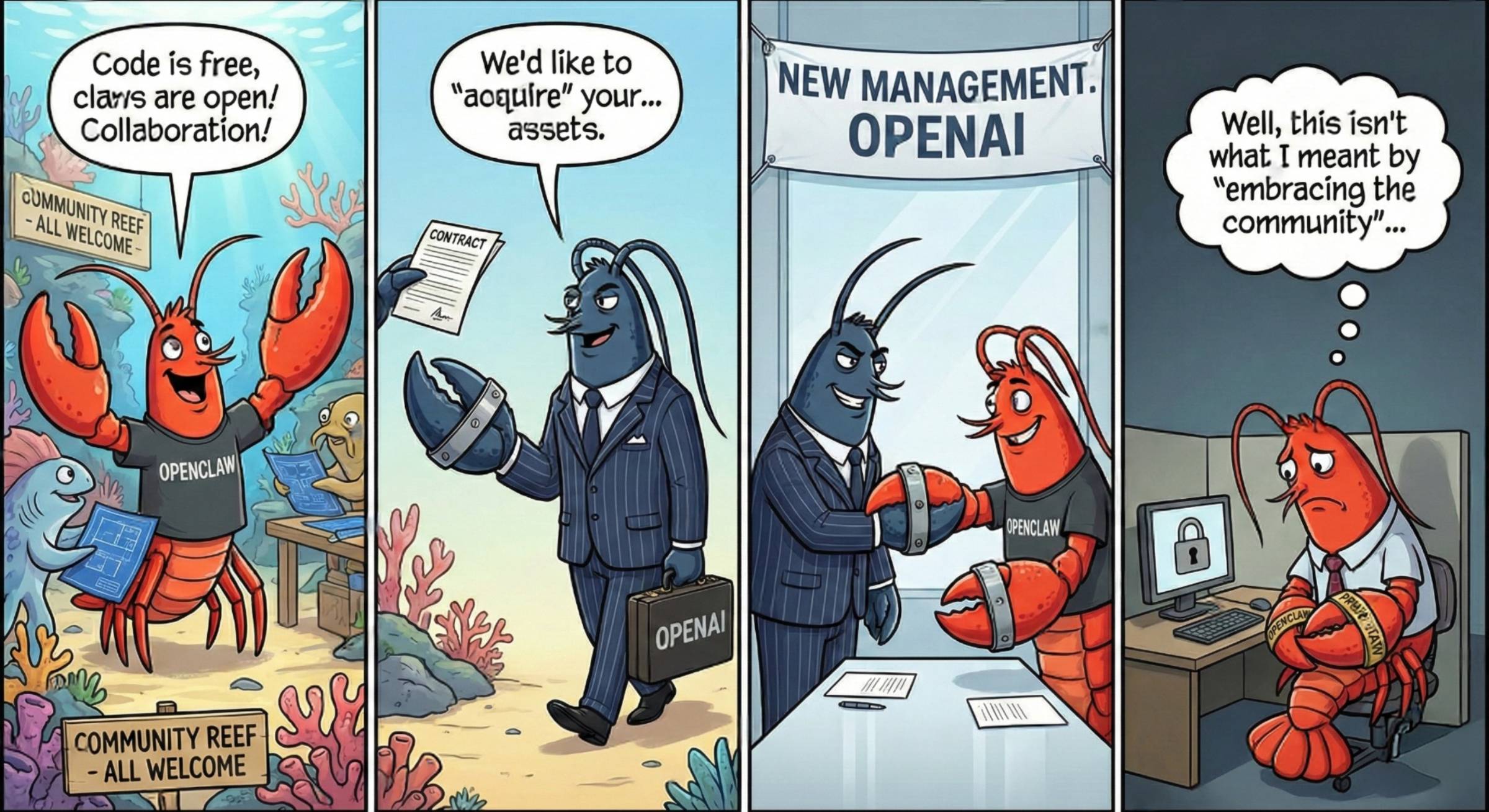
In a move that underscores the intensifying race to dominate AI agent technology, OpenAI has brought aboard Peter Steinberger, the visionary Austrian developer behind the viral open-source project OpenClaw. As reported by Reuters, Fortune, and TechCrunch, the deal was announced on February 15, 2026. This isn’t a conventional acquisition but an “acquihire,” where Steinberger joins OpenAI to spearhead the development of next-generation personal AI agents.
Meanwhile, OpenClaw transitions to an independent foundation, remaining fully open-source with continued support from OpenAI (confirmed via Steinberger’s Blog and LinkedIn). This strategic alignment comes amid soaring interest in AI agents, a market projected by AInvest to hit $52.6 billion by 2030 with a 46.3% compound annual growth rate.
The announcement, made via a post on X by OpenAI CEO Sam Altman around 21:39 GMT, arrived just hours before widespread media coverage from outlets like Fortune. Steinberger swiftly confirmed the news in a personal blog post, emphasizing his excitement for the future while reaffirming OpenClaw’s independence.
The Rise of OpenClaw: From Playground Project to Phenomenon
OpenClaw, originally launched as Clawdbot in November 2025—a playful nod to Anthropic’s Claude model—quickly evolved into a powerhouse open-source AI agent framework designed for personal use (Fortune, Steinberger’s Blog, APIYI). Steinberger, who “vibe coded” the project solo after a three-year hiatus following the sale of his previous company for over $100 million, saw it explode in popularity. It amassed over 100,000 GitHub stars, drew 2 million visitors in a week, and became the fastest-growing repo in GitHub history—surpassing milestones of projects like React and Linux (Yahoo Finance, LinkedIn).
A trademark dispute with Anthropic prompted renames: first to Moltbot (evoking metamorphosis), then to OpenClaw in early 2026. The framework empowers AI to autonomously handle tasks on users’ devices, fostering a community focused on data ownership and multi-model support.
Key capabilities that fueled its hype include:
- Managing emails and inboxes.
- Booking flights, restaurant reservations, and flight check-ins.
- Interacting with services like insurers.
- Integrating with apps such as WhatsApp and Slack for task delegation.
- Creating a “social network” for AI agents via features like Moltbook, which spawned 1.6 million agents (Source).
Despite its success, sustainability proved challenging. Steinberger personally shouldered infrastructure costs of $10,000 to $20,000 monthly, routing sponsorships to dependencies rather than himself, even as donations and corporate support (including from OpenAI) trickled in.
The Path to the Deal: Billion-Dollar Bids and Open-Source Principles
Prior to the announcement, Steinberger fielded billion-dollar acquisition offers from tech giants Meta and OpenAI (Yahoo Finance). Meta’s Mark Zuckerberg personally messaged Steinberger on WhatsApp, sparking a 10-minute debate over AI models, while OpenAI’s Sam Altman offered computational resources via a Cerebras partnership to boost agent performance. Meta aggressively pursued Steinberger and his team, but OpenAI advanced in talks to hire him and key contributors.
Steinberger spent the preceding week in San Francisco meeting AI labs, accessing unreleased research. He insisted any deal preserve OpenClaw’s open-source nature, likening it to Chrome and Chromium. Ultimately, OpenAI’s vision aligned best with his goal of accessible agents.
Key Announcements and Voices from the Frontlines
Sam Altman, in his X post on February 15, 2026, hailed Steinberger as a “genius with a lot of amazing ideas about the future of very smart agents interacting with each other to do very useful things for people.” He added, “We expect this will quickly become core to our product offerings. OpenClaw will live in a foundation as an open source project that OpenAI will continue to support. The future is going to be extremely multi-agent and it’s important to us to support open source as part of that.”
Steinberger’s blog post echoed this enthusiasm: “tl;dr: I’m joining OpenAI to work on bringing agents to everyone. OpenClaw will move to a foundation and stay open and independent. The last month was a whirlwind… When I started exploring AI, my goal was to have fun and inspire people… My next mission is to build an agent that even my mum can use… I’m a builder at heart… What I want is to change the world, not build a large company… The claw is the law.”
Strategic Implications: Opportunities and Challenges Ahead
For OpenAI, this bolsters their AI agent push, potentially accelerating consumer-grade solutions and addressing barriers like setup complexity and security. It positions them in the “personal agent race” against Meta, emphasizing multi-agent systems. The broader AI agents market could reach $180 billion by 2033, driving undisclosed but likely substantial financial terms.
OpenClaw benefits from foundation status (akin to the Linux Foundation), ensuring independence and community focus with OpenAI’s sponsorship.
However, risks loom large. OpenClaw’s “unfettered access” to devices raises security concerns, including data breaches and rogue actions—like one incident of spamming hundreds of iMessages. China’s industry ministry warned of cyberattack vulnerabilities if misconfigured. Steinberger aims to prioritize safety and accessibility.
Community Pulse: Excitement, Skepticism, and Satire
Reactions on X blend hype and caution. Cointelegraph noted the move as a “big move” for ecosystems. One user called it the “birth of the agent era,” while another satirically predicted a shift to “ClosedClaw.” Fears of closure persist, but congratulations abound, with some viewing Anthropic’s trademark push as a “fumble.”
LinkedIn’s Reyhan Merekar praised Steinberger’s solo feat: “Literally coding alone at odd hours… Faster than React, Linux, and Kubernetes combined.”
Beyond the Headlines: Vision and Value
Steinberger’s core vision: Agents for all, even non-tech users, with emphasis on safety, cutting-edge models, and impact over empire-building. OpenClaw’s strengths—model-agnostic design, delegation-focused UX, and persistent memory—eluded even well-funded labs.
As of February 15, 2026, this marks a pivotal moment in AI’s evolution, blending open innovation with corporate muscle. No further updates have emerged, but the multi-agent future Altman envisions is accelerating.