PJFP.com

Pursuit of Joy, Fulfillment, and Purpose

Tag: OpenAI

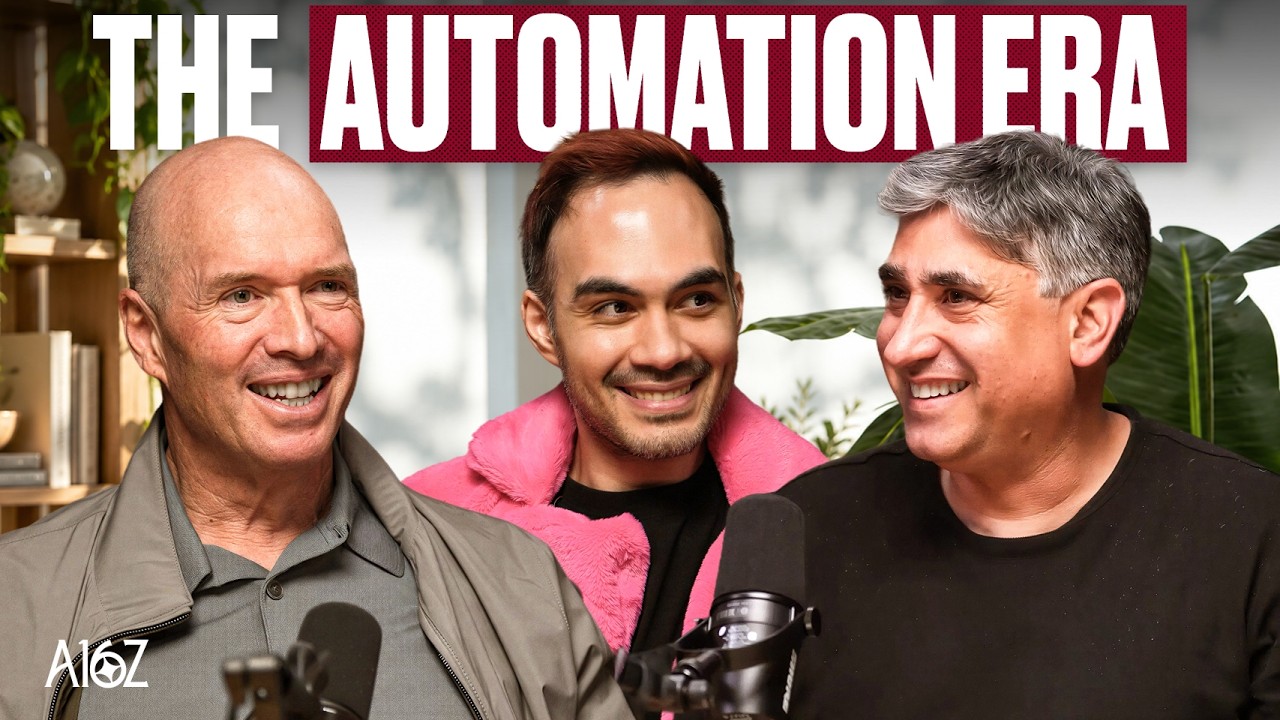
  • Jensen Huang on Nvidia’s Supply Chain Moat, TPU Competition, China Export Controls, and Why Nvidia Will Not Become a Cloud (Dwarkesh Podcast Summary)

    TLDW (Too Long, Didn’t Watch)

    Jensen Huang sat down with Dwarkesh Patel for over 90 minutes covering Nvidia’s supply chain dominance, the TPU threat, why Nvidia will not become a hyperscaler, whether the US should sell AI chips to China, and why Nvidia does not pursue multiple chip architectures at once. Jensen framed Nvidia’s entire business as transforming “electrons into tokens” and argued that Nvidia’s real moat is not any single technology but the full stack ecosystem it has built over two decades. He was blunt about his regret over not investing in Anthropic and OpenAI earlier, passionate about keeping the American tech stack dominant worldwide, and dismissive of the idea that China’s chip industry can be meaningfully contained through export controls.

    Key Takeaways

    1. Nvidia’s moat is the ecosystem, not the chip. Jensen repeatedly emphasized that Nvidia’s competitive advantage comes from CUDA, its massive installed base, its deep partnerships across the entire supply chain, and the fact that it operates in every cloud. The moat is not a single product but an interlocking system that took 20+ years to build.

    2. Supply chain bottlenecks are temporary, energy bottlenecks are not. Jensen argued that CoWoS packaging, HBM memory, EUV capacity, and logic fabrication bottlenecks can all be resolved in two to three years with the right demand signal. The real constraint on AI scaling is energy policy, which takes far longer to fix.

    3. TPUs and ASICs are not an existential threat to Nvidia. Jensen was emphatic that no competitor has demonstrated better price-performance or performance-per-watt than Nvidia, and challenged TPU and Trainium to prove otherwise on public benchmarks like InferenceMAX and MLPerf. He described Anthropic as a “unique instance, not a trend” for TPU adoption.

    4. Jensen regrets not investing in Anthropic and OpenAI earlier. He admitted he did not deeply internalize how much capital AI labs needed and that traditional VC funding was not sufficient for companies at that scale. He described this as a clear miss, though he said Nvidia was not in a position to make multi-billion dollar investments at the time.

    5. Nvidia will not become a hyperscaler. Jensen’s philosophy is “do as much as needed, as little as possible.” Building cloud infrastructure is something other companies can do, so Nvidia supports neoclouds like CoreWeave, Nebius, and Nscale instead of competing with them. Nvidia invests in ecosystem partners rather than vertically integrating into cloud services.

    6. Jensen is strongly against US chip export controls on China. This was the longest and most heated segment of the interview. Jensen argued that China already has abundant compute, energy, and AI researchers, and that export controls have accelerated China’s domestic chip industry while causing the US to concede the world’s second-largest technology market. He compared the situation to how US telecom policy allowed Huawei to dominate global telecommunications.

    7. AI will cause software tool usage to skyrocket, not collapse. Jensen pushed back on the narrative that AI will commoditize software companies. He argued that agents will use existing tools at massive scale, causing the number of instances of products like Excel, Synopsys Design Compiler, and other enterprise tools to grow exponentially.

    8. Nvidia does not pick winners among AI labs. Jensen explained that Nvidia invests across multiple foundation model companies simultaneously and refuses to favor any single one. He cited his own company’s unlikely survival story as the reason for this humility: Nvidia’s original graphics architecture was “precisely wrong” and would have been counted out by anyone picking winners.

    9. Nvidia added Groq for premium token economics. Nvidia recently acquired Groq and is folding it into the CUDA ecosystem because the market is now segmenting into different token tiers. Some customers will pay premium prices for faster response times even at lower throughput, creating a new segment of the inference market.

    10. Without AI, Nvidia would still be very large. Jensen was clear that accelerated computing, not AI specifically, is the foundational mission of the company. Molecular dynamics, quantum chemistry, computational lithography, data processing, and physics simulation all benefit from GPU acceleration regardless of deep learning.

    Detailed Summary

    Nvidia’s Real Business: Electrons to Tokens

    Jensen opened the conversation by reframing Nvidia’s entire value proposition. When Dwarkesh suggested that Nvidia is fundamentally a software company that sends a GDS2 file to TSMC for manufacturing, Jensen pushed back hard. He described Nvidia’s job as transforming electrons into tokens, with everything in between representing an “incredible journey” of artistry, engineering, science, and invention. He said the transformation is far from deeply understood and the journey is far from over, making commoditization unlikely.

    Jensen described Nvidia as operating a philosophy of doing “as much as necessary and as little as possible.” Whatever Nvidia does not need to do itself, it partners with someone else and makes it part of the broader ecosystem. This is why Nvidia has what Jensen called probably the largest ecosystem of partners in the industry, spanning the full supply chain upstream and downstream, application developers, model makers, and all five layers of the AI stack.

    On the question of whether AI will commoditize software companies, Jensen offered a contrarian take. He argued that agents are going to use software tools at unprecedented scale, meaning the number of instances of products like Excel, Cadence design tools, and Synopsys compilers will skyrocket. Today the bottleneck is the number of human engineers. Tomorrow, those engineers will be supported by swarms of agents exploring design spaces and using the same tools humans use today. Jensen said the reason this has not happened yet is simply that the agents are not good enough at using tools. That will change.

    The Supply Chain Moat

    Dwarkesh pressed Jensen on Nvidia’s reported $100 billion (and potentially $250 billion) in purchase commitments with foundries, memory manufacturers, and packaging companies. The question was whether Nvidia’s real moat for the next few years is simply locking up scarce upstream components so that no competitor can get the memory and logic they need to build alternative accelerators.

    Jensen confirmed this is a significant advantage but framed it differently. He said Nvidia has made enormous explicit and implicit commitments upstream. The implicit commitments matter just as much: Jensen personally meets with CEOs across the supply chain to explain the scale of the coming AI industry, convince them to invest in capacity, and assure them that Nvidia’s downstream demand is large enough to justify that investment. Nvidia’s GTC conference serves this purpose too, bringing the entire ecosystem together so upstream suppliers can see downstream demand and vice versa.

    Jensen described a process of systematically “prefetching bottlenecks” years in advance. CoWoS advanced packaging was a major bottleneck two years ago, but Nvidia swarmed it with repeated doubling of capacity until TSMC recognized it as mainstream computing technology rather than a specialty product. More recently, Nvidia has invested in the silicon photonics ecosystem through partnerships with Lumentum and Coherent, invented new packaging technologies, licensed patents to keep the supply chain open, and even invested in new testing equipment like double-sided probing.

    When Dwarkesh asked about the ultimate physical bottlenecks, Jensen surprised him. The hardest bottleneck to solve is not CoWoS or HBM or EUV machines. It is plumbers and electricians needed to build data centers. Jensen used this as a launching point to criticize “doomers” who discourage people from pursuing careers in software engineering or radiology, arguing that scaring people out of these professions creates the real bottlenecks.

    On EUV and logic scaling specifically, Jensen was optimistic. He said no supply chain bottleneck lasts longer than two to three years. Once you can build one of something, you can build ten, and once you can build ten, you can build a million. The key is a clear demand signal. If TSMC is convinced of the demand, ASML will produce enough EUV machines. Meanwhile, Nvidia continues to improve computing efficiency by 10x to 50x per generation through architecture, algorithms, and system design.

    The TPU Question

    Dwarkesh pushed hard on whether Google’s TPUs represent a real threat, noting that two of the top three AI models (Claude and Gemini) were trained on TPUs. Jensen drew a sharp distinction between what Nvidia builds and what a TPU is. Nvidia builds accelerated computing, which serves molecular dynamics, quantum chromodynamics, data processing, fluid dynamics, particle physics, and AI. A TPU is a tensor processing unit optimized for matrix multiplies. Nvidia’s market reach is far greater than any TPU or ASIC can possibly have.

    Jensen emphasized programmability as Nvidia’s core architectural advantage. If you want to invent a new attention mechanism, build a hybrid SSM model, fuse diffusion and autoregressive techniques, or disaggregate computation in a novel way, you need a generally programmable architecture. The only way to achieve 10x or 100x performance leaps (versus the roughly 25% per year from Moore’s Law) is to fundamentally change the algorithm, and that requires the flexibility CUDA provides.

    On the specific question of whether hyperscalers with huge engineering teams can simply write their own kernels and bypass CUDA, Jensen acknowledged they do write custom kernels but argued that Nvidia’s engineers still routinely deliver 2x to 3x speedups when they optimize a partner’s stack. He described Nvidia’s GPUs as “F1 racers” that anyone can drive at 100 mph, but extracting peak performance requires deep architectural expertise. Nvidia uses AI itself to generate many of its optimized kernels.

    Jensen was particularly blunt about public benchmarks. He pointed to Dylan Patel’s InferenceMAX benchmark and said neither TPU nor Trainium has been willing to demonstrate their claimed performance advantages on it. He said Nvidia’s performance-per-TCO is the best in the world, “bar none,” and challenged anyone to prove otherwise.

    Regarding Anthropic’s multi-gigawatt deal with Broadcom and Google for TPUs, Jensen called it “a unique instance, not a trend.” He said without Anthropic, there would be essentially no TPU growth and no Trainium growth. He traced this back to his own mistake: when Anthropic and OpenAI needed multi-billion dollar investments from their compute suppliers to get off the ground, Nvidia was not in a position to provide that capital. Google and AWS were, and in return, Anthropic committed to using their compute.

    Nvidia’s Investment Strategy and Regrets

    Jensen was unusually candid about his regret over not investing in foundation model companies earlier. He said he did not deeply internalize how different AI labs were from typical startups. A traditional VC would never put $5 to $10 billion into a single AI lab, but that was exactly what companies like OpenAI and Anthropic needed. By the time Jensen understood this, Nvidia was not in a financial or cultural position to make those kinds of investments.

    Now, Nvidia has invested approximately $30 billion in OpenAI and $10 billion in Anthropic. Jensen said he is delighted to support both and considers their existence essential for the world. But he acknowledged that these investments came at much higher valuations than would have been possible years earlier.

    Jensen explained Nvidia’s broader investment philosophy: support everyone, do not pick winners. He invests in one foundation model company, he invests in all of them. This comes from hard-won humility. When Nvidia started, there were 60 3D graphics companies. Nvidia’s original architecture was “precisely wrong” and the company would have been at the top of most lists to fail. Jensen said he has enough humility from that experience to know that you cannot predict which AI company will ultimately succeed.

    Why Nvidia Will Not Become a Hyperscaler

    Dwarkesh pointed out that Nvidia has the cash to build and operate its own cloud infrastructure, bypassing the middleman ecosystem that converts CapEx into OpEx for AI labs. Jensen rejected this path based on his core operating philosophy.

    If Nvidia did not build its computing platform, NVLink, and the CUDA ecosystem, nobody else would have done it. He is “completely certain” of that. These are things Nvidia must do. But the world has lots of clouds. If Nvidia did not build a cloud, someone else would show up. So the answer is to support the ecosystem instead: invest in CoreWeave, Nscale, Nebius, and others to help them exist and scale, rather than competing with them.

    Jensen was clear that Nvidia is not trying to be in the financing business either. When OpenAI needed a $30 billion investment before its IPO, Nvidia stepped up because OpenAI needed it and Nvidia deeply believed in the company. But these are targeted ecosystem investments, not a strategic pivot into cloud services.

    On GPU allocation during shortages, Jensen pushed back on the narrative that Nvidia strategically “fractures” the market by giving allocations to smaller neoclouds. He said the process is straightforward: you forecast demand, you place a purchase order, and it is first in, first out. Nvidia never changes prices based on demand. Jensen said he prefers to be dependable and serve as the foundation of the industry rather than extracting maximum short-term value.

    The China Debate

    The longest and most heated section of the interview was Jensen’s case against US chip export controls on China. This was a genuine debate, with Dwarkesh pushing the national security argument and Jensen pushing back forcefully.

    Jensen’s core argument rested on several pillars. First, China already has abundant compute. They manufacture 60% or more of the world’s mainstream chips, have massive energy infrastructure (including empty data centers with full power), and employ roughly 50% of the world’s AI researchers. The threshold of compute needed to build models like Anthropic’s Mythos has already been reached and exceeded by China’s existing infrastructure.

    Second, export controls have backfired. They accelerated China’s domestic chip industry, forced their AI ecosystem to optimize for internal architectures instead of the American tech stack, and caused the United States to concede the second-largest technology market in the world. Jensen compared this directly to how US telecom policy allowed Huawei to dominate global telecommunications infrastructure.

    Third, Jensen argued that AI is a five-layer stack (energy, chips, computing platform, models, applications) and the US needs to win at every layer. Fixating on one layer (models) at the expense of another layer (chips) is counterproductive. If Chinese open source AI models end up optimized for non-American hardware and that stack gets exported to the global south, the Middle East, Africa, and Southeast Asia, the US will have lost something far more valuable than whatever marginal compute advantage the export controls provided.

    Dwarkesh countered with the Mythos example: Anthropic’s new model found thousands of high-severity zero-day vulnerabilities across every major operating system and browser, including one that had existed in OpenBSD for 27 years. If China had enough compute to train and deploy a model like Mythos at scale before the US could prepare, the cyber-offensive capabilities would be devastating.

    Jensen’s response was direct. Mythos was trained on “fairly mundane capacity” that is already abundantly available in China. The amount of compute is not the bottleneck for that kind of breakthrough. Great computer science is, and China has no shortage of brilliant AI researchers. He pointed to DeepSeek as evidence: most advances in AI come from algorithmic innovation, not raw hardware. If China’s researchers can achieve breakthroughs like DeepSeek with limited hardware, imagine what they could do with more.

    Jensen also argued for dialogue over confrontation. He said it is essential that American and Chinese AI researchers are talking to each other, and that both countries agree on what AI should not be used for. The idea that you can prevent AI risks by cutting off chip sales, when the real advances come from algorithms and computer science, reflects a fundamental misunderstanding of how AI progress works.

    The debate ended without resolution, but Jensen’s final point was sharp: “I’m not talking to somebody who woke up a loser. That loser attitude, that loser premise, makes no sense to me.”

    Why Not Multiple Chip Architectures?

    Near the end of the interview, Dwarkesh asked why Nvidia does not run multiple parallel chip projects with different architectures, like a Cerebras-style wafer-scale design or a Dojo-style huge package, or even one without CUDA.

    Jensen’s answer was simple: “We don’t have a better idea.” Nvidia simulates all of these alternative approaches in its internal simulators and they are provably worse. The company works on exactly the projects it wants to work on. If the workload were to change dramatically (not just the algorithms, but the actual market shape), Nvidia might add other accelerators.

    In fact, Nvidia recently did exactly this by acquiring Groq. The inference market is now segmenting into different tiers. Some customers will pay premium prices for extremely fast response times even if throughput is lower. This creates a new “high ASP token” segment that justifies a different point on the performance curve. But Jensen was clear: if he had more money, he would put it all behind Nvidia’s existing architecture, not diversify into alternatives.

    Nvidia Without AI

    Jensen closed by saying that even if the deep learning revolution had never happened, Nvidia would be “very, very large.” The premise of the company has always been that general-purpose computing cannot scale indefinitely and that domain-specific acceleration is the way forward. Molecular dynamics, seismic processing, image processing, computational lithography, quantum chemistry, and data processing all benefit from GPU acceleration regardless of AI. Jensen said the fundamental promise of accelerated computing has not changed “not even a little bit.”

    Thoughts

    This interview is one of the most revealing Jensen Huang conversations in years, partly because Dwarkesh actually pushes back instead of lobbing softballs. A few things stand out.

    The Anthropic regret is real and significant. Jensen is essentially admitting that Nvidia’s biggest strategic miss of the AI era was not understanding that foundation model companies needed supplier-level capital commitments, not VC funding. The fact that Google and AWS used compute investments to lock in Anthropic’s architecture choices has had downstream consequences that Nvidia is still working to unwind. When Jensen says Anthropic is “a unique instance, not a trend” for TPU adoption, he is simultaneously downplaying the threat and revealing exactly how seriously he takes it.

    The China debate is the highlight. Jensen’s argument is more nuanced than it first appears. He is not saying “sell China everything.” He is saying the current binary approach of near-total restriction has backfired by accelerating China’s domestic chip industry and pushing the Chinese AI ecosystem away from the American tech stack. His comparison to the US telecom industry losing global market share to Huawei is pointed and historically grounded. Whether you agree with his conclusion or not, the framing of AI as a five-layer stack where the US needs to compete at every layer is a useful mental model.

    The “electrons to tokens” framing is Jensen at his best. It is a simple metaphor that captures something genuinely complex about where value is created in the AI supply chain. And his insistence that the transformation is “far from deeply understood” is a subtle way of arguing that Nvidia’s competitive position will be durable because the problem space is not close to being solved.

    The Groq acquisition reveal is interesting for what it signals about the inference market. If Nvidia is creating a separate product tier for premium-priced, low-latency tokens, it suggests the company sees inference economics fragmenting significantly. This aligns with the broader trend of AI becoming an enterprise product where different customers have wildly different willingness to pay based on how they use tokens.

    Finally, Jensen’s refusal to diversify chip architectures is a bold bet. “We simulate it all in our simulator, provably worse” is an incredibly confident statement. History is full of companies that were right until they were not. But Nvidia’s track record of 50x generation-over-generation improvements through co-design across processors, fabric, libraries, and algorithms is hard to argue with. The question is whether the current paradigm of transformer-based models on GPU clusters represents a local or global optimum for AI compute.

  • OpenAI Hires OpenClaw Creator Peter Steinberger: A Major Shift in the AI Agent Race

    OpenAI Hires OpenClaw Creator Peter Steinberger

    In a move that underscores the intensifying race to dominate AI agent technology, OpenAI has brought aboard Peter Steinberger, the visionary Austrian developer behind the viral open-source project OpenClaw. As reported by Reuters, Fortune, and TechCrunch, the deal was announced on February 15, 2026. This isn’t a conventional acquisition but an “acquihire,” where Steinberger joins OpenAI to spearhead the development of next-generation personal AI agents.

    Meanwhile, OpenClaw transitions to an independent foundation, remaining fully open-source with continued support from OpenAI (confirmed via Steinberger’s Blog and LinkedIn). This strategic alignment comes amid soaring interest in AI agents, a market projected by AInvest to hit $52.6 billion by 2030 with a 46.3% compound annual growth rate.

    The announcement, made via a post on X by OpenAI CEO Sam Altman around 21:39 GMT, arrived just hours before widespread media coverage from outlets like Fortune. Steinberger swiftly confirmed the news in a personal blog post, emphasizing his excitement for the future while reaffirming OpenClaw’s independence.

    The Rise of OpenClaw: From Playground Project to Phenomenon

    OpenClaw, originally launched as Clawdbot in November 2025—a playful nod to Anthropic’s Claude model—quickly evolved into a powerhouse open-source AI agent framework designed for personal use (Fortune, Steinberger’s Blog, APIYI). Steinberger, who “vibe coded” the project solo after a three-year hiatus following the sale of his previous company for over $100 million, saw it explode in popularity. It amassed over 100,000 GitHub stars, drew 2 million visitors in a week, and became the fastest-growing repo in GitHub history—surpassing milestones of projects like React and Linux (Yahoo Finance, LinkedIn).

    A trademark dispute with Anthropic prompted renames: first to Moltbot (evoking metamorphosis), then to OpenClaw in early 2026. The framework empowers AI to autonomously handle tasks on users’ devices, fostering a community focused on data ownership and multi-model support.

    Key capabilities that fueled its hype include:

    • Managing emails and inboxes.
    • Booking flights, restaurant reservations, and flight check-ins.
    • Interacting with services like insurers.
    • Integrating with apps such as WhatsApp and Slack for task delegation.
    • Creating a “social network” for AI agents via features like Moltbook, which spawned 1.6 million agents (Source).

    Despite its success, sustainability proved challenging. Steinberger personally shouldered infrastructure costs of $10,000 to $20,000 monthly, routing sponsorships to dependencies rather than himself, even as donations and corporate support (including from OpenAI) trickled in.

    The Path to the Deal: Billion-Dollar Bids and Open-Source Principles

    Prior to the announcement, Steinberger fielded billion-dollar acquisition offers from tech giants Meta and OpenAI (Yahoo Finance). Meta’s Mark Zuckerberg personally messaged Steinberger on WhatsApp, sparking a 10-minute debate over AI models, while OpenAI’s Sam Altman offered computational resources via a Cerebras partnership to boost agent performance. Meta aggressively pursued Steinberger and his team, but OpenAI advanced in talks to hire him and key contributors.

    Steinberger spent the preceding week in San Francisco meeting AI labs, accessing unreleased research. He insisted any deal preserve OpenClaw’s open-source nature, likening it to Chrome and Chromium. Ultimately, OpenAI’s vision aligned best with his goal of accessible agents.

    Key Announcements and Voices from the Frontlines

    Sam Altman, in his X post on February 15, 2026, hailed Steinberger as a “genius with a lot of amazing ideas about the future of very smart agents interacting with each other to do very useful things for people.” He added, “We expect this will quickly become core to our product offerings. OpenClaw will live in a foundation as an open source project that OpenAI will continue to support. The future is going to be extremely multi-agent and it’s important to us to support open source as part of that.”

    Steinberger’s blog post echoed this enthusiasm: “tl;dr: I’m joining OpenAI to work on bringing agents to everyone. OpenClaw will move to a foundation and stay open and independent. The last month was a whirlwind… When I started exploring AI, my goal was to have fun and inspire people… My next mission is to build an agent that even my mum can use… I’m a builder at heart… What I want is to change the world, not build a large company… The claw is the law.”

    Strategic Implications: Opportunities and Challenges Ahead

    For OpenAI, this bolsters their AI agent push, potentially accelerating consumer-grade solutions and addressing barriers like setup complexity and security. It positions them in the “personal agent race” against Meta, emphasizing multi-agent systems. The broader AI agents market could reach $180 billion by 2033, driving undisclosed but likely substantial financial terms.

    OpenClaw benefits from foundation status (akin to the Linux Foundation), ensuring independence and community focus with OpenAI’s sponsorship.

    However, risks loom large. OpenClaw’s “unfettered access” to devices raises security concerns, including data breaches and rogue actions—like one incident of spamming hundreds of iMessages. China’s industry ministry warned of cyberattack vulnerabilities if misconfigured. Steinberger aims to prioritize safety and accessibility.

    Community Pulse: Excitement, Skepticism, and Satire

    Reactions on X blend hype and caution. Cointelegraph noted the move as a “big move” for ecosystems. One user called it the “birth of the agent era,” while another satirically predicted a shift to “ClosedClaw.” Fears of closure persist, but congratulations abound, with some viewing Anthropic’s trademark push as a “fumble.”

    LinkedIn’s Reyhan Merekar praised Steinberger’s solo feat: “Literally coding alone at odd hours… Faster than React, Linux, and Kubernetes combined.”

    Beyond the Headlines: Vision and Value

    Steinberger’s core vision: Agents for all, even non-tech users, with emphasis on safety, cutting-edge models, and impact over empire-building. OpenClaw’s strengths—model-agnostic design, delegation-focused UX, and persistent memory—eluded even well-funded labs.

    As of February 15, 2026, this marks a pivotal moment in AI’s evolution, blending open innovation with corporate muscle. No further updates have emerged, but the multi-agent future Altman envisions is accelerating.

  • Jensen Huang on Joe Rogan: AI’s Future, Nuclear Energy, and NVIDIA’s Near-Death Origin Story

    In a landmark episode of the Joe Rogan Experience (JRE #2422), NVIDIA CEO Jensen Huang sat down for a rare, deep-dive conversation covering everything from the granular history of the GPU to the philosophical implications of artificial general intelligence. Huang, currently the longest-running tech CEO in the world, offered a fascinating look behind the curtain of the world’s most valuable company.

    For those who don’t have three hours to spare, we’ve compiled the “Too Long; Didn’t Watch” breakdown, key takeaways, and a detailed summary of this historic conversation.

    TL;DW (Too Long; Didn’t Watch)

    • The OpenAI Connection: Jensen personally delivered the first AI supercomputer (DGX-1) to Elon Musk and the OpenAI team in 2016, a pivotal moment that kickstarted the modern AI race.
    • The “Sega Moment”: NVIDIA almost went bankrupt in 1995. They were saved only because the CEO of Sega invested $5 million in them after Jensen admitted their technology was flawed and the contract needed to be broken.
    • Nuclear AI: Huang predicts that within the next decade, AI factories (data centers) will likely be powered by small, on-site nuclear reactors to handle immense energy demands.
    • Driven by Fear: Despite his success, Huang wakes up every morning with a “fear of failure” rather than a desire for success. He believes this anxiety is essential for survival in the tech industry.
    • The Immigrant Hustle: Huang’s childhood involved moving from Thailand to a reform school in rural Kentucky where he cleaned toilets and smoked cigarettes at age nine to fit in.

    Key Takeaways

    1. AI as a “Universal Function Approximator”

    Huang provided one of the most lucid non-technical explanations of deep learning to date. He described AI not just as a chatbot, but as a “universal function approximator.” While traditional software requires humans to write the function (input -> code -> output), AI flips this. You give it the input and the desired output, and the neural network figures out the function in the middle. This allows computers to solve problems for which humans cannot write the code, such as curing diseases or solving complex physics.

    2. The Future of Work and Energy

    The conversation touched heavily on resources. Huang noted that we are in a transition from “Moore’s Law” (doubling performance) to “Huang’s Law” (accelerated computing), where the cost of computing drops while energy efficiency skyrockets. However, the sheer scale of AI requires massive power. He envisions a future of “energy abundance” driven by nuclear power, which will support the massive “AI factories” of the future.

    3. Safety Through “Smartness”

    Addressing Rogan’s concerns about AI safety and rogue sentience, Huang argued that “smarter is safer.” He compared AI to cars: a 1,000-horsepower car is safer than a Model T because the technology is channeled into braking, handling, and safety systems. Similarly, future computing power will be channeled into “reflection” and “fact-checking” before an AI gives an answer, reducing hallucinations and danger.

    Detailed Summary

    The Origin of the AI Boom

    The interview began with a look back at the relationship between NVIDIA and Elon Musk. In 2016, NVIDIA spent billions developing the DGX-1 supercomputer. At the time, no one understood it or wanted to buy it—except Musk. Jensen personally delivered the first unit to a small office in San Francisco where the OpenAI team (including Ilya Sutskever) was working. That hardware trained the early models that eventually became ChatGPT.

    The “Struggle” and the Sega Pivot

    Perhaps the most compelling part of the interview was Huang’s recounting of NVIDIA’s early days. In 1995, NVIDIA was building 3D graphics chips using “forward texture mapping” and curved surfaces—a strategy that turned out to be technically wrong compared to the industry standard. Facing bankruptcy, Huang had to tell his only major partner, Sega, that NVIDIA could not complete their console contract.

    In a move that saved the company, the CEO of Sega, who liked Jensen personally, agreed to invest the remaining $5 million of their contract into NVIDIA anyway. Jensen used that money to pivot, buying an emulator to test a new chip architecture (RIVA 128) that eventually revolutionized PC gaming. Huang admits that without that act of kindness and luck, NVIDIA would not exist today.

    From Kentucky to Silicon Valley

    Huang shared his “American Dream” story. Born in Taiwan and raised in Thailand, his parents sent him and his brother to the U.S. for safety during civil unrest. Due to a misunderstanding, they were enrolled in the Oneida Baptist Institute in Kentucky, which turned out to be a reform school for troubled youth. Huang described a rough upbringing where he was the youngest student, his roommate was a 17-year-old recovering from a knife fight, and he was responsible for cleaning the dorm toilets. He credits these hardships with giving him a high tolerance for pain and suffering—traits he says are required for entrepreneurship.

    The Philosophy of Leadership

    When asked how he stays motivated as the head of a trillion-dollar company, Huang gave a surprising answer: “I have a greater drive from not wanting to fail than the drive of wanting to succeed.” He described living in a constant state of “low-grade anxiety” that the company is 30 days away from going out of business. This paranoia, he argues, keeps the company honest, grounded, and agile enough to “surf the waves” of technological chaos.

    Some Thoughts

    What stands out most in this interview is the lack of “tech messiah” complex often seen in Silicon Valley. Jensen Huang does not present himself as a visionary who saw it all coming. Instead, he presents himself as a survivor—someone who was wrong about technology multiple times, who was saved by the grace of a Japanese executive, and who lucked into the AI boom because researchers happened to buy NVIDIA gaming cards to train neural networks.

    This humility, combined with the technical depth of how NVIDIA is re-architecting the world’s computing infrastructure, makes this one of the most essential JRE episodes for understanding where the future is heading. It serves as a reminder that the “overnight success” of AI is actually the result of 30 years of near-failures, pivots, and relentless problem-solving.

  • Meta Review: GPT-5.1 – A Step Forward or a Filtered Facelift?

    TL;DR:

    OpenAI’s GPT-5.1, rolling out starting November 13, 2025, enhances the GPT-5 series with warmer tones, adaptive reasoning, and refined personality styles, praised for better instruction-following and efficiency. However, some users criticize its filtered authenticity compared to GPT-4o, fueling #keep4o campaigns. Overall X sentiment: 60% positive for utility, but mixed on emotional depth—7.5/10.

    Introduction

    OpenAI’s GPT-5.1, announced and beginning rollout on November 13, 2025, upgrades the GPT-5 series to be “smarter, more reliable, and a lot more conversational.” It features two variants: GPT-5.1 Instant for quick, warm everyday interactions with improved instruction-following, and GPT-5.1 Thinking for complex reasoning with dynamic thinking depth. Key additions include refined personality presets (e.g., Friendly, Professional, Quirky) and granular controls for warmth, conciseness, and more. The rollout starts with paid tiers (Pro, Plus, Go, Business), extending to free users soon, with legacy GPT-5 models available for three months. API versions launch later this week. Drawing from over 100 X posts (each with at least 5 likes) and official details from OpenAI’s announcement, this meta review captures a community vibe of excitement for refinements tempered by frustration over perceived regressions, especially versus GPT-4o’s unfiltered charm. Sentiment tilts positive (60% highlight gains), but #keep4o underscores a push for authenticity.

    Key Strengths: Where GPT-5.1 Shines

    Users and official benchmarks praise GPT-5.1 for surpassing GPT-5’s rigidity, delivering more human-like versatility. Officially, it excels in math (AIME 2025) and coding (Codeforces) evaluations, with adaptive reasoning deciding when to “think” deeper for accuracy without sacrificing speed on simple tasks.

    • Superior Instruction-Following and Adaptability: Tops feedback, with strict prompt adherence (e.g., exact word counts). Tests show 100% compliance vs. rivals’ 50%. Adaptive reasoning varies depth: quick for basics, thorough for math/coding, reducing errors in finances or riddles. OpenAI highlights examples like precise six-word responses.
    • Warmer, More Natural Conversations: The “heart” upgrade boosts EQ and empathy, making responses playful and contextual over long chats. It outperforms Claude 4.5 Sonnet on EQ-Bench for flow. Content creators note engaging, cliché-free outputs. Official demos show empathetic handling of scenarios like spills, with reassurance and advice.
    • Customization and Efficiency: Refined presets include Default (balanced), Friendly (warm, chatty), Efficient (concise), Professional (polished), Candid (direct), Quirky (playful), Cynical, and Nerdy. Sliders tweak warmth, emojis, etc. Memory resolves conflicts naturally; deleted info stays gone. Speed gains (e.g., 30% faster searches) and 196K token windows aid productivity. GPT-5.1 Auto routes queries optimally.
    AspectCommunity HighlightsExample User Feedback
    Instruction-FollowingPrecise adherence to limits and styles“100% accurate on word-count prompts—game-changer for coding.”
    Conversational FlowWarmer, empathetic tone“Feels like chatting with a smart friend, not a bot.”
    CustomizationRefined presets and sliders enhance usability“Friendly mode is spot-on for casual use; no more robotic replies.”
    EfficiencyFaster on complex tasks with adaptive depth“PDF summaries in seconds—beats GPT-5 by miles.”

    These align with OpenAI’s claims, positioning GPT-5.1 as a refined tool for pros, writers, and casuals, with clearer, jargon-free explanations (e.g., simpler sports stats breakdowns).

    Pain Points: The Backlash and Shortcomings

    Not all are sold; 40% of posts call it a “minor patch” amid Gemini 3.0 competition. #keep4o reflects longing for GPT-4o’s “spark,” with official warmth seen by some as over-polished.

    • Filtered and Less Authentic Feel: “Safety ceilings” make it feel simulated; leaked prompts handle “delusional” queries cautiously, viewed as censorship. Users feel stigmatized, contrasting GPT-4o’s genuine vibe, accusing OpenAI of erasing “soul” for liability.
    • No Major Intelligence Leap: Adaptive thinking helps, but tests falter on simulations or formatting. No immediate API Codex; “juice” metric dips. Rivals like Claude 4.5 lead in empathy/nuance. Official naming as “5.1” admits incremental gains.
    • Rollout Glitches and Legacy Concerns: Chats mimic GPT-5.1 on GPT-4o; voice stays GPT-4o-based. Enterprise gets early toggle (off default). Some miss unbridled connections, seeing updates as paternalistic. Legacy GPT-5 sunsets in three months.
    AspectCommunity CriticismsExample User Feedback
    AuthenticityOver-filtered, simulated feel“It’s compliance over connection—feels creepy.”
    IntelligenceMinor upgrades, no wow factor“Shines in benchmarks but flops on real tasks like video directs.”
    AccessibilityDelayed API; rollout bugs“Why no Codex? And my 4o chats are contaminated.”
    ComparisonsLags behind Claude/Gemini in EQ“Claude 4.5 for empathy; GPT-5.1 is just solid, not special.”

    This tension: Tech users love tweaks, but raw AI seekers feel alienated. OpenAI’s safety card addendum addresses mitigations.

    Comparisons and Broader Context

    GPT-5.1 vs. peers:

    • Vs. Claude 4.5 Sonnet: Edges in instruction-following but trails in writing/empathy; users switch for “human taste.”
    • Vs. Gemini 2.5/3.0: Quicker but less affable; timing counters competition.
    • Vs. GPT-4o/GPT-5: Warmer than GPT-5, but lacks 4o’s freedom, driving #keep4o. Official examples show clearer, empathetic responses vs. GPT-5’s formality.

    Links to ecosystems like Marble (3D) or agents hint at multi-modal roles. Finetuning experiments roll out gradually.

    A Polarizing Upgrade with Promise

    X’s vibe: Optimistic yet split—a “nice upgrade” for efficiency, “step back” for authenticity. Scores 7.5/10: Utility strong, soul middling. With refinements like Codex and ignoring #keep4o risks churn. AI progress balances smarts and feel. Test presets/prompts; personalization unlocks magic.

  • Inside Microsoft’s AGI Masterplan: Satya Nadella Reveals the 50-Year Bet That Will Redefine Computing, Capital, and Control

    1) Fairwater 2 is live at unprecedented scale, with Fairwater 4 linking over a 1 Pb AI WAN

    Nadella walks through the new Fairwater 2 site and states Microsoft has targeted a 10x training capacity increase every 18 to 24 months relative to GPT-5’s compute. He also notes Fairwater 4 will connect on a one petabit network, enabling multi-site aggregation for frontier training, data generation, and inference.

    2) Microsoft’s MAI program, a parallel superintelligence effort alongside OpenAI

    Microsoft is standing up its own frontier lab and will “continue to drop” models in the open, with an omni-model on the roadmap and high-profile hires joining Mustafa Suleyman. This is a clear signal that Microsoft intends to compete at the top tier while still leveraging OpenAI models in products.

    3) Clarification on IP: Microsoft says it has full access to the GPT family’s IP

    Nadella says Microsoft has access to all of OpenAI’s model IP (consumer hardware excluded) and shared that the firms co-developed system-level designs for supercomputers. This resolves long-standing ambiguity about who holds rights to GPT-class systems.

    4) New exclusivity boundaries: OpenAI’s API is Azure-exclusive, SaaS can run elsewhere with limited exceptions

    The interview spells out that OpenAI’s platform API must run on Azure. ChatGPT as SaaS can be hosted elsewhere only under specific carve-outs, for example certain US government cases.

    5) Per-agent future for Microsoft’s business model

    Nadella describes a shift where companies provision Windows 365 style computers for autonomous agents. Licensing and provisioning evolve from per-user to per-user plus per-agent, with identity, security, storage, and observability provided as the substrate.

    6) The 2024–2025 capacity “pause” explained

    Nadella confirms Microsoft paused or dropped some leases in the second half of last year to avoid lock-in to a single accelerator generation, keep the fleet fungible across GB200, GB300, and future parts, and balance training with global serving to match monetization.

    7) Concrete scaling cadence disclosure

    The 10x training capacity target every 18 to 24 months is stated on the record while touring Fairwater 2. This implies the next frontier runs will be roughly an order of magnitude above GPT-5 compute.

    8) Multi-model, multi-supplier posture

    Microsoft will keep using OpenAI models in products for years, build MAI models in parallel, and integrate other frontier models where product quality or cost warrants it.

    Why these points matter

    • Industrial scale: Fairwater’s disclosed networking and capacity targets set a new bar for AI factories and imply rapid model scaling.
    • Strategic independence: MAI plus GPT IP access gives Microsoft a dual track that reduces single-partner risk.
    • Ecosystem control: Azure exclusivity for OpenAI’s API consolidates platform power at the infrastructure layer.
    • New revenue primitives: Per-agent provisioning reframes Microsoft’s core metrics and pricing.

    Pull quotes

      “We’ve tried to 10x the training capacity every 18 to 24 months.”

      “The API is Azure-exclusive. The SaaS business can run anywhere, with a few exceptions.”

      “We have access to the GPT family’s IP.”

    TL;DW

    • Microsoft is building a global network of AI super-datacenters (Fairwater 2 and beyond) designed for fast upgrade cycles and cross-region training at petabit scale.
    • Strategy spans three layers: infrastructure, models, and application scaffolding, so Microsoft creates value regardless of which model wins.
    • AI economics shift margins, so Microsoft blends subscriptions with metered consumption and focuses on tokens per dollar per watt.
    • Future includes autonomous agents that get provisioned like users with identity, security, storage, and observability.
    • Trust and sovereignty are central. Microsoft leans into compliant, sovereign cloud footprints to win globally.

    Detailed Summary

    1) Fairwater 2: AI Superfactory

    Microsoft’s Fairwater 2 is presented as the most powerful AI datacenter yet, packing hundreds of thousands of GB200 and GB300 accelerators, tied by a petabit AI WAN and designed to stitch training jobs across buildings and regions. The key lesson: keep the fleet fungible and avoid overbuilding for a single hardware generation as power density and cooling change with each wave like Vera Rubin and Rubin Ultra.

    2) The Three-Layer Strategy

    • Infrastructure: Azure’s hyperscale footprint, tuned for training, data generation, and inference, with strict flexibility across model architectures.
    • Models: Access to OpenAI’s GPT family for seven years plus Microsoft’s own MAI roadmap for text, image, and audio, moving toward an omni-model.
    • Application Scaffolding: Copilots and agent frameworks like GitHub’s Agent HQ and Mission Control that orchestrate many agents on real repos and workflows.

    This layered approach lets Microsoft compete whether the value accrues to models, tooling, or infrastructure.

    3) Business Models and Margins

    AI raises COGS relative to classic SaaS, so pricing blends entitlements with consumption tiers. GitHub Copilot helped catalyze a multibillion market in a year, even as rivals emerged. Microsoft aims to ride a market that is expanding 10x rather than clinging to legacy share. Efficiency focus: tokens per dollar per watt through software optimization as much as hardware.

    4) Copilot, GitHub, and Agent Control Planes

    GitHub becomes the control plane for multi-agent development. Agent HQ and Mission Control aim to let teams launch, steer, and observe multiple agents working in branches, with repo-native primitives for issues, actions, and reviews.

    5) Models vs Scaffolding

    Nadella argues model monopolies are checked by open source and substitution. Durable value sits in the scaffolding layer that brings context, data liquidity, compliance, and deep tool knowledge, exemplified by Excel Agent that understands formulas and artifacts beyond screen pixels.

    6) Rise of Autonomous Agents

    Two worlds emerge: human-in-the-loop Copilots and fully autonomous agents. Microsoft plans to provision agents with computers, identity, security, storage, and observability, evolving end-user software into an infrastructure business for agents as well as people.

    7) MAI: Microsoft’s In-House Frontier Effort

    Microsoft is assembling a top-tier lab led by Mustafa Suleyman and veterans from DeepMind and Google. Early MAI models show progress in multimodal arenas. The plan is to combine OpenAI access with independent research and product-optimized models for latency and cost.

    8) Capex and Industrial Transformation

    Capex has surged. Microsoft frames this era as capital intensive and knowledge intensive. Software scheduling, workload placement, and continual throughput improvements are essential to maximize returns on a fleet that upgrades every 18 to 24 months.

    9) The Lease Pause and Flexibility

    Microsoft paused some leases to avoid single-generation lock-in and to prevent over-reliance on a small number of mega-customers. The portfolio favors global diversity, regulatory alignment, balanced training and inference, and location choices that respect sovereignty and latency needs.

    10) Chips and Systems

    Custom silicon like Maia will scale in lockstep with Microsoft’s own models and OpenAI collaboration, while Nvidia remains central. The bar for any new accelerator is total fleet TCO, not just raw performance, and system design is co-evolved with model needs.

    11) Sovereign AI and Trust

    Nations want AI benefits with continuity and control. Microsoft’s approach combines sovereign cloud patterns, data residency, confidential computing, and compliance so countries can adopt leading AI while managing concentration risk. Nadella emphasizes trust in American technology and institutions as a decisive global advantage.


    Key Takeaways

    1. Build for flexibility: Datacenters, pricing, and software are optimized for fast evolution and multi-model support.
    2. Three-layer stack wins: Infrastructure, models, and scaffolding compound each other and hedge against shifts in where value accrues.
    3. Agents are the next platform: Provisioned like users with identity and observability, agents will demand a new kind of enterprise infrastructure.
    4. Efficiency is king: Tokens per dollar per watt drives margins more than any single chip choice.
    5. Trust and sovereignty matter: Compliance and credible guarantees are strategic differentiators in a bipolar world.
  • All-In Podcast Breaks Down OpenAI’s Turbulent Week, the AI Arms Race, and Socialism’s Surge in America

    November 8, 2025

    In the latest episode of the All-In Podcast, aired on November 7, 2025, hosts Jason Calacanis, Chamath Palihapitiya, David Sacks, and guest Brad Gerstner (with David Friedberg absent) delivered a packed discussion on the tech world’s hottest topics. From OpenAI’s public relations mishaps and massive infrastructure bets to the intensifying U.S.-China AI rivalry, market volatility, and the surprising rise of socialism in U.S. politics, the episode painted a vivid picture of an industry at a crossroads. Here’s a deep dive into the key takeaways.

    OpenAI’s “Rough Week”: From Altman’s Feistiness to CFO’s Backstop Blunder

    The podcast kicked off with a spotlight on OpenAI, which has been under intense scrutiny following CEO Sam Altman’s appearance on the BG2 podcast. Gerstner, who hosts BG2, recounted asking Altman about OpenAI’s reported $13 billion in revenue juxtaposed against $1.4 trillion in spending commitments for data centers and infrastructure. Altman’s response—offering to find buyers for Gerstner’s shares if he was unhappy—went viral, sparking debates about OpenAI’s financial health and the broader AI “bubble.”

    Gerstner defended the question as “mundane” and fair, noting that Altman later clarified OpenAI’s revenue is growing steeply, projecting a $20 billion run rate by year’s end. Palihapitiya downplayed the market’s reaction, attributing stock dips in companies like Microsoft and Nvidia to natural “risk-off” cycles rather than OpenAI-specific drama. “Every now and then you have a bad day,” he said, suggesting Altman might regret his tone but emphasizing broader market dynamics.

    The conversation escalated with OpenAI CFO Sarah Friar’s Wall Street Journal comments hoping for a U.S. government “backstop” to finance infrastructure. This fueled bailout rumors, prompting Friar to clarify she meant public-private partnerships for industrial capacity, not direct aid. Sacks, recently appointed as the White House AI “czar,” emphatically stated, “There’s not going to be a federal bailout for AI.” He praised the sector’s competitiveness, noting rivals like Grok, Claude, and Gemini ensure no single player is “too big to fail.”

    The hosts debated OpenAI’s revenue model, with Calacanis highlighting its consumer-heavy focus (estimated 75% from subscriptions like ChatGPT Plus at $240/year) versus competitors like Anthropic’s API-driven enterprise approach. Gerstner expressed optimism in the “AI supercycle,” betting on long-term growth despite headwinds like free alternatives from Google and Apple.

    The AI Race: Jensen Huang’s Warning and the Call for Federal Unity

    Shifting gears, the panel addressed Nvidia CEO Jensen Huang’s stark prediction to the Financial Times: “China is going to win the AI race.” Huang cited U.S. regulatory hurdles and power constraints as key obstacles, contrasting with China’s centralized support for GPUs and data centers.

    Gerstner echoed Huang’s call for acceleration, praising federal efforts to clear regulatory barriers for power infrastructure. Palihapitiya warned of Chinese open-source models like Qwen gaining traction, as seen in products like Cursor 2.0. Sacks advocated for a federal AI framework to preempt a patchwork of state regulations, arguing blue states like California and New York could impose “ideological capture” via DEI mandates disguised as anti-discrimination rules. “We need federal preemption,” he urged, invoking the Commerce Clause to ensure a unified national market.

    Calacanis tied this to environmental successes like California’s emissions standards but cautioned against overregulation stifling innovation. The consensus: Without streamlined permitting and behind-the-meter power generation, the U.S. risks ceding ground to China.

    Market Woes: Consumer Cracks, Layoffs, and the AI Job Debate

    The discussion turned to broader economic signals, with Gerstner highlighting a “two-tier economy” where high-end consumers thrive while lower-income groups falter. Credit card delinquencies at 2009 levels, regional bank rollovers, and earnings beats tempered by cautious forecasts painted a picture of volatility. Palihapitiya attributed recent market dips to year-end rebalancing, not AI hype, predicting a “risk-on” rebound by February.

    A heated exchange ensued over layoffs and unemployment, particularly among 20-24-year-olds (at 9.2%). Calacanis attributed spikes to AI displacing entry-level white-collar jobs, citing startup trends and software deployments. Sacks countered with data showing stable white-collar employment percentages, calling AI blame “anecdotal” and suggesting factors like unemployable “woke” degrees or over-hiring during zero-interest-rate policies (ZIRP). Gerstner aligned with Sacks, noting companies’ shift to “flatter is faster” efficiency cultures, per Morgan Stanley analysis.

    Inflation ticking up to 3% was flagged as a barrier to rate cuts, with Calacanis criticizing the administration for downplaying it. Trump’s net approval rating has dipped to -13%, with 65% of Americans feeling he’s fallen short on middle-class issues. Palihapitiya called for domestic wins, like using trade deal funds (e.g., $3.2 trillion from Japan and allies) to boost earnings.

    Socialism’s Rise: Mamdani’s NYC Win and the Filibuster Nuclear Option

    The episode’s most provocative segment analyzed Democratic socialist Zohran Mamdani’s upset victory as New York City’s mayor-elect. Mamdani, promising rent freezes, free transit, and higher taxes on the rich (pushing rates to 54%), won narrowly at 50.4%. Calacanis noted polling showed strong support from young women and recent transplants, while native New Yorkers largely rejected him.

    Palihapitiya linked this to a “broken generational compact,” quoting Peter Thiel on student debt and housing unaffordability fueling anti-capitalist sentiment. He advocated reforming student loans via market pricing and even expressed newfound sympathy for forgiveness—if tied to systemic overhaul. Sacks warned of Democrats shifting left, with “centrist” figures like Joe Manchin and Kyrsten Sinema exiting, leaving energy with revolutionaries. He tied this to the ongoing government shutdown, blaming Democrats’ filibuster leverage and urging Republicans to eliminate it for a “nuclear option” to pass reforms.

    Gerstner, fresh from debating “ban the billionaires” at Stanford (where many students initially favored it), stressed Republicans must address affordability through policies like no taxes on tips or overtime. He predicted an A/B test: San Francisco’s centrist turnaround versus New York’s potential chaos under Mamdani.

    Holiday Cheer and Final Thoughts

    Amid the heavy topics, the hosts plugged their All-In Holiday Spectacular on December 6, promising comedy roasts by Kill Tony, poker, and open bar. Calacanis shared updates on his Founder University expansions to Saudi Arabia and Japan.

    Overall, the episode underscored optimism in AI’s transformative potential tempered by real-world challenges: financial scrutiny, geopolitical rivalry, economic inequality, and political polarization. As Gerstner put it, “Time is on your side if you’re betting over a five- to 10-year horizon.” With Trump’s mandate in play, the panel urged swift action to secure America’s edge—or risk socialism’s further ascent.

  • The Benefits of Bubbles: Why the AI Boom’s Madness Is Humanity’s Shortcut to Progress

    TL;DR:

    Ben Thompson’s “The Benefits of Bubbles” argues that financial manias like today’s AI boom, while destined to burst, play a crucial role in accelerating innovation and infrastructure. Drawing on Carlota Perez and the newer work of Byrne Hobart and Tobias Huber, Thompson contends that bubbles aren’t just speculative excess—they’re coordination mechanisms that align capital, talent, and belief around transformative technologies. Even when they collapse, the lasting payoff is progress.

    Summary

    Ben Thompson revisits the classic question: are bubbles inherently bad? His answer is nuanced. Yes, bubbles pop. But they also build. Thompson situates the current AI explosion—OpenAI’s trillion-dollar commitments and hyperscaler spending sprees—within the historical pattern described by Carlota Perez in Technological Revolutions and Financial Capital. Perez’s thesis: every major technological revolution begins with an “Installation Phase” fueled by speculation and waste. The bubble funds infrastructure that outlasts its financiers, paving the way for a “Deployment Phase” where society reaps the benefits.

    Thompson extends this logic using Byrne Hobart and Tobias Huber’s concept of “Inflection Bubbles,” which he contrasts with destructive “Mean-Reversion Bubbles” like subprime mortgages. Inflection bubbles occur when investors bet that the future will be radically different, not just marginally improved. The dot-com bubble, for instance, built the Internet’s cognitive and physical backbone—from fiber networks to AJAX-driven interactivity—that enabled the next two decades of growth.

    Applied to AI, Thompson sees similar dynamics. The bubble is creating massive investment in GPUs, fabs, and—most importantly—power generation. Unlike chips, which decay quickly, energy infrastructure lasts decades and underpins future innovation. Microsoft, Amazon, and others are already building gigawatts of new capacity, potentially spurring a long-overdue resurgence in energy growth. This, Thompson suggests, may become the “railroads and power plants” of the AI age.

    He also highlights AI’s “cognitive capacity payoff.” As everyone from startups to Chinese labs works on AI, knowledge diffusion is near-instantaneous, driving rapid iteration. Investment bubbles fund parallel experimentation—new chip architectures, lithography startups, and fundamental rethinks of computing models. Even failures accelerate collective learning. Hobart and Huber call this “parallelized innovation”: bubbles compress decades of progress into a few intense years through shared belief and FOMO-driven coordination.

    Thompson concludes with a warning against stagnation. He contrasts the AI mania with the risk-aversion of the 2010s, when Big Tech calcified and innovation slowed. Bubbles, for all their chaos, restore the “spiritual energy” of creation—a willingness to take irrational risks for something new. While the AI boom will eventually deflate, its benefits, like power infrastructure and new computing paradigms, may endure for generations.

    Key Takeaways

    • Bubbles are essential accelerators. They fund infrastructure and innovation that rational markets never would.
    • Carlota Perez’s “Installation Phase” framework explains how speculative capital lays the groundwork for future growth.
    • Inflection bubbles drive paradigm shifts. They aren’t about small improvements—they bet on orders-of-magnitude change.
    • The AI bubble is building the real economy. Fabs, power plants, and chip ecosystems are long-term assets disguised as mania.
    • Cognitive capacity grows in parallel. When everyone builds simultaneously, progress compounds across fields.
    • FOMO has a purpose. Speculative energy coordinates capital and creativity at scale.
    • Stagnation is the alternative. Without bubbles, societies drift toward safety, bureaucracy, and creative paralysis.
    • The true payoff of AI may be infrastructure. Power generation, not GPUs, could be the era’s lasting legacy.
    • Belief drives progress. Mania is a social technology for collective imagination.

    1-Sentence Summary:

    Ben Thompson argues that the AI boom is a classic “inflection bubble” — a burst of coordinated mania that wastes money in the short term but builds the physical and intellectual foundations of the next technological age.

  • Sam Altman on Trust, Persuasion, and the Future of Intelligence: A Deep Dive into AI, Power, and Human Adaptation

    TL;DW

    Sam Altman, CEO of OpenAI, explains how AI will soon revolutionize productivity, science, and society. GPT-6 will represent the first leap from imitation to original discovery. Within a few years, major organizations will be mostly AI-run, energy will become the key constraint, and the way humans work, communicate, and learn will change permanently. Yet, trust, persuasion, and meaning remain human domains.

    Key Takeaways

    OpenAI’s speed comes from focus, delegation, and clarity. Hardware efforts mirror software culture despite slower cycles. Email is “very bad,” Slack only slightly better—AI-native collaboration tools will replace them. GPT-6 will make new scientific discoveries, not just summarize others. Billion-dollar companies could run with two or three people and AI systems, though social trust will slow adoption. Governments will inevitably act as insurers of last resort for AI but shouldn’t control it. AI trust depends on neutrality—paid bias would destroy user confidence. Energy is the new bottleneck, with short-term reliance on natural gas and long-term fusion and solar dominance. Education and work will shift toward AI literacy, while privacy, free expression, and adult autonomy remain central. The real danger isn’t rogue AI but subtle, unintentional persuasion shaping global beliefs. Books and culture will survive, but the way we work and think will be transformed.

    Summary

    Altman begins by describing how OpenAI achieved rapid progress through delegation and simplicity. The company’s mission is clearer than ever: build the infrastructure and intelligence needed for AGI. Hardware projects now run with the same creative intensity as software, though timelines are longer and risk higher.

    He views traditional communication systems as broken. Email creates inertia and fake productivity; Slack is only a temporary fix. Altman foresees a fully AI-driven coordination layer where agents manage most tasks autonomously, escalating to humans only when needed.

    GPT-6, he says, may become the first AI to generate new science rather than assist with existing research—a leap comparable to GPT-3’s Turing-test breakthrough. Within a few years, divisions of OpenAI could be 85% AI-run. Billion-dollar companies will operate with tiny human teams and vast AI infrastructure. Society, however, will lag in trust—people irrationally prefer human judgment even when AIs outperform them.

    Governments, he predicts, will become the “insurer of last resort” for the AI-driven economy, similar to their role in finance and nuclear energy. He opposes overregulation but accepts deeper state involvement. Trust and transparency will be vital; AI products must not accept paid manipulation. A single biased recommendation would destroy ChatGPT’s relationship with users.

    Commerce will evolve: neutral commissions and low margins will replace ad taxes. Altman welcomes shrinking profit margins as signs of efficiency. He sees AI as a driver of abundance, reducing costs across industries but expanding opportunity through scale.

    Creativity and art will remain human in meaning even as AI equals or surpasses technical skill. AI-generated poetry may reach “8.8 out of 10” quality soon, perhaps even a perfect 10—but emotional context and authorship will still matter. The process of deciding what is great may always be human.

    Energy, not compute, is the ultimate constraint. “We need more electrons,” he says. Natural gas will fill the gap short term, while fusion and solar power dominate the future. He remains bullish on fusion and expects it to combine with solar in driving abundance.

    Education will shift from degrees to capability. College returns will fall while AI literacy becomes essential. Instead of formal training, people will learn through AI itself—asking it to teach them how to use it better. Institutions will resist change, but individuals will adapt faster.

    Privacy and freedom of use are core principles. Altman wants adults treated like adults, protected by doctor-level confidentiality with AI. However, guardrails remain for users in mental distress. He values expressive freedom but sees the need for mental-health-aware design.

    The most profound risk he highlights isn’t rogue superintelligence but “accidental persuasion”—AI subtly influencing beliefs at scale without intent. Global reliance on a few large models could create unseen cultural drift. He worries about AI’s power to nudge societies rather than destroy them.

    Culturally, he expects the rhythm of daily work to change completely. Emails, meetings, and Slack will vanish, replaced by AI mediation. Family life, friendship, and nature will remain largely untouched. Books will persist but as a smaller share of learning, displaced by interactive, AI-driven experiences.

    Altman’s philosophical close: one day, humanity will build a safe, self-improving superintelligence. Before it begins, someone must type the first prompt. His question—what should those words be?—remains unanswered, a reflection of humility before the unknown future of intelligence.

  • Andrej Karpathy on the Decade of AI Agents: Insights from His Dwarkesh Podcast Interview

    TL;DR

    Andrej Karpathy’s reflections on artificial intelligence trace the quiet, inevitable evolution of deep learning systems into general-purpose intelligence. He emphasizes that the current breakthroughs are not sudden revolutions but the result of decades of scaling simple ideas — neural networks trained with enormous data and compute resources. The essay captures how this scaling leads to emergent behaviors, transforming AI from specialized tools into flexible learning systems capable of handling diverse real-world tasks.

    Summary

    Karpathy explores the evolution of AI from early, limited systems into powerful general learners. He frames deep learning as a continuation of a natural process — optimization through scale and feedback — rather than a mysterious or handcrafted leap forward. Small, modular algorithms like backpropagation and gradient descent, when scaled with modern hardware and vast datasets, have produced behaviors that resemble human-like reasoning, perception, and creativity.

    He argues that this progress is driven by three reinforcing trends: increased compute power (especially GPUs and distributed training), exponentially larger datasets, and the willingness to scale neural networks far beyond human intuition. These factors combine to produce models that are not just better at pattern recognition but are capable of flexible generalization, learning to write code, generate art, and reason about the physical world.

    Drawing from his experience at OpenAI and Tesla, Karpathy illustrates how the same fundamental architectures power both self-driving cars and large language models. Both systems rely on pattern recognition, prediction, and feedback loops — one for navigating roads, the other for navigating language. The essay connects theory to practice, showing that general-purpose learning is not confined to labs but already shapes daily technologies.

    Ultimately, Karpathy presents AI as an emergent phenomenon born from scale, not human ingenuity alone. Just as evolution discovered intelligence through countless iterations, AI is discovering intelligence through optimization — guided not by handcrafted rules but by data and feedback.

    Key Takeaways

    • AI progress is exponential: Breakthroughs that seem sudden are the cumulative effect of scaling and compounding improvements.
    • Simple algorithms, massive impact: The underlying principles — gradient descent, backpropagation, and attention — are simple but immensely powerful when scaled.
    • Scale is the engine of intelligence: Data, compute, and model size form a triad that drives emergent capabilities.
    • Generalization emerges from scale: Once models reach sufficient size and data exposure, they begin to generalize across modalities and tasks.
    • Parallel to evolution: Intelligence, whether biological or artificial, arises from iterative optimization processes — not design.
    • Unified learning systems: The same architectures can drive perception, language, planning, and control.
    • AI as a natural progression: What humanity is witnessing is not an anomaly but a continuation of the evolution of intelligence through computation.

    Discussion

    The essay invites a profound reflection on the nature of intelligence itself. Karpathy’s framing challenges the idea that AI development is primarily an act of invention. Instead, he suggests that intelligence is an attractor state — something the universe converges toward given the right conditions: energy, computation, and feedback. This idea reframes AI not as an artificial construct but as a natural phenomenon, emerging wherever optimization processes are powerful enough.

    This perspective has deep implications. It implies that the future of AI is not dependent on individual breakthroughs or genius inventors but on the continuation of scaling trends — more data, more compute, more refinement. The question becomes not whether AI will reach human-level intelligence, but when and how we’ll integrate it into our societies.

    Karpathy’s view also bridges philosophy and engineering. By comparing machine learning to evolution, he removes the mystique from intelligence, positioning it as an emergent property of systems that self-optimize. In doing so, he challenges traditional notions of creativity, consciousness, and design — raising questions about whether human intelligence is just another instance of the same underlying principle.

    For engineers and technologists, his message is empowering: the path forward lies not in reinventing the wheel but in scaling what already works. For ethicists and policymakers, it’s a reminder that these systems are not controllable in the traditional sense — their capabilities unfold with scale, often unpredictably. And for society as a whole, it’s a call to prepare for a world where intelligence is no longer scarce but abundant, embedded in every tool and interaction.

    Karpathy’s work continues to resonate because it captures the duality of the AI moment: the awe of creation and the humility of discovery. His argument that “intelligence is what happens when you scale learning” provides both a technical roadmap and a philosophical anchor for understanding the transformations now underway.

    In short, AI isn’t just learning from us — it’s showing us what learning itself really is.

  • The BG2 Pod: A Deep Dive into Tech, Tariffs, and TikTok on Liberation Day

    In the latest episode of the BG2 Pod, hosted by tech luminaries Bill Gurley and Brad Gerstner, the duo tackled a whirlwind of topics that dominated headlines on April 3, 2025. Recorded just after President Trump’s “Liberation Day” tariff announcement, this bi-weekly open-source conversation offered a verbose, insightful exploration of market uncertainty, global trade dynamics, AI advancements, and corporate maneuvers. With their signature blend of wit, data-driven analysis, and insider perspectives, Gurley and Gerstner unpacked the implications of a rapidly shifting economic and technological landscape. Here’s a detailed breakdown of the episode’s key discussions.

    Liberation Day and the Tariff Shockwave

    The episode kicked off with a dissection of President Trump’s tariff announcement, dubbed “Liberation Day,” which sent shockwaves through global markets. Gerstner, who had recently spoken at a JP Morgan Tech conference, framed the tariffs as a doctrinal move by the Trump administration to level the trade playing field—a philosophy he’d predicted as early as February 2025. The initial market reaction was volatile: S&P and NASDAQ futures spiked 2.5% on a rumored 10% across-the-board tariff, only to plummet 600 basis points as details emerged, including a staggering 54% tariff on China (on top of an existing 20%) and 25% auto tariffs targeting Mexico, Canada, and Germany.

    Gerstner highlighted the political theater, noting Trump’s invite to UAW members and his claim that these tariffs flipped Michigan red. The administration also introduced a novel “reciprocal tariff” concept, factoring in non-tariff barriers like currency manipulation, which Gurley critiqued for its ambiguity. Exemptions for pharmaceuticals and semiconductors softened the blow, potentially landing the tariff haul closer to $600 billion—still a hefty leap from last year’s $77 billion. Yet, both hosts expressed skepticism about the economic fallout. Gurley, a free-trade advocate, warned of reduced efficiency and higher production costs, while Gerstner relayed CEOs’ fears of stalled hiring and canceled contracts, citing a European-Asian backlash already brewing.

    US vs. China: The Open-Source Arms Race

    Shifting gears, the duo explored the escalating rivalry between the US and China in open-source AI models. Gurley traced China’s decade-long embrace of open source to its strategic advantage—sidestepping IP theft accusations—and highlighted DeepSeek’s success, with over 1,500 forks on Hugging Face. He dismissed claims of forced open-sourcing, arguing it aligns with China’s entrepreneurial ethos. Meanwhile, Gerstner flagged Washington’s unease, hinting at potential restrictions on Chinese models like DeepSeek to prevent a “Huawei Belt and Road” scenario in AI.

    On the US front, OpenAI’s announcement of a forthcoming open-weight model stole the spotlight. Sam Altman’s tease of a “powerful” release, free of Meta-style usage restrictions, sparked excitement. Gurley praised its defensive potential—leveling the playing field akin to Google’s Kubernetes move—while Gerstner tied it to OpenAI’s consumer-product focus, predicting it would bolster ChatGPT’s dominance. The hosts agreed this could counter China’s open-source momentum, though global competition remains fierce.

    OpenAI’s Mega Funding and Coreweave’s IPO

    The conversation turned to OpenAI’s staggering $40 billion funding round, led by SoftBank, valuing the company at $260 billion pre-money. Gerstner, an investor, justified the 20x revenue multiple (versus Anthropic’s 50x and X.AI’s 80x) by emphasizing ChatGPT’s market leadership—20 million paid subscribers, 500 million weekly users—and explosive demand, exemplified by a million sign-ups in an hour. Despite a projected $5-7 billion loss, he drew parallels to Uber’s turnaround, expressing confidence in future unit economics via advertising and tiered pricing.

    Coreweave’s IPO, meanwhile, weathered a “Category 5 hurricane” of market turmoil. Priced at $40, it dipped to $37 before rebounding to $60 on news of a Google-Nvidia deal. Gerstner and Gurley, shareholders, lauded its role in powering AI labs like OpenAI, though they debated GPU depreciation—Gurley favoring a shorter schedule, Gerstner citing seven-year lifecycles for older models like Nvidia’s V100s. The IPO’s success, they argued, could signal a thawing of the public markets.

    TikTok’s Tangled Future

    The episode closed with rumors of a TikTok US deal, set against the April 5 deadline and looming 54% China tariffs. Gerstner, a ByteDance shareholder since 2015, outlined a potential structure: a new entity, TikTok US, with ByteDance at 19.5%, US investors retaining stakes, and new players like Amazon and Oracle injecting fresh capital. Valued potentially low due to Trump’s leverage, the deal hinges on licensing ByteDance’s algorithm while ensuring US data control. Gurley questioned ByteDance’s shift from resistance to cooperation, which Gerstner attributed to preserving global value—90% of ByteDance’s worth lies outside TikTok US. Both saw it as a win for Trump and US investors, though China’s approval remains uncertain amid tariff tensions.

    Broader Implications and Takeaways

    Throughout, Gurley and Gerstner emphasized uncertainty’s chilling effect on markets and innovation. From tariffs disrupting capex to AI’s open-source race reshaping tech supremacy, the episode painted a world in flux. Yet, they struck an optimistic note: fear breeds buying opportunities, and Trump’s dealmaking instincts might temper the tariff storm, especially with China. As Gurley cheered his Gators and Gerstner eyed Stargate’s compute buildout, the BG2 Pod delivered a masterclass in navigating chaos with clarity.