PJFP.com

Pursuit of Joy, Fulfillment, and Purpose

Tag: risk management

  • Lloyd Blankfein on the 3 Sectors Where He Puts His Money Now: Big Tech, Energy, and Financial Services, Day Trading From an iPad, and the Warren Buffett Handshake That Backed Goldman in 2008

    Lloyd Blankfein spent almost 40 years at Goldman Sachs, the last dozen as its chairman and chief executive, and he still trades almost every day from an iPad. In this wide ranging conversation on the My First Million podcast, the former Goldman boss lays out exactly where he is putting his own money right now, why a supportive spouse beats nearly any investment, how Warren Buffett wired five billion dollars into Goldman on a handshake during the 2008 crisis, and why he reads medieval history to stay calm about the present. It is part stock picking, part risk philosophy, and part a frank accounting of money, marriage, and the scars of growing up in the projects.

    TLDW

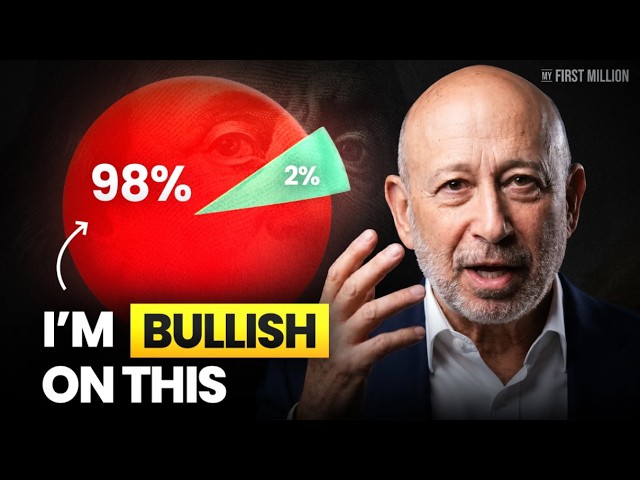
    Blankfein says he is roughly 98 percent in risky assets, almost all equities, and concentrated in three sectors he knows cold: big tech, energy, and financial services. His personal book leans heavily into single stocks over ETFs, weighted toward the big hyperscalers and a few second tier names, and he trades daily, alone, from an iPad and a phone, using calls and texts as his research network. Yet the advice he gives a normal investor is the boring opposite: a diversified S&P 500 fund like VOO, more risk when you are young because you will outlive your mistakes, the same thing Warren Buffett would tell you. The conversation ranges across the 2008 Buffett investment in Goldman, the cost of trying to legislate risk out of markets, the thin margin between the best and the rest, luck and the myth of the genius, why reputation is the real contract on Wall Street, why a supportive spouse is the highest return asset he knows, the money anxiety he carried out of a Brooklyn housing project, the dignity of a 500 dollar financial aid check, giving with a warm hand versus a cold one, the dangers of gamified investing, the big misses like SpaceX and early cellular, the obituary test a senior partner once gave him, and why reading history keeps the present in proportion.

    Thoughts

    The most useful tension in this interview is the gap between what Blankfein practices and what he preaches. He tells young people to buy a diversified S&P 500 index fund, he holds VOO himself, and he calls the host’s plain 90 percent stocks and 10 percent bonds split sensible. Then he admits his own portfolio is something like 90 percent single stocks that he trades by hand every day. The honest read is that his edge is not a transferable tip. It is a 40 year information network of phone calls and a tolerance for risk that most people neither have nor should want. The replicable lesson is the boring half, not the day trading half.

    The most contrarian idea here is not a stock pick, it is his defense of risk itself. His argument that regulators trying to prevent the hundred year storm also forfeit the 99 normal years of growth in between is a serious claim about the price of safety, and it travels far beyond Wall Street. The same goes for his point that a good risk manager sometimes has to push people to take more risk, not less. The moment after a loss, when everyone goes gunshy, is exactly when the best operators lean back in. That is an uncomfortable thing for a former bank CEO to say out loud, and it is the part of the conversation most worth sitting with.

    The Warren Buffett story is a master class in what actually moves markets, and it is not cash. Goldman did not need the five billion dollars. Blankfein says the money was almost irrelevant because the firm already had money. What it could not manufacture was confidence, and Buffett’s name supplied it. The handshake, the commitment with no paperwork, the line about worrying enough for the both of us, all point to the same thing. At the top, reputation is the collateral. His aside that most trades are never written down because you will never eat lunch in this town again is the same idea wearing street clothes.

    Quietly, the personal finance thread may be the most valuable part for a normal listener. A former Goldman CEO saying that a supportive partner is more game changing than any investment, that a bad marriage is financially worse than being lonely, and that he has not paid a bill in over 40 years because his wife runs the household economy, is a reminder that household stability is itself an asset class. The 500 dollar financial aid check he still remembers half a century later, and his give with your warm hand philosophy, reframe wealth as something measured by how it feels to give and to receive, not just by the size of a pie chart.

    Finally, the history obsession is not a side hobby, it is his risk model. Reading about the black plague, the McCarthy era, and the Vietnam draft is how he keeps the present in proportion. His Mark Twain line, that history does not repeat but it rhymes, is the direct antidote to the in this economy defeatism he and the host both complain about. For an investor, that long view is close to the whole game. It is what lets you hold through the drawdowns that scare everyone else out of the market.

    Key Takeaways

    • Blankfein estimates he is about 98 percent in risky assets, with roughly 95 of those 98 points in equities, and the rest spread thin. He invests in risky assets because, in his words, that is what is fun for him.
    • Within his equities, he is heavily tilted toward single stocks rather than ETFs. He frames it as roughly a quarter to a third in ETFs and the rest in single names, and concedes it could be as lopsided as 90 percent single stocks because picking names is what he enjoys.
    • The three sectors he has concentrated in for years are big tech, energy, and financial services, and he says his outperformance comes from where he focused, not from any special genius.
    • On tech he owns the big hyperscalers, the Googles, Microsofts, and Nvidias of the world, plus a tier just below them, naming Oracle and Larry Ellison as an example of a slightly riskier second tier name. He thinks in categories, not fixed tickers, because he changes positions constantly.
    • He says he has a background in trading energy, which is why energy is a core sleeve, and he knows financial services from the inside after almost 40 years at Goldman, so those are natural areas of edge.
    • He still owns a lot of Goldman Sachs stock, out of affection for the firm he spent his career building.
    • He is bullish on big tech and plans to stay bullish until it stops going up. His foreseeable future, he jokes, lasts until he finishes the conversation and checks the screen again.
    • He trades every single day, alone, with no team. He does it from an iPad and a phone, not a computer, and treats the market like background music rather than a job.
    • His research is human, not algorithmic. He chats and texts with people, then calls them because he is tired of fixing typos, and he reads the New York Post, the Wall Street Journal, the New York Times, the Financial Times, and Bloomberg.
    • The advice he gives ordinary investors is deliberately boring and different from his own behavior: hold a diversified equity portfolio like an S&P 500 fund, with VOO as his own example, and tilt more aggressively when you are young because you have time to outlive mistakes.
    • He notes that broad indexes are already heavily weighted toward tech because of market cap, so a plain index gives meaningful tech exposure, and a tech focused ETF on top can add a disproportionate tilt for believers.
    • He calls the host’s simple 90 percent index and 10 percent bonds allocation sensible, and says this is essentially the same advice Warren Buffett would give a normal person.
    • The older you get, the more conservative you should become, shifting from maximizing gains toward not losing what you have. Young people can afford more risk precisely because they will outlive their errors.
    • During the 2008 financial crisis, Warren Buffett invested about five billion dollars in Goldman through a preferred stock structure, essentially on a phone call and a handshake, with no demand for due diligence.
    • Buffett’s real value was confidence, not capital. Goldman already had money, but it had lost the confidence of the market while peers were failing. Buffett’s name signaled the firm was a good investment being beaten down by circumstances that would reverse.
    • Buffett asked for a verbal commitment that Goldman would not sell shares before he did, and declined to put it in writing. He waved off the worry with the line that five billion dollars going bad would not even be a bad hurricane for Berkshire, an insurer.
    • Most trading is done on reputation, not paper. Blankfein says people buy and sell bonds worth enormous sums without written contracts, relying on probity, because anyone who reneges will never eat lunch in this town again.
    • On risk and regulation, he argues you cannot legislate risk away. Trying to prevent the hundred year storm also forgoes the 99 in between years of growth, and a good risk manager sometimes has to encourage people to take risk, not suppress it.
    • The best traders have resilience. They bounce back, focus on new information rather than the past, and adapt quickly instead of staying gunshy after a loss.
    • The difference between someone who is really good and someone who cannot make it is small. He compares it to a golf tournament won by one stroke with six people tied for second, and notes much of life is winner take all at razor thin margins.
    • Luck matters enormously. He became Goldman CEO partly because his predecessor was nominated to be Treasury Secretary, a reference to Hank Paulson, and the timing of opportunities is often out of your control.
    • He is skeptical of the word genius. He says he can usually see how successful people do what they do, with Elon Musk as a rare exception, and that powerful people are more normal, more insecure, and more flawed than outsiders assume.
    • On democratized investing, he thinks apps that make markets accessible are good in their own terms, but gamifying trading with confetti and high fives can mask real danger for people who can lose more than they can afford.
    • He has missed plenty. He thought SpaceX was overpriced at a 100 billion dollar valuation, now discussed near a trillion and three quarters, and passed on early cellular because he could not imagine why anyone would carry a bulky phone when payphones existed. He says he missed far more than he got.
    • He frames a supportive spouse as more game changing than almost any investment, and warns that a bad marriage, with custody fights and property settlements, is financially and personally worse than being lonely.
    • He has not paid a bill in over 40 years. His wife Laura, a former lawyer he says now chairs Barnard College, runs a bill paying service and manages the household economy. He generates the money, she distributes it.
    • He grew up in an East New York, Brooklyn housing project, the son of a postal worker, and carried money anxiety well into his 30s. He recalls buying a vacation home that cost more than all their savings, with his wife unable to make the math work until they remembered the down payment.
    • A 500 dollar financial aid check, handed to him without shame as a college freshman around 1971, shaped his philosophy on giving. He learned it is not enough to give people what they need, you have to give it in a way that feels dignified.
    • He embraces the give with your warm hand, not your cold hand idea, the notion of giving while alive so you can experience the joy, which connects to the spirit of the book Die With Zero.
    • He admits ambivalence about giving to his kids, the strange feeling of resenting that they have what he provided, and notes the heavy burden carried by children of prominent people who must prove they earned their place.
    • He describes himself as wired for anxiety, inherited from his father, and says looking around corners for what could go wrong actually suited a career in a risky business with a big balance sheet.
    • When he made partner, a senior partner gave him rules of the road, including avoiding misconduct, being conservative on taxes, setting up a charitable foundation, and living so that no more than three of the nine paragraphs in his eventual obituary would be about Goldman. He says he stayed too long to pass that test.
    • He reads history as a discipline, favoring Barbara Tuchman, Robert Caro’s The Power Broker, Ron Chernow, Rick Atkinson, and Stephen Ambrose. His core belief, borrowed from Mark Twain, is that history does not repeat but it rhymes, which is why he would not bet against America.

    Detailed Summary

    The three sectors he actually invests in

    The headline answer to where the former Goldman CEO is putting his money is simple: big tech, energy, and financial services. He says he has been focused on those three areas for a long time, and that his outperformance is a function of where he aimed rather than any unusual investing gift. Energy is natural because he has a background trading it. Financial services is natural because he spent nearly 40 years inside the industry. Tech is where he is most heavily concentrated, and he expects to stay there for good reason, citing the threshold of large changes in technology. He owns the major hyperscalers by category, the Googles, Microsofts, and Nvidias, plus a tier just below, offering Oracle and Larry Ellison as a polite example of a slightly riskier second tier name. He is careful to say he thinks in categories rather than fixed tickers because he changes his positions all the time.

    How the portfolio is really built: single stocks over ETFs

    Asked to describe his portfolio as a pie chart, Blankfein says he is about 98 percent in risky assets, with roughly 95 of those points in equities. He pushes back on the idea that index funds are safe, pointing out that a diversified equity ETF is still equities and still risky, just spread out, and very different from debt or short term money markets. Within his equity sleeve he leans into single stocks, framing it as somewhere between a quarter and a third in ETFs and the rest in individual names, and conceding it might be as extreme as 10 percent ETFs and 90 percent single stocks. The reason is preference, not theory. Picking and trading names is what he likes to do, and he is honest that this is a hobby pursued by a professional, not a model for someone investing for a living.

    How he actually trades: an iPad, a phone, and a network

    He trades every day, by himself, with no team. There is no Bloomberg terminal and no desk of analysts. He uses an iPad and a phone, and admits it takes discipline not to glance at his screen mid conversation. The market, he says, is like music playing in the background while he does other things. His information edge is relational. People text him, he texts back, and then he calls because he is tired of fixing typos with what he calls his fat fingers. He follows general and business news, reads a stack of newspapers starting with the New York Post, and treats companies like little stories, almost like gossip. He even notes, with some delight, that he still watches commercials on Netflix, a small window into a frugality that never fully left him.

    The advice he gives young investors, and what Buffett would say

    For a normal person, his counsel is the opposite of his own behavior. He would hold a diversified portfolio of equities like an S&P 500 fund, naming the SPY and VOO tickers and saying he personally uses VOO. Because of the importance of technology, he might add a tech oriented ETF for extra tilt, while noting the broad index is already tech heavy by market cap. He endorses the host’s plain 90 percent index and 10 percent bonds split as sensible and says it mirrors what Warren Buffett would advise. His one piece of age based guidance is that younger investors should accept more risk through equities, because they have time to recover, while older investors should grow more conservative and focus on not losing what they have rather than maximizing returns.

    The Warren Buffett handshake that backed Goldman in 2008

    The most cinematic story in the conversation is Buffett’s roughly five billion dollar investment in Goldman during the financial crisis, structured as a preferred stock that sits between a loan and equity. Blankfein describes a deal done largely on trust. When he offered to walk Buffett through everything he was worried about, Buffett replied that he knew Lloyd well enough to know he worried enough for the both of them. Buffett also asked, verbally and without writing, for a commitment that Goldman would not sell shares before he did. Blankfein is clear that the cash itself was almost irrelevant, since Goldman had money. What the firm lacked was the confidence of a frightened market, and Buffett’s willingness to invest before things improved supplied exactly that signal. Buffett, he stresses, was acting for his own shareholders, not as a rescuer, which is precisely what made the vote of confidence credible.

    Why you cannot legislate risk out of the system

    Reflecting on the post crisis regulatory push to make sure 2008 never happened again, Blankfein makes a careful argument about the price of safety. Once you are in the business of taking risk, anything can happen, and trying to legislate it away has a hidden cost. You may think you are protecting the world from the hundred year storm, but you also forgo the 99 years of growth in between. He extends this inside the firm too. After a period of big losses, partners had become gunshy and were talking themselves out of every idea. A good risk manager, he argues, sometimes has to promote risk taking rather than repress it, because without risk there is no growth, no entrepreneurship, and no progress. The flip side is real: take risk and there is a meaningful chance you fail and lose other people’s money, which is a terrible outcome. But the alternative, never risking anything, buys comfort at the cost of ever moving forward.

    Small margins, big outcomes, and the role of luck

    Asked what separated the traders who could not outperform from the rest, Blankfein says the gap between the very good and those who cannot make it is surprisingly small. He likens it to a golf tournament decided by a single stroke with six players tied for second, and to acting, where the best performer gets every role and the second best waits tables. Much of life, he says, is winner take all at tiny margins. Luck compounds this. He freely credits fortune for his own rise, noting he became CEO in part because his predecessor was tapped to be Treasury Secretary. He is also skeptical of the genius label. He can usually see how accomplished people do what they do, with Elon Musk a rare exception, and insists the powerful are more normal, more insecure, and more driven by their flaws than outsiders imagine.

    Reputation is the real contract

    A recurring theme is that the financial world runs on reputation more than paperwork. Blankfein notes that most of what traders do is not written down. People buy and sell bonds and other instruments that settle days later, relying on probity rather than signed contracts, because anyone who lies or reneges will never eat lunch in this town again. He references the casual texts between Elon Musk and Larry Ellison around the Twitter acquisition as proof that big does not mean complicated. There are big things that are simple and little things that are complicated. Documentation is good when execution is far off, but when a deal will be performed in two days, dotting every i is often pointless. The point is not that documents do not matter, it is that trust and reputation are the load bearing structure.

    A supportive spouse as the highest return asset

    The conversation turns personal when both men agree that a supportive partner may be the single most game changing factor in a life, more than any investment. Blankfein adds the inverse warning: a bad marriage, with breakups, custody battles, and property settlements, is worse than loneliness. He credits his wife Laura, a former big firm lawyer he says now chairs Barnard College, with handling everything when his career moved the family overseas, from the car to the house to the kids’ schooling, while he took the visible victory laps at work. He has not paid a bill in over 40 years. Laura manages a bill paying service and runs the household finances. As he puts it, he is in charge of generating the money and she is in charge of distributing it. The host contrasts this with his own monthly money meetings with his wife, a discipline he picked up from a personal finance author friend.

    Money scars, the 500 dollar check, and giving with a warm hand

    Blankfein grew up in an East New York housing project, the son of a postal worker who had earlier lost a job, in a household where rent was scarce. He calls himself an urban hick who barely left Brooklyn as a kid. That scarcity left a mark that lasted into his 30s. He tells the story of buying a small beach house that cost more than all their savings, and of his wife driving 30 miles while failing to make the closing math work, until they realized she had forgotten to count the 10 percent down payment. The most resonant memory is a 500 dollar financial aid check handed to him as a freshman around 1971, made out on the spot by a clerk with a generosity of spirit that let him receive it without shame. That experience shaped a lifelong view that giving well means preserving dignity, and he now co chairs a financial aid campaign at his university. It also connects to his embrace of the idea of giving with your warm hand rather than your cold hand, giving while alive so you can feel the joy, the same spirit as the book Die With Zero. He is candid about a strange ambivalence, the way he can resent that his kids enjoy what he himself gave them.

    Robinhood, confetti, and the misses

    On apps like Robinhood, Blankfein takes a balanced view. Democratizing investing and making assets accessible is good in its own terms, and advertising can pull people toward markets they would otherwise ignore. But if you make trading too much like a video game, with confetti and high fives, you can mask the danger and lure people who cannot afford to lose into losing more than they can. He is equally frank about his own misses. He thought SpaceX was overpriced at a 100 billion dollar valuation, a figure now discussed near a trillion and three quarters. He passed on early cellular because he could not imagine why anyone would carry a bulky phone with payphones everywhere. His blunt summary is that he missed far more than he got, and that nobody is great at predicting the future.

    The obituary test, thick skin, and staying too long

    When Blankfein made partner, a senior partner assigned to acculturate new partners gave him rules of the road: avoid anything that would today be called misconduct, be rigorous and conservative on taxes, set up and actually use a charitable foundation, and keep enough balance that, if your obituary runs nine paragraphs, no more than three are about Goldman. Blankfein says he failed that last test by staying too long, even titling his memoir around the firm. He also reflects on having a thick skin, recalling unflattering press and concluding that he could take a punch, a trait not everyone has and one he did not know he possessed until he was tested. He is careful to say this does not make people who cannot take a punch bad, just differently wired.

    Why he reads history: it rhymes

    The final stretch is a love letter to reading history. Blankfein favors Barbara Tuchman, whose A Distant Mirror he has read twice and whose Guns of August he calls fantastic and influential, along with Robert Caro’s The Power Broker on Robert Moses, Ron Chernow’s biographies, Rick Atkinson’s Revolution series, and Stephen Ambrose’s Undaunted Courage. He describes rereading the Robert Moses book after 40 years of trying to get things done and finding his appreciation for the achievements rise, even as the flaws stayed the same, because he had changed. He ties history directly to markets through the Mark Twain line that history does not repeat but it rhymes. Patterns recur, every generation maximizes its own crises and minimizes resolved ones, and reading about the black plague, the McCarthy era, or the Vietnam draft is how he stays calm. His conclusion, echoing a sentiment often attributed to Buffett, is that he would not bet against America, a country he describes as mostly good and able to improve.

    Notable Quotes

    “I invest in risky assets. That’s what’s fun for me.”

    Lloyd Blankfein, describing his own portfolio, which he says is roughly 98 percent risky assets

    “It’s been good to be bullish on big tech, and I’ll stop being bullish on it when it stops going up.”

    Lloyd Blankfein, on why he stays concentrated in technology

    “I’m not at a computer. I don’t have a computer. I have an iPad.”

    Lloyd Blankfein, on how he day trades every day, alone and with no team

    “To me, the market is like music. It’s out there. It’s going on.”

    Lloyd Blankfein, on why trading daily feels like a hobby rather than work

    “Look, $5 billion if it all goes bad, that’s not even a bad hurricane on the East Coast.”

    Warren Buffett to Lloyd Blankfein, waving off the risk of his 2008 investment in Goldman Sachs

    “The difference between somebody who’s really, really good and somebody who can’t make it is not that great.”

    Lloyd Blankfein, on the thin margin between the best and the rest

    “You may think you’re protecting the world from the hundred-year storm, but you’re also going to forego the 99 years of in between when there was growth.”

    Lloyd Blankfein, on the cost of trying to legislate risk out of markets after 2008

    “I’m in charge of generating the money, and she’s in charge of distributing it.”

    Lloyd Blankfein, on his 40-plus-year marriage to Laura and why he has not paid a bill in decades

    “History doesn’t repeat, but to paraphrase Mark Twain, it rhymes.”

    Lloyd Blankfein, on why reading history keeps the present in proportion

    Watch the full conversation with Lloyd Blankfein on the My First Million podcast here.

    Related Reading

    • Lloyd Blankfein (Wikipedia) background on the former Goldman Sachs chairman and CEO whose investing views anchor the conversation.
    • My First Million podcast the show where this interview took place, for the full back catalog of investor and founder conversations.
    • Berkshire Hathaway primary source on Warren Buffett’s company, which made the roughly five billion dollar Goldman investment in 2008.
    • Vanguard S&P 500 ETF (VOO) the diversified index fund Blankfein names as the sensible core holding for a normal investor.
    • Die With Zero by Bill Perkins the book behind the give with your warm hand, not your cold hand philosophy discussed near the end.
  • Alex Becker’s Principles for Wealth and Success

    Alex Becker, claiming a net worth approaching multi-nine figures, argues that achieving significant wealth and success boils down to adopting specific principles and a particular mindset. He asserts that these principles, though sometimes counterintuitive or harsh, are highly effective. He emphasizes that conventional paths often lead to mediocrity and that true success requires a different approach focused on leverage, risk, focus, and a specific understanding of how to manage one’s own mind and efforts.


    🏛️ Core Principles for Success

    These are the foundational principles Becker identifies as crucial:

    1. Everything Is Your Fault:
      • Take absolute ownership of everything that happens in your life, both good and bad.
      • Avoid a victim mentality; blaming others removes your control over the situation.
      • Using the drunk driver analogy: while the drunk driver is legally at fault, focusing on your own decisions (driving late, not looking carefully) allows you to learn and potentially avoid similar situations in the future.
      • This mindset forces you to think ahead and strategize to avoid negative outcomes and trigger positive ones.
    2. Volume Overcomes Luck:
      • Success isn’t primarily about luck, especially in business.
      • Consistently putting in high volume of effort (e.g., 10-12 hours a day for years) inevitably leads to skill development and results.
      • If you take enough shots (e.g., try enough business ideas with full effort), one is statistically likely to succeed, overcoming the need for luck.
    3. Embrace Being Cringe:
      • Accept that the initial stages of learning or starting anything new will be awkward, embarrassing, and “cringe”.
      • Becker cites his own early videos, jiu-jitsu attempts, and guitar playing as examples.
      • Willingness to look bad, be judged, and make mistakes is essential for growth and achieving mastery.
      • Fear of looking like a beginner or being judged prevents most people from starting or persisting.
      • Consider this willingness a “superpower”; putting yourself out there forces rapid learning and improvement.
    4. Get Rich From Leverage (Not Just Hard Work):
      • Hard work alone doesn’t guarantee wealth; leverage multiplies the impact of your efforts.
      • Types of Leverage:
        • Assets: Owning assets (like a business) that generate value or appreciate.
        • Systems/Delegation: Building systems and hiring people so your decisions or processes are executed by others, multiplying your output. Example: Training a sales team vs. making calls yourself.
        • Capital: Using money (often borrowed against assets) to acquire more assets or invest.
      • Focus work efforts on activities that build leverage, not just repeatable low-leverage tasks.
      • This is the key to working fewer hours while making significant money (the “one hour a week” concept) – build leverage, then delegate its management.
    5. Understand and Take Calculated Risk:
      • Avoiding risk is the surest way to guarantee failure or mediocrity. Almost all success comes from taking risks.
      • Structure your life to enable risk-taking. This primarily means keeping personal expenses extremely low, so failures don’t ruin you.
      • View risk-taking as a skill that improves with practice. Each attempt, even failures, provides learning for the next.
      • The reward potential in business/wealth creation often vastly outweighs the downside if you can take multiple shots. Position yourself to be a “chronic risk taker”.
    6. Don’t Stay In Your Comfort Zone:
      • Comfort leads to stagnation at every level of success.
      • People plateau (e.g., at a comfortable job, or even at $2M/year income) because they become unwilling to take new risks or face discomfort.
      • Continuously ask yourself if you are comfortable; if yes, you need to push yourself into something challenging or scary to grow. Time is limited for taking big swings.
    7. Sacrifice Ruthlessly:
      • “If you fail to sacrifice for what you care about, what you care about will be the sacrifice”.
      • Audit your life: identify activities, possessions, habits, and even relationships that don’t align with your core goals.
      • Cut out the non-essentials ruthlessly (e.g., mediocre friendships, time-wasting hobbies, bad habits like excessive drinking or video games).
      • Prioritize work over social life, especially early on. Becker argues most early-life friendships fade anyway, and financial stability enables better long-term relationships.
      • Reject the justification of “living a little” for habits that hold you back; often these are just dopamine traps or addictions.
      • Live poorly initially to free up time and resources to invest in yourself and your goals.
    8. Focus: One Thing is Better Than Five:
      • To achieve exceptional results and beat competitors, intense focus on one primary objective is necessary.
      • Splitting focus leads to mediocrity in multiple areas (Tom Brady analogy).
      • Most highly successful people (billionaires) achieved their wealth through one primary business or endeavor. Identify your main thing and say no to almost everything else.
    9. Enjoy the Process (The Game Itself):
      • Peak happiness often arrives relatively early in the wealth journey (e.g., when bills are comfortably paid). More money doesn’t proportionally increase happiness.
      • Find fulfillment in the process of learning, growing, and playing the “game” of business or skill acquisition, much like leveling up in a video game.
      • Avoid “destination addiction” – thinking happiness will only come upon reaching a specific goal.
      • Recognize the ultimate pointlessness (in the grand scheme of mortality) allows you to define the point as enjoying the journey itself.

    💰 Specific Wealth Building Strategy: Equity over Income

    Becker advocates focusing on building equity (the value of your assets, primarily your business) rather than maximizing income.

    • Problem with Income: High income is heavily taxed, and much is often spent on lifestyle or agents/expenses, reducing actual wealth accumulation (Dak Prescott example). Pulling profits as income also starves the business of capital needed for growth.
    • Equity Focus:
      • Reinvest profits back into the business to fuel growth.
      • This growth increases the valuation (equity) of the business, often at a multiple (e.g., $1 reinvested might add $5 to the valuation).
      • Growth in business value (equity) is typically unrealized capital gains and not taxed until sale.
      • Live off a small salary or, more significantly, borrow against the business equity for living expenses or investments. Loans are generally not taxed as income.
      • This creates a cycle of reinvestment, equity growth, and tax-advantaged access to capital.
      • If the business is eventually sold, it’s often taxed at lower long-term capital gains rates.

    🧠 Mindset and Execution

    Beyond the core principles, Becker stresses several mindset shifts:

    • Be Unbalanced: Accept and embrace periods of extreme imbalance, prioritizing goals (especially financial stability) over a conventionally “balanced” life filled with mediocrity.
    • Value Specific Opinions: Only heed advice from people who have demonstrably achieved what you aspire to achieve. Ignore opinions from parents, friends, or the general public if they haven’t reached those goals.
    • Strategic Arrogance/Confidence: Reject forced humility. Cultivate strong self-belief and confidence (backed by work and sacrifice) as it fuels risk-taking and ambitious action. Frame life as a game where a confident “main character” mindset is more fun and effective, while acknowledging the ultimate lack of inherent superiority.
    • Embrace Dislike: Don’t fear being disliked or misunderstood, especially by those outside your target audience. Controversy can be effective marketing (Brian Johnson example).
    • Value Simplicity: Prioritize clear, simple thinking and communication over complex jargon that often masks a lack of results (contrasting Steve Jobs/Hormozi with “midwits”).
    • Ruthless Prioritization of Time/Focus: Be extremely protective of your time and mental energy. Say no often and don’t apologize for prioritizing your core objectives over others’ demands.

    ⚙️ The Engine: Optimizing Your Brain (The Sim Analogy)

    Becker argues the primary obstacle to achieving goals is the inability to consistently direct one’s own brain and actions. He suggests treating the brain like a Sim you need to program, optimizing three key areas through removal:

    1. Energy (Brain Health):
      • Remove: Bad food (sugar, inflammatory foods), poisons (alcohol, pot), poor sleep habits.
      • Add/Optimize: Clean diet (plants, meat, simple carbs), adequate sleep, exercise.
      • Result: Increased physical and mental energy, reduced brain fog.
    2. Focus:
      • Remove: All non-essential distractions. This includes financial stress (by drastically lowering living costs), unnecessary social obligations (friends, excessive family time), non-productive hobbies, politics, mental clutter (chores, complexity).
      • Result: Ability to direct mental resources intensely towards the primary goal.
    3. Motivation (Dopamine Management):
      • Understand: The brain seeks the easiest path to dopamine/reward and doesn’t prioritize long-term benefit. Modern life offers many “shortcuts” (video games, porn, social media, junk food, TV) that provide high dopamine with low effort.
      • Remove: These dopamine shortcuts. Smash the TV/game console, delete social media apps, block websites, eliminate junk food.
      • Result: By removing easy dopamine sources, the brain’s reward system recalibrates. Productive work and achieving goals become the most stimulating and rewarding activities available, making motivation natural rather than forced. Embrace the initial boredom until the baseline resets.

    By systematically optimizing energy, focus, and motivation through removal, Becker claims you can transform yourself into a highly effective individual capable of achieving ambitious goals.


    🚀 Practical Starting Advice

    • Just Start: Don’t get paralyzed by picking the “perfect” business. Start something. Skills learned are often transferable, and you’ll discover what works for you through action.
    • Find Breakage: Look for inefficiencies or problems in existing markets where businesses are losing money or customers are underserved. Solving these “breakage” points creates valuable opportunities.
    • Niche Down: In saturated markets, focus on a specific, underserved niche where you can become the best provider.
  • Inside the Mind of Stan Druckenmiller: Investment Strategies, Market Insights, and Timeless Financial Wisdom

    Stan Druckenmiller discusses market insights, trading strategies, and lessons from his career in investing, focusing on adaptability, timing, and risk management. He emphasizes macro investing from the ground up, relying on both data and intuition, and warns about inflation and debt risks similar to the 1970s. He underscores the importance of humility, cutting losses quickly, and valuing mentorship. Druckenmiller advocates for investing in innovation early, using AI and anti-obesity stocks as examples. He discourages pursuing finance solely for money, emphasizing passion and continuous learning.


    In an insightful conversation with Nicolai Tangen, CEO of Norges Bank Investment Management, legendary investor Stan Druckenmiller shared his views on market dynamics, investment strategy, and the philosophies that have guided his success. Known for his unique approach to macro investing, Druckenmiller offers a wealth of knowledge on balancing data, intuition, and risk.

    The Current Market Landscape and Inflation Concerns

    Druckenmiller expresses caution about the potential resurgence of inflation, likening current conditions to the inflationary 1970s. While the Federal Reserve has made moves to stabilize the economy, Druckenmiller critiques its focus on a “soft landing,” warning that it might prioritize short-term gains over long-term economic health. According to him, the Fed’s reliance on forward guidance has reduced its flexibility, limiting its ability to respond dynamically to market changes.

    “I’m more concerned about inflation now than the economy itself,” he shared. Reflecting on past cycles, Druckenmiller notes that economic downturns often re-ignite inflationary pressures, a lesson he suggests the Fed should keep in mind.

    Investment Strategy: Combining Intuition with Data

    One of Druckenmiller’s most famous approaches, “macro from the bottom up,” combines in-depth company data with broader economic analysis. This strategy has served him well across different market conditions, giving him an edge in identifying underlying trends without solely relying on overarching economic indicators.

    Druckenmiller is known for trusting his intuition, refined through years of experience and quick, decisive actions. His philosophy? “Invest first, analyze later.” He argues that taking an initial position upon identifying a trend is better than overanalyzing and missing potential gains. However, he’s equally unafraid to cut losses when a position underperforms, emphasizing the importance of emotional detachment from individual trades.

    Lessons from the Past: The Value of Big Bets and Risk Management

    Reflecting on trades like his historic short against the British pound in the early 1990s, Druckenmiller highlights the importance of conviction in high-stakes positions. When confident in a trade, he isn’t afraid to go big, a principle he learned from his mentor George Soros. This approach has led to some of his most successful trades, underscoring that in finance, it’s often “not about being right or wrong, but how much you make when you’re right.”

    This experience has made Druckenmiller adept at recognizing and quickly exiting losing positions. According to him, clinging to poor trades in hopes of a turnaround often traps investors, whereas quick exits allow for greater financial agility.

    The Power of Early Investing: AI, Tech, and Anti-Obesity Drugs

    Druckenmiller’s investment acumen is evident in his early positions in Nvidia and the AI sector. Noticing a shift among Stanford and MIT engineers from cryptocurrency to AI, he took a significant position in Nvidia even before AI became mainstream. His interest in tech extends to industries with high growth potential, like anti-obesity pharmaceuticals, where he identified a societal trend in Americans’ demand for convenient weight-loss solutions.

    Druckenmiller maintains that staying open to innovation is crucial but acknowledges that even seasoned investors face challenges in timing and identifying the most lucrative long-term plays.

    Advice for Young Investors: The Importance of Mentorship and Passion

    Druckenmiller advises newcomers to finance to seek mentors rather than MBAs, stressing the irreplaceable value of experience and guidance in honing investment skills. He believes those entering the field solely for monetary gain may lack the resilience required to endure market losses, which can be psychologically taxing. In his view, passion and persistence are critical, with success depending more on an insatiable curiosity than on financial motivation.

    Wrapping Up

    Stan Druckenmiller’s insights offer a masterclass in balanced investing, emphasizing the need for quick, informed decisions, openness to emerging trends, and an understanding of macroeconomic cycles. From inflation warnings to a nuanced view on the role of intuition, his strategies exemplify how financial wisdom, adaptability, and humility form the foundation of sustained success.

    In today’s volatile markets, Druckenmiller’s insights remind us that a successful investor isn’t just one who “beats the market”—it’s one who understands it deeply, stays grounded, and learns continuously.

  • Diverging Paths: Marks and Buffett’s Contrasting Investment Philosophies

    Diverging Paths: Marks and Buffett's Contrasting Investment Philosophies

    While Howard Marks and Warren Buffett share a deep respect for intrinsic value and long-term investing, their approaches diverge in several key areas. These differences, while subtle, offer valuable insights into the diverse strategies that can lead to success in the financial markets.

    Risk Management

    Marks is known for his emphasis on risk management and avoiding losses. He believes that “if we avoid the losers, the winners will take care of themselves.” This focus on capital preservation is evident in Oaktree’s investment strategies, which often involve buying distressed debt or other undervalued assets with a margin of safety. Buffett, while also risk-averse, is more focused on the long-term growth potential of his investments. He is willing to take on more concentrated positions in companies he believes have a durable competitive advantage, even if it means accepting more short-term volatility.

    Investment Philosophy

    Marks is a proponent of value investing, but he also emphasizes the importance of understanding market cycles and investor psychology. He believes that these factors can create opportunities for outsized returns, but they can also lead to significant losses if not properly understood. Buffett, on the other hand, is a more traditional value investor who focuses on buying high-quality businesses at reasonable prices. He is less concerned with market cycles and investor psychology, believing that the long-term performance of a business is the most important factor in determining its value.

    Investment Universe

    Marks, through Oaktree Capital Management, has a broader investment mandate than Buffett. Oaktree invests in a variety of asset classes, including distressed debt, real estate, and private equity. This allows Marks to take advantage of opportunities in different markets and to diversify his portfolio. Buffett, on the other hand, primarily invests in publicly traded stocks of large, well-established companies. He has a more concentrated portfolio than Marks, and he is less likely to invest in alternative asset classes.

    Communication Style

    Marks is known for his clear and concise communication style. He regularly publishes memos to his clients that share his insights on the market and his investment philosophy. These memos are widely read and respected in the investment community. Buffett also communicates regularly with his shareholders through his annual letters, but his writing style is more folksy and anecdotal. He often uses stories and analogies to explain his investment philosophy, and he is less likely to share specific investment ideas.

    The divergent paths of Howard Marks and Warren Buffett highlight the diverse approaches that can lead to success in investing. While their shared principles provide a solid foundation, their differences in focusing on macroeconomic factors, investment universe, portfolio concentration, investment style, and communication offer valuable lessons for investors seeking to develop their own unique strategies. By understanding these nuances, investors can tailor their approach to their individual risk tolerance, investment goals, and areas of expertise, ultimately increasing their chances of achieving long-term success in the market.

    If you want to know where Marks and Buffett converge on investment philosophy read this.

  • Converging on Investment Philosophy: Marks and Buffett’s Shared Wisdom

    In the world of investing, few figures command as much respect as Howard Marks and Warren Buffett. While their individual styles and approaches may differ, a careful analysis of their writings reveals a remarkable convergence of key investment principles. This exploration of the shared wisdom found in Marks’ memos and Buffett’s letters offers a roadmap for navigating the complexities of the market.

    Intrinsic Value: The North Star of Investing

    Both Marks and Buffett unequivocally stress the importance of intrinsic value as the bedrock of investment decisions. Intrinsic value, they argue, is the true worth of a business, determined by the present value of its future cash flows. This principle serves as a guiding light, leading investors toward assets that are genuinely undervalued and shielding them from the capriciousness of market sentiment.

    Long-Term Orientation: The Antidote to Short-Termism

    In a world often fixated on short-term gains and quarterly earnings, Marks and Buffett champion the virtues of long-term thinking. They recognize that true value creation is a gradual process, and succumbing to the allure of quick profits can lead to devastating consequences. By maintaining an unwavering focus on the long-term potential of their investments, they navigate through market turbulence and emerge stronger.

    Tuning Out Market Noise: The Path to Rationality

    The daily fluctuations of the market can be a source of anxiety for many investors. However, Marks and Buffett counsel against being swayed by the noise. They posit that short-term price movements are often fueled by irrational exuberance or fear, and astute investors should concentrate on the underlying value of their holdings, not the fleeting whims of the ticker tape.

    Margin of Safety: The Investor’s Fortress

    The concept of margin of safety is deeply embedded in both Marks’ and Buffett’s investment strategies. It entails acquiring assets at a substantial discount to their intrinsic value, creating a buffer against potential losses. This approach not only safeguards against downside risk but also amplifies the potential for extraordinary gains when the market eventually aligns with the investment’s true worth.

    Circle of Competence: Knowing Your Limits

    Both investors underscore the importance of operating within one’s circle of competence. This means investing in businesses and industries that you genuinely comprehend, acknowledging the boundaries of your knowledge. By adhering to this principle, Marks and Buffett sidestep costly errors and seize upon opportunities that others may miss due to a lack of understanding.

    Temperament and Discipline: The Investor’s Emotional Rudder

    Successful investing transcends mere intellect; it necessitates the cultivation of the right temperament and discipline. Marks and Buffett emphasize the significance of remaining patient, rational, and emotionally composed amidst market volatility. By eschewing impulsive decisions fueled by fear or greed, they maintain a steady course and make judicious choices that endure.

    Prioritizing Loss Avoidance: The Foundation of Winning

    While the pursuit of gains is a natural inclination for investors, Marks and Buffett prioritize the avoidance of losses. They understand that by safeguarding capital and mitigating downside risk, the winning investments will naturally reveal themselves over time. This prudent approach ensures that their portfolios are resilient and capable of withstanding market downturns.

    The Importance of Management: The Human Element

    Both investors acknowledge that the caliber of a company’s management team is a pivotal factor in its long-term success. They seek out companies helmed by competent, ethical, and shareholder-oriented leaders who are dedicated to creating value for their investors. By investing in companies with robust leadership, Marks and Buffett align themselves with the paragons of the business world.

    Opportunistic Investing: Seizing the Right Moment

    Marks and Buffett are opportunistic investors, perpetually vigilant for undervalued assets and market dislocations. They exercise patience, waiting for the right opportunities to emerge, rather than succumbing to the allure of fleeting trends. When the market presents them with a bargain, they act decisively and with unwavering conviction.

    Financial Strength and Conservatism: The Bedrock of Stability

    Both investors stress the importance of maintaining financial strength and eschewing excessive debt. They believe that a conservative approach is paramount for long-term survival and prosperity in the unpredictable world of investing. By prioritizing financial stability, they fortify their portfolios against unforeseen challenges.

    Skepticism of Forecasts: Embracing the Unknown

    Marks and Buffett share a healthy skepticism towards macroeconomic forecasts and market predictions. They acknowledge the inherent uncertainty of the future and the limitations of human foresight. Instead of relying on speculative prognostications, they concentrate on what is knowable and controllable, such as the intrinsic value of their investments and the quality of the businesses they own.

    Value Investing Philosophy: The Time-Tested Path

    Both Marks and Buffett are ardent proponents of the value investing philosophy, which entails acquiring assets at a discount to their intrinsic value. This approach, championed by Benjamin Graham and refined by Buffett, has consistently proven to be a reliable path to enduring investment success. By adhering to this philosophy, they consistently unearth and acquire undervalued assets poised to deliver superior returns over time.

    If you want to know where Marks and Buffett diverge on investment philosophy read this.

  • Assessing Existential Threats: Exploring the Concept of p(doom)

    TL;DR: The concept of p(doom) relates to the calculated probability of an existential catastrophe. This article delves into the origins of p(doom), its relevance in risk assessment, and its role in guiding global strategies for preventing catastrophic events.


    The term p(doom) stands at the crossroads of existential risk assessment and statistical analysis. It represents the probability of an existential catastrophe that could threaten human survival or significantly alter the course of civilization. This concept is crucial in understanding and preparing for risks that, although potentially low in probability, carry extremely high stakes.

    Origins and Context:

    • Statistical Analysis and Risk Assessment: p(doom) emerged from the fields of statistics and risk analysis, offering a framework to quantify and understand the likelihood of global catastrophic events.
    • Existential Risks: The concept is particularly relevant in discussions about existential risks, such as nuclear war, climate change, pandemics, or uncontrolled AI development.

    The Debate:

    • Quantifying the Unquantifiable: Critics argue that the complexity and unpredictability of existential threats make them difficult to quantify accurately. This leads to debates about the reliability and usefulness of p(doom) calculations.
    • Guiding Policy and Prevention Efforts: Proponents of p(doom) assert that despite uncertainties, it offers valuable insights for policymakers and researchers, guiding preventive strategies and resource allocation.

    p(doom) remains a vital yet contentious concept in the discourse around existential risk. It highlights the need for a cautious, anticipatory approach to global threats and underscores the importance of informed decision-making in safeguarding the future.


  • Exploring the Future of AGI: Ownership, Open-Source, and Global Collaboration

    The rapidly evolving landscape of Artificial General Intelligence (AGI) presents a unique set of challenges and opportunities. As we stand on the brink of significant breakthroughs, questions around ownership, development models, and global cooperation become increasingly pertinent. In this exploration, we delve into the key areas shaping the future of AGI.

    Ownership and Control: A Consortium Approach
    Defining and enforcing collective ownership of AGI technologies requires a novel approach. A consortium consisting of governments, academic institutions, and private entities, governed by an international agreement, is a feasible solution. This consortium would oversee AGI development standards and ensure equitable access, while preventing any single entity from gaining overpowering control.

    The Push for Open-Source AGI
    The promotion of open-source development in AGI is crucial for widespread innovation and accessibility. This can be achieved through strong community governance, dedicated funding, and incentives for businesses to participate. Open-source models offer transparency and collaborative opportunities, essential in the ethical development of AGI.

    Innovative Funding and Investment Models
    To support open-source AGI without leading to privatization, diverse funding models are required. These include public-private partnerships, philanthropic grants, and government funding. Crowdfunding and community-driven funding models also play a vital role, ensuring the decentralization and collective ownership of AGI projects.

    Global Collaboration and Governance
    International cooperation is crucial in the realm of AGI. Agreements similar to those in climate change or nuclear non-proliferation are necessary. Such treaties would focus on ethical standards, development guidelines, and fair distribution of AGI benefits. An international regulatory body could ensure compliance and manage disputes.

    Setting Universal Ethical Standards
    The ethical development of AGI necessitates clear guidelines, including principles like transparency, accountability, non-maleficence, beneficence, justice, and respect for autonomy. These should be developed with diverse global inputs, ensuring a universally acceptable ethical framework.

    Building the Right Technological Infrastructure
    A decentralized AGI system requires robust, scalable cloud computing infrastructures, advanced data processing capabilities, and high-speed internet. Blockchain technology could be utilized for decentralized governance and tracking contributions, ensuring secure and transparent operations.

    Enhancing Public Understanding and Awareness
    Improving public understanding of AGI is imperative. This can be achieved through educational campaigns, open forums, and media collaborations. Public involvement in AGI-related decision-making processes is also crucial for fostering a well-informed community.

    Adapting to Long-Term Visions and Needs
    AGI development must align with humanity’s evolving needs and values. This requires a flexible and sustainable approach, with regular reassessment of goals and stakeholder engagement. Adapting to societal changes and technological advancements is key in maintaining relevance and ethical alignment.

    Monitoring and Regulation in a Decentralized Landscape
    Effective monitoring of decentralized AGI systems is essential to prevent abuses and ensure compliance with global standards. Automated tools, regular audits, and a global reporting system, coupled with a robust international regulatory body, can help maintain ethical standards and transparency.

    Mitigating Risks in Decentralized AGI
    Decentralized AGI poses risks such as uneven development and challenges in standardization. Strategies to mitigate these risks include clear coordination guidelines, promoting equitable technology access, and establishing a global framework for governance and standardization.

    As we navigate the complexities of AGI development, a collaborative, open, and ethically-guided approach is essential. These considerations offer a roadmap for responsible AGI evolution, ensuring its benefits are equitably distributed and its risks thoughtfully managed.


    1. Ownership and Control:
      • Question: How can we define and enforce collective ownership of AGI technologies?
      • Answer: Collective ownership of AGI technologies could be defined through a consortium of governments, academic institutions, and private entities, operating under an international agreement. Legal frameworks can be established to ensure that no single entity has overriding control or ownership. This consortium could oversee licensing, development standards, and ensure equitable access to AGI technologies. Mechanisms like open licenses similar to those used in open-source software development could be adapted for AGI.
    2. Open-Source Frameworks:
      • Question: What are the most effective ways to promote and sustain open-source development in the field of AGI?
      • Answer: Promoting open-source AGI development can be achieved by establishing strong community governance, providing funding and resources specifically for open-source projects, and creating incentives for businesses to contribute to and use open-source AGI. Educational initiatives and public awareness campaigns can emphasize the benefits of open-source models, encouraging more developers and researchers to participate.
    3. Funding and Investment:
      • Question: What financial models can support the development of open-source AGI without leading to privatization or control by specific investors?
      • Answer: Funding models such as public-private partnerships, grants from philanthropic organizations, and government funding can support open-source AGI. Crowdfunding and community-driven funding models could also play a role. These models can be designed to ensure that funders do not gain disproportionate control over AGI projects, maintaining the open and decentralized nature of the initiatives.
    4. Global Collaboration and Governance:
      • Question: What international agreements are necessary to ensure global cooperation in the development and regulation of AGI?
      • Answer: International treaties and agreements, similar to those in climate change or nuclear non-proliferation, are needed. These agreements should focus on ethical standards, development guidelines, and the equitable distribution of AGI benefits. An international regulatory body could be established to oversee and enforce these agreements, ensuring compliance and resolving disputes.
    5. Ethics and Safety:
      • Question: What ethical guidelines should be universally adopted for AGI development?
      • Answer: Ethical guidelines should include principles such as transparency, accountability, non-maleficence (do no harm), beneficence (actively do good), justice (fair distribution of benefits and burdens), and respect for autonomy. These guidelines should be developed with input from diverse stakeholders, including ethicists, technologists, and representatives from various cultures and demographics.
    6. Technology and Infrastructure:
      • Question: What technological infrastructures are required to support a decentralized AGI system?
      • Answer: A decentralized AGI system would require robust, scalable, and secure cloud computing infrastructures, along with advanced data storage and processing capabilities. Blockchain technology could be utilized for decentralized governance and tracking contributions. Additionally, high-speed internet and interoperability standards are essential to ensure seamless integration and communication between different AGI systems and platforms.
    7. Public Awareness and Education:
      • Question: How can public understanding and awareness of AGI be improved to support decentralization efforts?
      • Answer: Public awareness can be enhanced through educational campaigns, open forums, and participatory workshops that demystify AGI and its implications. Collaborations with media, educational institutions, and public figures can help disseminate accurate information. Additionally, involving the public in decision-making processes related to AGI development and usage can increase awareness and support.
    8. Long-Term Vision and Adaptability:
      • Question: How can long-term goals for AGI be aligned with the evolving needs and values of humanity?
      • Answer: Long-term goals for AGI should be grounded in a vision of sustainable and ethical progress, aligning with the broader objectives of enhancing human well-being and societal advancement. This requires a flexible approach, with regular reassessment of goals based on societal changes, technological advancements, and ethical considerations. Stakeholder engagement and adaptive governance structures are key.
    9. Monitoring and Regulation:
      • Question: How can decentralized AGI systems be effectively monitored to prevent abuses and ensure compliance with global standards?
      • Answer: Effective monitoring can be achieved through a combination of automated surveillance tools, regular audits, and a global reporting system for ethical violations. An international regulatory body should be established to oversee compliance, with the power to enforce penalties for violations. Transparency in operations and decision-making processes is also vital for effective monitoring.
    10. Risk Management:
      • Question: What are the potential risks of decentralized AGI, and how can these be mitigated?
      • Answer: Potential risks include lack of coordinated response to AGI-related crises, uneven development and access, and challenges in establishing universally accepted standards. Mitigation strategies involve establishing clear guidelines for coordination, promoting equitable access to technology, and developing a robust global framework for standardization and governance. Regular risk assessment and contingency planning are also essential.
  • Warren Buffett and Charlie Munger on Index Funds

    In the world of investing, few names command as much respect as Warren Buffett and Charlie Munger. Their investment philosophy has been a guiding light for many, offering a blend of wisdom, simplicity, and practicality. Central to their approach is the endorsement of index funds, which they regard as a prudent choice for most individual investors. Let’s delve into their perspectives:

    Simplicity and Effectiveness

    Warren Buffett, known for his straightforward approach to investing, has long been an advocate of the simplicity and effectiveness of index funds. His recommendation for most individual investors, especially those who are not investment professionals, is to opt for a low-cost S&P 500 index fund. Buffett’s rationale is rooted in the difficulty of consistently outperforming the market. For the average investor, attempting to beat the market is often a futile endeavor fraught with unnecessary risks and costs.

    Cost Efficiency

    Both Buffett and Munger have been vocal critics of the hefty fees charged by many actively managed funds. They argue that these fees significantly diminish returns, contributing to the often lackluster performance of active funds compared to their benchmarks. In contrast, index funds are known for their low-cost structure, making them a more efficient choice for investors.

    Long-Term Investing

    The investment strategy espoused by Buffett and Munger emphasizes long-term thinking. This philosophy aligns perfectly with the nature of index funds, which are designed to mirror the performance of the broader market over extended periods. Such funds are less susceptible to the short-term volatility that can affect individual stocks, making them suitable for long-term investment strategies.

    Diversification

    A cornerstone of risk management in investing is diversification, and index funds excel in this area. By investing in a broad market index fund, one gains exposure to a diverse array of sectors and companies. This diversification minimizes the risks associated with single-stock investments and offers a more balanced portfolio.

    Passive Management

    Finally, the Buffett-Munger investment ethos criticizes excessive trading and speculation, favoring instead a passive, buy-and-hold approach. Index funds embody this philosophy, as they involve purchasing and holding a diversified portfolio that reflects the market index.

    Wrap Up

    In essence, the advocacy of Warren Buffett and Charlie Munger for index funds is a natural extension of their broader investment philosophy. They champion index funds for their simplicity, cost-efficiency, long-term growth potential, diversification benefits, and passive management style. For the average investor seeking a sensible, low-cost route to market returns, Buffett.

  • Busting Financial Fears: Unmasking the Rare Disaster Theory

    Busting Financial Fears: Unmasking the Rare Disaster Theory

    If you’ve ever found yourself going through lengths to protect your assets from an unlikely catastrophe, you’ve likely encountered what economists call the ‘Rare Disaster Theory.’ But what is it, and how does it impact our financial decision-making?

    What is the Rare Disaster Theory?

    The Rare Disaster Theory is an economic principle that suggests individuals make financial decisions based on the perceived risk of catastrophic, yet infrequent, events. These can range from major financial crises to extreme natural disasters or global pandemics. This theory, popularized by economist Robert Barro, assumes that we overestimate the likelihood of these ‘black swan’ events, often leading to seemingly irrational financial decisions.

    Why is Understanding the Rare Disaster Theory Important?

    Understanding the Rare Disaster Theory is crucial as it offers insight into our financial behaviors, especially during times of perceived crisis. Awareness of this theory can help us recognize when we might be succumbing to the fear of rare disasters, allowing us to make more balanced and rational financial decisions. It can serve as a guide to avoid over-protecting our assets to the point of hindering their potential growth.

    How to Avoid Falling Prey to the Rare Disaster Theory

    1. Educate Yourself: Familiarize yourself with the economic and financial principles. The more you understand about how markets work and the historical occurrence of ‘black swan’ events, the better equipped you will be to assess their likelihood realistically.

    2. Diversify Your Portfolio: By diversifying your investments, you can effectively manage and spread your risk. This way, even if a rare disaster strikes, not all your assets will be impacted.

    3. Consult with Financial Advisors: Professional financial advisors can provide expert guidance, helping you to make informed decisions and avoid the pitfalls of the Rare Disaster Theory.

    4. Create a Financial Plan: Having a comprehensive financial plan in place can help keep your financial decisions grounded in your goals and risk tolerance, rather than in fear of a rare disaster.

    Understanding and navigating the Rare Disaster Theory can lead to healthier financial decisions, ensuring your personal finance strategy is balanced, rational, and less susceptible to the fear of improbable catastrophes.

  • Mastering the Loser’s Game: Timeless Strategies for Successful Investing

    Mastering the Loser's Game: Timeless Strategies for Successful Investing


    Book Summary: Winning the Loser’s Game: Timeless Strategies for Successful Investing

    Key Insights:

    1. The Loser’s Game: Charles D. Ellis describes investing as a “loser’s game” because most professional investors tend to underperform the market. The goal, therefore, should be to avoid mistakes and minimize losses to achieve long-term success.
    2. Long-term perspective: Successful investing requires a long-term perspective. Focus on your long-term goals and needs, rather than short-term market fluctuations.
    3. Costs matter: High fees and transaction costs can severely impact your investment returns. Opt for low-cost, passive investment strategies, such as index funds, to maximize your returns.
    4. Diversification: Diversify your investments across different asset classes and geographic regions to reduce risk and improve long-term returns.
    5. Rebalancing: Periodically rebalance your portfolio to maintain your desired asset allocation and risk profile.
    6. Time, not timing: Avoid trying to time the market, as it’s virtually impossible to consistently predict market movements. Instead, focus on time in the market and allow the power of compounding to work in your favor.
    7. Risk management: Understand your risk tolerance and invest accordingly. Diversification and a long-term perspective can help mitigate risks.
    8. The importance of asset allocation: Asset allocation – the proportion of stocks, bonds, and cash in your portfolio – is a crucial determinant of long-term investment performance. Develop a strategic asset allocation plan based on your risk tolerance, investment horizon, and financial goals.
    9. Passive vs. active investing: Most active investment managers fail to consistently outperform the market. Passive investing through index funds or exchange-traded funds (ETFs) is a more effective way to achieve long-term success.
    10. Emotional discipline: Resist the urge to make emotional investment decisions. Stay disciplined and stick to your long-term plan.

    Mastering The Loser’s Game on Amazon