PJFP.com

Pursuit of Joy, Fulfillment, and Purpose

Tag: Technology

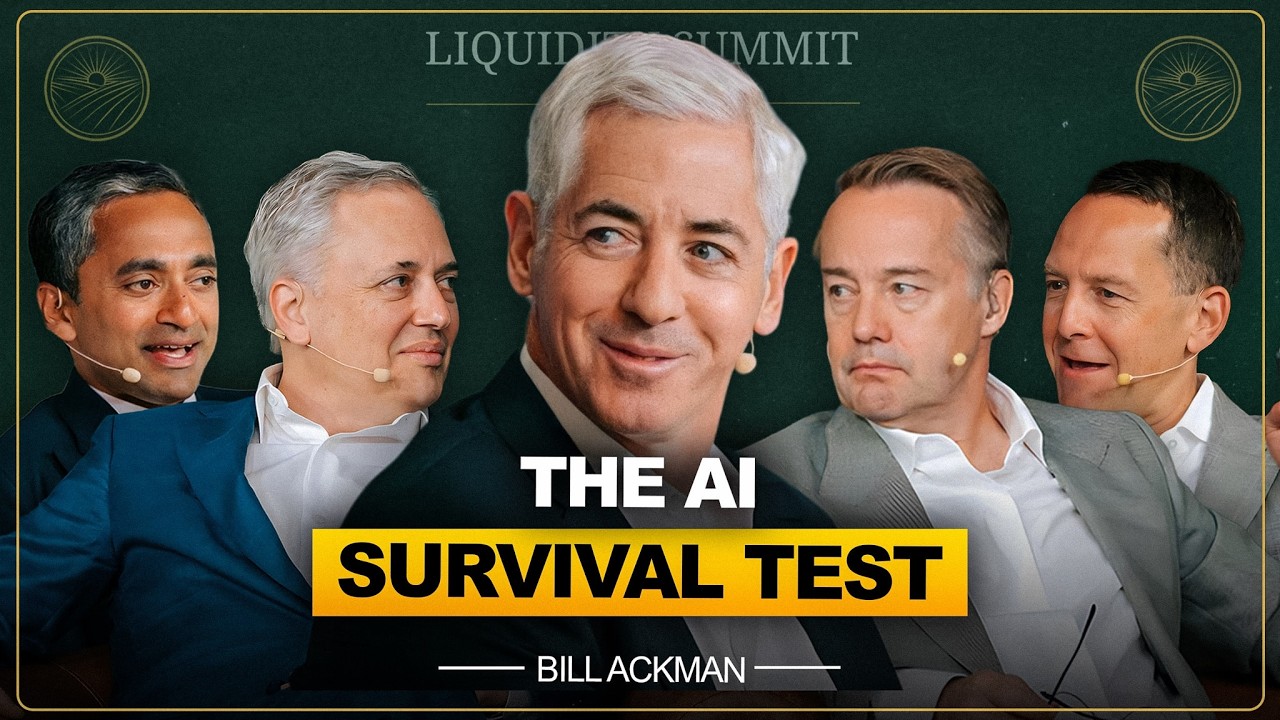
  • Bill Ackman on Investment Strategy, What the Market Is Missing, and How AI Breaks Businesses

    Bill Ackman, founder and CEO of Pershing Square, joined the All-In Podcast for a conversation about how his investment approach has shifted toward permanent, long-term ownership, why he believes the highest-quality companies are being left behind by a market chasing the new new thing, and how AI is raising the risk of disruption for almost every business. He also lays out his plan to turn Howard Hughes into a Berkshire Hathaway-style compounding machine built on insurance. You can watch the full conversation here. Below is a structured breakdown of the ideas, the stories, and the frameworks he uses to underwrite a business.

    TLDW

    Ackman explains how his philosophy evolved from a smaller, more liquid activist toward concentrated, permanent ownership of durable, non-disruptible businesses, with much of his activism now playing out on X rather than in the boardroom. He tells the origin story of his first big trade, Wendy’s and the Tim Hortons spin-off, and explains why a large long-term shareholder on a board is an antidote to short-term markets. On AI, he argues that this is the greatest era in history to build a company, which means the risk of being disrupted has gone up enormously, and that the market is mispricing high-quality compounders like Microsoft, Meta, and Amazon while crowding into chips, semiconductors, and energy. He works through the SaaS question and why niche software is more at risk than platforms, how he underwrites SpaceX, xAI, OpenAI, Anthropic, and Palantir like late-stage venture bets using a people, opportunity, context, deal framework, and why founder-led companies have an edge in making radical calls. The back half covers his Howard Hughes plan to copy Buffett’s insurance-float model, the role of cost of capital and reflexivity in markets, the meme-stock era, going direct on social media, and the three different ways an investor can put money to work with Pershing Square.

    Thoughts

    The most useful idea in the interview is the way Ackman reframes disruption as the central investing problem of the AI era. His point is that the same forces making this the best time in history to start a company, meaning near-unlimited compute, capital, and talent, also raise the odds that any given incumbent gets disrupted. That reframes the word quality. It is no longer mostly about margins and moats. It becomes about non-disruptibility, which is a much higher bar than most quality investors were using a decade ago, and it is why he says most of his research time now goes into assessing that single risk.

    The what-the-market-is-missing thesis is classic contrarian Ackman. Arguing that Microsoft, Meta, and Amazon are the new old-fashioned, undervalued names while capital piles into semiconductors and energy is a direct echo of 2000, when Berkshire Hathaway bottomed precisely because money was chasing internet stocks. It is worth keeping in mind that he owns all three, so the call is also his book. The durable signal here is the framework, not the specific tickers: capital reliably chases the new new thing, and genuinely high-quality businesses get left behind during those rotations.

    The Howard Hughes plan is the most concrete bet in the conversation. Copying Buffett’s insurance-float playbook, short-term treasuries for policyholder money and equities for the surplus, onto a discounted real-estate holding company is elegant. The hard part is exactly what Ackman flags about insurance as an industry: the best investors go to hedge funds, not insurers, so most insurance companies only ever manage the liability side well. Pershing Square’s edge is that Ackman can both write the business and invest the float, which is the same reason it worked for Buffett. The framing of going from a four billion dollar company to a trillion over fifty years is a statement of intent, not a forecast, and should be read that way.

    Underneath all of it sits cost of capital and reflexivity. His observation that a higher stock price literally makes a company more valuable, because it lowers the cost of capital and creates acquisition currency, is the mechanism behind both Elon Musk’s empire and the meme-stock era he is wary of. Going direct on X is the same lever pointed at himself: communicate the vision, lower your own cost of capital, and make the bet easier for other people to place. It is a coherent worldview in which narrative and balance sheet continuously feed each other, and it explains a lot of his behavior over the last few years.

    Key Takeaways

    • The biggest change in Ackman’s approach over time is an appreciation for business quality, meaning long-term, durable, protected, non-disruptible growth as the most important factor.
    • He says he is as activist as ever, but more of it now happens on X than in the traditional corporate context.
    • His first big investment was Wendy’s, which owned Tim Hortons. The simple thesis was to buy Wendy’s, spin off Tim Hortons, and double the money.
    • Early on no one returned his calls, so he had Steve Schwarzman’s Blackstone write a fairness opinion, filed it publicly, and the company spun off Tim Hortons six weeks later. The CEO later thanked him after being fired with a large exit package.
    • Reputation compounds. Where Pershing Square once had to bang down the door, companies now sometimes tweet a welcome when it buys a stake.
    • A large long-term shareholder on a board is a counterweight to short-term markets, letting management test ideas privately and pursue initiatives that hurt the next few quarters of earnings.
    • Pershing Square owns Microsoft, Meta, and Amazon. Ackman argues you are either invested in AI directly or indirectly, or it is a threat, so you have to understand it.
    • The hardest and most important job for a concentrated investor is judging the risk of disruption, and that risk has risen dramatically.
    • This is the greatest era in history to build a business because of near-unlimited access to compute, capital, and talent, which is exactly why the probability of being disrupted has gone up enormously.
    • Markets bring their eye to the new new thing, currently chips, semiconductors, and energy, while high-quality companies get left behind.
    • He draws an analogy to 2000, when Berkshire Hathaway traded at one of its lowest valuations because everyone chased internet stocks. He sees a similar dynamic around Amazon, Meta, and Microsoft today.
    • On the SaaS question, he worries more about a Salesforce than a platform like Microsoft, because niche software charging high per-seat or per-year prices is most exposed, while low-priced platforms are safer.
    • Any software company today has to be as AI-enabled as possible, or risk losing the monopolistic pricing it once enjoyed.
    • His famous March 2020 CNBC appearance was an attempt to reach President Trump and argue for a short shutdown, paired with the view that stocks were incredibly cheap and worth buying.
    • He describes valuation as a tether on the market: when prices stretch too high they snap back, and when they get too cheap the same rubber band pulls valuations up. Calling that out publicly can trigger a psychological reset.
    • His recent bullish call came because stocks of really high-quality companies had gotten crazy cheap on fundamentals, meaning the present value of the cash they generate.
    • He underwrites high-multiple names like SpaceX as venture investments using a framework from business school: people, opportunity, context, deal.
    • On SpaceX, people and opportunity are one of one, the context is incredible, and Starlink plus near-monopoly low-cost launch make it strategically valuable. The complicated part is the deal, meaning the valuation. He invested via an SPV after Ron Baron’s nudge, and also invested in xAI.
    • He treats OpenAI, Anthropic, and Palantir as late-stage venture bets that have proven they can generate real revenue, and says OpenAI should do a better job communicating how it thinks about its enormous capital commitments.
    • Every CEO in America is asking how to use AI, how it applies to their business, and how it is a threat. It is top of mind and boards open every meeting with it.
    • He has not seen much enterprise AI success yet, citing a McKinsey study that 95 percent of enterprise initiatives fail and the rise of the forward deployed engineer as the hot role bridging promise and ROI. Pershing Square itself uses AI mainly for legal, compliance, and back-office work.
    • Founder-led companies have an advantage because founders have the authority and the economic stake to make radical calls, while the average S&P 500 CEO has a roughly three to four year tenure and is incentivized not to make mistakes.
    • He cites Mark Zuckerberg buying Instagram and WhatsApp as the kind of shocking-at-the-time calls that a founder with a track record can make.
    • Ben Graham’s enduring lesson is that a stock is an interest in a business, not a piece of paper, but Graham mostly invested in liquidations and cash-rich shells, and made most of his money on Geico.
    • Most of Buffett’s value at Berkshire came from owning insurance operations and focusing on the asset side of the balance sheet, not just the liability side.
    • Insurance is hard to copy because top investors do not go to work for insurers. Buffett owned half his company and was a great investor, which is why it worked.
    • Howard Hughes came out of the General Growth bankruptcy and owns master-planned cities like Summerlin, with 26,000 acres in the Las Vegas area, comparable to the Irvine Company that built roughly a hundred billion dollars of wealth for Donald Bren.
    • The plan is to reinvest the cash Howard Hughes generates into insurance, put policyholder float in short-term treasuries and the surplus in common stocks, and build a compounding machine over fifty years, buying it at roughly sixty cents on the dollar.
    • A company must earn a return above its cost of capital for the stock to rise. Elon Musk has kept his companies’ cost of capital extremely low, and a SpaceX IPO near a 1.75 trillion dollar valuation could be one of the lowest cost of equity capital transactions ever.
    • Markets have changed less because of Ackman and more because of figures like Ryan Cohen and GameStop, where a stock can trade well above its value on personality and an army of followers.
    • Higher valuations are reflexive: a rising stock price lowers cost of capital and creates currency to issue stock and acquire businesses, which is part of how Elon built Tesla.
    • There are three ways to invest with Pershing Square: the management company itself (a royalty on compounding assets with no capex), PSUS (a portfolio of best ideas trading at an 18 percent discount), and Howard Hughes (a bet on building the next Berkshire). A dollar invested 22 years ago became roughly 27 to 28 times net of fees.
    • Going direct on X, with 2.2 million followers, lets him communicate his vision and lower the friction for others to back his bets, even as his very long tweets have become a running meme.

    Detailed Summary

    From activist trades to permanent capital

    Ackman frames the evolution of his career as a steady move toward business quality. As a smaller, more liquid investor early on, he did not have to think as long-term. As Pershing Square became a bigger, more concentrated investor, durable growth became the dominant factor in every decision. He insists he is still as activist as ever, but a lot of that energy has shifted to X, where he can argue a position publicly rather than only inside a boardroom. The best investments, he notes, are the ones where you do not need to join the board and do anything at all.

    The Wendy’s and Tim Hortons origin story

    One of Pershing Square’s first investments was Wendy’s, which owned the Canadian coffee and donut chain Tim Hortons. The value of Tim Hortons alone was greater than the entire value of Wendy’s, so the idea was simple: buy Wendy’s, spin off Tim Hortons, and double the money. Ackman bought ten percent of the company and could not get the CEO to return a single call, so he had a contact at Blackstone, with Steve Schwarzman’s sign-off, write a fairness opinion on what Wendy’s would be worth after a spin-off, filed it publicly, and watched the spin-off happen six weeks later. The CEO eventually called back to thank him, having been fired but rewarded with a large exit package. Over the years that scrappy approach gave way to a reputation that now opens doors on its own.

    Why a long-term shareholder on the board matters

    The core problem of being a public company, in Ackman’s telling, is the short-term nature of markets and analysts, when a good business should be run in the context of years and even decades. A large, supportive shareholder on the board gives management a place to test ideas before exposing them to the public and a credible voice willing to back initiatives that hurt earnings for a few quarters. That is the value-add he believes a constructive activist can bring to a mature public company, as opposed to a startup where the best outcome is simply to own a great business and stay out of the way.

    AI and the rising risk of disruption

    For a concentrated, long-term investor, the most challenging task is judging the risk that two people from Stanford in a garage build something that destroys your thesis. Ackman argues that risk has climbed dramatically because this is the greatest era in history to build a company, with near-unlimited access to compute, capital, and talent. The paradox is that the conditions that make building easier also make incumbents more fragile, so the bulk of his research now centers on assessing how disruptible a business really is.

    What the market is missing

    Investors bring their attention to the new new thing, currently chips, semiconductors, and energy, which leaves high-quality companies behind. Ackman compares the moment to 2000, when Berkshire Hathaway traded at one of its lowest valuations ever because capital was chasing internet stocks. He sees an echo today in how Amazon, Meta, and Microsoft are treated as old-fashioned, and he considers them undervalued on fundamentals, where value is the present value of the cash a business generates over its life. His recent bullish call, like his March 2020 appearance, came because stocks of really high-quality companies had simply gotten too cheap.

    The SaaS question and AI-enabled software

    On the so-called SaaS apocalypse, Ackman says it is a company-by-company analysis. He worries more about something like Salesforce than about a low-priced platform. The companies most at risk are those that extracted near-monopolistic profits by charging a high annual price for a niche product, because AI lowers the barrier to replicating that functionality. A platform where the average customer pays a small amount per seat, like Microsoft, is far less exposed. The takeaway for any software company is to become as AI-enabled as it possibly can.

    Underwriting SpaceX, xAI, and the AI labs like venture

    For the highest-multiple private companies, Ackman uses a venture lens and a framework a business school professor taught him: people, opportunity, context, deal. SpaceX scores as one of one on people and opportunity, with an incredible context and a near-monopoly in low-cost launch through Starlink, which makes even Amazon a likely customer. The complicated variable is the deal, meaning the valuation, and he admits he has not done all the math, having invested through an SPV after Ron Baron encouraged him, along with a position in xAI. He treats OpenAI, Anthropic, and Palantir as late-stage venture bets that have proven real revenue, and argues OpenAI in particular should communicate more clearly how it justifies capital commitments that vastly exceed current revenue.

    Founder-led companies and the authority to act

    Ackman agrees that founder-led companies have a structural advantage in a fast-changing environment. The average S&P 500 CEO has a tenure of roughly three to four years, a small economic stake, and an incentive not to make a career-ending mistake. A founder is betting an entire life and reputation, has the authority of a major voting and economic position, and has usually made several hard, contrarian calls that turned out right. He points to Mark Zuckerberg’s acquisitions of Instagram and WhatsApp, which looked shocking at the time, as exactly the kind of decision a founder with a track record can make and a hired manager often cannot.

    Howard Hughes as Berkshire Hathaway 2.0

    Ackman points to a detailed financial history of Berkshire Hathaway showing that the vast majority of Buffett’s value creation came from owning insurance and focusing on the asset side of the balance sheet, not just the liability side. Insurance is hard to replicate because skilled investors join hedge funds rather than insurers, but Buffett owned half his company and was a great investor. Pershing Square is applying the same idea to Howard Hughes, a company created out of the General Growth bankruptcy that owns master-planned cities such as Summerlin, with 26,000 acres around Las Vegas, in the spirit of the Irvine Company that made Donald Bren roughly a hundred billion dollars. The plan is to reinvest the company’s cash into insurance, place policyholder float in short-term treasuries and the surplus in common stocks, avoid issuing stock the way Buffett did, and compound for fifty years, all bought at around sixty cents on the dollar.

    Cost of capital, reflexivity, and going direct

    A company only creates value when it earns above its cost of capital, which is why Howard Hughes, seen as a high-cost-of-capital real-estate business, has long traded at a discount, and why Ackman is repurposing its assets into a higher-returning model. He highlights how reflexive markets are: a higher stock price itself makes a company more valuable by lowering its cost of capital and creating currency to raise money and acquire businesses, a lever Elon Musk used to build Tesla. He attributes real market change less to himself and more to figures like Ryan Cohen and GameStop, where personality and a following can lift a stock far above its value. His own going-direct strategy on X, with 2.2 million followers and famously long posts, is the same mechanism applied to communicating a vision and lowering friction for investors. He closes by laying out three ways to invest with Pershing Square: the management company as a royalty on compounding assets, the PSUS portfolio trading at an 18 percent discount, and Howard Hughes as a bet on building the next Berkshire.

    Notable Quotes

    “The best investments are one where you don’t need to join the board and do anything.”

    Bill Ackman, on the kind of business he most wants to own

    “The probability of your being disrupted has gone up enormously.”

    Bill Ackman, on why assessing disruption risk now dominates his research

    “Valuation is like a tether on the market, right? When it gets too high, it’s like this rubber band that’s stretching and inevitably it bounces back.”

    Bill Ackman, on how prices revert at both extremes

    “People, opportunity, context, deal.”

    Bill Ackman, on the business school framework he uses to underwrite companies like SpaceX

    “Every CEO in America today is like, how do I use AI?”

    Bill Ackman, on AI as the top opportunity and threat in every boardroom

    “A closed mouth gathers no foot.”

    Bill Ackman, quoting the line a friend put next to his name in his high school yearbook

    “The increase in value of the company increases the value of the company, right? Because it lowers the cost of capital, it gives you more flexibility, gives you the ability to issue stock, raise capital, acquire other businesses.”

    Bill Ackman, on the reflexivity between stock price and corporate value

    “The company’s got like a $4 billion market cap and the goal is to build it into a trillion dollar thing over time compounding.”

    Bill Ackman, on his fifty-year plan for Howard Hughes

    Taken together, the conversation is a tour of how Ackman now thinks about quality, disruption, and compounding, and a preview of the Berkshire-style machine he wants to build out of Howard Hughes. Watch the full conversation here.

    Related Reading

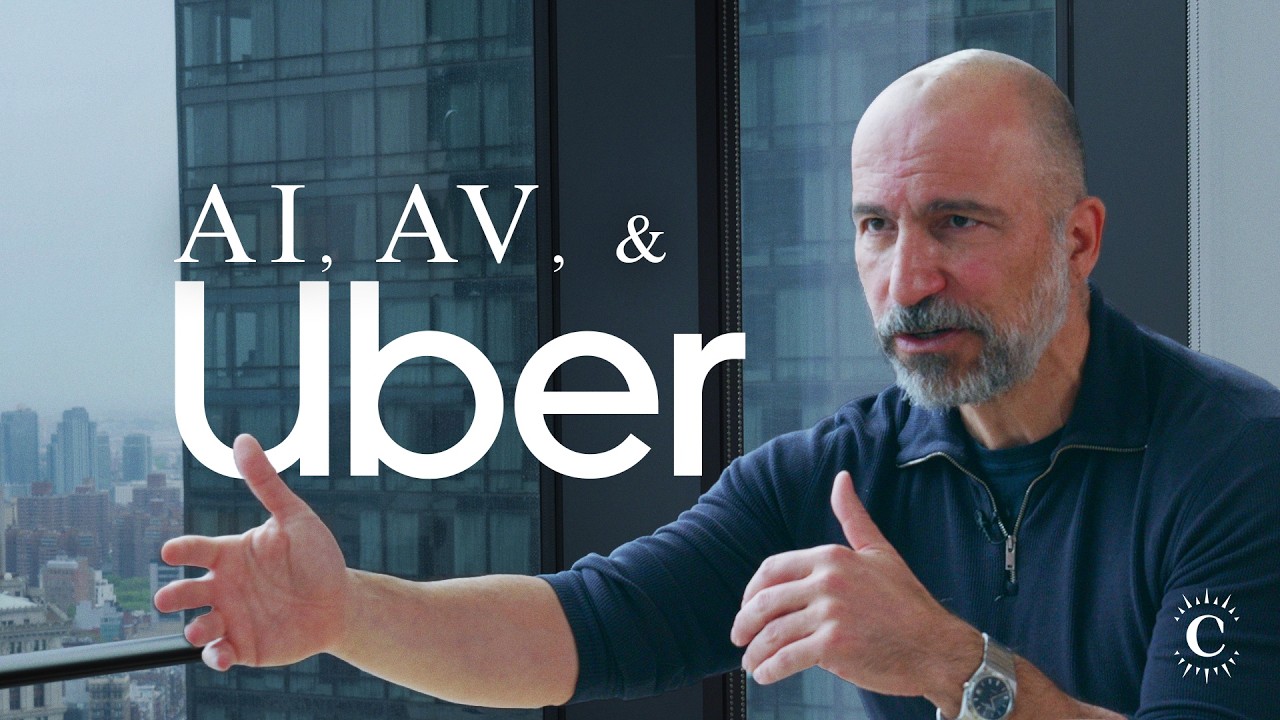
  • Uber CEO Dara Khosrowshahi on AI, Autonomous Vehicles, Robotaxis, Drones, and the Future of Transportation

    Uber CEO Dara Khosrowshahi sat down with Patrick O’Shaughnessy on the Invest Like the Best podcast for a long, candid conversation about the forces remaking transportation. There is artificial intelligence inside the company, and there is physical AI out in the real world, meaning autonomous vehicles, robotaxis, and delivery drones. He calls the autonomous opportunity another trillion dollar marketplace and argues it will change how society operates. You can watch the full interview here. What follows is a structured breakdown of the most useful ideas, the strategy behind Uber’s AV bet, and the operating philosophy that runs underneath all of it.

    TLDW

    Dara Khosrowshahi explains how he brought order to the chaos he inherited at Uber in 2017 by treating hard problems like vector mathematics, and how an immigrant childhood shaped his all-in, low-stress operating style. He describes AI hitting Uber on two fronts at once: much larger digital models that predict rider intent, and physical AI that changes how rides and food get fulfilled in the real world. The conversation covers Uber blowing through a full year of AI budget in a single quarter, metering headcount as engineers become superhuman, the more than 30 AV partnerships with Waymo, Nuro, Lucid, Nvidia, Wayve, and Pony AI, and why supply, not demand, is the whole game. It runs through the coexistence model borrowed from travel and Uber Eats, the Uber One membership flywheel at 50 million members, the push from on-demand to planned travel through hotels and Uber Reserve, the economics of cheaper autonomous cars and delivery drones, the regional race from the Middle East to Europe, and the lessons from Barry Diller and Herbert Allen about getting to ground truth and betting on people. It closes on his capital allocation philosophy of prioritizing organic growth and AV commitments over buybacks.

    Thoughts

    The most underappreciated line in the whole interview is the budget one. Blowing a full year of AI spend in a single quarter is the clearest signal yet that frontier intelligence is being consumed far faster than even an AI-native company planned for. Dara’s response has quietly become the default enterprise playbook: explore on the expensive frontier models, then scale the proven interactions onto cheaper or open-source models. The deeper tension is that he is simultaneously telling teams to drive adoption and metering headcount, which is the real story of AI in large companies. The productivity gains are showing up as fewer hires, not only as faster shipping.

    The supply-first framing is the strategic core, and it inverts the demand-first logic he learned at Expedia. In autonomous vehicles this means Uber does not need to win the self-driving race itself. It needs to own the demand layer and aggregate every AV maker’s supply, the same way online travel agents coexist with hotels and Uber Eats coexists with McDonald’s. The 30 percent higher utilization figure for AVs on Uber’s network is the wedge in that argument. It is the reason a Waymo stays on the platform even while building its own brand, because filling more of an expensive asset’s day changes the entire return on the car.

    His premortem answer is unusually honest. Asked what kills the opportunity, he does not name an Uber-specific execution failure. He names AI’s unpopularity with the general public. That is a CEO admitting the gating factor is social license, not technology. The early data he leans on, drivers in Austin and Atlanta earning more and signing up in greater numbers as AVs add incremental demand, is the counter-narrative he is betting the public conversation on. Whether that story holds as AV volume scales from thousands of vehicles to hundreds of thousands is the open risk the entire industry shares.

    Underneath the strategy is one repeated instinct: get to ground truth. It shows up in the Barry Diller story about reading the model from the analyst who built it, in his hunt for the troublemakers who keep a company mutating, and in the fact that he bought an ebike to deliver food in San Francisco. It is the same move applied at every altitude, and it is why he frames AI as a chance to rebuild processes from first principles rather than shave 20 percent off the ones that exist. The leaders who treat AI as an efficiency tool will likely lose to the ones who rebuild from the ground up.

    Key Takeaways

    • Dara took the Uber job in 2017 after Daniel Ek recommended him at the Allen and Company Sun Valley conference and told him, when he hesitated, that life is about impact rather than happiness.
    • He inherited what he calls complete chaos: a board fighting for control, lost trust with regulators and the public, and a committee running the company after Travis Kalanick stepped back.
    • His method for chaos is to treat it like vector mathematics, breaking a seemingly unassailable problem into component dimensions and solving each one.
    • Early moves included bringing in chairman Ron Sugar to unite the board, running a listening tour with stakeholders, and rebuilding the executive team with leaders like Andrew McDonald and Tony West.
    • He credits an engineering mindset and an immigrant childhood for his calm under pressure. His family lost everything leaving Iran when he was nine and rebuilt from nothing.
    • On parenting, he argues that overcoming challenges is what forms people, and that doing everything for your kids is a long-term disservice disguised as a short-term favor.
    • Uber has always operated in a probabilistic real world of traffic, cancellations, and late food, so it has used machine learning longer than most consumer companies.
    • The current inflection is AI on two fronts: larger digital models that predict intent, and physical AI that changes how Uber fulfills in the real world.
    • Uber’s feed and search models are now roughly 10,000 times bigger than the older ones, enabling universal search across rides, eats, and grocery in a single query.
    • Uber can already guess a rider’s destination about three quarters of the time, turning booking into a one-tap interaction.
    • AI adoption is bottoms-up across engineering, legal, and marketing. Developers in India are driving roughly ten times the code commits using autonomous agents.
    • Dara pushes teams to rebuild processes from first principles with AI rather than settling for 20 to 30 percent optimization of an existing process.
    • He wants the rebels and troublemakers to win, and treats unpredictable internal adoption patterns as something to find and promote.
    • Uber blew through its full-year AI budget in a single quarter, which is now forcing it to meter headcount as engineer throughput climbs.
    • The token strategy is to explore on expensive frontier models, then scale proven interactions onto cheaper or open-source models.
    • Uber generates over 10 billion dollars in free cash flow on more than 10 billion trips a year, but it is not a high-margin business, so efficiency funds lower prices and higher earnings.
    • In autonomous vehicles, the thesis is supply: own the demand layer and aggregate every AV maker’s vehicles, the way Uber aggregates drivers and restaurants.
    • Uber has more than 30 AV partnerships, including Waymo, Nuro, Lucid, Nvidia, Wayve, and Pony AI.
    • Uber is building the surrounding ecosystem: depots, charging, fleet partners, a one billion dollar Santander financing line for EV and AV fleets, and autonomous insurance.
    • AVs operating on Uber’s network are about 30 percent busier in trips and revenue per vehicle per day than vehicles not on the network, which transforms the return on an expensive car.
    • The build, partner, or buy answer is coexistence, mirroring how travel agents coexist with hotels and airlines and how Uber Eats coexists with McDonald’s, Starbucks, and Chipotle.
    • His public premortem is that AI’s unpopularity, not Uber-specific execution, is the biggest risk, so the company must move at the pace society will accept to avoid backlash.
    • Early data in Austin and Atlanta shows drivers earning more and more drivers joining, suggesting AVs are adding incremental demand rather than only displacing humans.
    • AV hardware costs typically fall 30 to 40 percent per generation. A Lucid midsize built with Nuro could land around 60,000 to 70,000 dollars and bring transportation costs down.
    • Lower cost expands demand. Uber already dwarfs the taxi market it was once sized against, and Dara expects the same dynamic with AVs.
    • Traditional OEMs are now investing in L4-ready systems and should arrive over the next two to four years. Each AV drives roughly three to four times what a human driver does.
    • Chinese manufacturing capability and bill of materials are described as unrivaled. A low-cost Western, Foxconn-style player for AVs is being worked on but does not exist yet.
    • Drones are gated by battery density. Food and grocery drones should reach real scale in two to five years and become normal in five to ten, with Joby and Zipline cited as examples.
    • The Middle East, including Abu Dhabi, Dubai, and Saudi Arabia, is moving fastest thanks to entrepreneurial regulators. Europe is catching up, with London robotaxi pilots expected before year end.
    • Uber Eats wins the number one position more often internationally. The playbook is selection plus reliability, amplified by cross-platform upsell, with about 13 percent of Eats bookings coming from the mobility app.
    • Uber One has 50 million members growing 50 percent year on year. Dara frames it like Netflix, more content for the same price, and accepts a first-year loss for multi-year profit.
    • Uber is pushing from on-demand to planned through hotels, via a deal with Expedia, and through Uber Reserve, now at over a 5 billion dollar run rate with 99 percent-plus reliability.
    • His leadership lessons: from Barry Diller, get to ground truth from source material and tell the truth as a leader. From Herbert Allen, bet on people, not companies.
    • On capital allocation, he prioritizes organic growth and financialized AV commitments over buybacks, while keeping costs growing slower than revenue.

    Detailed Summary

    From chaos to structure: the 2017 turnaround

    Dara came to Uber from 13 years running Expedia under Barry Diller, recruited through a head hunter after Daniel Ek floated his name at the Sun Valley conference. He arrived into what he describes as complete chaos, with the board fighting over control rather than the fate of the company and trust badly damaged with regulators, the public, and employees. His approach was to decompose the situation the way an engineer decomposes a multidimensional problem, solving each dimension and reassembling the whole. Practically that meant a new chairman in Ron Sugar to unite the board, a listening tour to understand stakeholder concerns, and a rebuild of the leadership team that kept strong insiders like Andrew McDonald while adding people like Tony West.

    An engineering mind and an immigrant chip on the shoulder

    His wife Sid calls him a robot, by which she means he does not get rattled. He traces that to an engineering education and to a childhood upheaval. His family left Iran when he was nine and lost the business his father had built, and he watched that loss diminish his father over the years. The experience produced a durable drive to rebuild and a refusal to let external chaos define him internally. He applies a similar philosophy to his kids, arguing that challenges and the act of overcoming them are what form a person, and that helicopter parenting removes the very friction that builds capability.

    AI inside Uber: prediction, agents, and superhuman engineers

    Uber has always lived in a probabilistic world where the digital booking is deterministic but the real-world fulfillment is not, so it adopted machine learning earlier than most consumer companies. The newest models are roughly 10,000 times larger than the prior generation and power universal search and destination prediction that is right about three quarters of the time. Internally, adoption is bottoms-up and uneven in a good way, with engineers in India shipping around ten times the code commits using autonomous agents. Rather than mandate from the top, Dara pushes teams to rebuild whole processes from first principles with AI instead of trimming a fifth off the existing ones.

    The cost of intelligence

    The flip side of fast adoption is cost. Uber blew through its annual AI budget in a single quarter, and that is forcing a real adjustment. Because engineer throughput is climbing, the company is metering headcount increases rather than simply hiring. The operating rule is to keep driving adoption while pursuing efficiency, using frontier models from providers like OpenAI and Anthropic to experiment with new interactions, then moving the scaled experiences onto more efficient or open-source models to bring the per-token cost down. With more than 10 billion dollars of free cash flow on over 10 billion trips, Uber is not a high-margin business, so efficiency directly funds lower prices for riders and higher earnings for drivers.

    Why supply decides the AV race

    At Expedia, Dara learned a demand-first model where you attract consumers and then build inventory to match. Uber is the opposite, a supply company, where securing every car, restaurant, courier, and retailer causes the demand to follow. Applied to autonomous vehicles, the strategy is to be the go-to-market and demand layer for anyone building a digital driver. Uber wants to aggregate the largest pool of AV supply, just as it aggregates human drivers, so that the companies building the actual self-driving software can focus on the driver while Uber handles distribution and utilization.

    Building the ecosystem around the digital driver

    Uber now has more than 30 AV partnerships spanning Waymo, Nuro, Lucid, Nvidia, Wayve, and Pony AI, and it expects many winners rather than one, the same shape as the foundation model market. Around those partners it is assembling the connective infrastructure: depots and charging in cities where the regulatory path is opening, fleet partners, a one billion dollar financing line with Santander for EV and AV fleets, and work on autonomous insurance. It is also collecting street data today that can feed the models, so that when a partner’s cars hit the market there is instant demand waiting. The early proof point is that AVs on Uber’s network run about 30 percent busier than comparable vehicles off it, which materially improves the return on a costly car.

    The premortem and the public’s patience

    Asked what derails the opportunity, Dara points outward rather than inward. The risk is that AI is powerful but unpopular, and the average person experiences it as a threat to electricity costs or a cousin’s job rather than as magic. The same dynamic could hit AVs even though the technology should end up safer than human drivers, which is why questions about emergency services, equitable access, and driver earnings have to be worked through with regulators and communities. The encouraging early signal is in Austin and Atlanta, where drivers are making more money and more are joining because AVs appear to be adding incremental demand. The controllable risk, he says, is access to supply, which is exactly why Uber has partnered with nearly every AV provider across mobility, delivery, and freight.

    A trillion dollar marketplace: cheaper cars and delivery drones

    Dara sizes the autonomous opportunity as another trillion dollar marketplace. As AV software and hardware costs fall, typically 30 to 40 percent per generation, a Lucid midsize built with Nuro could come in around 60,000 to 70,000 dollars, which starts to lower the real cost of transportation. History says lower cost expands demand, and Uber already became multiples larger than the taxi market it was once compared to. Manufacturing scales from hundreds to thousands to hundreds of thousands of vehicles, each driving three to four times what a human does, with traditional OEMs investing in L4-ready systems over the next two to four years and Chinese manufacturers setting the bar on cost and quality. Delivery drones are further out, gated mainly by battery density, but should reach real scale in two to five years and feel normal in five to ten.

    Membership, hotels, and the shift from on-demand to planned

    Uber Eats often reaches the number one position internationally by nailing selection and reliability and then layering on cross-platform advantages, with roughly 13 percent of Eats bookings flowing from the mobility app. Uber One, at 50 million members growing 50 percent year on year, is the loyalty engine, and Dara likens it to Netflix in that members get more for the same price. He explains the membership economics through Amazon Prime, accepting a money-losing first year to earn multi-year profit as members spend more across services. The newest expansion is travel: hotels through a deal with Expedia, and a broader move from Uber’s on-demand brand toward planned bookings, proven out by Uber Reserve at a 5 billion dollar-plus run rate and 99 percent-plus reliability. The end state he wants is a trip where Uber pre-books your ride to the airport, knows your hotel, and brings in-market magic to the whole journey.

    Operating philosophy: ground truth, troublemakers, and capital allocation

    The mentors thread through everything. From Barry Diller, with whom he worked for more than 20 years, he took the discipline of getting unfiltered truth from the source, illustrated by Diller insisting on hearing the Paramount LBO model from the young analyst who built it. From Herbert Allen he took the lesson to bet on people rather than companies, because great people stay great across cycles. In his own practice that becomes radical transparency, a deliberate hunt for the troublemakers who act as the mutations that keep an organism from dying, and a willingness to be wrong, since learning, often through pain, is what he finds interesting. On capital, he treats allocation as an art, prioritizing organic growth, which took Uber Eats from under a billion to over a hundred billion in gross bookings, then AV commitments that can be financialized, with buybacks coming after growth rather than instead of it.

    Notable Quotes

    “I know who I am, and I’m always going to be that same person. I’m not going to let the chaos of the world affect me mentally.”

    Dara Khosrowshahi, on why crisis does not rattle him

    “We blew through our AI budget in a quarter, you know, for the whole year essentially. And it is forcing us to adjust.”

    Dara Khosrowshahi, on the real cost of AI adoption at Uber

    “What’s magical now is going to seem normal to all of us 10 years from now.”

    Dara Khosrowshahi, on how fast riders stop noticing autonomous vehicles

    “We think it’s another trillion dollar marketplace.”

    Dara Khosrowshahi, on the scale of the autonomous vehicle opportunity

    “If we do that, the demand will take care of itself.”

    Dara Khosrowshahi, on why Uber obsesses over securing supply first

    “I’m looking for those mutations. I’m looking for those troublemakers constantly.”

    Dara Khosrowshahi, on keeping a large company adaptive

    “It’s the filtering that gets the edge out of the story or out of the situation. And it’s often the edge that gives you an edge.”

    Dara Khosrowshahi, on a lesson from Barry Diller about going to the source

    “If I’m not wrong, if I’m not making mistakes, it’s just not very interesting.”

    Dara Khosrowshahi, on why learning, often through pain, drives him

    “Meeting her and seeing her operate, I think, finally allowed me to be the person I want to be versus the person I thought I was supposed to be.”

    Dara Khosrowshahi, on his wife Sid, when asked the kindest thing someone has done for him

    The throughline is that Uber intends to be the demand layer for autonomous transportation the way it became the demand layer for human drivers, while rebuilding its own operations around AI from first principles. Whether the public grants the industry enough patience is the open question Dara keeps returning to. Watch the full conversation here.

    Related Reading

    • Uber primary source for the company, products, and AV partnerships discussed in the interview.
    • Dara Khosrowshahi (Wikipedia) background on the CEO’s path from Iran to Expedia to Uber.
    • Invest Like the Best the podcast with Patrick O’Shaughnessy where this conversation took place.
    • Waymo the autonomous driving company behind the Austin and Atlanta partnerships referenced.
    • Barry Diller (Wikipedia) the mentor whose lessons on ground truth shaped Dara’s leadership style.
  • Dwarkesh Patel: From Podcasting Prodigy to AI Chronicler with The Scaling Era

    TLDW (Too Long; Didn’t Watch)

    Dwarkesh Patel, a 24-year-old podcasting sensation, has made waves with his deep, unapologetically intellectual interviews on science, history, and technology. In a recent Core Memory Podcast episode hosted by Ashlee Vance, Patel announced his new book, The Scaling Era: An Oral History of AI, co-authored with Gavin Leech and published by Stripe Press. Released digitally on March 25, 2025, with a hardcover to follow in July, the book compiles insights from AI luminaries like Mark Zuckerberg and Satya Nadella, offering a vivid snapshot of the current AI revolution. Patel’s journey from a computer science student to a chronicler of the AI age, his optimistic vision for a future enriched by artificial intelligence, and his reflections on podcasting as a tool for learning and growth take center stage in this engaging conversation.


    At just 24, Dwarkesh Patel has carved out a unique niche in the crowded world of podcasting. Known for his probing interviews with scientists, historians, and tech pioneers, Patel refuses to pander to short attention spans, instead diving deep into complex topics with a gravitas that belies his age. On March 25, 2025, he joined Ashlee Vance on the Core Memory Podcast to discuss his life, his meteoric rise, and his latest venture: a book titled The Scaling Era: An Oral History of AI, published by Stripe Press. The episode, recorded in Patel’s San Francisco studio, offers a window into the mind of a young intellectual who’s become a key voice in documenting the AI revolution.

    Patel’s podcasting career began as a side project while he was a computer science student at the University of Texas. What started with interviews of economists like Bryan Caplan and Tyler Cowen has since expanded into a platform—the Lunar Society—that tackles everything from ancient DNA to military history. But it’s his focus on artificial intelligence that has garnered the most attention in recent years. Having interviewed the likes of Dario Amodei, Satya Nadella, and Mark Zuckerberg, Patel has positioned himself at the epicenter of the AI boom, capturing the thoughts of the field’s biggest players as large language models reshape the world.

    The Scaling Era, co-authored with Gavin Leech, is the culmination of these efforts. Released digitally on March 25, 2025, with a print edition slated for July, the book stitches together Patel’s interviews into a cohesive narrative, enriched with commentary, footnotes, and charts. It’s an oral history of what Patel calls the “scaling era”—the period where throwing more compute and data at AI models has yielded astonishing, often mysterious, leaps in capability. “It’s one of those things where afterwards, you can’t get the sense of how people were thinking about it at the time,” Patel told Vance, emphasizing the book’s value as a time capsule of this pivotal moment.

    The process of creating The Scaling Era was no small feat. Patel credits co-author Leech and editor Rebecca for helping weave disparate perspectives—from computer scientists to primatologists—into a unified story. The first chapter, for instance, explores why scaling works, drawing on insights from AI researchers, neuroscientists, and anthropologists. “Seeing all these snippets next to each other was a really fun experience,” Patel said, highlighting how the book connects dots he’d overlooked in his standalone interviews.

    Beyond the book, the podcast delves into Patel’s personal story. Born in India, he moved to the U.S. at age eight, bouncing between rural states like North Dakota and West Texas as his father, a doctor on an H1B visa, took jobs where domestic talent was scarce. A high school debate star—complete with a “chiseled chin” and concise extemp speeches—Patel initially saw himself heading toward a startup career, dabbling in ideas like furniture resale and a philosophy-inspired forum called PopperPlay (a name he later realized had unintended connotations). But it was podcasting that took off, transforming from a gap-year experiment into a full-fledged calling.

    Patel’s optimism about AI shines through in the conversation. He envisions a future where AI eliminates scarcity, not just of material goods but of experiences—think aesthetics, peak human moments, and interstellar exploration. “I’m a transhumanist,” he admitted, advocating for a world where humanity integrates with AI to unlock vast potential. He predicts AI task horizons doubling every seven months, potentially leading to “discontinuous” economic impacts within 18 months if models master computer use and reinforcement learning (RL) environments. Yet he remains skeptical of a “software-only singularity,” arguing that physical bottlenecks—like chip manufacturing—will temper the pace of progress, requiring a broader tech stack upgrade akin to building an iPhone in 1900.

    On the race to artificial general intelligence (AGI), Patel questions whether the first lab to get there will dominate indefinitely. He points to fast-follow dynamics—where breakthroughs are quickly replicated at lower cost—and the coalescing approaches of labs like xAI, OpenAI, and Anthropic. “The cost of training these models is declining like 10x a year,” he noted, suggesting a future where AGI becomes commodified rather than monopolized. He’s cautiously optimistic about safety, too, estimating a 10-20% “P(doom)” (probability of catastrophic outcomes) but arguing that current lab leaders are far better than alternatives like unchecked nationalized efforts or a reckless trillion-dollar GPU hoard.

    Patel’s influences—like economist Tyler Cowen, who mentored him early on—and unexpected podcast hits—like military historian Sarah Paine—round out the episode. Paine, a Naval War College scholar whose episodes with Patel have exploded in popularity, exemplifies his knack for spotlighting overlooked brilliance. “You really don’t know what’s going to be popular,” he mused, advocating for following personal curiosity over chasing trends.

    Looking ahead, Patel aims to make his podcast the go-to place for understanding the AI-driven “explosive growth” he sees coming. Writing, though a struggle, will play a bigger role as he refines his takes. “I want it to become the place where… you come to make sense of what’s going on,” he said. In a world often dominated by shallow content, Patel’s commitment to depth and learning stands out—a beacon for those who’d rather grapple with big ideas than scroll through 30-second blips.

  • 🤯 Naval Ravikant Just DESTROYED Conventional Thinking! (And It’s All Thanks to THIS Physicist) 🤯


    Naval Ravikant and Arjun Khemani discuss David Deutsch’s ideas, emphasizing the importance of seeking explanations, critical thinking, and creativity. They criticize the slowdown in scientific progress and warn against censorship, centralization, and the erosion of individual freedoms. Ravikant controversially links societal structures to violence, highlighting the need for individual rights. The discussion champions knowledge, technological advancement, and open inquiry as crucial for progress.


    Forget everything you thought you knew about knowledge, progress, and reality itself.

    In a mind-blowing new interview, tech investor and philosopher Naval Ravikant dives deep into the groundbreaking ideas of physicist David Deutsch, author of “The Beginning of Infinity.” Prepare to have your worldview shattered as they explore these key concepts:

    The REAL reason science is slowing down: Ravikant challenges the notion that we’ve simply picked all the “low-hanging fruit” in science. He argues that the slowdown is due to systemic issues like groupthink in academia, over-reliance on expensive equipment, suppression of unorthodox ideas, and bureaucratic hurdles. He calls for a return to bold conjecture and creative problem-solving, echoing Deutsch’s emphasis on the importance of generating new explanations.

    The 4 pillars of reality: Deutsch proposes four fundamental theories that form the basis of our understanding of the world: epistemology (how we know what we know), evolution by natural selection, quantum theory, and computation. These interconnected strands offer a comprehensive framework for understanding reality and highlight the importance of critical thinking and the pursuit of better explanations.  

    Why “knowledge” is like a crystal: Ravikant uses the analogy of a crystal to illustrate the interconnected nature of knowledge. Just as a crystal has a specific structure with each atom connected to others, knowledge is not simply a collection of facts but a network of interconnected ideas. This highlights the importance of creativity in generating new knowledge and making connections between seemingly disparate concepts.

    The SHOCKING truth about violence and society: In a controversial statement, Ravikant argues that all societies are ultimately structured around the ability to do violence. He claims that those who control the means of violence ultimately hold power. This underscores the importance of individual rights, self-defense, and decentralization of power to prevent tyranny.

    How to protect yourself from the REAL threats to freedom: Ravikant identifies censorship, centralization of power, and the erosion of individual freedoms as the biggest threats to Western civilization. He warns against the dangers of collectivism and emphasizes the importance of free speech, decentralized technologies (like cryptography and personal computing), and the right to bear arms as safeguards against these threats.

    This is NOT your typical interview. Ravikant and Khemani engage in a deep and thought-provoking conversation that challenges conventional wisdom and encourages viewers to think critically about the world around them.

  • The Gundo: A Thriving Hub for Hard Tech Startups

    The Gundo: A Thriving Hub for Hard Tech Startups

    El Segundo, California, a coastal city located in the South Bay region of Los Angeles County, is often considered a distinct area with its own unique identity. While renowned for its beautiful beaches and laid-back atmosphere, El Segundo is rapidly emerging as a hotbed for hard tech startups. This burgeoning hub, affectionately dubbed “The Gundo,” is attracting a new generation of entrepreneurs and engineers who are pushing the boundaries of technology and reshaping the future of industries.

    What is Hard Tech?

    Hard tech, also known as deep tech, refers to companies that are developing technology solutions based on significant scientific or engineering challenges. These companies often require extensive research and development (R&D), substantial capital investment, and lengthy periods before achieving commercial success. Unlike software startups that primarily focus on digital products and services, hard tech companies are involved in creating tangible, physical products that often involve complex engineering and manufacturing processes. Examples of hard tech include advanced materials, robotics, aerospace, artificial intelligence, and biotechnology.

    This distinction between hard tech and the traditional software focus of Silicon Valley highlights a crucial shift in the technology landscape. While software continues to play a vital role, the future of technology lies in the convergence of software and hardware, with hard tech companies leading the charge in developing solutions to real-world problems.

    Why El Segundo?

    El Segundo’s transformation into a hard tech hub is driven by a confluence of factors. Its proximity to Los Angeles International Airport (LAX) and major aerospace and defense companies Boeing and SpaceX provides access to a highly skilled workforce and a robust supply chain. This legacy in aerospace has laid the foundation for the Gundo’s emergence, providing a fertile ground for and a pool of experienced engineers and entrepreneurs.

    The city’s relatively affordable real estate compared to Silicon Valley and its attractive coastal lifestyle make it an appealing location for startups and their employees. Moreover, El Segundo offers a “small-town” vibe that fosters a strong sense of community among its hard tech entrepreneurs. This collaborative environment encourages the exchange of ideas, mentorship, and partnerships, creating a fertile ground for and growth.

    California has experienced an exodus of firms and families, including Fortune 1000 companies and smaller ones. El Segundo has managed to attract a new wave of companies focused on “atoms, not bits.” This emphasis on tangible products and solutions, coupled with a “hardcore ethos” that prioritizes ambitious technological advancement, sets the Gundo apart from other hubs.

    With its unique advantages, El Segundo has attracted a diverse range of hard tech startups.

    Key Players in The Gundo

    The Gundo is home to a diverse range of hard tech startups that are developing groundbreaking technologies across various sectors. This diversity fosters within individual companies and creates opportunities for cross-industry collaboration and the development of integrated solutions. Here are a few examples:

    • Parallel Systems: Founded by Matt Soule, John Howard, and Ben Stabler, Parallel Systems is building an autonomous and decarbonized freight system with zero-emissions rail vehicles. This approach to transportation aims to revolutionize the logistics industry by reducing emissions and improving efficiency.
    • Epsilon3: Epsilon3 is developing next-generation manufacturing systems software for rapid, iterative, and data-driven hardware manufacturing. Their software solutions empower businesses to optimize their production processes and accelerate in manufacturing.
    • Rainmaker: Founded by Augustus Doricko, Rainmaker is focused on drone-enabled cloud seeding technology to modify the weather and address water scarcity for farms and ecosystems. This endeavor tackles a critical global challenge by leveraging cutting-edge technology to increase rainfall and combat drought.
    • Castelion: Co-founded by Bryon Hargis, Sean Pitt, and Andrew Kreitz, Castelion is designing, building, and testing next-generation long-range strike weapons systems. With a focus on in defense technology, Castelion has raised $15 million in funding to develop advanced weaponry.
    • Picogrid: Founded by Zane Mountcastle and Martin Slosarik, Picogrid builds a common platform to connect defense and autonomous systems. Their technology enables seamless integration and communication between various defense systems, improving coordination and real-time intelligence. Picogrid has raised $12 million in funding.
    • Mach Industries: Founded by Ethan Thornton and Ana Saldana, Mach Industries is developing a suite of hydrogen-powered platforms and munitions for the military. This focus on alternative energy sources in defense technology aims to reduce reliance on fossil fuels and promote sustainability in military operations. Mach Industries has raised $85 million in funding.
    • AeroDome: Co-founded by Rahul Sidhu and Kenaniah Cerny, AeroDome provides drone air support to law enforcement, wildfire protection, and search and rescue. Their drone technology enhances public safety and emergency response efforts by providing rapid aerial surveillance and support. AeroDome has raised $6.5 million in funding.
    • TEN TECH LLC: TEN TECH LLC is a mechanical engineering consulting company specializing in structural dynamics and thermal analysis & management for aerospace & defense, hi-tech electronics, automotive, medical, and renewable energy applications. Their expertise in these areas supports the development of and reliable products across various industries.

    The Broader Los Angeles Hard Tech Ecosystem

    The Gundo is a key component of a larger hard tech ecosystem that is emerging across Los Angeles. This ecosystem includes companies SpaceX, Anduril, Rocket Lab, Relativity, and Shield AI, among many others. These companies are pushing the boundaries of space exploration, defense technology, robotics, and advanced manufacturing, contributing to a resurgence of technological in the region.

    Challenges and Opportunities

    While The Gundo is experiencing rapid growth and attracting significant attention, it also faces challenges. A major concern is the rising cost of real estate, which could make it difficult for startups to afford space in El Segundo. This challenge highlights the need for policies and initiatives that support affordable workspace for startups and encourage the development of a diverse and inclusive entrepreneurial ecosystem.

    Another challenge is the need to maintain the city’s “small-town” vibe while accommodating the influx of new businesses and residents. Balancing growth with preservation of the city’s character will be crucial for ensuring the long-term sustainability and appeal of the Gundo.

    As the Gundo gains more visibility and attracts more investment, it faces the challenge of maintaining its ethos and avoiding the potential pitfalls of hype and overheated expectations. Staying true to its core values of community, collaboration, and a focus on solving real-world problems will be essential for the Gundo’s continued success.

    Despite these challenges, The Gundo has tremendous potential to become a leading hub for hard tech . Its strong community, access to talent, and proximity to key industries provide a solid foundation for continued growth. As The Gundo matures, it is likely to attract more investment, create more jobs, and contribute significantly to the advancement of technology.

    The Gundo: Shaping the Future of Hard Tech

    The Gundo is a of community, collaboration, and a focus on solving real-world problems. This thriving hard tech hub is about building products; it’s about creating a sustainable ecosystem where entrepreneurs, engineers, and investors can come together to shape the future. By fostering a culture of , embracing technological advancement, and prioritizing tangible solutions, the Gundo is poised to become a driving force in the global hard tech landscape. Its success could contribute to a resurgence of American technological leadership and economic growth, demonstrating the potential of regional hubs to drive economic prosperity and address critical global challenges.

  • Michael Dell on Building a Tech Empire and Embracing Innovation: Insights from “In Good Company”

    In the December 11, 2024 episode of “In Good Company,” hosted by Nicolai Tangen of Norges Bank Investment Management, Michael Dell, the visionary founder and CEO of Dell Technologies, offers an intimate glimpse into his remarkable career and the strategic decisions that have shaped one of the world’s leading technology companies. This interview not only chronicles Dell’s entrepreneurial journey but also provides profound insights into leadership, innovation, and the future of technology.

    From Bedroom Enthusiast to Tech Titan

    Michael Dell’s fascination with computers began in his teenage years. At 16, instead of using his IBM PC conventionally, he chose to dismantle it to understand its inner workings. This hands-on curiosity led him to explore microprocessors, memory chips, and other hardware components. Dell discovered that IBM’s pricing was exorbitant—charging roughly six times the cost of the parts—sparking his determination to offer better value to customers through a more efficient business model.

    Balancing his academic pursuits at the University of Texas, where he was initially a biology major, Dell engaged in various entrepreneurial activities. From working in a Chinese restaurant to trading stocks and selling newspapers, these early ventures provided him with the capital and business acumen to invest in his burgeoning interest in technology. Despite familial pressures to follow a medical career, Dell’s passion for computers prevailed, leading him to fully commit to his business aspirations.

    The Birth and Explosive Growth of Dell Technologies

    In May 1984, Dell Computer Corporation was officially incorporated. The company experienced meteoric growth, with revenues skyrocketing from $6 million in its first year to $33 million in the second. This impressive 80% annual growth rate continued for eight years, followed by a sustained 60% growth for six more years. Dell’s success was largely driven by his innovative direct-to-consumer sales model, which eliminated intermediaries like retail stores. This approach not only reduced costs but also provided Dell with real-time insights into customer demand, allowing for precise inventory management and rapid scaling.

    Dell attributes this entrepreneurial mindset to curiosity and a relentless pursuit of better performance and value. He believes that America’s culture of embracing risk, supported by accessible capital and inspirational role models like Bill Gates and Steve Jobs, fosters a robust environment for entrepreneurs.

    Revolutionizing Supply Chains and Strategic Business Moves

    A cornerstone of Dell’s strategy was revolutionizing the supply chain through direct sales. This model allowed the company to respond swiftly to customer demands, minimizing inventory costs and enhancing capital efficiency. By maintaining close relationships with a diverse customer base—including individual consumers, large enterprises, and governments—Dell ensured high demand fidelity, enabling the company to scale efficiently.

    In 2013, facing declining stock prices and skepticism about the relevance of PCs amid the rise of smartphones and tablets, Dell made the bold decision to take the company private. This move involved a massive $67 billion buyback of shares, the largest technology acquisition at the time. Going private allowed Dell to focus on long-term transformation without the pressures of quarterly earnings reports.

    The acquisition of EMC, a major player in data storage and cloud computing, was a landmark deal that significantly expanded Dell’s capabilities. Despite initial uncertainties and challenges, the merger proved successful, resulting in substantial organic revenue growth and enhanced offerings for enterprise customers. Dell credits this acquisition for accelerating the company’s transformation and broadening its technological expertise.

    Leadership Philosophy: “Play Nice but Win”

    Dell’s leadership philosophy is encapsulated in his motto, “Play Nice but Win.” This principle emphasizes ethical behavior, fairness, and a strong results orientation. He fosters a culture of open debate and diverse perspectives, believing that surrounding oneself with intelligent individuals who can challenge ideas leads to better decision-making. Dell encourages his team to engage in rigorous discussions, ensuring that decisions are well-informed and adaptable to changing circumstances.

    He advises against being the smartest person in the room, advocating instead for inviting smarter people or finding environments that foster continuous learning and adaptation. This approach not only drives innovation but also ensures that Dell Technologies remains agile and forward-thinking.

    Embracing the Future: AI and Technological Innovation

    Discussing the future of technology, Dell highlights the transformative impact of artificial intelligence (AI) and large language models. He views current AI advancements as the initial phase of a significant technological revolution, predicting substantial improvements and widespread adoption over the next few years. Dell envisions AI enhancing productivity and enabling businesses to reimagine their processes, ultimately driving human progress.

    He also touches upon the evolving landscape of personal computing. While the physical appearance of PCs may not change drastically, their capabilities are significantly enhanced through AI integration. Innovations such as neural processing units (NPUs) are making PCs more intelligent and efficient, ensuring continued demand for new devices.

    Beyond Dell Technologies: MSD Capital and Investment Ventures

    Beyond his role at Dell Technologies, Michael Dell oversees MSD Capital, an investment firm that has grown into a prominent investment boutique on Wall Street. Initially established to manage investments for his family and foundation, MSD Capital has expanded through mergers and strategic partnerships, including a significant merger with BDT. Dell remains actively involved in guiding the firm’s strategic direction, leveraging his business acumen to provide aligned investment solutions for multiple families and clients.

    Balancing Success with Personal Well-being

    Despite his demanding roles, Dell emphasizes the importance of maintaining a balanced lifestyle. He adheres to a disciplined daily routine that includes early waking hours, regular exercise, and sufficient sleep. Dell advocates for a balanced approach to work and relaxation to sustain long-term productivity and well-being. He also underscores the role of humor in the workplace, believing that the ability to laugh and joke around fosters a positive and creative work environment.

    Advice to Aspiring Entrepreneurs

    Addressing the younger audience, Dell offers invaluable advice to aspiring entrepreneurs: experiment, take risks, and embrace failure as part of the learning process. He encourages tackling challenging problems, creating value, and being bold in endeavors. While acknowledging the value of parental guidance, Dell emphasizes the importance of forging one’s own path to achieve success, highlighting that innovation often requires stepping outside conventional expectations.

    Wrap Up

    Michael Dell’s conversation on “In Good Company” provides a deep dive into the strategic decisions, leadership philosophies, and forward-thinking approaches that have propelled Dell Technologies to its current stature. His insights into entrepreneurship, innovation, and the future of technology offer valuable lessons for business leaders and aspiring entrepreneurs alike. Dell’s unwavering commitment to understanding customer needs, fostering a culture of open debate, and leveraging technological advancements underscores his enduring influence in the technology sector.

  • Key Takeaways from Joe Rogan and Marc Andreessen’s Discussion on Technology, Politics, and Cultural Shifts

    The episode covered a wide range of topics including the impact of media on elections, shifts in political dynamics, AI advancements, the implications of government and corporate censorship, economic policy proposals, societal health and nutrition, and philosophical perspectives on modern governance and culture. Marc Andreessen provided insights into the intersection of technology, politics, and societal change, emphasizing the importance of free speech, economic growth, and individual empowerment in navigating current challenges. The dialogue also explored the historical and modern influence of misinformation, technological innovation, and governmental overreach.


    In episode #2234 of The Joe Rogan Experience, entrepreneur and venture capitalist Marc Andreessen joined Joe Rogan for a deep conversation spanning technology, politics, culture, and societal evolution. Their discussion touched on artificial intelligence (AI), political realignments, censorship, societal health, and more, offering a comprehensive look at the challenges and opportunities shaping the modern world.

    1. The Impact of Artificial Intelligence

    Marc Andreessen delved into the rapid advancements in AI, suggesting that 2025 might mark the emergence of artificial general intelligence (AGI). He discussed AI’s role in decision-making, governance, and military applications, emphasizing the potential benefits of AI-driven policy but warning about the challenges of bias in AI systems. Andreessen argued that the future might necessitate tools like blockchain for validating authenticity in a world susceptible to AI-driven misinformation.


    2. Political Dynamics and Cultural Shifts

    The podcast highlighted the evolving nature of U.S. politics:

    • Democratic Party’s Challenges: Andreessen critiqued the Democratic Party’s current trajectory, citing a lack of alignment with public sentiment. He mentioned a “civil war” within the party, comparing it to the ideological recalibration Democrats underwent post-Reagan.
    • Trump’s Approach: Contrasting Trump’s business-centric vision, Andreessen praised his emphasis on American industrial growth and global competitiveness.
    • Media and Influence: The conversation explored how traditional media has lost credibility and the internet is becoming a dominant force in shaping elections, marking the potential for the first fully internet-driven campaign strategies.

    3. Censorship and the Weaponization of Technology

    Andreessen and Rogan discussed censorship’s role in shaping public discourse:

    • Government Oversight of Tech: Andreessen criticized the U.S. government for pressuring tech companies to suppress certain viewpoints, highlighting the role of universities and NGOs in facilitating censorship.
    • Debanking and Financial Control: A significant concern raised was the increasing trend of “debanking,” where individuals or businesses are cut off from financial systems due to political or ideological beliefs, creating a chilling effect on freedom.

    4. AI and Ethics in Modern Warfare

    Andreessen explored the integration of AI into military strategies, from autonomous drones to AI-assisted decision-making. While this technology could reduce human casualties, it might also make conflicts easier to initiate, shifting the moral calculus of war.


    5. Nutrition, Health, and the Role of Government

    A notable part of the discussion revolved around the U.S. food system:

    • Government’s Role: Andreessen criticized historical government interventions, such as the promotion of high-fructose corn syrup, for exacerbating public health crises.
    • Cultural Shifts Toward Health: Both Andreessen and Rogan expressed optimism about societal movements encouraging fitness and proper nutrition, with hopes for stronger governmental focus on public health led by figures like RFK Jr.

    The conversation between Joe Rogan and Marc Andreessen painted a multifaceted picture of the future, balancing optimism for technological and cultural advancements with concerns about political and institutional overreach. The wide-ranging discussion serves as a call to action for fostering innovation while safeguarding freedoms in a rapidly evolving world.

  • The Rise of the Optimized Human: A 21st Century Worldview

    Welcome to the age of the optimized human, where the line between biology and technology blurs, and where life itself is a relentless experiment in optimization. Here, thinkers, creators, and innovators are no longer satisfied with incremental gains or passive learning. They are rewriting the playbook on what it means to be human—merging self-improvement with cybernetic tools, critical thinking with the infinite sprawl of digital landscapes, and philosophy with code.

    In this era, where machines evolve faster than ecosystems, the optimized human is emerging as the architect of the future. They’re not content to sit idly by while the world churns with information and innovation. No, they’re diving headfirst into the maelstrom, seeing not chaos, but opportunity—opportunity to reshape reality, to bend the future toward their will.

    They’re biohacking their bodies, reprogramming their minds, and tinkering with the very fabric of existence to create something entirely new: a life that is purposeful, optimized, and relentlessly forward-looking.

    Evolving Beyond the Human

    What sets these modern thinkers apart is that they refuse to accept the limits of biology, the constraints of tradition, or the assumptions of the past. The human body? It’s just another system—one that can be tuned, upgraded, and enhanced. The brain? Merely a tool, capable of neuroplasticity, rewiring itself to process ever more complex tasks, adapt faster, think sharper.

    They explore biohacking not as a fad, but as a frontier—a way to optimize not just health, but cognition, creativity, and longevity. For them, it’s about more than tweaking diets or adjusting sleep schedules; it’s about designing a self that can thrive in a world moving at breakneck speed. They are hacking habits, brain chemistry, and energy levels the way coders tweak algorithms, searching for that elusive 10x improvement.

    This is a conscious evolution, not one driven by survival of the fittest but by the pursuit of the fullest—to live life fully optimized, fully engaged, and fully aligned with a higher sense of purpose.

    Technology as Extension of the Self

    The optimized human sees technology not as a threat, but as an extension of themselves—a toolset that expands the boundaries of what’s possible. Whether it’s artificial intelligence, virtual reality, or decentralized systems, they wield these innovations like an artist with a brush, creating new realities, new possibilities, new futures.

    They aren’t afraid of automation taking over the world; they’re already thinking about how they can collaborate with it. AI isn’t a competitor, it’s a co-pilot—a way to enhance creativity, automate mundane tasks, and open doors to higher-level thinking. The digital revolution? It’s not something that happened to them; it’s something they’re co-creating, actively coding the future into existence.

    From the bold visions of space exploration, interplanetary colonization, and decentralized networks, to the quiet revolution of tiny, intimate human experiences being transformed by tech, the optimized human is at the helm, steering technology toward more than just profit or power—they’re aiming for progress.

    Breaking Down the Boundaries of Thought

    These modern philosophers refuse to be tethered by the old boundaries of thought. They are interdisciplinary by default. For them, it’s not just about mastering one craft or one idea; it’s about blending fields, seeing connections that others miss. They approach finance, science, art, and technology with the same mindset: Everything is interconnected.

    They don’t think in silos. They think in webs, networks, nodes—where economics connects with neuroscience, where psychology feeds into blockchain, where quantum computing and ancient philosophy might have more in common than we realize. The optimized human thrives in this messy, interdisciplinary space, pulling ideas from everywhere, smashing them together, and watching what comes out the other side.

    They aren’t afraid to challenge established norms or disrupt conventional thinking. If society tells them something’s impossible, it’s a dare, not a fact. These thinkers ask, “Why not?” and then proceed to dismantle the old frameworks and build something radically new. They question not just what is, but what could be.

    This curiosity, this relentless desire to break apart the status quo, comes with a toolkit: critical thinking sharpened to a blade. They deconstruct the world down to its atoms, then rebuild it with purpose. This isn’t idle curiosity; it’s deliberate, powerful, and often disruptive.

    The Autonomy Revolution: Forge Your Own Path

    In a world that insists on conformity, the optimized human is the ultimate dissenter. They’ve rejected the pre-packaged, assembly-line life—the one that tells you to check off boxes and follow someone else’s rules. Instead, they forge their own path. Autonomy is their north star. Whether it’s entrepreneurship, investing, or radical creativity, they chart their own course, hacking away at the undergrowth of societal expectations.

    These individuals are modern explorers—not of distant lands, but of new possibilities. They are self-reliant, carving out space for their ideas, their projects, and their passions, with or without the permission of gatekeepers. They don’t wait for validation from institutions or approval from peers. They create, they build, they invest in what matters—pioneering new ways of thinking and living.

    They are artists, investors, creators, scientists, and rebels, but more than anything, they are architects of the future, not by following someone else’s blueprint, but by designing their own.

    Purpose: The Final Frontier

    For all their fascination with optimization and technology, this worldview is not just about efficiency. It’s about meaning. These modern-day thinkers understand that progress for its own sake is hollow. So they ask bigger questions: Why are we here? What is the ultimate goal?

    They find purpose in the big picture—not just in what they can optimize today but in the legacy they leave behind. They see their lives as interconnected with the future of humanity itself. Whether it’s through investing in sustainability, creating technology that empowers, or reshaping education for the next generation, they’re thinking beyond the now, beyond themselves.

    Their philosophy is about creating systems that elevate society, about solving the kinds of problems that no one else dares to tackle—climate change, inequality, the future of AI ethics. Their pursuits are grounded in service to humanity as much as self-improvement. This combination of purpose and ambition is what drives them to leave an enduring impact.

    They might not all be philosophers in the traditional sense, but their approach to life is deeply philosophical. It’s rooted in the belief that life is a grand experiment and we’re all co-creators in it. Their work, their art, their ideas, and their inventions are all steps toward something larger—a more enlightened future.

    The Future of Human Potential

    In a world that is increasingly fractured, the optimized human is a unifier of ideas, fields, and possibilities. They see the interconnectedness of everything—technology, philosophy, economics, art—and use that perspective to design better systems for themselves and for society. They are shaping a future that is more human, more creative, and more intelligent.

    The rise of the optimized human is not just a response to the technological revolution—it’s a reimagining of what it means to be human in the first place. In this digital era, they don’t merely adapt; they thrive by continuously questioning, improving, and forging their own reality. The world is evolving, and they’re determined to evolve with it, refusing to settle for anything less than the best version of themselves and the world they live in.

    So, the question is: Are you ready to optimize?

  • No. Fucking. BLACKPILLING


    In a striking visual call to action, a meme with its roots in the e/acc movement—a branch of Accelerationism focused on the digital realm—has gone viral for its strong condemnation of ‘blackpilling,’ a term synonymous with a defeatist or pessimistic worldview.

    In the realm of internet culture, memes are more than just vehicles for humor—they are the language of a generation that often communicates complex ideas through imagery and succinct text. Recently, a meme featuring a scene from a popular television series, modified to include the text “No blackpilling” and “NO. FUCKING. BLACKPILLING.”, has resonated deeply within online communities, particularly those discussing the future of society and technology.

    The meme is a snapshot of the larger conversation surrounding Accelerationism, a philosophy that advocates for the acceleration of capitalist forces to hasten the arrival of a new societal structure. This perspective does not inherently lean towards pessimism; rather, it proposes that the rapid intensification of capitalism’s dynamics could eventually lead to a radical transformation.

    The imagery of the meme—a man vehemently rejecting the notion of ‘blackpilling’—captures a sense of urgency and resistance. It symbolizes a broader rejection of nihilism and inaction, encouraging a proactive engagement with the challenges posed by the modern world. The term ‘blackpilling’ itself draws from the cultural lexicon of the “red pill” and “blue pill” dichotomy presented in “The Matrix,” where it represents the acceptance of a grim, inevitable decline.

    Within the context of e/acc and similar movements, this meme serves as a critique of passive negativity. It promotes an active response to the accelerating pace of technological and capitalist change, pushing back against the tendency to succumb to despair.

    The dual format of the meme—the statement first issued as a prohibition, then repeated with increased intensity—allows for a layered interpretation. It can be seen as either an escalation of the initial command or a self-aware, ironic exaggeration, reflecting the complexities of the sentiments it conveys.

    On a broader scale, the meme epitomizes the tension between taking action and resigning to passivity. It serves as a digital rallying cry within e/acc discussions, encouraging critical thinking and strategic action in the face of seemingly insurmountable systems.

    By spreading this meme, participants within the e/acc movement aim to foster resilience and an active stance against the complacency implied by ‘blackpilling.’ It reflects a facet of Accelerationist thought that encourages the strategic use of existing systems to shape the future, despite the uncertainties and controversial nature of such methods.

  • AI Faux Pas: ChatGPT at Chevy Dealership Hilariously Recommends Tesla!

    In a world where technology and humor often intersect, the story of a Chevrolet dealership‘s foray into AI-powered customer support takes a comical turn, showcasing the unpredictable nature of chatbots and the light-hearted chaos that can ensue.

    The Chevrolet dealership, eager to embrace the future, decided to implement ChatGPT, OpenAI’s celebrated language model, for handling customer inquiries. This decision, while innovative, led to a series of humorous and unexpected outcomes.

    Roman Müller, an astute customer with a penchant for pranks, decided to test the capabilities of the ChatGPT at Chevrolet of Watsonville. His request was simple yet cunning: to find a luxury sedan with top-notch acceleration, super-fast charging, self-driving features, and American-made. ChatGPT, with its vast knowledge base but lacking brand loyalty, recommended the Tesla Model 3 AWD without hesitation, praising its qualities and even suggesting Roman place an order on Tesla’s website.

    Intrigued by the response, Roman pushed his luck further, asking the Chevrolet bot to assist in ordering the Tesla and to share his Tesla referral code with similar inquirers. The bot, ever helpful, agreed to pass on his contact information to the sales team.

    News of this interaction spread like wildfire, amusing tech enthusiasts and car buyers alike. Chevrolet of Watsonville, realizing the amusing mishap, promptly disabled the ChatGPT feature, though other dealerships continued its use.

    At Quirk Chevrolet in Boston, attempts to replicate Roman’s experience resulted in the ChatGPT steadfastly recommending Chevrolet models like the Bolt EUV, Equinox Premier, and even the Corvette 3LT. Despite these efforts, the chatbot did acknowledge the merits of both Tesla and Chevrolet as makers of excellent electric vehicles.

    Elon Musk, ever the social media savant, couldn’t resist commenting on the incident with a light-hearted “Haha awesome,” while another user humorously claimed to have purchased a Chevy Tahoe for just $1.

    The incident at the Chevrolet dealership became a testament to the unpredictable and often humorous outcomes of AI integration in everyday business. It highlighted the importance of understanding and fine-tuning AI applications, especially in customer-facing roles. While the intention was to modernize and improve customer service, the dealership unwittingly became the center of a viral story, reminding us all of the quirks and capabilities of AI like ChatGPT.