PJFP.com

Pursuit of Joy, Fulfillment, and Purpose

Tag: Twitter

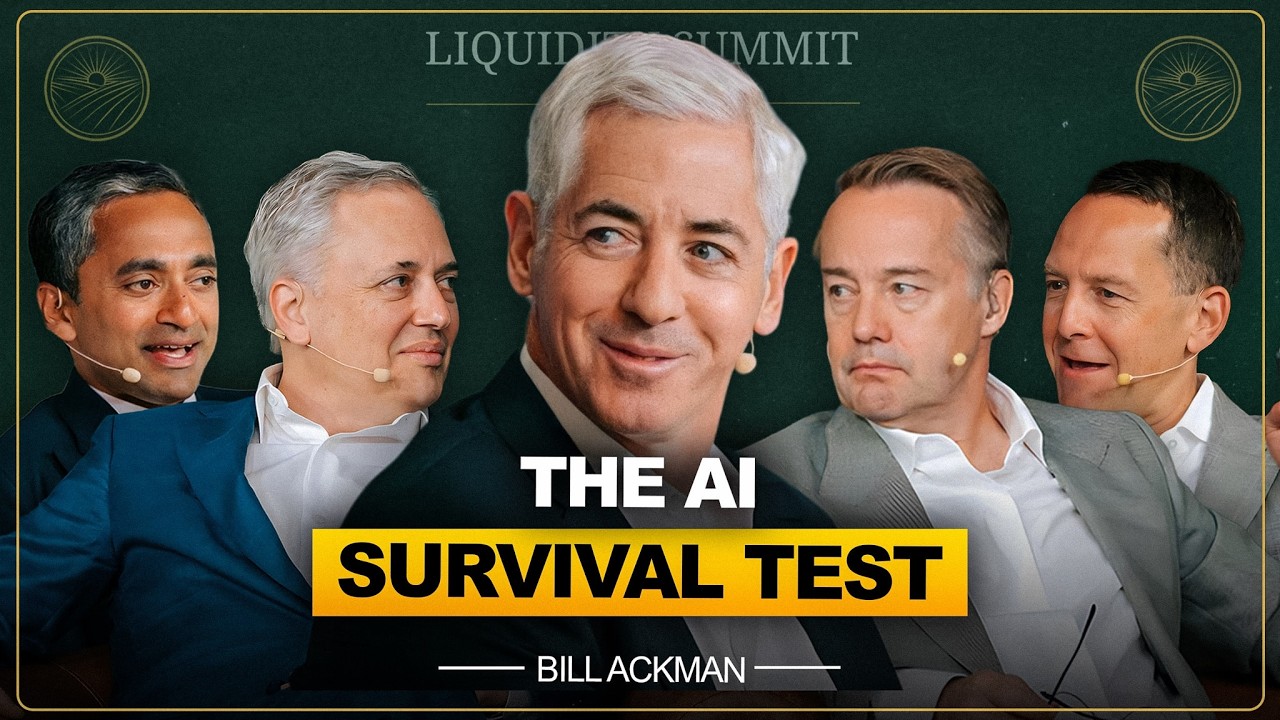
  • Bill Ackman on Investment Strategy, What the Market Is Missing, and How AI Breaks Businesses

    Bill Ackman, founder and CEO of Pershing Square, joined the All-In Podcast for a conversation about how his investment approach has shifted toward permanent, long-term ownership, why he believes the highest-quality companies are being left behind by a market chasing the new new thing, and how AI is raising the risk of disruption for almost every business. He also lays out his plan to turn Howard Hughes into a Berkshire Hathaway-style compounding machine built on insurance. You can watch the full conversation here. Below is a structured breakdown of the ideas, the stories, and the frameworks he uses to underwrite a business.

    TLDW

    Ackman explains how his philosophy evolved from a smaller, more liquid activist toward concentrated, permanent ownership of durable, non-disruptible businesses, with much of his activism now playing out on X rather than in the boardroom. He tells the origin story of his first big trade, Wendy’s and the Tim Hortons spin-off, and explains why a large long-term shareholder on a board is an antidote to short-term markets. On AI, he argues that this is the greatest era in history to build a company, which means the risk of being disrupted has gone up enormously, and that the market is mispricing high-quality compounders like Microsoft, Meta, and Amazon while crowding into chips, semiconductors, and energy. He works through the SaaS question and why niche software is more at risk than platforms, how he underwrites SpaceX, xAI, OpenAI, Anthropic, and Palantir like late-stage venture bets using a people, opportunity, context, deal framework, and why founder-led companies have an edge in making radical calls. The back half covers his Howard Hughes plan to copy Buffett’s insurance-float model, the role of cost of capital and reflexivity in markets, the meme-stock era, going direct on social media, and the three different ways an investor can put money to work with Pershing Square.

    Thoughts

    The most useful idea in the interview is the way Ackman reframes disruption as the central investing problem of the AI era. His point is that the same forces making this the best time in history to start a company, meaning near-unlimited compute, capital, and talent, also raise the odds that any given incumbent gets disrupted. That reframes the word quality. It is no longer mostly about margins and moats. It becomes about non-disruptibility, which is a much higher bar than most quality investors were using a decade ago, and it is why he says most of his research time now goes into assessing that single risk.

    The what-the-market-is-missing thesis is classic contrarian Ackman. Arguing that Microsoft, Meta, and Amazon are the new old-fashioned, undervalued names while capital piles into semiconductors and energy is a direct echo of 2000, when Berkshire Hathaway bottomed precisely because money was chasing internet stocks. It is worth keeping in mind that he owns all three, so the call is also his book. The durable signal here is the framework, not the specific tickers: capital reliably chases the new new thing, and genuinely high-quality businesses get left behind during those rotations.

    The Howard Hughes plan is the most concrete bet in the conversation. Copying Buffett’s insurance-float playbook, short-term treasuries for policyholder money and equities for the surplus, onto a discounted real-estate holding company is elegant. The hard part is exactly what Ackman flags about insurance as an industry: the best investors go to hedge funds, not insurers, so most insurance companies only ever manage the liability side well. Pershing Square’s edge is that Ackman can both write the business and invest the float, which is the same reason it worked for Buffett. The framing of going from a four billion dollar company to a trillion over fifty years is a statement of intent, not a forecast, and should be read that way.

    Underneath all of it sits cost of capital and reflexivity. His observation that a higher stock price literally makes a company more valuable, because it lowers the cost of capital and creates acquisition currency, is the mechanism behind both Elon Musk’s empire and the meme-stock era he is wary of. Going direct on X is the same lever pointed at himself: communicate the vision, lower your own cost of capital, and make the bet easier for other people to place. It is a coherent worldview in which narrative and balance sheet continuously feed each other, and it explains a lot of his behavior over the last few years.

    Key Takeaways

    • The biggest change in Ackman’s approach over time is an appreciation for business quality, meaning long-term, durable, protected, non-disruptible growth as the most important factor.
    • He says he is as activist as ever, but more of it now happens on X than in the traditional corporate context.
    • His first big investment was Wendy’s, which owned Tim Hortons. The simple thesis was to buy Wendy’s, spin off Tim Hortons, and double the money.
    • Early on no one returned his calls, so he had Steve Schwarzman’s Blackstone write a fairness opinion, filed it publicly, and the company spun off Tim Hortons six weeks later. The CEO later thanked him after being fired with a large exit package.
    • Reputation compounds. Where Pershing Square once had to bang down the door, companies now sometimes tweet a welcome when it buys a stake.
    • A large long-term shareholder on a board is a counterweight to short-term markets, letting management test ideas privately and pursue initiatives that hurt the next few quarters of earnings.
    • Pershing Square owns Microsoft, Meta, and Amazon. Ackman argues you are either invested in AI directly or indirectly, or it is a threat, so you have to understand it.
    • The hardest and most important job for a concentrated investor is judging the risk of disruption, and that risk has risen dramatically.
    • This is the greatest era in history to build a business because of near-unlimited access to compute, capital, and talent, which is exactly why the probability of being disrupted has gone up enormously.
    • Markets bring their eye to the new new thing, currently chips, semiconductors, and energy, while high-quality companies get left behind.
    • He draws an analogy to 2000, when Berkshire Hathaway traded at one of its lowest valuations because everyone chased internet stocks. He sees a similar dynamic around Amazon, Meta, and Microsoft today.
    • On the SaaS question, he worries more about a Salesforce than a platform like Microsoft, because niche software charging high per-seat or per-year prices is most exposed, while low-priced platforms are safer.
    • Any software company today has to be as AI-enabled as possible, or risk losing the monopolistic pricing it once enjoyed.
    • His famous March 2020 CNBC appearance was an attempt to reach President Trump and argue for a short shutdown, paired with the view that stocks were incredibly cheap and worth buying.
    • He describes valuation as a tether on the market: when prices stretch too high they snap back, and when they get too cheap the same rubber band pulls valuations up. Calling that out publicly can trigger a psychological reset.
    • His recent bullish call came because stocks of really high-quality companies had gotten crazy cheap on fundamentals, meaning the present value of the cash they generate.
    • He underwrites high-multiple names like SpaceX as venture investments using a framework from business school: people, opportunity, context, deal.
    • On SpaceX, people and opportunity are one of one, the context is incredible, and Starlink plus near-monopoly low-cost launch make it strategically valuable. The complicated part is the deal, meaning the valuation. He invested via an SPV after Ron Baron’s nudge, and also invested in xAI.
    • He treats OpenAI, Anthropic, and Palantir as late-stage venture bets that have proven they can generate real revenue, and says OpenAI should do a better job communicating how it thinks about its enormous capital commitments.
    • Every CEO in America is asking how to use AI, how it applies to their business, and how it is a threat. It is top of mind and boards open every meeting with it.
    • He has not seen much enterprise AI success yet, citing a McKinsey study that 95 percent of enterprise initiatives fail and the rise of the forward deployed engineer as the hot role bridging promise and ROI. Pershing Square itself uses AI mainly for legal, compliance, and back-office work.
    • Founder-led companies have an advantage because founders have the authority and the economic stake to make radical calls, while the average S&P 500 CEO has a roughly three to four year tenure and is incentivized not to make mistakes.
    • He cites Mark Zuckerberg buying Instagram and WhatsApp as the kind of shocking-at-the-time calls that a founder with a track record can make.
    • Ben Graham’s enduring lesson is that a stock is an interest in a business, not a piece of paper, but Graham mostly invested in liquidations and cash-rich shells, and made most of his money on Geico.
    • Most of Buffett’s value at Berkshire came from owning insurance operations and focusing on the asset side of the balance sheet, not just the liability side.
    • Insurance is hard to copy because top investors do not go to work for insurers. Buffett owned half his company and was a great investor, which is why it worked.
    • Howard Hughes came out of the General Growth bankruptcy and owns master-planned cities like Summerlin, with 26,000 acres in the Las Vegas area, comparable to the Irvine Company that built roughly a hundred billion dollars of wealth for Donald Bren.
    • The plan is to reinvest the cash Howard Hughes generates into insurance, put policyholder float in short-term treasuries and the surplus in common stocks, and build a compounding machine over fifty years, buying it at roughly sixty cents on the dollar.
    • A company must earn a return above its cost of capital for the stock to rise. Elon Musk has kept his companies’ cost of capital extremely low, and a SpaceX IPO near a 1.75 trillion dollar valuation could be one of the lowest cost of equity capital transactions ever.
    • Markets have changed less because of Ackman and more because of figures like Ryan Cohen and GameStop, where a stock can trade well above its value on personality and an army of followers.
    • Higher valuations are reflexive: a rising stock price lowers cost of capital and creates currency to issue stock and acquire businesses, which is part of how Elon built Tesla.
    • There are three ways to invest with Pershing Square: the management company itself (a royalty on compounding assets with no capex), PSUS (a portfolio of best ideas trading at an 18 percent discount), and Howard Hughes (a bet on building the next Berkshire). A dollar invested 22 years ago became roughly 27 to 28 times net of fees.
    • Going direct on X, with 2.2 million followers, lets him communicate his vision and lower the friction for others to back his bets, even as his very long tweets have become a running meme.

    Detailed Summary

    From activist trades to permanent capital

    Ackman frames the evolution of his career as a steady move toward business quality. As a smaller, more liquid investor early on, he did not have to think as long-term. As Pershing Square became a bigger, more concentrated investor, durable growth became the dominant factor in every decision. He insists he is still as activist as ever, but a lot of that energy has shifted to X, where he can argue a position publicly rather than only inside a boardroom. The best investments, he notes, are the ones where you do not need to join the board and do anything at all.

    The Wendy’s and Tim Hortons origin story

    One of Pershing Square’s first investments was Wendy’s, which owned the Canadian coffee and donut chain Tim Hortons. The value of Tim Hortons alone was greater than the entire value of Wendy’s, so the idea was simple: buy Wendy’s, spin off Tim Hortons, and double the money. Ackman bought ten percent of the company and could not get the CEO to return a single call, so he had a contact at Blackstone, with Steve Schwarzman’s sign-off, write a fairness opinion on what Wendy’s would be worth after a spin-off, filed it publicly, and watched the spin-off happen six weeks later. The CEO eventually called back to thank him, having been fired but rewarded with a large exit package. Over the years that scrappy approach gave way to a reputation that now opens doors on its own.

    Why a long-term shareholder on the board matters

    The core problem of being a public company, in Ackman’s telling, is the short-term nature of markets and analysts, when a good business should be run in the context of years and even decades. A large, supportive shareholder on the board gives management a place to test ideas before exposing them to the public and a credible voice willing to back initiatives that hurt earnings for a few quarters. That is the value-add he believes a constructive activist can bring to a mature public company, as opposed to a startup where the best outcome is simply to own a great business and stay out of the way.

    AI and the rising risk of disruption

    For a concentrated, long-term investor, the most challenging task is judging the risk that two people from Stanford in a garage build something that destroys your thesis. Ackman argues that risk has climbed dramatically because this is the greatest era in history to build a company, with near-unlimited access to compute, capital, and talent. The paradox is that the conditions that make building easier also make incumbents more fragile, so the bulk of his research now centers on assessing how disruptible a business really is.

    What the market is missing

    Investors bring their attention to the new new thing, currently chips, semiconductors, and energy, which leaves high-quality companies behind. Ackman compares the moment to 2000, when Berkshire Hathaway traded at one of its lowest valuations ever because capital was chasing internet stocks. He sees an echo today in how Amazon, Meta, and Microsoft are treated as old-fashioned, and he considers them undervalued on fundamentals, where value is the present value of the cash a business generates over its life. His recent bullish call, like his March 2020 appearance, came because stocks of really high-quality companies had simply gotten too cheap.

    The SaaS question and AI-enabled software

    On the so-called SaaS apocalypse, Ackman says it is a company-by-company analysis. He worries more about something like Salesforce than about a low-priced platform. The companies most at risk are those that extracted near-monopolistic profits by charging a high annual price for a niche product, because AI lowers the barrier to replicating that functionality. A platform where the average customer pays a small amount per seat, like Microsoft, is far less exposed. The takeaway for any software company is to become as AI-enabled as it possibly can.

    Underwriting SpaceX, xAI, and the AI labs like venture

    For the highest-multiple private companies, Ackman uses a venture lens and a framework a business school professor taught him: people, opportunity, context, deal. SpaceX scores as one of one on people and opportunity, with an incredible context and a near-monopoly in low-cost launch through Starlink, which makes even Amazon a likely customer. The complicated variable is the deal, meaning the valuation, and he admits he has not done all the math, having invested through an SPV after Ron Baron encouraged him, along with a position in xAI. He treats OpenAI, Anthropic, and Palantir as late-stage venture bets that have proven real revenue, and argues OpenAI in particular should communicate more clearly how it justifies capital commitments that vastly exceed current revenue.

    Founder-led companies and the authority to act

    Ackman agrees that founder-led companies have a structural advantage in a fast-changing environment. The average S&P 500 CEO has a tenure of roughly three to four years, a small economic stake, and an incentive not to make a career-ending mistake. A founder is betting an entire life and reputation, has the authority of a major voting and economic position, and has usually made several hard, contrarian calls that turned out right. He points to Mark Zuckerberg’s acquisitions of Instagram and WhatsApp, which looked shocking at the time, as exactly the kind of decision a founder with a track record can make and a hired manager often cannot.

    Howard Hughes as Berkshire Hathaway 2.0

    Ackman points to a detailed financial history of Berkshire Hathaway showing that the vast majority of Buffett’s value creation came from owning insurance and focusing on the asset side of the balance sheet, not just the liability side. Insurance is hard to replicate because skilled investors join hedge funds rather than insurers, but Buffett owned half his company and was a great investor. Pershing Square is applying the same idea to Howard Hughes, a company created out of the General Growth bankruptcy that owns master-planned cities such as Summerlin, with 26,000 acres around Las Vegas, in the spirit of the Irvine Company that made Donald Bren roughly a hundred billion dollars. The plan is to reinvest the company’s cash into insurance, place policyholder float in short-term treasuries and the surplus in common stocks, avoid issuing stock the way Buffett did, and compound for fifty years, all bought at around sixty cents on the dollar.

    Cost of capital, reflexivity, and going direct

    A company only creates value when it earns above its cost of capital, which is why Howard Hughes, seen as a high-cost-of-capital real-estate business, has long traded at a discount, and why Ackman is repurposing its assets into a higher-returning model. He highlights how reflexive markets are: a higher stock price itself makes a company more valuable by lowering its cost of capital and creating currency to raise money and acquire businesses, a lever Elon Musk used to build Tesla. He attributes real market change less to himself and more to figures like Ryan Cohen and GameStop, where personality and a following can lift a stock far above its value. His own going-direct strategy on X, with 2.2 million followers and famously long posts, is the same mechanism applied to communicating a vision and lowering friction for investors. He closes by laying out three ways to invest with Pershing Square: the management company as a royalty on compounding assets, the PSUS portfolio trading at an 18 percent discount, and Howard Hughes as a bet on building the next Berkshire.

    Notable Quotes

    “The best investments are one where you don’t need to join the board and do anything.”

    Bill Ackman, on the kind of business he most wants to own

    “The probability of your being disrupted has gone up enormously.”

    Bill Ackman, on why assessing disruption risk now dominates his research

    “Valuation is like a tether on the market, right? When it gets too high, it’s like this rubber band that’s stretching and inevitably it bounces back.”

    Bill Ackman, on how prices revert at both extremes

    “People, opportunity, context, deal.”

    Bill Ackman, on the business school framework he uses to underwrite companies like SpaceX

    “Every CEO in America today is like, how do I use AI?”

    Bill Ackman, on AI as the top opportunity and threat in every boardroom

    “A closed mouth gathers no foot.”

    Bill Ackman, quoting the line a friend put next to his name in his high school yearbook

    “The increase in value of the company increases the value of the company, right? Because it lowers the cost of capital, it gives you more flexibility, gives you the ability to issue stock, raise capital, acquire other businesses.”

    Bill Ackman, on the reflexivity between stock price and corporate value

    “The company’s got like a $4 billion market cap and the goal is to build it into a trillion dollar thing over time compounding.”

    Bill Ackman, on his fifty-year plan for Howard Hughes

    Taken together, the conversation is a tour of how Ackman now thinks about quality, disruption, and compounding, and a preview of the Berkshire-style machine he wants to build out of Howard Hughes. Watch the full conversation here.

    Related Reading

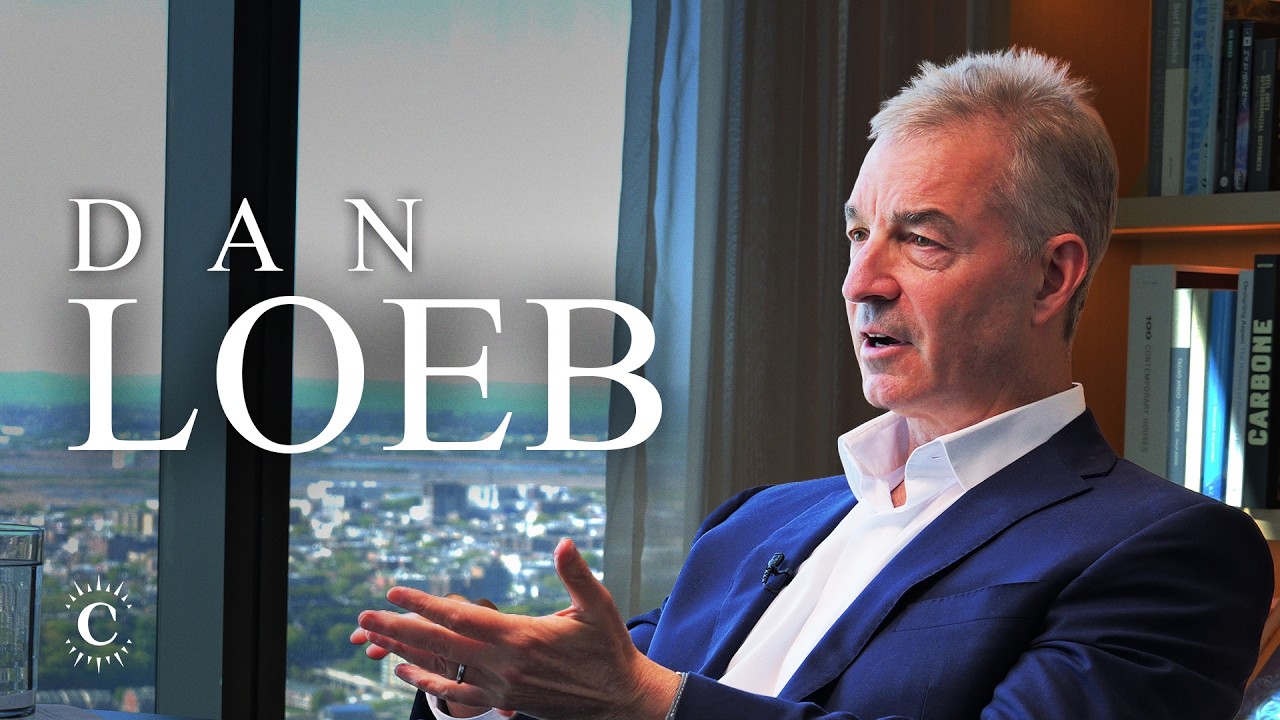
  • Dan Loeb on Building Third Point’s $25 Billion Investment Empire: AI, Activism, Credit, and the FTX Mistake

    Dan Loeb has spent three decades turning a $3 million fund into Third Point, a roughly $25 billion collection of hedge fund, credit, insurance, and venture businesses. In this Invest Like the Best conversation with Patrick O’Shaughnessy, Loeb walks through how he reinvented his strategy from deep value and event-driven trades into quality and thematic investing, why he now believes every serious investor has to be a technology investor, how he reads the AI cycle and the semiconductor melt-up, where activism and corporate governance still pay, and the single mistake that taught him the most. It is a rare, unhurried look at how a famously sharp-elbowed activist actually thinks about markets, businesses, and people.

    TLDW

    Loeb covers an enormous amount of ground: his daily process for staying ahead of the information firehose, Jensen Huang’s AI stack as a mental model, and why Nvidia, Anthropic, and Elon Musk’s companies are the three most consequential firms he tracks. He traces Third Point’s roots in credit and event-driven investing at Jefferies, the influence of Joel Greenblatt’s “You Can Be a Stock Market Genius,” and his later pivot to quality investing shaped by “The Outsiders” and Lawrence Cunningham’s “Quality Investing.” He argues the AI rally is not a dot-com-style valuation bubble because the leaders generate enormous cash, explains why human judgment and structural market quirks still create alpha, and makes the case that AI will never fully run a capital system. He digs into corporate governance and his father’s influence, the Sotheby’s and Sony activism campaigns, the hard reality of activism in Japan, and what investing in Danaher’s operating system taught him. He names FTX as his hardest lesson, breaks down Third Point’s evolution into a 60-percent-credit platform spanning CLOs, structured credit, reinsurance and annuities, describes how he is pushing his analysts to use AI and Claude daily, and closes on kindness and the friend who let him sleep on a couch before he made it.

    Thoughts

    The most striking thing about Loeb is that he treats his own strategy as a thing to be disrupted rather than defended. He built his reputation on Greenblatt-style special situations, spin-offs, demutualizations, and post-reorg equities bought cheap because of forced selling and sandbagged guidance. Most investors who win that way spend the rest of their careers protecting the formula. Loeb instead watched the people who stayed rigid about deep value and low multiples underperform or disappear, and deliberately retrained himself and his team around business quality and thematic conviction. The willingness to abandon a winning identity is the actual edge here, more than any single trade. It is the rare investor who can say his current strategy would not fit cleanly on a PowerPoint deck and treat that as a feature.

    His AI framing deserves attention because it is unfashionably calm. The bear case on AI is usually about valuation, and Loeb dismantles it on the leaders’ own numbers: these are companies investing off their balance sheets, generating enormous cash, trading at multiples that do not resemble 1999. He was short the dot-com bubble, so he is not a permabull cheering from the sidelines. His real point is subtler, that the danger is expectations, not valuations. The semiconductor index ran up 40 percent on genuinely strong fundamentals, but Micron and Nvidia both put up monster quarters and saw their stocks fall because expectations had simply outrun even great results. That gap between fundamentals and price is where he thinks the human investor still earns a living, precisely because quant strategies, CTAs, and risk-managed pods are forced to sell into weakness rather than buy it.

    The governance material is the most quietly radical part of the conversation. Loeb defends shareholder primacy against the Business Roundtable’s softer stakeholder language, but his argument is not the cartoon version where shareholder value means strip-mining a company. It is that boards have one job, accountability for capital allocation and management, and that vague multi-stakeholder mandates become an excuse for directors to avoid the hard work. His read on bad governance is almost always relational: directors who let loyalty to an underperforming CEO override their duty, or who sit on boards for status and income. The Sotheby’s story is the clean illustration, a centuries-old, high-status business run unprofitably because nobody treated it like a business. Loeb’s pattern is to find the gap between claimed status and actual performance and to raise the social cost of coasting.

    What is genuinely new in Loeb’s posture is how he talks about AI inside his own firm. He is not pitching it as a moat or a headcount-reduction story. He frames Claude and AI tools as a way to make each person a more autonomous self-improver, something that gives back whatever you put into it, with some analysts running agents overnight and burning tokens while he personally uses it more for queries. Coming from a 30-year fundamental investor, the absence of defensiveness is the signal. He pairs it with Brad Gerstner’s nod to “Essentialism”: the firehose is now infinite, so the scarce skill is deciding what is actually relevant. That is a more honest answer to the AI question than either doom or hype.

    Finally, the FTX confession is worth sitting with because of how he frames it. He does not retreat into cynicism about venture or crypto. He notes that Sam Bankman-Fried, fraud aside, had a real nose for value, with stakes in Anthropic, Cursor, and Solana that would have made him a top venture investor of the era. The lesson Loeb extracts is procedural, not philosophical: their due diligence now includes checking bank balances, the most basic verification that would have surfaced the problem. It is a useful reminder that even sophisticated capital can skip boring fundamentals when a company is growing fast and the cap table looks good. The discipline is not in having a grand theory of fraud, it is in never skipping the unglamorous checks.

    Key Takeaways

    • Loeb’s macro focus right now collapses to two variables: where oil goes, dictated by war and geopolitics, and what AI does on the spending and infrastructure front and its impact on society and the economy.
    • He argues you can no longer punt on technology and focus on industrials or consumer; tech is a big, growing, compounding part of the economy that affects everything else, so every investor has to become a tech investor.
    • He uses Jensen Huang’s AI stack as a mental model: power and energy at the bottom, then chips and infrastructure, up through large language models, software, and applications.
    • The three most consequential companies he tracks are Nvidia, Anthropic, and Elon Musk’s companies collectively.
    • Third Point’s roots are in credit and event-driven investing, shaped by his time at Jefferies watching investors like David Tepper before he founded Appaloosa, Eric Mindich at Goldman, and firms like Angelo Gordon and Farallon.
    • Joel Greenblatt’s “You Can Be a Stock Market Genius” was his foundational framework: spin-offs, demutualizations, privatizations, and post-reorg equities where a new, illiquid security gets dumped by holders who will not do the work.
    • Spin-off managers often sandbag guidance because their incentive packages get set at the time of the spin-off, creating a predictable gap between conservative numbers and real value.
    • From 1995 to roughly 2013-2015, event-driven special situations were Third Point’s bread and butter; those opportunities still exist, but the real edge now is overlaying them with a business-quality lens.
    • The pivot to quality and thematic investing was influenced most by “The Outsiders” (capital allocation plus great operations) and Lawrence Cunningham’s “Quality Investing” (high-moat, high-return-on-capital businesses to own for years).
    • AI disruption made last year one of the worst for many apparently high-quality companies, as businesses that looked durable rapidly became less so.
    • Loeb sees the AI rally as fundamentally different from the dot-com bubble: the leaders invest off their balance sheets, generate enormous cash, and do not carry the valuation excess of 1999.
    • The danger in semis is expectations, not valuation: Nvidia and Micron posted spectacular quarters yet saw stocks fall because expectations had outrun even great numbers.
    • Structural forces still create alpha for fundamental investors: quants, CTAs, and multi-strategy pods have risk metrics that force selling on the way down, the opposite of what is rational for long-term holders.
    • He believes AI will not fully run a capital system; private equity, restructurings, creditor committees, and high-touch negotiation will always need humans.
    • His interest in governance came from his father, a securities lawyer and corporate governance expert who sat on the boards of Mattel and Williams-Sonoma and pushed ethical sourcing ahead of his time.
    • Loeb defends shareholder primacy, citing Milton Friedman and Warren Buffett, and criticizes the Business Roundtable’s move away from shareholder value as a distraction from the board’s real duty.
    • Bad governance usually comes from directors letting loyalty to a weak CEO override fiduciary duty, lacking the knowledge to do the job, or serving for status and income.
    • Writing is a core activism lever: great writing is clear thinking, and social pressure through writing and PR is one of the most effective ways to move a board, alongside financial and legal levers.
    • The Sotheby’s campaign targeted a high-status, centuries-old business run unprofitably; Third Point bought 9.9 percent, eventually brought in Tad Smith from MSG, who cleaned up operations and technology before the company sold.
    • Third Point increasingly prefers to back great companies with excellent management and cheer them on rather than hunt for mismanaged businesses, because bad management tends to cluster into a morass.
    • Third Point is a collection of businesses; the flagship hedge fund grew from $3 million to about $9 billion and is roughly 30 percent credit, with the broader firm closer to 60 percent credit.
    • The firm spans a roughly $7 billion CLO business, structured and corporate credit, an insurance company, asbestos liabilities, a small private credit unit, and a venture capital arm.
    • The unifying thread is valuing enterprises across early, mid, and mature stages and investing in whichever fulcrum security offers the best risk-reward, from equity to senior debt.
    • Loeb cites buying Twitter’s financing debt near 96-97 cents at a 12 percent yield when most credit investors were scared, and a difficult xAI debt financing, as examples of cross-discipline conviction.
    • He is the portfolio manager only of the hedge fund; the credit, CLO, structured credit, and high-yield businesses have their own PMs and investment committees he does not sit on.
    • The Sony campaign saw Third Point own up to 7 percent and push to separate the conglomerate; management resisted for years before spinning out the semiconductor and financial services businesses.
    • He learned that activism in Japan is hard, but the government often wants reform; he co-wrote a paper with Larry Lindsey and Niall Ferguson urging corporate governance and return on invested capital as a fourth arrow of Abenomics, picked up as a Wall Street Journal editorial.
    • Investing in Danaher was his most instructive experience, teaching him how the Danaher Business System drives continuous improvement (Kaizen) and how the company celebrates rather than shames underperformance because problems are fixable.
    • FTX was his hardest lesson; it looked great and was verifiable on the blockchain, but was not what it appeared, and now Third Point’s diligence includes checking bank balances.
    • He notes that, fraud aside, Sam Bankman-Fried had a strong nose for value with stakes in Anthropic, Cursor, and Solana.
    • Recent mistakes also include shorts where Third Point thought certain info-services businesses would resist AI disruption; he still expects a shakeout with some phoenixes rising from the ashes.
    • He is pushing his whole team to use AI daily, hiring native computer scientists and system integrators, and describes Claude as a tool that makes you autonomous and gives back whatever you put into it.
    • Third Point’s distinctive edge is optimism about AI creating net jobs and the ability to default into credit investing during stressed times, as it did with investment-grade credit in 2020.
    • Credit is hard to copy because it runs on relationships, not electronic trading; that is why Third Point built into CLOs and eyes the roughly $6 trillion structured credit market rather than treating it as tourism.
    • The great analyst has changed: 20 years ago it was someone who could model fast and crack a complex restructuring (Loeb made a career-defining bet on Drexel Burnham claims); today it is a Gavin Baker type who deeply understands an industry, like the analyst who flew to Texas and realized Casey’s General Stores was really a pizza chain.
    • Outside the US, Loeb is more bullish on Korea, Taiwan, and Japan as hunting grounds, finds Europe tough on regulation (though he owns Rolls-Royce and ASML), and finds the Middle East the most vibrant region.
    • What worries him most is not the business but running out of time for family, surfing, and reading; what excites him is incorporating everything relevant about the world and forming relationships with people building interesting things.
    • His closing reflection is on kindness as a top-tier value, and the friend, Carter, who let him sleep on a couch and seeded his early fund, echoing a Palmer Luckey line that money cannot buy friends who believed in you when you had nothing.

    Detailed Summary

    Staying ahead of the firehose and reading the macro

    Loeb opens by admitting he does not have a perfectly organized system for processing the modern flood of information. He checks the news for what is relevant to the economy and to Third Point’s positions, tries not to obsess over minute-to-minute moves, and leans more tactical than strategic. When people ask him about macro, he says the usual government-reported metrics (growth, unemployment, inflation, rates, currencies, gold, crypto) are trumped right now by two things: where oil goes, which depends on war and geopolitics, and what AI does on the spending and infrastructure side and its impact on society and the economy. To understand technology, he leans on Jensen Huang’s framing of the AI stack and talks to smart people regularly, and he watches three companies above all: Nvidia, Anthropic, and Elon Musk’s companies as a group.

    From event-driven roots to quality investing

    Third Point’s DNA comes from Loeb’s time as a credit investor at Jefferies, where he watched some of the best distressed, event-driven, and risk-arbitrage investors operate, from David Tepper to Eric Mindich to firms like Angelo Gordon and Farallon. His first lens was event-driven: spin-offs, demutualizations, privatizations, and post-reorg equities, where a newly created and illiquid security gets dumped by holders who will not do the work, and management sandbags guidance because incentive packages are set at the spin date. He barely thought about moats or returns on capital; he just wanted to buy something genuinely cheap with those characteristics. That was the firm’s bread and butter from 1995 until roughly 2013-2015. Those opportunities still exist, but Loeb describes deliberately evolving toward business quality and thematic investing, influenced by “The Outsiders” on capital allocation and Lawrence Cunningham’s “Quality Investing” on durable, high-return businesses. He organized the team around industry experts rather than generalists. The twist: AI disruption recently turned many apparently high-quality companies into much lower-quality ones, fast.

    The AI cycle, bubbles, and the human edge

    Loeb resists the bubble narrative. He was short the dot-com bubble and remembers the valuation excess; today’s AI leaders, by contrast, invest off their balance sheets and generate enormous cash, so unless you believe the capex yields no return, the earnings and multiples do not look like 1999. The real driver of volatility, he argues, is expectations: the semiconductor index ran up 40 percent on strong fundamentals, but Nvidia and Micron both delivered blowout quarters and still saw their stocks fall because expectations had run too high. That dynamic is exactly where a fundamental investor earns a living, because quants, CTAs, and risk-managed pods are structurally forced to sell into weakness. He also doubts AI will ever fully run a capital system, since private equity, restructurings, creditor committees, and high-touch credit always need humans. He cites “Reminiscences of a Stock Operator” and Ecclesiastes: there is nothing new under the sun, and human nature, with its bubbles, panics, and extremes, does not change.

    Governance, his father, and the duty of boards

    Loeb traces his governance interest to his father, a securities lawyer and corporate-governance expert who served on the boards of Mattel and Williams-Sonoma and championed ethical sourcing before it was common. He calls the American board system beautiful: directors are answerable to shareholders and accountable for strategy and key financial decisions. Governance breaks down when directors lose sight of their fiduciary duty, lack the knowledge or talent diversity to do the job, or prioritize things other than shareholders. He invokes Milton Friedman and Warren Buffett to argue that caring about communities, employees, and conduct is not inconsistent with shareholder value but part of it, and criticizes the Business Roundtable for muddying the board’s core duty. The most common failure he sees is directors letting loyalty to an underperforming CEO override their duty. Most of the time Third Point redirects existing boards without even taking a seat; the extreme proxy fights are the exception.

    Activism, writing, Sotheby’s, and Sony

    Great writing, Loeb says, is clear thinking and organizing your thoughts to get a desired outcome, and it is one of activism’s most effective levers alongside financial and legal pressure. Social pressure through writing and PR can move a board on its own. He sees a pattern in his campaigns: targets that hold themselves out as high status but are not living up to it. Sotheby’s is the clean example, a centuries-old, high-status business run unprofitably, where Third Point bought 9.9 percent, gave the existing CEO a year, then helped install Tad Smith from MSG, who modernized operations and technology before the company was sold. Sony was a two-act campaign in which Third Point owned up to 7 percent and pushed to break up the conglomerate; he recounts sharing the thesis with Andrew Ross Sorkin at the New York Times under embargo, the panic it caused, and how management resisted for years before spinning out the semiconductor and financial services units. The lesson: activism in Japan is genuinely hard, even though the government wanted reform. He co-authored a paper with Larry Lindsey and Niall Ferguson arguing corporate governance and return on invested capital should be a fourth arrow of Abenomics, which ran as a Wall Street Journal editorial.

    The Danaher operating system

    Loeb calls Danaher his most instructive investment. He and his partner persuaded the company to compress its five-day Danaher Business System training into a single day, and he came away with a deep appreciation for how a real operating system drives continuous improvement. The standout lesson was cultural: Danaher holds people individually accountable, but when it finds someone underperforming it celebrates rather than shames, because the problems are addressable and fixable, and it does this relentlessly across operations and working capital. He also points to the diaspora of Danaher executives, including Larry Culp and the leadership at Ingersoll Rand, as evidence of the system’s depth. The investment worked for about four years before COVID-era order surges and inventory swings turned tailwinds into headwinds; Third Point sold and has recently bought back in modestly.

    The structure of Third Point and the fulcrum security

    Third Point is not one fund but a collection of businesses. The flagship hedge fund grew from $3 million to about $9 billion and is roughly 30 percent credit, generically around 110 percent long and 30-40 percent short on the equity side. Across the firm the credit weight is closer to 60 percent, spanning a roughly $7 billion CLO business, several billion in structured and corporate credit, an insurance company, a couple billion in asbestos liabilities, a small new private credit unit, and a venture arm. The unifying thread is valuing enterprises at any stage and investing in whichever fulcrum security (the one with the best risk-reward) makes sense. Loeb illustrates with Credit Suisse’s takeover by UBS, where the holdco paper proved the fulcrum, and with buying Twitter’s resold financing debt near 96-97 cents at a 12 percent yield when other credit investors were scared, plus a difficult xAI debt financing that few credit people wanted. He pushes back on the idea that he sits atop everything: he is the PM only of the hedge fund, while the other businesses have their own PMs and committees he is not on.

    Insurance, the FTX lesson, and recent mistakes

    Loeb started a Bermuda reinsurance company in 2010, backed by himself, Kelso, and Pinebrook, on a barbell thesis of investing the float in Third Point and treasuries to defer taxes and lever capital. The reinsurance side soured, and about three years ago he concluded they had the right idea but the wrong vehicle, that plain-vanilla annuities (which can only invest in credit) would have fit better. Third Point merged the reinsurer into its UK closed-end fund, Third Point Offshore Investors, reincorporated from Guernsey to Cayman, and repurposed it into an insurance company managing private credit, structured credit, whole-loan mortgages, real estate lending, and investment-grade debt. His hardest lesson was FTX: it looked great, was verifiable on the blockchain, and had a strong cap table, but was not what it seemed; diligence now includes checking bank balances. He notes Sam Bankman-Fried, fraud aside, had a great nose for value (Anthropic, Cursor, Solana). Other recent mistakes were shorts where Third Point bet certain info-services businesses would resist AI disruption; he still expects a shakeout with some survivors rising from the ashes.

    AI inside the firm, the analyst of the future, and kindness

    Loeb is pushing his entire team to use AI daily, hiring native computer scientists and system integrators, and describes Claude as a tool that makes you an autonomous self-improver and gives back whatever you put into it, with some analysts running agents overnight while he uses it more for queries. He pairs this with Brad Gerstner’s recommendation of “Essentialism”: you cannot do it all, so you must decide what is most relevant. The great analyst has changed: 20 years ago it was someone who could model fast and crack a complex restructuring, as Loeb did with the Drexel Burnham bankruptcy claims early in his career; today it is a Gavin Baker type who deeply understands an industry and its technology, like the analyst who flew to Texas and realized Casey’s General Stores was really a pizza chain in disguise. On the rest of the world, he is more bullish on Korea, Taiwan, and Japan, finds Europe tough on regulation (while owning Rolls-Royce and ASML), and finds the Middle East the most vibrant region. He closes on what worries and excites him (time with family, surfing, and reading versus the joy of incorporating everything relevant about the world), and on kindness, crediting his friend Carter, who let him sleep on a couch and seeded his early fund, and echoing Palmer Luckey’s line that money cannot buy friends who believed in you when you had nothing.

    Notable Quotes

    “I think you have to be a tech person today. It’s a big and growing and compounding part of the economy. It affects everything else.”

    Dan Loeb, on why no serious investor can punt on technology anymore

    “Hold on to your seats because things are only going to accelerate from here.”

    Dan Loeb, recounting a 2013 Davos warning about technological change he now applies to AI

    “Maybe that’s where the human element comes in, to understand and to be able to make those tough trading decisions when fundamentals are going one way and stock prices are going the other way, and to be able to take the pain of losses in the short run.”

    Dan Loeb, on where a human investor still has an edge over machines

    “It’s very different from the dot-com bubble, which we were short going into. You don’t have the valuation bubble now on those companies that you had back in those days.”

    Dan Loeb, on why he does not see the AI rally as a 1999-style bubble

    “When they found someone that was underperforming, it was celebrated instead of shamed, because look at all these things you’re doing wrong, we can fix those. And they did.”

    Dan Loeb, on the accountability culture he learned from the Danaher Business System

    “I would have to say our investment in FTX. It looked great. The company was growing fast. We could verify it all on the blockchain.”

    Dan Loeb, naming his hardest investment lesson

    “Be kind to people you have no idea how it will ever benefit you. And sometimes it will and sometimes it won’t.”

    Dan Loeb, on elevating kindness in your hierarchy of values

    “The one thing money doesn’t buy you is friends that believed in you when you had nothing.”

    Dan Loeb, quoting Gavin Baker quoting Palmer Luckey, on the friend who seeded his early fund

    Watch the full conversation between Dan Loeb and Patrick O’Shaughnessy here.

    Related Reading

  • Inside X with Nikita Bier: Viral Growth, Elon Musk, and “Doing the Hard Thing”

    In a recent episode of the Out of Office podcast, Lightspeed partner Michael Mignano sat down with Nikita Bier, the Head of Product at X (formerly Twitter). Filmed in Bier’s hometown of Redondo Beach, California, the interview offers a rare, candid look into the chaotic, high-stakes world of running product at one of the world’s most influential platforms.

    Bier, famous for founding the viral apps TBH and Gas, discusses everything from his unorthodox hiring by Elon Musk to the specific growth hacks being used to revitalize a 20-year-old platform. Here is a breakdown of the conversation.


    TL;DW (Too Long; Didn’t Watch)

    • The Hire: Elon Musk hired Nikita via DM. The “interview” was a 48-hour sprint to redesign the app’s onboarding flow, which Nikita presented to Elon at 2:00 AM.
    • The Role: Bier describes his job as “customer support for 500 million people” and admits he acts as the company mascot/punching bag.
    • The Culture: X runs like a seed-stage startup. There are roughly 30 core product engineers, very few managers, and a flat hierarchy.
    • Growth Strategy: The team is focusing on “Starter Packs” to help new users find niche communities (like Peruvian politics or plumbing) rather than just general tech/news content.
    • Elon’s Management: Musk is deeply involved in engineering reviews and consistently pushes the team to “do the hard thing” rather than take shortcuts for quick growth.

    Key Takeaways

    1. Think Like an Adversary

    Bier credits his early days as a “script kiddie” hacking AOL and building phishing sites (for educational purposes, mostly) as the foundation for his product sense. He argues that understanding how to break a system is essential for building consumer products. This “adversarial” mindset helps in preventing spam, but it is also the secret to growth—understanding exactly how funnels work and how to optimize them to the extreme.

    2. The “Build in Public” Double-Edged Sword

    Nikita is a prolific poster on X, often testing feature ideas in real-time. This creates an incredibly tight feedback loop where bugs are reported seconds after launch. However, it also makes him a target. He recounted the “Crypto Twitter” incident where a critique of “GM” (Good Morning) posts led to him being meme-d as a pig for a week. The sentiment only flipped when X shipped useful features like anti-spam measures and financial charts.

    3. Fixing the Link Problem

    One of the biggest recent product changes involved how X handles external links. Historically, social platforms downrank links to keep users on-site. Bier helped design a new UI where the engagement buttons (Like, Repost) remain visible while the user reads the article in the in-app browser. This allows X to capture engagement signals on external content, meaning the algorithm can finally properly rank high-quality news and articles without penalizing creators.

    4. Identity and Verification

    To combat political misinformation without compromising free speech, X launched “Country of Origin” labels. Bier explained that this allows users to see if a political opinion is coming from a local citizen or a “grifter” farm in a different country, providing context rather than censorship.


    Detailed Summary

    From TBH to X

    The interview traces Bier’s history of building viral hits. He famously sold his app TBH (a positive polling app for teens) to Facebook, and years later, built Gas (effectively the same concept) and sold it to Discord. He dispelled the myth that he simply “sold the same app twice,” noting that while the mechanics were similar, the growth engines and social graph integrations had to be completely reinvented for a new generation.

    The Musk Methodology

    Bier provides a fascinating look at Elon Musk’s leadership style. Contrary to the idea of a distant executive, Musk conducts weekly reviews with engineers where they present their code and progress directly. Bier noted that Musk has a high tolerance for pain if it means long-term stability. For example, rewriting the entire recommendation algorithm or moving data centers in mere months—projects that would take years at Meta or Google—were executed rapidly because Musk insisted on “doing the hard thing.”

    Reviving a 20-Year-Old Platform

    The core challenge at X is growth. The app has billions of dormant accounts. Bier’s strategy relies on “resurrection”—bringing old users back by showing them that X isn’t just for news, but for specific interests. This led to the creation of Starter Packs, which curate lists of accounts for specific niches. The result has been a doubling of time spent for new users.

    The Financial Future

    Bier teased upcoming features that align with Musk’s vision of an “everything app.” This includes Smart Cashtags, which allow users to pull up real-time financial data and charts within the timeline. The long-term goal is to enable transactions directly on the platform, allowing users to buy products or tip creators seamlessly.


    Thoughts

    What stands out most in this interview is the sheer precariousness of Nikita Bier’s position. He is attempting to apply “growth hacking” principles—usually reserved for fresh, nimble startups—to a massive, entrenched legacy platform. The fact that the core engineering team is only around 30 people is staggering when compared to the thousands of engineers at Meta or TikTok.

    Bier represents a new breed of product executive: the “poster-operator.” He doesn’t hide behind corporate comms; he engages in the muddy waters of the platform he builds. While this invites toxicity (and the occasional death threat, which he mentions casually), it affords X a speed of iteration that is unmatched in the industry. If X succeeds in revitalizing its growth, it will likely be because they treated the platform not as a museum of the internet, but as a product that still needs to find product-market fit every single day.

  • Elon Musk Takes a Courageous Stand Against Corporate Censorship on X

    In a bold move that underscores his commitment to free speech, Elon Musk, the innovative billionaire owner of the social media platform X, formerly known as Twitter, has fiercely defended his platform against advertisers withdrawing over alleged antisemitic content. Musk’s candid retort to these advertisers, “Go fuck yourself,” during a Wednesday interview, exemplifies his unwavering stance on freedom of expression and his refusal to capitulate to corporate pressures.

    Previously, at a New York Times DealBook Summit interview, Musk had shown a reflective side, acknowledging his regret over a controversial tweet made on Nov. 15. This tweet, which aligned with the so-called “Great Replacement” theory, was criticized for its perceived anti-Jewish sentiment. However, Musk’s subsequent clarification and apology highlight his recognition of the sensitivities involved and his dedication to constructive discourse.

    Linda Yaccarino, CEO of X, echoed Musk’s sentiments in a recent post, affirming the platform’s unique role in balancing free speech with mainstream values. Despite challenges, Musk’s frank approach to advertisers signals a new era for X, emphasizing transparency and open dialogue over traditional corporate relationships.

    This confrontation signifies a pivotal moment for X, underscoring its leadership’s commitment to protecting free speech, even amidst potential financial pressures. Musk’s stance is not just a defense against what he perceives as financial blackmail by advertisers but also a statement about the integrity and independence of his platform.

    The withdrawal of major companies like Walt Disney, Warner Bros Discovery, and Comcast from X, catalyzed by a Media Matters report, has only strengthened Musk’s resolve. His response to these developments points to a deeper conviction about the importance of unfiltered communication in today’s digital age.

    In a world increasingly concerned about the rise of antisemitism, as noted by U.S. Senate Majority Leader Chuck Schumer and the White House, Musk’s actions demonstrate his awareness of these issues. His recent visit to Israel and conversation with Prime Minister Benjamin Netanyahu further reinforces his stance against hate speech and his commitment to using X as a platform for positive change.

    Musk’s bold approach may have sparked controversy, but it also reveals a leader unafraid to challenge the status quo and stand firm on principles. His vision for X as a bastion of free speech and open dialogue sets a new standard in the social media landscape, emphasizing the power of unbridled expression in shaping public discourse.

  • The Shocking Truth About Your Privacy on Meta’s Threads

    The Shocking Truth About Your Privacy on Meta's Threads

    Privacy has become a prominent concern for social media users recently. Understanding how platforms collect and use your data is crucial to maintaining your online privacy. We will examine several platforms’ privacy policies, specifically focusing on Threads, Bluesky, Mastodon, Spill, Hive Social, and Twitter.

    Threads

    Threads collects a significant amount of data linked to you. This includes Purchase History, Financial Information, Location (Precise and Coarse), Contact Info (Physical Address, Email Address, Name, Phone Number, Other User Contact Info), Search History, Browsing History, Identifiers (User ID, Device ID), Usage Data, Diagnostics, and Other Data. This is used for various purposes such as Third-Party Advertising, Developers Advertising or Marketing, Analytics, Product Personalization, App Functionality, and Other Purposes.

    Bluesky

    Bluesky, an app developed by Twitter’s founder Jack Dorsey, collects less personal data than Threads or Twitter. It primarily collects data for app functionality, including remembering your email and user ID, or accessing photos and videos on your device.

    Mastodon

    Mastodon is another social media app that values user privacy. In contrast to many other platforms, the Mastodon app for iOS does not collect any data from your device. However, for Android owners, the app may share your name and email address with other companies.

    Spill

    Spill, a Black-owned social media app, also gathers some sensitive information but does not collect as much data as Threads. Its data collection covers Location (Coarse Location), Contact Info (Email Address, Name, Phone Number), User Content (Emails or Text Messages, Photos or Videos, Audio Data), and Sensitive Info.

    Hive Social

    Hive Social, a smaller platform popular with gamers, collects information about you for functionality and analytics, but it’s not connected specifically to you. The data includes Contact Info (Email Address, Name, Phone Number), User Content (Photos or Videos, Customer Support, Other User Content), Identifiers (User ID), Usage Data, and Diagnostics.

    Twitter

    In comparison, Twitter collects data linked to you and uses it to track your actions. This includes your purchase history, browsing history, and precise location. However, it does not list “sensitive information” as one of the disclosed categories of data collection.

    Understanding how different platforms handle your data is a crucial part of maintaining online privacy. While Twitter and Threads collect extensive data, alternatives such as Bluesky, Mastodon, Spill, and Hive Social offer more privacy-focused policies. Users should always check and understand the privacy policies and data collection practices of the platforms they use to ensure their personal information is handled appropriately.

    Here are some practical steps users can take to protect their data:

    1. Limit App Permissions: Limit what information an app can access on your phone. Be wary of apps that require unnecessary permissions.
    2. Use VPNs: Virtual Private Networks (VPNs) can encrypt your data and make your online activities less traceable.
    3. Update Your Devices: Regularly update your devices and apps to the latest versions. Updates often include important security patches.
    4. Use Strong, Unique Passwords: Using a combination of letters, numbers, and symbols can help protect your accounts. Also, avoid using the same password across multiple platforms.
    5. Enable Two-Factor Authentication: Two-Factor Authentication (2FA) adds an additional layer of security to your accounts by requiring two types of identification.
    6. Be Mindful of Sharing Personal Information: Be cautious about what personal information you share online. Once it’s out there, it’s nearly impossible to take back.

    Despite the worrying trends in data collection by companies like Meta, users are not completely powerless. By being proactive in managing and protecting personal data, you can navigate the digital world with a greater sense of control and security. If one thing is clear, it’s that user privacy should never be an afterthought in our increasingly interconnected world.

  • Instagram Threads: An Ambitious Attempt to Rattle Twitter’s Dominance – Screenshots Live on the App Store Now

    Instagram has thrown down the gauntlet to Twitter with the launch of its new application, Threads, designed to facilitate text-based conversations within online communities. Although a bold move from the social media giant, industry experts are questioning if Threads can overcome Twitter’s extensive network effect to secure a sizable market share.

    Launched recently, Instagram Threads invites communities to engage in discussions about a wide array of topics, from the most trending to niche interest. It empowers users to follow their preferred creators, interact with like-minded individuals, or cultivate their follower base by sharing unique ideas, viewpoints, and creativity.

    The screenshots of the app, now available in the App Store, depict an intuitive, user-friendly design aligned with Instagram’s hallmark aesthetic. The interface seems to emphasize ease of use and enhanced connectivity, as Instagram attempts to differentiate itself from Twitter’s robust platform.

    However, Twitter’s immense network effect presents a formidable challenge for Instagram Threads. Network effect, a phenomenon where increased numbers of participants improve the value of a product or service, is arguably Twitter’s most significant asset. With a diverse user base spanning across various demographics and regions globally, Twitter’s massive network effect has been instrumental in its sustained success and resilience against competition.

    While Instagram is a force to reckon with in the realm of photo and video sharing, breaking into the space dominated by Twitter is a completely different ballgame. Twitter’s interface, characterized by its concise, fast-paced posting format, has attracted millions of users globally who actively engage in conversations about trending topics, making it an important source of breaking news, public opinion, and more.

    That said, competition is always beneficial for the end-users. Instagram Threads might not dethrone Twitter anytime soon, but it certainly pushes the envelope in terms of how social media platforms facilitate text-based conversations. It will also drive Twitter to innovate and improve, ensuring that the platform doesn’t rest on its laurels.

    Instagram’s attempt to crack into Twitter’s market should be seen as a positive sign for the industry, with increased competition usually leading to enhanced user experience and innovative solutions. Users can now download Instagram Threads from the App Store and see if it provides a compelling alternative to Twitter’s long-standing platform.

  • Musk vs Zuckerberg: Battle of the Tech Titans in the Vegas Octagon – Reality or Meme Goldmine?

    The tech world is bracing itself for an unprecedented show of force, and we’re not talking about the next big software update. Enter “The Walrus,” also known as Elon Musk, and “The Eye of Sauron,” or Mark Zuckerberg if you prefer. These two titans of tech have agreed to swap keyboards for boxing gloves in a no-holds-barred cage match.

    It all started when Musk tweeted, “I’m up for a cage fight,” to which Zuckerberg, kingpin of Meta, responded with a screenshot captioned, “send me location”. The internet exploded faster than a SpaceX rocket launch, and a Meta spokesperson said, “The story speaks for itself,” which is corporate speak for, “We can’t believe it either.” Musk then suggested the “Vegas Octagon” as the battleground.

    For those who aren’t MMA aficionados, the Octagon is the UFC’s version of a gladiator arena, based in the not-so-quiet Las Vegas, Nevada. But before you imagine Musk and Zuckerberg throwing punches, you need to know about Musk’s secret weapon: “The Walrus.” He described this as lying on top of his opponent and doing… well, nothing. This comical strategy might be the tech mogul’s way of saying, “Hey, I’m not taking this too seriously,” or maybe he’s just really into walruses.

    But let’s not forget about The Eye of Sauron. Zuckerberg may not have a legion of orcs at his disposal, but he’s been secretly training in mixed martial arts and winning jiu-jitsu tournaments. Musk, on the other hand, has admitted his main workout is tossing his kids into the air, which we’re not sure is UFC approved.

    As you can imagine, this news sent social media into overdrive, with meme creators having a field day. One business consultant even encouraged users to “choose your fight” with pictures of the tech bosses. Like it or not, the Musk vs. Zuckerberg face-off is now the internet’s favourite meme.

    Nick Peet, a fight sports journalist, stated that UFC president Dana White must be “licking his lips at the possibility” of this fight. He also believes that Musk’s unpredictable nature could indeed mean the fight happens, despite the absurdity of it all.

    But who would win this geeky gladiator bout? Peet places his bets on Zuckerberg. While Musk has the height and weight advantage, Zuckerberg’s jiu-jitsu training might allow him to “give him a good old cuddle and choke him out”.

    It’s important to remember that Musk has a knack for making wild statements that sometimes don’t come to fruition. Remember when he said he made his dog the CEO of Twitter? Or when he promised a hyperloop that is yet to materialize? On the other hand, he did step down as Twitter CEO after users voted for his resignation. So who knows? This fight might just happen.

    Meanwhile, Meta has been cooking up its own Twitter competitor, a text-based social network, potentially taking the Musk-Zuckerberg rivalry from the Octagon to the online arena.

    In the end, whether this tech titans’ tussle happens or not, it’s given us a good laugh and some amazing memes. So grab some popcorn and stay tuned, because the Musk vs. Zuckerberg saga is far from over.

  • Checkmark Chaos: Woke Journalists’ Epic Twitter Meltdowns Exposed!

    As the Twitterverse continues to evolve, there’s a new phenomenon gripping the social media platform: “Woke Journalists” who are more concerned with their coveted blue checkmark and labels than actual journalism. They’ve taken to their keyboards to unleash a barrage of complaints and virtual tears about losing their precious status symbol. But is this really the crisis they’re making it out to be?

    Picture this: a world where journalists prioritize the truth and integrity of their work, not the color of a tiny symbol next to their name. What an incredible place that would be! Yet, it seems that for some, the loss of a blue checkmark is akin to an existential crisis. The horror!

    Let’s dive into the shallow end of the pool and explore the melodrama surrounding Twitter’s ever-changing policies and what they mean for our intrepid, blue-checkmark-seeking journalists.

    First, let’s address the checkmark. Twitter initially created the blue checkmark as a way to verify the identity of high-profile users, ensuring that followers were interacting with the real deal. However, over time, this simple verification tool became an elitist status symbol, causing envy and strife amongst the Twitterati.

    Twitter has since made some changes, and not everyone is happy. Some woke journalists are downright distraught over losing their precious blue checkmark – a validation that they were once part of an elite group. Are these journalists more concerned with their social standing than their responsibility to provide fair and accurate reporting? It’s a question worth asking.

    And then there’s the issue of labels. Some accounts were being labeled as ‘Government funded’ which has them up in arms. But let’s face it: labels are everywhere in our daily lives. We label our food, our clothes, and even ourselves. Why should those accounts be exempt from the rules that apply to the rest of society?

    If anything, labels provide transparency and help readers make informed decisions about the content they consume. Isn’t that what journalism should be all about? Educating and informing the public? Perhaps these journalists should take a moment to reflect on the real purpose of their profession.

    So, to all the woke journalists out there, shedding tears over lost blue checkmarks and labels: it’s time to put things into perspective. In a world filled with pressing issues and real challenges, maybe it’s time to shift the focus back to what truly matters – telling compelling, accurate stories that make a difference. The world needs more truth-tellers, not blue checkmark chasers.

    Now, pass the tissues and let’s get back to work.

  • Meet Auto-GPT: The AI Game-Changer

    Meet Auto-GPT: The AI Game-Changer

    A game-changing AI agent called Auto-GPT has been making waves in the field of artificial intelligence. Developed by Toran Bruce Richards and released on March 30, 2023, Auto-GPT is designed to achieve goals set in natural language by breaking them into sub-tasks and using the internet and other tools autonomously. Utilizing OpenAI’s GPT-4 or GPT-3.5 APIs, it is among the first applications to leverage GPT-4’s capabilities for performing autonomous tasks.

    Revolutionizing AI Interaction

    Unlike interactive systems such as ChatGPT, which require manual commands for every task, Auto-GPT takes a more proactive approach. It assigns itself new objectives to work on with the aim of reaching a greater goal without the need for constant human input. Auto-GPT can execute responses to prompts to accomplish a goal, and in doing so, will create and revise its own prompts to recursive instances in response to new information.

    Auto-GPT manages short-term and long-term memory by writing to and reading from databases and files, handling context window length requirements with summarization. Additionally, it can perform internet-based actions such as web searching, web form, and API interactions unattended, and includes text-to-speech for voice output.

    Notable Capabilities

    Observers have highlighted Auto-GPT’s ability to iteratively write, debug, test, and edit code, with some even suggesting that this ability may extend to Auto-GPT’s own source code, enabling a degree of self-improvement. However, as its underlying GPT models are proprietary, Auto-GPT cannot modify them.

    Background and Reception

    The release of Auto-GPT comes on the heels of OpenAI’s GPT-4 launch on March 14, 2023. GPT-4, a large language model, has been widely praised for its substantially improved performance across various tasks. While GPT-4 itself cannot perform actions autonomously, red-team researchers found during pre-release safety testing that it could be enabled to perform real-world actions, such as convincing a TaskRabbit worker to solve a CAPTCHA challenge.

    A team of Microsoft researchers argued that GPT-4 “could reasonably be viewed as an early (yet still incomplete) version of an artificial general intelligence (AGI) system.” However, they also emphasized the system’s significant limitations.

    Auto-GPT, developed by Toran Bruce Richards, founder of video game company Significant Gravitas Ltd, became the top trending repository on GitHub shortly after its release and has repeatedly trended on Twitter since.

    Auto-GPT represents a significant breakthrough in artificial intelligence, demonstrating the potential for AI agents to perform autonomous tasks with minimal human input. While there are still limitations to overcome, Auto-GPT’s innovative approach to goal-setting and task management has set the stage for further advancements in the development of AGI systems.