PJFP.com

Pursuit of Joy, Fulfillment, and Purpose

Tag: Y Combinator

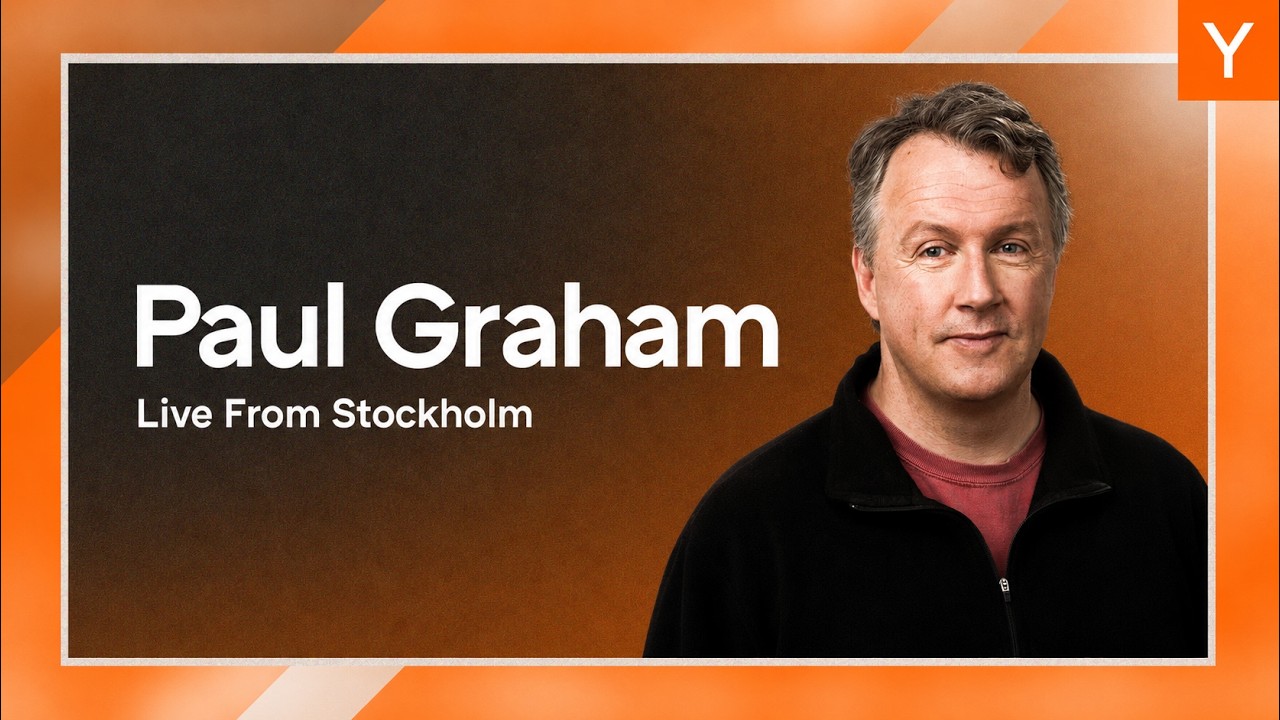
  • Paul Graham in Stockholm on Why Founders Should Go to Silicon Valley and How Sweden Can Become the Silicon Valley of Europe

    Paul Graham, the Y Combinator co-founder whose essays have shaped how a generation of founders thinks about startups, took the stage in Stockholm to answer two questions at once. Should you, as an ambitious founder, go to Silicon Valley? And what should Sweden do to thrive as a startup hub? His surprising thesis is that both questions have the same answer. Watch the full talk on YouTube.

    TLDW

    Graham argues that talent in any high-intensity field concentrates in one geographic center, the way painting clustered in 1870s Paris, math in Gutting around 1900, and movies in 1950s Hollywood. For startups today, that center is Silicon Valley. Founders should go, at least for a while, because the talent pool is both bigger and better, because serendipitous meetings outperform planned ones, because investors decide faster, because moving abroad paradoxically earns more respect from investors at home, and because measuring yourself against known greats like Brian Chesky, Sam Altman, or Max Levchin clears away the fog at the summit and shows you the work required to get there. The most subtle benefit is cultural. Silicon Valley has a 60 year old pay it forward custom in which people help strangers for no reason, a habit Graham traces to a place where nobodies become billionaires faster than anywhere else. The pivot to Sweden is that the best way to help Stockholm become a startup hub is for Swedish founders to go to Silicon Valley, ideally through YC, and then come back, importing money, skills, and Valley culture. Yes, returning founders are only half as likely to become unicorns as those who stay, but selection bias and the valuation gap explain most of that, and half a unicorn is still extraordinary. The job of Silicon Valley of Europe is unclaimed. Mountain View was a backwater in 1955 too. Critical mass is invisible until it is reached.

    Key Takeaways

    • Whenever humans work intensely on something, one place in the world becomes its center. Painting in 1870 was Paris. Math in 1900 was Gutting. Movies in 1950 was Hollywood. Startups today is Silicon Valley.
    • Every ambitious person working in those eras faced the same decision founders face now. The right answer is the same one it has always been. Yes, go. You can come back, but you should at least go.
    • National borders do not change the basic logic of moving from a village to a capital city. The reasoning that says move to where your peers are does not even know the dotted line on the map is there.
    • At the great center, the talent pool expands in two dimensions at once. The people are better and there are more of them, and they cluster, producing an intoxicating concentration of ability.
    • Serendipitous meetings are mysteriously, enormously valuable. Biographies of people who do great things are full of chance encounters that change everything.
    • Graham offers three candidate explanations for why unplanned meetings beat planned ones. There are simply more of them, so outliers are statistically unplanned. Planned meetings may be too conservative because they require a stated reason in advance. Unplanned conversations let you bail in the first few sentences, so the ones that continue are pre filtered for fit.
    • For ambitious people there is nothing better than serendipitous meetings with other people working on the same hard thing. Big centers produce more of them.
    • Things move faster in big centers because better people are more confident and more decisive, and because peers compete with and egg each other on. Ideas get acted on rather than half held.
    • Investors in Silicon Valley decide dramatically faster than European investors. They are more confident and they face stiff competition, so they cannot sit on a good opportunity without losing it.
    • This produces a counterintuitive rule. The more right an investor is about a deal, the less time they can wait, because everyone else who meets the same founder is going to invest too.
    • Yuri Sagalov is the canonical example. He invested in Max Levchin instantly because he knew anyone else who met Max would invest. Speed is the rational response to a crowded, high quality market.
    • Valley investors grumble that valuations are too high and decisions too rushed, yet they outperform European investors empirically. The complaining is just noise.
    • Moving abroad earns you more respect from investors back home. Jesus said no one is a prophet in their own country, and local investors implicitly assume local startups are second rate everywhere, not just in Sweden.
    • Leaving inverts that rule and lifts you in local investors estimation. Sometimes the mere announcement that you got into Y Combinator is enough. Investors who ignored you for months suddenly trip over themselves to write checks.
    • The Dropbox story illustrates this perfectly. A big Boston VC firm spent a year offering Drew Houston encouragement and advice but no money. The moment Sequoia got interested in Silicon Valley, that same firm faxed Drew a term sheet with a blank valuation. Drew went with Sequoia anyway and in 2018 Dropbox became the first YC company to go public.
    • The biggest advantage of moving to a great center is not what it does for you but what it does to you. A big fish in a small pond cannot tell how big it actually is.
    • In a big pond you can measure yourself against known giants. Surprisingly often the news is good. You see Brian Chesky or Sam Altman or Max Levchin and realize they are not a different species. You could do what they did if you worked that hard.
    • The key word is hard. Seeing a giant up close also calibrates the cost. It is not just I could be like that. It is I could be like that if I worked as hard as that.
    • Graham offers a Mount Olympus metaphor. Moving to the mountain clears away the fog at the top. The summit is right there, quite high but no longer impossibly high. Ambitious people need a high but definite threshold.
    • The most surprising thing about Silicon Valley to outsiders is that people help you for no reason. A founder who recently moved from England said every conversation seems to end with what can I do to help you.
    • This is not politeness. English people are far more polite than Americans on average. The helpfulness is a different cultural artifact specific to the Valley.
    • Graham traces the origin to economics. Silicon Valley is the place where nobodies become billionaires faster than anywhere else, so being nice to nobodies has historically paid off. If the helping behavior was ever calculated, the calculation is gone now. The custom is 60 years old and has become reflex.
    • Ron Conway is the purest expression of the pattern. All he does is help people. He does not track whether they are portfolio companies. He does not remember most of the favors. That untracked, indiscriminate helpfulness lets him operate at a much larger scale.
    • When many people behave this way at once, the conservation law for favors breaks down. There are just more favors. The pie grows.
    • Moving to the Valley changes you. One of the strangest effects is that it makes you more helpful to other people.
    • The answer to how Sweden should thrive as a startup hub is buried inside the answer to whether founders should go. Go to Silicon Valley for a bit and then come back.
    • That move helps Sweden in three concrete ways. The average quality of Swedish startups goes up. Returning founders bring Silicon Valley money back with them. And they import Silicon Valley culture, which has spent decades evolving to be optimal for startups.
    • Silicon Valley culture is more compatible with Swedish culture than people realize. Sweden lacks the tall poppies problem (which it should drop anyway) and shares the high trust trait that makes the Valley work.
    • Historical precedent backs this. In the 1800s Sweden literally gave mathematicians fellowships conditional on leaving the country to study math abroad. Boycotting Gutting in the name of building Swedish math would have been absurd.
    • YC is the optimal way to do the go for a bit and come back move. It is a deliberately engineered super valley within the Valley, concentrating density of founders, helpfulness, and investor speed into four to six months.
    • If the Swedish government designed a program to give Swedish founders concentrated Silicon Valley exposure, they could not do better than YC, and it costs them nothing because Silicon Valley investors fund it. They do not even have to license it. They just call the API.
    • YC data shows founders who go home are only about half as likely to become unicorns as those who stay. Three reasons not to be discouraged. First, selection bias. The most confident and determined founders are the ones willing to relocate, so the data is measuring those traits as much as Valley effects.
    • Second, the metric is valuation, not company performance. Bay Area startups simply raise at higher multiples for the same business.
    • Third, even half as well is still very good. If you would have been a Valley billionaire and end up with 500 million instead, the practical difference is zero. In Swedish kroner you are still a billionaire.
    • Money is not everything anyway. Once you have kids, where they grow up becomes the dominant question. That is an argument for returning home that has nothing to do with startups.
    • The most exciting upside is that Stockholm could become the Silicon Valley of Europe. The job is unclaimed. Nobody has a confident answer to where the European tech center is.
    • Geographic size is not the constraint people think it is. Mountain View was a backwater in 1955 when Shockley Semiconductor was founded there, and it stayed the geographic center of Silicon Valley until 2012 when activity shifted to San Francisco.
    • The two ingredients required are a place founders want to live and a critical mass of them. Stockholm clearly clears the first bar. The second is impossible to measure until you hit it, at which point it tips quickly.
    • Stockholm may be closer than it looks. Critical mass is the kind of threshold that is invisible until it has already been passed.

    Detailed Summary

    Why Centers Exist and Why You Have to Go There

    Graham opens with a historical pattern. Whenever a field gets pursued intensely, one place becomes its center. Painting in 1870 was Paris. Math in 1900 was Gutting. Movies in 1950 was Hollywood. For startups now it is Silicon Valley. The question every ambitious person in those eras asked, should I go, has had the same correct answer for thousands of years. Yes. You can come back, but at minimum you should go. The logic does not change at national borders. If a villager interested in startups would obviously move to their country’s capital, the same reasoning applies when the capital sits across a dotted line on a map.

    What you get at the center is a talent pool that expands in two dimensions at once. The people are better, and there are more of them, and they cluster, producing a density of ability that Graham describes as intoxicating. Every YC batch dinner, he says, feels the way the Stockholm room felt during his talk.

    The Mystery of Serendipitous Meetings

    One specific benefit of density is serendipitous meetings, and Graham admits he does not fully understand why unplanned encounters outperform planned ones so dramatically. Biographies of accomplished people are dense with chance meetings that redirected entire lives. He offers three possible explanations. Maybe there are simply more unplanned meetings, so statistically the outliers will mostly be unplanned. Maybe planned meetings are too conservative because they require a stated reason in advance, which lops off the upside the same way deliberate startup idea hunts lop off the best ideas. Maybe unplanned conversations have built in selection. You can decide in the first few sentences whether to continue, so the surviving conversations are pre filtered for fit. Whatever the mechanism, big centers produce more of these high value encounters, and that alone is worth the move.

    Speed and the Investor Asymmetry

    Things move faster in big centers because better people are more confident and more decisive. They egg each other on. Ideas get acted on instead of half held. Graham notes that in villages around the world there are people who half had every famous idea and never moved on it, and now resent the founder who did.

    The starkest example is investor speed. Silicon Valley investors decide dramatically faster than European ones, partly because they are better and more confident and partly because competition forces it. An investor who correctly identifies a great opportunity faces a counterintuitive rule. The more right they are, the less time they can wait, because every other investor who meets that founder will reach the same conclusion. Yuri Sagalov is the canonical case. He invested in Max Levchin immediately on meeting him because he knew anyone else would do the same. Valley investors complain that valuations are too high and decisions too rushed, but they empirically outperform European investors anyway. The grumbling is noise.

    The Prophet at Home Effect

    An underrated benefit of leaving for the center is that it raises your standing at home. Graham quotes the line about no prophet in their own country and notes that investors outside Silicon Valley implicitly assume local startups are second rate. It is not a Swedish problem. It is universal. Leaving inverts the rule. Local investors automatically rate you higher because you have been somewhere they consider serious. Sometimes the mere announcement that you got into Y Combinator triggers the inversion. The Dropbox story is the cleanest illustration. A big Boston VC firm spent a year giving Drew Houston encouragement and advice but no money. The moment Sequoia took an interest in Silicon Valley, that same firm faxed Drew a term sheet with a blank valuation, willing to invest at any price. Drew went with Sequoia. Dropbox went public in 2018 as the first YC IPO.

    Big Pond, Visible Summit

    The deepest benefit of relocating is not what the center does for you but what it does to you. A big fish in a small pond cannot tell how big it actually is. A big fish in a big pond can. You can stand next to Brian Chesky or Sam Altman or, as the Stockholm audience just had, Max Levchin, and recognize that they are not a different species. You could do what they did, if you worked that hard. The catch, Graham emphasizes twice, is the if. Seeing a giant up close calibrates both the achievability of the summit and the cost of reaching it.

    He offers a Mount Olympus image. Moving to the mountain clears away the fog at the top. The summit is right there, quite high but no longer impossibly high. Ambitious people need a high but definite threshold. Visibility transforms a vague aspiration into a clear, hard, finite target.

    The Pay It Forward Culture

    The most surprising thing about Silicon Valley to outsiders is that people help you for no reason. The phrase sounds normal in the Valley and strange everywhere else, the way clean streets feel normal in Sweden but require explanation elsewhere. Graham asked a founder who recently moved from England what surprised him most. The answer was the helpfulness. Every conversation ended with what can I do to help you. The English founder noted that this was not English politeness, which is a different thing and arguably more pronounced.

    Graham traces the origin to economics. Silicon Valley is where nobodies become billionaires faster than anywhere else. Someone with a taste for being nice to nobodies, the kind of person who pets the nobody on the head rather than kicking it aside, was always going to end up with powerful friends in that environment. Whether the original behavior was calculated or not, it is reflexive now. The custom is 60 years old. Ron Conway is the purest expression. He helps everyone, does not track favors, does not remember most of them, and as a result operates at a scale that ledger keeping makes impossible. When many people behave that way at once, the conservation law for favors breaks down. The pie expands. Graham notes that moving to the Valley will change you in this same way, almost involuntarily.

    The Sweden Answer Is Inside the Founder Answer

    The pivot of the talk is that both questions have the same answer. The way Stockholm thrives as a startup hub is for Swedish founders to go to Silicon Valley and come back. That move helps Sweden in three concrete ways. The average quality of Swedish startups rises. Returning founders bring Valley money back with them. And they import Valley culture, which has been optimized over decades for startups and which is more compatible with Swedish culture than people assume. Sweden lacks the tall poppies dynamic, which it should drop anyway, and shares the high trust trait that the Valley runs on.

    The historical analogy is direct. In the late 1800s the Swedish government gave mathematicians fellowships conditional on leaving the country to study abroad. Boycotting Gutting to develop Swedish math would have been self defeating. The same logic applies to startups now.

    YC as the Optimal Vehicle

    Graham acknowledges he is talking his own book and says it anyway because he thinks it is true. The optimal way to go for a bit and come back is YC. YC is a deliberately engineered super valley inside the Valley, concentrating founder density, helpfulness, and investor speed into a four to six month container. If the Swedish government designed such a program from scratch it would look like YC, and YC costs the government nothing because Silicon Valley investors fund it. There is no licensing process. Founders just call the API.

    The Half As Many Unicorns Caveat

    The honest data point. Founders who go home after YC are only about half as likely to become unicorns as those who stay. Graham offers three reasons not to be discouraged. First, selection bias. The most confident and determined founders are also the ones willing to relocate, so the data is partly measuring those traits rather than the effect of geography. Second, the metric is valuation, not company performance. Bay Area companies simply raise at higher multiples. Third, half is still very good. A 500 million dollar company instead of a 1 billion dollar one is no real difference in practice, and in Swedish kroner you still cross the billionaire threshold.

    Money is not everything anyway. Once you have kids, where they grow up becomes the dominant decision, and that question has nothing to do with valuations.

    The Silicon Valley of Europe Is an Open Position

    Graham ends with the most ambitious frame. If Sweden transplants enough Valley culture, Stockholm could become the Silicon Valley of Europe. The job is unclaimed. There is no confident answer to where the European startup center is, the way nobody asks where the Silicon Valley of America is because the answer is obvious. Geographic size is a weaker constraint than people think. Mountain View was a backwater in 1955 when Shockley Semiconductor was founded there, and it remained the geometric center of Silicon Valley until activity shifted to San Francisco in 2012. The only real requirements are a place founders want to live and a critical mass of founders. Stockholm clearly clears the first bar. The second is impossible to measure until it is hit, and then it tips fast. Graham closes by suggesting Stockholm may already be closer than it looks.

    Thoughts

    The most useful idea in this talk is the inversion at the heart of it. Most advice about startup geography frames the choice as a tradeoff between leaving and staying, with leaving optimized for the founder and staying optimized for the country. Graham collapses the two. The country wins more when founders leave and come back than when founders stay out of loyalty. The brain drain framing assumes a fixed pool of talent that can only be in one place. The brain circulation framing, which is what Graham is actually describing, assumes that exposure compounds. A founder who has spent six months absorbing Valley density brings back something a founder who stayed home never had. The Swedish math fellowships from the 1800s are the deepest evidence here. A government that wanted strong domestic mathematicians did not try to build a wall around them. It paid them to leave.

    The serendipity argument is the part of the talk that should make planners uncomfortable, because it is essentially an admission that the highest leverage activity in a startup career cannot be scheduled. The three theories Graham offers are not mutually exclusive and the cumulative force of them is that any environment optimized for planned, calendared interaction is by definition lopping off its own upside. This has obvious implications beyond geography. Remote first cultures, calendar tetris, gated office access, and the whole apparatus that converts random encounters into booked meetings are all working against the mechanism Graham is describing. Whether that tradeoff is worth it for any given company is a separate question, but it is at minimum a tradeoff, not a free win.

    The pay it forward story is also more economically grounded than it usually gets credit for. Graham is careful to note that the helping behavior may have originated as a calculated bet on being kind to potential future billionaires, then ossified into reflex once enough generations practiced it. That is a more honest origin story than the usual quasi spiritual version. It also implies the culture can be transplanted, but only by recreating the conditions that originally produced it. You cannot just declare a pay it forward culture and have one. You need a place where nobodies actually do become billionaires often enough that helping them rationally pays off, then run that loop for 60 years. Most cities trying to engineer their way into being startup hubs skip past this part and wonder why the culture does not stick.

    Finally, the Mountain View in 1955 line is the underrated punch of the talk. People who write off their own city as too small or too peripheral to become anything usually have an idealized image of the current center as a place that was always obviously special. It was not. Shockley Semiconductor went into a strip of orchards. Whatever Stockholm or anywhere else looks like today, it looks more impressive than Mountain View did the year Silicon Valley was born.

    Watch the full Paul Graham talk from Stockholm on YouTube.

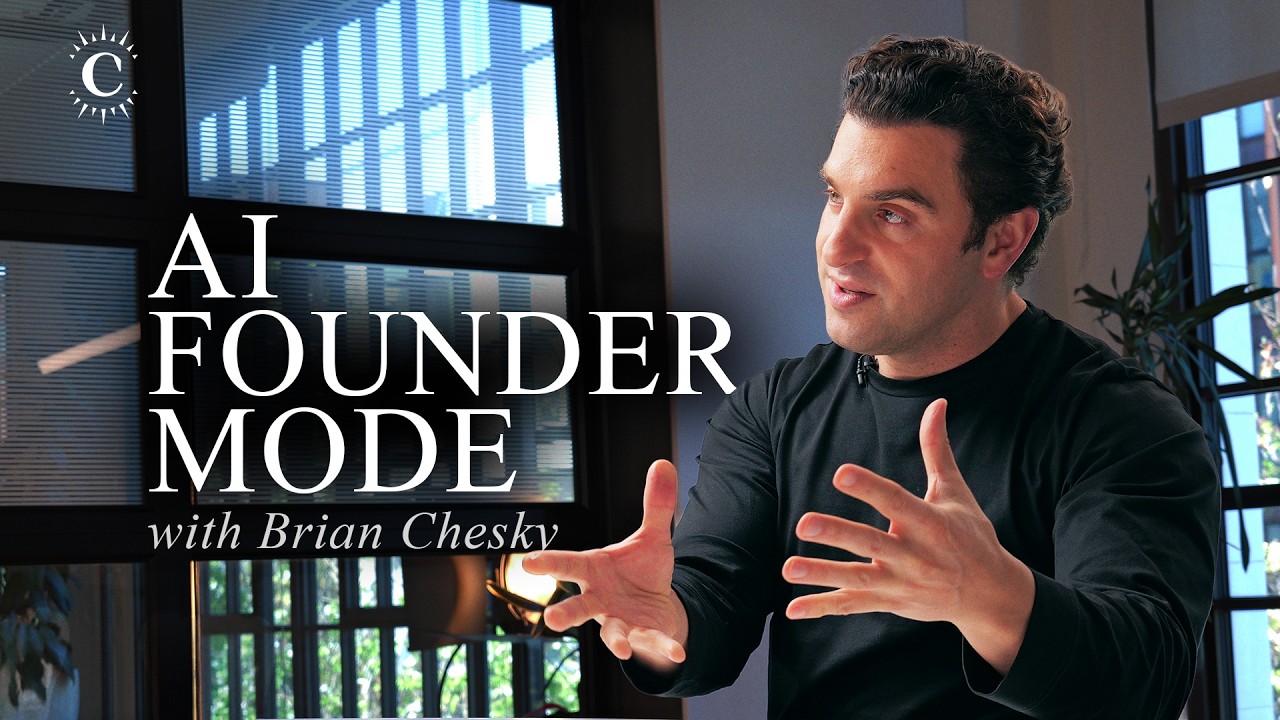
  • Brian Chesky on AI Founder Mode, the 11-Star Experience, and Reinventing Airbnb for the Age of AI

    Airbnb CEO Brian Chesky sits down with Patrick O’Shaughnessy on Invest Like The Best to talk about the next evolution of company building: AI Founder Mode. He covers the shift from founder to CEO, the lessons he learned from Steve Jobs through Hiroki Asai, why consumer AI is the next great frontier, and how he plans to change the atomic unit of Airbnb from a home to a person.

    TLDW

    Brian Chesky believes the next era of company building belongs to founders who refuse to delegate the soul of their company. He coined Founder Mode with Paul Graham after the pandemic forced him to take Airbnb back into his own hands. Now he is shaping what comes next: AI Founder Mode, where leaders work with on-demand context, fewer layers of management, asynchronous communication, and a new generation of hybrid manager-makers. He shares why most software companies have not been touched by AI yet, why consumer AI is about to explode, and why he is rebuilding Airbnb around people, not homes. The conversation also touches on the 11-Star Experience exercise, the power of small teams, why recruiting is the most important job a CEO has, and why every adult is still an artist underneath.

    Key Takeaways

    • Founder Mode is not micromanagement, it is having a steering wheel. Chesky woke up in 2019 feeling like the car had no steering wheel. After the pandemic, he reviewed every detail for two to three years before delegating again. Start hands-on and give ground grudgingly, not the other way around.
    • AI Founder Mode is even more intense. With AI, leaders can be in significantly more details because almost everything is on demand. Expect fewer layers of management, mostly asynchronous work, and the death of the pure people manager.
    • Two types of leaders will not survive AI. Pure people managers who only do one-on-ones, and rigid people who refuse to evolve. Everyone needs to be a hybrid manager-IC who can still touch the work.
    • Manage people through the work, not through meetings. Frank Lloyd Wright did it. Johnny Ive does it. You are not anyone’s therapist.
    • Consumer AI is the next great prize. 159 of the last 175 Y Combinator companies were enterprise. Almost every app on your home screen has not changed since AI arrived. That changes in the next 12 to 24 months.
    • Why consumer AI is hard. No proven business model, mature distribution, trend-chasing investor culture, and the simple fact that consumer is more hits-driven and requires excellence in design, marketing, culture, and press, not just technology and sales.
    • Project Hawaii is the new operating model. A 10 to 12 person Navy SEAL team, hands-on coaching from the CEO, crawl-walk-run-fly. The first project added roughly $200 million in year one and $400 to $500 million in year two.
    • Make the problem as small as possible. Airbnb spent 16 years failing to launch a second hit because it kept trying to scale globally on day one. Now: pilot in one city, expand to 10, then industrialize.
    • It is better to have 100 people love you than a million people sort of like you. Paul Buchheit shipped Gmail only after 100 Googlers loved it. The sample size of intense love is enough to predict mass adoption.
    • The 11-Star Experience is an imagination exercise. Push to absurdity (Elon takes you to space) so a 6 or 7-star experience suddenly seems normal. The gap between 5 and 6 stars is the gap between you and your competitor.
    • Simplicity is distillation, not subtraction. Hiroki Asai, Steve Jobs’s longtime creative director, taught Chesky that great design distills something to its essence. First principles is a design term too.
    • The score takes care of itself. Bill Walsh and John Wooden both taught that you do not focus on winning, you focus on making every input perfect. Wooden spent his first hour with new players teaching them how to put on socks.
    • Industrial design is the original product management. There are no PMs in industrial design. The designer is the PM, working alongside engineers and program managers to design through user journeys.
    • Recruiting is the CEO’s number one job. The more time you spend recruiting, the less time you spend managing, because great people self-manage. Build pipelines, not searches. Start with results, work backwards to people.
    • Co-hire the top 200 people, not just the executive team. Most CEOs hire executives and let them hire their teams. Chesky considers that fatal because most executives cannot hire well without help.
    • Bodybuilding is a metaphor for leadership. If you can change your body, you can change your life. Progressive overload, 1 percent a day, is how compounding works. Start with biology before therapy.
    • Founder-led companies build the deepest moats. Disney is still selling Walt’s playbook 60 years after he died. Apple is still selling Steve’s iPhone. The longer founders stay in founder mode, the more the company can endure when they leave.
    • Software is hyper fast fashion. Hardware ages well. Buildings get patina. Software always looks dated 10 years later. What endures is the community, the brand, the principles, the mission, and the network effect.
    • Apps are dying. Agents are coming. Chesky says we should let go of our attachment to apps because they are not what the future looks like.
    • Airbnb’s atomic unit is changing from a home to a person. Chesky wants to build the most authenticated identity on the internet, the richest preference library, a real-world social graph, and a membership program. Then expand to 50 to 70 verticals on top of that identity.
    • AI shifts attention from consumption to creation. Social media gave you a paintbrush only for opinions. AI gives everyone a real paintbrush and canvas. We are heading into a creative renaissance.
    • Founders are expeditionaries, not visionaries. They put one foot in front of the other and call it a vision later.
    • Detach from accolades. Chesky describes adulation as a cup with a hole in the bottom. Status is a drug. The path to durable creative work is doing it because you love it, the way Walt Disney, Da Vinci, Van Gogh, and Steve Jobs did until the very end.
    • The kindest gift is belief. The best way to activate a person’s potential is to see something in them they do not yet see in themselves.

    Detailed Summary

    From Industrial Design to the CEO Chair

    Chesky studied industrial design at the Rhode Island School of Design. He chose it on instinct after a department head told him industrial designers design everything from a toothbrush to a spaceship. He grew up enchanted by the Reebok Pump, the Game Boy, the Nintendo, and eventually by the late 1990s golden age of Apple. Raymond Loewy, the man who designed Air Force One and an enormous catalog of mid-century consumer products, became a touchstone, but Johnny Ive was the real hero.

    What he loved about industrial design was that it is technical, commercial, and empathetic. A building can win an architecture award and never be leased. A piece of industrial design that does not sell is a failure. So you have to think about manufacturing, distribution, marketing, and most importantly, user journeys. There are no product managers in industrial design. The designer is the PM. That training, he says, prepared him directly for the role of CEO.

    The Pandemic and the Birth of Founder Mode

    Chesky says no one is born a good CEO. People are born good founders. The job of CEO is counterintuitive in almost every direction. Founders are taught to learn by doing, but a CEO who learns by trial and error wastes years unwinding the empires of misfit hires.

    By 2019 he was running a 7,000 person company he no longer recognized. He felt he was driving a car without a steering wheel. He had a dream that he had left Airbnb for ten years and come back to find it had become a giant political bureaucracy. Then he realized he had been there the whole time. The pandemic hit and Airbnb lost 80 percent of its business in eight weeks. He shifted from peacetime to wartime, took control of every detail, worked 100-hour weeks, and reviewed everything for two to three years.

    The vision was never to micromanage forever. The vision was: I need to know what is going on before I can empower anyone. Hire people, audit their work, and only then give ground grudgingly. Most founders do the opposite, which is why they end up with executives building empires they later have to dismantle.

    AI Founder Mode

    Chesky says AI Founder Mode will be even more intense than Founder Mode because nearly everything will be on demand. He used to live in 35 hours of meetings a week to gather information, the same way Steve Jobs ran Apple. He held weekly, biweekly, monthly, and quarterly group reviews with the full chain of command in one room, anyone could speak, and he made the final call after listening last.

    In the AI era, that culture shifts from meetings to asynchronous work. He expects fewer layers of management. He cites the Catholic Church as a 2,000-year-old institution with only four layers and asks why most companies need seven, eight, or nine. Pure people managers will not survive. Every manager will have to be a hybrid IC, an engineer who still codes, a lawyer who still reads case law, a designer who still designs. You manage through the work, not through one-on-ones.

    He is also bullish that AI tooling will become consumer-grade simple very soon. The current tools, including Claude Code and Cowork, are not yet intuitive to the average person, but the economic incentive will force that to change.

    Why Consumer AI Is the Next Great Frontier

    Chesky points out that 159 of the last 175 Y Combinator companies were enterprise. Almost every consumer app on your phone, including Airbnb, has not fundamentally changed since the arrival of AI. He gives four reasons: investors feared ChatGPT would kill consumer companies; consumer AI has no proven business model because subscriptions hit a local max against free Claude and Gemini, ads are off the table for most labs, and e-commerce has been shut down via third-party app removals; distribution is mature; and Silicon Valley culture, while branded as rebellious, is in practice trend-following.

    The deeper reason is simply that consumer is harder. It is hits-driven, requires great design, marketing, culture, press, and you cannot easily start by selling to your dorm-mates the way enterprise YC startups sell to other YC startups. The prize is bigger. The risk is bigger. He predicts a consumer AI renaissance over the next 12 to 24 months.

    Project Hawaii and the Magic of Small Teams

    Inside Airbnb, Chesky tested a new operating model called Project Hawaii. He took 10 to 12 people, designers, engineers, product, and data scientists, treated them like a startup inside the company, and pointed them at one problem: improving the guest funnel. The system is crawl, walk, run, fly. First fix bugs, then add features, then re-imagine flows, then completely reinvent.

    The first team delivered roughly $200 million of internal revenue in year one and $400 to $500 million the next year, eventually contributing more than 600 basis points of conversion improvement on a base of $134 billion in gross sales. Then they took the same system to pricing, then to other problems, then to launching new businesses like Services and Experiences.

    The guiding lesson: make the problem as small as possible. Airbnb launched in one city, New York. Uber in San Francisco. DoorDash in Palo Alto. When Chesky launched Services and Experiences in 100 cities at once last year, it did not work. The fix was to dominate one city, expand to 10, then industrialize. Peter Thiel said it cleanly: better to have a monopoly of a tiny market than a small share of a big market.

    Underneath that is a Paul Buchheit insight Chesky calls the best advice he ever got. It is better to have 100 people love you than a million people sort of like you. Buchheit refused to ship Gmail until 100 Googlers loved it, and that took two years. Once 100 people loved it, 100 million people did.

    The Hiroki Asai Lessons: Simplicity and Craft

    Hiroki Asai, Steve Jobs’s quietly legendary creative director, taught Chesky two principles. The first is that simplicity is not removing things, simplicity is distillation, understanding something so deeply that you can express its essence. Steve Jobs called design the fundamental soul of a man-made creation that reveals itself through subsequent layers. Elon Musk’s first principles thinking is the same idea applied to physics.

    The second is craft. How you do anything is how you do everything. Chesky cites Bill Walsh’s The Score Takes Care of Itself and John Wooden’s first hour with UCLA players, an hour spent teaching them how to put on their socks. Walsh said the way you tucked your jersey was one of 10,000 details that decided whether you won. The lesson is to focus on getting every input right. The output follows.

    The 11-Star Experience

    The 11-Star Experience is one of Chesky’s most copied frameworks. Most Airbnb stays get five stars because anything else means something went wrong. So Chesky asked: what would six stars look like? Your favorite wine on the table, fruit, snacks, a handwritten card. Seven stars? A limousine at the airport and the surfboard waiting for you because they know you surf. Eight stars? An elephant and a parade in your honor. Nine stars, the Beatles arrive in 1964 with 5,000 screaming fans. Ten stars, Elon Musk takes you to space.

    The point is the absurdity. By imagining the impossible, six and seven star experiences stop seeming crazy. The gap between five and six stars is the gap between you and your competitor. If you can industrialize a sixth star, you may have product-market fit. The exercise also restarts your imagination, which Patrick noted has atrophied for many people in the era of consumption-only social media.

    AI as a Canvas for Creativity

    Chesky frames AI as the ultimate platform shift, the ultimate creative expression, and possibly the greatest invention in human history. Social media made us mostly consumers and gave creators only opinion-shaped tools. AI gives everyone a paintbrush. He believes far more people are creative than we recognize because most have never had craftsmanship or tools to express what is in their heads. Pablo Picasso said all children are born artists; the problem is to remain one as you grow up. Chesky thinks every adult is still an artist underneath.

    The Next Chapter of Airbnb

    Chesky describes four phases of the CEO journey: get to product-market fit, scale to hyper-growth, become a real profitable public company, and finally reinvent. Airbnb’s stock has been flat because the core idea is saturating. He is now squarely in phase four, with three priorities.

    First, change the atomic unit from a home to a person. He wants Airbnb to build the most authenticated identity on the internet, the richest preference library, a real-world social graph, and a membership program. Proof of personhood, he says, will be enormously valuable in the AI age. Second, industrialize the new-business engine to support 50 to 70 verticals (homes, experiences, services, eventually flights, and more) all built on top of that personal atomic unit. Third, navigate the AI transition without breaking the existing business or the livelihoods of hosts. He is also exploring sandbox apps that imagine a radically different Airbnb, the answer to “what is after Airbnb?”

    What Endures in the Age of AI

    Chesky is direct that software does not endure. Look at any software from 10 years ago and it looks dated. Hardware ages better. Buildings develop patina. Paris endures. So if you want to build something lasting, you cannot bet on the app. You have to bet on the community, the brand, the mission, the principles, the identity, and the network effect. Apps are going away, replaced by agents. Founders attached to apps need to let go.

    Founder-Led Moats: Disney and the Ham Sandwich Paradox

    Chesky reconciles Warren Buffett’s “buy a company a ham sandwich could run” with the venture capital truth that a founder’s ceiling is the company’s ceiling. The reconciliation is Disney. Most people cannot name a Paramount, Warner Brothers, Universal, or MGM film off the top of their head, but everyone can name Disney films. Walt Disney was a founder in founder mode for so long that he created enough IP and momentum that the company has been running on his playbook for 60 years after his death. Apple is similar with Steve Jobs and the iPhone.

    The counterintuitive lesson: if you want a company to last 100 years, do not delegate early to make it independent of you. Stay in founder mode for as long as possible so you can institutionalize the magic deeply enough that it endures after you. Tech is the industry of change, so founder mode matters even more there than in chocolate or insurance.

    Bodybuilding as Leadership Training

    Chesky was a 135-pound late bloomer who told his friends he would compete at the national level in bodybuilding by 19. He did. Two lessons came out of it. First, if you can change your body, you can change your life. Start with biology before therapy. Second, you cannot get in shape in one day. Progressive overload, discipline, consistency, and roughly 1 percent a day compound into massive gains. The visible feedback loop in bodybuilding taught him to break invisible problems (like the quality of a leadership team) into observable, measurable proxies (like the quality of the room at a twice-yearly roadmap review of the top 100 people).

    Recruiting as the CEO’s Number One Job

    Sam Altman told a 27-year-old Chesky he would spend 50 percent of his time on hiring. Chesky did not, and considers that his biggest mistake. He now starts and ends every day with his recruiter and spends two to three hours a day on hiring. The more time you spend recruiting, the less time you have to spend managing because great people self-manage.

    His system is pipeline recruiting, not search recruiting. He never starts with a search firm. He constantly meets the best people in their fields, asks each one to introduce him to the next two or three best, and builds a rolling rolodex. He starts with results, finds an ad he loves, and works backwards to the team that made it. He builds little mafias of top talent inside the company. He is the co-hiring manager for the top 200 people at Airbnb, not just executives, because most executives cannot hire well without help.

    Activating Talent and the Power of Belief

    You cannot teach motivation. You can only give people a problem and see if they have agency. The way to activate someone, Chesky says, is to show them potential they cannot yet see in themselves. He cites John Wooden, who said the secret to coaching was that he saw potential in players they did not see in themselves. People will climb mountains for that.

    The kindest gift anyone gave Chesky, he says, was belief. A high school art teacher named Miss Williams told his parents he was going to be a famous artist. He never became one, but the belief gave him the confidence to choose art school and to choose to be happy. Michael Seibel and the Justin.tv founders believed in him. Paul Graham made an exception to fund a non-engineer with what he thought was a bad idea. His co-founders Joe and Nate believed in him when he had no business being a CEO. The biggest gift you can give back, he says, is belief in others.

    Detaching from the Scoreboard

    Chesky describes adulation as a cup with a hole in the bottom. Status keeps draining out and you keep needing more to feel the same. The day Airbnb went public at a $100 billion valuation should have been one of the best days of his life. The next morning he put on sweatpants for a Zoom meeting and felt nothing. That triggered a re-evaluation. He stopped seeking accolades and started focusing on intrinsic work. He cites Rick Rubin: an artist is an artist when they make for themselves. He cites Vice President Obama, who told him to focus on what you want to do, not who you want to be.

    His four heroes are Leonardo da Vinci, Vincent Van Gogh, Walt Disney, and Steve Jobs. All four were working until the last week or day of their lives. Da Vinci carried the Mona Lisa with him until he died. Van Gogh sold one painting in his life. Disney was imagining theme parks in the ceiling tiles of his hospital room. Chesky says his motivation is the motivation of an artist. He calls being a CEO of a public company at his scale “almost a glitch in the system” that gave him one of the largest design canvases in human history.

    Thoughts

    What stands out about this conversation is how clearly Chesky has decoupled identity from outcome. He frames himself first as a designer, second as a CEO, and considers the resources he commands as a kind of accidental fortune for an industrial designer to be sitting on. That self-image is what lets him talk about disrupting Airbnb, killing the app paradigm, and changing the atomic unit of the company without flinching. Most public-company CEOs cannot afford that posture.

    The framework worth stealing is Project Hawaii. The pattern of taking a 10-person elite team, putting them under direct CEO coaching, and running them through crawl-walk-run-fly is a near-universal answer to the problem of innovation inside a large company. It works because it removes abstraction layers, creates direct contact with reality, and gives the founder a way to teach muscle memory before delegating. Anyone running a team of any size can borrow the pattern: pick one problem, staff it small, work with it weekly, then let go gradually. The golf-instructor analogy of teaching muscle memory before bad habits set in might be the most important management metaphor of the year.

    His prediction about consumer AI is the most economically interesting part of the talk. The fact that 159 of 175 recent YC companies are enterprise is a startling concentration. If he is right that the next 12 to 24 months bring a consumer renaissance, the opening is enormous. The hard part is what he names directly: there is no proven business model for consumer AI yet. Subscriptions cap out against free incumbents, ads are off-limits for the labs, and e-commerce has been throttled. Solving the business model is probably more valuable than building the next great consumer interface.

    The deeper philosophical thread, that AI is the transition from consumption to creation, is one that anyone building tools for makers should hold close. The 11-Star Experience also reads differently in the AI era. It used to be a thought exercise constrained by what you could plausibly build. AI compresses the gap between imagination and execution to minutes, sometimes seconds. The question is no longer “what is the most absurd version of this experience?” but “which six and seven star experiences can I now industrialize that were unthinkable a year ago?” The exercise has become operational.

    Finally, the meta-lesson on founder-led moats is worth taking seriously. The instinct in venture capital and at most public-company boards is to professionalize early. Chesky’s argument is the opposite: the longer the founder stays in founder mode, the deeper the IP and the longer the company endures after they leave. Disney is the proof. Apple is the proof. Whether Airbnb will be is the open question, and it is the question Chesky is using AI Founder Mode to answer.

  • How to Build the Future: Aravind Srinivas on Revolutionizing Search with Perplexity


    TL;DR
    In an insightful interview with Y Combinator’s David Lieb on February 21, 2025, Aravind Srinivas, co-founder and CEO of Perplexity, shares his journey from AI researcher to building a $9 billion-valued company in under three years. He discusses his motivations, the evolution of Perplexity, and his vision to redefine search by prioritizing user experience over traditional ad-driven models, positioning it as a potential challenger to Google.

    Executive Summary
    Aravind Srinivas’s story is one of curiosity, persistence, and bold ambition. From his early days as a PhD student at Berkeley and internships at OpenAI and Google, he identified search as a domain ripe for disruption through AI. Founding Perplexity, Srinivas aimed to create a user-centric, intelligent alternative to conventional search engines. The interview reveals how Perplexity evolved from early Twitter-based demos to a scalable, general-purpose search tool, leveraging advancements in large language models (LLMs). Srinivas emphasizes a relentless focus on user needs, team culture, and a long-term vision to integrate end-to-end solutions—beyond just answers—into everyday life.

    Key Takeaways

    • Origins in AI: Srinivas’s exposure to unsupervised learning and generative AI during his OpenAI internship shaped his vision for a product-driven AI company.
    • Perplexity’s Evolution: Starting with niche demos, Perplexity pivoted to a broader, LLM-powered search engine after realizing the potential of simpler, scalable solutions.
    • User-First Philosophy: Inspired by Google’s Larry Page, Srinivas believes “the user is never wrong,” driving Perplexity’s design to anticipate and clarify user intent.
    • Competing with Giants: Perplexity’s edge lies in its obsession with user experience and product taste, unencumbered by Google’s ad-centric legacy.
    • Future Vision: Srinivas envisions Perplexity as an all-in-one platform, blending fast answers, task fulfillment, and monetization beyond subscriptions.


    In a captivating February 21, 2025, interview hosted by Y Combinator, Aravind Srinivas, co-founder and CEO of Perplexity, unveils the blueprint behind his $9 billion-valued startup. With a background in AI research from Berkeley, OpenAI, and Google, Srinivas is on a mission to transform search into a user-first experience. This SEO-optimized article explores his journey, Perplexity’s rise, and its bold vision to challenge giants like Google, answering key questions about his motivations and strategy through metaphorical lenses.

    From AI Roots to Entrepreneurial Ambition
    Question Answered: What inspired Aravind to start Perplexity?
    Metaphor: A gardener tending to a seedling, Srinivas nurtured his curiosity in AI research until it blossomed into a vision for a company that could grow as tall as the mightiest oaks (Google), fueled by the sunlight of innovation.

    Srinivas’s journey began in India, where his passion for deep learning led him to a PhD at Berkeley. An internship at OpenAI under Ilya Sutskever introduced him to unsupervised learning, planting the seed for a product-driven AI venture. At Google, reading In the Plex sparked his dream of building a company blending research and usability—enter Perplexity. His realization? Search and self-driving cars are rare domains where AI and product development create a flywheel, improving with every user interaction.

    The Birth and Evolution of Perplexity
    Question Answered: How did Perplexity find its potential?
    Metaphor: Like a sailor charting uncharted waters, Srinivas navigated through early demos (Twitter search) with a small crew, only to discover a trade wind—follow-up questions doubling engagement—that propelled Perplexity toward a new horizon.

    Perplexity’s early days were experimental. Srinivas and co-founder Dennis prototyped a Twitter search tool using OpenAI’s Codex, organizing data into tables for SQL queries. User engagement soared when follow-up questions doubled session times, signaling potential beyond niche applications. Pivoting to a general-purpose search engine, Perplexity embraced LLMs for unstructured data, betting on smarter models to outpace Google’s rigid indexing. This shift, sparked by a weekend prototype inspired by OpenAI’s Web GPT, marked its ascent.

    A User-Centric Approach to Search
    Question Answered: How does Perplexity differ from Google?
    Metaphor: Google is a bustling marketplace, hawking wares (ads) amid a sea of stalls (links), while Perplexity is a wise librarian, quietly fetching the exact book you need without pushing a sales pitch.

    Drawing from Larry Page’s mantra, “the user is never wrong,” Srinivas designed Perplexity to anticipate needs, not blame users for vague prompts. Unlike Google’s ad-cluttered results, Perplexity offers a clean, answer-focused experience—think healthy meal versus fast food. This philosophy drives its edge: obsession with user satisfaction and product finesse. Srinivas tracks queries per day, ensuring retention reflects genuine value, not forced interactions.

    Managing a Growing Team
    Question Answered: What’s the secret to managing a growing team?
    Metaphor: Srinivas conducts his orchestra with a steady baton, keeping the rhythm of queries per day in focus, ensuring every musician plays in harmony, not drowned out by the cacophony of bureaucracy.

    As Perplexity grows, Srinivas maintains a flat, data-driven culture. Weekly All Hands meetings spotlight queries per day, fostering transparency without constant scoreboard-watching. He engages directly with engineers on bugs, prioritizing product quality over hierarchy. Hiring focuses on passion for good work, mirroring his detail-obsessed DNA, though he acknowledges the challenge of scaling without slowing down.

    Competing with Google and Beyond
    Google’s ad-driven model and Microsoft’s consumer struggles leave room for Perplexity. Srinivas sees its advantage in agility and taste, unencumbered by legacy systems. While Google’s $200 billion search revenue looms large, Srinivas argues its stock-driven focus hinders bold pivots, giving Perplexity a shot at redefining monetization. He shrugs off early threats like Bing Chat, trusting in Perplexity’s user-first ethos to carve a niche.

    The Future of Search: Perplexity’s Vision
    Question Answered: What’s the future of search according to Srinivas?
    Metaphor: Imagine a trusty guide who not only points you to the mountain peak but hands you the gear to climb it—Perplexity aims to be that companion, merging answers with actions in a seamless journey.

    Srinivas envisions Perplexity as more than a search engine—an end-to-end solution. Whether recommending a sweater or booking a flight, it aims to deliver answers and actions. This requires orchestrating small models, knowledge graphs, and widgets—a daunting task, but one Srinivas believes can rival Google with a decade of perseverance. Unlike subscription-only models, he seeks sustainable monetization, balancing user trust with mass-market utility.

    Why Perplexity Could Win
    Unlike AI-centric firms like OpenAI, Perplexity blends model expertise with user obsession. Its DNA prioritizes product over benchmarks, positioning it to solve real-world problems—shopping, travel, quick facts—without drowning in ad revenue pressures. Srinivas bets on taste and persistence, not just tech, to outmaneuver competitors over the next decade.

    Wrap Up
    Aravind Srinivas’s story is a masterclass in building the future: start with curiosity, iterate with purpose, and obsess over users. Perplexity isn’t just challenging Google—it’s reimagining how we interact with information. As Srinivas steers this ship, the search landscape may never be the same.

  • The Idea Guy Era: How AI is Unleashing a New Renaissance of Innovation

    For much of the digital age, the dominant narrative of technological advancement has centered on the figure of the coding prodigy: the solitary programmer immersed in lines of code, crafting intricate systems from the ground up. While this image holds a kernel of truth, it has often obscured a more fundamental reality: true innovation rarely originates solely from technical mastery. It begins with an idea—a spark of insight that identifies a problem, envisions a solution, and ignites the drive to create something new. Now, with the rapid advancement of artificial intelligence, we are witnessing a profound transformation: the dawn of the “Idea Guy Era,” a time when creative visionaries, empowered by AI tools, are democratizing entrepreneurship and ushering in a new renaissance of innovation.

    The story of Amjad Masad, the founder of Replit, as recounted on the My First Million podcast, serves as a powerful illustration of this paradigm shift. His journey, marked by four rejections from the prestigious Y Combinator (YC) accelerator yet ultimately culminating in a billion-dollar valuation, underscores a crucial point: deep technical expertise is no longer the exclusive gateway to entrepreneurial success. Masad’s initial inspiration for Replit didn’t stem from a burning ambition to showcase his coding skills. Instead, it emerged from a deeply personal frustration: the cumbersome and time-consuming process of configuring coding environments in internet cafes during his formative years. This recurring challenge sparked an idea: a browser-based platform that would eliminate the friction of setup, allowing anyone to code from anywhere, on any device.

    This “Idea Guy” approach—identifying a problem and conceiving a solution—is now being amplified exponentially by the rise of sophisticated AI tools. Platforms like Replit, themselves increasingly leveraging AI, are dramatically lowering the barriers to entry for aspiring entrepreneurs. As Masad himself explained, AI agents are now empowering individuals with little to no programming experience to create functional and even sophisticated software that would have previously required significant investment in developer time and resources. Imagine someone with a brilliant idea for a personalized fitness app, but lacking the coding skills to bring it to life. Today, they can leverage AI-driven platforms to rapidly prototype, test, and even launch their product with unprecedented speed and efficiency, focusing on the user experience and core value proposition rather than the technical minutiae.

    This transformative power of AI extends far beyond the creation of simple applications. AI is rapidly evolving to generate high-quality code in multiple programming languages, design intuitive and engaging user interfaces, automate complex back-end processes, provide real-time debugging and optimization suggestions, and even generate marketing copy and user documentation. This means the “Idea Guy” can now focus on their unique strengths: articulating a compelling product vision, defining its core features, deeply understanding the target market, crafting a seamless user experience, and building a strong brand narrative. The often-daunting technical implementation, once the exclusive domain of seasoned programmers, can be significantly augmented, or in some cases almost entirely handled, by AI.

    Masad’s now-famous “Rickroll” incident during his eventual YC interview, while a lighthearted anecdote, further underscores this crucial shift. It wasn’t his technical wizardry that initially captured the attention of Paul Graham, the co-founder of YC, but rather the ingenuity and transformative potential of the solution he was building. The sheer power of the idea—a vision for a more accessible and inclusive coding environment—was potent enough to transcend the traditional metrics of startup viability and pique the interest of one of Silicon Valley’s most influential figures.

    This democratization of entrepreneurship, fueled by the rise of the “Idea Guy” and the transformative power of AI, has far-reaching implications for the future of innovation and the global economy:

    • An Explosion of Innovation Across Industries: With a vastly expanded pool of individuals empowered to bring their ideas to fruition, we can anticipate a dramatic surge in innovation across a multitude of industries, from healthcare and education to finance and entertainment. Ideas that might have previously languished due to a lack of technical resources or access to coding talent can now be rapidly prototyped, tested, and brought to market, leading to an accelerated pace of technological advancement and societal progress.
    • Accelerated Iteration and Rapid Feedback Loops: AI facilitates rapid prototyping, A/B testing, and data analysis, enabling entrepreneurs to iterate on their ideas with unprecedented speed and efficiency. This allows for quicker adaptation to market feedback, a more agile approach to product development, and a reduced risk of investing significant resources in unproven concepts.
    • A Renewed Emphasis on User-Centric Design: As AI handles the intricate technical complexities of software development, entrepreneurs can dedicate more time and resources to crafting intuitive, user-friendly, and engaging products. This renewed focus on user-centric design will likely lead to more accessible and enjoyable user experiences, driving greater adoption and impact.
    • The Emergence of Entirely New Business Models and Industries: The convergence of AI and the “Idea Guy” paradigm is likely to catalyze the emergence of entirely new business models, industries, and even entirely new ways of thinking about solving problems. The ability to rapidly prototype and deploy AI-powered solutions will unlock opportunities that were previously unimaginable, creating new markets and disrupting established industries.
    • The Continued Rise of the “No-Code” and “Low-Code” Movements: While not solely focused on AI, the “no-code” and “low-code” movements are closely related phenomena that further empower the “Idea Guy.” These platforms provide visual interfaces, drag-and-drop functionality, and pre-built components, allowing individuals to build complex applications and automate workflows without writing extensive amounts of code. Combined with AI, these tools create a powerful and synergistic ecosystem for rapid innovation and digital transformation.
    • The Enduring Importance of Human Creativity, Intuition, and Context: While AI can automate many technical tasks and even generate creative content, it cannot fully replicate the nuances of human creativity, intuition, critical thinking, and contextual understanding. The “Idea Guy” remains essential for identifying real-world problems, envisioning truly innovative solutions, understanding the complex social and cultural contexts in which these solutions will operate, and crafting compelling narratives that resonate with users and stakeholders.
    • A Necessary Shift in Educational and Training Paradigms: As technical skills become less of an absolute barrier to entry in the world of entrepreneurship and innovation, educational institutions and training programs will need to adapt their curricula to emphasize the development of crucial “soft skills” such as creativity, critical thinking, problem-solving, communication, collaboration, and ethical reasoning. The ability to effectively communicate ideas, collaborate with diverse teams, understand user needs, and navigate complex ethical dilemmas will become even more crucial in the “Idea Guy Era.”
    • The Democratization of Access to Capital and Resources: The rise of AI-powered platforms and tools is not only democratizing access to technology but also, indirectly, democratizing access to capital and other resources. With lower development costs and faster time-to-market, entrepreneurs can now launch ventures with significantly less initial investment, opening up opportunities for a more diverse range of individuals and communities.

    This is not to suggest that coding skills are becoming obsolete. Technical expertise will always be valuable, and a deep understanding of how AI works can provide a significant competitive advantage. However, it is no longer a mandatory prerequisite for launching a successful tech venture or driving meaningful innovation. The ability to identify a pressing problem, articulate a compelling vision, and effectively leverage AI tools to bring that vision to life has become the new currency of entrepreneurship and the defining characteristic of the “Idea Guy Era.”

    We are now living in a time of unprecedented opportunity, a new renaissance of innovation driven by the convergence of human creativity and artificial intelligence. The “Idea Guy Era” is upon us, empowering a new generation of entrepreneurs and innovators, defined not solely by their technical prowess, but by the power of their ideas, their vision for a better future, and their ability to harness the transformative potential of AI. As Amjad Masad’s inspiring story so vividly demonstrates, sometimes a brilliant idea, coupled with unwavering determination, a willingness to embrace unconventional approaches, and the intelligent use of available tools, is all it takes to build a company that not only achieves remarkable financial success but also reshapes the technological landscape and improves the lives of millions. The future of innovation is no longer confined to the realm of the technical elite; it is now within reach of anyone with a vision, a passion, and the drive to make a difference.

  • The Path to Building the Future: Key Insights from Sam Altman’s Journey at OpenAI


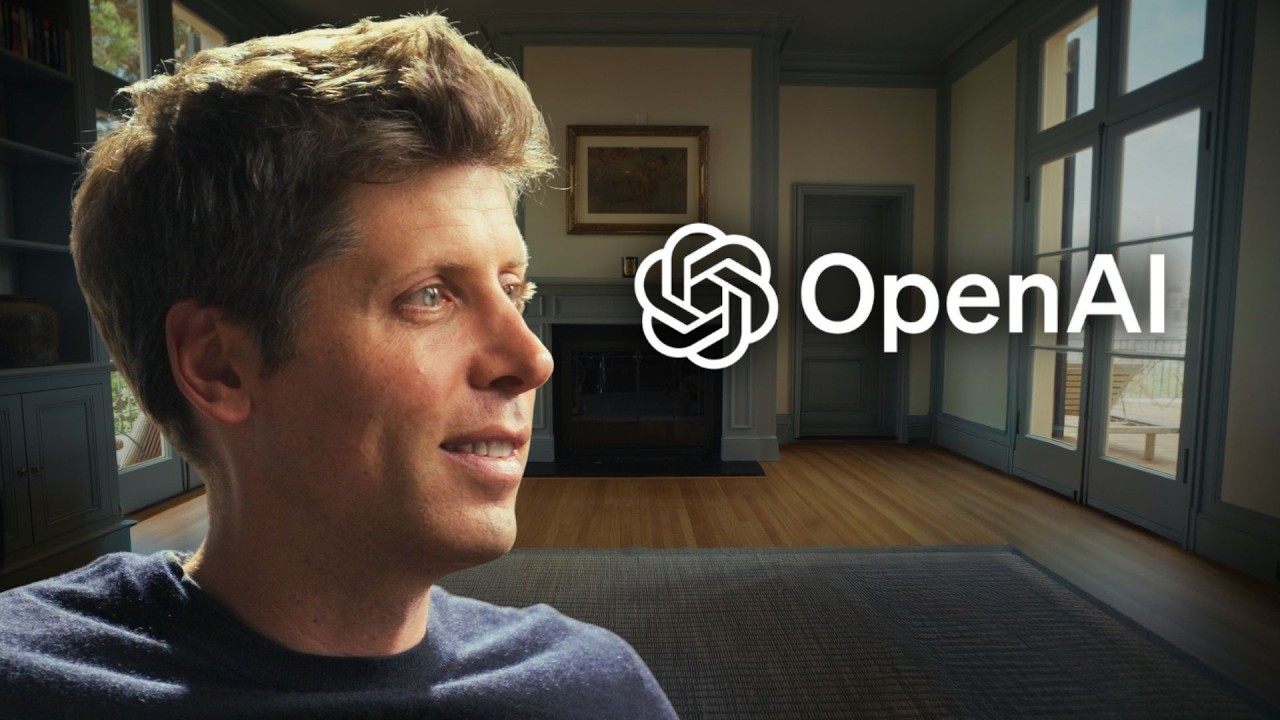
    Sam Altman’s discussion on “How to Build the Future” highlights the evolution and vision behind OpenAI, focusing on pursuing Artificial General Intelligence (AGI) despite early criticisms. He stresses the potential for abundant intelligence and energy to solve global challenges, and the need for startups to focus, scale, and operate with high conviction. Altman emphasizes embracing new tech quickly, as this era is ideal for impactful innovation. He reflects on lessons from building OpenAI, like the value of resilience, adapting based on results, and cultivating strong peer groups for success.


    Sam Altman, CEO of OpenAI, is a powerhouse in today’s tech landscape, steering the company towards developing AGI (Artificial General Intelligence) and impacting fields like AI research, machine learning, and digital innovation. In a detailed conversation about his path and insights, Altman shares what it takes to build groundbreaking technology, his experience with Y Combinator, the importance of a supportive peer network, and how conviction and resilience play pivotal roles in navigating the volatile world of tech. His journey, peppered with strategic pivots and a willingness to adapt, offers valuable lessons for startups and innovators looking to make their mark in an era ripe for technological advancement.

    A Tech Visionary’s Guide to Building the Future

    Sam Altman’s journey from startup founder to the CEO of OpenAI is a fascinating study in vision, conviction, and calculated risks. Today, his company leads advancements in machine learning and AI, striving toward a future with AGI. Altman’s determination stems from his early days at Y Combinator, where he developed his approach to tech startups and came to understand the immense power of focus and having the right peers by your side.

    For Altman, “thinking big” isn’t just a motto; it’s a strategy. He believes that the world underestimates the impact of AI, and that future tech revolutions will likely reshape the landscape faster than most expect. In fact, Altman predicts that ASI (Artificial Super Intelligence) could be within reach in just a few thousand days. But how did he arrive at this point? Let’s explore the journey, philosophies, and advice from a man shaping the future of technology.


    A Future-Driven Career Beginnings

    Altman’s first major venture, Loopt, was ahead of its time, allowing users to track friends’ locations before smartphones made it mainstream. Although Loopt didn’t achieve massive success, it gave Altman a crash course in the dynamics of tech startups and the crucial role of timing. Reflecting on this experience, Altman suggests that failure and the rate of learning it offers are invaluable assets, especially in one’s early 20s.

    This early lesson from Loopt laid the foundation for Altman’s career and ultimately brought him to Y Combinator (YC). At YC, he met influential peers and mentors who emphasized the power of conviction, resilience, and setting high ambitions. According to Altman, it was here that he learned the significance of picking one powerful idea and sticking to it, even in the face of criticism. This belief in single-point conviction would later play a massive role in his approach at OpenAI.


    The Core Belief: Abundance of Intelligence and Energy

    Altman emphasizes that the future lies in achieving abundant intelligence and energy. OpenAI’s mission, driven by this vision, seeks to create AGI—a goal many initially dismissed as overly ambitious. Altman explains that reaching AGI could allow humanity to solve some of the most pressing issues, from climate change to expanding human capabilities in unprecedented ways. Achieving abundant energy and intelligence would unlock new potential for physical and intellectual work, creating an “age of abundance” where AI can augment every aspect of life.

    He points out that if we reach this tipping point, it could mean revolutionary progress across many sectors, but warns that the journey is fraught with risks and unknowns. At OpenAI, his team keeps pushing forward with conviction on these ideals, recognizing the significance of “betting it all” on a single big idea.


    Adapting, Pivoting, and Persevering in Tech

    Throughout his career, Altman has understood that startups and big tech alike must be willing to pivot and adapt. At OpenAI, this has meant making difficult decisions and recalibrating efforts based on real-world results. Initially, they faced pushback from industry leaders, yet Altman’s approach was simple: keep testing, adapt when necessary, and believe in the data.

    This iterative approach to growth has allowed OpenAI to push boundaries and expand on ideas that traditional research labs might overlook. When OpenAI saw promising results with deep learning and scaling, they doubled down on these methods, going against what was then considered “industry logic.” Altman’s determination to pursue these advancements proved to be a winning strategy, and today, OpenAI stands at the forefront of AI innovation.

    Building a Startup in Today’s Tech Landscape

    For anyone starting a company today, Altman advises embracing AI-driven technology to its full potential. Startups are uniquely positioned to benefit from this AI-driven revolution, with the advantage of speed and flexibility over bigger companies. Altman highlights that while building with AI offers an edge, founders must remember that business fundamentals—like having a competitive edge, creating value, and building a sustainable model—still apply.

    He cautions against assuming that having AI alone will lead to success. Instead, he encourages founders to focus on the long game and use new technology as a powerful tool to drive innovation, not as an end in itself.


    Key Takeaways

    1. Single-Point Conviction is Key: Focus on one strong idea and execute it with full conviction, even in the face of criticism or skepticism.
    2. Adapt and Learn from Failures: Altman’s early venture, Loopt, didn’t succeed, but it provided lessons in timing, resilience, and the importance of learning from failure.
    3. Abundant Intelligence and Energy are the Future: The foundation of OpenAI’s mission is achieving AGI to unlock limitless potential in solving global issues.
    4. Embrace Tech Revolutions Quickly: Startups can harness AI to create cutting-edge products faster than established companies bound by rigid planning cycles.
    5. Fundamentals Matter: While AI is a powerful tool, success still hinges on creating real value and building a solid business foundation.

    As Sam Altman continues to drive OpenAI forward, his journey serves as a blueprint for how to navigate the future of tech with resilience, vision, and an unyielding belief in the possibilities that lie ahead.