Elon’s Tech Tree Convergence: Why the Future of AI is Moving to Space
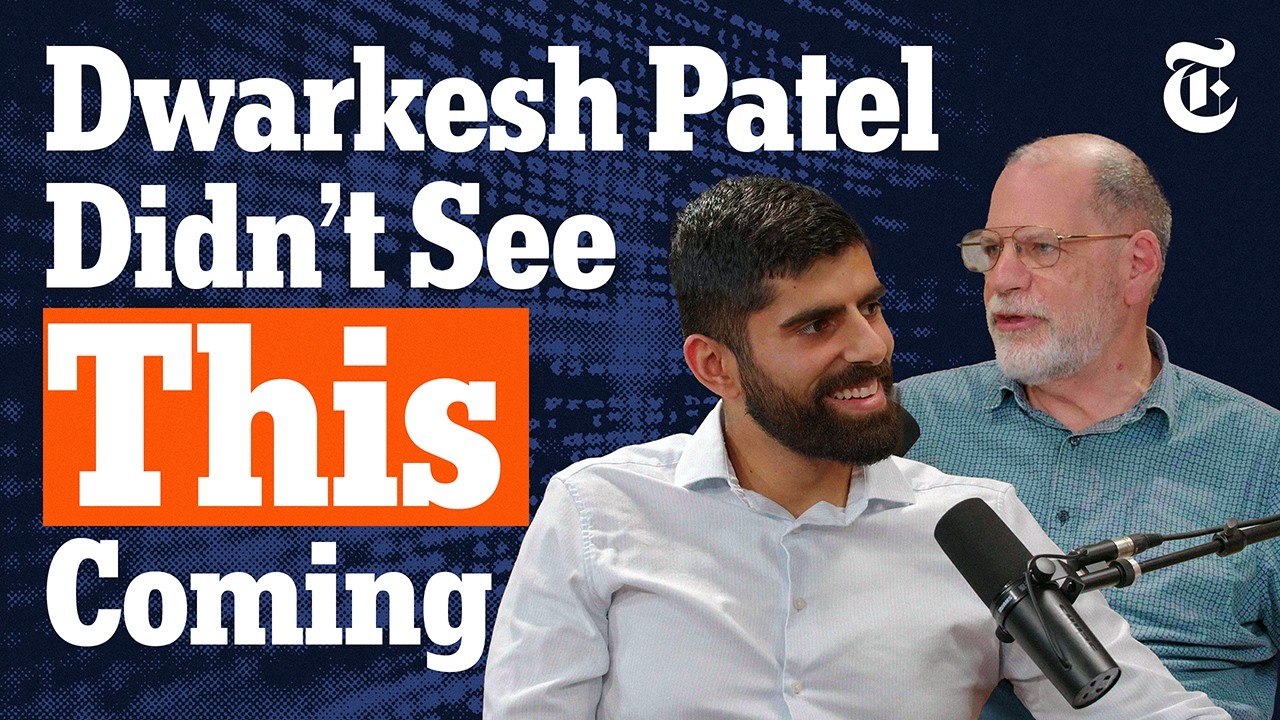
The latest sit-down between Elon Musk and Dwarkesh Patel is a roadmap for the next decade. Musk describes a world where the limitations of Earth—regulatory red tape, flat energy production, and labor shortages—are bypassed by moving the “tech tree” into orbit and onto the lunar surface.
TL;DW (Too Long; Didn’t Watch)
Elon Musk predicts that within 30–36 months, the most economical place for AI data centers will be space. Due to Earth’s stagnant power grid and the difficulty of permitting, SpaceX and xAI are pivoting toward orbital data centers powered by sun-synchronous solar, eventually scaling to the Moon to build a “multi-petawatt” compute civilization.
Key Takeaways
The Power Wall: Electricity production outside of China is flat. By 2026, there won’t be enough power on Earth to turn on all the chips being manufactured.
Space GPUs: Solar efficiency is 5x higher in space. SpaceX aims for 10,000+ Starship launches a year to build orbital “hyper-hyperscalers.”
Optimus & The Economy: Once humanoid robots build factories, the global economy could grow by 100,000x.
The Lunar Mass Driver: Mining silicon on the Moon to launch AI satellites into deep space is the ultimate scaling play.
Truth-Seeking AI: Musk argues that forcing “political correctness” makes AI deceptive and dangerous.
Detailed Summary: Scaling Beyond the Grid
Musk identifies energy as the immediate bottleneck. While GPUs are the main cost, the inability to get “interconnect agreements” from utilities is halting progress. In space, you get 24/7 solar power without batteries. Musk predicts SpaceX will eventually launch more AI capacity annually than the cumulative total existing on Earth.
The discussion on Optimus highlights the “S-curve” of manufacturing. Musk believes Optimus Gen 3 will be ready for million-unit annual production. These robots will initially handle “dirty/boring” tasks like ore refining, eventually closing the recursive loop where robots build the factories that build more robots.
Thoughts: The Most Interesting Outcome
Musk’s philosophy remains rooted in keeping civilization “interesting.” Whether or not you buy into the 30-month timeline for space-based AI, his “maniacal urgency” is shifting from cars to the literal stars. We are witnessing the birth of a verticalized, off-world intelligence monopoly.
In a surprise appearance at the 2026 World Economic Forum in Davos, Elon Musk sat down with BlackRock CEO Larry Fink to discuss the engineering challenges of the coming decade. The conversation laid out an aggressive timeline for AI, robotics, and the colonization of space, framed by Musk’s goal of maximizing the future of human consciousness.
⚡ TL;DR
Elon Musk predicts AI will surpass individual human intelligence by the end of 2026 and collective human intelligence by 2030. To overcome Earth’s energy bottlenecks, he plans to move AI data centers into space within the next three years, utilizing orbital solar power and the cold vacuum for cooling. Additionally, Tesla’s humanoid robots are slated for public sale by late 2027.
🚀 Key Takeaways
The Intelligence Explosion: AI is expected to be smarter than any single human by the end of 2026, and smarter than all of humanity combined by 2030 or 2031.
Orbital Compute: SpaceX aims to launch solar-powered AI data centers into space within 2–3 years to leverage 5x higher solar efficiency and natural cooling.
Robotics for the Public: Humanoid “Optimus” robots are currently in factory testing; public availability is targeted for the end of 2027.
Starship Reusability: SpaceX expects to prove full rocket reusability this year, which would decrease the cost of space access by 100x.
Solving Aging: Musk views aging as a “synchronizing clock” across cells that is likely a solvable problem, though he cautions against societal stagnation if people live too long.
📝 Detailed Summary
The discussion opened with a look at the massive compounded returns of Tesla and BlackRock, establishing the scale at which both leaders operate. Musk emphasized that his ventures—SpaceX, Tesla, and xAI—are focused on expanding the “light of consciousness” and ensuring civilization can survive major disasters by becoming multi-planetary.
Musk identified electrical power as the primary bottleneck for AI. He noted that chip production is currently outpacing the grid’s ability to support them. His “no-brainer” solution is space-based AI. By moving data centers to orbit, companies can bypass terrestrial power constraints and weather cycles. He also highlighted China’s massive lead in solar deployment compared to the U.S., where high tariffs have slowed the transition.
The conversation concluded with Musk’s “philosophy of curiosity.” He shared that his drive stems from wanting to understand the meaning of life and the nature of the universe. He remains an optimist, arguing that it is better to be an optimist and wrong than a pessimist and right.
🧠 Thoughts
The most striking part of this talk is the shift toward space as a practical infrastructure solution for AI, rather than just a destination for exploration. If SpaceX achieves full reusability this year, the economic barrier to launching heavy data centers disappears. We are moving from the era of “Internet in the cloud” to “Intelligence in the stars.” Musk’s timeline for AGI (Artificial General Intelligence) also feels increasingly urgent, putting immense pressure on global regulators to keep pace with engineering.
In a wide-ranging discussion on the No Priors Podcast, NVIDIA Founder and CEO Jensen Huang reflects on the rapid evolution of artificial intelligence throughout 2025 and provides a strategic roadmap for 2026. From the debunking of the “AI Bubble” to the rise of physical robotics and the “ChatGPT moments” coming for digital biology, Huang offers a masterclass in how accelerated computing is reshaping the global economy.
TL;DW (Too Long; Didn’t Watch)
The Core Shift: General-purpose computing (CPUs) has hit a wall; the world is moving permanently to accelerated computing.
The Jobs Narrative: AI automates tasks, not purposes. It is solving labor shortages in manufacturing and nursing rather than causing mass unemployment.
The 2026 Breakthrough: Digital biology and physical robotics are slated for their “ChatGPT moment” this year.
Geopolitics: A nuanced, constructive relationship with China is essential, and open source is the “innovation flywheel” that keeps the U.S. competitive.
Key Takeaways
Scaling Laws & Reasoning: 2025 proved that scaling compute still translates directly to intelligence, specifically through massive improvements in reasoning, grounding, and the elimination of hallucinations.
The End of “God AI”: Huang dismisses the myth of a monolithic “God AI.” Instead, the future is a diverse ecosystem of specialized models for biology, physics, coding, and more.
Energy as Infrastructure: AI data centers are “AI Factories.” Without a massive expansion in energy (including natural gas and nuclear), the next industrial revolution cannot happen.
Tokenomics: The cost of AI inference dropped 100x in 2024 and could drop a billion times over the next decade, making intelligence a near-free commodity.
DeepSeek’s Impact: Open-source contributions from China, like DeepSeek, are significantly benefiting American startups and researchers, proving the value of a global open-source ecosystem.
Detailed Summary
The “Five-Layer Cake” of AI
Huang explains AI not as a single app, but as a technology stack: Energy → Chips → Infrastructure → Models → Applications. He emphasizes that while the public focuses on chatbots, the real revolution is happening in “non-English” languages, such as the languages of proteins, chemicals, and physical movement.
Task vs. Purpose: The Future of Labor
Addressing the fear of job loss, Huang uses the “Radiologist Paradox.” While AI now powers nearly 100% of radiology applications, the number of radiologists has actually increased. Why? Because AI handles the task (scanning images), allowing the human to focus on the purpose (diagnosis and research). This same framework applies to software engineers: their purpose is solving problems, not just writing syntax.
Robotics and Physical AI
Huang is incredibly optimistic about robotics. He predicts a future where “everything that moves will be robotic.” By applying reasoning models to physical machines, we are moving from “digital rails” (pre-programmed paths) to autonomous agents that can navigate unknown environments. He foresees a trillion-dollar repair and maintenance industry emerging to support the billions of robots that will eventually inhabit our world.
The “Bubble” Debate
Is there an AI bubble? Huang argues “No.” He points to the desperate, unsatisfied demand for compute capacity across every industry. He notes that if chatbots disappeared tomorrow, NVIDIA would still thrive because the fundamental architecture of the world’s $100 trillion GDP is shifting from CPUs to GPUs to stay productive.
Analysis & Thoughts
Jensen Huang’s perspective is distinct because he views AI through the lens of industrial production. By calling data centers “factories” and tokens “output,” he strips away the “magic” of AI and reveals it as a standard industrial revolution—one that requires power, raw materials (data/chips), and specialized labor.
His defense of Open Source is perhaps the most critical takeaway for policymakers. By arguing that open source prevents “suffocation” for startups and 100-year-old industrial companies, he positions transparency as a national security asset rather than a liability. As we head into 2026, the focus is clearly shifting from “Can the model talk?” to “Can the model build a protein or drive a truck?”
In a wide-ranging, three-hour deep dive recorded at the Tesla Gigafactory, Elon Musk sat down with Peter Diamandis and Dave Blundin to map out a future that feels more like science fiction than reality. From the “supersonic tsunami” of AI to the launch of orbital data centers, Musk’s 2026 vision is a blueprint for a world defined by radical abundance, universal high income, and the dawn of the technological singularity.
⚡ TLDW (Too Long; Didn’t Watch)
We are currently living through the Singularity. Musk predicts AGI will arrive by 2026, with AI exceeding total human intelligence by 2030. Key bottlenecks have shifted from “code” to “kilowatts,” leading to a massive push for Space-Based Data Centers and solar-powered AI satellites. While the transition will be “bumpy” (social unrest and job displacement), the destination is Universal High Income, where goods and services are so cheap they are effectively free.
🚀 Key Takeaways
The 2026 AGI Milestone: Musk remains confident that Artificial General Intelligence will be achieved by next year. By 2030, AI compute will likely surpass the collective intelligence of all humans.
The “Chip Wall” & Power: The limiting factor for AI is no longer just chips; it’s electricity and cooling. Musk is building Colossus 2 in Memphis, aiming for 1.5 gigawatts of power by mid-2026.
Orbital Data Centers: With Starship lowering launch costs to sub-$100/kg, the most efficient way to run AI will be in space—using 24/7 unshielded solar power and the natural vacuum for cooling.
Optimus Surgeons: Musk predicts that within 3 to 5 years, Tesla Optimus robots will be more capable surgeons than any human, offering precise, shared-knowledge medical care globally.
Universal High Income (UHI): Unlike UBI, which relies on taxation, UHI is driven by the collapse of production costs. When labor and intelligence cost near-zero, the price of “stuff” drops to the cost of raw materials.
Space Exploration: NASA Administrator Jared Isaacman is expected to pivot the agency toward a permanent, crude-based Moon base rather than “flags and footprints” missions.
📝 Detailed Summary
The Singularity is Here
Musk argues that we are no longer approaching the Singularity—we are in it. He describes AI and robotics as a “supersonic tsunami” that is accelerating at a 10x rate per year. The “bootloader” theory was a major theme: the idea that humans are merely a biological bridge designed to give rise to digital super-intelligence.
Energy: The New Currency
The conversation pivoted heavily toward energy as the fundamental “inner loop” of civilization. Musk envisions Dyson Swarms (eventually) and near-term solar-powered AI satellites. He noted that China is currently “running circles” around the US in solar production and battery deployment, a gap he intends to close via Tesla’s Megapack and Solar Roof technologies.
Education & The Workforce
The traditional “social contract” of school-college-job is broken. Musk believes college is now primarily for “social experience” rather than utility. In the future, every child will have an individualized AI tutor (Grock) that is infinitely patient and tailored to their “meat computer” (the brain). Career-wise, the focus will shift from “getting a job” to being an entrepreneur who solves problems using AI tools.
Health & Longevity
While Musk and Diamandis have famously disagreed on longevity, Musk admitted that solving the “programming” of aging seems obvious in retrospect. He emphasized that the goal is not just living longer, but “not having things hurt,” citing the eradication of back pain and arthritis as immediate wins for AI-driven medicine.
🧠 Final Thoughts: Star Trek or Terminator?
Musk’s vision is one of “Fatalistic Optimism.” He acknowledges that the next 3 to 7 years will be incredibly “bumpy” as companies that don’t use AI are “demolished” by those that do. However, his core philosophy is to be a participant rather than a spectator. By programming AI with Truth, Curiosity, and Beauty, he believes we can steer the tsunami toward a Star Trek future of infinite discovery rather than a Terminator-style collapse.
Whether you find it exhilarating or terrifying, one thing is certain: 2026 is the year the “future” officially arrives.
What happens when the world’s most famous biohacker and a leading network state theorist team up? You get a blueprint for a “Longevity Network State.” In this recent discussion, Bryan Johnson and Balaji Srinivasan discuss moving past the FDA era into an era of high-velocity biological characterization and startup societies.
TL;DW (Too Long; Didn’t Watch)
Balaji and Bryan argue that the primary barrier to human longevity isn’t just biology—it’s the regulatory state. They propose creating a Longitudinal Network State focused on “high-fidelity characterization” (measuring everything about the body) followed by a Longevity Network State where experimental therapies can be tested in risk-tolerant jurisdictions. The goal is to make “Don’t Die” a functional reality through rapid iteration, much like software development.
Key Takeaways
Regulation is the Barrier: The current US regulatory framework allows you to kill yourself slowly with sugar and fast food but forbids you from trying experimental science to extend your life.
The “Don’t Die” Movement: Bryan Johnson’s Blueprint has transitioned from a “viral intrigue” to a global movement with credibility among world leaders.
Visual Phenotypes Matter: People don’t believe in longevity until they see it in the face, skin, or hair. Aesthetics are the “entry point” for public belief in life extension.
The Era of Wonder Drugs: We are exiting the era of minimizing side effects and re-entering the era of “large effect size” drugs (like GLP-1s/Ozempic) that have undeniable visual results.
Characterization First: Before trying “wild” therapies, we need better data. A “Longitudinal Network State” would track thousands of biomarkers (Integram) for a cohort of people to establish a baseline.
Gene and Cell Therapy: The most promising treatments for significant life extension include gene therapy (e.g., Follistatin, Klotho), cell therapy, and Yamanaka factors for cellular reprogramming.
Detailed Summary
1. The FDA vs. High-Velocity Science
Balaji argues that we are currently “too damn slow.” He contrasts the 1920s—where Banting and Best went from a hypothesis about insulin to mass production and a Nobel Prize in just two years—with today’s decades-long drug approval process. The “Don’t Die Network State” is proposed as a jurisdiction where “willing buyers and willing sellers” can experiment with safety-tested but “efficacious-unproven” therapies.
2. The Power of “Seeing is Believing”
Bryan admits that when he started, he focused on internal biomarkers, but the public only cared when his skin and hair started looking younger. They discuss how visual “wins”—like reversing gray hair or increasing muscle mass via gene therapy—are necessary to trigger a “fever pitch” of interest similar to the current boom in Artificial General Intelligence (AGI).
3. The Roadmap: Longitudinal to Longevity
The duo landed on a two-step strategy:
The Longitudinal Network State: A cohort of “prosumers” (perhaps living at Balaji’s Network School) who undergo $100k/year worth of high-fidelity measurements—blood, saliva, stool, proteomics, and even wearable brain imaging (Kernel).
The Longevity Network State: Once a baseline is established, these participants can trial high-effect therapies in friendly jurisdictions, using their data to catch off-target effects immediately.
4. Technological Resurrection and Karma
Balaji introduces the “Dharmic” concept of genomic resurrection. By sequencing your genome and storing it on a blockchain, a community could “reincarnate” you in the future via chromosome synthesis once the technology matures—a digital form of “good karma” for those who risk their lives for science today.
Thoughts: Software Speed for Human Biology
The most provocative part of this conversation is the reframing of biology as a computational problem. Companies like NewLimit are already treating transcription factors as a search space for optimization. If we can move the “trial and error” of medicine from 10-year clinical trials to 2-year iterative loops in specialized economic zones, the 21st century might be remembered not for the internet, but for the end of mandatory death.
However, the challenge remains: Risk Tolerance. As Balaji points out, society accepts a computer crash, but not a human “crash.” For the Longevity Network State to succeed, it needs “test pilots”—individuals willing to treat their own bodies as experimental hardware for the benefit of the species.
What do you think? Would you join a startup society dedicated to “Don’t Die”?
In this deep-dive conversation, Dr. Andrew Huberman joins Chris Williamson to discuss the latest protocols for optimizing the human brain and body. Moving beyond simple tips, Huberman explains the mechanisms behind stress, sleep, focus, and the role of spirituality in mental health. If you feel like your brain has been “hijacked” by the digital age, this is your manual for taking it back.
TL;DW (Too Long; Didn’t Watch)
Cortisol is not the enemy: You need a massive spike in the first hour of waking to set your circadian clock and prevent afternoon anxiety.
Digital focus is dying: To reclaim deep work, you must eliminate “sensory layering”—the buildup of digital inputs before you even start a task.
Sleep is physical: Moving your eyes in specific patterns and using “mind walks” can physically trigger the brain’s “off” switch for body awareness (proprioception).
Spirituality as a “Top-Down” Protocol: Relinquishing control to a higher power acts as a powerful neurological bypass for breaking bad habits and chronic stress.
Key Takeaways for 2026
1. The “Morning Spike” Protocol
Most people try to suppress cortisol, but Huberman argues that early morning cortisol is the “first domino” for health. By viewing bright light (sunlight or 10,000 lux artificial light) within the first 60 minutes of waking, you amplify your morning cortisol spike by up to 50%. This creates a “negative feedback loop” that naturally lowers cortisol in the evening, ensuring better sleep and reduced anxiety.
2. Eliminating Sensory Layering
Thoughts are not spontaneous; they are “layered” sensory memories. If you check your phone before working, your brain is still processing those infinite digital inputs while you try to focus. Huberman recommends “boring breaks” and a “no-phone zone” for at least 15 minutes before deep work to clear the mental slate.
3. The Glymphatic “Wash”
Brain fog is often a literal buildup of metabolic waste (ammonia, CO2) in the cerebral spinal fluid. To optimize clearance, Huberman suggests sleeping on your side with the head slightly elevated. This aids the glymphatic system in “washing” the brain during deep sleep, which is why we look “puffy” or “glassy-eyed” after a poor night’s rest.
4. The Next Supplement Wave
While Vitamin D and Creatine are now mainstream, Huberman predicts Magnesium (specifically Threonate and Bisglycinate) will be the next frontier. Beyond sleep, Magnesium is critical for protecting against hearing loss and the cognitive decline associated with sensory deprivation.
Detailed Summary
Understanding Stress & Burnout
Huberman identifies two types of burnout: the “wired but tired” state (inverted cortisol) and the “square wave” state (constantly high stress). The solution isn’t just “less stress,” but better-timed stress. Pushing your body into a high-cortisol state early in the day through light, hydration, and movement prevents the HPA axis from staying “primed” for stress later in the day.
The Architecture of Habits
Breaking a bad habit requires top-down control from the prefrontal cortex to suppress the “lower” hypothalamic urges (the “seven deadly sins”). Interestingly, Huberman notes that for many, this top-down control is exhausted by daily life. This is where faith and prayer come in; by “handing over” control to a higher power, individuals often find a neurological bypass that makes behavioral change significantly easier.
Hacking Your Mitochondrial DNA
The conversation touches on the cutting edge of “three-parent IVF” and the role of mitochondrial DNA (inherited solely from the mother). Huberman explains how red and near-infrared light can “charge” the mitochondria by interacting with the water surrounding these cellular power plants, effectively boosting cellular energy and longevity.
Thoughts and Analysis
What makes this 2026 update unique is Huberman’s transition from purely “bio-mechanical” advice to a more holistic view of the human experience. His admission of a serious daily prayer practice marks a shift in the “optimizing” community—moving away from the idea that we can (or should) control every variable through willpower alone.
The “Competitive Advantage of Resilience” is perhaps the most salient point of the discussion. In a world where “widespread fragility” is becoming the norm due to digital distraction, those who can master sensory restriction and circadian timing will have an almost unfair advantage in their professional and personal lives.
In this wide-ranging conversation on The Knowledge Project to kick off 2026, James Clear (author of Atomic Habits) joins Shane Parrish to discuss the evolution of habit formation, the “tyranny of labels,” and why success is ultimately about having power over your own time.
If you are looking to reset your systems for the new year, this episode offers a masterclass in standardizing behavior before optimizing it.
TL;DW (Too Long; Didn’t Watch)
Identity over Outcomes: Stop setting goals to “read a book” and start casting votes for the identity of “becoming a reader.”
Standardize Before You Optimize: Use the 2-Minute Rule to master the art of showing up before worrying about the quality of the performance.
Environment Design: Discipline is often a result of environment, not willpower. Make good habits obvious and bad habits invisible.
Patience & The Stone Cutter: Progress is often invisible (like heating an ice cube) until you hit a “phase transition.”
Move Like Thunder: A strategy of quiet, intense preparation followed by a high-impact release.
Key Takeaways
1. Every Action is a Vote for Your Identity
The most profound shift in habit formation is moving from “outcome-based” habits to “identity-based” habits. Every time you do a workout, you aren’t just burning calories; you are casting a vote for the identity of “someone who doesn’t miss workouts.” As the evidence piles up, your self-image changes, and you no longer need willpower to force the behavior—you simply act in accordance with who you are.
2. The 2-Minute Rule
A habit must be established before it can be improved. Clear suggests scaling any new habit down to just two minutes. Want to do yoga? Your only goal is to “take out the yoga mat.” It sounds ridiculous, but you cannot optimize a habit that doesn’t exist. Master the entry point first.
3. Broad Funnel, Tight Filter
When learning a new subject, Clear uses a “broad funnel” approach. He opens 50 tabs, scans hundreds of comments or reviews, and looks for patterns. He then applies a “tight filter,” distilling hours of research into just a few high-signal sentences. This is how you separate noise from wisdom.
4. The Tyranny of Labels
Be careful with the labels you adopt (e.g., “I am a surgeon,” “I am a Republican”). The tighter you cling to a specific identity, the harder it becomes to grow beyond it. Instead, define yourself by the lifestyle you want (e.g., “I want a flexible life where I teach”) rather than a specific job title.
5. Success is Power Over Your Days
Ultimately, Clear defines success not by net worth, but by the ability to control your time. Whether that means spending time with kids, traveling, or deep-diving into a new project, the goal is autonomy.
Detailed Summary
The Physics of Progress
Clear uses the analogy of an ice cube sitting in a cold room. You heat the room from 25 degrees to 26, then 27, then 28. The ice cube doesn’t melt. There is no visible change. But at 32 degrees, it begins to melt. The work done in the earlier degrees wasn’t wasted; it was stored. This is “invisible progress.” Most people quit during the “stored energy” phase because they don’t see immediate results. You have to be willing to hammer the rock 100 times without a crack, knowing the 101st blow will split it.
Environment Design vs. Willpower
We often look at professional athletes and admire their “discipline.” Clear argues that their environment does the heavy lifting: coaches plan the drills, nutritionists prep the food, and the gym is designed for work. When you design your own space (e.g., putting apples in a visible bowl or deleting social media apps from your phone), you reduce the friction for good habits and increase it for bad ones. You want your desired behavior to be the path of least resistance.
Strategic Positioning & “Moving Like Thunder”
Clear shares a personal internal motto: “Move like thunder.” Thunder is unseen until the moment it crashes. This represents a strategy of working quietly and diligently in the background, accumulating leverage and quality, and then releasing it all at once for maximum impact. This ties into his concept of “sequencing”—doing things in the right order so that your current advantages (like time) can be traded for new advantages (like an audience).
Digital Minimalism
Clear discusses his “social media detox.” He deleted social apps and email from his phone, reclaiming massive amounts of headspace. The challenge, he notes, is figuring out “what to do when there is nothing to do.” Without the crutch of the phone, you have to relearn how to be bored or how to fill small gaps of time with higher-quality inputs, like audiobooks or simple reflection.
Thoughts
There is a specific kind of pragmatism in James Clear’s thinking that is refreshing. He doesn’t rely on “motivation,” which is fickle, but on “systems,” which are reliable.
The most valuable insight here for creators and entrepreneurs is the concept of “Standardize before you optimize.” We often get paralyzed trying to find the perfect workflow, the perfect camera settings, or the perfect diet plan. Clear reminds us that an optimized plan for a habit you don’t actually perform is worthless. It is better to do a “C+” workout consistently than to plan an “A+” workout that you never start.
Additionally, the “Broad Funnel, Tight Filter” concept is a perfect mental model for the information age. We are drowning in data; the skill of the future isn’t accessing information, but ruthlessly filtering it down to the few sentences that actually matter.
In a wide-ranging conversation on The Network State Podcast, David Friedberg and Balaji Srinivasan diagnose the terminal inefficiencies of the modern Western state and propose a radical alternative: the “Fractal Frontier.” They argue that the path to re-industrialization lies not in capital, but in the creation of “Freedom Cities” and decentralized economic zones that prioritize the “speed of physics” over the “speed of permits.”
Key Takeaways
The State as an Organism: The modern state has become a self-preserving entity that consumes capital to grow its own influence, leading to “political billionaires” who allocate billions without market accountability.
The Fractal Frontier: Pioneering is no longer geographic; it is “fractal,” consisting of special economic zones (SEZs), cloud-coordinated communities, and startup cities.
Regulatory Croft: U.S. infrastructure costs (especially in nuclear energy) are 100x higher than China’s due to bureaucratic layers and permitting, rather than material or labor shortages.
“Go Broke, Go Woke”: Economic stagnation is the root of cultural division. When individuals lose the ability to progress by 10% annually, they pivot to “oppressor vs. oppressed” narratives to rationalize their decline.
10th Amendment Activism: The solution to federal overreach is returning regulatory authority to the states to create competitive “Elon Zones” for robotics, biotech, and energy.
Detailed Summary
1. The Meta-Organism and the “Homeless Industrial Complex”
David Friedberg describes the state as a biological organism competing for survival. In cities like San Francisco, this manifests as a “homeless industrial complex” where nonprofits receive massive state funding to manage, rather than solve, social issues. Because these organizations are funded based on the scale of the problem, they have no market incentive for the problem to disappear. This leads to administrative bloat where “political billionaires” allocate more cash per year than the net worth of most market-driven entrepreneurs, yet produce fewer tangible results.
2. Closing the 100x Cost Gap: Physics vs. Permits
The conversation highlights the staggering industrial disparity between the U.S. and China. While the U.S. is bogged down in decades of permitting for a single reactor, China is building 400 nuclear plants and pioneering Gen-4 thorium technology. Friedberg argues that regulation acts as a binary “0 or 1” gate; if the state says no, no amount of capital can fix the problem. To compete, America must establish zones where the “speed of physics” dictates the pace of building, bypassing the labyrinthine “croft” of federal agencies like the EPA and FDA.
3. Ascending vs. Descending Worlds
Balaji introduces the concept of “ascending” and “descending” worlds. The legacy West is currently a descending world, where the younger generation graduates into “negative capital”—saddled with debt and locked out of homeownership. This reality triggers the “Happiness Hypothesis”: humans require a visible 10% annual improvement in their standard of living to remain satisfied. When that growth disappears, society cannibalizes itself through tribalism and culture wars. In contrast, the “ascending world” (Asia and the Internet) is characterized by rapid physical and digital growth.
4. The Blueprint for Freedom Cities
The proposed “reboot” involves the creation of Freedom Cities on barren, low-incumbency land. These zones would utilize 10th Amendment activism to return power to the states, allowing for the rapid deployment of drones, robotics, and biotech. By creating “Special Economic Zones” (SEZs) that offer more efficient regulatory terms than the federal government, these cities can attract global talent and capital. This model offers a path to re-industrialization by allowing builders to “opt-in” to new social and economic contracts.
Analysis & Final Thoughts
The most profound takeaway is that exit is a form of fighting. By leaving dysfunctional systems to build new ones, innovators are not surrendering; they are preserving the startup spirit that founded America. The “Fractal Frontier” is the necessary response to a centralized state that has reached its point of no return. Whether through “Special Elon Zones” or startup cities in Singapore, the builders of the next century will be those who prioritize the “speed of physics” over the “speed of permits.”
For more insights on startup societies and the future of the network state, visit ns.com.
While Pete is famous for his advice on savings rates and index funds, this conversation took a different turn. They dove deep into the philosophy of living a good life after the paycheck stops, dealing with the loss of work identity, and the surprising joy of doing your own laundry.
Here is a breakdown of the conversation, the tools they use to track happiness, and how to handle the “identity crisis” of early retirement.
TL;DW (Too Long; Didn’t Watch)
The Badassity Tracker: Pete uses a physical paper checklist to track daily habits (sunlight, exercise, no phone in bed) to ensure good days happen by default.
The Good Life Algorithm: Doug discusses Cal Newport’s method of scoring days (-2 to +2) to create a feedback loop for happiness.
Identity Shift: You are not your job. Pete identifies as a “free human” or a “learner,” while Doug views himself through the lens of freedom.
Health Hacks: Early dinners and fasting can drastically improve sleep quality.
Margin Loans: Pete explains how to use margin loans against a stock portfolio to buy real estate with cash (risky, but powerful).
Key Takeaways
1. Automate Your “Good Days”
Pete realized that a “good life” is just a series of good days strung together. He developed the Badassity Tracker, a simple grid on his fridge. It tracks basics like:
No phone upon waking.
Morning sunlight immediately.
Salad for lunch.
Alcohol-free days.
Physical weight training.
The goal isn’t perfection; it’s to color in enough boxes that the habits eventually become internalized. Once they are automatic, you don’t even need the tracker anymore.
2. The Identity Crisis is Real (But Solvable)
One of the hardest parts of early retirement is answering the question, “What do you do?” when you no longer have a fancy job title. Pete suggests stripping away the corporate identity before you quit. Start scaling back work hours to let other parts of your life—parenting, hobbies, physical skills—fill the void. Eventually, the job becomes the distraction, not the purpose.
3. “Puttering” is Productive
We are conditioned to believe productivity equals money. Pete argues that “puttering”—fixing a welding project, hanging laundry on a sunny day, or cooking a complex meal—is the fabric of a happy life. These activities are productive for your soul and your household, even if they don’t show up in a bank account.
Detailed Summary
Habit Tracking vs. The Good Life Algorithm
Doug introduced Cal Newport’s concept of the “Good Life Algorithm,” which involves rating your day on a scale from -2 to +2. This creates a data feedback loop: if you notice you are consistently unhappy when you travel or when you skip workouts, you stop doing those things. Pete takes a more prescriptive approach with his checklist, arguing that we already know what makes humans happy (movement, nature, socialization), so we should just track our adherence to those biological necessities.
Social Overload and Small Talk
Both hosts discussed the drain of social small talk. Doug noted that telling the same stories repeatedly at parties became exhausting. The solution? Seek fewer, deeper friendships where you can skip the small talk and discuss “big ideas” immediately. Pete calls this the difference between being a public figure and just being a guy hanging out with friends.
Financial Strategy: The Margin Loan
Answering a listener question, Pete explained a high-level financial maneuver: using a Margin Loan. Instead of selling stocks (and triggering taxes) to buy a house, you can borrow against your portfolio.
Warning: This is dangerous if the market crashes. Pete advises borrowing no more than 25% of your portfolio value to remain safe even during a 50% market drop. This allows you to be a “cash buyer” in real estate without actually liquidating your investments.
Intentional Communities
Discussions touched on Culdesac (a car-free community in Tempe) and the dream of building a village with friends. Pete’s advice? You don’t need to be a billionaire developer. You can build a “creates-ac” simply by convincing 3-4 of your best friends to move into the same neighborhood or apartment complex. Proximity is the key to community, not fancy architecture.
Thoughts & Analysis
What stands out most in this conversation is the evolution of Mr. Money Mustache. Ten years ago, the focus might have been heavily on the math of spending 50% less than you earn. Today, the focus is entirely on Life Design.
The discussion on “laundry” was particularly telling. Pete described the joy of waking up, seeing the sun, and realizing it was a “perfect laundry day.” To a career-focused individual, laundry is a chore to be outsourced. To a free human, it is a connection to nature and a productive physical act.
Ultimately, the episode reinforces that Financial Independence isn’t about sitting on a beach; it’s about reclaiming the time to do the work you actually want to do, whether that’s building a house, recording a podcast, or just hanging your clothes on the line.
In a landmark episode of the Joe Rogan Experience (JRE #2422), NVIDIA CEO Jensen Huang sat down for a rare, deep-dive conversation covering everything from the granular history of the GPU to the philosophical implications of artificial general intelligence. Huang, currently the longest-running tech CEO in the world, offered a fascinating look behind the curtain of the world’s most valuable company.
For those who don’t have three hours to spare, we’ve compiled the “Too Long; Didn’t Watch” breakdown, key takeaways, and a detailed summary of this historic conversation.
TL;DW (Too Long; Didn’t Watch)
The OpenAI Connection: Jensen personally delivered the first AI supercomputer (DGX-1) to Elon Musk and the OpenAI team in 2016, a pivotal moment that kickstarted the modern AI race.
The “Sega Moment”: NVIDIA almost went bankrupt in 1995. They were saved only because the CEO of Sega invested $5 million in them after Jensen admitted their technology was flawed and the contract needed to be broken.
Nuclear AI: Huang predicts that within the next decade, AI factories (data centers) will likely be powered by small, on-site nuclear reactors to handle immense energy demands.
Driven by Fear: Despite his success, Huang wakes up every morning with a “fear of failure” rather than a desire for success. He believes this anxiety is essential for survival in the tech industry.
The Immigrant Hustle: Huang’s childhood involved moving from Thailand to a reform school in rural Kentucky where he cleaned toilets and smoked cigarettes at age nine to fit in.
Key Takeaways
1. AI as a “Universal Function Approximator”
Huang provided one of the most lucid non-technical explanations of deep learning to date. He described AI not just as a chatbot, but as a “universal function approximator.” While traditional software requires humans to write the function (input -> code -> output), AI flips this. You give it the input and the desired output, and the neural network figures out the function in the middle. This allows computers to solve problems for which humans cannot write the code, such as curing diseases or solving complex physics.
2. The Future of Work and Energy
The conversation touched heavily on resources. Huang noted that we are in a transition from “Moore’s Law” (doubling performance) to “Huang’s Law” (accelerated computing), where the cost of computing drops while energy efficiency skyrockets. However, the sheer scale of AI requires massive power. He envisions a future of “energy abundance” driven by nuclear power, which will support the massive “AI factories” of the future.
3. Safety Through “Smartness”
Addressing Rogan’s concerns about AI safety and rogue sentience, Huang argued that “smarter is safer.” He compared AI to cars: a 1,000-horsepower car is safer than a Model T because the technology is channeled into braking, handling, and safety systems. Similarly, future computing power will be channeled into “reflection” and “fact-checking” before an AI gives an answer, reducing hallucinations and danger.
Detailed Summary
The Origin of the AI Boom
The interview began with a look back at the relationship between NVIDIA and Elon Musk. In 2016, NVIDIA spent billions developing the DGX-1 supercomputer. At the time, no one understood it or wanted to buy it—except Musk. Jensen personally delivered the first unit to a small office in San Francisco where the OpenAI team (including Ilya Sutskever) was working. That hardware trained the early models that eventually became ChatGPT.
The “Struggle” and the Sega Pivot
Perhaps the most compelling part of the interview was Huang’s recounting of NVIDIA’s early days. In 1995, NVIDIA was building 3D graphics chips using “forward texture mapping” and curved surfaces—a strategy that turned out to be technically wrong compared to the industry standard. Facing bankruptcy, Huang had to tell his only major partner, Sega, that NVIDIA could not complete their console contract.
In a move that saved the company, the CEO of Sega, who liked Jensen personally, agreed to invest the remaining $5 million of their contract into NVIDIA anyway. Jensen used that money to pivot, buying an emulator to test a new chip architecture (RIVA 128) that eventually revolutionized PC gaming. Huang admits that without that act of kindness and luck, NVIDIA would not exist today.
From Kentucky to Silicon Valley
Huang shared his “American Dream” story. Born in Taiwan and raised in Thailand, his parents sent him and his brother to the U.S. for safety during civil unrest. Due to a misunderstanding, they were enrolled in the Oneida Baptist Institute in Kentucky, which turned out to be a reform school for troubled youth. Huang described a rough upbringing where he was the youngest student, his roommate was a 17-year-old recovering from a knife fight, and he was responsible for cleaning the dorm toilets. He credits these hardships with giving him a high tolerance for pain and suffering—traits he says are required for entrepreneurship.
The Philosophy of Leadership
When asked how he stays motivated as the head of a trillion-dollar company, Huang gave a surprising answer: “I have a greater drive from not wanting to fail than the drive of wanting to succeed.” He described living in a constant state of “low-grade anxiety” that the company is 30 days away from going out of business. This paranoia, he argues, keeps the company honest, grounded, and agile enough to “surf the waves” of technological chaos.
Some Thoughts
What stands out most in this interview is the lack of “tech messiah” complex often seen in Silicon Valley. Jensen Huang does not present himself as a visionary who saw it all coming. Instead, he presents himself as a survivor—someone who was wrong about technology multiple times, who was saved by the grace of a Japanese executive, and who lucked into the AI boom because researchers happened to buy NVIDIA gaming cards to train neural networks.
This humility, combined with the technical depth of how NVIDIA is re-architecting the world’s computing infrastructure, makes this one of the most essential JRE episodes for understanding where the future is heading. It serves as a reminder that the “overnight success” of AI is actually the result of 30 years of near-failures, pivots, and relentless problem-solving.