PJFP.com

Pursuit of Joy, Fulfillment, and Purpose

Day: May 12, 2026

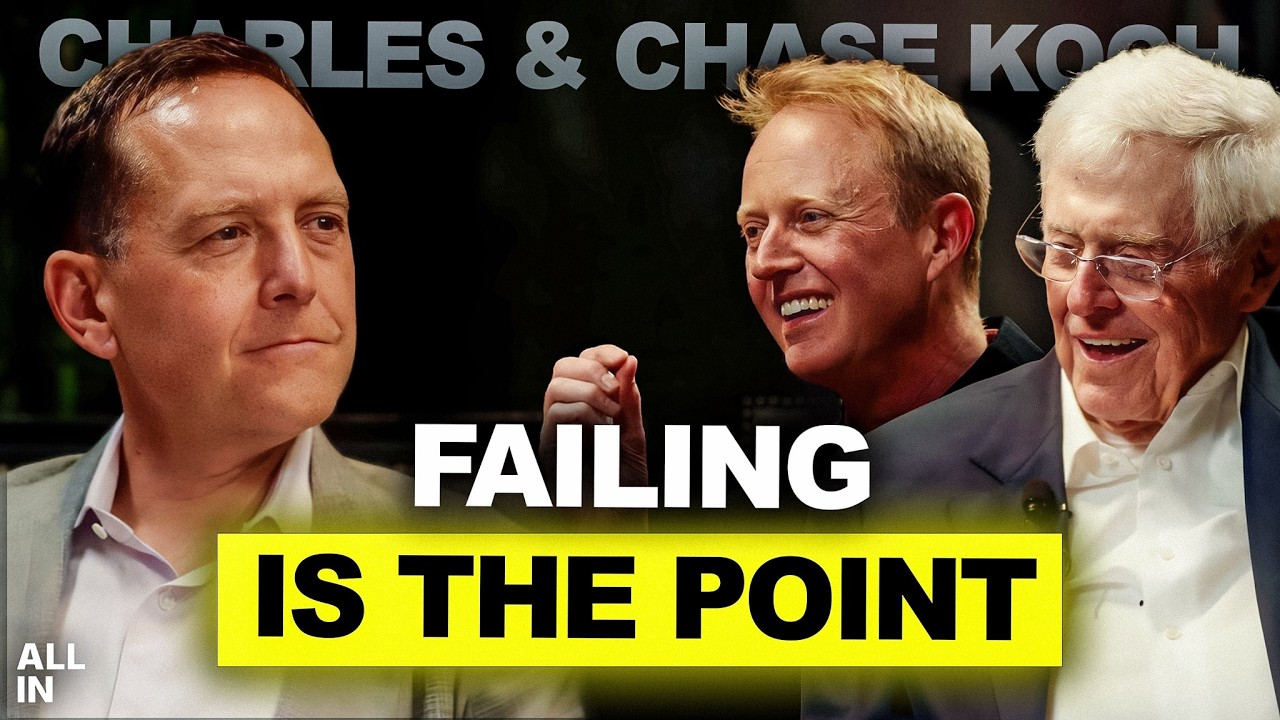
  • Charles Koch and Chase Koch on Koch Industries: 130K Employees, 60 Countries, and a $150B Private Empire Built on Principle-Based Management

    Charles Koch and his son Chase Koch sat down with David Friedberg for a long, candid Forbes/All-In conversation about how a small crude-oil gathering operation in southern Oklahoma became Koch Industries, a privately held company with more than 130,000 employees across 60 countries and revenue that would land it comfortably in the top 25 of the Fortune 500 if it were public. They walked through the founding story, the management principles that drove a 9,000x increase in value since the early 1960s, the failures that almost wiped out the company, and the philanthropic and political work being done through Stand Together. Watch the full conversation on YouTube.

    TLDW

    Charles Koch took over a roughly 300-person family business in 1961 at age 25, fired the bureaucratic president, and built it into one of the most profitable private companies in the world by applying what he calls Principle-Based Management. The core insight is to be capability bounded rather than industry bounded, to run an internal “republic of science” that rewards contribution over credentials, and to treat failure as the price of experimental discovery. Koch grew through both organic capability extension and large acquisitions like Georgia Pacific in 2005 and Molex in 2013, mostly by replacing top-down hierarchies with bottom-up empowerment. The conversation covers the founding by Fred Koch, the near-death failures of the late 1990s “gas to bread spread,” the Pine Bend Minnesota refinery turnaround, the role of Wichita as a competitive advantage, Chase Koch’s path from feed-yard laborer to leader of Koch Disruptive Technologies, the launch of Stand Together as a long-running social-change platform, the rejection of single-party politics, the case against entitlements and occupational licensing, and the principles for using AI as a permissionless empowerment tool rather than a top-down control system. The throughline is Viktor Frankl: more people have the means to live and less meaning to live for, and the remedy is helping every individual find a gift and apply it in a way that creates value for others.

    Key Takeaways

    • Koch Industries today has more than 130,000 employees across 60 countries and has increased in value roughly 9,000 times since Charles took over in the early 1960s, when headcount was about 300.
    • Founded in 1940 by Fred Koch in Wichita, Kansas. The two starting businesses were designing fractionating trays (separating liquids by boiling point) and crude oil gathering in Oklahoma.
    • Charles got three engineering degrees at MIT, worked at Arthur D. Little, and reluctantly came back at 25 only after his father said he would otherwise sell the company. His father gave him full autonomy over every decision except selling.
    • His first move was firing the controlling, memo-driven president and replacing protectionism with three pillars: create value for customers, empower employees, and own end-to-end execution. They built their own plant in Italy instead of stitching together European subcontractors.
    • The defining mental model is “capability bounded, not industry bounded.” You expand into adjacent industries where the capabilities you have already proven (operations, logistics, trading, refining, branding) create more value than incumbents, not because the new industry is in the same SIC code.
    • Wholly owned business platforms today include engineered projects and construction, solar plants, commodity trading and distribution, fertilizers, refined products, chemicals and polymers, glass, forest and consumer products, electrical products (Molex), and management software, plus four distinct investment firms.
    • Koch is explicitly not a Berkshire-style conglomerate of independent silos. Chase frames it as an integrated republic of science, an integrated set of capabilities that share knowledge and people across business lines.
    • “If you are not failing at anything, you are not doing anything new.” Failure is treated as the cost of experimental discovery, but only when the learning value exceeds the cost.
    • The worst failures came from violating the hiring rule. Hire on values first, talent second. People with destructive motivation (power and control over contribution) hide failures and invent successes, and the damage compounds when those people get promoted into leadership.
    • The 1973 trading blowup nearly bankrupted the company. The late 1990s “gas to bread spread” strategy, an attempt to vertically integrate from natural gas through fertilizer to pizza crust, nearly wiped out all of Koch’s earnings. Lesson repeated, then internalized.
    • One acquisition shipped hundreds of millions of dollars in out-of-the-money hog feed contracts that nobody bothered to read before closing. Apply the scientific method: try as hard to disprove your hypothesis as to prove it.
    • Georgia Pacific was acquired in 2005 for roughly $20 billion when Koch was much smaller. They originally tried to buy only the commodity pulp piece so GP could re-rate as a pure consumer-products company at a higher P/E. When legal blockers killed that path, they bought the whole thing.
    • The Georgia Pacific culture change started with sending Joe Moeller in as CEO. He gutted the 51st-floor coat-and-tie executive suite, fired the most bureaucratic managers, moved everyone to working floors, and converted the executive floor into open meeting rooms. Signals like that drive culture more than memos do.
    • The Pine Bend, Minnesota refinery, bought in 1969, was one of the hardest cultural turnarounds. The union strike was violent (rifles fired, switch engines used to ram units), Charles ran it nine months without union labor on his honeymoon, the work rules finally changed, and once empowered, the workforce built its own machine shop, cut spare-part costs, and grew capacity tenfold. It is now one of the best refineries in the country.
    • Molex, bought in 2013, took years to transform. The dominant paradigm was top-line growth rather than bottom-line value creation, partly because it had been public for 30 years and the market rewarded the wrong things. Almost every successful turnaround required swapping in leadership with a bottom-up empowerment paradigm.
    • Sheep-dipping does not work. Pushing 130,000 people through the same seminar will not rewire habits. Coaching one struggling team until it succeeds creates social mimicry. Other teams ask to be next. Demand for Principle-Based Management coaches now exceeds supply inside the company.
    • The talent doctrine is values first, skills second, credentials last. Wichita and the farm-team labor pool are deliberate competitive advantages because farm kids tend to show up contribution-motivated rather than entitlement-motivated.
    • The current Koch CIO, Jared Benson, joined as a contractor striping lines in the parking lot and has no college degree. He learned data science, built the cyber-security capability, and ran circles around credentialed peers.
    • Public-company pressure to IPO was the biggest external threat. Charles refused. Staying private was the only way to keep reinvesting roughly 90 percent of profits, to maintain the capability-bounded model that no analyst would underwrite, and to keep accepting low P/E optics on commodity businesses inside the portfolio.
    • Three things any lasting partnership requires (marriage, business, employment): shared vision, shared values, and complementary capabilities. Miss any one and it does not last.
    • Chase Koch started at age 15 throwing tennis matches to escape practice, got shipped to a feed yard the next morning, shared a single-wide trailer with his boss, shoveled manure, and discovered the “glorious feeling of accomplishment” that his grandfather Fred had written about in his famous letter to the next generation.
    • At one point Chase was promoted to president of Koch Fertilizer, realized after nine months he was a builder and not an optimization operator, walked into his boss’s office, and fired himself. The role went to someone with the right comparative advantage and the business grew faster. Chase went on to launch Koch Disruptive Technologies (KDT).
    • KDT would have been shut down on a normal three-to-four-year venture timeline. Koch kept investing through the losses because of two principles: experimental discovery and creative destruction. They also valued the knowledge inflow about disruptive technologies that might one day eat the core business.
    • Comparative advantage applies to careers. The job of 20,000 plus Koch supervisors is to keep moving people into roles where they can actually contribute. Beating people up in the wrong seat is destructive.
    • Viktor Frankl frames the moral problem of the era: ever more people have the means to live and no meaning to live for. Without meaning, people default to either power or pleasure. Both lead, at scale, to totalitarianism, authoritarianism, or socialism.
    • Charles credits Maslow’s Eupsychian Management, Polanyi’s Personal Knowledge, Hayek’s price-signal work, and Frankl’s logotherapy as the intellectual foundations of Principle-Based Management. The five dimensions: vision, virtue and talents, knowledge processes, decision rights, and incentives.
    • Stand Together, founded in 2003, is a community of close to a thousand business leaders pooling effort on social change rather than working in philanthropic silos. The thesis: every human has a gift and the institutions are putting up barriers (broken schools, broken criminal justice, bad policy, occupational licensing).
    • Education is one of Stand Together’s biggest fronts. Pre-COVID, around 20 percent of families were open to a new model. Post-COVID, it is 70 to 80 percent. They back Alpha School (Joe Liemandt), Khan Academy (Sal Khan), and the VELA Education Fund alongside the Walton family. Roughly 5,000 micro-schools have been seeded.
    • The model for social change mirrors the business model: bet on the person closest to the problem who already shows results. Scott Strode and The Phoenix gym went from a couple of Colorado locations to one million people overcoming addiction, with relapse rates under 10 percent, by combining community and exercise rather than top-down treatment programs.
    • Charles says the biggest mistake of the first 50 years was trying to drive social change through a single political party, first the Libertarians and later just the Republicans. The current rule, from Frederick Douglass, is “I will unite with anybody to do right and with nobody to do wrong.”
    • His policy critique cuts in every direction: occupational licensing locks out newcomers, the treatment of working illegal immigrants is wrong, tariffs undermine division of labor by comparative advantage and raise prices, and entitlements once created are nearly impossible to dismantle.
    • Asked whether capitalism inevitably compounds into monopoly, Charles answers that the fix is removing barriers to others realizing their potential, not capping the winners.
    • On AI: the principle is permissionless innovation. Cost is collapsing, access is widening, and the right use is empowering individuals to learn 1000x faster, not concentrating power.
    • Koch backs Cosmos and other AI efforts that apply market-based management principles. Internally, they launched an AI app called Principal Companion that uses the Socratic method to walk users through problems using the book’s principles, from business to parenting.
    • Writing the new book (Charles’s fifth, Chase’s first) was the most important project Chase has worked on. They went through 27 versions of the stewardship chapter. Charles still corrects Koch leaders who say “the proof is in the pudding” instead of “the proof of the pudding is in the eating.”
    • When asked about legacy, Charles answered in one sentence: he wants the country to more fully live up to the promise in the Declaration of Independence.

    Detailed Summary

    From 300 Employees to 130,000 Across 60 Countries

    Koch Industries was founded in 1940 by Fred Koch in Wichita, Kansas. When Charles took over full-time in 1961, the company had about 300 employees and two main businesses: designing fractionating trays for separating liquids by boiling point, and a crude oil gathering system in Oklahoma. Today the company has more than 130,000 employees in 60 countries and has grown in value roughly 9,000 times over that period. If Koch were public, revenue would put it easily in the top 25 of the Fortune 500. The portfolio spans engineered projects and construction, solar plants, commodity trading and distribution, fertilizers, refined products, chemicals and polymers, glass, forest and consumer products, electrical products through Molex, management software, and four distinct investment vehicles. Roughly 90 percent of profits are reinvested.

    Charles Coming In at 25

    Charles describes himself as a poor engineer who happened to be good at math, science, and theory and bad at making or operating things. After three MIT degrees and a stint at Arthur D. Little doing what he calls “absurd” management consulting at 25, his father called and said the company was struggling and his health was failing. Either Charles came back or it would be sold. He came back. The condition was full autonomy: Charles could run it any way he wanted, the only decision requiring approval was selling. Within a short time he fired the previous president, a top-down memo-writer obsessed with controlling spending, and rewrote the operating philosophy around three things: create value for customers, empower employees, and own the value chain end to end. Instead of farming European fractionating trays out to multiple subcontractors and then re-assembling, Koch built its own plant in Italy.

    Capability Bounded, Not Industry Bounded

    This is the single most important strategic idea in the interview. Conventional advice told Koch to become an integrated oil major because they were in crude oil gathering. Charles rejected that and ran on Hayek and Adam Smith instead: division of labor by comparative advantage. Be in the part of any value chain where you can create more value than anyone else. From crude oil gathering, Koch leveraged operations, logistics, and trading into pipelines, refineries, natural gas, chemicals, fertilizers. Georgia Pacific looked like a non sequitur, wood products, but the underlying capability set transferred, and the acquisition also added branding as a new capability that fed back into the system. Chase calls the result not a Berkshire-style conglomerate of independent businesses but a republic of science: an integrated set of capabilities that share talent, knowledge, and laboratories.

    The Failures That Almost Killed the Company

    Charles spends a long stretch on failures, because he says the strength is in them. The 1973 trading blowup tied to the Middle East war could have bankrupted the company. The late 1990s “gas to bread spread” was an attempt to control the entire chain from natural gas to nitrogen fertilizer to grain to pizza crust. It violated almost every principle in the book at once and wiped out most of Koch Industries earnings for the decade. One acquisition closed before anyone read the hog-feed contracts, and on closing day they discovered hundreds of millions of dollars of out-of-the-money positions. Every failure traced back to two violations: hiring leaders with destructive motivation (power and control instead of contribution), and skipping the scientific method (trying to prove a hypothesis instead of disprove it). Charles says “repetition penetrates even the dullest of minds,” and he had to be punished enough times before the lesson took.

    Georgia Pacific, Molex, and the Pine Bend Refinery

    Three acquisition stories show how Koch transfers culture into businesses ten times larger than the corporate playbook would normally allow. Georgia Pacific in 2005 was a $20 billion bet on a company much larger than Koch at the time. Joe Moeller, sent in as CEO, immediately fired the most bureaucratic managers, gutted the 51st-floor private-elevator executive suite (coat and tie required to visit), moved everyone to working floors, and turned the old executive floor into open meeting rooms. Molex, bought in 2013, had been public for 30 years and ran on top-line growth thinking because that is what the market rewarded. Changing the paradigm to bottom-up empowerment and bottom-line value creation took years and required new leadership. Pine Bend, Minnesota, bought in 1969, was the hardest. The union ran the refinery, ignored work rules, and went on a violent strike when Koch tried to change them, firing rifles and ramming switch engines into units. Charles ran the refinery nine months without union labor (during his honeymoon), eventually got the work rules changed, then spent years rebuilding the culture. The empowered workforce designed and built its own machine shop, cut spare-part costs, and grew capacity tenfold. Pine Bend is now one of the best refineries in the country.

    How Principle-Based Management Actually Diffuses

    Charles is blunt that they tried “sheep dipping” first, hauling everyone through a seminar. It did not work, because changing a habit means rewiring the brain through work at intensity over time, the way a weightlifter has to retrain to become a marathoner. The model that did work was small. Find one team that is struggling, coach them with principles, let them succeed, and the rest of the company asks to be next. Social mimicry replaces top-down rollout. Internally the Principle-Based Management group is now in higher demand than any other function.

    Talent: Values First, Skills Second, Credentials Last

    Koch deliberately stayed in Wichita partly to access a “farm team” labor pool of people who grew up contribution-motivated. Chase tells the story of Jared Benson, who started as a contractor striping lines in the Koch parking lot, taught himself data science, built the company’s cyber-security capability, and is now CIO with no college degree. The lesson runs against the prestige-school default of most large companies. Contribution motivation, not credentials, predicts long-run output, and Charles is willing to “hire slow and stupid” for anyone with bad values so the company can flush them quickly. Aligning incentives matters as much as hiring: reward people on overall long-run contribution to Koch’s future, including the value of what was learned from a failed experiment, not on near-term P&L.

    Why Koch Stayed Private

    Multiple parties pushed hard for an IPO over the decades. Charles refused. Going public would have made the capability-bounded model impossible to communicate to analysts, would have forced a higher payout ratio and broken the reinvestment compounding, and would have introduced the short-termism that wrecks bottom-up empowerment. Buffett gets credit, but Berkshire does not try to integrate its businesses the way Koch does. Asked whether a non-owner public CEO could ever apply the principles, Charles allows it is possible if they can sell a different durable story (as Buffett did), but it is much harder.

    Chase Koch’s Path

    Chase tells two formative stories. The first is being shipped to a feed yard at 15, sharing a single-wide trailer with his boss, shoveling manure for minimum wage, and finding, for the first time, what his grandfather Fred had called “the glorious feeling of accomplishment.” The second is firing himself as president of Koch Fertilizer after nine months because he realized he was a builder, not an operator. The business outgrew where he would have taken it, and he went on to launch Koch Disruptive Technologies, the venture and innovation arm that now feeds technological insight back into every Koch business line. The comparative-advantage principle applied to a career, in public, by the boss’s son.

    Stand Together and Social Change

    Stand Together, founded in 2003, is the Koch family’s social-change platform. It now includes close to a thousand aligned business leaders. The animating belief is that every human has a gift and institutional barriers (broken schools, broken criminal justice, occupational licensing, bad policy) prevent most people from finding and applying it. The Phoenix gym founded by Scott Strode is the canonical Stand Together bet: a person closest to the problem, with results (relapse rates under 10 percent), funded to scale. In seven or eight years it has gone from a couple of Colorado locations to one million people. On education, post-COVID openness to new models jumped from roughly 20 percent of families to 70 to 80 percent. Stand Together backs Alpha School, Khan Academy, and the VELA Education Fund alongside the Walton family, and has helped seed roughly 5,000 micro-schools.

    Politics: The Single-Party Mistake

    Charles says for the first 50 of his 60 years in this work he avoided major-party politics, then concluded the country needed principle-based policies badly enough that engagement was required. The mistake was trying to do it through one party. The Libertarian Party turned into purity tests reminiscent of the early Communist Party. Doing it through Republicans blew up too. The rule going forward is Frederick Douglass’s: unite with anybody to do right and with nobody to do wrong. He is openly critical of both parties on occupational licensing, immigration policy, tariffs, entitlements, and the treatment of working illegal immigrants. He invokes Jefferson on slavery to describe his current mood: “If God is just, I despair for the future of our country.”

    Capitalism, Compounding, and AI

    Asked whether capitalism inevitably ends in monopoly because successful operators compound, Charles flips the framing. The remedy is not to cap the winners, it is to remove the barriers preventing everyone else from realizing their potential. Occupational licensing, immigration restriction on contributors, tariffs that undermine comparative advantage. On AI, Koch’s principle is permissionless innovation: cost is collapsing, access is widening, and the right outcome is individual empowerment and 1000x faster learning, not power concentration. Internally they launched Principal Companion, an AI app built on the principles in the book that uses the Socratic method to walk users through problems rather than handing out answers. Koch backs Cosmos and other AI ventures applying market-based management.

    The Philosophical Spine

    Charles cites four foundational thinkers. Polanyi’s Personal Knowledge gave him the model for how habits encode knowledge in the brain and why retraining is bodily work. Maslow’s Eupsychian Management supplied the empirical link between self-actualization and organizational performance. Hayek supplied the price system and the case against central planning. Frankl supplied the diagnosis: more means to live, less meaning to live for, and in that vacuum people drift to either power or pleasure, both paths to the slippery slope of authoritarianism and socialism. The Principle-Based Management answer is to design the company (and the country) so that everyone can find a gift and apply it to help others succeed.

    Thoughts

    The most useful concept in the conversation, the one worth stealing for any operator regardless of industry, is “capability bounded, not industry bounded.” Most companies define their addressable market by SIC code or competitive set. Koch defines it by the actual transferable skills they have demonstrated: operations, logistics, trading, refining, branding, cyber-security. Each acquisition is a probe to see whether the capability set creates more value than incumbents, and each acquisition that works hands back new capabilities (branding from Georgia Pacific, electronic-components engineering from Molex) that compound the option space. This is the same logic that makes Amazon’s AWS, advertising, and logistics businesses adjacent rather than diversifications. Industry conglomerates collapse. Capability conglomerates do not, because the capabilities reinforce each other.

    The honest treatment of failure is rarer than it sounds. Most CEOs who say “we celebrate failure” mean something performative. Charles’s version has teeth because the failures he names (the 1973 trade, the late 1990s vertical-integration push, the unread hog contracts) were almost terminal, and the lesson he draws is not “fail fast” but a specific causal claim about hiring leaders with destructive motivation. The asymmetry between contribution-motivated and destructively motivated employees, with the latter capable of hiding losses and inventing successes until the damage compounds, is the kind of insight that only comes from forty years of post-mortems. The remedy, hire slow and dumb if values are bad so you can purge fast, is uncomfortable enough to be real advice.

    The case for staying private is also harder than the founder-flex version usually heard from private operators. Charles is not arguing that private is better for everyone. He is arguing that a specific operating model (high reinvestment, cross-business capability sharing, willingness to take long P/E hits on commodity legs, leadership succession over decades) cannot be communicated to public markets without distortion. If you do not run that model, going public is fine. If you do, going public would have killed the system. That distinction is worth holding on to when reading the founder-control discourse in tech, because most “stay private forever” arguments do not actually meet that bar.

    The political reflection is the most surprising part of the conversation, particularly given the public reputation. Charles plainly says the biggest mistake of his life in social change was trying to do it through one party, that the Libertarians collapsed into purity-test factionalism, that the Republican approach failed in similar ways, and that the current operating rule is the one Frederick Douglass actually wrote down. He criticizes the current administration’s treatment of working illegal immigrants and the tariff regime by name. Whether one agrees or disagrees on policy, the willingness to grade your own past work in public, decades after the bets were placed, is rare at this level.

    Finally, the Frankl framing deserves a longer hearing than a podcast can give it. “Ever more people have the means to live and no meaning to live for” is the most economical statement of the malaise running through politics, addiction, education, and labor data right now. Koch’s bet is that the answer is not policy alone but a design problem: build institutions (companies, schools, philanthropies, AI tools) that let each individual find a gift and apply it in a way that creates value for others. That is the through-line connecting Principle-Based Management, Stand Together, the Alpha School partnership, The Phoenix gym, and Principal Companion. Whether it scales is an open question. The fact that one family business has spent 60 years pressure-testing it makes the experiment worth paying attention to.

    Watch the full Charles Koch and Chase Koch conversation on All-In and Forbes.

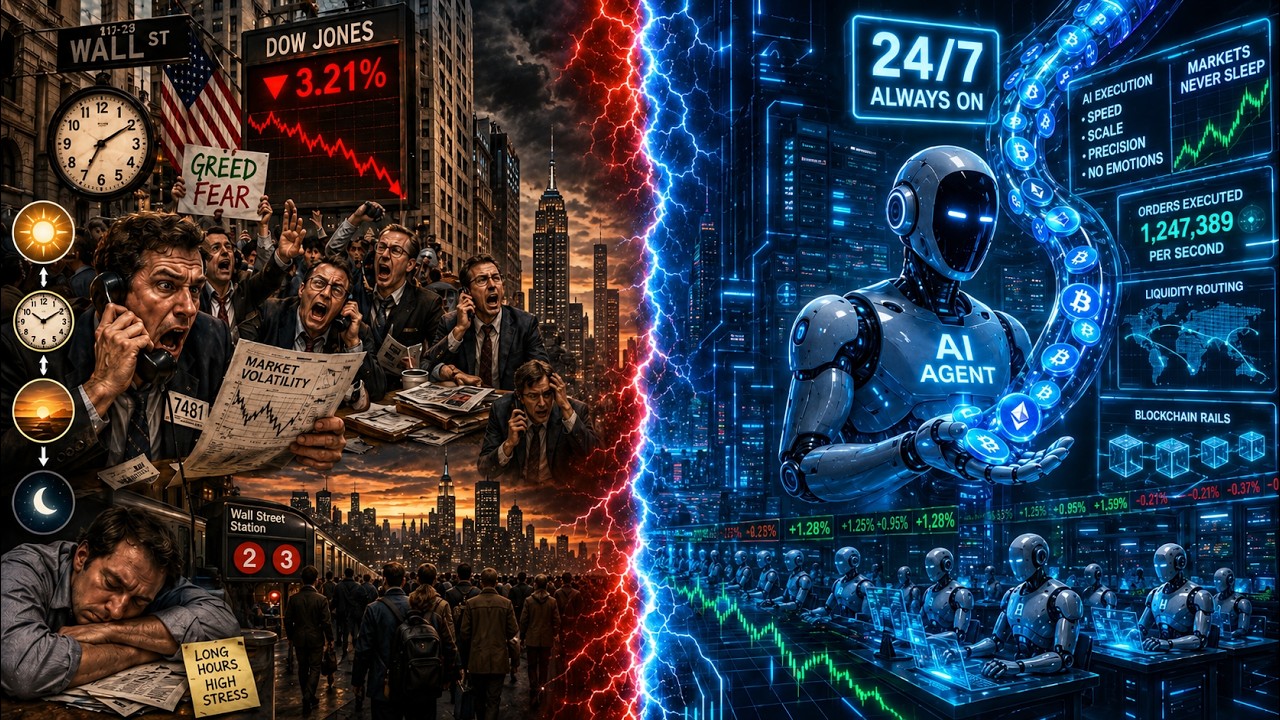
  • Bubbles, Parabolas and Speed Crashes: How AI Agents Are Ending Human Market Structure and Why This Is Not the Dot-Com Bubble

    The host opens this Saturday morning macro and AI markets video with a direct challenge to anyone calling the current move a bubble. The argument is that the market structure itself has changed, that AI agents now dominate trading and capital allocation, and that Charles Kindleberger’s Manias, Panics, and Crashes describes a world that no longer exists. The full hour-long conversation walks through earnings, PEG ratios, capex, the benchmark arbitrage trapping passive investors, the inflation regime shift, and where money is rotating now. Watch the original video here.

    TLDW

    AI is not a bubble in the Kindleberger sense because the market is no longer dominated by emotional human professionals. AI agents, retail risk-takers, and passive flows are reshaping price discovery while the spend is being funded by free cash flow from the most cash-rich companies in history, not bond-issuance manias like telecoms or oil. Earnings growth is 27 percent, semiconductor sales grew 88 percent year over year in March, OpenAI and Anthropic revenue is on near-vertical curves, Nvidia’s PE is at decade lows even as Cisco’s was 130 at the dot-com peak, and the PEG ratio for the S&P sits at 1.03 with one third of the host’s thematic basket under 1.0 while Microsoft, Amazon, Meta, Apple, and Alphabet all carry richer PEGs. The new regime brings speed crashes instead of multi-year recessions, persistent bottlenecks in power, chips, transportation, and chemicals, inflation pressure that pushes three-month bills below CPI for the first time since the inflation era, and a benchmark arbitrage forcing passive money to chase AI exposure. The host is selling two thirds of his Micron, rotating into Nvidia, Vistra, silver, Bitcoin, and Ethereum, and warning that tokenization launches scheduled for July 26 will be the next major regime change.

    Key Takeaways

    • The word bubble is being misapplied because the same people calling AI a bubble called QE, tariffs, oil, Bitcoin, and passive investing bubbles for fifteen years and were wrong every time.
    • Kindleberger’s Manias, Panics, and Crashes described a slow, linear, human-emotion-driven world. AI agents have no emotion, no memory of Druckenmiller’s 2000 top, and one goal: make money.
    • The simplest test for anyone bearish on AI is to ask how much they use artificial intelligence. If they have not used a tool like OpenClaw or similar agentic systems, they are still operating in the old market regime.
    • This buildout is funded by free cash flow and bond issuance at yields better than US Treasuries from companies with stronger balance sheets than the federal government, unlike the dot-com telecoms or 1970s oil majors.
    • The S&P 500 is up only 7 percent year to date. The bubble framing is being applied to a handful of names, not to broad indices that remain reasonably valued.
    • The agentic stage of AI started in late November and accelerated when OpenClaw went viral at the end of January. Token consumption is set to grow 15 to 50 times from the IQ stage.
    • Anthropic revenue is stair-stepping from 5 to 7 to 9 to 14 to 19 to 24 to 30 billion in annualized run rate, on pace to surpass Alphabet in revenue by mid-2028.
    • OpenAI’s backlog hit 1.3 to 1.4 trillion in the most recent earnings cycle and the company still does not have enough compute.
    • Dario Amodei told the world Anthropic was planning for 10 times growth per year. In Q1 they saw 80 times annualized growth, which is why compute is bottlenecked and Anthropic is renting from Amazon, Google, and Colossus.
    • S&P 500 earnings growth is 27.1 percent year over year. The only quarters that match are those coming out of recessions, and this is not a reopening trade.
    • 320 of 500 S&P companies have reported and the average earnings surprise is 20 percent. Forward estimates are up 25 percent year over year as analysts revise upward against the historical pattern.
    • Total semiconductor sales grew 88 percent year over year in March. Semis have moved in proportion to earnings, not in excess of them.
    • Cisco’s PE was 130 at the dot-com peak. Nvidia’s PE today is the lowest of the last decade because professionals cannot run concentrated positions in single names.
    • The Edward Yardeni PEG ratio for the S&P is 1.03. The hyperscalers are not cheap on PEG: Microsoft 1.4, Amazon 1.66, Meta 1.96, Apple 3, Alphabet near 5. Thirty of ninety-five names in the host’s thematic portfolio carry PEGs under 1.0.
    • Passive investing creates a benchmark arbitrage. Everyone long the S&P 500 through index funds is structurally underweight Intel, Nvidia, Micron, and every name actually going up. Pension funds and mutual funds are forced to chase AI exposure to keep up.
    • BlackRock’s Tony Kim at the Milken conference: compute and model layers added 8 trillion in market cap year to date while the service apps that make up two thirds of GDP lost 1.2 trillion. The benchmark arbitrage is already running.
    • Larry Fink predicted a futures market for computing power. Power plus chips is the oil of the intelligence economy.
    • Jensen Huang called this a 90 trillion dollar AI physical upgrade cycle. The one big beautiful bill bonus depreciation provision was designed to incentivize this capex magic.
    • The host is selling two thirds of his Micron position. The reasoning is the memory market started moving in September of last year, the DRAM ETF is the ninth most traded ETF with billion dollar daily volumes, and exhaustion indicators are flashing red.
    • Money from Micron is rotating into Nvidia, Vistra, silver, Bitcoin, and Ethereum. The view is that the energy and power side of the AI stack is lagging the semis and will catch up next.
    • Silver versus gold has not moved while Micron has gone parabolic. LME metals are breaking out. China is increasing gold purchases significantly month over month.
    • The expected CPI print of 3.7 percent will put three-month Treasury bills below CPI for the first time since the post-pandemic inflation era. That is when Bitcoin started its last major run.
    • Logistics Managers Index hit 69.9 in March, the fastest expansion since March 2022. Transportation prices are surging because there is no capacity. This typically only happens during tax cuts or post-COVID reopenings.
    • Payroll job creation in information, professional services, and financial activities is negative. AI is already replacing knowledge work. Job creation has shifted to mining, manufacturing, construction, trade, transportation, and utilities, which is structurally inflationary.
    • Whirlpool says appliance demand is at great financial crisis lows. The consumer PC and laptop market collapse is worse than 2008. AI is pulling capital and pricing power away from legacy consumer categories.
    • Mike Wilson’s data shows reacceleration across sectors, not just large cap tech. Small caps and median stocks are showing earnings growth too, just at smaller market caps.
    • Chevron’s CEO says global oil shortages are starting. Jeff Currie warns US storage tanks will run empty. Ships are still not transiting the Strait of Hormuz. Countries that learned this lesson will restock to higher inventory levels permanently.
    • The Renmac Bubble Watch threshold was crossed on a technical basis. The host considers technical exhaustion a stronger signal than narrative-driven bubble calls.
    • Goldman Sachs power demand reports, Guggenheim warnings on the power crunch, and BlackRock’s compute intensity research all triangulate on the same conclusion: capex needs are larger than current forecasts.
    • The thematic portfolio is up roughly 30 percent from March lows. Power, optical fiber, advanced packaging, chemicals, and rack-level infrastructure baskets are leading.
    • Sterling Infrastructure (STRL), Fluence batteries, ABB electrification, Hon Hai (Foxconn), Vistra, Eaton, and Soitec are highlighted as names lagging the megacaps but inside the same AI infrastructure trade.
    • John Roque at 22V Research is releasing weekly frozen rope charts, long-base breakouts across power, copper, grid equipment, utilities, natural gas, transportation, capital goods, and agriculture. They all map to the same AI plus inflation regime.
    • Bitcoin ETF outstanding shares hit new highs. BlackRock, Morgan Stanley, and Goldman are all running competitive products. Boomer and wealth manager allocation is accelerating into year end.
    • Tokenization rolls out July 26. Wall Street clearing has enlisted 50 firms. A16Z published their case in December 2024. The host considers this underweighted by most investors and is speaking on the topic at the II event in Fort Lauderdale.
    • Raoul Pal and Yoni Assia on the end of human trading: AI agents and crypto collide by moving finance from human speed to machine speed. Agents will trade, allocate, hedge, and shift capital through wallets and exchanges. Tokenization means ownership becomes programmable.
    • The new regime is bubbles, parabolas, and speed crashes. Corrections compress from years into months. The right strategy is to never go to cash, only to rebalance and slow down within the portfolio.
    • For traders, exhaustion indicators using 5-day and 14-day RSI plus DeMark signals identify potential speed crash setups. Intel and Micron are flashing red on those screens right now.

    Detailed Summary

    Why this is not Kindleberger’s world anymore

    The framing argument of the video is that Manias, Panics, and Crashes described a market dominated by human professionals operating with limited information and lagged feedback loops. When supply and demand fell out of sync, prices collapsed because nobody could see what was happening in real time. That world is gone. AI agents now manage a majority of professional fund flows. Information moves instantaneously. Retail investors trade differently than institutional pros, and the capital structure of the entire market has changed. The host argues that since the Great Financial Crisis, the combination of QE and exponential corporate growth produced the only companies in history worth 25 trillion dollars combined with no net debt. Their AI capex is funded by free cash flow and high-grade bonds, not panicked bond issuance like the dot-com telecoms or oil majors of the 1970s.

    The Druckenmiller anchor and why FOMO is the wrong lens

    The video reads the Stanley Druckenmiller story of buying six billion in tech at the 2000 top and losing three billion in six weeks. Every professional carries that scar. It has shaped a generation of money managers into seeing parabolic moves and immediately calling bubble. The host’s counter is that recession calls from wealthy professionals are themselves a form of hope. Cash-rich investors root for crashes because crashes give them entry points. If the bubble never breaks the way it broke in 2000, those investors stay locked out, and that is precisely what the AI regime is doing.

    Earnings, revenue, and the reality test

    The video walks through current numbers in detail. S&P 500 earnings growth is running 27.1 percent year over year, which only happens coming out of recessions. 320 companies have reported with an average 20 percent earnings surprise. Forward estimates were revised up 25 percent year over year, well above the historical pattern of starting-year estimates getting cut. Total semiconductor sales were up 88 percent year over year in March. Anthropic’s revenue trajectory is stair-stepping from 5 to 30 billion in annualized run rate on the back of Claude Opus 4.5, putting it on track to surpass Alphabet by mid-2028. OpenAI is sitting on a 1.3 to 1.4 trillion backlog and still cannot get enough compute. Dario Amodei told the public Anthropic planned for 10 times growth per year and saw 80 times in Q1.

    PE, PEG, and the valuation argument

    Cisco’s PE at the dot-com peak was 130. Nvidia, the indisputable lead dog of the AI buildout, currently has a PE at the lowest of its last decade. The S&P 500’s PE is roughly where it has been since the post-COVID money printing era, far below the dot-com peak. Edward Yardeni’s PEG ratio for the index sits at 1.03. The host built a PEG screen for his ninety-five name thematic portfolio. Thirty of those names trade at a PEG under 1.0. The hyperscalers everyone holds passively are the expensive ones: Microsoft 1.4, Amazon 1.66, Meta 1.96, Apple 3, Alphabet near 5. The capacity for forward PE compression sits in the names retail and active rotational money are buying, not in the index core.

    The benchmark arbitrage trap

    Most money is now in passive investing. By construction, an S&P 500 or MSCI World allocation is underweight the names that are actually rising. Pension funds, mutual funds, and any active manager benchmarked to those indices is forced to add AI exposure to keep pace. BlackRock’s Tony Kim made this point at Milken: 8 trillion in market cap has accrued to compute and model layers year to date, while service apps representing two thirds of GDP lost 1.2 trillion. The host calls this benchmark arbitrage and considers it the single most underappreciated driver of the current move.

    The 90 trillion dollar physical upgrade cycle

    Jensen Huang’s framing of a 90 trillion dollar AI upgrade includes autos, phones, computers, humanoids, robotics, and the military stack. The host considers this a global race between the US and China. The one big beautiful bill included bonus depreciation specifically to incentivize the capex push. Greg Brockman’s interview with Sequoia made the point that demand for intelligence is effectively unlimited, and that every company outside the hyperscalers, Morgan Stanley, Goldman, Eli Lilly, Merck, United Healthcare, needs their own data center compute or their margins will not keep up with competitors. In a capitalist system, that forces broad enterprise AI spending.

    Speed crashes replace recessions

    The new regime has corrections but they are fast. Since 2020 we have had multiple 20 percent corrections compressed into weeks instead of years. The host expects this pattern to continue for the next decade. Bottlenecks in power, chips, transportation, chemicals, and skilled labor will produce inflation spikes that trigger speed crashes, not traditional credit-cycle recessions. The Logistics Managers Index reading of 69.9 in March, with capacity contraction near record lows, signals exactly this kind of bottleneck environment. The host’s strategy in this regime is to never go to cash, only to rebalance and slow down within the portfolio.

    The inflation regime shift and the rotation out of Micron

    The expected CPI print of 3.7 percent will put three-month Treasury bills below CPI for the first time since the post-pandemic inflation era, restoring negative real yields. That was the condition under which Bitcoin first launched its major bull moves. The host has sold two thirds of his Micron position despite continued bullish conviction on the name, because the memory market is the most stretched on exhaustion indicators and the DRAM ETF is trading at unprecedented volume. The capital is rotating into Nvidia, Vistra, silver, Bitcoin, and Ethereum. Silver versus gold has not moved while semis went parabolic. LME metals are breaking out. China is increasing gold purchases. The energy and power side of the stack is the next leg up.

    AI is breaking the consumer and the labor market

    Whirlpool reports appliance demand at financial crisis lows. PCs and laptops are collapsing worse than 2008. Phones, autos, housing, all the categories Kindleberger’s framework was built around are under pressure because AI is pulling capital and pricing power into compute, power, and chemicals. Payroll job creation in information, professional services, and financial activities is negative as AI takes knowledge work. Job creation is rotating into mining, construction, manufacturing, trade, transportation, and utilities, which is structurally inflationary because those sectors require physical capacity and wages. That combination, wage inflation plus commodity inflation, makes it very difficult for the Fed to ease, even with Kevin Warsh likely taking over.

    Crypto, tokenization, and AI agents at machine speed

    The final section pivots to crypto. Bitcoin ETF outstanding shares hit new highs, BlackRock’s product remains dominant, and Morgan Stanley and Goldman have launched competing vehicles. Wealth managers and boomers are allocating. The Raoul Pal and Yoni Assia conversation on the end of human trading is the host’s headline reference: AI agents will trade, allocate, hedge, and shift capital at machine speed through programmable wallets and exchanges. Tokenization, scheduled for a major launch on July 26 with 50 Wall Street clearing firms onboarded, makes ownership programmable. A16Z laid out the case in December 2024. The host is speaking on tokenization at the II event in Fort Lauderdale May 13 through 15 and considers it the next regime-defining shift after agentic AI.

    Thoughts

    The strongest argument in this video is structural, not narrative. The shift from human professionals with anchored memories to AI agents and benchmark-driven passive flows is a real change in who sets prices. Whether or not you accept the host’s portfolio calls, the framing should make any investor pause before defaulting to dot-com pattern recognition. Cisco’s PE was 130 with no business model. Nvidia’s PE is at a decade low with a near monopoly on the picks and shovels of the largest capex cycle in industrial history. Those facts cannot both be true and produce the same outcome.

    The PEG framework is the cleanest test in the video. If you believe Nvidia, Micron, Intel, and the second-tier AI infrastructure names are bubbles, you are implicitly betting that earnings growth collapses. That bet was viable in 2000 because the companies driving the move had no earnings. It is much harder to bet against earnings growth when 320 companies have just printed a 20 percent average earnings beat and analysts are revising forward estimates up by 25 percent. The host’s argument is not that the prices are reasonable in absolute terms. It is that the bear case requires growth to fall off a cliff, and nothing in the order books, the capex commitments, or the compute backlog suggests that is imminent.

    The benchmark arbitrage point deserves more attention than it gets. If the majority of professional money is locked in passive structures that are by definition underweight the leading names, and if those managers are evaluated quarter to quarter against the benchmark they cannot match, the pressure to chase will compound. This is the opposite of the dot-com setup, where active managers were forced to add overpriced tech to keep up with the index. Here, the index itself is structurally underweight the trade, and the active managers chasing it are doing so against names with rational PEG ratios.

    The rotation thesis from Micron into power, silver, and crypto is more debatable. The energy and bottleneck story is real, but the timing of when the power trade catches up with the semi trade is the hard part. The host’s discipline of never going to cash and rebalancing through the cycle is a sensible response to a regime that produces speed crashes rather than slow drawdowns. The investors most hurt by this regime will not be the ones who are long the wrong names. They will be the ones who sit out waiting for an entry point that never comes.

    Tokenization is the most underappreciated thread in the video. If the July 26 rollout brings 50 clearing firms and real ownership programmability online, the second half of the year could produce a regime shift on top of the AI regime shift. AI agents transacting on tokenized assets at machine speed is the logical endpoint of the trends the host has been tracking, and it is the part of his framework that current market consensus has not yet priced.

    Watch the full conversation here.