PJFP.com

Pursuit of Joy, Fulfillment, and Purpose

Tag: Dubai

  • Uber CEO Dara Khosrowshahi on AI, Autonomous Vehicles, Robotaxis, Drones, and the Future of Transportation

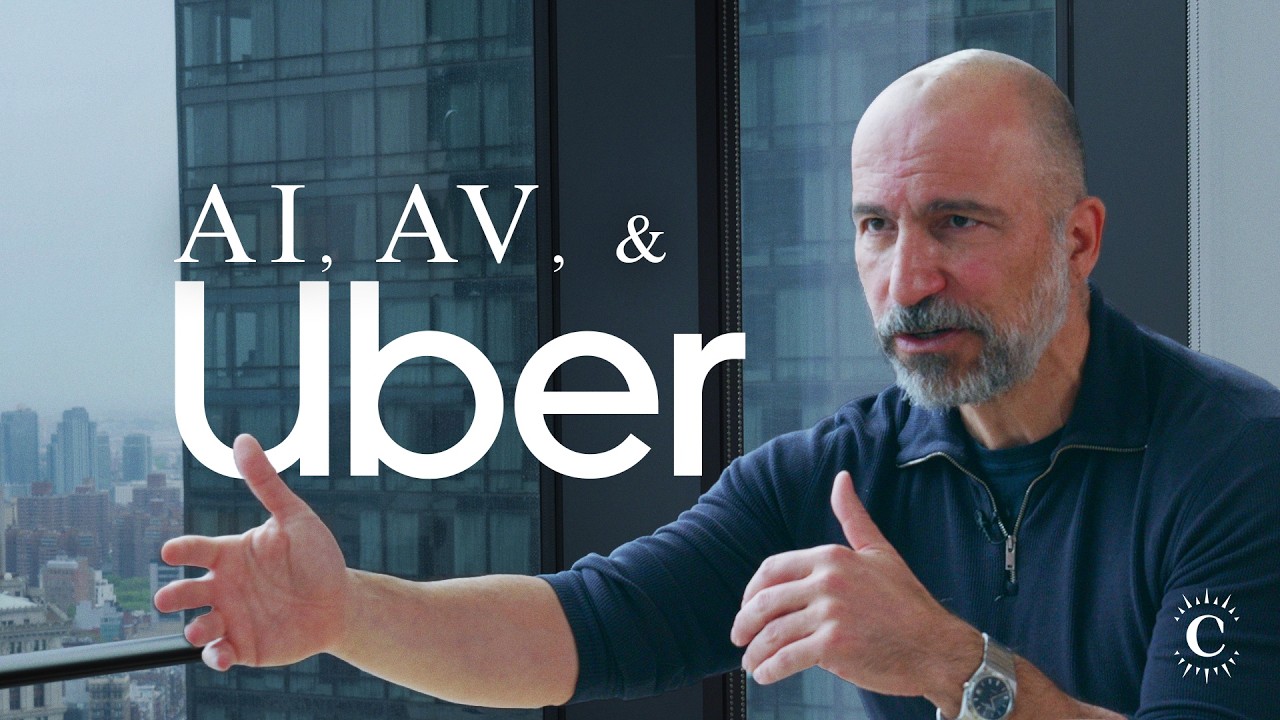
    Uber CEO Dara Khosrowshahi sat down with Patrick O’Shaughnessy on the Invest Like the Best podcast for a long, candid conversation about the forces remaking transportation. There is artificial intelligence inside the company, and there is physical AI out in the real world, meaning autonomous vehicles, robotaxis, and delivery drones. He calls the autonomous opportunity another trillion dollar marketplace and argues it will change how society operates. You can watch the full interview here. What follows is a structured breakdown of the most useful ideas, the strategy behind Uber’s AV bet, and the operating philosophy that runs underneath all of it.

    TLDW

    Dara Khosrowshahi explains how he brought order to the chaos he inherited at Uber in 2017 by treating hard problems like vector mathematics, and how an immigrant childhood shaped his all-in, low-stress operating style. He describes AI hitting Uber on two fronts at once: much larger digital models that predict rider intent, and physical AI that changes how rides and food get fulfilled in the real world. The conversation covers Uber blowing through a full year of AI budget in a single quarter, metering headcount as engineers become superhuman, the more than 30 AV partnerships with Waymo, Nuro, Lucid, Nvidia, Wayve, and Pony AI, and why supply, not demand, is the whole game. It runs through the coexistence model borrowed from travel and Uber Eats, the Uber One membership flywheel at 50 million members, the push from on-demand to planned travel through hotels and Uber Reserve, the economics of cheaper autonomous cars and delivery drones, the regional race from the Middle East to Europe, and the lessons from Barry Diller and Herbert Allen about getting to ground truth and betting on people. It closes on his capital allocation philosophy of prioritizing organic growth and AV commitments over buybacks.

    Thoughts

    The most underappreciated line in the whole interview is the budget one. Blowing a full year of AI spend in a single quarter is the clearest signal yet that frontier intelligence is being consumed far faster than even an AI-native company planned for. Dara’s response has quietly become the default enterprise playbook: explore on the expensive frontier models, then scale the proven interactions onto cheaper or open-source models. The deeper tension is that he is simultaneously telling teams to drive adoption and metering headcount, which is the real story of AI in large companies. The productivity gains are showing up as fewer hires, not only as faster shipping.

    The supply-first framing is the strategic core, and it inverts the demand-first logic he learned at Expedia. In autonomous vehicles this means Uber does not need to win the self-driving race itself. It needs to own the demand layer and aggregate every AV maker’s supply, the same way online travel agents coexist with hotels and Uber Eats coexists with McDonald’s. The 30 percent higher utilization figure for AVs on Uber’s network is the wedge in that argument. It is the reason a Waymo stays on the platform even while building its own brand, because filling more of an expensive asset’s day changes the entire return on the car.

    His premortem answer is unusually honest. Asked what kills the opportunity, he does not name an Uber-specific execution failure. He names AI’s unpopularity with the general public. That is a CEO admitting the gating factor is social license, not technology. The early data he leans on, drivers in Austin and Atlanta earning more and signing up in greater numbers as AVs add incremental demand, is the counter-narrative he is betting the public conversation on. Whether that story holds as AV volume scales from thousands of vehicles to hundreds of thousands is the open risk the entire industry shares.

    Underneath the strategy is one repeated instinct: get to ground truth. It shows up in the Barry Diller story about reading the model from the analyst who built it, in his hunt for the troublemakers who keep a company mutating, and in the fact that he bought an ebike to deliver food in San Francisco. It is the same move applied at every altitude, and it is why he frames AI as a chance to rebuild processes from first principles rather than shave 20 percent off the ones that exist. The leaders who treat AI as an efficiency tool will likely lose to the ones who rebuild from the ground up.

    Key Takeaways

    • Dara took the Uber job in 2017 after Daniel Ek recommended him at the Allen and Company Sun Valley conference and told him, when he hesitated, that life is about impact rather than happiness.
    • He inherited what he calls complete chaos: a board fighting for control, lost trust with regulators and the public, and a committee running the company after Travis Kalanick stepped back.
    • His method for chaos is to treat it like vector mathematics, breaking a seemingly unassailable problem into component dimensions and solving each one.
    • Early moves included bringing in chairman Ron Sugar to unite the board, running a listening tour with stakeholders, and rebuilding the executive team with leaders like Andrew McDonald and Tony West.
    • He credits an engineering mindset and an immigrant childhood for his calm under pressure. His family lost everything leaving Iran when he was nine and rebuilt from nothing.
    • On parenting, he argues that overcoming challenges is what forms people, and that doing everything for your kids is a long-term disservice disguised as a short-term favor.
    • Uber has always operated in a probabilistic real world of traffic, cancellations, and late food, so it has used machine learning longer than most consumer companies.
    • The current inflection is AI on two fronts: larger digital models that predict intent, and physical AI that changes how Uber fulfills in the real world.
    • Uber’s feed and search models are now roughly 10,000 times bigger than the older ones, enabling universal search across rides, eats, and grocery in a single query.
    • Uber can already guess a rider’s destination about three quarters of the time, turning booking into a one-tap interaction.
    • AI adoption is bottoms-up across engineering, legal, and marketing. Developers in India are driving roughly ten times the code commits using autonomous agents.
    • Dara pushes teams to rebuild processes from first principles with AI rather than settling for 20 to 30 percent optimization of an existing process.
    • He wants the rebels and troublemakers to win, and treats unpredictable internal adoption patterns as something to find and promote.
    • Uber blew through its full-year AI budget in a single quarter, which is now forcing it to meter headcount as engineer throughput climbs.
    • The token strategy is to explore on expensive frontier models, then scale proven interactions onto cheaper or open-source models.
    • Uber generates over 10 billion dollars in free cash flow on more than 10 billion trips a year, but it is not a high-margin business, so efficiency funds lower prices and higher earnings.
    • In autonomous vehicles, the thesis is supply: own the demand layer and aggregate every AV maker’s vehicles, the way Uber aggregates drivers and restaurants.
    • Uber has more than 30 AV partnerships, including Waymo, Nuro, Lucid, Nvidia, Wayve, and Pony AI.
    • Uber is building the surrounding ecosystem: depots, charging, fleet partners, a one billion dollar Santander financing line for EV and AV fleets, and autonomous insurance.
    • AVs operating on Uber’s network are about 30 percent busier in trips and revenue per vehicle per day than vehicles not on the network, which transforms the return on an expensive car.
    • The build, partner, or buy answer is coexistence, mirroring how travel agents coexist with hotels and airlines and how Uber Eats coexists with McDonald’s, Starbucks, and Chipotle.
    • His public premortem is that AI’s unpopularity, not Uber-specific execution, is the biggest risk, so the company must move at the pace society will accept to avoid backlash.
    • Early data in Austin and Atlanta shows drivers earning more and more drivers joining, suggesting AVs are adding incremental demand rather than only displacing humans.
    • AV hardware costs typically fall 30 to 40 percent per generation. A Lucid midsize built with Nuro could land around 60,000 to 70,000 dollars and bring transportation costs down.
    • Lower cost expands demand. Uber already dwarfs the taxi market it was once sized against, and Dara expects the same dynamic with AVs.
    • Traditional OEMs are now investing in L4-ready systems and should arrive over the next two to four years. Each AV drives roughly three to four times what a human driver does.
    • Chinese manufacturing capability and bill of materials are described as unrivaled. A low-cost Western, Foxconn-style player for AVs is being worked on but does not exist yet.
    • Drones are gated by battery density. Food and grocery drones should reach real scale in two to five years and become normal in five to ten, with Joby and Zipline cited as examples.
    • The Middle East, including Abu Dhabi, Dubai, and Saudi Arabia, is moving fastest thanks to entrepreneurial regulators. Europe is catching up, with London robotaxi pilots expected before year end.
    • Uber Eats wins the number one position more often internationally. The playbook is selection plus reliability, amplified by cross-platform upsell, with about 13 percent of Eats bookings coming from the mobility app.
    • Uber One has 50 million members growing 50 percent year on year. Dara frames it like Netflix, more content for the same price, and accepts a first-year loss for multi-year profit.
    • Uber is pushing from on-demand to planned through hotels, via a deal with Expedia, and through Uber Reserve, now at over a 5 billion dollar run rate with 99 percent-plus reliability.
    • His leadership lessons: from Barry Diller, get to ground truth from source material and tell the truth as a leader. From Herbert Allen, bet on people, not companies.
    • On capital allocation, he prioritizes organic growth and financialized AV commitments over buybacks, while keeping costs growing slower than revenue.

    Detailed Summary

    From chaos to structure: the 2017 turnaround

    Dara came to Uber from 13 years running Expedia under Barry Diller, recruited through a head hunter after Daniel Ek floated his name at the Sun Valley conference. He arrived into what he describes as complete chaos, with the board fighting over control rather than the fate of the company and trust badly damaged with regulators, the public, and employees. His approach was to decompose the situation the way an engineer decomposes a multidimensional problem, solving each dimension and reassembling the whole. Practically that meant a new chairman in Ron Sugar to unite the board, a listening tour to understand stakeholder concerns, and a rebuild of the leadership team that kept strong insiders like Andrew McDonald while adding people like Tony West.

    An engineering mind and an immigrant chip on the shoulder

    His wife Sid calls him a robot, by which she means he does not get rattled. He traces that to an engineering education and to a childhood upheaval. His family left Iran when he was nine and lost the business his father had built, and he watched that loss diminish his father over the years. The experience produced a durable drive to rebuild and a refusal to let external chaos define him internally. He applies a similar philosophy to his kids, arguing that challenges and the act of overcoming them are what form a person, and that helicopter parenting removes the very friction that builds capability.

    AI inside Uber: prediction, agents, and superhuman engineers

    Uber has always lived in a probabilistic world where the digital booking is deterministic but the real-world fulfillment is not, so it adopted machine learning earlier than most consumer companies. The newest models are roughly 10,000 times larger than the prior generation and power universal search and destination prediction that is right about three quarters of the time. Internally, adoption is bottoms-up and uneven in a good way, with engineers in India shipping around ten times the code commits using autonomous agents. Rather than mandate from the top, Dara pushes teams to rebuild whole processes from first principles with AI instead of trimming a fifth off the existing ones.

    The cost of intelligence

    The flip side of fast adoption is cost. Uber blew through its annual AI budget in a single quarter, and that is forcing a real adjustment. Because engineer throughput is climbing, the company is metering headcount increases rather than simply hiring. The operating rule is to keep driving adoption while pursuing efficiency, using frontier models from providers like OpenAI and Anthropic to experiment with new interactions, then moving the scaled experiences onto more efficient or open-source models to bring the per-token cost down. With more than 10 billion dollars of free cash flow on over 10 billion trips, Uber is not a high-margin business, so efficiency directly funds lower prices for riders and higher earnings for drivers.

    Why supply decides the AV race

    At Expedia, Dara learned a demand-first model where you attract consumers and then build inventory to match. Uber is the opposite, a supply company, where securing every car, restaurant, courier, and retailer causes the demand to follow. Applied to autonomous vehicles, the strategy is to be the go-to-market and demand layer for anyone building a digital driver. Uber wants to aggregate the largest pool of AV supply, just as it aggregates human drivers, so that the companies building the actual self-driving software can focus on the driver while Uber handles distribution and utilization.

    Building the ecosystem around the digital driver

    Uber now has more than 30 AV partnerships spanning Waymo, Nuro, Lucid, Nvidia, Wayve, and Pony AI, and it expects many winners rather than one, the same shape as the foundation model market. Around those partners it is assembling the connective infrastructure: depots and charging in cities where the regulatory path is opening, fleet partners, a one billion dollar financing line with Santander for EV and AV fleets, and work on autonomous insurance. It is also collecting street data today that can feed the models, so that when a partner’s cars hit the market there is instant demand waiting. The early proof point is that AVs on Uber’s network run about 30 percent busier than comparable vehicles off it, which materially improves the return on a costly car.

    The premortem and the public’s patience

    Asked what derails the opportunity, Dara points outward rather than inward. The risk is that AI is powerful but unpopular, and the average person experiences it as a threat to electricity costs or a cousin’s job rather than as magic. The same dynamic could hit AVs even though the technology should end up safer than human drivers, which is why questions about emergency services, equitable access, and driver earnings have to be worked through with regulators and communities. The encouraging early signal is in Austin and Atlanta, where drivers are making more money and more are joining because AVs appear to be adding incremental demand. The controllable risk, he says, is access to supply, which is exactly why Uber has partnered with nearly every AV provider across mobility, delivery, and freight.

    A trillion dollar marketplace: cheaper cars and delivery drones

    Dara sizes the autonomous opportunity as another trillion dollar marketplace. As AV software and hardware costs fall, typically 30 to 40 percent per generation, a Lucid midsize built with Nuro could come in around 60,000 to 70,000 dollars, which starts to lower the real cost of transportation. History says lower cost expands demand, and Uber already became multiples larger than the taxi market it was once compared to. Manufacturing scales from hundreds to thousands to hundreds of thousands of vehicles, each driving three to four times what a human does, with traditional OEMs investing in L4-ready systems over the next two to four years and Chinese manufacturers setting the bar on cost and quality. Delivery drones are further out, gated mainly by battery density, but should reach real scale in two to five years and feel normal in five to ten.

    Membership, hotels, and the shift from on-demand to planned

    Uber Eats often reaches the number one position internationally by nailing selection and reliability and then layering on cross-platform advantages, with roughly 13 percent of Eats bookings flowing from the mobility app. Uber One, at 50 million members growing 50 percent year on year, is the loyalty engine, and Dara likens it to Netflix in that members get more for the same price. He explains the membership economics through Amazon Prime, accepting a money-losing first year to earn multi-year profit as members spend more across services. The newest expansion is travel: hotels through a deal with Expedia, and a broader move from Uber’s on-demand brand toward planned bookings, proven out by Uber Reserve at a 5 billion dollar-plus run rate and 99 percent-plus reliability. The end state he wants is a trip where Uber pre-books your ride to the airport, knows your hotel, and brings in-market magic to the whole journey.

    Operating philosophy: ground truth, troublemakers, and capital allocation

    The mentors thread through everything. From Barry Diller, with whom he worked for more than 20 years, he took the discipline of getting unfiltered truth from the source, illustrated by Diller insisting on hearing the Paramount LBO model from the young analyst who built it. From Herbert Allen he took the lesson to bet on people rather than companies, because great people stay great across cycles. In his own practice that becomes radical transparency, a deliberate hunt for the troublemakers who act as the mutations that keep an organism from dying, and a willingness to be wrong, since learning, often through pain, is what he finds interesting. On capital, he treats allocation as an art, prioritizing organic growth, which took Uber Eats from under a billion to over a hundred billion in gross bookings, then AV commitments that can be financialized, with buybacks coming after growth rather than instead of it.

    Notable Quotes

    “I know who I am, and I’m always going to be that same person. I’m not going to let the chaos of the world affect me mentally.”

    Dara Khosrowshahi, on why crisis does not rattle him

    “We blew through our AI budget in a quarter, you know, for the whole year essentially. And it is forcing us to adjust.”

    Dara Khosrowshahi, on the real cost of AI adoption at Uber

    “What’s magical now is going to seem normal to all of us 10 years from now.”

    Dara Khosrowshahi, on how fast riders stop noticing autonomous vehicles

    “We think it’s another trillion dollar marketplace.”

    Dara Khosrowshahi, on the scale of the autonomous vehicle opportunity

    “If we do that, the demand will take care of itself.”

    Dara Khosrowshahi, on why Uber obsesses over securing supply first

    “I’m looking for those mutations. I’m looking for those troublemakers constantly.”

    Dara Khosrowshahi, on keeping a large company adaptive

    “It’s the filtering that gets the edge out of the story or out of the situation. And it’s often the edge that gives you an edge.”

    Dara Khosrowshahi, on a lesson from Barry Diller about going to the source

    “If I’m not wrong, if I’m not making mistakes, it’s just not very interesting.”

    Dara Khosrowshahi, on why learning, often through pain, drives him

    “Meeting her and seeing her operate, I think, finally allowed me to be the person I want to be versus the person I thought I was supposed to be.”

    Dara Khosrowshahi, on his wife Sid, when asked the kindest thing someone has done for him

    The throughline is that Uber intends to be the demand layer for autonomous transportation the way it became the demand layer for human drivers, while rebuilding its own operations around AI from first principles. Whether the public grants the industry enough patience is the open question Dara keeps returning to. Watch the full conversation here.

    Related Reading

    • Uber primary source for the company, products, and AV partnerships discussed in the interview.
    • Dara Khosrowshahi (Wikipedia) background on the CEO’s path from Iran to Expedia to Uber.
    • Invest Like the Best the podcast with Patrick O’Shaughnessy where this conversation took place.
    • Waymo the autonomous driving company behind the Austin and Atlanta partnerships referenced.
    • Barry Diller (Wikipedia) the mentor whose lessons on ground truth shaped Dara’s leadership style.
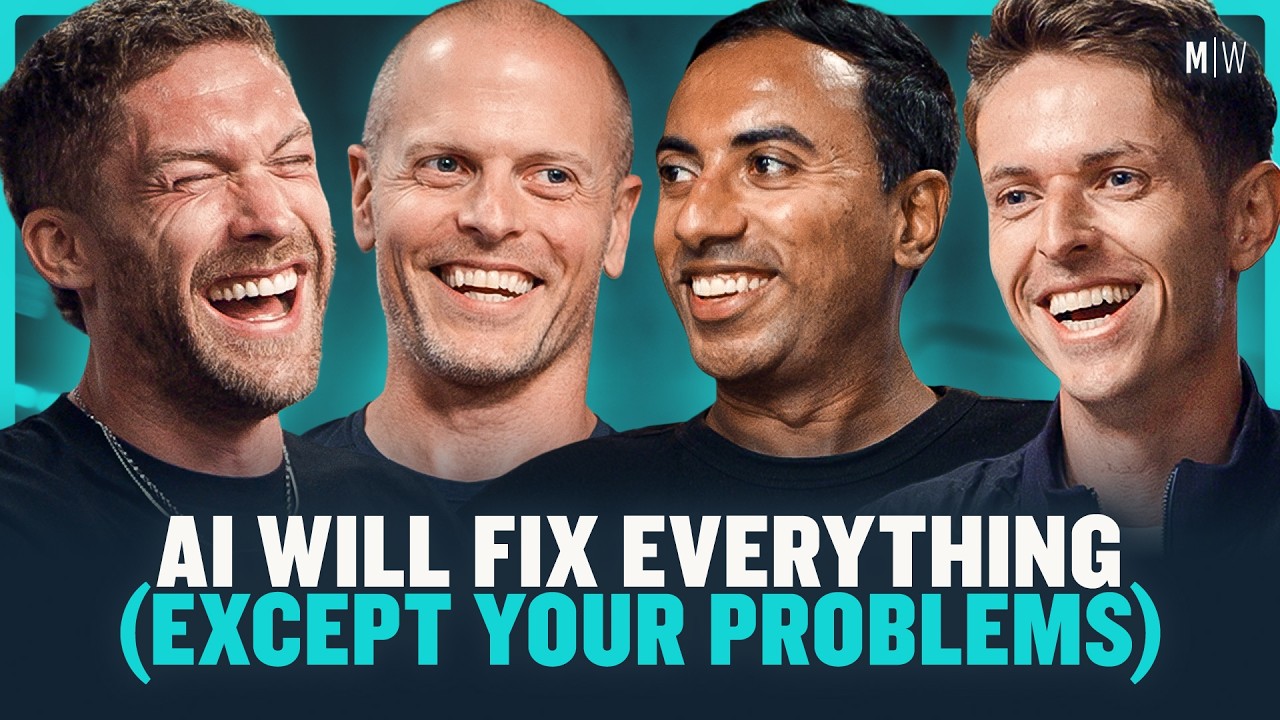
  • Tim Ferriss, Chris Williamson, and George Mack Go Down the Rabbit Hole: Japanese Immersion, Memory and Forgetting, Brain Stimulation, AI Interfaces, and the Search for Meaning

    This is the third installment of the freewheeling “Rabbit Hole” roundtable from Chris Williamson’s Modern Wisdom, and the cast is stacked: Tim Ferriss, writer George Mack, and the founder behind the ambient-AI app Sky (who posts as @signull). It is a sprawling, two-and-a-half-hour conversation that jumps from why Americans never adopted WhatsApp to whether Tim dreams in Japanese, then keeps tunneling into deeper ground: how language shapes thought, why forgetting is a feature, the frontier of brain stimulation, what the next computing interface looks like, and the search for meaning in a world where AI keeps removing scarcity. You can watch the full conversation on YouTube here.

    TLDW

    The group opens on language: the etymology of “soon,” Malay and Indonesian reduplication, the Sapir-Whorf idea that language shapes thought, and Tim Ferriss recounting how a year of total immersion in a Japanese high school at fifteen made him fluent, with a detour into why adults can learn languages faster than the myth suggests. From there they move into the mind itself, aphantasia versus hyperphantasia, eidetic memory, and the underrated advantages of forgetting, which loops into AI memory, hallucination as a form of confabulation, and the unreliability of eyewitness testimony. A long middle section, anchored by Packy McCormick’s essay “Riding the Leopard,” wrestles with meaning in a post-scarcity world, drawing on Viktor Frankl, Joseph Campbell, Nick Bostrom, and the Dawkins versus Hirsi Ali debate about whether comforting beliefs are rational if they work. Tim then walks through the most concrete material in the episode: his use of accelerated TMS, the one-day protocol, the stellate ganglion block, and why the chemical-imbalance theory of depression is largely debunked. They close on the next interface (ambient AI, camera-equipped AirPods, the post-app phone, Apple’s wait-and-win strategy), a riff on Britain versus America, and the rise of AI-assisted looks-maxing. The throughline, stated and restated, is that friction and scarcity are where meaning and value actually come from.

    Thoughts

    For a conversation that looks like pure chaos, one idea holds it together: friction is where meaning lives, and modern technology is a machine for removing friction. They route the point through Nick Bostrom (the traits we admire in people exist because we have to negotiate a scarce, resistant world), through dating apps and DoorDash (frictionless access cheapens the thing you get), and through chess (still meaningful precisely because there is an opponent pushing back, even though engines crush every human). It reframes the AI-and-meaning panic in a useful way. The danger is not that AI deletes meaning, it is that it makes meaning harder to reach, the same way a calorie-dense food environment does not outlaw health but quietly makes it the harder path. If that is right, the work ahead is less about stopping the technology and more about deliberately reintroducing resistance.

    The most original riff is the treatment of forgetting as a feature rather than a defect, and then turning that lens on AI. Humans prune memory by salience, holding onto the vivid and the painful and letting the middle fade. Current AI memory systems do not prune, so when you stuff a model’s context full of stored “facts” you get noise and forced, spurious connections. The group notes that AI hallucination is really just machine confabulation, and that humans confabulate constantly, the Grenfell Tower “baby caught from the tower” false memory and the general unreliability of eyewitness testimony being the proof. The practical takeaway for anyone building AI products is counterintuitive and correct: the hard problem is not storage, it is principled forgetting.

    Tim Ferriss’s neuromodulation segment is the most concrete and quietly radical part of the episode. The claim worth sitting with is that the chemical-imbalance theory of depression is largely debunked, and the frontier has moved to circuit-level intervention: accelerated TMS, a neuroplasticity agent like d-cycloserine taken beforehand, and a “one-day protocol” that took him from an eight or nine on anxiety and rumination down to a one, with lifelong insomnia resolved. Two honest caveats keep it credible rather than salesy. It does not always work (he is candid that several rounds failed), and the side effects are real (rebound symptoms, temporary anhedonia). The economics are a clean illustration of a pattern that recurs through the whole conversation: roughly thirty thousand dollars out of pocket today is how the unit cost eventually falls to something insurers and ordinary patients can afford, the same arc that electric cars and the first copy-and-paste-less iPhones traveled.

    The meaning-and-religion exchange is where the conversation is most alive, and most revealing about where this cohort has landed. The Dawkins versus Ayaan Hirsi Ali anecdote crystallizes it: a man “optimizing for rationality while ignoring effectiveness,” pressing someone on whether the stone literally moved on the third day, when that someone’s life was demonstrably saved by the belief. Their tentative conclusion, that comforting delusions may be permissible when the measurable outcomes (health, community, longevity, a sense of meaning) are real, would have been near-heresy in the New Atheist moment of fifteen years ago and is now close to consensus among exactly these kinds of people. Whether you buy it or not, it is a sharp barometer of how far the cultural wind has shifted, and it pairs neatly with George Mack’s point that you cannot invalidate a whole framework with a single counterexample the way you can in mathematics.

    Key Takeaways

    • Americans never adopted WhatsApp largely because the US had free SMS early, while Brits paid per text, which is also why a generation grew up compressing messages into 160 characters.
    • The word “soon” was the Anglo-Saxon word for “now.” Because people kept saying “soon” and not acting, the language invented “now” to replace it, and “now” is already drifting the same way (“now now” in South Africa, similar constructions in Latin America).
    • Malay and Indonesian use reduplication instead of plurals (table-table, orang-orang meaning men, the root of orangutan, “man of the forest”), a small example of how different languages carve up the world differently.
    • The Sapir-Whorf hypothesis and Wittgenstein’s line, “the limits of my language are the limits of my world,” frame a recurring theme: we assume we shape language, but language also shapes us, including, some speakers report, having a different personality in a different language.
    • Tim Ferriss became fluent in Japanese through total immersion as a fifteen-year-old exchange student, taking physics and world history in Japanese, helped by the fact that it was pre-smartphone so there was no English escape hatch.
    • Adults can often learn languages faster than children, not slower. Children seem faster mainly because they have no choice and are forced into immersion. Adults already have the conceptual scaffolding (grammar, abstraction, the subjunctive) that a three-year-old lacks.
    • Density of practice beats frequency. Learning a language one hour a week is like trying to learn tennis once a month. The Michel Thomas method and Nassim Taleb’s joke (“the best way to learn Russian is to go into a Russian jail”) both point at intensity and stakes.
    • People differ radically in how they think. Aphantasia is the inability to visualize (some people only think in words), while others cannot think in words at all and only in images. The “imagine an apple” test reveals where you sit on that spectrum.
    • An overdeveloped memory can be counter-evolutionary past a point. Hyperthymesia makes it hard to let go of grievances and slights, and there are real, underrated advantages to forgetting.
    • Forgetting is the hard, missing piece in AI memory. Systems store facts but have no pruning of salience, so loading lots of “memories” into context produces noise and spurious connections rather than wisdom.
    • AI hallucination is best understood as machine confabulation, and humans confabulate constantly. The Grenfell Tower “baby dropped and caught” story spread through multiple eyewitnesses and turned out to be a collective false memory once physicists questioned it.
    • Memory is bound to place. One participant had to move neighborhoods after a breakup because every coffee shop and corner replayed the relationship, echoing an Alain de Botton observation that a beautiful memory becomes the sharpest source of pain if the relationship ends.
    • Phantom phone vibrations are real and documented. Years of notifications Pavlovian-condition your body to feel buzzes that are not there, evidence of how deeply the device has wired itself into your nervous system.
    • You can train visual memory. Tools include “Drawing on the Right Side of the Brain,” gesture drawing with short timed poses, and learning to see specifics (the six local tree species) instead of the generic label “tree.” Attention and labels, not just raw acuity, drive perception.
    • The smartphone is described as a “black mirror.” There is data suggesting people with fewer mirrors at home self-report as happier, and “Zoom face” drove a surge in cosmetic surgery during the pandemic as people watched themselves on camera all day.
    • Packy McCormick’s essay “Riding the Leopard” anchors the meaning discussion. A reader who analyzed more than 200 sci-fi novels found that the most common unsolved problem in post-scarcity worlds is meaning (59% of books), with identity next at 17%.
    • Viktor Frankl’s framing recurs: “as the struggle for survival has subsided, the question has emerged, survival for what?” Ever more people have the means to live but no meaning to live for.
    • Nick Bostrom’s point (from his “solved world” work) is that almost everything we value in other people, discipline, prudence, good judgment, honesty, exists because we must negotiate a scarce world. Remove the scarcity and those values risk a strange “weightlessness.”
    • The precautionary principle cuts both ways: humans are very good at forecasting problems and very bad at forecasting the solutions that billions of people will eventually invent for those problems.
    • Chess is the optimistic counterexample to “AI removes all purpose.” Engines beat every human, yet people, including Magnus Carlsen, still love playing, because meaning needs resistance, not victory.
    • There is a real resurgence in religion, including the ascendant Latin Mass, conducted in a language the congregation does not speak. The group debates whether “comforting delusions” are actually rational if religious people are measurably happier, healthier, and longer-lived.
    • The Dawkins versus Ayaan Hirsi Ali exchange is held up as someone “optimizing for rationality while ignoring effectiveness,” and you cannot disprove a whole framework with a single counterexample the way you can in math.
    • Tim Ferriss is now far more focused on neuromodulation than psychedelics. Accelerated TMS, paired with a plasticity agent and refined into a “one-day protocol,” took him from an eight or nine on anxiety and rumination to a one, and resolved decades of insomnia.
    • The chemical-imbalance theory of depression and anxiety is, by his account, thoroughly debunked. You are not depressed simply because of low serotonin, which is part of why SSRIs come with off-target side effects and poor off-ramping plans.
    • The stellate ganglion block (SGB) acts like a hard reset of the nervous system. Tim measured a roughly 30% jump in HRV on his Whoop that held for months. It is used aggressively for PTSD in soldiers.
    • Psychedelics reopen critical-period plasticity windows (research associated with Gul Dolen) for two to three weeks afterward, which is powerful for relearning but also means whatever habits you instill in that window can stick hard. The brain is “Play-Doh warmed in the microwave.”
    • Most consumer vagus-nerve stimulators are “bunk” because they do not hit the nerve correctly (the target near the ear is the cymba concha). Kevin Tracey’s book “The Great Nerve” is cited as the credible source, and devices like gammaCore are FDA-cleared for migraine.
    • Hard safety warning: do not DIY brain stimulation. Hit the wrong target and you can make symptoms much worse. Use a reputable clinic.
    • Sequencing is everything, in TMS, in language learning, and in habit change. Most mistakes are sequencing mistakes. Pick the right domino to tip first and everything downstream gets easier.
    • The next interface is unsettled. Candidates include camera-equipped AirPods, a “Her”-style earpiece, a glanceable agentic home screen (the Sky app), and OpenAI’s Jony Ive collaboration. Elon Musk’s bet is that apps disappear and the phone generates whatever you need on demand.
    • Apple’s strategy is to never be first but to be best, letting other companies fund the R&D and split-test the market (MP3 players before iPod, smartphones before iPhone, wireless earbuds before AirPods), backed by a war chest and roughly 20 billion dollars a year from Google.
    • Both smartphone hardware and AI models feel like they are hitting diminishing returns in noticeable user experience, after a long stretch (iPhone 5 to 12) of obvious leaps.
    • If the UK were a US state it would rank first in many quality-of-life metrics (life expectancy, low homicide, healthcare coverage, paid leave) and 51st in GDP per capita. Scott Galloway’s line: America is the best place to earn money, Europe the best place to spend it.
    • A fast, real-world AI win: uploading photos of a years-long skin condition to Gemini, which correctly identified it as fungal and recommended ketoconazole shampoo after doctors had failed. Photo-based self-diagnosis is becoming a major consumer use case, as is AI-assisted “looks-maxing” and Facetune-style editing.
    • Tim’s recent long-form essay, “The Self-Help Trap: What I Learned After 20 Years of Improving Myself,” is on tim.blog, and George Mack’s book recommendations live at highagency.com/books.

    Detailed Summary

    Does Tim Ferriss dream in Japanese? Immersion and learning as an adult

    The episode’s title question gets a real answer. Tim Ferriss says he runs on an English interface but became genuinely fluent in Japanese as a fifteen-year-old exchange student, after misunderstanding that “Japanese lessons” meant all his lessons (physics, world history) would be taught in Japanese. Total immersion plus a pre-smartphone world with no way to retreat into English did the work, and when he came home it took about a month to switch back, waking up and speaking Japanese to his mother. The group challenges the myth that children learn languages faster than adults: kids appear faster only because they are forced into immersion and have no mortgage and no job to distract them. Adults arrive with conceptual scaffolding, grammar, abstraction, the ability to grasp a counterfactual subjunctive, that a three-year-old simply does not have. The real variable is density of practice, which is why a six-week immersion can beat a year of weekly classes, and why the Michel Thomas method and Nassim Taleb’s “learn Russian in a Russian jail” both lean on intensity.

    Language shapes thought: etymology and Sapir-Whorf

    The opening stretch is a love letter to etymology. “Soon” was once the Anglo-Saxon word for “now,” and degraded over generations as people said it without acting, forcing the invention of “now,” which is itself now drifting. Malay and Indonesian double nouns rather than pluralize them (table-table, and orang-orang, men, giving us orangutan, “man of the forest”). These are small doors into the Sapir-Whorf hypothesis and Wittgenstein’s claim that the limits of your language are the limits of your world. The group treats the idea that language shapes us, not only the reverse, as easy to dismiss and probably true, citing friends who feel they have a different personality or can access different thoughts in Italian or Swedish.

    Two ways of thinking, and the praise of forgetting

    From language they move to cognition. People differ dramatically: some have aphantasia and cannot picture an apple at all, thinking only in words, while others cannot think in words and only in images, one friend reportedly visualizing a staircase to count. Tim places himself far toward hyper-visual memory, able to recall the floor plan of nearly every restaurant he has been in. But the group keeps returning to the underrated value of forgetting. An overdeveloped memory, hyperthymesia, makes it hard to release grievances and slights, which may be counter-evolutionary past a point. The athletic version is the “yips,” where you have to learn to process a mistake on film and then discard it rather than ruminate.

    When memory becomes a feature: AI, hallucination, and false memory

    The forgetting thread maps directly onto AI. The founder building the Sky app notes that it is now trivial to have AI extract and store a fact, but there is no pruning of salience, no built-in sense that something is no longer relevant, so passing many stored memories into context produces noise and forced connections. AI hallucination, the group argues, is just machine confabulation, and humans confabulate all the time. The vivid example is the Grenfell Tower fire, where multiple eyewitnesses “remembered” a baby being dropped from the tower and caught, a story that fell apart once physicists ran the numbers, an illustration that eyewitness testimony and human memory are themselves hallucinated reconstructions.

    Attention, phones, and the black mirror

    Phones get treated as both nervous-system extension and liability. Phantom vibrations are real and documented, a Pavlovian artifact of years of haptic notifications. The smartphone is a “black mirror,” and the group cites data suggesting fewer mirrors at home correlate with higher self-reported happiness, plus the pandemic “Zoom face” surge in cosmetic surgery. Tim describes running no social media, no vibrate, and no ringer on his phone with no felt loss of being informed, and a wider complaint that screens are now so ambient (five screens on a treadmill, a video wall, subtitles everywhere) that going screen-free requires active effort.

    Riding the leopard: meaning in a post-scarcity world

    Tim reads from Packy McCormick’s essay “Riding the Leopard,” which opens with a parade of AI funding announcements and the deflating question, “who gives a damn, why do we care?” before pivoting to a reader, in remission from stage-four cancer, who analyzed more than 200 sci-fi novels and found that the dominant unsolved problem in post-scarcity worlds is meaning. The piece quotes Viktor Frankl on survival giving way to “survival for what,” and takes its title from Joseph Campbell’s image of Dionysus riding the leopard without being torn apart, living with composure atop overwhelming energy. The group widens it with Nick Bostrom’s argument that the human traits we prize exist only because we negotiate a scarce world, so removing scarcity creates a values “weightlessness,” and David Deutsch’s counter that problems are infinite and soluble.

    Friction, resistance, and the cocktail-party question

    The most coherent conclusion is that meaning requires friction. Chess stays meaningful despite unbeatable engines because there is still resistance. Capitalism’s genius and its cost is removing friction, dating apps turning people into a swipeable catalog, DoorDash delivering a bathing suit in thirty minutes, and that frictionlessness tends to cheapen the thing delivered. The “what do you do?” cocktail-party question gets dissected as a very Western tic that ties identity to craft and productivity. Winston Churchill becomes the case study: a man who nearly died countless times, believed he was preserved for a purpose, fought his “black dog” depression, and laid 200 bricks a day just to stay occupied.

    Religion, rationality, and comforting delusions

    The meaning question leads into the religion revival, including the surging Latin Mass conducted in a language nobody in the pews speaks. They revisit the Jordan Peterson and Sam Harris debates about whether a secular population can build a durable moral code from first principles, and the Dawkins versus Ayaan Hirsi Ali exchange, where Dawkins challenged the literal resurrection while Hirsi Ali described religion saving her from a suicidal low. The verdict offered is that Dawkins was “optimizing for rationality while ignoring effectiveness,” and that if comforting beliefs reliably produce better health, community, and meaning, calling them irrational starts to look like the irrational move. George Mack adds the logical point that you cannot void an entire framework with a single counterexample the way you can in mathematics.

    Rewiring the brain: TMS, the one-day protocol, and neuromodulation

    Tim delivers the episode’s most concrete material. He describes years of generalized anxiety, OCD, and rumination he now traces partly to Lyme disease and chronic neuroinflammation, and his use of accelerated TMS (intermittent theta-burst stimulation) targeting specific circuits identified via fMRI. Paired with a neuroplasticity agent, the antibiotic d-cycloserine, dissolved in the mouth beforehand, the treatment evolved into a “one-day protocol” that took him from an eight or nine to a one and ended decades of insomnia. He is careful to caveat: he is not a doctor, it has not worked every time (five or six attempts), and side effects include rebound symptoms, occasional insomnia, and temporary anhedonia. The broader claim is that the chemical-imbalance theory of depression is largely debunked, and that real innovation here, as with electric cars and early iPhones, starts with wealthy early adopters overpaying (around 30 thousand dollars out of pocket) until cost and throughput improve. He names Jonathan Downar as a leading researcher and is involved with a device company, Ampa, built around the one-day protocol.

    Psychedelics, plasticity windows, and the stellate ganglion block

    Adjacent to TMS, Tim explains that psychedelics (and MDMA) appear to reopen critical-period plasticity for two to three weeks afterward, work associated with researcher Gul Dolen, which is promising for stroke recovery or relearning but dangerous if you instill bad habits while the brain is malleable. He recounts a two-sided stellate ganglion block (SGB) with Matt Cook, essentially a hard reset of the nervous system that produced a roughly 30% increase in HRV on his Whoop that held for months, and is used aggressively for PTSD in soldiers. After years funding psychedelic science, he says he has done almost none in the last three years because neuromodulation has been that compelling, while warning that psychedelics are “nuclear power for the psyche,” not suitable for everyone.

    The vagus nerve, real and fake

    On vagus-nerve stimulation, Tim’s verdict is that most consumer devices are bunk because they do not hit the nerve in the right place (the ear target is the cymba concha, and many heavily funded products miss it). He points to Kevin Tracey, author of “The Great Nerve,” as the credible scientist, explains the “inflammatory reflex” and its relevance to rheumatoid arthritis and autoimmune conditions, and notes that gammaCore (the prescription version of Truvaga) is FDA-cleared for migraine, with SetPoint Medical’s implant another route. A migraine-with-aura sufferer in the group provides the real-world test case.

    The next interface and Apple’s wait-and-win game

    The future-of-computing thread argues the real AI device has not been invented yet. Candidates include camera-equipped AirPods, a glanceable agentic home screen (the Sky app’s pitch is surfacing what you need so you doom-scroll less), a “Her”-style always-on earpiece, subvocalization sensors that read intended speech, and OpenAI’s secretive hardware with Jony Ive. Elon Musk’s bet is that apps vanish and the phone simply generates what you need on demand, which is plausible now that people use ChatGPT or Claude for tasks that used to need dedicated apps. Apple’s counter-move is its classic one: never first, always best, letting rivals fund the R&D (MP3 players, smartphones, wireless earbuds all predate Apple’s versions), backed by a war chest and roughly 20 billion dollars a year from Google. Both phone hardware and AI models, the group feels, are now delivering diminishing perceptible gains.

    Britain, America, and the image economy

    The closing tangents include George Mack’s viral chart showing that if the UK were a US state it would rank first in many quality-of-life measures and 51st in GDP per capita, with Scott Galloway’s summary that America is the best place to earn money and Europe the best place to spend it. They land on AI as an everyday tool: uploading photos of a stubborn skin condition to Gemini, which diagnosed it as fungal and recommended ketoconazole shampoo where doctors had failed, and the booming use of AI for “looks-maxing,” facial analysis, and Facetune-style editing, with writer Freya India’s reporting that young women now compete to be the one holding the phone so they control the edit. Tim signs off pointing to his “Self-Help Trap” essay on tim.blog, George to highagency.com/books, and the Sky founder to the app’s growing wait list.

    Notable Quotes

    “The reason that people mistakenly believe that kids learn faster is because the kids have no choice. The kids have no mortgage. The kids have no job.”

    On why adults can actually learn languages faster than children

    “It’s the Wittgenstein quote of, the limits of my world are the limits of my language. And we think that we shape language, but language shapes us.”

    George Mack, introducing the Sapir-Whorf thread

    “There are some tremendous advantages to forgetting.”

    Tim Ferriss, on why an overdeveloped memory can be counter-evolutionary

    “As the struggle for survival has subsided, the question has emerged, survival for what? Ever more people today have the means to live but no meaning to live for.”

    Viktor Frankl, quoted by Tim Ferriss reading from Packy McCormick’s essay “Riding the Leopard”

    “Everything that we value in other humans can be refined down to the fact that you need to negotiate with a world that is scarce.”

    Summarizing Nick Bostrom’s argument about values in a solved world

    “What you see is a guy who is playing a game of optimizing for rationality whilst ignoring effectiveness.”

    On Richard Dawkins challenging Ayaan Hirsi Ali’s faith despite the outcomes it produced

    “There’s very few things that I can think of that are meaningful that are also totally frictionless or just there is no challenge in it.”

    On why meaning depends on resistance, from the chess and dating-app discussion

    “The general chemical imbalance theory of depression or anxiety is pretty much thoroughly debunked at this point. You’re not depressed because you have low serotonin levels by and large.”

    Tim Ferriss, on the shift from serotonin models to circuit-level neuromodulation

    “A lot of innovation starts with people with money spending way too much money. That’s true with electric cars, it’s true with Uber, it’s true with the early generation iPhones.”

    Tim Ferriss, on how expensive early treatments like accelerated TMS eventually scale

    These are short, curated pulls from a long conversation, not a transcript. For the full context, including the brain-stimulation walkthrough and the meaning debate, watch the full episode on YouTube here.

    Related Reading

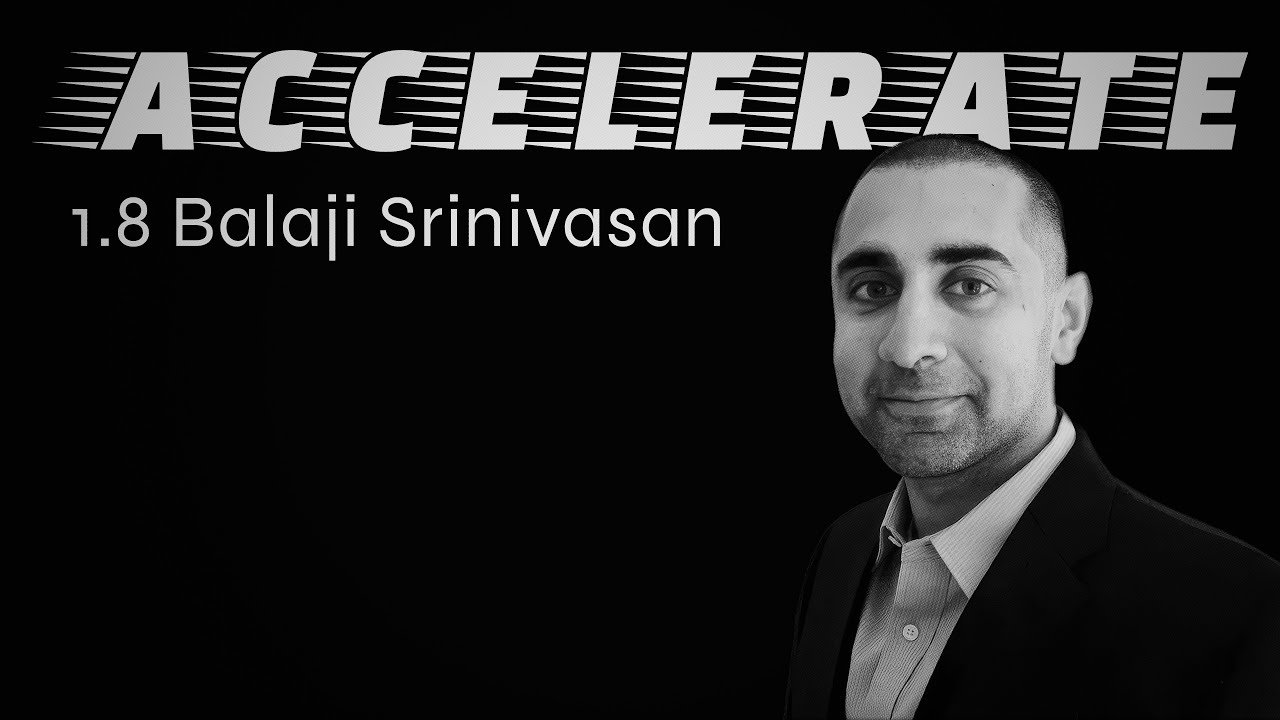
  • Balaji Srinivasan: The Future of Crypto Is Private – ACC 1.8

    TL;DW (Too Long; Didn’t Watch)

    In this insightful podcast episode from “Accelerate with Mert,” Balaji Srinivasan explores the shifting global landscape, contrasting the declining Western powers—particularly America as an invisible empire—with the rising centralized might of China. He frames the future as a dynamic tension between China’s vertically integrated “Apple-like” system (nation, state, and network in one) and the decentralized, open “Android” of the internet. Crypto emerges as a crucial “backup” for core American values like freedom, capitalism, and self-sovereignty, evolving from Bitcoin’s foundational role to Ethereum’s programmability, and now prioritizing privacy through zero-knowledge (ZK) technologies. Balaji stresses that crypto’s ideological essence—providing an exit from failed banks and political systems, with privacy as the missing piece—is as vital as its commercial applications. He envisions network states as physical manifestations of online communities, rebooting civilization amid Western collapse.

    Introduction

    The podcast “Accelerate with Mert,” hosted by Mert Kurttutan, delivers thought-provoking discussions on technology, geopolitics, and innovation. In episode ACC 1.8, released on November 12, 2025, Mert welcomes Balaji Srinivasan, a renowned entrepreneur, investor, and futurist known for his roles as former CTO of Coinbase, co-founder of Earn.com (acquired by Coinbase), and author of “The Network State.” With over 2,367 views shortly after release, the episode titled “Balaji Srinivasan: The Future of Crypto Is Private” weaves personal stories, macroeconomic analysis, and a deep dive into cryptocurrency’s role in a multipolar world. Balaji’s signature blend of historical analogies, technological optimism, and geopolitical realism makes this a must-listen for anyone interested in the intersection of tech and global power dynamics.

    Personal Connections and the Catalyst for Change

    The conversation begins on a personal note, highlighting the real-world impact of Balaji’s influence. Mert recounts how Balaji was the first notable figure to DM him on Twitter (now X) in 2020 or 2021, responding to a tweet about Balaji’s 1729 bounty platform—a now-defunct initiative that rewarded users for completing tasks related to technology and innovation. This interaction boosted Mert’s confidence in building an online presence, proving that insightful content could attract attention regardless of follower count.

    Adding another layer, Mert shares how a discussion with Balaji and investor Naval Ravikant convinced him to leave Canada for Dubai. They warned of Canada’s downward trajectory—citing issues like economic stagnation, overregulation, and political instability—contrasting it with Dubai’s rapid growth, business-friendly environment, and appeal to global talent. Balaji reinforces this by noting the broader trend: the East (including Dubai and Riyadh) is ascending, while the West copes with decline. This personal anecdote sets the tone for the episode’s exploration of global shifts, emphasizing how individual decisions mirror larger geopolitical movements.

    Framing the World: East vs. West, State vs. Internet

    Balaji introduces a compelling framework inspired by Ray Dalio’s analysis of empires and the ideas in “The Sovereign Individual.” He argues that the postwar Western order is crumbling, with the future defined by “China plus/versus the internet.” China represents a centralized, vertically integrated powerhouse—akin to Apple—where nation (Han Chinese culture), state (Communist Party), and network (Great Firewall-insulated apps) align seamlessly under one authority. With 1.4 billion people, China operates as a self-sufficient civilization, immune to external disruptions like Anglo-internet trends.

    In contrast, the West is decentralizing into “American anarchy,” marked by internal divisions (blue, red, and tech America) and a sovereign debt crisis. Balaji points to financial indicators: rising U.S. Treasury yields signaling eroding creditworthiness, while investors flock to Chinese bonds, gold, and “digital gold” (crypto). Militarily, he cites U.S. admissions of inferiority, such as China’s hypersonic missiles outpacing American defenses and a single Chinese shipyard outproducing the entire U.S. Navy.

    Drawing historical parallels, Balaji likens the internet’s disruption of the West to Christianity’s role in Rome’s fall. Social media embodies “ultra-democracy” (like Gorbachev’s glasnost), and crypto “ultra-capitalism” (perestroika), unleashing forces that fragment established powers. Yet, just as Christianity rebooted civilization via the Holy Roman Empire, the internet could synthesize a new order. China, meanwhile, has “inactivated” communism’s destructive elements post-Deng Xiaoping, fusing it with 5,000 years of tradition to create a stable alloy—nationalist in practice, communist in name only.

    Balaji warns of China’s “monkey’s paw” foreign policy: non-interference abroad, but exporting surveillance tech to prop up regimes in places like Venezuela or Iran, ensuring resource extraction without ideological meddling. This contrasts sharply with Western neoconservatism/neoliberalism, which he critiques for overreach.

    America as the Greatest Empire: Rise, Achievements, and Inevitable Decline

    Challenging conventional narratives, Balaji defends America as not merely a country but “the greatest empire of all time”—invisible yet omnipresent. With 750 military bases, the UN headquartered in New York, and exported regulations (e.g., FDA, SEC standards), America shaped global norms. Culturally, it dominated via Hollywood, McDonald’s, and blue jeans; economically, through the dollar’s reserve status.

    He traces this to World War II: Pre-1939, America avoided empire-building, focusing inward. But with Britain faltering against Nazis, FDR’s administration pivoted to global dominance to prevent fascist or Soviet hegemony. The result? A “rules-based order” where America made the rules, promoting democratic capitalism over alternatives.

    Yet, Balaji argues, this empire is fading. Economic defeat is evident in the flight from U.S. bonds; military setbacks include failed decoupling from China and dependencies on Chinese suppliers for weapons. Politically, fragmentation erodes unity. He rebuffs accusations of anti-Americanism, praising innovations in science, technology, culture, and politics, but insists on facing reality: Empires rise and fall, and denial (e.g., on inflation, COVID origins, or Biden’s decline) accelerates collapse.

    The Ideological Heart of Crypto: Beyond Commerce to Self-Sovereignty

    Transitioning to crypto, Balaji echoes the episode’s title: “Crypto isn’t just about the commercial part. It’s about the ideological part.” It’s a response to systemic failures—banks, politics—and a tool for exit and self-sovereignty. Privacy, he asserts, is the missing link.

    He outlines crypto’s evolution: Bitcoin as the base layer (2009-2017), proving digital scarcity; Ethereum introducing programmability (2017-2025), enabling smart contracts, DEXes, NFTs, stablecoins, and scalability solutions like L2s. Today, crypto banks the unbanked globally—in Bolivia, prices are quoted in Tether; in Nigeria, savings in Bitcoin—operating 24/7 on smartphones.

    Looking ahead (2025-2033), privacy takes center stage via Zcash-inspired ZK tech. This encrypts transactions while proving validity, enabling ZKYC (zero-knowledge know-your-customer), private DEXes, and minimal data disclosure. Balaji references Coinbase’s 40-page PDF on replacing traditional KYC, highlighting how ZK could overhaul compliance without sacrificing privacy.

    Ideologically, crypto upgrades American values: From British common law to U.S. Constitution to smart contracts—global, equal access via “TCP/IP visas” over H-1Bs. It’s “version 3.0” of freedom, accessible to all regardless of nationality.

    Network States: Printing the Cloud onto the Land

    Balaji’s vision culminates in “network states”—physical embodiments of online communities, as detailed in his book. Examples include Zuzalu (Ethereum-inspired), Network School, Prospera’s zones in Honduras, and initiatives like Coinbase’s Base Camp or SpaceX’s Starbase. These “print out” digital networks into real-world societies, providing order amid chaos.

    As the West faces debt crises and anarchy, the internet—designed to withstand nuclear attacks—endures. Crypto ensures property rights and identity in the cloud, enabling a mammalian reboot after the “dinosaur” empires fall. Balaji urges accelerating this: Privacy isn’t optional; it’s essential for resilient, sovereign communities.

    Audience Reactions and Broader Context

    The episode has sparked positive feedback in comments. Viewers like @aseideman praise Balaji’s insights, while @Shaqir plans to buy more $ZEC (Zcash), aligning with the privacy focus. @remsee1608 shouts out Monero, another privacy coin, and @sigma_brethren notes AI’s lag behind Balaji’s intellect. These reactions underscore crypto’s community-driven ethos.

    Balaji’s ideas build on his prior work, such as interviews with Tim Ferriss (e.g., on Bitcoin’s future and non-cancelability) and his book “The Network State,” which expands on decentralized societies. Similar themes appear in podcasts like “Venture Stories” with Naval Ravikant, discussing blockchains as alternatives to traditional governance.

    Closing Thoughts: Creativity and Wordsmithing

    Mert wraps by asking about Balaji’s (and Naval’s) prowess in wordplay. Balaji describes it as intuitive crafting—constantly refining concepts like a woodworker shapes figurines. This creative process mirrors his broader approach: Iterating on ideas to navigate complex futures.

    Why This Matters Now

    In a world of escalating U.S.-China tensions and crypto’s maturation, Balaji’s analysis is timely. As privacy coins and ZK tech gain traction, they offer tools for sovereignty amid surveillance. This episode challenges listeners to think beyond borders, embracing crypto not just for profit but as a ideological lifeline. For policymakers, investors, and innovators, it’s a roadmap to a decentralized tomorrow.

    Follow Mert on X: @0xmert_.

    Follow Balaji on X: @balajis.