PJFP.com

Pursuit of Joy, Fulfillment, and Purpose

Tag: job displacement

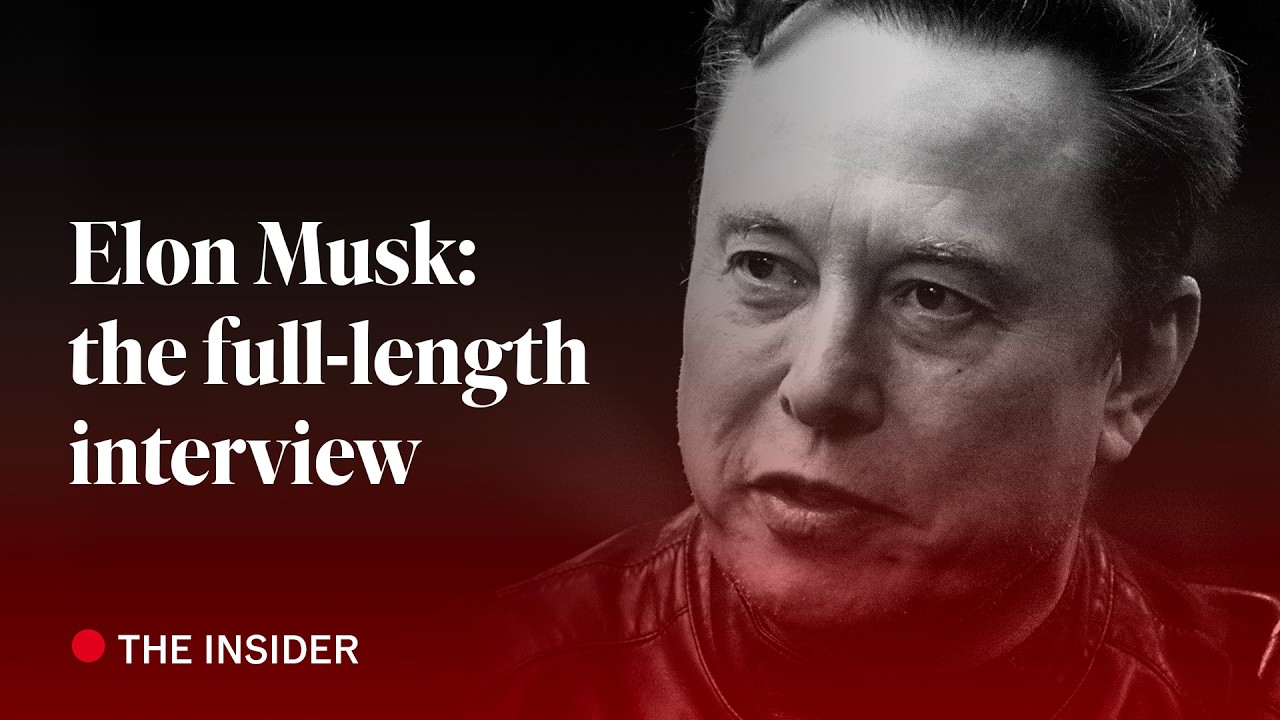
  • Elon Musk’s Full Economist Interview: Superintelligence in 5 Years, Why Money Won’t Matter by 2036, a Peer Review Plan for Frontier AI, China’s Electricity Edge, and a Fiery Clash Over Europe

    Sitting down with The Economist at Tesla’s Texas Gigafactory for a full-length interview, Elon Musk lays out the most concentrated version yet of his worldview: superintelligence within roughly five years, an age of abundance where money stops mattering by 2036, humans no longer in charge and probably happier for it. He also floats a surprisingly concrete AI safety mechanism (competitors peer-reviewing each other’s frontier models before release), handicaps the US-China race in terms of electricity rather than chips, defends his voting control and his Starlink decisions in Ukraine, admits he got carried away with politics during the DOGE era, and then spends the final half hour in a genuinely combative argument with his interviewer about Europe, immigration, and his claim that civil war in Britain is inevitable.

    TLDW

    Musk predicts AI exceeds the sum of human intelligence in about five years and that by 2036 robots plus digital intelligence create a quasi-infinite economy where anyone can have anything they can think of and money, taxation, and even corporate control become irrelevant. He concedes humans will not be in charge (the chimpanzee analogy), still holds a 10 to 20 percent probability of catastrophe, and explains his shift from doomer to “enjoy the ride” fatalism: the momentum cannot be stopped, and even a stop button probably should not be pressed. His safety fix: the leading labs, including Chinese ones, hold biweekly calls and get a week or two of pre-release access to test each other’s frontier models, escalating to the US or Chinese government when a maker refuses to address a danger, on the model of the Motion Picture Association and the recent government intervention over Anthropic’s Mythos model that Amazon flagged. He assesses Kimi K3 as closing on Fable, says China’s electricity advantage (already more than the US, Europe, and India combined) will eventually make it the AI leader, and pitches orbital data centers as the answer to the power constraint. On jobs he is blunter than ever: AI already beats 90 percent of professional programmers, will reach Stockfish-level unbeatability at everything, and work becomes optional like gardening, funded by Treasury checks in a deflationary abundance economy. He defends his 80 percent voting control as protection for five-to-ten-year bets like Mars, dismisses key-man risk with the Apple-after-Jobs analogy, explains the Starlink whitelist built with Ukraine to cut off smuggled Russian terminals, calls for a pragmatic peace with territorial concessions, insists zero people died from DOGE’s aid cuts while admitting he got too involved in politics, and battles The Economist over whether his portrayal of Europe as heading toward civil war is prophecy or misinformation. His closer: the singularity is 10 years away, civil war 20, so AI renders the rest less relevant.

    Thoughts

    The most important thing in this interview is a subtle accounting trick with risk. Musk’s probability of catastrophe has not moved: he reaffirms the 10 to 20 percent chance that this ends humanity. What changed is his relationship to agency. Since he believes nothing can stop the momentum (and that his own attempts to shape it, founding OpenAI as a counterweight to Google, only accelerated it), he has reclassified doom from a problem to a weather condition, and settled on “let’s enjoy the ride.” The rocket comparison the interviewer springs on him is the sharpest moment of the first hour: he would board a rocket with a 10 to 20 percent failure chance only if he could do nothing about it, which is precisely the premise doing all the work in his optimism. Fatalism is doing the job that safety engineering is supposed to do.

    That said, his peer-review proposal deserves to be taken seriously, because it is the rare AI governance idea with a working incentive structure and an existing precedent. Competitors are technically capable of evaluating a frontier model, motivated to slow each other down, and (per the Mythos episode he describes, where Amazon spotted the cybersecurity risk and called the White House, not a regulator) evidently faster than government at finding the danger. The Motion Picture Association analogy is apt in both directions, though: industry self-rating bodies work, but they also entrench incumbents and define “dangerous” on the industry’s terms. A safety club of five American labs plus a few Chinese ones is also, functionally, a cartel with a hotline to two governments. That may still beat the alternatives on speed, which is his real argument: six months is a long time now.

    The economics section contains a contradiction Musk half-acknowledges and the interviewer never quite lands. He argues money will not matter by 2036, that taxation becomes irrelevant, and that inflation dissolves into deflation as robot output outruns the money supply. Yet in the same conversation he defends, with real feeling, his 80 percent voting control, his stock option tax bill, and the quarterly-earnings pressure that justifies the structure, all machinery of a world where money matters enormously. His own reconciliation is the interesting part: control only matters to him for the window before AI is smart enough that controlling companies is moot. He is, by his own description, racing to steer during the last decade in which steering exists. The gardening model of post-labor life (work as artisanal hobby, your tomatoes worse than the store’s but grown with love) is the most concrete picture of the abundance endgame he has offered, and notably it is a picture of consumption and pastime, not of purpose, which is exactly the gap readers of this site will notice.

    His China analysis is the most analytically useful segment. Strip out the drama and his model is clean: AI is a function of whichever input binds first, chips or electricity. Outside China the binding constraint is already power and cooling; inside China it is chips, and China is close to solving lithography while already producing more electricity than the US, Europe, and India combined, heading toward four times US output. On that model, export controls buy time but cannot change the destination, orbital data centers are not science fiction but an attempt to dodge the terrestrial power wall, and the eventual leader is whoever has the most electrons. It is essentially the same “transistors, then electrons” bottleneck Sam Altman named in his recent interview, extended one step further into a prediction Washington will not enjoy.

    Then there is the final act, which is a different genre entirely. The interviewer’s best question is the one that links the two halves: how does the man narrating a civilizational transformation also spend his evenings in the tribal cesspit of social media, posting that civil war in Britain is inevitable? Musk’s own numbers dissolve some of the tension he creates: if the singularity arrives in 10 years and the British civil war in 20, then by his own model the machine gods adjudicate the immigration debate before it ever reaches the barricades, and he says as much, agreeing the AI revolution renders the rest less relevant. Which invites the obvious question of why a man with a quarter billion followers and, by his estimate, ten years of human steering left, allocates so much of that scarce steering to the fight he says will not matter. The interview never answers it, but it is the right thing to sit with after watching.

    Key Takeaways

    • Musk expects AI to exceed the sum of all human intelligence in roughly five years, and by 2036 to be so far beyond it that there is essentially nothing AI cannot do better than humans, apart from being human.
    • The most likely outcome, barring thermonuclear war, is an age of amazing abundance where anyone can have anything they can think of. He offers no analogy or metaphor that captures the magnitude of the change.
    • The economy, in his frame, is digital plus physical intelligence. Digital AI lacks end effectors; humanoid robots supply them (“you need lots of bots”), and vast robots plus vast intelligence yields a quasi-infinite economy.
    • He predicts money will not matter by 2036: money is only wanted for goods and services, and if robots produce more than any human can consume, its purpose evaporates. Taxation, he says, becomes somewhat irrelevant too.
    • Humans will most likely not be in control within 10 years. If the intelligence gap between AI and humans exceeds the gap between humans and chimpanzees, it is hard to imagine the chimpanzees staying in charge.
    • He still assigns a 10 to 20 percent chance that this ends badly for humanity, unchanged from his earlier warnings, but has philosophically concluded to look on the bright side because the momentum cannot be stopped.
    • Even if a stop button existed, he argues we probably should not press it, because the most likely outcome is incredible abundance for all. His stated philosophy now: enjoy the ride.
    • He believes the most important thing for AI safety is that the AI be maximally truth-seeking and curious, in which case it will foster humanity and want us to be happy and prosper.
    • By his own account his interventions backfired into acceleration: he created OpenAI as a counterweight to Google’s near-monopoly, Anthropic spun out of OpenAI, and he now calls Anthropic the leader in AI.
    • His concrete safety proposal, discussed with Demis Hassabis before Hassabis published his regulator piece: the leading labs hold an informal call every week or two, and each new frontier model gets a week or two of pre-release testing by competitors via API.
    • The incentive logic: governments lack the technical depth to judge a frontier release, but competitors both understand the risks and are not shy about arguing a rival’s model should be delayed. Rivals keep each other honest.
    • The model for the scheme is the Motion Picture Association: an industry body that rates its own products, with government stepping in only when a company refuses to address a flagged danger. Only the US and Chinese governments have real power to act, and Chinese frontier labs should be included.
    • The precedent he cites: the US government limited the release of Anthropic’s Mythos model over cybersecurity risks, but it was Amazon, not government, that spotted the danger and called the White House.
    • On timelines for setting this up, six months is a long time. Breakthroughs now arrive sometimes multiple per day, so the calls and cross-testing should start immediately.
    • He remains openly not a fan of Sam Altman: a nonprofit founded to be open source and owned by the world became an 800 billion dollar closed-source for-profit, the exact opposite of what he donated for. He notes the Anthropic team left OpenAI because they did not trust Altman.
    • He calls Dario Amodei a very principled person and says nobody he has met at Anthropic set off his evil detector, then adds his own twist on the proverb: the road to hell is mostly paved with bad intentions, with a few well-intentioned paving stones in there. Despite the feuds, he says the leaders will set aside personal differences and talk for the good of the world.
    • He also jabs that Dario dug his own grave on Mythos messaging: if you tell everyone a model is terrifying and then announce you are releasing it, people will naturally be alarmed.
    • He rates Fable still clearly the smartest model, with Kimi K3 getting quite close, and assumes Anthropic certainly has something much better than Mythos ready to release at any time.
    • AI is a function of its limiting factor: chips or electricity. Outside China the constraint is now power and cooling, because AI chips are being made faster than new electricity comes online. Inside China, US export controls make chips the constraint.
    • China already produces more electricity than the US, Europe, and India combined, and he guesses it reaches four times US production. Chinese labs are highly compute-efficient, China is closer than most realize to solving lithography, and at some point China probably leads in AI.
    • Banning US companies from using Chinese models will not stop China from leading and cannot bind the rest of the world. Orbital data centers are his answer to the power constraint, after which chips become the binding constraint again outside China.
    • On jobs, AI is already better than at least 90 percent of professional software engineers, heading for 99 percent, and then for what he calls Stockfish level: as unbeatable at software (and eventually everything) as chess engines are at chess.
    • Every job involving a person at a computer or phone will be doable by AI very soon; humanoid robots extend that to physical work, with local intelligence managed by a large model.
    • Work becomes optional, like gardening: store vegetables will be pristine and your homegrown tomatoes less perfect but artisanal, and cooking dinner from your garden for friends stays a nice touch. People still play chess despite Stockfish.
    • The transition plan is universal high income, with the Treasury simply issuing people checks. Inflation fears misread the future: if goods and services output grows faster than the money supply, the problem is deflation, and he makes that an explicit prediction.
    • He grants the road will be bumpy and leans on history: “computer” was once a human job title, with skyscrapers full of people calculating bank interest, jobs nobody wants back. The difference now is the radically accelerated pace.
    • His recommended reading for the AI future is Iain M. Banks’s Culture novels, which the interviewer is reading on his advice while objecting that humans in the Culture have minimal agency compared to the Minds.
    • He defends holding roughly 80 percent voting control post-IPO as insulation for five-to-ten-year investments like moon and Mars bases against quarterly earnings pressure, which he traces to portfolio managers’ own short-horizon incentive structures. Retail investors, he says, are on balance more insightful and longer-term.
    • On key-man risk: his companies would do very well for several years on their existing roadmaps, but the Apple-after-Jobs analogy applies. Apple still makes amazing phones and has not produced a Jobs-level breakthrough since.
    • His unifying goal is maximizing the future light cone of consciousness: a spacefaring civilization, the Star Trek or Star Wars future. Starship, the largest flying object ever made, is intended to eventually launch more than once per hour. His life feels surreal enough to make him believe in simulation theory, and he says AI is unfolding pretty much as he and Ray Kurzweil expected.
    • On Starlink and Ukraine: Russia was never sold Starlink but smuggled terminals through Ukraine, so SpaceX built a whitelist of approved terminals with the Ukrainian government, knowingly cutting off innocent users in occupied territories. He argues for a pragmatic peace with concessions to Russia, is offended by diplomats pontificating over seven-course dinners while conscripts die, and answers the power question with “there are no angels in war.”
    • On DOGE he concedes: “I think I got a little too involved in politics, got carried away, frankly.” The mission was the deficit (interest payments now exceed the entire war department and intelligence budget), and he claims recipients repeatedly refused to provide contact information proving money reached its stated purpose.
    • He flatly insists zero people died from the aid cuts, calling contrary claims nonsense and arguing the Gates Foundation and MacKenzie Scott’s billions could have covered any genuine gap, and if they did not, they are equally responsible. The interviewer explicitly refuses to accept this.
    • On the administration: no administration is perfect, but this one is on balance excellent and vastly better than the alternative.
    • The Europe segment is a sustained fight: he defends “civil war in Britain is inevitable” (later: probably 20 years away) as extrapolation of a growing population with beliefs antithetical to Western values; the interviewer, who lives in London, counters that he has not visited in years, that UK violent crime is lower than any US city, and that his 240 million followers absorb a false picture. He demands the exchange stay in the final cut.
    • His self-description: not far right but centrist and classically liberal, for secure borders, safe cities, and sensible spending, and supporting “normal people,” not fringe parties. He argues welfare states create the forcing function for mass migration, favors immigration by productive, honest immigrants (being one himself), and claims a Cassandra effect: a very high batting average of predictions people refuse to believe until they come to pass.
    • The closing reconciliation of the interview’s two halves is his own: the AI and robot singularity (10 years) arrives before any British civil war (20 years), dominates everything on the macro scale, and probably renders the political fights less important. The interviewer’s last word: hopefully the benign all-powerful AIs prevent such outcomes. His reply: they probably will.

    Detailed Summary

    2036: abundance and the end of money

    Asked to describe 2036 if he succeeds, Musk answers that AI will be far greater than the sum of human intelligence, having likely crossed that threshold around 2031. The economy reduces to digital and physical intelligence: models supply the thinking, humanoid robots supply the end effectors that let intelligence shape atoms, and the combination makes the production of goods and services quasi-infinite. Pressed on how his companies make money, given the SpaceX IPO prospectus showed most revenue coming from Grok, he short-circuits the question: money is a claim on goods and services, and when robots produce more than any human can consume, money stops mattering. He allows the standard caveats (a thermonuclear war could derail it) but insists the most likely outcome is an age of amazing abundance, while admitting no analogy or metaphor illustrates the magnitude of the change.

    From doomer to “enjoy the ride”

    The interviewer confronts him with his own record: a decade ago he called rapid recursive self-improvement the thing that terrified him most and predicted humans would be pet Labradors at best; in 2023 he signed the pause letter; last year he put a 10 to 20 percent chance on killer robots ending humanity. Musk confirms the risk estimate still stands, then explains the shift: he cannot see any way to stop the momentum, his own attempts (founding OpenAI as a counterweight to Google, which spawned Anthropic) only accelerated the field, and so all roads lead to acceleration and one can either be sad about it or join the club. Even a stop button, he says, probably should not be pressed, since the most likely outcome is abundance for all. When the interviewer asks whether he would board a rocket with a 10 to 20 percent chance of exploding, his answer is yes, if you cannot do anything about it: the only move is minimizing the probability of the bad outcome. He describes swinging intraday between exhilaration and terror, rejects the Panglossian label, and says his AI-safety bet is on making AI maximally truth-seeking and curious. The chimpanzee analogy carries the control question: we are evolved chimps who recently swung through trees (a digression both participants enjoy more than expected), and the chimps do not stay in charge.

    A peer-review system for frontier models

    Musk reveals he spent hours with Demis Hassabis before Hassabis published his public-private regulator proposal, and his own recommendation is smaller and faster: the leading AI companies hold an informal call every week or two on safety and security, and before any breakthrough frontier model ships, competitors get a week or two of API access to test it and can recommend a pause. The genius of the scheme, he argues, is the incentive structure: government reviewers lack the technical depth to judge a release, while competitors both understand the dangers and are delighted to argue a rival should be delayed. The analogy is the Motion Picture Association rating its own industry’s output. Government enters only as backstop: if leading companies conclude a model is dangerous and its maker refuses to act, they alert Washington or Beijing, the only two governments with real power here, and Chinese frontier labs should be inside the tent. The precedent is fresh: the US government used the threat of export controls to limit release of Anthropic’s Mythos over cybersecurity risks, and it was Amazon that found the problem and called the White House. On trust between men who insult each other on social media, he is unsentimental: he considers his grievance with Altman legitimate (a nonprofit donated to as open source becoming an 800 billion dollar closed-source for-profit), praises Dario Amodei as principled and Anthropic’s people as failing to set off his evil detector, quips that the road to hell is mostly paved with bad intentions, and says that if they have to talk, they will talk, setting aside personal differences for the good of the world. Timeline: immediately; six months is a long time when breakthroughs land daily.

    China, chips, and electricity

    Musk’s China model is mechanical: AI output is a function of the limiting factor, either chips or electricity. Outside China, chips now outrun the grid, making power and cooling the constraint (and water, he insists, a negligible one); inside China, export controls make chips the constraint, though Chinese labs have become far more efficient with what they have (he cites Kimi K3’s efficiency) and China is closer than most realize to solving lithography at volume. On raw power, China already exceeds the US, Europe, and India combined and is heading, he guesses, to four times US production. His conclusion follows from the model: given lots of compute, Chinese companies would plausibly lead, they will eventually have lots of compute, ergo they will lead. Banning K3 in America will not change that and cannot bind the rest of the world. His escape hatch from the terrestrial power wall is AI data centers in space, after which the constraint cycles back to chips. Along the way he ranks the field: Fable still clearly the smartest model, K3 closing, and Anthropic certainly sitting on something better than Mythos it could release at any time. He also endorses China’s robot boxing matches as the future of entertainment, citing a headless robot that kept fighting.

    Jobs: Stockfish level, gardening, and deflation

    Musk sides with the blunt end of the jobs debate while mocking Dario Amodei’s framing (terrify everyone about a model, then release it, and people will be scared: “you’ve literally told them to be scared and then you release the scary thing”). His own claims are stronger than Amodei’s: AI already writes software better than at least 90 percent of professional engineers, will pass 99, and then reaches what he calls Stockfish level, the regime where a phone-sized program beats Magnus Carlsen and competition is simply over. That applies to everything, first every screen-and-phone job, then physical work as humanoid robots come online as end effectors under large-model management. Work becomes optional the way growing vegetables is optional: the store’s tomatoes are plumper, but dinner from a friend’s garden is a nice touch, and people still play chess although every computer wins. The distribution mechanism is universal high income, the Treasury issuing checks; the interviewer’s inflation objection gets flipped into an explicit prediction that deflation will be the issue, because output will grow faster than the money supply. He acknowledges a bumpy road and the historical rhyme: “computer” was a human job description, whole skyscrapers computed bank interest by hand, and nobody wants those jobs back. What differs is pace. His syllabus for the destination is Iain M. Banks’s Culture series (the interviewer is partway through Excession on his recommendation), though the two disagree about whether humans in the Culture retain meaningful agency, and the interviewer notes with some irony that Banks was a socialist.

    Control, key-man risk, and the IPO logic

    Challenged on holding roughly 80 percent of voting shares and being removable only by a vote he controls, Musk answers that founder control is the norm among AI-era giants (Alphabet under Larry and Sergey, Meta under Zuckerberg) and that his structure exists so he can invest on five-to-ten-year horizons, moon bases and Mars bases that were literally in the S-1, without being punished quarterly by short sellers and portfolio managers whose own compensation cycles force short-termism. Retail investors, he says, are on balance more insightful and longer-term, and taking SpaceX public was partly so the public could own a piece at all. His tax situation gets an airing: roughly 45 percent on stock options between federal and California rates, another rough half at death, a record for most tax ever paid by a human, trillions more to come, and he is fine with it, because all control buys him is direction-setting for the window before AI is smart enough that controlling companies stops mattering. On key-man risk he predicts several good years on existing roadmaps, then invokes Apple after Steve Jobs: great phones, no breakthrough products. The Mars question resolves into his most abstract self-definition: he is interested in whatever set of actions maximizes the future light cone of consciousness, the Star Trek and Star Wars future (Star Wars was the first film he saw in a theater, at six), and life now feels surreal enough, Starship launching hourly, to nudge him toward simulation theory. It is all unfolding, he says, pretty much as he and Ray Kurzweil expected.

    Starlink, Ukraine, and DOGE

    On geopolitical power, Musk confirms the mechanics of the recent Starlink restriction: Russia was never a customer, but terminals ordered through Ukraine were smuggled into occupied territory and used, in some cases, for attacks, so SpaceX and Kyiv built a whitelist of approved terminals, at the acknowledged cost of cutting off innocent users. He deflects the question of whether one man should hold war-tipping power (“is there something you think I should do differently?”) into his peace advocacy: the border has barely moved in years, Russia will not withdraw, concessions are pragmatism rather than pro-Russia sentiment, and he reserves particular contempt for diplomats pontificating over seven-course dinners while conscripts die, closing with the adage that there are no angels in war. On DOGE, he offers his frankest concession, that he got a little too involved in politics and got carried away, while defending the mission (interest payments on the debt now exceed the entire war and intelligence budget) and his method: DOGE merely asked for recipients’ contact information, found wires routed to Deloitte in Washington rather than Africa, and got silence. He then flatly asserts zero people died from the cuts, zero point zero, dismissing reports as the predictable sad stories of defunded fraud, and arguing the Gates Foundation’s 50 billion or MacKenzie Scott’s giving could have covered any real gap, and if they did not, they are equally responsible. The interviewer accepts the waste critique, endorses parts of the aid overhaul, and explicitly refuses the zero-deaths claim; neither yields. On the administration overall: not perfect, on balance excellent, vastly better than the alternative.

    The Europe fight

    The final half hour is the most confrontational interview Musk has given in years, and he demands it stay in the cut (“Please keep this part in”). The interviewer, a London resident, charges that Musk’s feed paints Europe as a dystopia of grooming gangs and civilizational collapse for 240 million followers, notes he has not visited Britain in years, cites crime statistics showing London safer than any large American city, and calls his promotion of a vigilante film that glorifies the murder of a Muslim immigrant family irresponsible. Musk counters that he supports normal people rather than a far right, that secure borders, safe cities, and sensible spending were mainstream positions 15 years ago (he claims you can read Obama or Hillary speeches to leftists as Trump quotes), that welfare-state benefits are the forcing function pulling migration toward Europe, and that a large, growing population holding beliefs antithetical to Western values makes eventual civil war obvious enough that a child can see it. He denies racism (pointing to his half-Indian partner and their four children) and frames his position as classical liberalism, which the interviewer contests by scoring Europe better than America on two of his own three principles. Both accept a tour of Britain as the tiebreaker, and Musk invokes his Cassandra effect: a very high batting average for predictions people refuse to believe. The heat deaths versus gun deaths exchange, and his discovery that The Economist is very pro air conditioning, is the segment’s one moment of comic relief.

    The singularity trumps everything

    Asked at the end where his confidence is higher, the AI predictions or the political ones, Musk gives the answer that reframes the whole interview: superintelligence is called the singularity because, like a black hole, you cannot know what happens after it, and it sucks in everything. AI and robots dominate every macro consideration on a sub-10-year timescale, while his British civil war estimate sits at 20 years, so by his own arithmetic the singularity arrives first and probably renders the political fights less important. The interviewer’s parting hope, that the benign all-powerful AIs prevent such outcomes, gets his final concession: they probably will. His actual last words: “I’m not boring.” On the evidence of this interview, that prediction, at least, is safe.

    Notable Quotes

    “The most likely outcome is an age of amazing abundance where anyone can have anything they can think of.”

    Elon Musk, describing the world of 2036 if his companies succeed

    “Money won’t matter in 2036.”

    Elon Musk, when pressed on how his companies will generate revenue

    “If the difference in intelligence between AI and humans is vastly greater than the difference in intelligence between AI and chimpanzees, it’s hard to imagine that the chimpanzees would be in charge.”

    Elon Musk, on whether humans remain in control within ten years

    “If there was a stop button, we probably shouldn’t press it.”

    Elon Musk, explaining his shift from urging an AI pause to embracing acceleration

    “Honestly, if you ask me on any given day, in fact, even intraday, I’ve gone from exhilaration to terror regarding AI.”

    Elon Musk, on how it feels to hold a 10 to 20 percent probability of catastrophe

    “We already have a situation where AI is better than at least 90% of humans at writing software.”

    Elon Musk, on the path to Stockfish-level AI at every job

    “I’ll make a prediction, which is that deflation will be the issue, not inflation.”

    Elon Musk, on funding universal high income with Treasury-issued checks

    “The road to hell is, I think, mostly paved with bad intentions. There are a few well intentioned paving stones in there.”

    Elon Musk, on trusting well-meaning rivals at Anthropic while staying vigilant

    “I think I got a little too involved in politics, got carried away, frankly.”

    Elon Musk, reflecting on the DOGE era

    “I would say civil war in Britain is probably 20 years away. And the AI robot singularity is 10 years away.”

    Elon Musk, ranking his own predictions at the close of the interview

    Watch the full conversation here.

    Related Reading

  • The Race for AGI: America, China, and the Future of Super-Intelligence

    The Race for AGI: America, China, and the Future of Super-Intelligence

    TL;DR

    Leopold Aschenbrenner’s discussion on the future of AGI (Artificial General Intelligence) covers the geopolitical race between the US and China, emphasizing the trillion-dollar clusters, espionage, and the immense impact of AGI on global power dynamics. He also delves into the implications of outsourcing technological advancements to other regions, the challenges faced by AI labs, and the potential socioeconomic disruptions.

    Summary

    Leopold Aschenbrenner, in a podcast with Dwarkesh Patel, explores the rapid advancements towards AGI by 2027. Key themes include:

    1. Trillion-Dollar Cluster: The rapid scaling of AI infrastructure, predicting a future where training clusters could cost trillions and consume vast amounts of power.
    2. Espionage and AI Superiority: The intense state-level espionage, particularly by the Chinese Communist Party (CCP), to infiltrate American AI labs and steal technology.
    3. Geopolitical Implications: How AGI will redefine global power, impacting national security and potentially leading to a new world order.
    4. State vs. Private-Led AI: The debate on whether AI advancements should be driven by state-led initiatives or private companies.
    5. AGI Investment: The challenges and strategies in launching an AGI hedge fund.

    Key Points

    1. Trillion-Dollar Cluster: The exponential growth in AI investment and infrastructure, with projections of clusters reaching up to 100 gigawatts and costing hundreds of billions by 2028.
    2. AI Progress and Scalability: The technological advancements from models like GPT-2 to GPT-4 and beyond, highlighting the significant leaps in capability and economic impact.
    3. Espionage Threats: The CCP’s strategic efforts to gain an edge in the AI race through espionage, aiming to steal technology and potentially surpass the US.
    4. Geopolitical Stakes: The potential for AGI to redefine national power, influence global politics, and possibly trigger conflicts or shifts in the global order.
    5. Economic and Social Impact: The transformative effect of AGI on industries, labor markets, and societal structures, raising concerns about job displacement and economic inequality.
    6. Security and Ethical Concerns: The importance of securing AI developments within democratic frameworks to prevent misuse and ensure ethical advancements.

    Key Takeaways

    1. AGI and Economic Power: The development of AGI could fundamentally change the global economic landscape. Companies are investing billions in AI infrastructure, with projections of trillion-dollar clusters that require significant power and resources. This development could lead to a new era of productivity and economic growth, but it also raises questions about the allocation of resources and the control of these powerful systems.
    2. National Security Concerns: The conversation emphasizes the critical role of AGI in national security. Both the United States and China recognize the strategic importance of AI capabilities, leading to intense competition. The potential for AGI to revolutionize military and intelligence operations makes it a focal point for national security strategies.
    3. Geopolitical Implications: As AGI technology advances, the geopolitical landscape could shift dramatically. The video discusses the possibility of AI clusters being built in the Middle East and other regions, which could introduce new security risks. The strategic placement of these clusters could determine the balance of power in the coming decades.
    4. Industrial Capacity and Mobilization: Drawing parallels to historical events like World War II, the video argues that the United States has the industrial capacity to lead in AGI development. However, this requires overcoming regulatory hurdles and making significant investments in both natural gas and green energy projects.
    5. Ethical and Social Considerations: The rise of AGI also brings ethical and social challenges. The potential displacement of jobs, the impact on climate change, and the concentration of power in a few hands are all issues that need to be addressed. The video suggests that a collaborative approach, including benefit-sharing with other nations, could help mitigate some of these risks.
    6. Strategic Decisions and the Future: The strategic decisions made by companies and governments in the next few years will be crucial. Ensuring that AGI development aligns with democratic values and is not dominated by authoritarian regimes will be key to maintaining a stable and equitable global order.
  • AI Industry Pioneers Advocate for Consideration of Potential Challenges Amid Rapid Technological Progress

    AI Industry Pioneers Advocate for Consideration of Potential Challenges Amid Rapid Technological Progress

    On Tuesday, a collective of industry frontrunners plans to express their concern about the potential implications of artificial intelligence technology, which they have a hand in developing. They suggest that it could potentially pose significant challenges to society, paralleling the severity of pandemics and nuclear conflicts.

    The anticipated statement from the Center for AI Safety, a nonprofit organization, will call for a global focus on minimizing potential challenges from AI. This aligns it with other significant societal issues, such as pandemics and nuclear war. Over 350 AI executives, researchers, and engineers have signed this open letter.

    Signatories include chief executives from leading AI companies such as OpenAI’s Sam Altman, Google DeepMind’s Demis Hassabis, and Anthropic’s Dario Amodei.

    In addition, Geoffrey Hinton and Yoshua Bengio, two Turing Award-winning researchers for their pioneering work on neural networks, have signed the statement, along with other esteemed researchers. Yann LeCun, the third Turing Award winner, who leads Meta’s AI research efforts, had not signed as of Tuesday.

    This statement arrives amidst escalating debates regarding the potential consequences of artificial intelligence. Innovations in large language models, as employed by ChatGPT and other chatbots, have sparked concerns about the misuse of AI in spreading misinformation or possibly disrupting numerous white-collar jobs.

    While the specifics are not always elaborated, some in the field argue that unmitigated AI developments could lead to societal-scale disruptions in the not-so-distant future.

    Interestingly, these concerns are echoed by many industry leaders, placing them in the unique position of suggesting tighter regulations on the very technology they are working to develop and advance.

    In an attempt to address these concerns, Altman, Hassabis, and Amodei recently engaged in a conversation with President Biden and Vice President Kamala Harris on the topic of AI regulation. Following this meeting, Altman emphasized the importance of government intervention to mitigate the potential challenges posed by advanced AI systems.

    In an interview, Dan Hendrycks, executive director of the Center for AI Safety, suggested that the open letter represented a public acknowledgment from some industry figures who previously only privately expressed their concerns about potential risks associated with AI technology development.

    While some critics argue that current AI technology is too nascent to pose a significant threat, others contend that the rapid progress of AI has already exceeded human performance in some areas. These proponents believe that the emergence of “artificial general intelligence,” or AGI, an AI capable of performing a wide variety of tasks at or beyond human-level performance, may not be too far off.

    In a recent blog post, Altman, along with two other OpenAI executives, proposed several strategies to manage powerful AI systems responsibly. They proposed increased cooperation among AI developers, further technical research into large language models, and the establishment of an international AI safety organization akin to the International Atomic Energy Agency.

    Furthermore, Altman has endorsed regulations requiring the developers of advanced AI models to obtain a government-issued license.

    Earlier this year, over 1,000 technologists and researchers signed another open letter advocating for a six-month halt on the development of the largest AI models. They cited fears about an unregulated rush to develop increasingly powerful digital minds.

    The new statement from the Center for AI Safety is brief, aiming to unite AI experts who share general concerns about powerful AI systems, regardless of their views on specific risks or prevention strategies.

    Geoffrey Hinton, a high-profile AI expert, recently left his position at Google to openly discuss potential AI implications. The statement has since been circulated and signed by some employees at major AI labs.

    The recent increased use of AI chatbots for entertainment, companionship, and productivity, combined with the rapid advancements in the underlying technology, has amplified the urgency of addressing these concerns.

    Altman emphasized this urgency in his Senate subcommittee testimony, saying, “We want to work with the government to prevent [potential challenges].”

  • 12 Major Threats to the US Economy: Is a 20-Year Downturn on the Horizon?

    12 Major Threats to the US Economy: Is a 20-Year Downturn on the Horizon?

    According to AI here is the bear case for the United States over the next 20 years.

    The bear case for the US economy over the next 20 years is based on a range of potential issues and challenges that could lead to an underperforming economy. While it is impossible to predict the future with certainty, here are some key factors that may contribute to a weaker economic outlook:

    1. Demographic Challenges: The aging population could place significant strain on the economy. As the baby boomer generation retires, there will be fewer workers available to support the growing number of retirees, leading to increased healthcare and pension costs, lower labor force participation, and slower economic growth.
    2. Rising Income Inequality: The widening gap between the rich and the poor could lead to reduced social mobility, weaker consumer demand, and decreased investment in education and skills. This may result in an economy that is less innovative, less competitive, and slower growing.
    3. High National Debt: The US national debt is at historically high levels and is projected to continue rising. High debt levels could lead to increased interest rates, reduced private investment, and a larger share of government spending devoted to servicing the debt, all of which may contribute to slower economic growth.
    4. Technological Displacement: Automation and artificial intelligence (AI) could lead to widespread job displacement, particularly in manufacturing and service sectors. This could lead to higher unemployment rates, lower consumer spending, and increased social unrest.
    5. Climate Change: The increasing frequency and severity of natural disasters due to climate change could cause massive disruptions to economic activity, leading to reduced growth, increased insurance costs, and the need for substantial public and private investment in disaster recovery and resilience.
    6. Trade and Globalization: Ongoing trade disputes and a potential retreat from globalization could lead to reduced international trade, decreased foreign investment, and slower economic growth. Additionally, supply chain disruptions and rising protectionism could increase inflation and reduce overall efficiency.
    7. Infrastructure Decay: The US has an aging infrastructure that requires significant investment to maintain and improve. Failure to adequately invest in infrastructure could lead to reduced productivity, lower growth rates, and increased costs for businesses and households.
    8. Healthcare Costs: The US has some of the highest healthcare costs in the world, and these costs are projected to continue rising. High healthcare costs could strain government budgets, reduce disposable income, and limit economic growth.
    9. Geopolitical Risks: Rising tensions between major powers, regional conflicts, and increased political instability could lead to disruptions in global trade, increased military spending, and reduced foreign investment, all of which could negatively impact the US economy.
    10. Education and Skills Gap: A lack of investment in education and skills training could lead to a workforce that is ill-prepared for the jobs of the future. This could reduce productivity, limit innovation, and result in lower economic growth.
    11. Monetary Policy Constraints: With interest rates near historic lows, the Federal Reserve may have limited tools to combat future recessions, potentially leading to deeper and more prolonged downturns.
    12. Potential Asset Bubbles: Overvalued asset markets, such as real estate or equity markets, could be at risk of a significant correction, potentially leading to a broad-based economic slowdown.

    While the US economy has shown remarkable resilience in the past, it faces a number of long-term challenges that could lead to a weaker economic outlook over the next 20 years. Policymakers will need to address these issues proactively to ensure continued growth and prosperity for future generations.