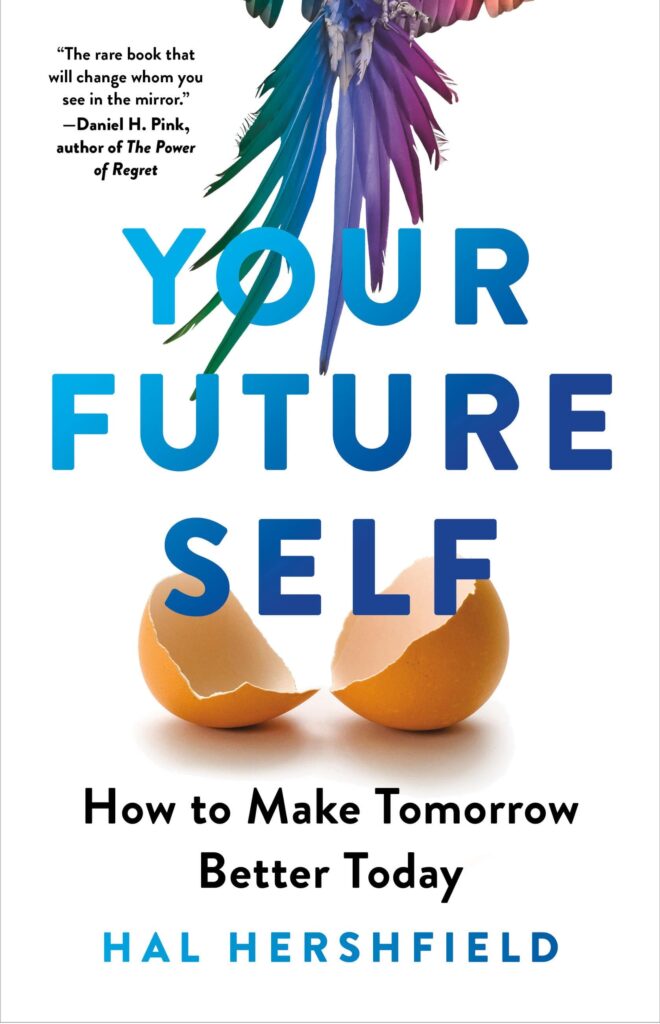
In “Your Future Self: How to Make Tomorrow Better Today,” Hal Hershfield reveals an intriguing perspective on our connection with our future selves and how this affects our decision-making processes.
Disconnection from Our Future Selves
Hershfield’s primary observation is the root cause of many of our problems: our disconnection from our future selves. He asserts that people often perceive their future selves as strangers, leading to decisions that may not be in their long-term best interests. Such behaviors could manifest as neglecting our health, failing to save for retirement, or taking unnecessary risks.
Creating a Dialogue with Your Future Self
To bridge this gap, Hershfield proposes a simple yet effective strategy: initiate a dialogue with your future self. By integrating the concept of our future selves into our present lives, we become more mindful of the potential impacts of our current decisions. One of the practical ways to do this is by writing a letter to our future self and then responding from the perspective of that future self.
The Importance of Forgiving Our Past Selves
Another crucial insight Hershfield emphasizes is the need to forgive our past selves. He argues that acknowledging our past mistakes while maintaining self-compassion allows us to focus on changing future behaviors rather than dwelling on past errors.
The Pitfalls of Focusing Too Much on the Present
Hershfield warns against the pitfalls of focusing excessively on the present at the expense of the future. We often wrongly assume that our future selves will take care of the things we’re currently neglecting. Cultivating a stronger connection with our future selves helps us strike a balance between living in the present and planning for the future.
Finding Harmony Between Present and Future Selves
The ultimate goal is to establish a harmonious relationship between who we are now and who we will become. Hershfield’s approach is not about sacrificing the present for the future but finding satisfaction in the choices we make now and still being satisfied with them in the future. His book is a guide that aims to provide readers with a sense of agency in their journey from the present to the future.
In summary, “Your Future Self: How to Make Tomorrow Better Today” offers profound insights on the interaction between our present and future selves, helping us make better decisions today that we will be proud of tomorrow.
Renowned financial writer and partner at Collaborative Fund, Morgan Housel, has shared some insightful observations in his recent blog post “Some Things I Think,” published on April 26, 2023. While delving into a range of subjects, he primarily focuses on our perceptions of wealth, success, and personal growth, offering thought-provoking perspectives that challenge conventional wisdom.
The Slow Path to Wealth
A striking insight that Housel provides is, “The fastest way to get rich is to go slow.” This contradicts the popular narrative of instant wealth creation often portrayed in media. Housel argues that true wealth accumulation is not a sprint but a marathon requiring patience, discipline, and consistency.
Housel’s contention is reinforced by his perspective on personal finance: “The most valuable personal finance asset is not needing to impress anyone.” In essence, true financial independence is not about showcasing wealth, but rather having the freedom to live life on your terms without social pressure.
The Deceptive Nature of Success
Housel warns of the risks of attributing success solely to personal brilliance, highlighting that luck often plays a significant role. It’s easy for one to believe they’re innately talented when they succeed without much effort, which can foster complacency and overconfidence. It’s crucial to remain humble and open to learning, regardless of one’s achievements.
On Human Behavior and Perception
A compelling observation from Housel pertains to the effects of social media and success on perception. He believes that social media is more of a stage for performance than a platform for authentic communication. Similarly, he notes that it’s easier for people to see you as special when they don’t know you intimately enough to see your flaws.
Furthermore, Housel suggests that our beliefs are often self-validating and highly subjective to our predispositions. Our perceptions and interpretations of the world around us can greatly be influenced by our emotions and perspectives.
Financial Debates and Time Horizons
He observes that most financial debates occur between people with different time horizons, leading to them essentially talking over each other. This serves as a reminder that everyone’s financial strategies and decisions are based on their unique circumstances and goals, thus reinforcing the importance of individualized financial planning.
Success and Knowing When to Quit
A defining trait of successful people in various fields, according to Housel, is their ability to know when to quit. Whether it’s in sports, business, politics, or entertainment, those who can wisely recognize when it’s time to pass the baton preserve and even enhance their reputation. Overstaying one’s welcome can risk diminishing past successes.
Housel’s insights serve as valuable reminders of the nuanced nature of success, wealth, and personal growth. From the role of luck in success to the deceptive allure of instant wealth, his reflections encourage a more thoughtful and realistic approach to life. It highlights the importance of patience, humility, individuality, and perseverance in navigating our personal and financial journeys.
Throughout history, countless figures have left their mark on the world of personal development, but few have had an impact as lasting and profound as Napoleon Hill. Born in 1883 in a small cabin in Pound, Virginia, Hill rose from humble beginnings to become one of the most influential self-help authors and personal development coaches of all time. His work has touched the lives of millions, inspiring them to achieve their goals and dreams.
Hill’s journey began with a chance encounter with steel magnate, Andrew Carnegie, who challenged him to devote 20 years of his life to uncovering the secrets of success. Hill accepted the challenge and embarked on a journey that led him to interview over 500 successful individuals, including Thomas Edison, Henry Ford, and Alexander Graham Bell. The result of this research was his groundbreaking book, “Think and Grow Rich,” which laid the foundation for modern personal development.
Napoleon Hill’s most important ideas:
Definiteness of Purpose: Hill emphasized the importance of having a clear, well-defined purpose in life. He believed that when an individual establishes a goal, they must focus their thoughts and efforts relentlessly on achieving that goal. This clarity of purpose is a driving force behind personal and professional success.
The Power of the Mastermind: Hill’s concept of the Mastermind is a central idea in his teachings. He believed that when a group of like-minded individuals come together to share ideas, knowledge, and resources, they create a collective intelligence that can propel each member towards success. This principle has inspired countless individuals and organizations to form their Mastermind groups.
The Subconscious Mind: Hill recognized the immense power of the subconscious mind in shaping an individual’s reality. He asserted that by planting positive thoughts and affirmations in the subconscious mind, individuals could attract success and wealth into their lives.
Persistence: Hill taught that persistence is a crucial factor in achieving any goal. He believed that setbacks and failures are inevitable on the road to success, but through unwavering persistence, individuals can overcome these obstacles and ultimately achieve their dreams.
The Law of Attraction: While not explicitly named in Hill’s work, his teachings on the subconscious mind, positive thinking, and goal setting laid the groundwork for the modern understanding of the Law of Attraction. Hill believed that individuals can manifest their desires by maintaining a positive mindset and focusing their thoughts on their goals.
As a pioneer in the personal development field, Napoleon Hill’s work has had an enduring impact on countless lives. His principles and teachings have become the foundation for personal development courses, seminars, and books that continue to inspire individuals to pursue their goals and dreams. The timeless wisdom of Napoleon Hill serves as a guiding light for those seeking to unlock their full potential and achieve lasting success.
Questions Napoleon Hill would ask:
What is your definite purpose in life, and how do you plan to achieve it?
Who are the members of your Mastermind group, and how do they support your goals and growth?
How do you cultivate a positive mindset and utilize the power of your subconscious mind to attract success?
Can you share an example of a setback or failure you’ve faced, and how did you demonstrate persistence to overcome it?
What daily habits or practices do you employ to maintain focus on your goals and nurture your personal development?
In life, weaving together the threads that bring us joy, satisfaction, and meaning can feel like a daunting task. Yet, it’s within these vibrant strands that we find the essence of a fulfilling life. Let us explore the colorful dimensions that make up the fabric of our existence: personal growth, relationships, altruism, our connection to nature, spiritual exploration, creative expression, and the wonders of travel.
The Path of Personal Growth
Life is a perpetual classroom, offering lessons at every turn. Embrace this journey of self-discovery by setting goals, learning new skills, and pursuing your passions. As you continue to grow and evolve, you’ll find a deeper sense of self-awareness and resilience that guides you through life’s ebbs and flows.
The Bonds That Bind
Family ties often hold a cherished place in our hearts, but the connections we forge with friends, colleagues, and romantic partners are equally vital. These relationships enrich our lives, offering emotional support, a sense of belonging, and opportunities for growth through shared experiences.
The Art of Giving
In the act of giving, we find a sense of purpose that transcends the boundaries of our individual lives. Whether we volunteer, donate, or raise awareness for the causes that move us, our contributions ripple outward, touching the lives of others and fostering a deeper connection with our communities.
Nature’s Embrace
Immersing ourselves in the natural world or striving to protect it can rejuvenate our spirits and remind us of our interconnectedness with all life. Activities like hiking, gardening, or engaging in environmental conservation projects bring us closer to the earth and offer moments of solace amid the chaos.
Delving into the Depths
Whether we identify as religious or not, the exploration of spirituality or philosophy can provide a compass to navigate the complexities of life. Contemplating life’s big questions, engaging with diverse beliefs, or practicing mindfulness can illuminate our paths, offering clarity and inner peace.
The Dance of Creativity
Creativity is the soul’s way of expressing its most profound thoughts, emotions, and experiences. Through music, writing, painting, or any other form of artistic endeavor, we uncover new dimensions of ourselves and find unique pathways to growth and self-expression.
The Allure of the Unknown
Travel invites us to step beyond the familiar and immerse ourselves in the wonders of the world. As we explore new places and cultures, our horizons expand, our perspectives shift, and we are inspired to learn and grow in ways we never thought possible.
The tapestry of life is intricate and ever-evolving, with each thread representing a unique aspect of our existence. By weaving these elements together, we create a rich and fulfilling life experience. Remember, the patterns and colors that make up our personal tapestry are as diverse as the individuals who create them. Embrace your journey and let your life’s masterpiece unfold, one vibrant thread at a time.
I apologize for the incomplete response earlier. Here’s the complete summary of Discipline Is Destiny by Ryan Holiday:
Discipline Is Destiny: The Hidden Secrets of Stoicism by Ryan Holiday is a book that explores the ancient philosophy of Stoicism and its relevance to modern-day life. Holiday, who is well-known for his works on Stoicism and its practical applications, argues that the philosophy’s core teachings are just as relevant today as they were in ancient Greece and Rome.
The book begins with a discussion of the importance of discipline in life. Holiday argues that discipline is the key to achieving success, happiness, and fulfillment. He emphasizes the need for discipline in all aspects of life, from personal habits to professional pursuits. Without discipline, he says, we are at the mercy of our impulses and emotions, which can lead us astray.
Holiday then introduces the philosophy of Stoicism and its central tenets. He explains that Stoicism is a philosophy of personal ethics that emphasizes the importance of reason, self-control, and fortitude. The philosophy was developed in ancient Greece and Rome by philosophers such as Epictetus, Marcus Aurelius, and Seneca.
The book explores the four virtues of Stoicism: wisdom, courage, justice, and temperance. Holiday explains how these virtues are central to the Stoic way of life and how they can be applied in modern-day contexts. He emphasizes the importance of living a virtuous life and how it can lead to greater happiness and fulfillment.
The book emphasizes the importance of focusing on the things that are within our control and letting go of those that are not. Holiday argues that this is a central tenet of Stoicism and that it can help us to reduce stress and anxiety in our lives. He explores the dichotomy of control, which is the idea that there are things that are within our control and things that are not. Focusing on the things that are within our control can help us to achieve greater success and happiness in life.
The book also emphasizes the importance of perception and how it can shape our experiences in life. Holiday argues that by changing our perceptions, we can change the way we experience the world. He explores the concept of eudaimonia, which is the Greek term for human flourishing or happiness. Holiday explains how this concept is central to Stoicism and how it can help us to live a more fulfilling life.
The book explores the practice of meditation and how it can help us to develop greater self-awareness and self-control. Holiday explains how meditation is a central practice in Stoicism and how it can be applied in modern-day contexts. The book also explores the practice of journaling and how it can help us to develop greater self-awareness and clarity.
In conclusion, Discipline Is Destiny is a thought-provoking book that explores the practical applications of Stoicism in modern-day life. The book provides a comprehensive overview of the philosophy and its central tenets, as well as practical advice on how to apply these teachings in daily life. It is a must-read for anyone interested in personal growth, self-improvement, and living a more fulfilling life.
Holiday argues that Stoicism is not just a philosophy but a way of life that can help individuals navigate the challenges of modern-day living. The book explores the key teachings of Stoicism, such as the dichotomy of control, the practice of mindfulness, and the importance of virtue.
The book emphasizes the importance of self-discipline and the development of positive habits. It suggests that individuals should focus on developing their strengths, managing their weaknesses, and cultivating self-awareness.
Holiday suggests that individuals should focus on their inner selves and their own goals and aspirations rather than external factors beyond their control. He also suggests that individuals should practice gratitude and appreciate what they have rather than focusing on what they lack.
The book also provides practical advice on how to apply Stoic principles to modern-day life. For example, it suggests that individuals should engage in regular exercise, practice meditation, and cultivate a sense of purpose and meaning.
Key Points:
The Importance of Discipline: The book begins with a discussion of the importance of discipline in life. Holiday argues that discipline is the key to achieving success, happiness, and fulfillment. He emphasizes the need for discipline in all aspects of life, from personal habits to professional pursuits.
The Philosophy of Stoicism: The book then introduces the philosophy of Stoicism and its central tenets. Holiday explains that Stoicism is a philosophy of personal ethics that emphasizes the importance of reason, self-control, and fortitude.
The Four Virtues of Stoicism: The book then explores the four virtues of Stoicism: wisdom, courage, justice, and temperance. Holiday explains how these virtues are central to the Stoic way of life and how they can be applied in modern-day contexts.
The Importance of Control: The book emphasizes the importance of focusing on the things that are within our control and letting go of those that are not. Holiday argues that this is a central tenet of Stoicism and that it can help us to reduce stress and anxiety in our lives.
The Dichotomy of Control: The book explores the dichotomy of control, which is the idea that there are things that are within our control and things that are not. Holiday explains that focusing on the things that are within our control can help us to achieve greater success and happiness in life.
The Power of Perception: The book emphasizes the importance of perception and how it can shape our experiences in life. Holiday argues that by changing our perceptions, we can change the way we experience the world.
The Concept of Eudaimonia: The book explores the concept of eudaimonia, which is the Greek term for human flourishing or happiness. Holiday explains how this concept is central to Stoicism and how it can help us to live a more fulfilling life.
The Practice of Meditation: The book explores the practice of meditation and how it can help us to develop greater self-awareness and self-control. Holiday explains how meditation is a central practice in Stoicism and how it can be applied in modern-day contexts.
The Importance of Virtue: The book emphasizes the importance of living a virtuous life and how it can lead to greater happiness and fulfillment. Holiday argues that living a virtuous life is central to the Stoic way of life.
The Practice of Journaling: The book explores the practice of journaling and how it can help us to develop greater self-awareness and clarity. Holiday explains how journaling is a central practice in Stoicism and how it can be applied in modern-day contexts.
Overall, Discipline Is Destiny is a comprehensive and insightful book that provides readers with a wealth of knowledge on the philosophy of Stoicism and its practical applications. It is a must-read for anyone interested in personal growth, self-improvement, and living a more fulfilling life.
Further Areas for Exploration:
The History of Stoicism: Readers who are interested in the history of Stoicism may want to explore the writings of ancient Stoic philosophers, such as Epictetus, Marcus Aurelius, and Seneca.
The Practice of Mindfulness: Readers who are interested in mindfulness may want to explore the practice of mindfulness meditation, which is similar to the Stoic practice of meditation.
The Psychology of Control: Readers who are interested in the psychology of control may want to explore the research on locus of control, which is the extent to which individuals believe they can control events in their lives.
The Practice of Virtue: Readers who are interested in the practice of virtue may want to explore the writings of Aristotle and other philosophers who have explored this topic in depth.
The Connection between Stoicism and CBT: Readers who are interested in the practical applications of Stoicism may want to explore the connection between Stoicism and cognitive-behavioral therapy (CBT), which is a type of psychotherapy that focuses on changing negative patterns of thinking and behavior.
Peaks and Valleys by Spencer Johnson is a self-help book that offers practical and insightful advice on how to manage the ups and downs of life. The book is a quick read, with only 112 pages, but it offers a powerful message that can help readers transform their lives.
In this article, we will explore the core ideas of the book, summarize the key points, and suggest some areas for further exploration.
Core Ideas:
Peaks and Valleys is based on the idea that life is full of peaks and valleys. Peaks are the high points in our lives, such as when we achieve a goal, receive recognition, or experience happiness. Valleys, on the other hand, are the low points, such as when we experience failure, disappointment, or loss.
According to Johnson, the key to managing peaks and valleys is to have a positive attitude and to learn from both the highs and lows. He suggests that there are three basic strategies for doing this:
Focus on the Peak: When we are in a peak, Johnson advises us to enjoy it fully, savor the moment, and celebrate our achievements. He reminds us that it is important to recognize and appreciate the good times in life, as they provide us with energy and motivation.
Find the Valley Opportunity: When we are in a valley, Johnson advises us to look for the opportunity to learn and grow. He reminds us that valleys can be valuable opportunities for reflection, self-improvement, and change.
Get out of the Valley Quickly: When we are in a valley, Johnson advises us to take action and get out of the valley as quickly as possible. He reminds us that it is important to take proactive steps to improve our situation and avoid getting stuck in negative emotions and thoughts.
Key Points:
Peaks and valleys are natural parts of life, and everyone experiences them.
Peaks provide us with motivation and energy, while valleys provide us with opportunities for growth and learning.
To manage peaks and valleys, we need to have a positive attitude and learn from both the highs and lows.
When we are in a peak, we should enjoy it fully, savor the moment, and celebrate our achievements.
When we are in a valley, we should look for the opportunity to learn and grow, take proactive steps to improve our situation, and avoid getting stuck in negative emotions and thoughts.
Areas for Further Exploration:
The Power of Attitude: Peaks and Valleys highlights the importance of having a positive attitude. Further exploration of the power of attitude can help readers understand how attitude can influence our thoughts, emotions, and actions.
The Psychology of Resilience: Peaks and Valleys emphasizes the importance of resilience in managing the ups and downs of life. Further exploration of the psychology of resilience can help readers understand the factors that contribute to resilience and how they can develop their own resilience.
Mindfulness and Emotional Regulation: Peaks and Valleys encourages readers to be mindful of their emotions and thoughts. Further exploration of mindfulness and emotional regulation can help readers understand how to manage their emotions and thoughts more effectively and develop greater self-awareness.
The Importance of Self-Care: Peaks and Valleys emphasizes the importance of taking care of oneself during both peaks and valleys. Further exploration of self-care can help readers understand the strategies and practices that can support their physical, emotional, and mental well-being.
Peaks and Valleys by Spencer Johnson is a powerful self-help book that offers practical and insightful advice on how to manage the ups and downs of life. The book emphasizes the importance of having a positive attitude, learning from both the highs and lows, and taking proactive steps to improve our situation. By following these strategies, readers can transform their lives and achieve greater happiness and fulfillment.
Life is a journey, a complex and often confusing path that can be filled with both joys and hardships. It can be difficult to find peace and contentment in this world, especially when facing the realities of impermanence, lack of control, death, unsatisfactoriness, and separation. However, psychologist and author David Richo has identified these five givens as universal aspects of our existence, which can be used as a roadmap for personal growth and transformation.
Impermanence
One of the most fundamental givens of life is impermanence, the idea that everything is constantly changing and that nothing stays the same. This can be a difficult concept to accept, as we often hold onto the things and people we love and seek stability and security in our lives. However, as Richo notes, this constant change is what gives life its richness and diversity, and embracing it can help us to find peace and contentment.
No Control over External Events
Another of the givens is our lack of control over external events. We can plan and prepare as much as we want, but in the end, the world around us operates according to its own laws and patterns. This can be difficult to accept, especially when it seems like things are going wrong, but understanding that we have limited control can help us to be more accepting of the present moment and to trust the flow of life.
Inevitability of Death
Death is a natural part of life, and one that we often avoid thinking about. But according to Richo, accepting this given can help us to live more fully in the present moment, knowing that our time is limited. It can also help us to appreciate the people and things in our lives, and to make the most of each day.
Unsatisfactoriness of Life
No matter how hard we try, life is never going to be perfect. There will always be ups and downs, joys and hardships. As Richo notes, accepting this given can help us to find peace and contentment, by focusing on what we do have instead of what we don’t. It can also help us to be more compassionate and understanding towards others, as we all face this common challenge.
Separation from Others
Finally, Richo notes that we are all separate from each other, and that we each have our own experiences, thoughts, and feelings. While this can be a source of loneliness and isolation, understanding this given can also help us to appreciate the uniqueness and beauty of each person we encounter. It can also help us to form deeper, more meaningful relationships, as we learn to accept and appreciate our differences.
David Richo’s five givens are a powerful reminder of the universal aspects of life that we all face. By accepting and embracing these givens, we can find peace, contentment, and meaning in our lives, no matter what the world around us may bring. Whether we are facing the highs or lows of life, these five givens offer a roadmap for personal growth and transformation, helping us to find the light in the darkness and to live fully in the present moment.
“How to Have the Best Year Ever!” by Jim Rohn is a comprehensive guide to personal development and life coaching. The book offers practical advice and strategies for achieving success and happiness in all areas of one’s life, including personal and professional growth, financial prosperity, and relationships. Rohn emphasizes the importance of setting clear and specific goals, developing a positive attitude, and taking consistent, focused action in order to achieve those goals. He also stresses the importance of self-discipline, ongoing learning and personal development, and the power of a supportive community in helping to achieve one’s goals.
The book is divided into several sections that cover different aspects of personal development and goal-setting. In the first section, Rohn emphasizes the importance of having a clear vision for one’s life and setting specific and measurable goals. He also provides advice on how to overcome obstacles and setbacks that may arise along the way.
The second section of the book focuses on developing a positive attitude and a mindset of success. Rohn emphasizes the importance of maintaining a positive outlook, even in the face of challenges and setbacks. He also provides strategies for developing self-confidence, self-esteem, and resilience.
The third section of the book is all about taking consistent, focused action to achieve one’s goals. Rohn stresses the importance of taking daily, consistent action towards one’s goals. He also provides advice on how to stay motivated and overcome procrastination.
The fourth section of the book covers the importance of self-discipline and self-control. Rohn emphasizes the importance of having the discipline to stick to one’s goals and the self-control to avoid distractions and temptations that can derail progress.
The fifth section of the book focuses on the importance of ongoing learning and personal development. Rohn stresses the importance of always looking for ways to improve oneself and one’s skills. He also provides advice on how to find mentors and role models to help guide personal development.
The final section of the book is all about the power of a supportive community. Rohn stresses the importance of surrounding oneself with positive and supportive people who can help to provide encouragement and guidance along the way. He also provides advice on how to build and maintain a supportive community.
Overall, “How to Have the Best Year Ever!” by Jim Rohn is an in-depth and comprehensive guide to personal development and life coaching. The book provides practical advice and strategies for achieving success and happiness in all areas of one’s life and it’s a powerful tool for anyone looking to make positive changes in their life.
When it comes to making changes in our lives, the phrase “If you don’t like how things are, change it! You’re not a tree” applies perfectly. Change is a necessary part of life, and it can be both difficult and rewarding. Sometimes it can be hard to take that first step in making a change, but it’s important to remember that you have the power to make a difference.
There are a few key things to keep in mind when making a change. First, be sure to be realistic about what you can do and how much time it will take. Change doesn’t happen overnight and it’s important to be patient and give yourself time to make the transition. Second, don’t be afraid to ask for help. Many people are more than willing to provide support and encouragement when it comes to making a change. Lastly, be sure to take care of yourself. Change can be stressful, so make sure to take the time to relax and unwind.
Making a change can be a daunting task, but it’s also an incredibly rewarding experience. It can help to improve your quality of life and make positive progress in your goals. It’s important to remember that you have the power to make a difference and you don’t have to stay the same if you don’t want to. So if you don’t like how things are, don’t be afraid to take the initiative and make a change. After all, you’re not a tree!
Remember, it’s important to note that change is a natural part of life and it’s important to take the initiative to make a difference. Don’t be afraid to take the first step and make a change. The rewards can be great and it’s important to take care of yourself throughout the process. So if you don’t like how things are, change it! You’re not a tree!
It’s no secret that life can be tough at times. Whether it’s a global pandemic, a personal crisis, or simply the daily grind, it’s easy to get caught up in stress and negativity. But it’s important to remember that even in the most challenging circumstances, it is possible to find joy and fulfillment. Here are 10 proven strategies for maintaining a sense of happiness and purpose in tough times:
Practice resilience. One of the keys to maintaining joy in difficult situations is the ability to bounce back from adversity. This means developing a mindset of determination, grit, and perseverance. It also means finding healthy ways to cope with stress and setbacks, such as through relaxation techniques, exercise, or seeking support from loved ones.
Cultivate gratitude. Another effective way to maintain joy is to focus on the things you are grateful for, rather than dwelling on the negative aspects of your circumstances. This could mean keeping a gratitude journal, sharing your gratitude with others, or simply taking a few moments each day to appreciate the good things in your life.
Prioritize self-care. It’s hard to feel joyful when you are burnt out, overwhelmed, or physically unhealthy. That’s why it’s important to prioritize self-care and make time for activities that nourish your mind, body, and spirit. This could include things like getting enough sleep, eating well, exercising, and engaging in hobbies or activities that bring you joy.
Practice mindfulness. Mindfulness is the act of bringing your attention to the present moment, without judgment. It can help you to manage stress, reduce negative thoughts, and find greater joy and fulfillment in your life. There are many ways to practice mindfulness, including through meditation, yoga, or simply taking a few deep breaths and paying attention to your surroundings.
Think positively. While it’s important to be realistic and acknowledge difficult situations, it’s also important to try to maintain a positive outlook. This doesn’t mean ignoring problems or being unrealistic, but rather looking for the silver lining and focusing on solutions rather than dwelling on problems.
Seek social support. Humans are social creatures, and we thrive when we have strong connections with others. In challenging times, it’s important to seek out supportive relationships with friends, family, or community. These relationships can provide a sense of belonging, help us to feel less alone, and give us a sense of purpose and meaning.
Set goals and work towards them. Having a sense of purpose and direction can give us a sense of meaning and fulfillment, even in difficult times. That’s why it’s important to set goals and work towards them, whether they are big or small. This could be anything from saving for a dream vacation to working towards a promotion at work.
Develop healthy habits. Building healthy habits, such as regular exercise, a healthy diet, and getting enough sleep, can help us to feel more energized, focused, and joyful.
Get creative. Engaging in creative pursuits, such as art, music, or writing, can provide a sense of accomplishment and bring joy and fulfillment to our lives.
Be generous and serve others. Finally, one of the most effective ways to find joy and fulfillment in challenging times is to focus on helping others. This could mean volunteering your time or resources to a cause you care about, or simply performing small acts of kindness for those around you. Generosity has been shown to increase happiness and well-being, and can provide a sense of purpose and connection to something larger than ourselves.
Maintaining joy and fulfillment in challenging times is not always easy, but it is possible. By practicing resilience, gratitude, self-care, mindfulness, positive thinking, and seeking social support, as well as setting goals, developing healthy habits, getting creative, and serving others, you can find a sense of happiness and purpose even in the most difficult circumstances. Remember to also be flexible, have a sense of humor, and try to maintain a healthy perspective, and don’t forget to stay true to your values and focus on personal growth. And above all, try to be kind and accepting of yourself and others, as this can go a long way towards finding joy and fulfillment in life.