PJFP.com

Pursuit of Joy, Fulfillment, and Purpose

Tag: Rick Rubin

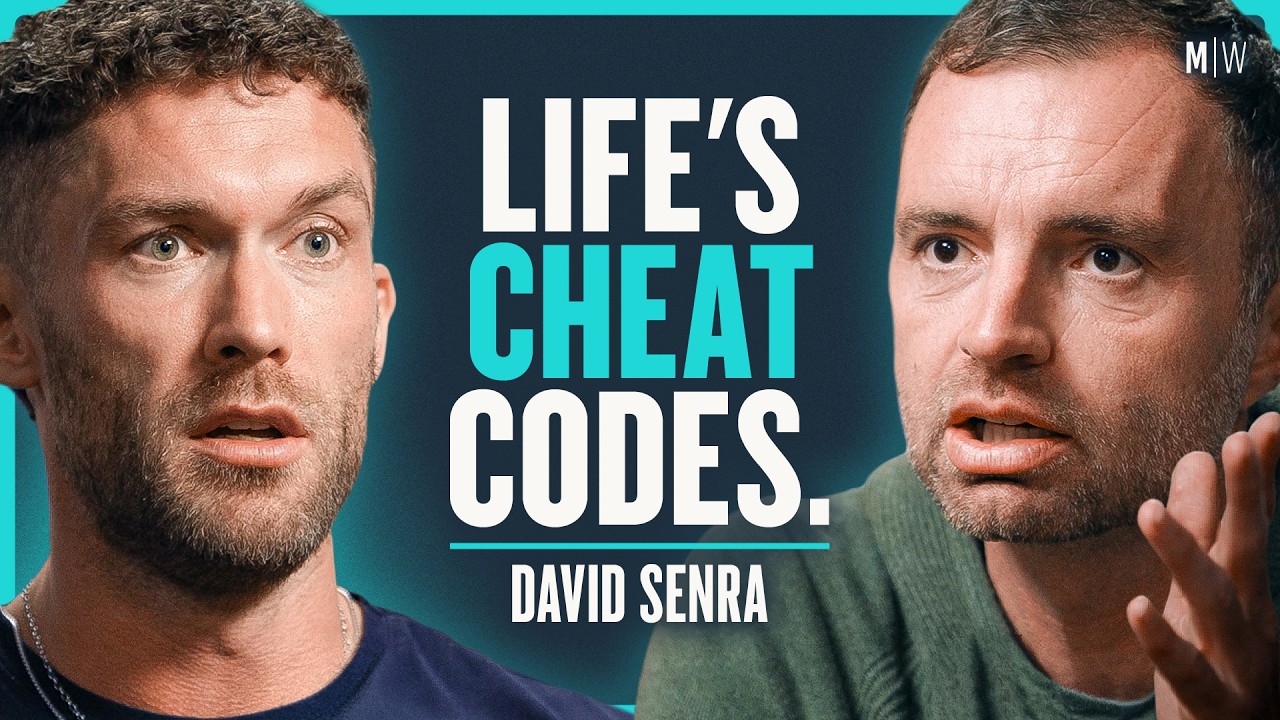
  • David Senra on the 14 Patterns Behind the World’s Greatest Minds: Rick Rubin the Lazy Workaholic, Chips on Shoulders, Wisdom Is Prevention, and Why Your Life Is Your Relationships

    David Senra has read something like 425 biographies and autobiographies of history’s greatest entrepreneurs, and he now spends his weeks sitting across from living ones. This conversation with Chris Williamson is structured around fourteen maxims he keeps running into, each one attached to a specific person and a specific story: Rick Rubin admitting he is a lazy workaholic, Charlie Munger arguing that wisdom is prevention, James Dyson failing for fourteen years in a carriage house, Jimmy Iovine listing the four ways talented people destroy themselves. You can watch the full conversation here.

    TLDW

    Senra opens with the most disorienting thing he has learned in years of interviews: Rick Rubin, four decades into a career at the top of music, says he has to force himself to work every single day. From there the patterns stack up. Chips on shoulders put chips in pockets, which is why AppLovin’s founder deliberately hires people with something to prove. The mind is a powerful place and what you feed it affects you in a powerful way, which is why Senra curates his information diet down to old books and a handful of people. Find a simple idea and take it seriously, which is Todd Graves selling nothing but chicken fingers for thirty years and owning ninety percent of a $20 billion company he refuses to sell. Successful people listen, which is Michael Jordan as a sponge and Steve Jobs firing the two Pixar board members who never disagreed with him. Wisdom is prevention, which is Munger’s argument that you get smart by avoiding problems rather than solving them. Create according to your own taste, which is Rubin’s house-on-the-mountain test. Raid your own life, which is Tim Urban’s Grand Theft Life and Tobi Lütke treating himself as a corporate raider who just seized Shopify from bad management. Stay away from the circus, which is Daniel Ek’s repeated advice to Senra. And the darker material: Jimmy Iovine’s four buckets of self-destruction, Williamson’s line that what you are praised for in public you will pay for in private, and Senra admitting on air that the thing he was lying to himself about was believing work mattered more than relationships. It does not, he says. It never did.

    Thoughts

    The Rick Rubin admission is the most useful thing in the episode because it demolishes the most damaging idea in modern work culture: that if you found the right thing, it would not feel like work. Rubin is the control case. He is paid to be himself, he sits at the absolute top of his field, he has been doing the same trade for forty years, and he says there is a part of him that does not want to show up for anything and he has to overcome it every day. What he loves is not the process but the moment of resolution, the failing and failing and then the one tweak that unlocks it. If that is true of Rubin, then the fact that you had to force yourself to sit down this morning is not evidence you picked the wrong life. It is just what the work is.

    Williamson’s contribution on the lonely chapter deserves as much attention as any of Senra’s maxims. The chip on the shoulder gets romanticized in these conversations, but he describes the actual cost with unusual precision: you become too developed to fit with your old friends and not yet developed enough to have earned the new ones, and you sit in that gap for years while a movie would have covered it in a three-minute montage. Worse, the people around you are not neutral. Your growth throws their lack of growth into contrast, so the environment actively resists the change. He is right that very few people are born into a setting that tolerates rapid change, and that this functions as a selection filter more brutal than talent.

    The Munger material is the most actionable and the least fashionable. Everyone wants a framework for solving hard problems. Munger’s claim is that most problems should never have been allowed to exist, and that the two decisions doing nearly all the work are who you spend your life with and what work you commit to. Get both right and you have eliminated the large majority of problems that were ever under your control. The rest, the child who gets sick, the diagnosis, arrives regardless. Williamson extends it neatly: it is far easier to date someone who compensates for your shortcomings than to fix them, and every annoying dinner and 3am nightclub you did not want to attend draws down a frustration budget you needed for something that actually mattered.

    Jimmy Iovine’s four buckets are the closest thing here to a survival checklist for anyone whose work is going well. Drugs, alcohol, megalomania, and the wrong partner. Iovine has watched fifty years of extraordinarily talented people and concluded that almost nobody is destroyed by a competitor. They do it themselves. The megalomania mechanism is the subtle one: 80,000 people scream your name for the work you put in, you slowly come to believe they are screaming for you rather than for the work, you stop doing the work, the work degrades, and the spiral begins. Senra’s protection against this is James Dyson, who never slept on a win because he simply liked picking the thing up and making it slightly better, then putting it back down, for forty-five straight years.

    The most human moment is Senra answering his own question about what he was lying to himself about. He spent a decade alone in a room making a podcast, told himself he was a loner who did not need people, and has now concluded that was false. He did not have a preference for solitude, he had low-quality people around him. The reframe Williamson offers, that far fewer people are introverts than believe it and that most of them just have friends who drain them, is the kind of line that is either glib or genuinely clarifying depending on how honest you are willing to be about your last few dinners. Senra also does something rare for someone in the productivity-adjacent world: he says out loud that relationships now outrank the work, that he would give up professional success for a deep relationship, and that this is the correct irrational choice.

    Key Takeaways

    • Rick Rubin, 63 and four decades into his career, told Senra he is a lazy workaholic who has to force himself to work. His natural inclination is to do nothing.
    • Rubin’s first 25 years were seven days a week, sixteen hours a day in a dark recording studio. What he is addicted to is the moment of resolution after long failure, not the process.
    • When Senra published that clip, thousands of people wrote in to say it described exactly how they feel about their own work.
    • People at the top of a profession almost always carry an encyclopedic knowledge of their field’s history. Rubin borrows solutions from what the Beatles did thirty years earlier.
    • When a session stalls, Rubin pulls a random book off the studio shelf, opens to a random page, reads a paragraph aloud, and they talk about it.
    • Chips on shoulders put chips in pockets. The Josh Wolfe maxim recurs across centuries of entrepreneurial history.
    • AppLovin founder Adam Foroughi deliberately avoids hiring the wealthy-prep-school-easy-Harvard profile and looks for dysfunctional people with something to prove.
    • His number two is a high school dropout who started working for him at 17, got kicked out of his house, and built bunk beds in the office. He is now the second largest shareholder in a company worth roughly $170 billion.
    • Foroughi once offered 25 percent of his company for a million dollars and every top VC turned him down, then funded his competitors. Driving those competitors out of business became the company goal.
    • The underlying feeling both Senra and Williamson describe is being born in the wrong spot, and using reading and self-education as the escape hatch.
    • Belief comes before ability. Kanye West was practicing his Grammy acceptance speech on the walk to the train before he had recorded a single verse.
    • Shia LaBeouf’s version: growing up without support, he decided his own opinion of his life was the most important one and cut out anyone who supplied counter-evidence.
    • The lonely chapter is the part nobody warns you about. You outgrow your old friends before you have earned new ones, and the Rocky montage that takes three and a half minutes on screen takes four years in real life.
    • Very few people are born into an environment that supports rapid change, because your growth makes other people’s lack of growth feel like their fault.
    • The mind is a powerful place and what you feed it affects you in a powerful way. Senra takes this from the rapper NF and applies it as an information-diet rule.
    • Tobi Lütke, running a $200 billion company, turned out to be all intuition rather than German-engineer analysis, and credits rewriting his inner monologue.
    • Lütke beat a fear of public speaking by writing “I love public speaking” a hundred times a day for ten minutes until the belief took. It sounds like nonsense and it worked.
    • Sofa friends and treadmill friends: after some people you want to lie down and stare at the ceiling, after others you want to go for a run. Apply the same test to the creators you follow.
    • Senra’s whole information diet is old books plus conversations with a small number of smart people. He treats letting an algorithm push whatever it wants into your brain as insane.
    • His argument against news: read a biography of Joseph Pulitzer, who invented yellow journalism, and of William Randolph Hearst who copied him, and you will understand why the feed looks the way it does.
    • You can achieve success without ever feeling it, especially doing work you do not care about. You do not want success, you want the feeling being successful gives you.
    • Senra’s grandfather was an uneducated Cuban butcher who realized what Castro’s takeover meant and got his family out. That one decision changed the trajectory of Senra’s life.
    • John Mackey started Whole Foods as a hitchhiking hippie who thought Safeway was poisoning people. Decades later, shelf stockers with stock options sent kids to college.
    • Find a simple idea and take it seriously. Munger’s maxim, and the explanation for Todd Graves selling essentially one product for thirty years without changing the menu.
    • Graves owns over 90 percent of Raising Cane’s, has turned down multiple billion-dollar offers, had 915 company-owned stores with no franchises, and was growing faster in year 30 than ever.
    • His business card reads fry cook, cashier, CEO. He still hands orders out of the drive-thru because he refuses to separate himself from the customer.
    • Munger’s underlying finding after six decades studying extreme business success: the winning system goes ridiculously far in maximizing or minimizing one or a few variables.
    • The better definition of a billion dollar idea, from Joe Hudson’s daughter: not an idea worth a billion dollars, an idea you would not sell for a billion dollars.
    • Senra is not interested in start, scale, sell. The goal is to reach your last company, the one you love so much they could not pay you to stop.
    • There is no deadline for finding your life’s work. Kobe Bryant found it at 13. Henry Leland founded Cadillac at 60 and Lincoln at 70. Senra was 32, and it took another five and a half years to pay his bills.
    • The loudest boos come from the cheapest seats. Dana White put on a five-knockout card at the White House and people still told him what he should have done differently.
    • Making mistakes is the privilege of the active. Reframing the mistake as evidence you are trying, and owning it immediately, is one of the highest-trust things an employee can do.
    • White loves entrepreneurship more than fighting and takes well over a hundred meetings a year with founders in his office just to talk shop.
    • The UFC was bought near bankruptcy for $2 million, absorbed another $40 million, and lost money for seven years. White was thrilled at the prospect of making one million dollars a year, because it meant he could keep doing it forever.
    • Successful people listen, and those who do not listen do not last long. That is a Michael Jordan line, and the real Jordan is a sponge for anything useful rather than the tyrant of the documentary.
    • Steve Jobs fired two Pixar board members specifically because they never disagreed with him, which meant they added no value.
    • The failure mode is mistaking the refusal to take feedback for self-belief, which strands you in a local maximum.
    • Munger would open an argument by stating the best case against his own position, then rebut it. Almost nobody else does this.
    • Wisdom is prevention. You are not smart because you solve problems, you are wise because you avoid them.
    • Munger’s prescription: four or five high-quality people you do life with, plus great work you stay in rather than jumping around. That eliminates most problems that were ever under your control.
    • Munger also said most people are rat poison and should be avoided, which he arrived at after watching his nine-year-old son die of leukemia during a divorce.
    • Everyone has a daily frustration budget. Annoying dinners and 3am nights you did not want spend the reserves you needed for the things that matter.
    • There is nobility in meaningful suffering and none whatsoever in meaningless suffering.
    • Rubin’s house-on-the-mountain test: if you owned a house so remote nobody would ever see it, would you still design it exactly to your taste? Your honest answer is your revealed preference.
    • Rubin’s corollary is that you are not that unique. If you love a stripped-back Johnny Cash recording, ten million other people probably will too.
    • The internet rule of thumb: would you consume your own content? If it takes more than five seconds to answer, the answer is no.
    • Tobi Lütke’s mental trick: pretend you are a corporate raider who just seized the company from insane previous management, then list everything you would change.
    • Tim Urban’s Grand Theft Life: treat yourself like a video game character. He needs money, so send him to work. He needs stamina, so send him to the gym.
    • The related exercise: imagine an evil version of you with a mustache trying to beat you. What would he do? Usually he is more decisive and stops giving people fourth and fifth chances.
    • Williamson’s own answer is that his bar for certainty before acting is too high. Never failing is a signal you are moving too slowly.
    • Daniel Ek’s advice to Senra, repeated across dinners and drives: stay away from the circus. Skip the conferences, skip the dinners, sit in a room and make podcasts.
    • Ek is Senra’s entire living board of directors. When Senra asked if he was going to Ek’s own conference, Ek said no, and neither should you.
    • Ruthlessly edit who gets access to you. With a large platform, people behave differently around you, so have people you trust spend time with them separately.
    • Your life is your relationships. Surround yourself with people who will drown in a cup of water and your life fills with manufactured drama.
    • A successful entrepreneur needs a supportive spouse or no spouse at all, which is the lesson Senra pulled from a memoir written by Arnold Schwarzenegger’s girlfriend in his twenties.
    • The expansive personality problem: for most people appetite is satisfied by eating, and for these people the more they succeed the more they want. It shows up as infidelity because the trait does not switch off in the romantic domain.
    • Jimmy Iovine’s four buckets of self-destruction after success: drugs, alcohol, megalomania, and the wrong partner. Nobody is beaten by a competitor, they beat themselves.
    • Megalomania works by confusing the applause for the work with applause for you, at which point you stop doing the work and the work shows it.
    • What you are praised for in public, you will pay for in private. The single-mindedness and refusal to quit that make you excellent at work can make you a stranger at your own kitchen table.
    • Navy SEAL Andy Stumpf built his identity around not quitting, which made him excellent on a SEAL team and kept him in a marriage a decade too long.
    • Be rational in business and accept that romance is default irrational. The only durable filter anyone gives Senra is make sure she is a good person, and good people are rare.
    • The question to bring to dinner: what are you lying to yourself about? Everyone is lying about something.
    • Senra’s own answer: he told himself for a decade that he was a loner and relationships did not matter. The truth is they matter more than the work, and he had simply been surrounded by low-quality people.
    • Far fewer people are introverts than believe it. If you never want to see your friends, the problem may be your friends.
    • The real distinction is energy, not sociability. Some conversations send you to the treadmill and some send you to the sofa.
    • If you go to sleep on a win, you wake up with a loss. The Conor McGregor line, delivered by a man who then demonstrated the failure it warns against.
    • James Dyson went through 5,126 failed prototypes before the 5,127th worked, failing in a carriage house for fourteen years while his kids grew up watching.
    • Dyson at 78 owns 100 percent of a company that would fetch $60 to $80 billion, and told a would-be acquirer it is a family heirloom, not about money.
    • Dyson’s fingers are twice as thick as Senra’s from a lifetime of working with his hands. He is in the engineering and design meetings, not an absentee executive.
    • Dyson’s organizing principle: pick up a product, ask how to make it better, make it slightly better, put it down, repeat. He did that for 45 years and never stopped.
    • Reading Dyson’s story at episode 25 is why Senra did not quit a podcast that was costing him money and eating his savings for five and a half years.
    • Michael Dell and others told Senra the same thing: it is not the love of success, it is the fear of failure. Senra would rather never make it than make it and lose it.
    • Advice for 25-year-olds: spend an afternoon with a 70-year-old. Senra builds his guest list in reverse order of age because the opportunity expires.
    • Everything that happens to you is not about you, it is about the position you hold. Someone else in your seat would get the same DMs.
    • Eminem in 1999 said he was in it for respect, not money, and that with a trillion dollars and a fall-off he would be the most miserable person alive. He optimized for skill and status over sales.
    • Keep an internal scorecard, not an external one. Senra took his definition of success from Steve Jobs: did I make something I am proud of?
    • His personal definition of failure is the day he cuts the 30 hours of reading down to six because the circus got to him.
    • Being admired by people you admire beats money and beats generic status. Senra’s proof is his 14-year-old daughter hearing from her heroes that her dad’s work matters to them.
    • You can’t save souls in an empty church. David Ogilvy’s line, and Williamson’s argument that if you believe the work is good for people you have a moral obligation to distribute it.
    • Being the cool underground band nobody listens to is not integrity. At some point the market’s verdict on your taste is information.
    • The peer-group model Senra wants is the 1970s film-school generation: Lucas, Spielberg, Coppola and De Palma trading secrets in their twenties because none of them lost anything by another one succeeding.

    Detailed Summary

    The lazy workaholic

    Senra had read the biographies, read The Creative Act, watched every interview, and walked into his session with Rick Rubin thinking he knew what to expect. Then Rubin said he was a lazy workaholic. Senra’s on-camera reaction is disbelief, because if anyone on earth is paid to be exactly themselves it is Rubin. But Rubin was specific. He likes the act of creation and he likes finishing, but he does not like the five months of thousands of takes, and he does not wake up thinking he gets to go to work. He wakes up thinking he has to go to the studio. Sitting in his Malibu studio on a beautiful day, he said he would rather be outside in the sun. What makes it land harder is the duration: forty years in the same trade, and the first twenty-five of those seven days a week and sixteen hours a day in a dark room. The only thing that has changed is that he now has more control over his schedule. What keeps him going is the moment of resolution, the long stretch of failing and experimenting followed by one small tweak that suddenly works. He is addicted to that, not to the labor. Senra says his heart sank a little, because he feels the opposite. He took two weeks off recording and described it as close to depression.

    Chips on shoulders put chips in pockets

    The Josh Wolfe maxim is Senra’s favorite recurring pattern, and his current example is AppLovin founder Adam Foroughi, who he calls the best founder nobody has heard of: roughly $170 billion in market cap, billions in cash generated annually, around 400 employees. Foroughi will not hire the frictionless profile of wealth, prep school, and easy admission. He hires dysfunctional people with something to prove, and his number two is a high school dropout who started working for him at seventeen, got kicked out of his house, and slept on bunk beds built inside the office. That man is now in his early thirties and the company’s second largest shareholder. Senra’s point is that when a founder tells you who he hires, he is telling you about himself. Foroughi offered a quarter of his company for a million dollars, was rejected by every top VC, watched them fund his competitors, and made driving those competitors out of business the company’s explicit goal. Both Senra and Williamson locate the same engine in themselves: the sense of being born in the wrong place, into a peer group that was not going to be their destiny, and using reading and self-education as the way out. The illustrations pile up. Kanye West rehearsing a Grammy speech on the walk to the train before he had recorded anything, which Senra treats as the cleanest available proof that belief comes before ability. Shia LaBeouf deciding, in an environment with no support, that his own opinion about his life was the only one that counted, and removing anyone who disagreed.

    The lonely chapter

    Williamson says the topic he is most likely to write a book about is the lonely chapter: the stretch where you have outgrown the friends you had and have not yet become the person who has the new ones. It is a messy middle full of doubt and uncertainty, made worse by the fact that the Rocky montage takes three and a half minutes on screen and four years in your actual life. He adds the part people avoid saying, which is that the people around you are not neutral observers. Rapid change reads as chaos, and someone else’s growth makes your own stagnation feel like a personal failing rather than circumstance. That makes an unsupportive environment the default rather than bad luck, and turns the whole thing into a selection criterion. His analogy, drawn from the incel community’s treatment of anyone who starts succeeding with women, is that hope paired with disappointment hurts far more than apathy paired with acceptance, so groups punish the member who escapes.

    The mind is a powerful place

    Senra takes the line from the rapper NF and finds it confirmed by Tobi Lütke, in what he calls the most surprising conversation he has ever had. You expect the German engineer running a $200 billion company to be relentlessly analytical, and instead Lütke talks about intuition and self-perception. His claim is that the way you view yourself is changeable and your inner monologue matters enormously. His method for beating a fear of public speaking was to sit for ten minutes a day and write “I love public speaking” a hundred times until it stuck. Senra admits it sounds ridiculous and notes that Lütke now presents comfortably to thousands of employees. The applied version is an information diet: old books and conversations with a small number of interesting people, with pessimistic and negative people cut out at the root. Williamson’s George contributes the sofa-friends-and-treadmill-friends test, and extends it to content. After watching something, do you want to call your mother and go outside, or do you feel the world is against you and start looking for enemies? Senra’s position is that people are far too cavalier about opening an app and letting an algorithm decide what enters their mind. His answer to being accused of ignoring the news is to send people to a biography of Joseph Pulitzer, the Hungarian immigrant who arrived by fighting in the Civil War, built the most successful newspaper in the world, laundered his reputation with a prize and a journalism school, and invented yellow journalism, which is precisely what your feed still runs on today.

    Find a simple idea and take it seriously

    The Munger maxim gets its fullest illustration in Todd Graves, whose original idea was to do for chicken fingers what In-N-Out did for burgers. Thirty years later the menu still has three or four moving parts and the only real decision a customer makes is three, four, or six fingers. Graves owns more than ninety percent of Raising Cane’s, has turned down multiple billion-dollar acquisition offers, operated 915 stores with zero franchises when Senra spoke to him, and was growing faster in year thirty than in any year before. His business card says fry cook, cashier, CEO, and he still works the drive-thru and drops chicken into the fryer because he refuses to put distance between himself and the customer. His stated logic is that if the box he hands you is the best box you ever get, you will keep coming back. Senra connects this to what Munger spent six decades finding: the winning system usually goes ridiculously far in maximizing or minimizing one or a few variables, and the businesses that look complex on the outside are simple at the core, which is why Elon Musk talks constantly about deleting and reducing complexity. Williamson adds the best reframe in the episode, from Joe Hudson’s daughter, who announced she had a billion dollar idea and meant not an idea worth a billion dollars but an idea she would not sell for one. That is Senra’s entire orientation. He is not interested in start, scale, sell, jokes that he tells friends he is sorry to hear they sold their company, and says the objective is to arrive at your last company. He also removes the deadline: Kobe Bryant found his work at 13, Henry Leland founded Cadillac at 60 and Lincoln at 70, and Senra himself was 32 with another five and a half years before it paid the bills.

    The loudest boos come from the cheapest seats

    The Dana White section pairs two lines from the rapper Russ. White built the largest combat sports organization in the world, put on a White House card that produced five knockouts, and still had people telling him what he did wrong. His response is to cut all of it out. The second half of the maxim, making mistakes is the privilege of the active, shows up in how readily White says he messed something up. Williamson notes the same thing after White’s publicized incident with his wife, that he took it on the chin immediately, and argues that owning a mistake fast is one of the highest-trust things a person can do while hedging is corrosive. Senra’s portrait of the man is worth the section on its own: an office of memorabilia and quotes, a professional-grade gym for himself and his friends, a bar for cigars and whiskey, and a stream of entrepreneurs coming through for meetings, because White loves entrepreneurship more than he loves fighting. The quote he added to the wall after the incident: may God have mercy on my enemies, because I won’t. And underneath the bravado, the detail that explains the endurance: the UFC was bought near bankruptcy for $2 million, took another $40 million, lost money for seven years, and White’s reaction to a projected first million in profit was that if he could just do that, he could do this forever.

    Successful people listen

    The line comes from Michael Jordan by way of Roland Lazenby’s Michael Jordan: The Life, a 700-page book Senra has read twice and says changed his life. The popular image from The Last Dance is a tyrant who thinks he knows better than everyone. The book’s Jordan is a sponge who wants any information that helps him win. Senra pairs it with a story from Ed Catmull, who worked alongside Steve Jobs for 24 consecutive years and insists the Jobs of the media is not the man he knew. During Pixar’s decade as a public company Jobs fired two board members, and the reason was that they never disagreed with him, which meant they added no value. Williamson extends the pattern into a warning: people conflate refusing feedback with self-belief, which leaves them stuck in a local maximum, and most people hold loose opinions strongly rather than strong opinions loosely because they slid into their worldview rather than deciding on it. The technique he most admires is Munger’s, who would state the strongest version of the counterargument first and then rebut it, which implies he had thought about it enough to steelman the other side before speaking.

    Wisdom is prevention

    Senra had dinner with Charlie Munger and describes a man nothing could rattle, which becomes more striking once you know his early life included a divorce and watching his nine-year-old son die slowly of leukemia before it was curable, walking the streets of Pasadena crying between hospital visits. Munger’s conclusion was not that you should get better at solving problems. It was that you are wise if you avoid them. His prescription has two parts: build a small number of deep relationships with high-quality people you will do life with, maybe four or five, and find great work and stay in it rather than jumping around. Do both and you eliminate the majority of problems that were ever within your control, leaving only the ones that are not. Munger’s blunter corollary is that most people are rat poison and should be avoided. Williamson layers on the practical version: it is far easier to date someone who compensates for your shortcomings than to fix them, everyone runs a daily frustration budget that gets drained by annoying dinners and late nights you never wanted, and there is nobility in meaningful suffering but none at all in meaningless suffering. His Spanish proverb for the people to avoid is the one who will drown in a cup of water.

    Create according to your own taste

    Near the end of The Creative Act, Rubin proposes the house on the mountain test. You buy a house so remote that no one but you will ever see it. Do you still put your full effort into designing and decorating it exactly as you want? Your honest answer is your revealed preference, and Rubin’s career is the answer applied: he makes the music he wants to hear and tells people to stop thinking about the audience, the customer, or the end user. His justification is deflating and correct. You are not that unique. If Rubin likes a Johnny Cash song that is a voice and a guitar, there are probably ten million other people who like it too. Senra says he and Williamson make the podcasts they want to listen to, and Williamson turns it into a rule for anyone making things on the internet: would you consume your own content? If not, do not post it. He once asked someone that question and got a thirty-second pause, which Senra points out is itself the answer. If it takes more than five seconds, it is no. The extension both men make is that the test applies beyond work. There are large parts of your life that nobody else sees, and you should design those with the same care as the parts that are visible.

    Raid your own life

    Tobi Lütke, running Shopify, describes taking the view that he is a corporate raider who did not found the company and did not run it, who has just extracted it from owners whose management was crazy, and who now walks through everything he would change. The point of the fiction is that day-to-day immersion blinds you to problems in plain sight. Tim Urban’s Grand Theft Life, from his essay on Elon Musk, is the personal version: treat yourself as a character you are playing. The character needs money, so he goes and does jobs. The character needs stamina to outrun the police, so you take him to the gym. Senra’s evidence that this works is that he and Williamson spent late nights in Hawaii talking through each other’s relationship problems and could each see the obvious solution to the other’s situation while being blind to their own. Williamson adds the mustache-man exercise: imagine an evil version of you trying to beat you, and ask what he would do. His own answer is that the evil version would be more decisive, would need less certainty before committing, and would stop handing out fourth and fifth chances. He concedes that his high bar for certainty has produced very few failures, which is itself a warning sign, because not failing usually means you are not moving fast enough.

    Stay away from the circus

    Senra’s answer to what his own mustache-man would fix is distraction. The first podcast built slowly enough that he never felt different, five and a half years to break through and eight before anything substantial. The new show, launched into an existing audience, changed his life fast enough to be disorienting. His entire living board of directors is one person, Daniel Ek, who he calls the Swedish Buddha, and the advice Ek gives him repeatedly is to stay away from the circus. Sit in a room, make podcasts, see your friends, take care of your health, and skip the dinners and conferences. When Senra texted to ask whether Ek was going to his own conference, the answer was no, and neither should you. The related Ek principle is to ruthlessly edit who is around you, with a specific mechanism for people with platforms: anyone who wants something from you will not show you their real self, so have people you trust spend time with them independently. Senra’s summary of what nearly every successful guest tells him is that everything comes down to the quality of the people around you. Your life is your relationships.

    Jimmy Iovine’s four buckets

    Jimmy Iovine was in Senra’s top three people to meet, on the strength of the documentary The Defiant Ones about his decades-long partnership with Dr. Dre. Five decades in music, engineer to producer to label executive to selling Beats to Apple for $3 billion, and having worked with everyone from John Lennon to Bruce Springsteen to Eminem. His central advice is that most people cannot handle success, and that you are not destroyed by a competitor, you do it yourself. He sorts the destruction into four buckets: drugs, alcohol, megalomania, and the wrong partner. Senra can dismiss the first two for himself. Megalomania is the interesting one, and the mechanism Iovine describes is precise: 80,000 people scream your name every night for the work you put in, and the difficulty is walking off that stage and still being a father, a husband, a friend, someone who takes the trash out. Megalomania is what happens when you start believing the adoration is for you rather than for the work, at which point you stop doing the work and the decline follows. Iovine is unusually open about the fourth bucket, having married the wrong person shortly after his father died suddenly, and his conclusion is that the wrong partner can destroy you. Senra’s related finding, drawn from a memoir written by the woman who lived with Arnold Schwarzenegger from 21 to 26 and spent 300 pages asking why he would not behave normally, is that anyone chasing something at that intensity needs a supportive spouse or no spouse at all. A consultant to famous people gave him the vocabulary for why: the expansive personality, where success creates more appetite rather than satisfying it, which Napoleon put as appetite comes with eating. In every other domain that trait compounds; in the romantic one it produces wreckage.

    What are you lying to yourself about

    Williamson’s line for this section is that what you are praised for in public, you will pay for in private. The single-mindedness, the hypervigilance, the attention to detail, the refusal to compromise, all the things that get called reliability and consistency in a boardroom, can turn you into a forgotten presence at your own kitchen table. His example is Navy SEAL Andy Stumpf, who built an identity around being a guy who does not quit, which made him excellent on a SEAL team and kept him in a marriage a decade longer than he should have stayed. Senra’s contribution is confessional. He worked full time from fifteen because he saw the pattern up and down his family tree and was terrified of turning out the same way, and he built a story in which the work was protection, independence, and control he never had as a kid, and therefore more important than anything else in his life. He now says that was a lie. The most important thing is building, maintaining, and deepening relationships with a small number of high-quality people, with the work bumping up against it in second place. He spent a decade alone in a room concluding he was a loner who did not need people, and realized the actual variable was that the people around him were low quality. When he recorded at the original Raising Cane’s he called a mentor to say he was in trouble, because the high he got from these relationships felt like a drug he was going to want constantly. Williamson’s blunt reframe: far fewer people are introverts than think they are, and if you never want to see anyone, your friends may just suck. Everyone has sat at a dinner table they did not want to leave, and the variable that night was not your personality.

    Never sleep on a win

    The maxim comes from Conor McGregor, who filmed his own rise while broke and working part time in Ireland because he was certain of what was coming, and who then became one of the more spectacular illustrations of failing to take his own advice. The counter-example is James Dyson, and this is the section where Senra’s enthusiasm is at its highest. Of roughly 425 biographies he has read, the one he would keep is Against the Odds, not because of the 78-year-old who owns 100 percent of a company worth $60 to $80 billion, but because of the Dyson of his thirties and forties failing for a decade and a half. 5,126 failed prototypes before the 5,127th worked. Failing all day in a carriage house, walking past his children, getting into bed and crying himself to sleep. The kid is four and dad is failing, the kid is seven and dad is failing, the kid is a teenager and dad is still a failure. Senra read that book at episode 25 of a podcast that was costing him money every month, decided that if Dyson could go fourteen years he could give it one, and ended up needing five and a half. When a friend inquired about buying the company, the response amounted to a refusal on the grounds that it is a family heirloom and not about money. Meeting Dyson, Senra noticed his fingers are twice as thick as his own from a lifetime of working with his hands, because he is on the manufacturing line and in the engineering meetings rather than presiding over them. And the organizing principle that explains why he never slept on a win: pick up a product, ask how to make it better, make it a little better, put it down, pick it up again later. Forty-five years without stopping, because he loves the activity itself.

    Internal scorecard, and the empty church

    Williamson has been thinking about the difference between having fallen off and having never made it, and would take never making it. Senra agrees and reports the same from Michael Dell, Daniel Ek, and Todd Graves: it is not love of success, it is fear of failure. The Biggest Loser winner Williamson quotes puts it best, that there is an extra special shame in being a failure after having been a success. His observation is that many people who never make it assume they lacked talent, when a significant group had the talent and lacked the constitution to handle its consequences. Senra’s defense against all of it is the internal scorecard. He says he does not know or care how many downloads he gets, and takes his definition of success from Steve Jobs: did I make something I am proud of. His definition of failure is correspondingly specific, the day he decides thirty hours of reading per episode can be cut to six because the circus is calling. He offers Eminem’s version from 1999 and 2002, that he was in it for respect rather than money, that a trillion dollars and a fall-off would make him the most miserable person alive, and the line that a plaque and platinum status is worthless if you are not the best. Being admired by people you admire, Williamson adds, is more addictive and more fulfilling than either money or generic status. Senra’s proof is his 14-year-old daughter hearing from the people she looks up to that her father’s work matters to them. But the episode ends on the correction to all of this, David Ogilvy’s line that you can’t save souls in an empty church. Being the underground band nobody listens to is not integrity, and if you genuinely believe the work is good for people, getting it in front of as many of them as possible is a moral obligation rather than a compromise.

    Notable Quotes

    “I’m a lazy workaholic. I have to force myself to do it. My demeanor would be to do nothing.”

    Rick Rubin, quoted by David Senra on the most surprising thing he has heard in an interview

    “There is a part of me that doesn’t want to show up for anything and I have to overcome that every day.”

    Rick Rubin, forty years into a career at the top of music

    “You’re so developed that you no longer fit in with your old set of friends, but you’re not yet sufficiently developed that you build the new ones. And you’re stuck in this messy middle.”

    Chris Williamson, on the lonely chapter nobody warns you about

    “The mind is a powerful place and what you feed it can affect you in a powerful way.”

    David Senra, quoting the rapper NF as the basis for curating an information diet

    “You’re not smart because you solve problems. You’re smart, or you’re wise, because you avoid them.”

    David Senra, on the Charlie Munger principle that wisdom is prevention

    “Let’s say you bought a house. It’s on a mountain. It’s so remote. No one is ever going to see it but you. Do you not put in your best effort to decorate it and to design it just like you would want it done?”

    Rick Rubin’s house on the mountain test, recounted by David Senra

    “A rule of thumb for anybody that makes things on the internet, would you consume your own content? If not, don’t post it.”

    Chris Williamson, on the only quality filter that matters

    “What you are praised for in public, you will pay for in private.”

    Chris Williamson, on the cost of the traits that make people exceptional at work

    “I built my entire identity around being a guy that doesn’t quit. So, it made me an amazing SEAL team member. Also made me stay in a marriage for a decade longer than I should have done.”

    Andy Stumpf, quoted by Chris Williamson

    “Far fewer people than think it are introverts. Like you’re probably not an introvert. Your friends just suck.”

    Chris Williamson, reframing solitude as a friendship problem

    “There is an extra special shame you feel being a failure after you’ve been a success.”

    Chris Williamson, quoting a Biggest Loser winner on why falling off is worse than never making it

    “You can’t save souls in an empty church.”

    David Ogilvy, cited by Chris Williamson on the obligation to distribute work you believe in

    Watch the full conversation here for the complete versions of the Dana White, Jimmy Iovine, and James Dyson stories, plus the parts on podcasting as a positive-sum craft.

    Related Reading

  • Dig Through Your Couches, SpaceX Needs It: Cyan Banister on Luke Nosek’s Pitch, Going All In on SpaceX, Pokemon Go, Meditation, and Why Curiosity Is the Ultimate Investing Edge

    Angel investor Cyan Banister has one of the most remarkable track records in Silicon Valley: SpaceX, Uber, Anduril, Postmates, Niantic, Affirm, Flexport, Flock Safety, and dozens more. In this wide-ranging conversation on the Sourcery podcast with Molly O’Shea, the Long Journey Ventures co-founder tells the story behind her first check, when PayPal co-founder Luke Nosek got on the floor of her house and told her to dig through her couches because SpaceX needed every liquid dollar she had. She also covers the Founders Fund Mafia show, why personality is not fixed, the five minute meditation practice she prescribes to stuck founders, how asking “why” led her to Pokemon Go and Uber, what worries her about AI surveillance, and why free speech is her number one cause.

    TLDW

    Cyan Banister explains how Luke Nosek and her husband Scott Banister convinced her to put her entire IronPort windfall into SpaceX while rockets were still blowing up on the launch pad, a bet that became the best investment of her life. She walks through the “second believer” philosophy behind Long Journey Ventures and its bellwether logo, her run on Mike Solana’s Founders Fund Mafia show filmed at the site of the famous PayPal Mafia photo, why games like Mafia, poker, and board games are core Silicon Valley social infrastructure, and the time she bluffed Phil Hellmuth on a live stream. She then goes deep on inner work: personality is not fixed, the gap between your values and your actions is measurable, meditation is noticing that you are noticing, and mornings should start with a “why” question. That mindset produced her Niantic and Uber investments, informs her worries about centralized AI and a surveillance state, and fuels her excitement about AI as a new paintbrush, vibe manufacturing, agentized one person businesses, Substrate, Becoming Bio, and Diamond Foundry. She closes with her mentors, Peter Thiel, Marc Andreessen, Scott Cook, and Rick Rubin, and a blunt defense of curiosity and free speech over shame by association.

    Thoughts

    The most useful idea in this interview is the “second believer.” Long Journey keeps two candles on the wall: a founder lights the first flame, and someone else lights their own candle from it and holds the flame in case the founder’s goes out. That is a precise description of what early capital actually is. Luke Nosek was Elon Musk’s second believer, championing SpaceX “with more heart” than Cyan had ever seen, and Cyan’s first check existed because Nosek’s conviction was strong enough to transfer. Most people think conviction is a private mental state. This interview argues it is social infrastructure: belief propagates person to person, and the people who hold flames for others quietly shape which futures get built.

    The SpaceX story deserves a caveat Banister herself supplies. Putting one hundred percent of a liquidity event into a company whose rockets were exploding looks like genius only in hindsight; her friends told her she had lit her money on fire, and they were reasoning correctly from the information available. What made the bet rational was not the outcome but the frame Nosek and Scott Banister gave her: you are young, able-bodied, and infinitely employable, so your downside is a career, not ruin. That is the actual lesson for anyone tempted to copy the trade. Concentrated risk is a function of your recovery capacity, not your conviction level. She could afford to be the fool card. A fifty five year old with dependents cannot, and pretending otherwise is how people get hurt imitating legends.

    Her investing process is really an attention practice wearing a venture costume. The Niantic story is the cleanest example: she noticed friends chartering boats and ditching Defcon parties to capture invisible portals in Ingress, asked why Google would build such a thing, worked out that it was free mapping data, and then recognized the ticket subject lines at Hint Water as her path to the CEO the week Niantic spun out of Alphabet. Nothing in that chain requires capital or connections. It requires being awake, which is exactly why she starts coaching clients with five minutes of meditation and a “why” question every morning. The pipeline from mindfulness to alpha sounds like woo until you notice that every step of her best deals was just paying attention slightly earlier than everyone else.

    Her claim that personality is surgically alterable is more radical than it sounds, and it lands close to the core of the pursuit of joy, fulfillment, and purpose. Most self-improvement advice accepts the self as given and optimizes around it. Banister says the “I’m just like this” script is an excuse for behavior you are unwilling to change, and her values-versus-actions audit, literally listing where you lied this week, including the accidental lies of broken small commitments, is a concrete tool anyone can run tonight. She even disagrees with Marc Andreessen’s famous advice against introspection, which takes some nerve given he is one of her heroes. The through line from her homelessness to her optimism is that she treated her own character as buildable, and that is a more transferable asset than any cap table.

    The last stretch, on centralized AI, surveillance, and free speech, is where her optimism shows its edges. She is an accelerationist who backs open source and decentralized control precisely because she remembers the internet of 1999 promising the same thing and consolidating anyway. Her warning that autonomous vehicles could quietly abolish freedom of movement for dissidents is the kind of unfashionable thought experiment that her whole “question every phrase” method is built to surface. You do not have to share her politics to notice the consistency: someone who measures a nation’s health by its tolerance for comedy and rap music is applying the same test to Peter Thiel dinner parties and to AI policy, which is more than most commentators on either side can say.

    Key Takeaways

    • Cyan Banister’s first ever angel check was SpaceX, made after PayPal co-founder Luke Nosek came to her house and told her and Scott Banister to dig through their couches for anything liquid because SpaceX needed it.
    • She put everything she made from the IronPort sale to Cisco into SpaceX at a time when rockets were blowing up on the launch pad and critics said private citizens had no business in space.
    • The frame that justified the all-in bet: if you are young and able-bodied you are infinitely employable, so a total loss costs you a lifestyle, not your future. She held the position for roughly 20 years and calls it the best investment she will ever make.
    • Failure was priced in: she compares early SpaceX to early aviation, where getting planes to fly required crashing a lot of planes, and NASA veterans knew reusability would demand repeated public failure.
    • Combined with her husband Scott Banister, she believes they are the number one angel investing duo in the world, and even split individually both would sit in the top ten of the Stanford angel rankings. Married partners share capital, which rankings and lists struggle to represent.
    • Her portfolio names dropped in the episode include SpaceX, Anduril, Uber, Zappos, PayPal, Affirm, Flexport, Checkr, Density, Flock Safety, Brave, Control Labs, Depop, Substrate, Carta, Together AI, Postmates, Niantic, Diamond Foundry, Upstart, Fiverr, Forge, Opendoor, Calm, TrueMed, and Crusoe.
    • Long Journey Ventures’ logo is a bellwether, the lead sheep of a flock, looking sideways to spot the nonobvious. The firm’s “second believer” ritual uses two candles: light your candle from a founder’s flame and hold it so they can reignite if theirs goes out.
    • She was a cast member on Mike Solana’s Founders Fund Mafia show, filmed at Tosca, the same location as the famous PayPal Mafia photo, with a full reality TV production: one camera per player, table lenses, aerial cameras, and over 30 crew.
    • Her Mafia strategy is the meta game: listening for sounds, watching eye movements, tracking who protests too much and who is forming alliances, on the assumption that everyone is lying.
    • Games are Silicon Valley’s social infrastructure. Poker, Mafia, Werewolf, chess, Magic the Gathering, and Settlers of Catan nights let people skip small talk, collaborate immediately, and reveal how many turns ahead someone thinks.
    • If you get invited to a poker night or a Mafia game in tech, go. She has found founders and friends through games, and treats them like poker or golf as deal flow channels.
    • Brian Singerman got her into board games through a board game of the month club she ran for $40 a month, shipping sub-30-minute games in advance so game night starts with playing, not rule explanations. She has never met anyone better at strategy board games.
    • She beat Phil Hellmuth with her first ever bluff during a live streamed poker game she did not know was being broadcast, by convincing herself she had the best hand and acting accordingly. Hellmuth went on tilt for the rest of the session.
    • She identifies with the fool tarot card: walking off ledges expecting things to work out, and believing that on a long enough time horizon every setback turns out to have been necessary.
    • Personality is not fixed. Statements like “I’m a Scorpio, I can’t help it” or “I’m Irish, I have a temper” are excuses for behavior you are unwilling to change. With introspection, effort, and time you can surgically alter your personality.
    • Her weekly thought experiment: how wide is the space between your values and your actions? She sits down with paper and lists where she lied, including accidental lies like promising an email and not sending it.
    • She runs Awake Academy 101 classes and coaches stuck founders, starting almost everyone with five minutes of meditation a day, often in the car before starting the engine.
    • Meditation is not silencing your mind. It is noticing thoughts passing like clouds, then noticing that you are noticing, then asking who the noticer is. If you are not your thoughts, who are you?
    • Her presence toolkit: mindful showers, feeling your toes for the first minute after waking instead of launching into routines, and writing “wake up” on mirrors and windows so it appears when they fog up.
    • Humans are “why machines.” She does not start her day until she has a why question to carry through it, and says asking why about everything makes you a better investor, entrepreneur, and everything else.
    • The Niantic investment came from watching Ingress players rent helicopters and charter boats for invisible objects, realizing Google was harvesting free mapping data, then using Hint Water ticket subject lines to reach CEO John Hanke through Kara Goldin the moment Niantic spun out of Alphabet.
    • Nobody would co-invest in Niantic with her because they could not imagine people holding phones up to look at invisible Pokemon. She calls the Pokemon Go launch the closest we have come to world peace.
    • Her Uber conviction came from years of asking taxi drivers about their lives: starting each day $200 in the hole to the taxi yard explained the rushing, the crankiness, and the broken system, so when Uber appeared the pre-thinking was already done.
    • Idle time is research time. Instead of doom scrolling at a restaurant, ask why the bread is baked that way and whether robotics would improve it. Play with science fiction scenarios and they lead you to investments.
    • Her biggest worry, a question Peter Thiel used to ask her: an AI-operated surveillance state. Autonomous vehicles could end freedom of movement, with a government able to shut down your ride or lock you inside it because you are a dissident.
    • She believes the internet’s drift from open and decentralized to closed and centralized is repeating in AI, and that one company with one ideology ruling AI is dangerous. Everyone needs their own models, which is why she backs open source and decentralized control.
    • On education: unless you are pursuing medicine or another field requiring years of formal training, she questions whether school is the right move now. Artisanship and creativity will rise, and AI tutors make genuine self-teaching possible.
    • She is excited about AI as a new paintbrush unlocking dormant creativity: vibe coding, vibe manufacturing, and fully agentized businesses with no employees will mint millionaires from basements even if the businesses are not venture scale.
    • On AI art and training data: after a hundred years art enters the public domain anyway, China will train on Western IP regardless and sell it back, and today’s “slop” is the worst the tools will ever be.
    • AI still cannot replace human judgment. AI-written text has telltale signs any heavy user recognizes, so the job is to take its useful nuggets and massage them back into human form.
    • Her most exciting current investments: Substrate (the substrate of technology, bringing semiconductor manufacturing back to the Americas), Becoming Bio (the substrate of biology), and Diamond Foundry, whose real market was industrial diamonds and wafers, not rings.
    • She avoids hypercompetitive hot deals because the alpha is not in what is happening today. A good seed fund finds moonshots at low prices with meaningful ownership, in the “what’s coming” space: nanotech, biotech, and bottlenecks removed by AI.
    • She is still hunting for “the Alibaba of the Americas” and puts it out publicly in case a founder claims the idea. Wars will be fought with robots and drones, SpaceX opened the category that made Anduril and Varda imaginable, and defense primes will need competitors.
    • Her heroes: Peter Thiel (she went to “Peter Thiel University” during four years as his partner at Founders Fund and calls him tolerant, open-minded, and poorly understood), Marc Andreessen (a teenage hero she vowed to meet as an equal), Scott Cook of Intuit (the gold standard of executive function), and Rick Rubin, whom she has never met but considers a kindred mind.
    • Mentors can be far off. You can learn from people without knowing them by observing them, listening to those around them, and asking why they do what they do without assuming.
    • On shame by association: go to the events, hear all sides before deciding where you stand, and stop weaponizing accusations, because if everyone is called a racist the real ones cannot be found.
    • You can tell the health of a nation by its ability to tolerate comedy and rap music, and comedy disappearing from universities first was the warning sign. Free speech is her number one cause, and much of what she invests in serves it.

    Detailed Summary

    Inside Cyan’s Lair: Play as a Design Principle

    The interview opens in “Cyan’s Lair,” a mural-covered room at Long Journey’s headquarters painted by Brooklyn ceramicist Dave Zackin, whom Banister discovered on Instagram because he wore the same red and green glasses she needed to learn to walk again after her stroke. Zackin rescues abandoned pottery from high schools and ceramic studios, repaints and refires it, and gives it new life. Her home works the same way: thrift store finds, walls of fried eggs, bowls of fake fish people end up throwing at each other. She gauges hosting success by how many things guests touch without permission, because rummaging means they feel free to play. The candles on the wall, added by co-founder Lee Jacobs, encode the firm’s “second believer” concept: light your candle from a founder’s flame and hold it in case theirs goes out. The firm’s bellwether logo, a sheep’s eye looking sideways, comes from her habit of interrogating common phrases: when is being a sheep good, who leads the sheep, and what is the bellwether watching for that others miss?

    Mafia at Tosca: Reality TV for the PayPal Set

    Banister was a breakout player on Mike Solana’s Mafia show for Founders Fund, filmed months before release at Tosca, the location of the famous PayPal Mafia photograph. The production was serious reality television: a camera per player, lenses embedded in the table, aerial shots, and over 30 crew, with spicy moments and sushi-room banter left on the cutting room floor. Her approach was pure meta game, listening for rustling when the mafia woke at night, watching for the table jerk when players leaned on it, and asking the bar who the best players were so she could target them first. It was her first time playing the killer, and she found lying so uncomfortable she was sure everyone could tell. They could not. She hopes for a second season and notes the game should not be played with couples, since accusations have a way of outliving the game.

    Games, Poker, and the Hellmuth Bluff

    Banister argues games are how a neurodiverse industry socializes: instead of cocktail small talk, you drop straight into collaboration and watch how someone thinks, whether they plan five turns ahead, and how they handle math, psychology, and losing. Brian Singerman, whom she calls the best strategy board gamer she has ever met, subscribed to her board game of the month club, where friends paid $40 a month for sub-30-minute games shipped in advance so game nights started instantly. Her poker fame is mostly accidental: she hosts an annual charity tournament for Inflection Grants micro grants, and once stumbled into a live streamed game with Steve Aoki, Ninja, and Phil Hellmuth without realizing cameras were showing her cards to the world. Told at the break to try bluffing just once, she waited for a big pot, convinced herself she held the best hand, and played it that way until Hellmuth folded and went on tilt. The story doubles as her whole philosophy: she was only in Vegas because a portfolio company had her working undercover in a bad wig.

    The Fool Card: Optimism as a Trainable Skill

    Asked how she keeps finding herself in improbable situations, Banister says her life is a series of them, like Bill Murray in The Man Who Knew Too Little, and that if she were a tarot card she would be the fool, walking off ledges expecting things to work out. Pressed on whether ordinary people can live that way, she rejects the premise that they cannot: personality feels fixed only because we recite excuses like “I’m a Scorpio” or “I’m Irish, I have a temper.” With introspection, and here she cheerfully disagrees with Marc Andreessen’s advice against it, you can surgically alter your personality, though it takes effort, time, and facing ugly truths. Her weekly thought experiment asks how wide the space is between your values and your actions: if you claim honesty, list where you lied this week, including the accidental lies of commitments the two-hours-later version of you failed to keep. People wear masks out of fear of standing out, but everyone else is too caught up in their own noise to care, and authenticity leads to more happiness, curiosity, and wonder.

    Waking Up: Meditation, the Right Brain, and Why Machines

    Through her coaching and Awake Academy classes, Banister starts almost everyone with five minutes of meditation a day, often sitting in the car before starting it. She dismantles the perfection myth that drives people away from the practice: meditation is not silencing thought but noticing thoughts pass like clouds, noticing that you are noticing, and asking who the noticer is. From there the practice extends into ordinary life: mindful showers, feeling your toes for the first minute after waking instead of diving into routines, asking “am I awake right now?” before getting out of bed, and writing “wake up” on surfaces that fog up. The point is escaping rumination about past and future, since the present is the only thing that exists. Mind workers live in the left brain, but creativity, body sense, and intuition live in the right, and her greatest investments came with a feeling. Humans, she says, are why machines: she does not start her day without a why question to carry through it.

    Pattern Matching in the Wild: Niantic and Uber

    Her Niantic story shows the method end to end. She watched friends display irrational devotion to Ingress, renting helicopters and abandoning Defcon to capture invisible portals, immersed herself in the game, and asked why Google would build it, concluding it was free mapping data. When Alphabet spun Niantic out, she remembered support tickets at Hint Water marked “Ingress code,” asked founder Kara Goldin about the Google relationship, and was connected to CEO John Hanke within five minutes. He told her Niantic had Nintendo and Google and did not need her money; she asked for one hour and a guarantee he would not regret it, brought her best friend who was a top player (Hanke hired him nearly on the spot), and got into the round. Convincing anyone to co-invest was impossible because nobody believed people would hold up phones to look at invisible Pokemon. The Uber thesis worked the same way years earlier: asking taxi drivers about their lives revealed a system where drivers started each day $200 in debt to the yard, which explained everything riders hated about taxis. People who complain about Uber, she notes, never lived the before times.

    Worries: Surveillance States and Centralized AI

    Banister borrows a question Peter Thiel used to ask her at Founders Fund: what worries you? Her answer is an AI-operated surveillance state fused with robotics. Freedom of movement is a human right, and a future where you cannot drive yourself means someone can shut down your autonomous ride, or lock you inside it, because you said things the state dislikes. AI, like a gun, can be a paperweight or a weapon, and she is an accelerationist who still insists on thinking through what happens if it falls into the wrong hands. Having entered the industry in 1999, she watched an internet that was supposed to be open and decentralized become closed and centralized, and sees the same drift in OpenAI and Anthropic. Everyone needs their own models, she argues, because one company with one ideology ruling it all is dangerous. She also worries about children and what they should study when so much is automatable, concluding that unless a path truly requires years of schooling, like medicine, formal education may not be the answer right now.

    Excitement: The New Paintbrush and the Agentized Business

    On the hopeful side, she sees AI as a new paintbrush unlocking dormant creativity. The person with a million dollar idea who could never get on Shark Tank can now vibe code the app, put up a site, and eventually vibe manufacture the product, running an agentized business with no employees from a basement. These may not be venture scale companies, but they will mint a wave of millionaires, followed in two to three years by a consumer wave that changes signs, fashion, and manufacturing. On AI art controversies she is pragmatic: all art enters the public domain after a hundred years anyway, China will train on Western IP regardless and sell it back, and today’s tools are the worst they will ever be. She has hundreds of movies inside her and can finally make them. But AI is not a replacement for humans: its writing carries telltale signs, and the human job is to take its nuggets and massage them back into human form, agreeing with the host’s Config takeaway that AI generates the average and the human must pull the work out of the bell curve.

    The SpaceX Bet and What Risk Taught Her

    The centerpiece story: Luke Nosek, who met Scott Banister and Max Levchin in a University of Illinois computer lab and drove west with Scott communicating by walkie-talkie, became Elon Musk’s fiercest champion. He arrived at the Banisters’ house, got on the floor in his Vibram shoes, and delivered the pitch: dig through your couches, anything liquid you have, SpaceX needs it. Rockets were blowing up on the launch pad and critics said private citizens had no business in space, but Nosek and Scott argued that early aviation crashed a lot of planes too, and that a young, infinitely employable person should take the shot. Fresh off her IronPort exit to Cisco, she went all in, then immediately wondered what she had done while her own startup struggled. Twenty years later, still essentially unsold, it is the best investment she will probably ever make. The deeper lesson came from realizing angel investing was a special club she had lucked into, one most people never learn exists. Scott farmed his PayPal network while she networked relentlessly through TC40, TC50, Disrupt, and YC demo days for a decade, writing failed checks and calibrating her pattern matching, because becoming good at early stage investing requires losing.

    What’s Next, and the Mentors Behind It

    Her most exciting current bets are Substrate and Becoming Bio, the substrates of technology and biology, plus Diamond Foundry, whose skeptics saw only synthetic rings while the founder saw industrial diamonds and wafers for AI and crypto. She wants semiconductor manufacturing back in the Americas, is watching AI companion devices race toward a genuinely useful Tamagotchi, and keeps a standing public request for the Alibaba of the Americas. She avoids today’s hot hypercompetitive deals because the alpha lives in what is coming, nanotech, biotech, and the bottlenecks AI removes, not what is hot now. Her inspirations: Peter Thiel, her partner for four years at what she calls Peter Thiel University, whom she defends as tolerant, open-minded, and poorly understood; Marc Andreessen, the teenage hero she vowed to meet as an equal and eventually did; Scott Cook of Intuit, her gold standard of executive function and decency; and Rick Rubin, the one mind she compares to her own, whom she is putting out into the universe a request to meet. The closing stretch is a defense of curiosity over tribalism: go to the Thiel events, hear all sides before deciding where you stand, stop diluting real words like racism through overuse, and protect the two canaries of a free nation, comedy and rap music. Free speech, she says, is her number one cause.

    Notable Quotes

    “Banisters, I need you to dig through your couches. Anything liquid you have, I need it. SpaceX needs it.”

    Luke Nosek’s pitch, as retold by Cyan Banister, describing the night that led to her first angel check

    “Luke and Scott convinced me to put everything that I made in IronPort when we sold to Cisco into SpaceX.”

    Cyan Banister, on going all in while SpaceX rockets were still blowing up on the launch pad

    “You can actually surgically go in and alter your personality where you can actually change these things, but it takes effort and time and a lot of facing the ugly truth about yourself.”

    Cyan Banister, rejecting the idea that personality is fixed

    “Meditation is about noticing the thoughts and noticing that they’re going by like clouds and then noticing that you’re noticing. So who is that person? So if you are not your thoughts then who are you is where I would start.”

    Cyan Banister, on the five minute practice she prescribes to stuck founders

    “When you ask why about everything in the world, it’s just going to make you a better investor. It’s going to make you a better entrepreneur, a better everything.”

    Cyan Banister, on humans as why machines and the habit behind her Uber and Niantic bets

    “I always say it’s the closest we’ve come to world peace. It was one of the most magical few weeks of my life and probably many people’s lives.”

    Cyan Banister, on the launch of Pokemon Go

    “I’ve got to try to find things at lower prices that are still a moonshot that I can get a good percentage of ownership like a good seed fund should do.”

    Cyan Banister, on why she avoids hypercompetitive hot deals where the alpha is already gone

    “If you get invited to a Peter Thiel event, go. Do not shy away from it. It does not make you anything that anyone’s going to accuse you of.”

    Cyan Banister, on curiosity versus shame by association

    “You can tell the health of a nation by its ability to tolerate comedy and rap music. Those two things have to exist for freedom.”

    Cyan Banister, on the canaries of free speech, her number one cause

    Watch the full conversation with Cyan Banister on the Sourcery podcast here.

    Related Reading

    • Cyan Banister (Wikipedia) background on her path from homelessness to one of the most successful angel investors in the world.
    • Long Journey Ventures the “magically weird” seed fund she co-founded, home of the bellwether and the second believer candles.
    • Luke Nosek (Wikipedia) the PayPal co-founder and Founders Fund co-founder whose couch-digging pitch started it all.
    • The Creative Act by Rick Rubin, the book behind the openness-to-the-universe mindset Banister says mirrors her own.
    • Purpose (PJFP) our pillar page on building the kind of why-driven daily practice Banister describes.
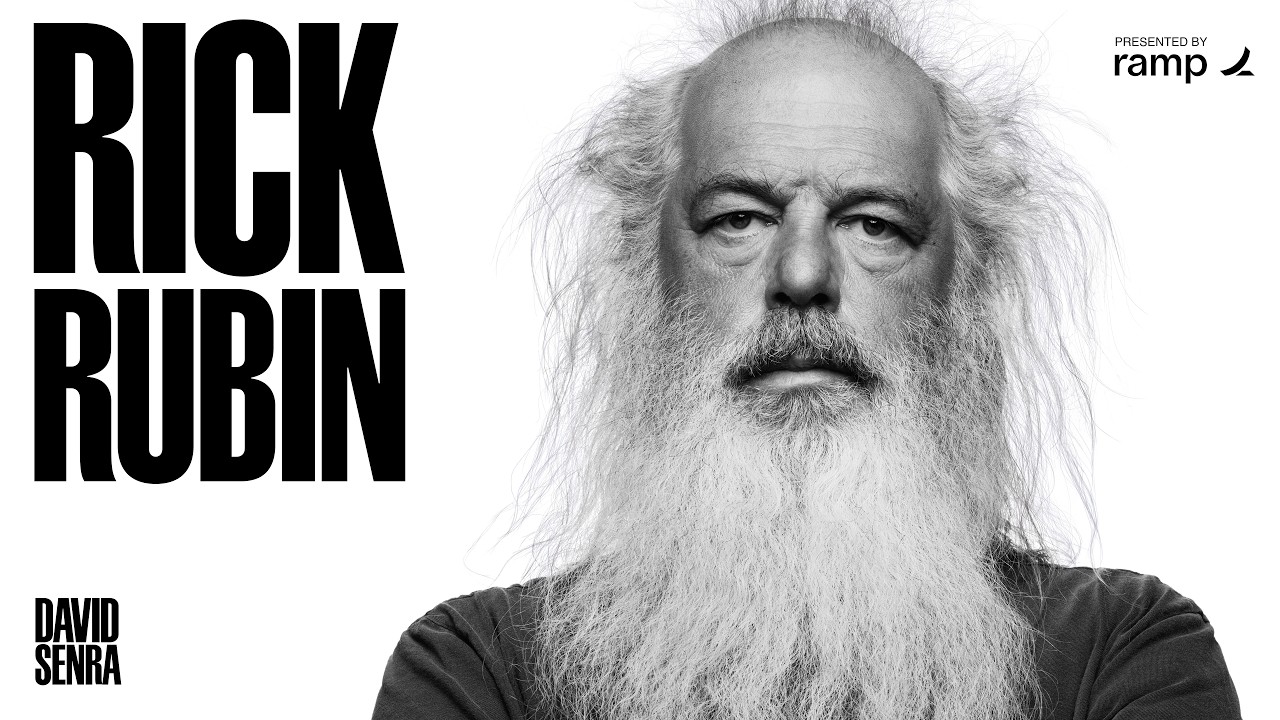
  • Rick Rubin on Obsession and Creativity, the Lazy Workaholic, Ruthless Editing, and Why a Great Producer Is Really a Reducer

    David Senra of the Founders Podcast sits down with Rick Rubin for a long, unhurried conversation about obsession, creativity, the discipline of reduction, and how to sustain greatness across more than four decades of making things. They cover the Def Jam dorm-room origin story, the religion of less is more, the ruthless edit, the fishing-for-magic mental model of studio life, the contrasting work styles of Eminem and Jay-Z, why Rick calls himself a lazy workaholic, what he learned from Johnny Cash and the Man in Black mythos, and why he believes a producer is really a reducer. Watch the full conversation on YouTube.

    TLDW

    Rick Rubin tells David Senra that the through-line of his career is not music, it is reduction. To get to less, you have to do more, because every element that survives has to carry the work alone. He started by trying to capture the energy of a downtown hip-hop club nobody respected, signed his early records “Reduced by Rick Rubin” because production meant taking apart rather than building up, and four decades later still runs the same playbook with The Strokes, the Red Hot Chili Peppers, Eminem, and Jay-Z. He describes himself as a lazy workaholic who has to drag himself to the studio for the magical moments that justify everything else. He talks about constraints as a palette, the Man in Black mythology that shaped the Johnny Cash American Recordings, the difference between Eminem’s notebook obsession and Jay-Z’s silent couch composition, why he is a professional listener with no judgment, why he thinks of every finished work as a diary entry rather than a magnum opus, and why the people who sustain greatness across decades stay grounded, never rest on wins, and treat the magic as something they serve rather than something they make.

    Thoughts

    The most counterintuitive idea in this conversation is that the most respected music producer of the last half century identifies as lazy. Rick is not posturing. He says clearly that his default state is to do nothing, that most days he would rather not go to the studio, and that he has to fight a part of himself every morning to show up. That detail matters because the popular image of mastery is fueled by passion, and Rubin is saying the opposite. Passion gets you to the door. After that, the actual work is patience, discipline, and forcing yourself to wait for the moment of magic to land. He is essentially describing the same engine Anthony Bourdain used, redirected from a heroin habit toward writing and television. The work ethic is the constant. The direction is the choice.

    The reduction framing is older than any of his hits. He signed LL Cool J’s first record “Reduced by Rick Rubin” at nineteen because he genuinely felt that what he was doing was taking apart, not building up. Almost every famous Rick Rubin record is recognizable by what is missing rather than what is present. The Johnny Cash sessions ended up as a man and an acoustic guitar because the demos in his living room were better than the band takes. The Strokes album sounds like five people in a room because that is what the band is. The discipline is to refuse to add layers that hide the essence of whoever you are working with. When he calls a band’s signature “stripped down to what they are,” he is describing a generalizable creative principle, not a sound. It applies just as well to writing, code, design, and product, which is why the conversation lands so hard with entrepreneurs.

    Senra correctly diagnoses Rubin’s edge in podcasting as the same edge that powers his production work: he is a professional listener. Most conversations are two people queuing the next thing they want to say. Rick describes listening to music with his eyes closed for hours as a young person, treating it as a psychedelic experience rather than wallpaper, and over a lifetime that built a mental muscle for being present with whoever is in front of him. He is not comparing what he hears to what he believes. He is trying to understand the world through someone else’s eyes. That posture is how he gets artists to deliver work they did not know they had, and it is also how Toby Lütke, Dana White, and dozens of other guests open up on his show.

    The Eminem and Jay-Z contrast is the most useful working-style comparison in the interview. Eminem fills notebooks with tiny letters every day, ninety percent of which never become a song. Jay-Z sits silent on a couch for half an hour, jumps up, and records the entire verse from memory. Both are great. Neither is correct. The point is that obsession and process can take radically different shapes, and trying to copy the surface behavior of someone you admire is mostly a mistake. The deeper pattern is full attention to the craft, sustained over decades, regardless of which ritual carries the attention.

    The conversation closes on the question of how to sustain success over forty years without imploding. Jimmy Iovine, quoted via Senra, says the four pitfalls are drugs, alcohol, women, and megalomania. Rubin adds that megalomania and crippling insecurity are two sides of the same coin, both rooted in not being grounded. His own protection has been meditation since youth and the simple belief that the work is not from him, that he is in service to something that happens in the room. Pair that with the diary-entry framing of past work, where nothing is your magnum opus and nothing is worth regretting, and you have a complete operating system for staying creative without burning out or going crazy.

    Key Takeaways

    • Less is more, but to get to less you have to do more. The fewer elements in a piece of work, the more each one has to be curated, because nothing is hidden.
    • The wall-of-guitars trick makes a recording sound generic. One player whose fingers you can hear on the strings carries personality. The singular essence is what Rubin always looks for.
    • Outsiders almost always underestimate the volume of work behind a finished thing. Rubin says he never thought of his early effort as work because it was mission and love, not labor.
    • Def Jam started in a dorm room at NYU because the few hip-hop singles being pressed were made by professionals who did not understand the music. The records were not a documentary of what was happening in the club, so Rubin made one.
    • His first hip-hop production was T La Rock’s “It’s Yours,” which sold roughly 100,000 copies over 18 months in a genre most adults at the time did not even recognize as music.
    • “Reduced by Rick Rubin” first appeared on an LL Cool J sleeve at age nineteen because Rubin thought “produced” meant to build up, and what he was actually doing was taking apart.
    • He applied Beatles song structure to rap because rap records before Def Jam were closer to monologues or Jamaican toasting than to organized songs. The Beatles are still his reference for what a tight piece of music looks like.
    • The ruthless edit: if you have 100 percent of material and want to end at 70, do not whittle 30 off the top. Reduce all the way down to 40 percent, then add back only what is needed. You understand the work better after the over-cut.
    • With the Red Hot Chili Peppers he records 40 or 50 songs per album, then everyone in the band votes A, B, or C. Only unanimous A songs make the record. Democratic ruthlessness.
    • The most interesting curation question for an artist with 20 albums is whether you can hear a song and know exactly which album it belongs on. Albums earn their place by being unlike the rest of the catalog, usually because of a palette or constraint imposed on that one project.
    • Johnny Cash’s American Recordings became an acoustic record because the in-home demos of him singing alone were better than the studio band takes. The discovery happened during the work, it was not a premeditated concept.
    • Song selection for Cash was filtered through the mythological Man in Black, not the man. A funny song could fit Johnny Cash. The Man in Black would not sing it. The mythos became the constraint.
    • Rubin calls himself a lazy workaholic. His default would be to do nothing. Every studio day starts with him having to overcome the part of himself that does not want to show up.
    • What he is addicted to is the moment of magic in the studio when nothing has been working and then suddenly something does. He compares the wait to fishing or watching paint dry.
    • Once the magic appears, the rest of the process is protecting it from being ruined. Magic is fragile and almost no one knows why or how it shows up.
    • Akon described Eminem treating the studio like a job: in by 9, lunch at noon, out at 5. Discipline beats waiting for inspiration. But you need both: show up every day, and stay open enough for inspiration to land.
    • Eminem is the most obsessive artist Rubin has worked with. He carries notebooks everywhere, writes in tiny letters, and admits that ninety percent of what he writes will never become a song. He writes to stay in shape.
    • Jay-Z is the opposite mode. He plays beats, sits silent on a couch listening, then jumps up and delivers the whole verse from memory. Magna Carta Holy Grail came together in two weeks.
    • Different artists need different things from a producer. Rubin’s job changes with the artist, sometimes hands off, sometimes starting from zero together. The constant is service to the work.
    • Constraints are a creative friend. Every great album benefits from a set of rules that apply only to that project: an instrument restriction, a thematic frame, a recording context, a character lens.
    • Great work is almost never made by committee. Some bands work as democracies (U2), some as dual opposition (Lennon and McCartney, Jagger and Richards), some as a single flag bearer with collaborators (Tom Petty and the Heartbreakers). All of them have a clear point of view.
    • Rubin is a professional listener. He treats listening to music as a psychedelic experience, with eyes closed and full attention, which is why he never needed drugs or alcohol. That listening muscle transfers directly to interviewing.
    • In conversation he has no judgment and no agenda to win. If someone says something he disagrees with, he asks more questions to understand the path that got them there, on the chance that he is the one who is wrong.
    • Curiosity for Rubin is bottomless. If he is into coffee, he wants to taste every important coffee and read every credible review of every machine. He calls himself a researcher, not professionally, but in the obsessive sense.
    • Magic was his obsession from age nine to sixteen before music took over. He counts that not as a loss but as a swap: one full-time occupation for another. The making is the constant, not the medium.
    • Aesthetic consistency carries across domains. Shangri-La studio, the records he makes, the objects he buys, the way his home is arranged all fit one worldview. The thing he does is not really about music, it is about that worldview applied to whatever he is making.
    • Jimmy Iovine described the difference between the two of them as “I am in the banking business, you are in the church business.” Iovine optimizes for what works commercially. Rubin optimizes for what he believes is true.
    • Rubin runs his life on intuition. He has stayed true to what feels right and it has worked. If it had not, he would have made things on a smaller scale and gotten a regular job. He does not see this as a strategy, just as the only honest way to operate when you accept that humans know almost nothing.
    • He is confident but not egotistical. Meditation, learned young, made the work never about him. His confidence is in being able to say clearly how he sees it, not in being right.
    • His inner monologue during work is rarely self-critical. It starts apprehensive because anything is still possible. As soon as one good thing lands, he relaxes into a direction.
    • Past work is a diary entry, not a magnum opus. You did the best you could in that moment. Treating every release as a daily installment removes the paralysis of trying to make the thing that defines you forever.
    • The release-readiness test: if you would be excited to play a track for the friend whose taste you respect, it is ready for everybody. Artists usually overestimate how much polish the world needs.
    • When someone asks for advice, Rubin listens for what they actually want. Most people lead with hopes and dreams, then list fears. The fears almost never matter. The hopes are the answer.
    • The four classic pitfalls of overnight success per Iovine: drugs, alcohol, women, and megalomania. Megalomania and crushing insecurity are the same imbalance, just presenting differently.
    • The way Rubin has sustained success is to stay grounded, treat himself as a conduit rather than a source, never rest on wins, and keep his attention on what he is making now rather than on what he made before.
    • Iovine’s mantra: no review mirror, no trophy room. Jeffrey Katzenberg and other long-careers Rubin meets all share that orientation toward what is in front of them.
    • James Dyson’s organizing principle is the same as Rubin’s: pick up a thing, ask how to make it better, make it better, put it down, repeat for fifty years. Improving what exists is more tractable than designing from scratch.
    • The house on top of a mountain metaphor: imagine no one will ever see your work. What would you still make. That is your life’s work. Bonus test: people say “if you loved it you would do it for free.” Rubin’s higher bar is, if you truly love it, they could not pay you to stop.

    Detailed Summary

    Less is more, and to get less you have to do more

    The conversation opens on the idea from Rubin’s biography In the Studio that Senra says he thinks about every week. Stacking things hides each individual thing. If a piece of music has ten elements, each one carries a tenth of the weight. If it has two, each one has to be devastatingly chosen because nothing else is covering for it. Rubin describes the wall-of-guitars trick as a way to lose personality: you hear “guitar,” not “someone playing guitar.” A single player whose fingers you can hear on the strings has more humanity. The principle is not “use less stuff.” It is “use only what is critically curated, because everything is exposed.”

    The Def Jam origin and “Reduced by Rick Rubin”

    Rubin grew up obsessed with music, played guitar in a punk band, and got into hip-hop in its earliest underground phase, when only one downtown club played it and only a handful of 12-inch singles existed. The singles being released did not represent what was happening in the clubs because they were made by professionals from other genres. Rubin made T La Rock’s “It’s Yours” essentially because no one else would. It sold around 100,000 copies, slowly, in a genre most people did not consider music. On LL Cool J’s first record he printed “Reduced by Rick Rubin” instead of “Produced by,” because he thought production meant building up, and what he was actually doing was stripping away. He also applied Beatles song structure to rap, which until then had been closer to a long monologue or Jamaican toasting. The structural discipline came directly from listening to Lennon and McCartney as a kid.

    The ruthless edit and how to curate an album

    Rubin’s editing method is to overshoot the cut, not nibble at it. If you want to end at 70 percent of what you have, do not trim 30. Reduce to 40, then add back only what is genuinely needed. You learn the work better that way. With the Red Hot Chili Peppers, he records 40 or 50 songs per album, then everyone votes A, B, or C on each track. Unanimous A songs make the album. Divided votes usually do not. The goal is not the sum of individual preferences but the songs you cannot live without, with everything else built out from those.

    Constraints, palettes, and the Man in Black

    The albums Rubin loves are the ones that stand alone in an artist’s catalog, recognizable by their palette. That distinctness comes from rules that apply only to that project. With Johnny Cash, the rule that emerged in the room was acoustic only, just Cash and his guitar with no pick. The song-selection rule was the Man in Black mythos: would the legendary character, not the man, sing this. A funny song could fit Johnny Cash. The Man in Black needed gravitas. That single filter generated the American Recordings sound. The lesson is not to copy the rule, it is to invent a fresh constraint for every project.

    The lazy workaholic and the fishing analogy

    Rubin describes himself as a lazy workaholic. He could happily stay home, walk on the beach, have lunch with friends. He has to drag himself to the studio. He spent twenty-five years in dark rooms in New York sixteen hours a day, seven days a week, and he does not pretend that was easy. What pulls him back is the fishing analogy. You can sit on a lake all day and catch nothing. You can sit in a studio all week and have no breakthrough. But when the fish hits, when the magic moment comes, when a band looks at each other mid-take because they realize the thing is happening, that is what he is addicted to. The rest of the process after that moment is protection: stay out of the way, do not break the spell.

    Show up versus wait for inspiration: Eminem and Jay-Z

    Senra retells an Akon story about Eminem treating the studio like a job, clocking in at 9, breaking for lunch at noon, finishing at 5. The lesson is that you cannot only wait for inspiration. You have to be in the practice that allows the thing to happen. Eminem is the most obsessive artist Rubin has worked with. He carries notebooks everywhere, writes constantly in tiny letters, and admits 90 percent of his writing will never end up in a song. He is just staying in shape. Jay-Z works the opposite way. Sits silent on a couch for half an hour while a beat loops, then jumps up and records the entire verse from memory. Most of his albums come together in days or weeks. Both are great. Both are obsessed. The shapes of the obsession are unrelated.

    The professional listener

    Senra’s working theory is that Rubin’s edge as an interviewer is the same edge that makes him a great producer: he listens for a living. Rubin agrees. Most people in conversation are queuing their next line. He listens to music with his eyes closed, going fully into the experience until he is surprised at where he is when it ends. He treats listening as psychedelic, which is part of why he never drank or used drugs. He has no judgment in conversation and no internal comparison to his own beliefs. If someone says something he disagrees with, his reaction is curiosity about the path, not defense of his position. People find it disarming because it is so rare.

    Intuition, ego, and the inner monologue

    Rubin runs on intuition because he genuinely believes humans know almost nothing. If you accept that, the only honest tool you have is feel. He has high self-confidence but says it is not ego, because meditation since childhood kept the work from being about him. His inner monologue is rarely self-critical. It starts apprehensive at the beginning of a project because anything is still possible. As soon as something good lands and there is a direction, the apprehension drops. He is confident in saying clearly how he sees a thing, not in being right.

    Banking versus church: the Iovine contrast

    Senra calls the Rubin and Iovine episode of Tetragrammaton the best podcast he heard in 2023. The line he keeps returning to is Iovine’s: “I am in the banking business, you are in the church business.” Iovine optimizes for what works commercially. Rubin optimizes for what he believes is good. Both are excellent. They are different jobs. Senra and Rubin draw the parallel to entrepreneurship: opposition between collaborators (Lennon and McCartney, Jagger and Richards) can be a great engine, but committees almost never produce great work, because the average of preferences flattens out the singular point of view.

    Diary entries, the friend test, and the house on the mountain

    Rubin’s frame for past work is that every release is a diary entry, a record of who you were that day. There is nothing to regret because you did the best you could in that moment. There is also nothing that defines you, which removes the paralysis of trying to make a magnum opus. His release-readiness test is the friend test: if you would be excited to play it for the friend whose taste you trust, it is ready for everyone. Artists almost always set the public bar higher than the friend bar, which is wrong. And his life’s work test is the house on the mountain: if no one would ever see what you make, what would you still make. Take the answer and orient your life around it. The higher version of “I would do this for free” is “they could not pay me to stop.”

    Surviving overnight success

    Iovine’s four pitfalls of fast success, relayed by Senra: drugs, alcohol, women, and megalomania. Rubin adds that megalomania and self-loathing insecurity are the same imbalance presenting differently. The famous version of one artist says “I am the greatest who ever lived.” The famous version of another says “any minute they will find out I am a fake.” Both are running from the same lack of grounding. Rubin credits meditation and the belief that the magic is not his with keeping him whole across forty years. He also points out that the people who sustain greatness do not run a victory lap. Iovine has no review mirror and no trophy room. Katzenberg, at lunch with Senra, wanted to talk about what he is working on now, not Disney. The orientation is always forward.

    Notable Quotes

    “If you’re stacking a lot of things on top of each other, each one of those things becomes less important. So if you have 10 things, each one of them is one tenth as important as one by itself.”

    Rick Rubin, on why less is more is a math problem, not an aesthetic one

    “I thought about the idea of produced by and I thought the word meant to build up. Like I think of production as building. And really what I was doing was taking apart and reducing. I thought maybe reduced by is more accurate in this case.”

    Rick Rubin, on why an LL Cool J record was signed “Reduced by Rick Rubin”

    “I’m a lazy workaholic. I have to force myself to do it. But I do force myself. My demeanor would be to do nothing.”

    Rick Rubin, describing his actual relationship with his job

    “It’s frustrating and boring and takes a great deal of patience. It’s like waiting for paint to dry. Just waiting, waiting, waiting and trying different things and nothing works until something either works or something happens and it just comes together and I can’t tell you why.”

    Rick Rubin, on the daily reality of working in the studio

    “If you only wait for inspiration, it won’t ever come. You have to work and be there and show up. If you’re not in the practice of allowing the thing to happen, it won’t happen. Doesn’t mean it will. Just because you do the show up doesn’t mean it will happen. But if you don’t show up, it won’t happen.”

    Rick Rubin, on Akon’s story about Eminem treating the studio like a 9-to-5 job

    “It feels like his entire life is centered around writing words. He’s totally preoccupied with that. So he always has a notebook. He writes tiny tiny letters and he’s always making notes. I asked him, are you working on a new song. He’s like, no, I’m just keeping active in the skill set.”

    Rick Rubin, on Eminem as the most obsessive artist he has ever worked with

    “In real life people like to talk and they don’t like to listen. Often in a conversation you’ll be with someone and they’ll be saying something and you’ll be thinking about what I’m going to say in response to that. You’re not really present. That’s what it is. It’s like two people waiting for their turn to say what they think.”

    Rick Rubin, on why being a professional listener is rare and disarming

    “Jimmy is in the banking business. These are his words. He said I’m in the banking business and you’re in the church business and that’s the difference.”

    Rick Rubin, quoting Jimmy Iovine on the fundamental split in how each of them approaches making music

    “As soon as I liked it enough to share it with one person, chances are it’s ready for everybody.”

    Rick Rubin, on the friend-test for when a piece of work is finished

    “People say, if you love what you do, you would do it for free. There’s another level to loving what you’re doing. If you truly love what you do, they couldn’t pay you to stop.”

    Rick Rubin, on the real test for whether something is your life’s work

    Watch the full conversation here on YouTube.

    Related Reading

    • The Creative Act: A Way of Being, the long-form expression of the worldview Rubin describes throughout the conversation.
    • Founders Podcast by David Senra, the host’s main show, where he distills lessons from biographies of history’s greatest entrepreneurs and the source of his framing throughout this conversation.
    • American Recordings (Wikipedia), background on the Johnny Cash project that Rubin uses as his clearest example of constraints and the Man in Black mythos.
    • Def Jam Recordings (Wikipedia), the dorm-room label Rubin co-founded that turned underground hip-hop into a global industry.
    • The Defiant Ones (Wikipedia), the HBO documentary that captures the Jimmy Iovine “banking business versus church business” lineage referenced throughout the interview.
  • How Vibe Coding Became the Punk Rock of Software

    From meme to manifesto

    In March 2025 a single photo of legendary record producer Rick Rubin—eyes closed, headphones on, one hand resting on a mouse—started ricocheting around developer circles. Online jokesters crowned him the patron saint of “vibe coding,” a tongue-in-cheek label for writing software by feeling rather than formal process. Rubin did not retreat from the joke. Within ten weeks he had written The Way of Code, launched the interactive site TheWayOfCode.com, and joined a16z founders Marc Andreessen and Ben Horowitz on The Ben & Marc Show to unpack the project’s deeper intent .

    What exactly is vibe coding?

    Rubin defines vibe coding as the artistic urge to steer code by intuition, rhythm, and emotion instead of rigid methodology. In his view the computer is just another instrument—like a guitar or an MPC sampler—waiting for a distinct point of view. Great software, like great music, emerges when the creator “makes the code do what it does not want to do” and pushes past the obvious first draft .

    Developers have riffed on the idea, calling vibe coding a democratizing wave that lets non-programmers prototype, remix, and iterate with large language models. Cursor, Replit, and GitHub Copilot all embody the approach: prompt, feel, refine, ship. The punk parallel is apt. Just as late-70s punk shattered the gate-kept world of virtuoso rock, AI-assisted tooling lets anyone bang out a raw prototype and share it with the world.

    The Tao Te Ching, retold for the age of AI

    The Way of Code is not a technical handbook. Rubin adapts the Tao Te Ching verse-for-verse, distilling its 3 000-year-old wisdom into concise reflections on creativity, balance, and tool use. Each stanza sits beside an AI canvas where readers can remix the accompanying art with custom prompts—training wheels for vibe coding in real time .

    Rubin insists he drafted the verses by hand, consulting more than a dozen English translations of Lao Tzu until a universal meaning emerged. Only after the writing felt complete did collaborators at Anthropic build the interactive wrapper. The result blurs genre lines: part book, part software, part spiritual operating system.

    Five takeaways from the a16z conversation

    1. Tools come and go; the vibe coder persists. Rubin’s viral tweet crystallised the ethos: mastery lives in the artist, not in the implements. AI models will change yearly, but a cultivated inner compass endures .
    2. Creativity is remix culture at scale. From Beatles riffs on Roy Orbison to hip-hop sampling, art has always recombined prior work. AI accelerates that remix loop for text, images, and code alike. Rubin views the model as a woodshop chisel—powerful yet inert until guided.
    3. AI needs its own voice, not a human muzzle. Citing AlphaGo’s improbable move 37, Rubin argues that breakthroughs arrive when machines explore paths humans ignore. Over-tuning models with human guardrails risks sanding off the next creative leap.
    4. Local culture still matters. The trio warns of a drift toward global monoculture as the internet flattens taste. Rubin urges creators to seek fresh inspiration in remote niches and protect regional quirks before algorithmic averages wash them out.
    5. Stay true first, iterate second. Whether launching a startup or recording Johnny Cash alone with an acoustic guitar, the winning work begins with uncompromising authenticity. Market testing can polish rough edges later; it cannot supply the soul.

    Why vibe coding resonates with software builders

    • Lower barrier, higher ceiling. AI pairs “anyone can start” convenience with exponential leverage for masters. Rubin likens it to giving Martin Scorsese an infinite-shot storyboard tool; the director’s taste, not the tech, sets the upper bound .
    • Faster idea discovery. Generative models surface dozens of design directions in minutes, letting developers notice serendipitous mistakes—Rubin’s favorite creative catalyst—without burning months on dead-end builds.
    • Feedback loop with the collective unconscious. Each prompt loops communal knowledge back into personal intuition, echoing Jung’s and Sheldrake’s theories that ideas propagate when a critical mass “gets the vibe.”

    The road ahead: punk ethos meets AI engineering

    Vibe coding will not replace conventional software engineering. Kernel engineers, cryptographers, and avionics programmers still need rigorous proofs. Yet for product prototypes, game jams, and artistic experiments, the punk spirit offers a path that prizes immediacy and personal voice.

    Rubin closes The Way of Code with a challenge: “Tools will come and tools will go. Only the vibe coder remains.” The message lands because it extends his decades-long mission in music—strip away external noise until the work pulses with undeniable truth. In 2025 that mandate applies as much to lines of Python as to power chords. A new generation of software punks is already booting up their DAWs, IDEs, and chat windows. They are listening for the vibe and coding without fear.

  • Pharrell Williams on Tetragrammaton with Rick Rubin: A Window into the Soul of a Creative Visionary

    When two creative powerhouses sit down for an in-depth conversation, sparks inevitably fly. Such was the case when Pharrell Williams, a multi–Grammy-winning producer, songwriter, and cultural tastemaker, joined renowned producer Rick Rubin for a revealing interview on the Tetragrammaton podcast. The resulting transcript, which delved deep into Pharrell’s past, present, and evolving artistic philosophies, provides an unparalleled look at one of the most influential artists of our time.

    Pharrell’s Roots: From Virginia Beach to Global Fame

    During the interview, Pharrell revisited his humble origins in Virginia Beach, Virginia—an environment that, while not as musically storied as big coastal cities like New York or Los Angeles, profoundly shaped his tastes and sounds. He recounted how a lack of an established local music industry encouraged him and peers like Chad Hugo, Timbaland, and Missy Elliott to draw on eclectic influences, resulting in a unique sonic fusion that defined the early 2000s. This fertile ground, paired with Pharrell’s innate curiosity, paved the way for his breakthrough as one half of The Neptunes, producing hit after hit for artists like Britney Spears, Justin Timberlake, and Snoop Dogg.

    Church, Rhythm, and Spiritual Resonance

    One of the most striking elements of the Tetragrammaton interview lies in Pharrell’s candid reflections on the spiritual and rhythmic foundations of his creativity. He describes his childhood experiences in the church as formative—seeing congregations move to the pastor’s sermons and an organist’s chords, feeling the collective energy swell into ecstatic waves. This early exposure to improvised spiritual expression informed how Pharrell would later approach production and songwriting: always chasing a feeling, never confined by convention.

    Pharrell and Rick Rubin probed the notion that good music mirrors the natural rhythms of life, from heartbeats to cosmic cycles. By tying the roots of sound to existential energy, Pharrell suggests that music is more than entertainment—it’s a conduit for spiritual connection and a reminder that creativity itself is a divine force.

    The LEGO Biopic “Piece by Piece” and Creative Self-Discovery

    The interview also highlighted Pharrell’s latest venture: Piece by Piece, an animated biopic created in collaboration with LEGO. Far from a standard career retrospective, this project reframes Pharrell’s life story in a playful, symbolic medium. By viewing his past as a LEGO narrative—objectifying it through bricks and animated storytelling—he found new creative inspiration, even penning original songs like “Piece by Piece” and “LEgo Odyssey.”

    In conversation with Rubin, Pharrell explained that this reframing allowed him to gain distance from his own narrative, seeing himself as a character rather than being chained to the insecurities, fears, and obligations that often cloud personal reflection. It’s a radical form of self-discovery: embracing the idea that deconstructing and rebuilding one’s story can spark fresh insights and rekindle curiosity.

    Fashion, Influence, and Global Ventures

    Pharrell’s scope extends well beyond the recording studio. Throughout the Tetragrammaton discussion, he touched on his current role as Creative Director of Louis Vuitton, reflecting a gravitational pull toward diverse mediums. Just as he once broke down genre barriers in music, he now marries storytelling, travel, fashion, and culture, curating experiences that feel as global and inclusive as his discography.

    The interview underscored Pharrell’s knack for blending high art and street culture, from his early collaborations with Marc Jacobs on sunglasses to guiding entire seasons of luxury collections. His fashion forays, combined with his upcoming role as a co-chair for the Met Gala, illustrate a creative spirit that thrives on reinvention, boundary-pushing, and blending disparate worlds into something coherent and resonant.

    Humility, Gratitude, and the Bigger Picture

    Although Pharrell has earned 13 Grammys, multiple Oscar nominations, and global adoration, the Tetragrammaton interview shows a man grounded in humility and faith. He credits existence itself—what he calls “the all that ever was and ever will be”—for his success, acknowledging that major breakthroughs like “Happy” and “Get Lucky” were not solely his doing. By seeing himself as part of a larger cosmic design, Pharrell unburdens himself from ego and steps into a role of service: channeling inspiration and sharing it with the world.

    This perspective underscores a central theme of the conversation: success, at its deepest level, is not about personal glory but about tapping into a collective energy, an infinite tapestry of spirit and sound. Pharrell’s revelations reveal a blueprint for any artist seeking longevity, relevance, and a meaningful connection to their audience.

    Insights from a Cultural Catalyst

    The Tetragrammaton interview with Rick Rubin captures Pharrell Williams at a profound juncture—an artist who has mastered pop’s most influential hits, propelled fashion brands into new creative heights, and embarked on multimedia storytelling ventures that challenge and expand our notions of biography, art, and spirituality.

    In listening to—and reading the transcript of—this intimate conversation, fans and creatives alike witness the heart of a cultural catalyst who remains as adventurous and soul-searching as ever. By blending self-reflection with visionary ambition, Pharrell Williams continues to inspire a world that thrives on rhythm, reinvention, and the universal language of creativity.

  • Rick Rubin: The Music Mogul’s Biography and New Book

    Rick Rubin: The Music Mogul's Biography and New Book

    Rick Rubin is a music producer, record producer and record executive who has been behind some of the most iconic albums of our time. He is best known as the co-founder of Def Jam Recordings, the label that launched the careers of artists such as LL Cool J, the Beastie Boys, and Slayer.

    Rubin was born in Long Beach, New York, in 1963. He grew up in a musical household, with his father being a drummer and his mother a classical pianist. Rubin began playing guitar at the age of nine and soon became interested in the production side of music.

    In 1983, Rubin co-founded Def Jam Recordings with Russell Simmons. The label quickly became one of the most influential in the hip-hop world, releasing albums by LL Cool J, the Beastie Boys, and Slayer, among others. Rubin produced many of these early Def Jam records, and his work helped to establish the sound of hip-hop in the 1980s.

    In 1988, Rubin left Def Jam to start his own label, American Recordings. Under this label, he produced albums for a wide range of artists, including Johnny Cash, Neil Diamond, Tom Petty, and the Dixie Chicks. He also worked with more heavy metal and hard rock acts such as Slayer, Metallica, AC/DC, and Black Sabbath.

    In the 2000s, Rubin continued to produce and work with some of the biggest names in music, including Jay-Z, Kanye West, and Eminem. He also worked with more contemporary acts such as Adele, System of a Down and Slipknot.

    Throughout his career, Rubin has been known for his ability to work with a wide range of artists and genres, and for his ability to bring out the best in the artists he works with. He is credited with helping to shape the sound of hip-hop in the 1980s, and with revitalizing the careers of artists such as Johnny Cash and Neil Diamond.

    Rubin has won numerous awards for his work, including multiple Grammys. He continues to be one of the most sought-after producers in the music industry and his work continues to be highly influential.

    New Book

    Rick Rubin is not just known for his exceptional production skills, but for creating an environment where artists of all genres and backgrounds can tap into their true selves and potential. He has a unique ability to help people break through their self-imposed limitations and reconnect with a state of innocence, where creativity flows naturally. Through years of reflection on the origins of creativity and the role of the artist, Rubin has come to understand that being an artist isn’t about the final product, but about one’s relationship with the world. He believes that creativity is a fundamental aspect of life, and that it is our responsibility to nurture it and make it a larger part of our lives.

    In his new book, “The Creative Act,” Rubin guides readers on a beautiful and enlightening journey of self-discovery, distilling the wisdom he has acquired throughout his career into a powerful and transformative reading experience. This book will be an inspiration to artists, writers, and creatives of all kinds, and will give them a renewed sense of purpose and direction. With Rubin’s guidance, readers will come to understand that creating something great is not only possible, but within reach.